-
-
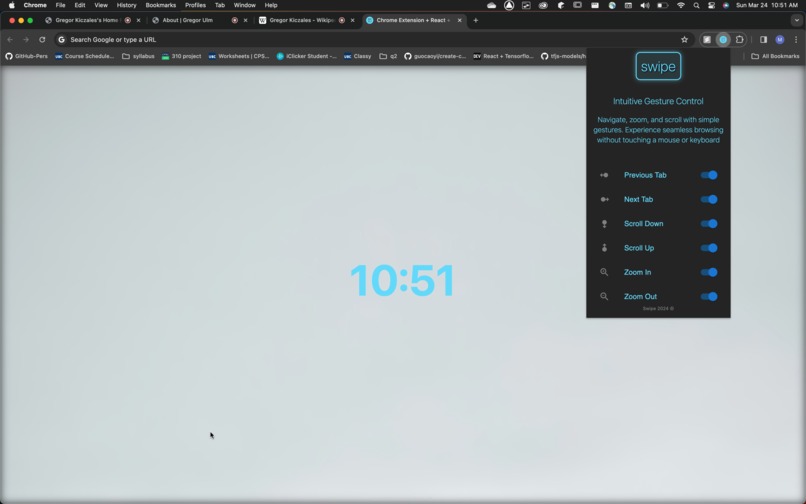
Chrome Extension
-
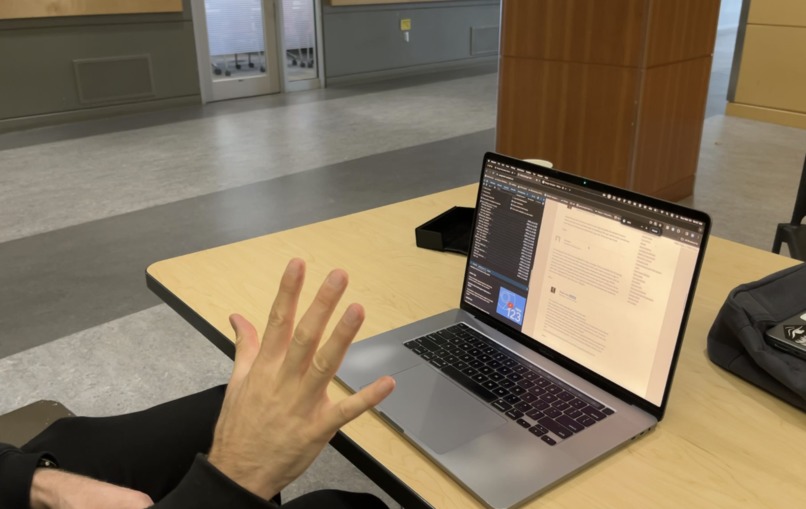
Motion Control
Inspiration
The idea was sparked by the desire to make digital navigation as natural and intuitive as gesturing during a conversation. We aimed to bridge the gap between human intent and digital response, envisioning a world where your computer understands your hand movements as clearly as your words.
What it does
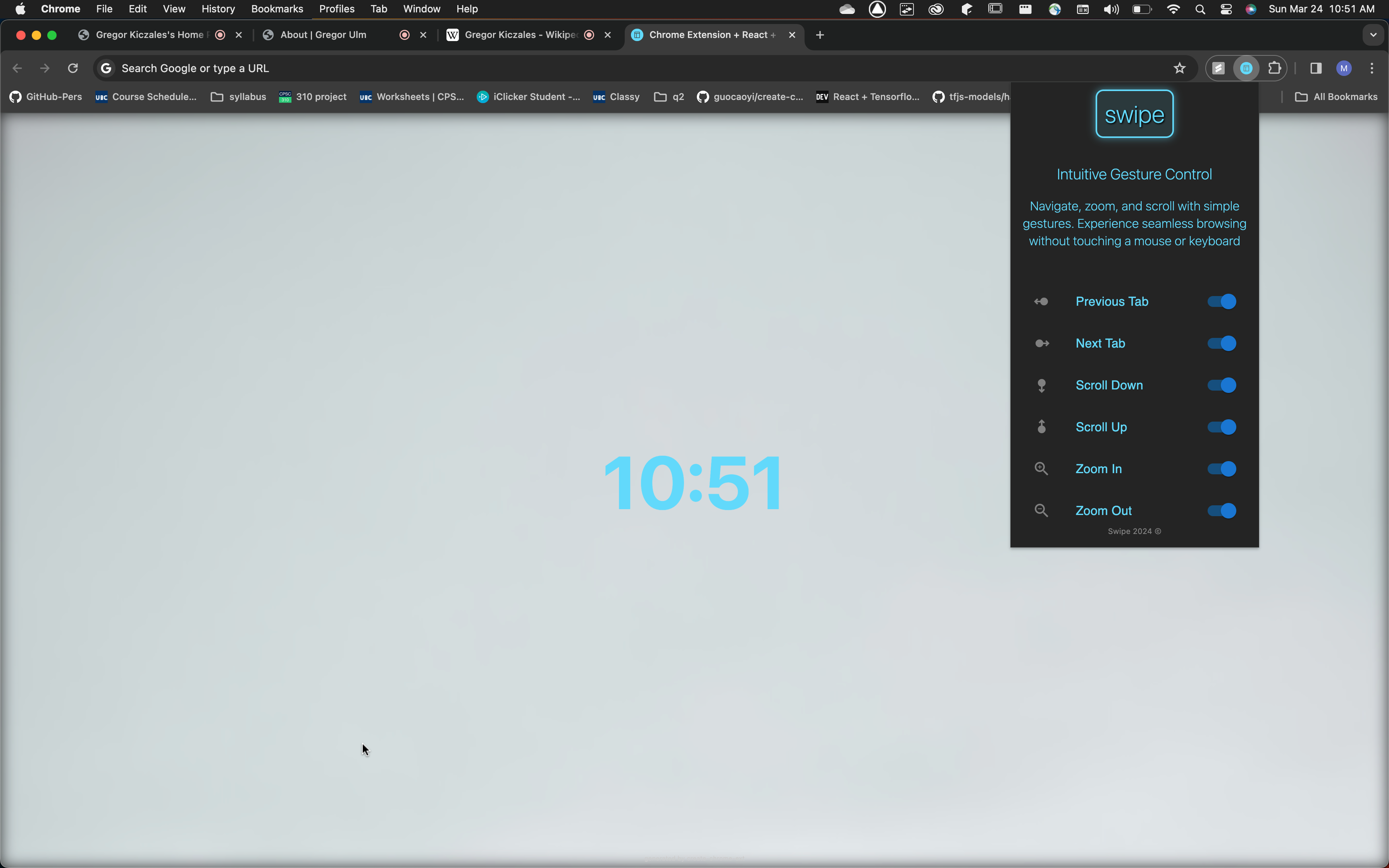
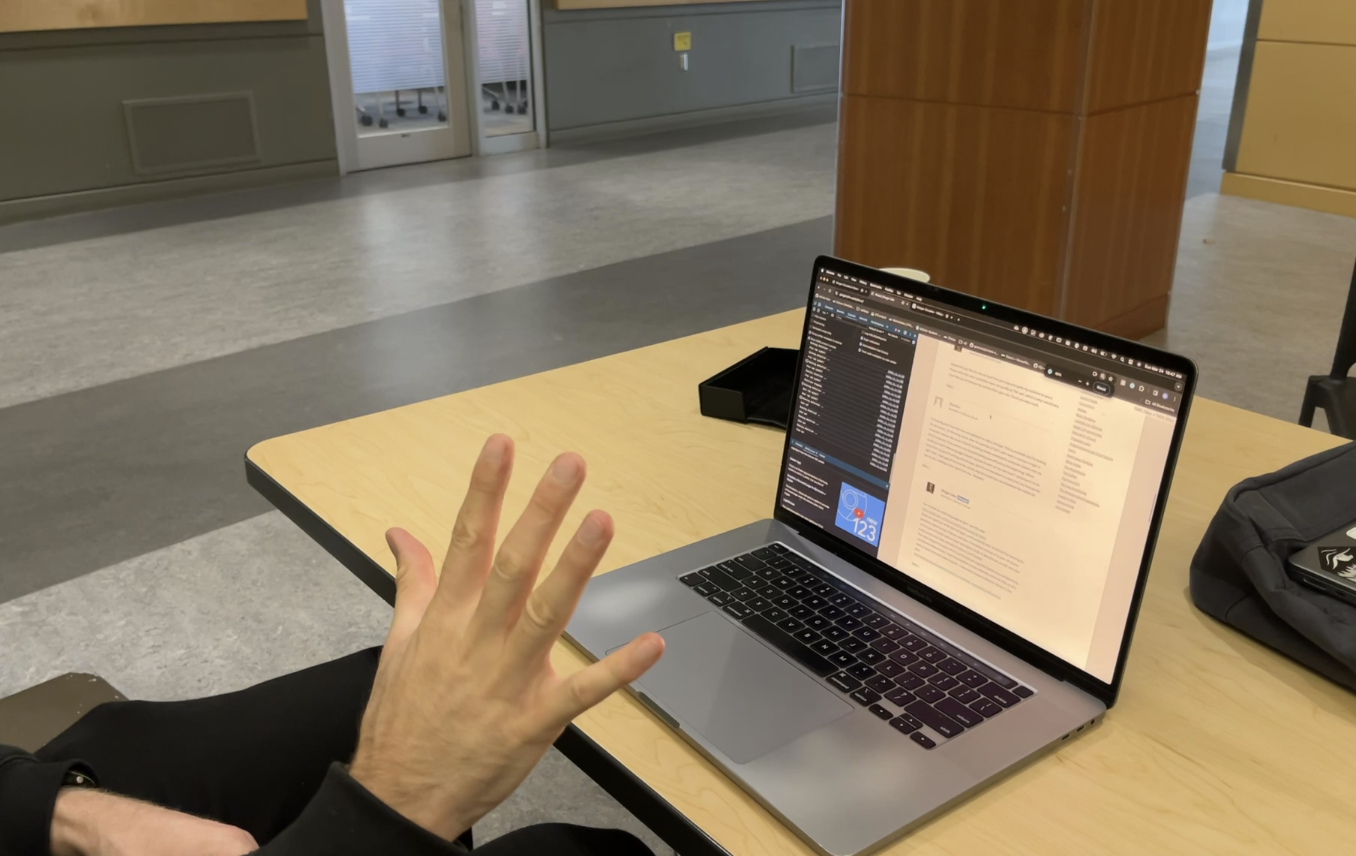
Our Chrome extension expands upon a sophisticated TensorFlow hand-pose model to detect and interpret specific hand gestures via your webcam, translating them into common browser commands like scrolling, zooming, and tab switching. This creates a seamless browsing experience without the need for a mouse or keyboard.
How we built it
We expanded upon the capabilities of TensorFlow's hand-pose model, integrating it with a Chrome extension framework. The extension processes live video feed from the webcam, analyzing hand positions and movements. Through meticulous programming and optimization, we mapped specific gestures to browser actions, ensuring a smooth and responsive user experience.
Challenges we ran into
Developing an intuitive gesture recognition system that could accurately interpret a wide range of human hand movements was our biggest challenge. We had to balance sensitivity and specificity to minimize false positives and negatives. Additionally, optimizing the extension for low-latency performance without overwhelming the user's CPU posed significant technical hurdles.
Accomplishments that we're proud of
We're particularly proud of creating an extension that enhances the browsing experience. Achieving a high degree of accuracy in gesture recognition, thereby reducing the learning curve for users, stands as a testament to our team's dedication and technical prowess.
What we learned
This project deepened our understanding of machine learning models, especially in real-time applications. We gained invaluable insights into optimizing performance for live video processing and the importance of a user-centric design approach in developing new technologies.
What's next for Swipe
Building on our foundation, we aim to introduce more complex gestures and motion controls to cover a broader spectrum of commands. Additionally, we're exploring the development of our own supplementary machine learning model to enhance gesture recognition accuracy and introduce new functionalities that could further transform user interaction with digital devices.
Built With
- chromeapi
- javascript
- linearalgebra
- python
- react
- tensorflow


Log in or sign up for Devpost to join the conversation.