-
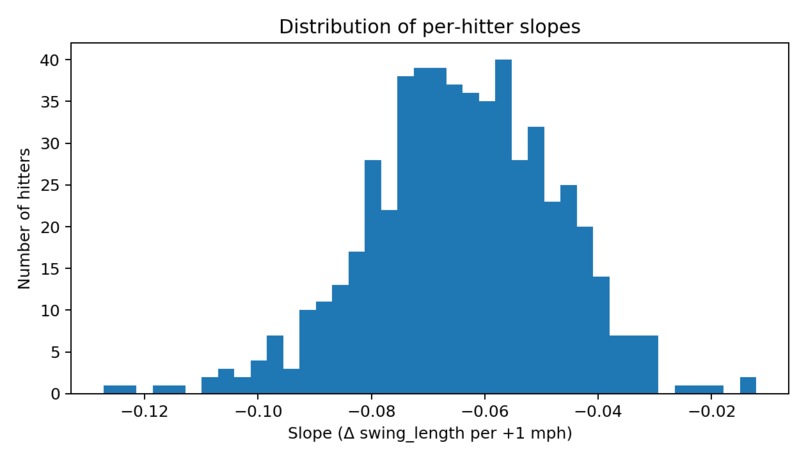
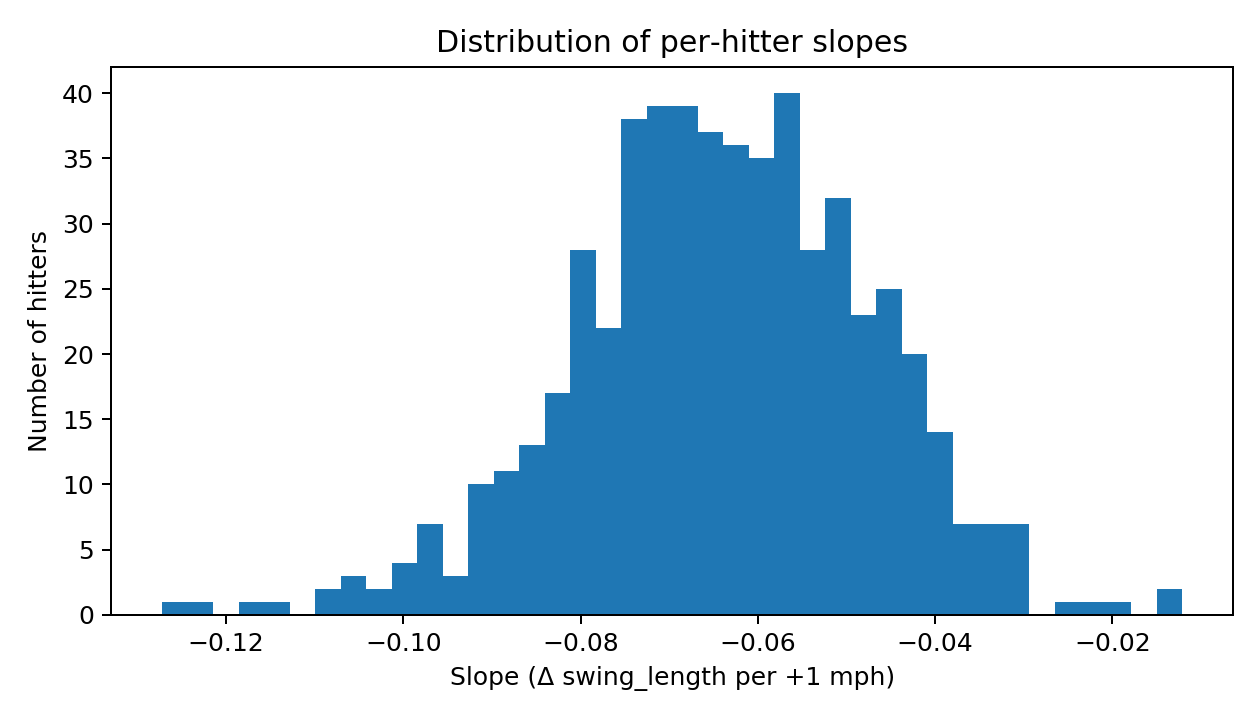
Distribution of Per-Hitter Slope
-
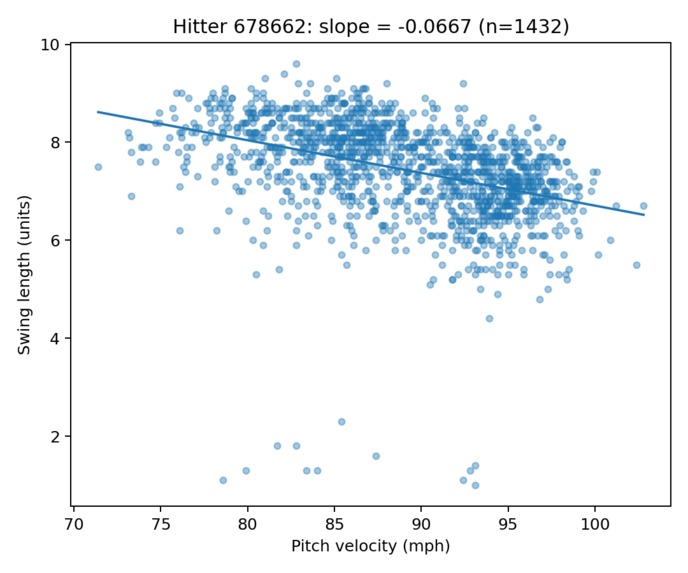
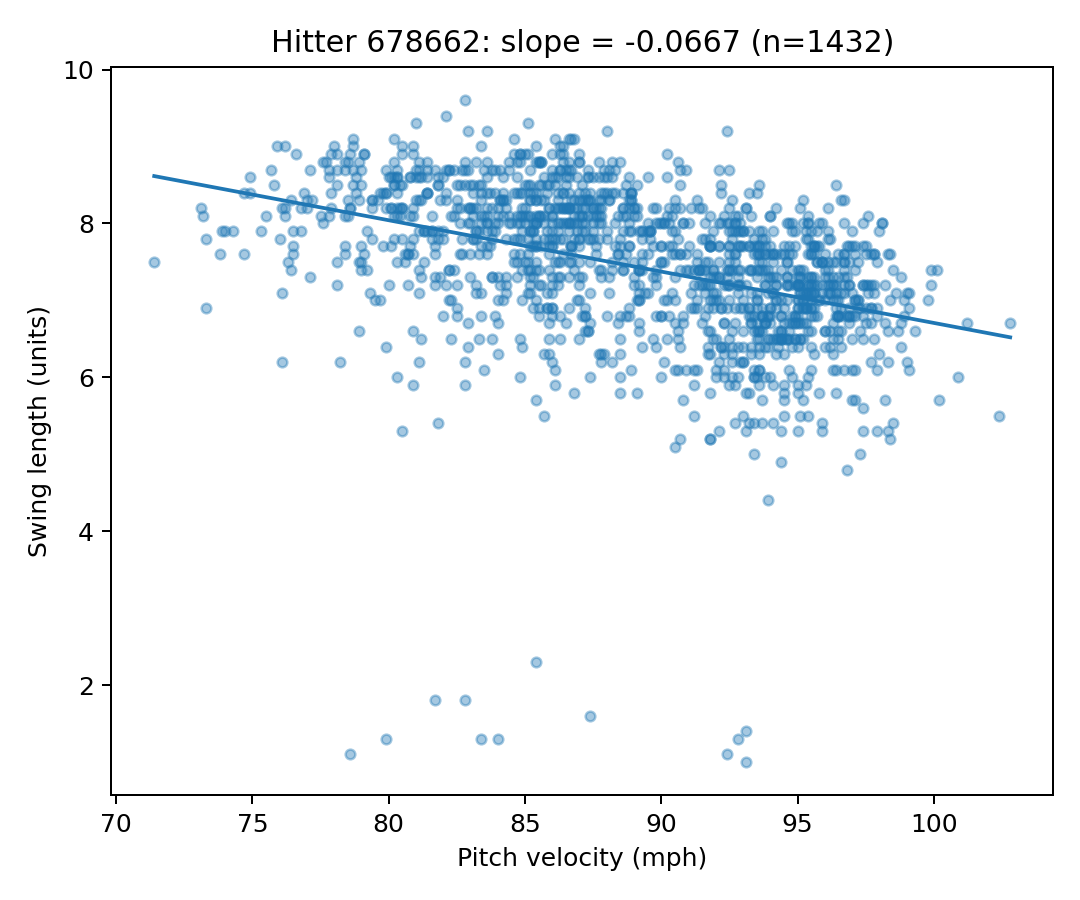
Pitch Velocity (mph) vs Swing Length for an individual hitter
🧠 Inspiration
I’m drawn to how people make decisions under pressure. Baseball captures that perfectly, a hitter has milliseconds to perceive, predict, and act. Swing mechanics become a trace of reaction, control, and focus. Measuring adaptability lets us study cognition in motion.
⚾ What It Does
SwingAdapt measures how hitters adjust their swing as pitch speed increases. By modeling swing length vs. velocity, we reveal whether a player adapts smoothly, over-corrects, or stays rigid, turning biomechanics into a simple cognitive-motor adaptability score.
🧩 How We Built It
Using Statcast data, we fit per-hitter linear models (swing_length ~ pitch_velocity) in Python. Each slope quantifies mechanical adjustment, visualized and classified into adaptability profiles. The pipeline favors clarity, interpretability, and reproducibility.
🚧 Challenges
Uneven pitch samples, pitch types, and noise could mimic adaptability. Cleaning data while preserving natural variation was key. Another challenge was restraint, keeping the model simple enough to stay explainable.
🏆 Accomplishments
I turned raw swing data into a clear behavioral insight. Coaches can now visualize how hitters react to speed, bridging analytics and on-field intuition.
📚 What We Learned
Adaptability is cognitive as much as mechanical. I learned to link data with behavior, not just patterns showing how players manage pressure and timing.
🔮 What’s Next
Next, I’ll add context, pitch type, count, and pressure to study adaptability across situations. The framework could extend to any high-speed motor task, from tennis to esports.

Log in or sign up for Devpost to join the conversation.