-
-
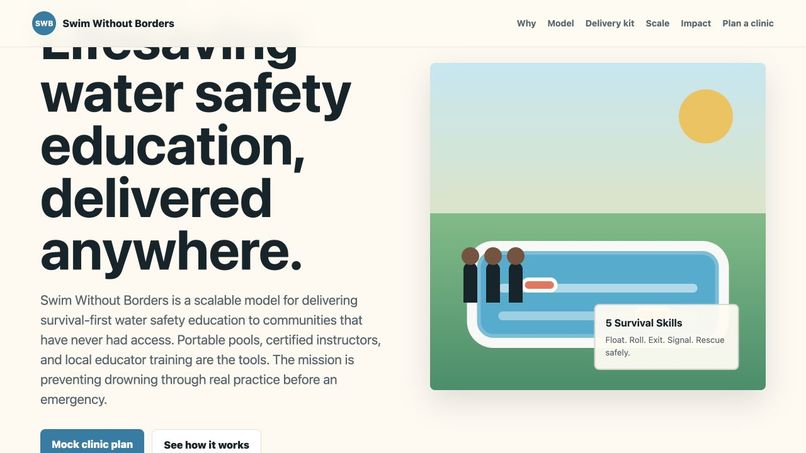
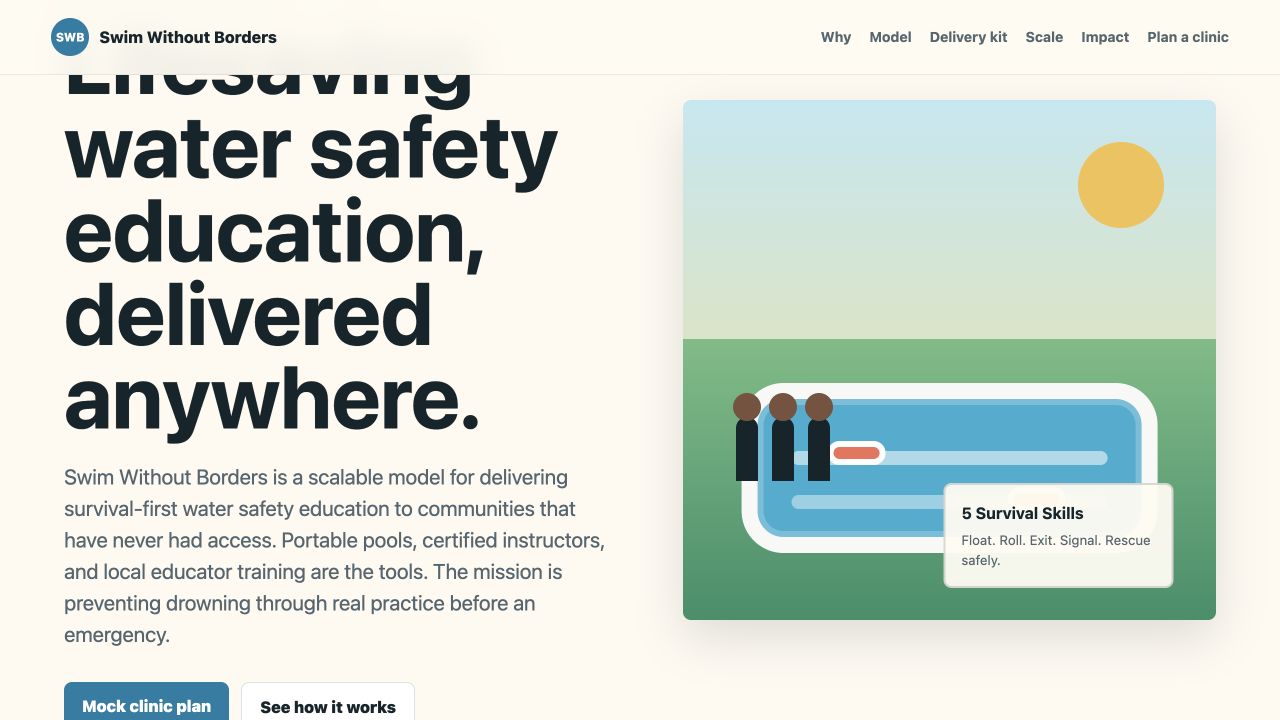
Swim Without Borders introduces survival-first water safety education that can be delivered anywhere.
-
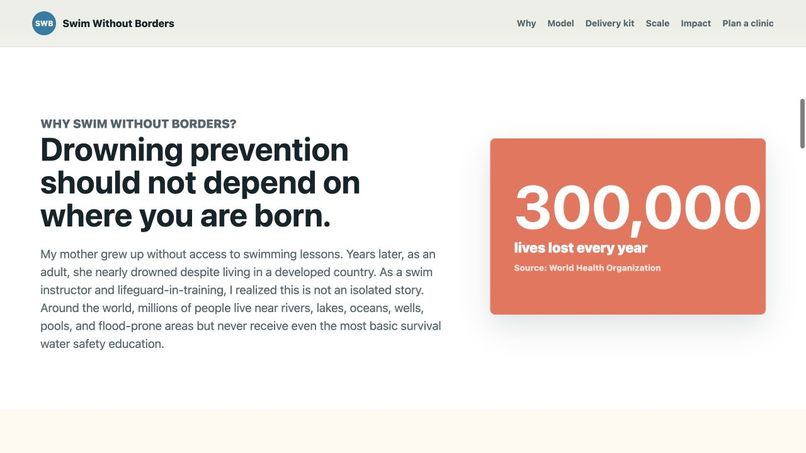
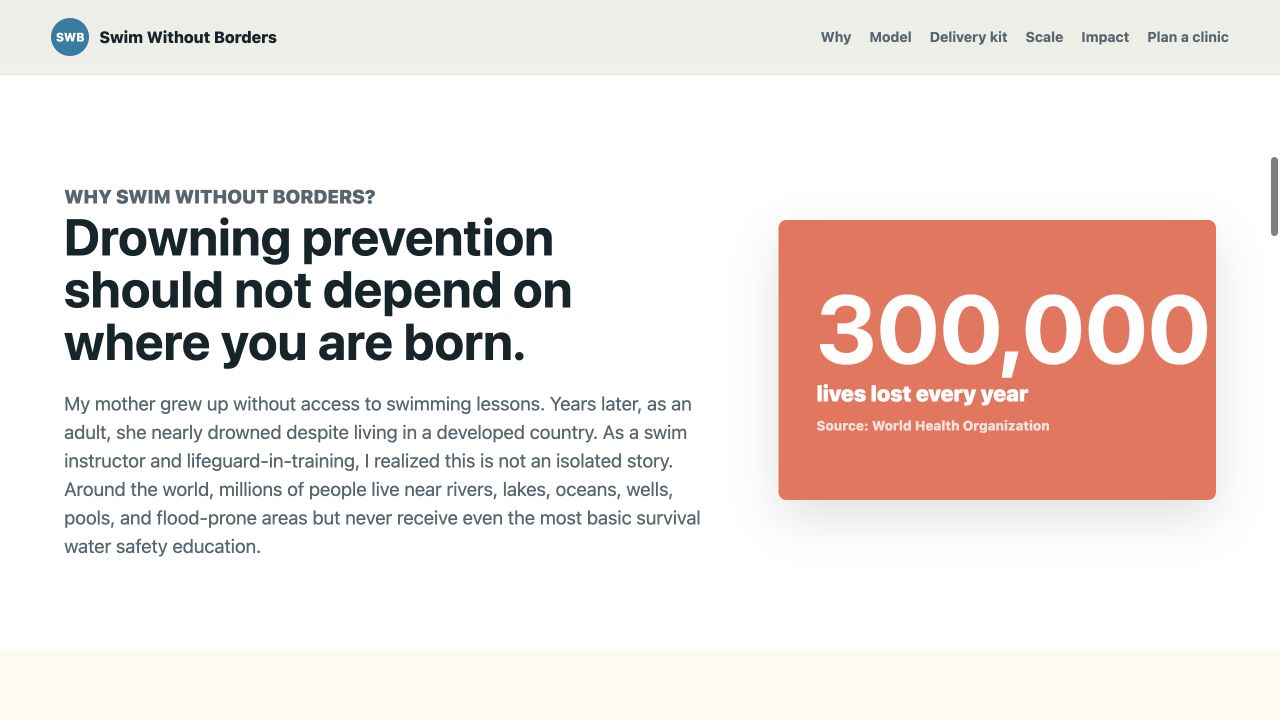
The founder story connects the mission to real access gaps, alongside the global drowning impact.
-
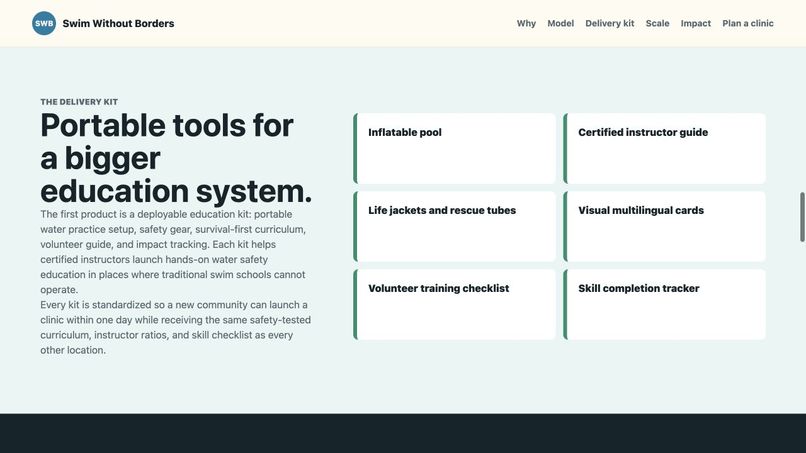
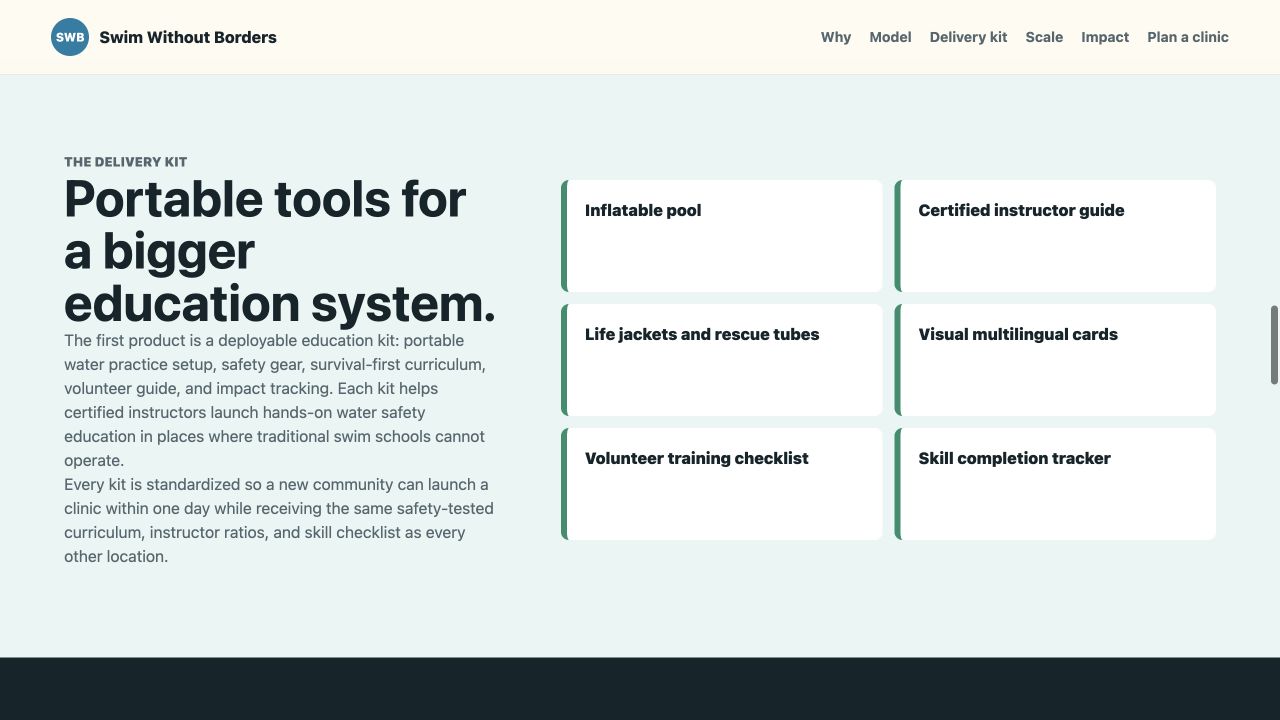
The standardized delivery kit makes each clinic repeatable, safe, and deployable in one day.
-
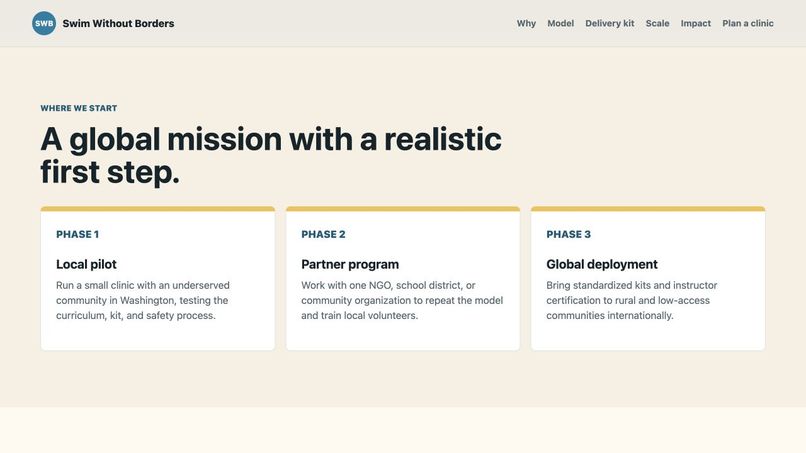
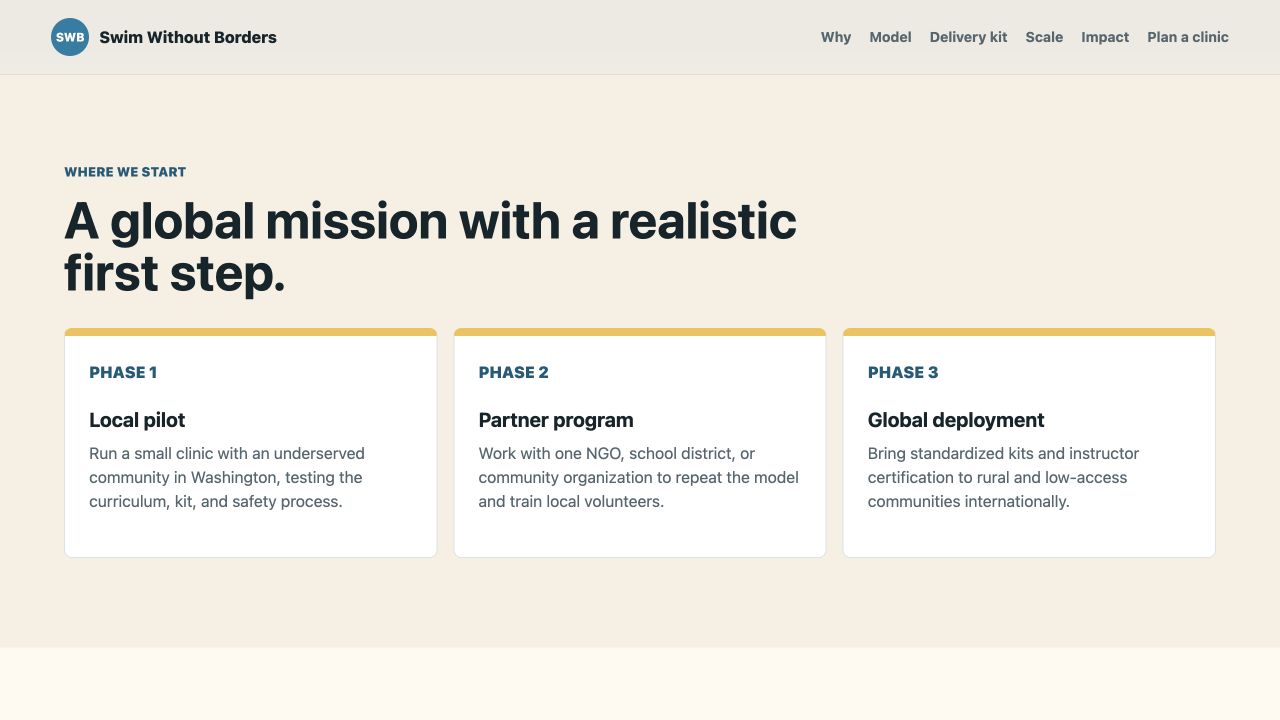
The phased rollout starts locally, then grows through partners and global instructor certification.
-
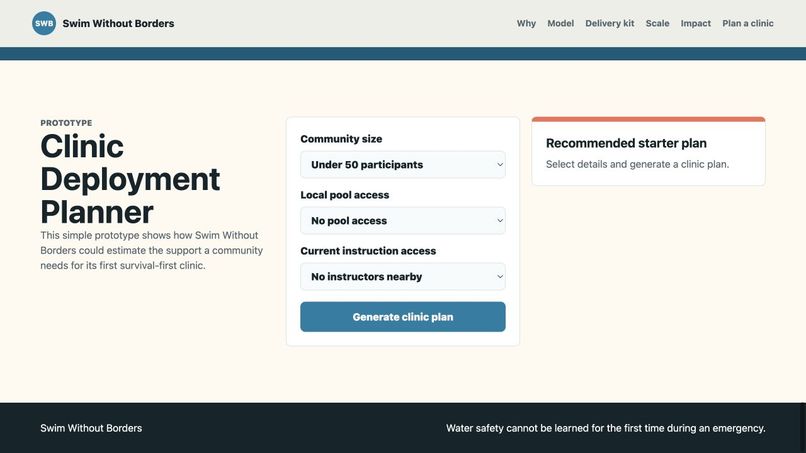
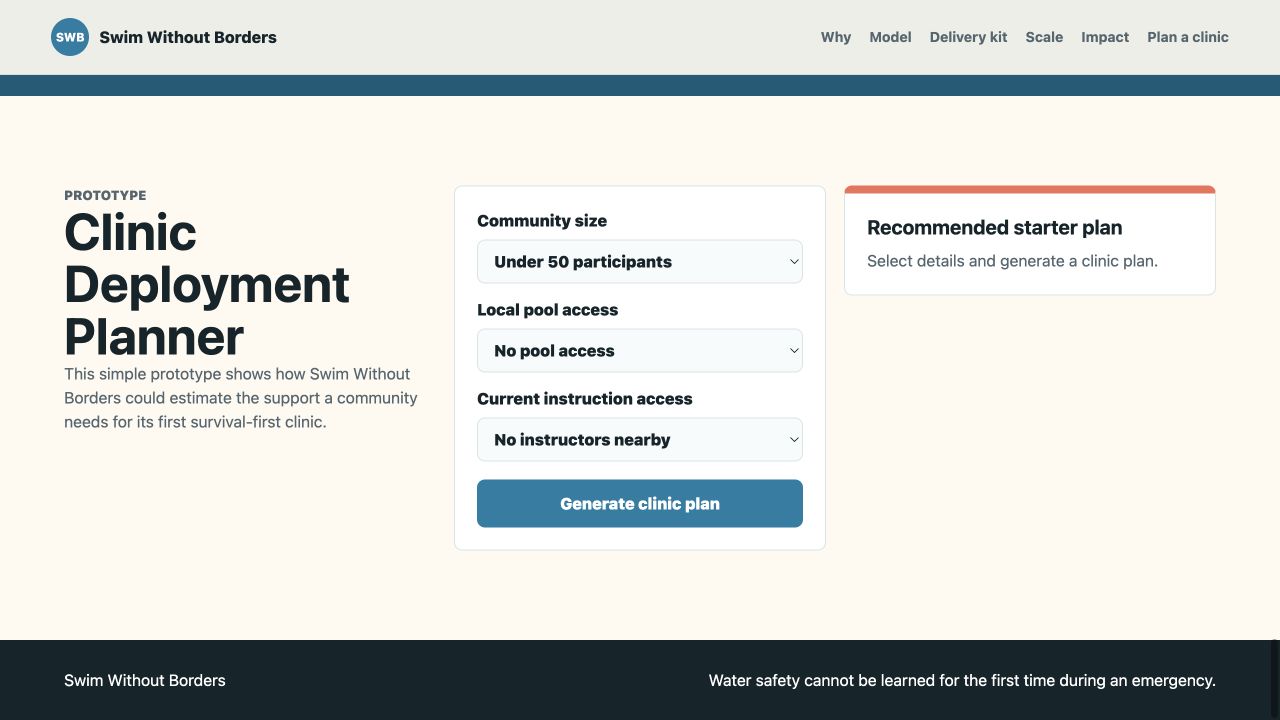
The Clinic Deployment Planner prototypes how communities could estimate resources for a first clinic.
Inspiration
Swim Without Borders started with my mom. She grew up without access to swimming lessons, and years later, as an adult, she almost drowned. Hearing her tell that story made me realize that something as basic as water safety isn't actually accessible to everyone.
That idea stuck with me even more after I became a swim instructor and lifeguard. Every day I teach kids who have the opportunity to learn in a safe environment, but I also started thinking about the millions of people who never get that chance simply because there isn't a pool, a swim school, or a certified instructor nearby. Water is everywhere, but water safety isn't.
Building the Project
I wanted to create something that focused on the most important goal: helping people survive an unexpected water emergency. Instead of traditional swim lessons that can take months, Swim Without Borders teaches simple survival-first skills like floating, rolling over to breathe, safely exiting the water, recognizing drowning, wearing a life jacket correctly, and calling for help.
I spent time researching drowning statistics, existing water safety programs, and how mobile services operate. From there, I designed a model that brings portable inflatable pools, instructors, safety equipment, and a standardized curriculum directly into underserved communities. I also built a website and an interactive Clinic Deployment Planner to show how the idea could realistically work.
What I Learned
One of the biggest things I learned is that solving a problem isn't just about having a good idea. It has to be realistic. I had to think about transportation, equipment costs, instructor training, partnerships, and how the program could continue after our team leaves.
That's why one of the biggest parts of Swim Without Borders became training local educators and community leaders. Instead of creating a program that depends on us forever, the goal is to leave behind the knowledge and resources for communities to continue teaching water safety themselves.
Challenges
The hardest challenge was making sure this wasn't just a volunteer project, but something that could actually become sustainable. I spent a lot of time thinking about who would fund the clinics, how they could scale, and how to make the biggest impact with limited resources. That changed the project from simply teaching swim lessons into building a long-term model for expanding access to water safety.
Looking Ahead
This project is still just the beginning, but I'm excited about where it could go. My hope is that Swim Without Borders can help make water safety something every community has access to, regardless of where they live or how much money they have. Learning to survive in the water shouldn't be considered a luxury; it should be a basic life skill.
Built With
- css
- html
- javascript
- netlify

Log in or sign up for Devpost to join the conversation.