-
-
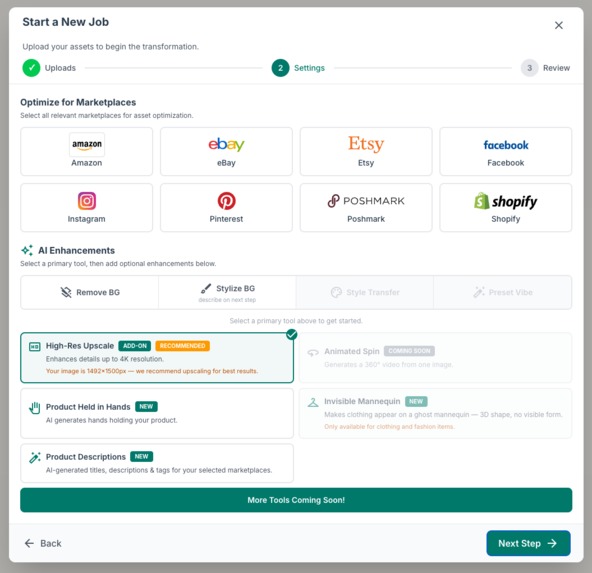
upload once, publish to multiple marketplces
-
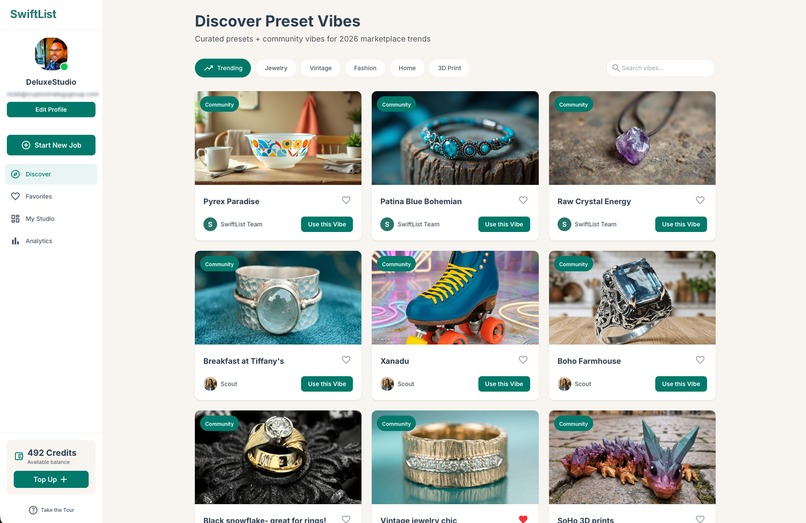
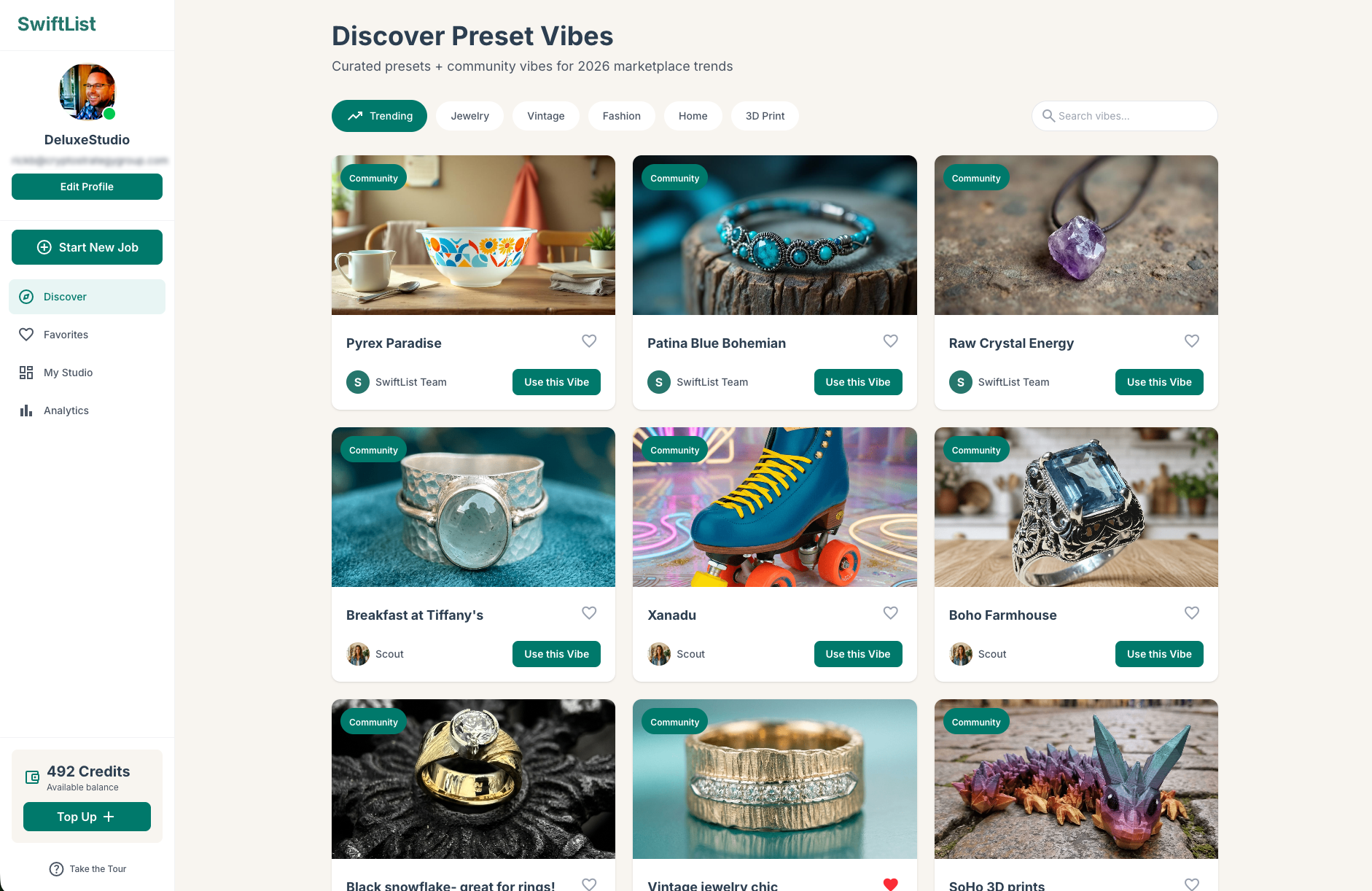
create preset 'vibes' for your product scene; use your own or someone else's
-
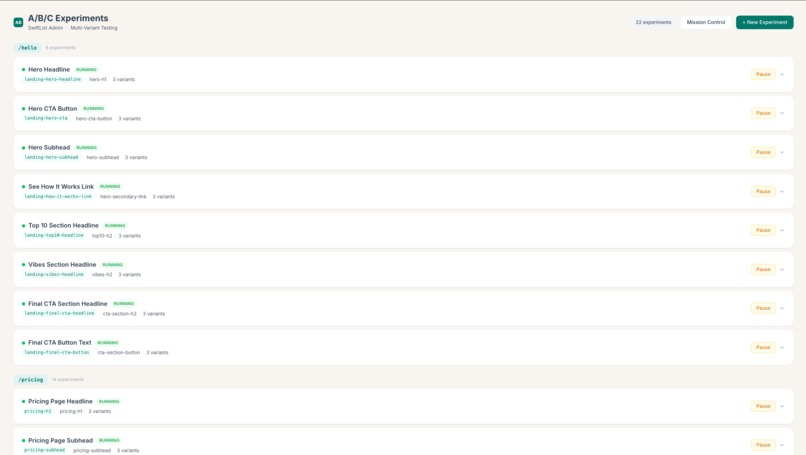
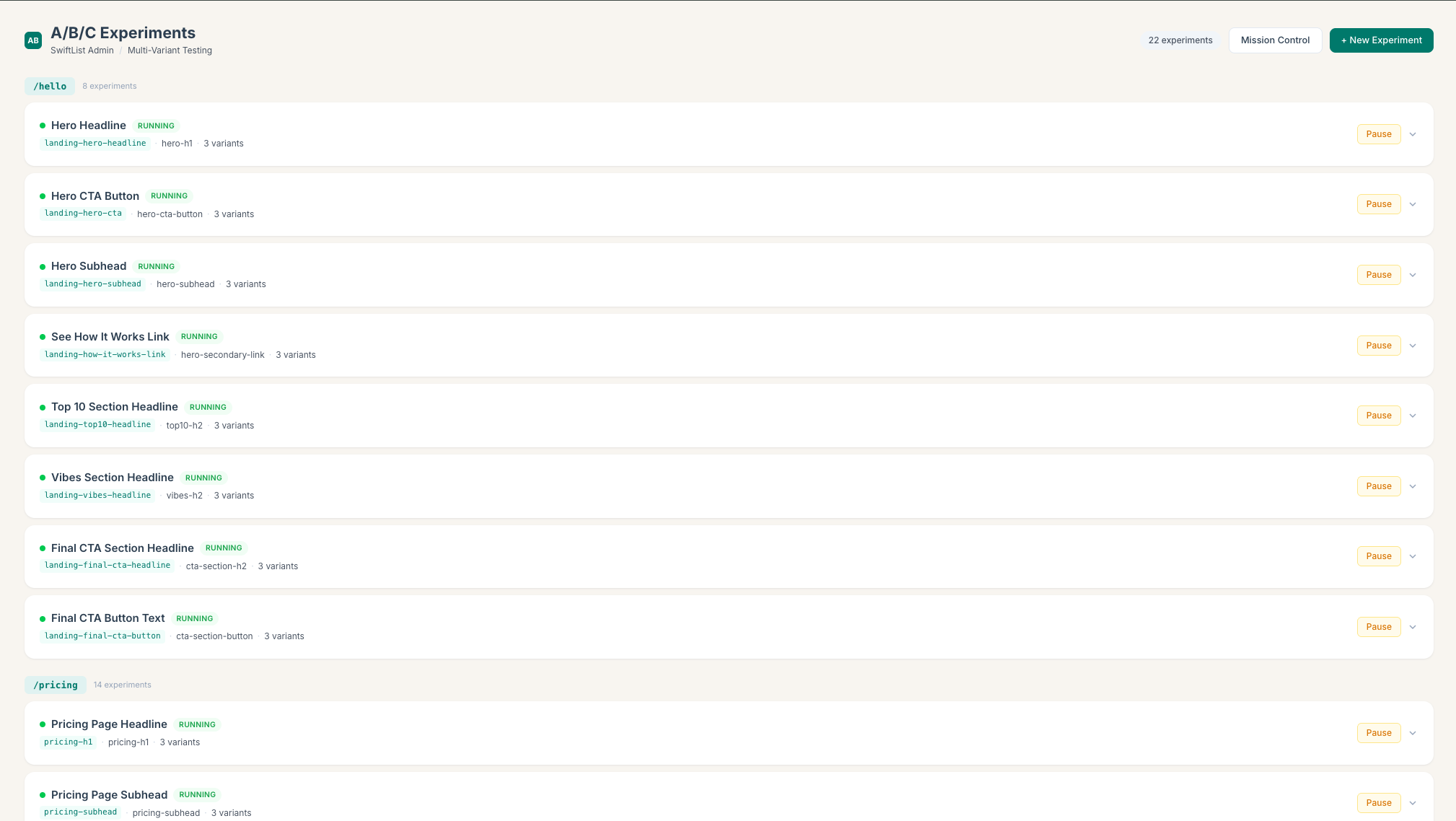
built an entire backend CRM dashboard (think Hubspot), an AI-lifeguard and A/B testing logic
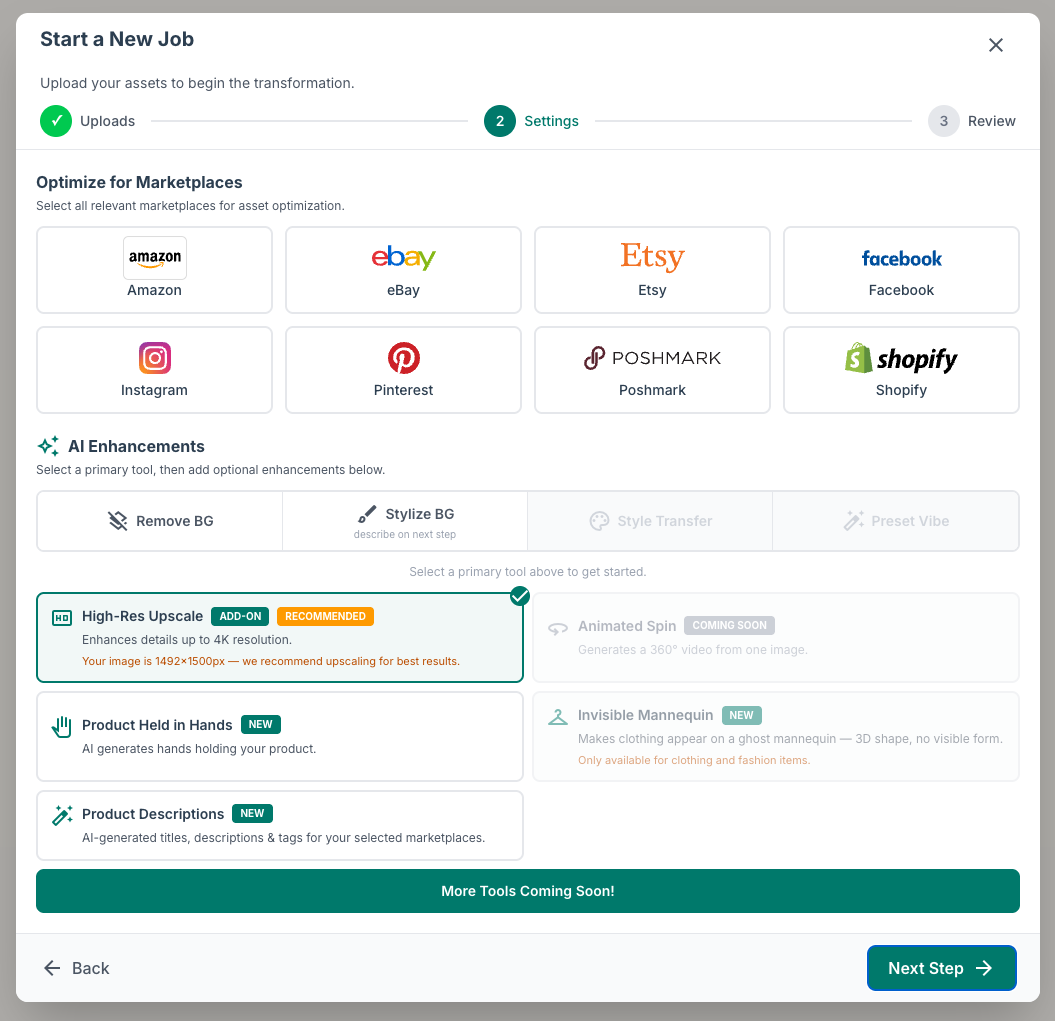
SwiftList — Hackathon Story
Inspiration
I spent 8 years at NIKE designing professional sports team identities. After that, I moved to Boulder and got involved with the TechStars community. There, I cofounded PressPay — a mobile payments startup built from 2010 to 2014, essentially Apple Pay before Apple Pay existed, acquired in 2014. In 2017, four years before anyone had heard of ChatGPT, I built ABBI — an AI-powered GTM system for a Bay Area cannabis company that drove a #1 Yelp ranking, three #1 Google search rankings, and $1M in revenue in year one.
I've always lived at the intersection of design and technology.
That instinct eventually led me to the maker economy — a $1 trillion industry being held back by friction nobody is solving. Sellers on Etsy, Poshmark, eBay, Amazon, and Shopify spend hours on two things that should take minutes: product photography and listing copy. Every platform requires different image sizes. Every marketplace has different copy requirements. Most sellers are doing this manually, five times over, for every single product they list.
I wanted to give every reseller their own virtual NIKE designer on demand.
What It Does
Upload one product photo. SwiftList does the rest.
The AI identifies what you've uploaded, removes the background, enhances the image, and drops it into a stylized lifestyle scene — then exports it perfectly sized for every marketplace: Amazon, eBay, Etsy, Facebook, Instagram, Poshmark, Shopify. It also generates platform-optimized product copy. One upload. Every platform. Done in under 60 seconds.
But that's not the best part.
Vibes are user-created visual presets — stylized scenes that give a product a specific mood, aesthetic, or setting. You can use your own Vibes or browse ones created by other sellers in the community. Here's where it gets interesting: every time another seller uses your Vibe, you earn free tokens.
That's a marketplace network effect built directly into the core product. The more sellers who join, the more Vibes exist. The more Vibes exist, the more valuable the platform becomes for everyone. Sellers are incentivized to create, share, and stay — not because we asked them to, but because the economics reward them for it.
How We Built It
Planning started in NotebookLM. Four notebooks, four purposes: one for vibe coding, one for GTM strategy and network effects, one for prompt engineering, and one that functioned as a virtual board of directors — a dedicated advisory layer to pressure-test decisions throughout the build.
Each notebook was paired with a Gemini Gem using the notebook as its knowledge base. Over three weeks, this stack — Google Workspace, NotebookLM, and Gemini Gems — produced the full planning layer: PRD, cost of goods, system architecture, and go-to-market strategy.
Google Stitch mapped the key UX flows and generated the initial layout, which became the structural foundation for the frontend.
Gemini APIs are the backbone of SwiftList's core functionality. Gemini analyzes every uploaded item to identify what it is before any processing begins. On the infrastructure side, a Gemini-powered "lifeguard" agent runs continuously behind the scenes — monitoring internal systems, watching for bugs and anomalies, and keeping everything stable as the platform scales.
The entire frontend and backend were built and shipped to production.
Challenges We Ran Into
Google Workspace friction. Reading and writing between spreadsheets, docs, and live Gemini conversations created more overhead than expected. What should have been fluid became a source of constant context switching.
Security. Finding and closing vulnerabilities in a fast-moving build is unglamorous work. We found them. We fixed them.
Rate limits and context windows. At scale, you hit ceilings fast. Managing rate limits across Gemini APIs while keeping the user experience seamless required careful architectural decisions throughout the build.
Accomplishments We're Proud Of
We shipped the full stack. Frontend, backend, AI pipelines all live and running in production.
The network effect is real. The Vibes marketplace isn't a feature bolted on for demo day. It's the defensible moat. We're not aware of many vibe-coded apps that launched with genuine network effects thinking baked into the core product mechanic from day one.
The unit economics work. Gemini makes this affordable to run at scale in a way that other AI providers simply don't. That's not a footnote, it's a structural competitive advantage built into every transaction on the platform.
What We Learned
If I built this again, I'd be more disciplined about tools from the start. The AI landscape is loud — every shiny object costs you a day. Knowing exactly which three tools to use and ignoring everything else is its own hard-won skill.
The other thing I underestimated: marketing is the hard part. Building a working AI product is achievable. Getting the right sellers to see it, trust it, and actually change their daily behavior around it — that's the real challenge. And it starts on day one, not after launch.
What's Next for SwiftList
The MVP went live this week. The network effect is in market. Now it's about velocity...get real sellers using it, collect signal fast, and iterate. The feedback loop between a seller's first upload and a shipped improvement is where the next version of SwiftList gets built.

Log in or sign up for Devpost to join the conversation.