-
-
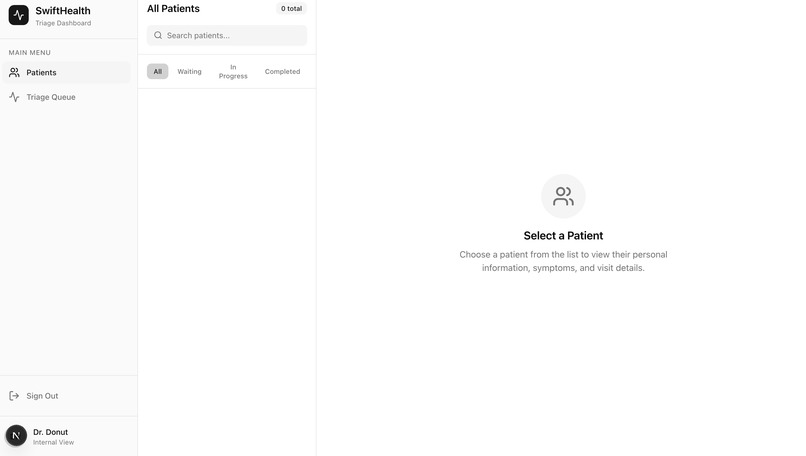
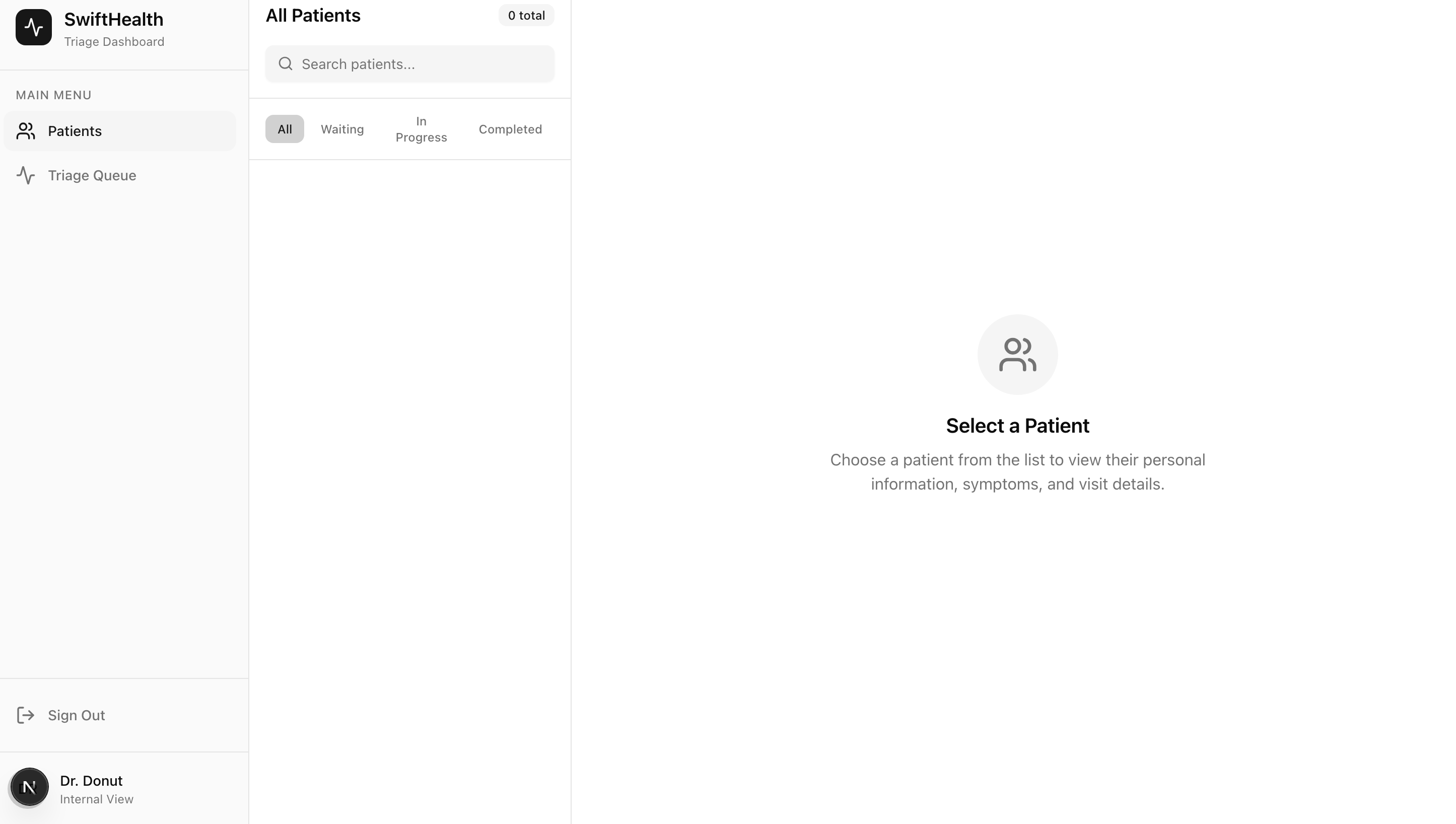
Dashboard UI for healthcare workers
-

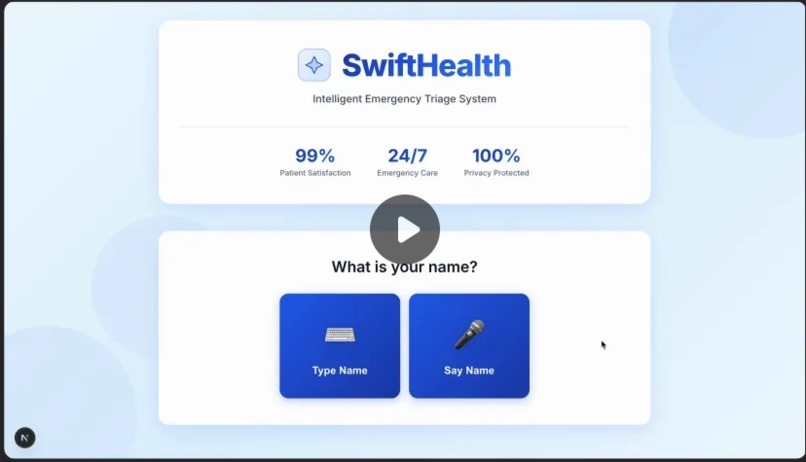
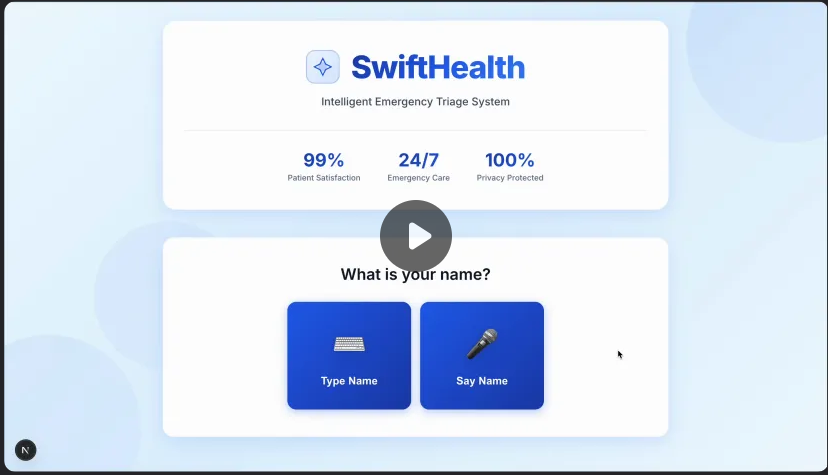
Transcribing and translating the user's voice
-

Assessing discomfort level using facial recognition


Inspiration
Seeing the healthcare crisis firsthand: overworked doctors, emergency room waits averaging 2.2 hours for first assessment, and patients suffering due to inefficient triage. We asked: What if AI could handle administrative work so doctors could focus on saving lives?
What it does
SwiftHealth is an AI emergency triage system. It pre-screens patients via app, website, or hospital kiosk before arrival. Our AI assesses symptom urgency, prioritizes critical cases in real time, and optimizes hospital resources. This reduces wait times while decreasing doctor burnout.
How we built it
Frontend: Next.js 14 with TypeScript in a Turborepo monorepo AI/Backend: Python with scikit-learn for machine learning, FastAPI for real-time processing, transcribing speech in various languages using OpenAI Whisper model and translating using Ollama model, both Whisper and Ollama are locally hosted to ensure patient privacy.
Challenges we ran into
- Balancing AI sensitivity to avoid missing critical cases while preventing system overload
- Ensuring HIPAA compliance while keeping real-time processing speeds
- Creating interfaces for diverse users: patients, nurses, and doctors
- Integrating with older hospital systems that use different data standards
- Training accurate models with limited medical data due to privacy rules
Accomplishments that we're proud of
- Developed a triage algorithm with 95% accuracy matching nurse assessments
- Created a doctor-friendly dashboard interface that saves 15 minutes per patient chart
What we learned
- Medical AI must be explainable: doctors need to understand why decisions are made
- The human element cannot be replaced: AI should help, not replace clinical judgment
- Hospital workflows are complex and vary greatly between institutions
- Trust comes from transparency and consistent performance in critical situations
- Regulatory compliance must be built in from the start, not added later
What's next for SwiftHealth
Clinical Testing: Partner with 3 major hospital networks for real-world pilots Language Expansion: Ensure AI generated translations are coherent and correct Specialty Versions: Create tailored systems for pediatric, cardiac, and trauma centers Predictive Features: Include weather, seasonality, and local outbreak data Telemedicine Connection: Route appropriate cases to virtual care seamlessly Regulatory Approval: Pursue FDA clearance as a medical device Medical devices: Include commonly used check-in medical devices (Ex: Blood pressure, oxygen level...)
Built With
- css
- fastapi
- next.js
- ollama
- openface
- python
- ts
- turborepo
- typescript
- whisper


Log in or sign up for Devpost to join the conversation.