-
-

Widget SDK on mobile
-
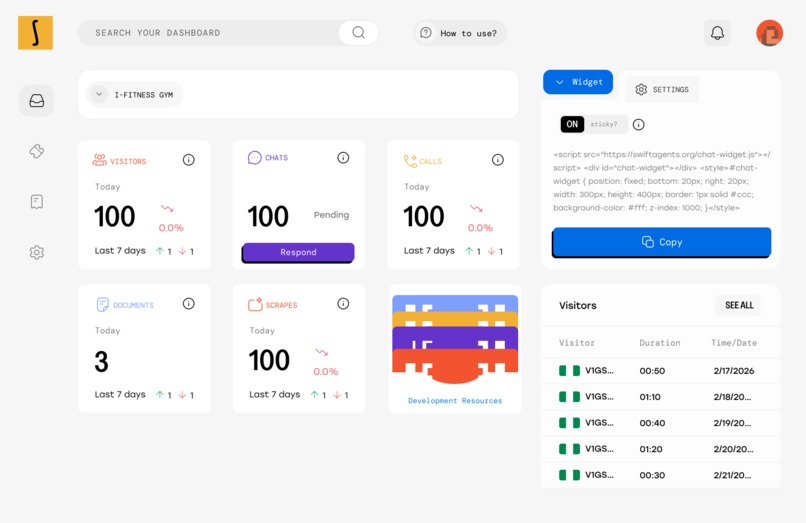
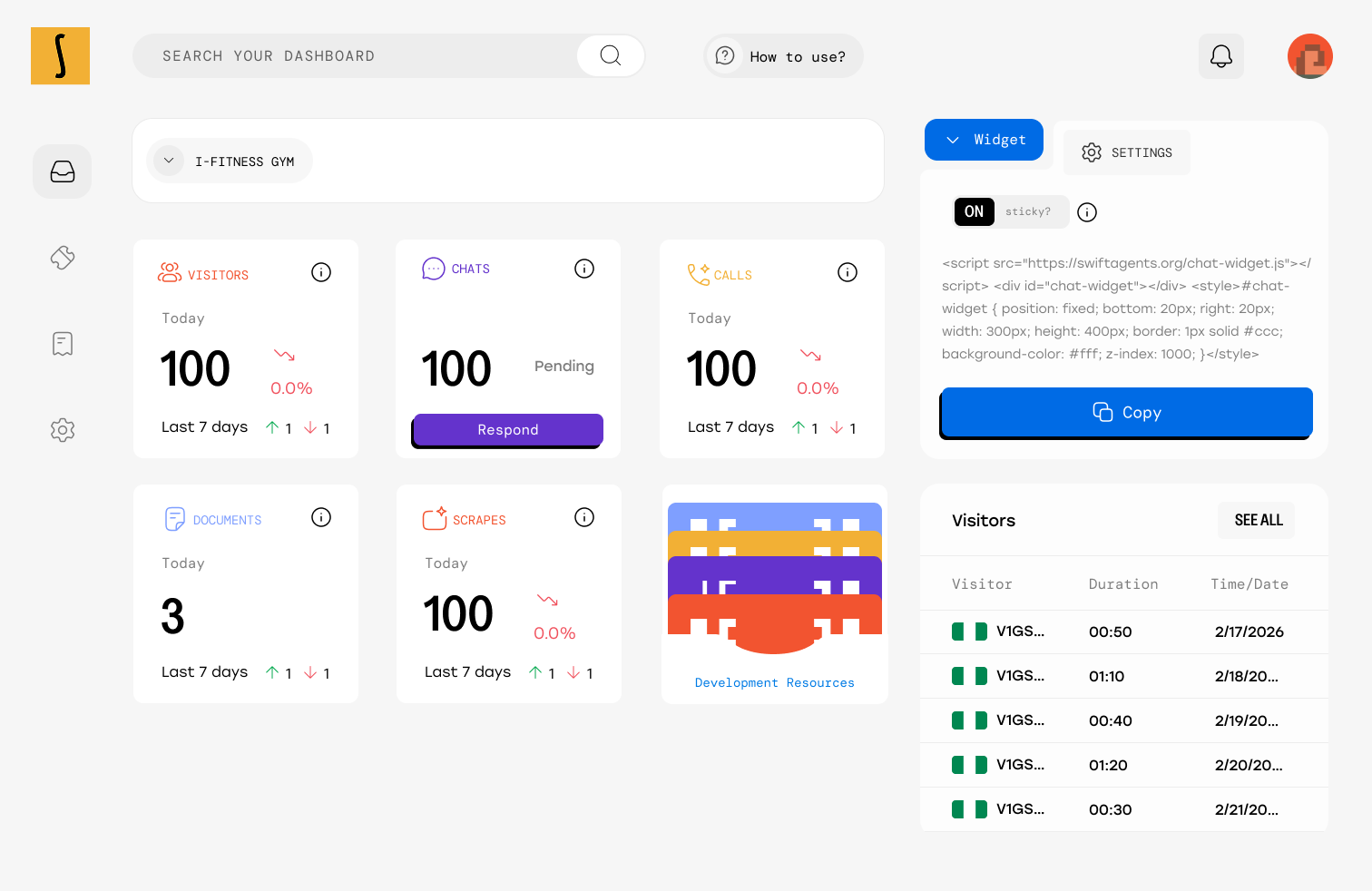
Dashboard
-
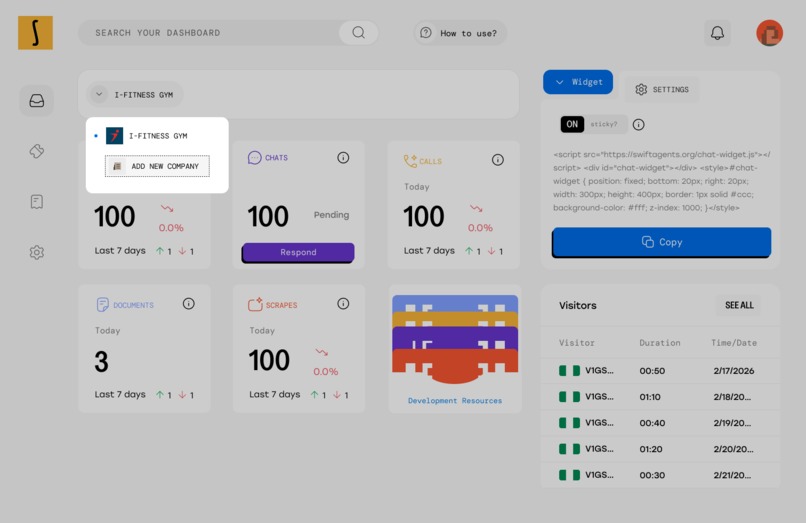
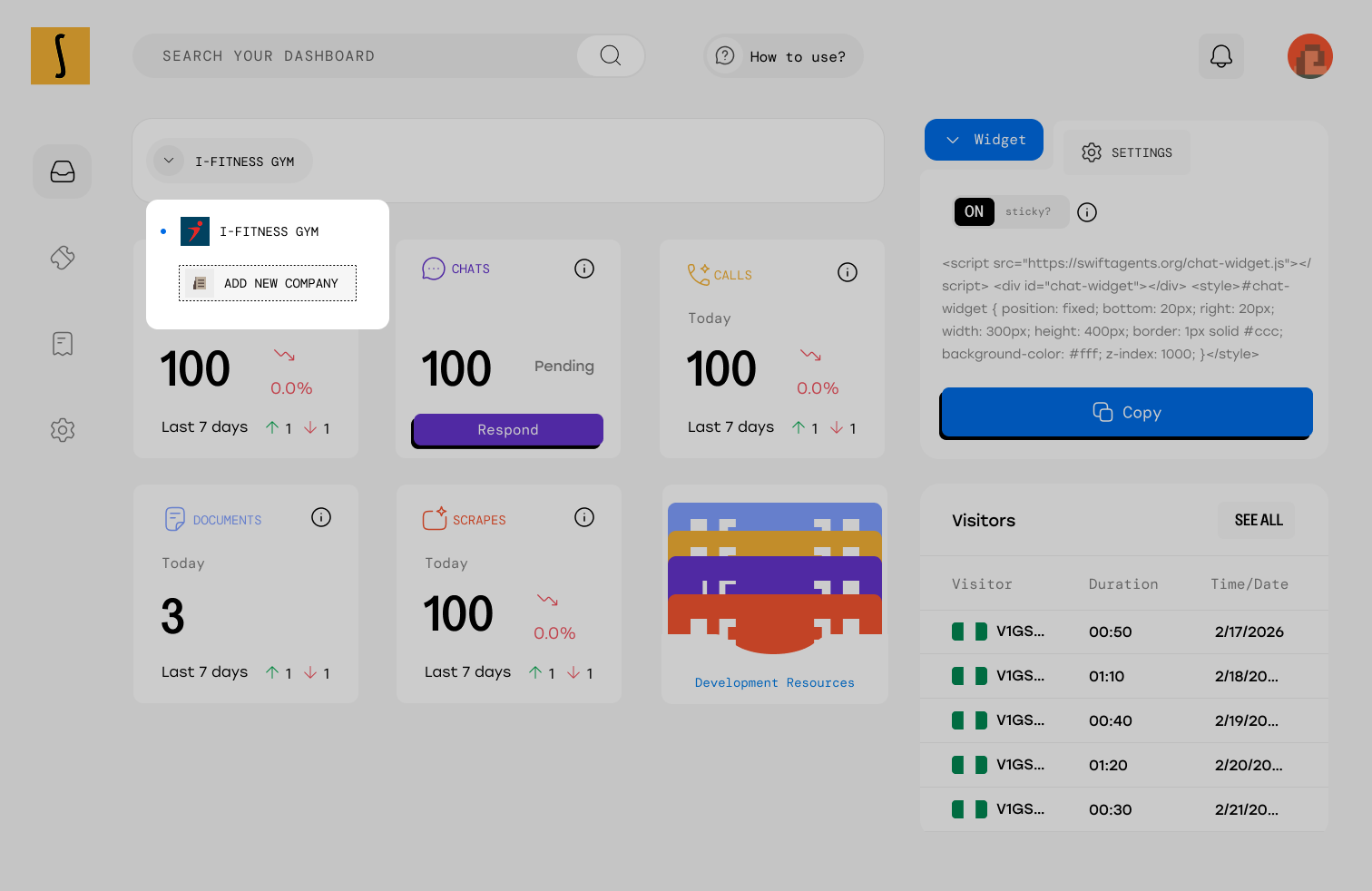
Add a new company
-
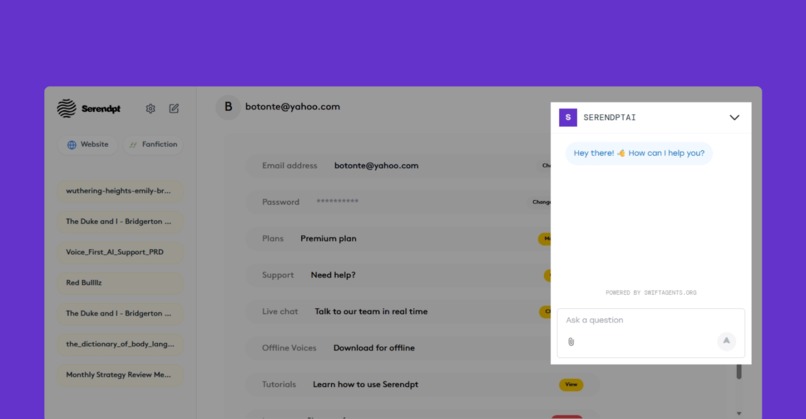
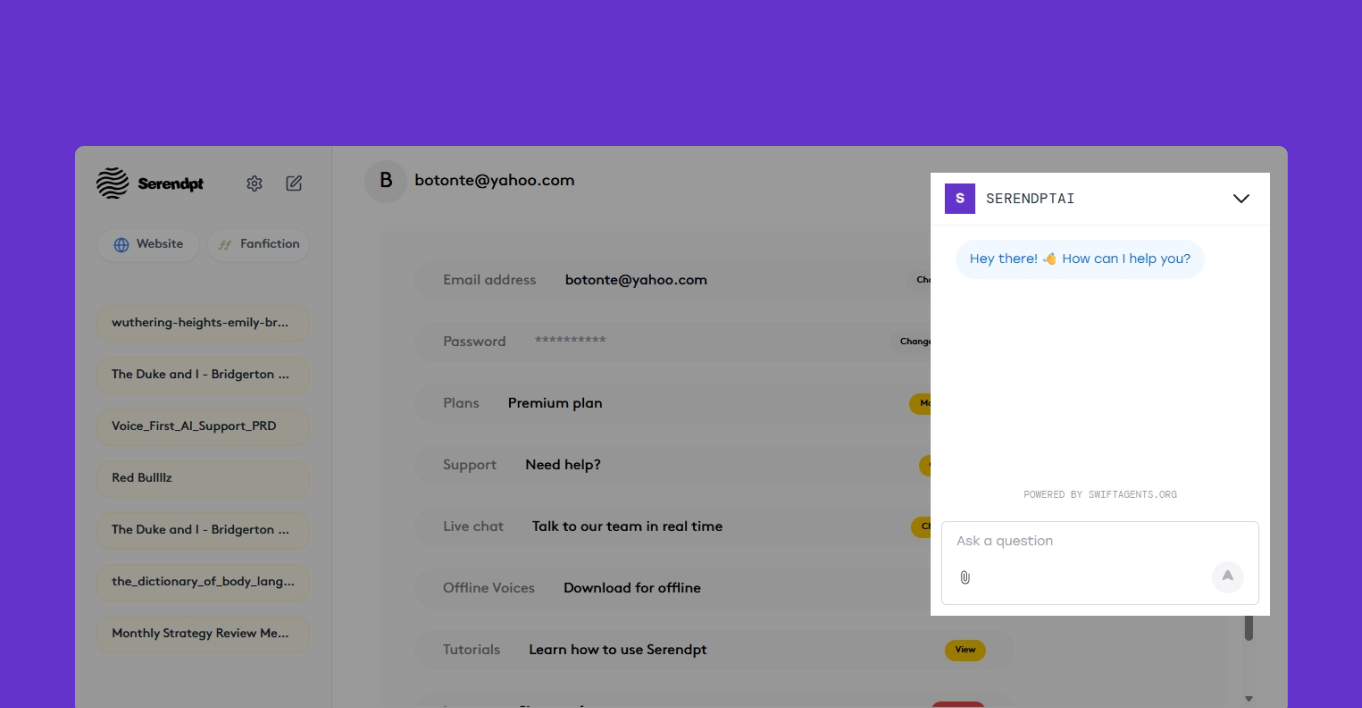
Widget on a dashboard
-
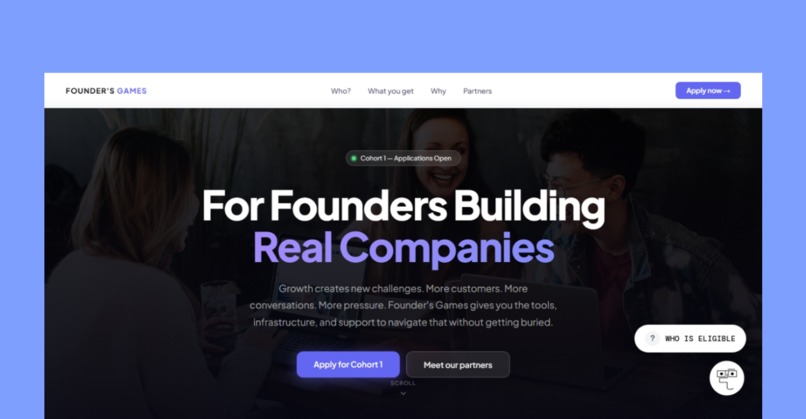
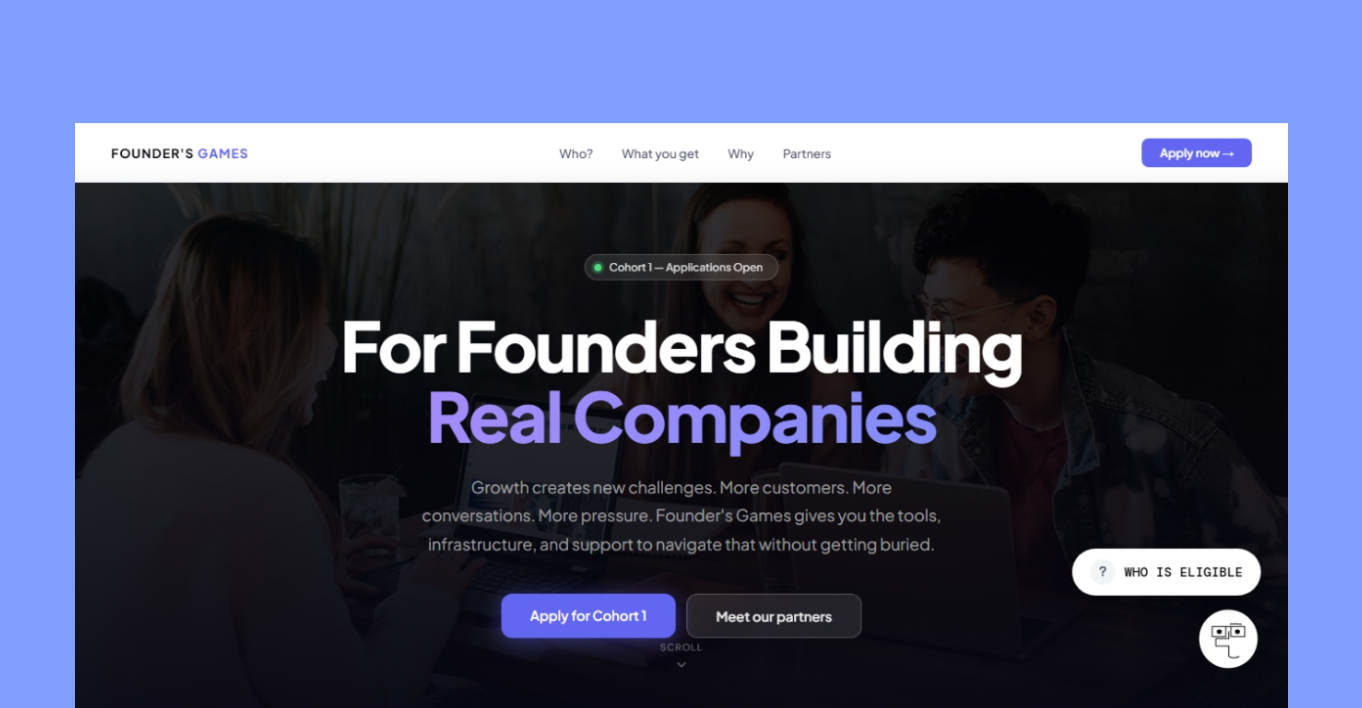
Widget on a website

Inspiration
Swift Agents grew out of a problem I'd already lived through once. My first startup, Blarbar, reached roughly 150,000 users before it closed, and one of the quiet, unglamorous reasons growth got harder was support. Customers reached out across every channel imaginable, and answering them well took more hands than we had.
Years later, building SERENDPT AI around a longstanding interest in African digital infrastructure sovereignty, I kept hearing the same complaint from founders across fintech, logistics, and e-commerce: customer support was scattered across WhatsApp, Instagram, X, and email, most of it was repetitive, and every AI tool that claimed to fix it wanted weeks of developer integration first. We ran a workflow survey to confirm this wasn't just our own experience, and the numbers backed it up: respondents estimated 45-80% of their inquiries were repetitive, and the majority said they'd pay for a solution that actually worked, if only setup didn't require an engineering project. That gap, between what businesses needed and what was actually accessible to them, is what Swift Agents was built to close.
What it does
Swift Agents is an AI customer service SDK. A business connects its existing docs, FAQs, and website content, and the platform trains itself and goes live within hours, no API documentation or developer integration required. Once live, it unifies conversations across website, web app, mobile, and social channels including WhatsApp into a single trained agent, automating around 70% of common tier-1 inquiries.
How we built it
The system is modular by design:
- Swift Agents-Core is the foundational SDK everything else plugs into.
- Agent-007 handles navigation mapping, giving the AI a structural understanding of a client's product.
- Agent-47 does on-demand scraping, pulling live information instead of relying on a static, quickly-stale knowledge base.
- Passive Observation Onboarding** is the piece I'm proudest of. Instead of asking a client's engineers to expose API documentation, the system learns the product by observing it directly, which is what makes the "live in hours" promise possible.
- Feature Finder V2 is the technical core of the whole system: server-side BFS graph building combined with $A^*$ pathfinding, which lets the agent guide a user to the exact feature or screen they need inside any React Native or Flutter app, not just answer a question about it. We also built out mobile SDK specs across Flutter, React Native, and Kotlin, and explored a social media management module (evaluating Zernio and Ayrshare) to bring native WhatsApp support into the same dashboard as everything else.
Challenges we ran into
The hardest technical problem was Feature Finder V2 itself: building graph-based pathfinding that works reliably across arbitrary app structures, without the manual menu-mapping most navigation tools depend on. Getting BFS graph construction and $A^*$ pathfinding to generalize across different apps, rather than being hand-tuned per client, took real iteration.
The harder, less technical challenge has been funding. Investor constraints have made our capital inconsistent, which has made it difficult to commit to a sustained marketing push, hire a full sales team, or plan infrastructure upgrades on a fixed timeline. Instead of executing a steady growth plan, we've often had to scale effort up and down based on whatever funding was available that month, which slows down exactly the kind of momentum a product like this needs to compound.
Accomplishments that we're proud of
Building a working pathfinder SDK that lets users find any feature inside a React Native or Flutter app, regardless of how it's structured, is the achievement we're proudest of. Using server-side BFS graph building combined with $A^*$ pathfinding, we solved a problem most support and product teams treat as unsolvable: guiding a user directly to the exact screen or feature they need, without pre-mapped menus or manual documentation. This became the foundation of Feature Finder V2, and it's the core technical differentiator that separates Swift Agents from support tools that only answer questions instead of actually navigating users to solutions.
We're also proud of validating real demand before over-building: our customer service workflow survey of founders across fintech, logistics, and tech, including Opay, Ecobank, Cencori, Brydge, and Money Africa, confirmed that 45-80% of customer inquiries are repetitive and that most respondents were willing to pay $20-35/month for a solution like ours, with several requesting early access outright.
On the team side, our technical co-founder Jimoh has won multiple AI hackathons, and co-founder Chukwuebuka previously worked as an AI engineer at a YC-backed startup and has also won multiple AI hackathons, giving the team a track record of shipping strong technical work under pressure.
What we learned
Two things stood out. First, the technical unlock isn't just "AI that answers questions," it's AI that can be trusted to navigate a product the way a human support agent would, which only became possible once graph-based pathfinding techniques (long used in mapping and routing) could be applied to app structure itself. Second, and just as important: founders don't actually want more features, they want speed to value and one unified place to manage support. Every business we talked to had already tried stitching together two or three tools; what they wanted was one system that just worked, out of the box, without asking their engineering team for help.
What's next for Swift Agents
Our immediate next step is fully building out the social media management module, folding channels like WhatsApp, Instagram, and X natively into the same dashboard as forms, so businesses manage every conversation from one place instead of stitching tools together themselves.
Alongside that, we're finishing the remaining sales and marketing push: hiring a dedicated four-person sales team to pursue enterprise-level companies, increasing adspend to generate and track qualified leads, and upgrading our AI infrastructure to handle higher conversation volumes as we onboard larger clients. We're also working to move past inconsistent, investor-dependent funding toward a more predictable capital base, so we can execute a fixed growth plan instead of reacting month to month.
Longer term, Swift Agents stays true to SERENDPT AI's broader mission of building African digital infrastructure, expanding beyond our current fintech, e-commerce, and logistics customers into other support-heavy sectors across Nigeria and the continent, with a target of reaching profitability and self-sustainability by July 2027.

Log in or sign up for Devpost to join the conversation.