-
-
Sweet Ol' Memories Logo
-
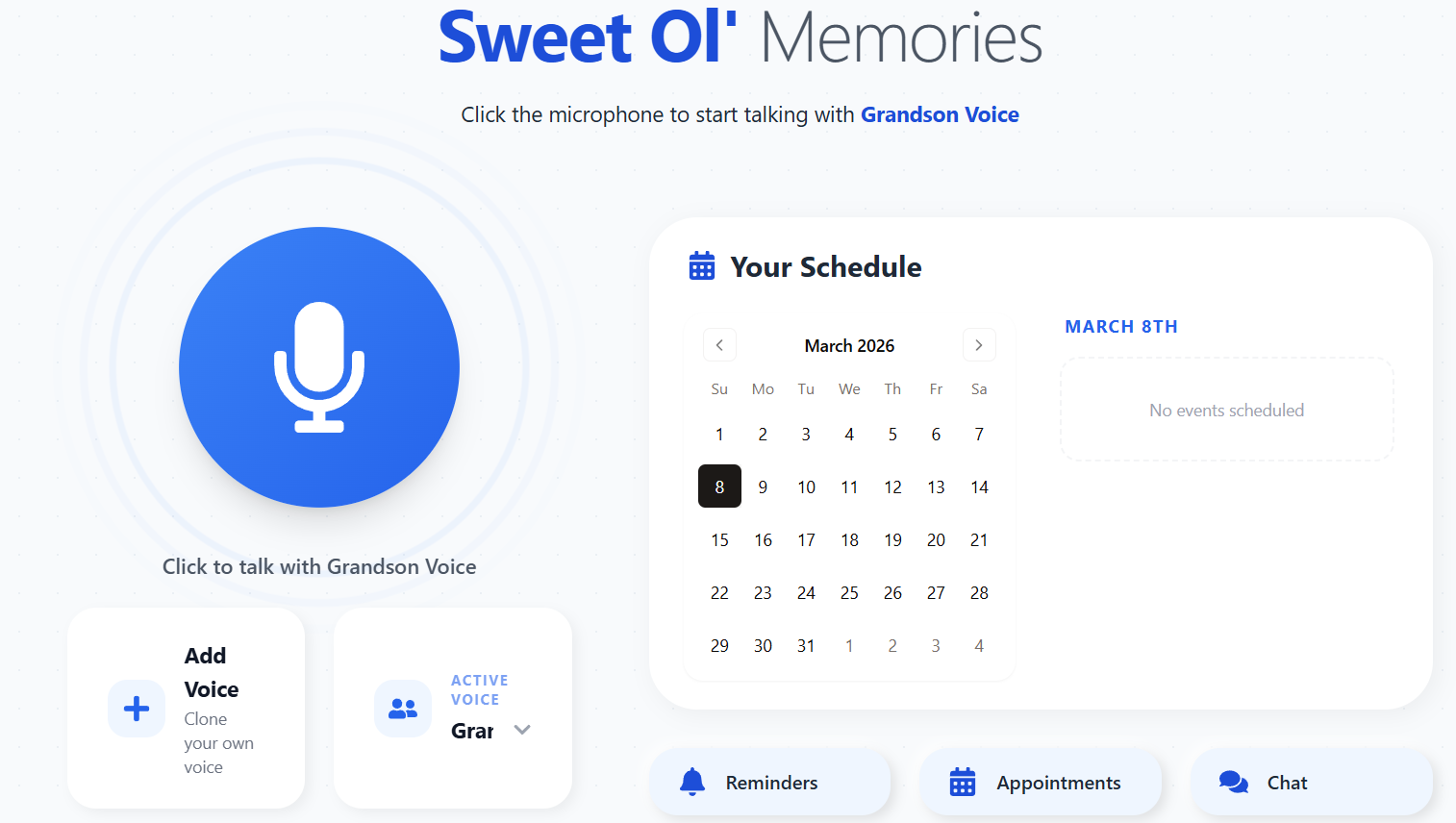
Home Page
-
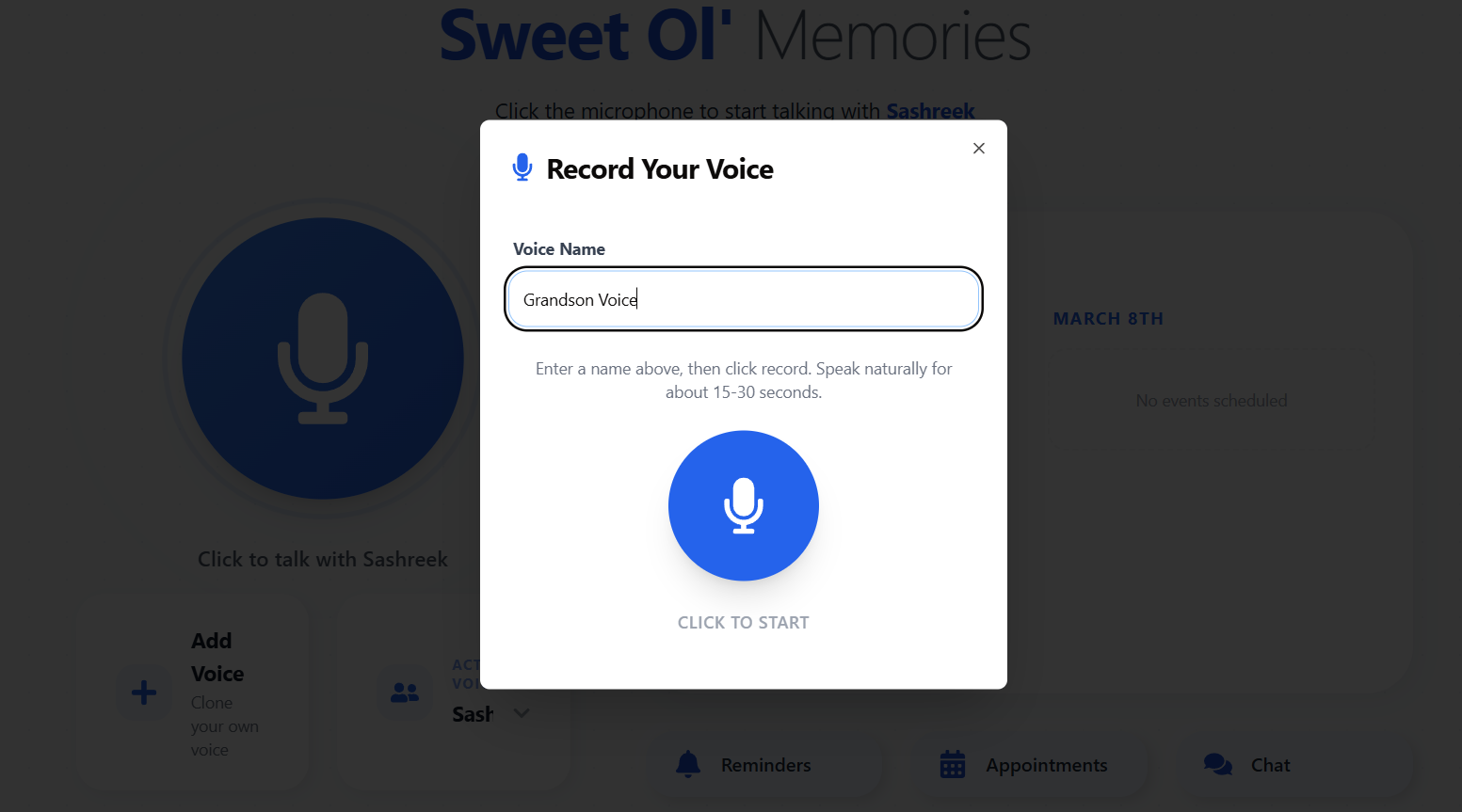
Add Voice
-
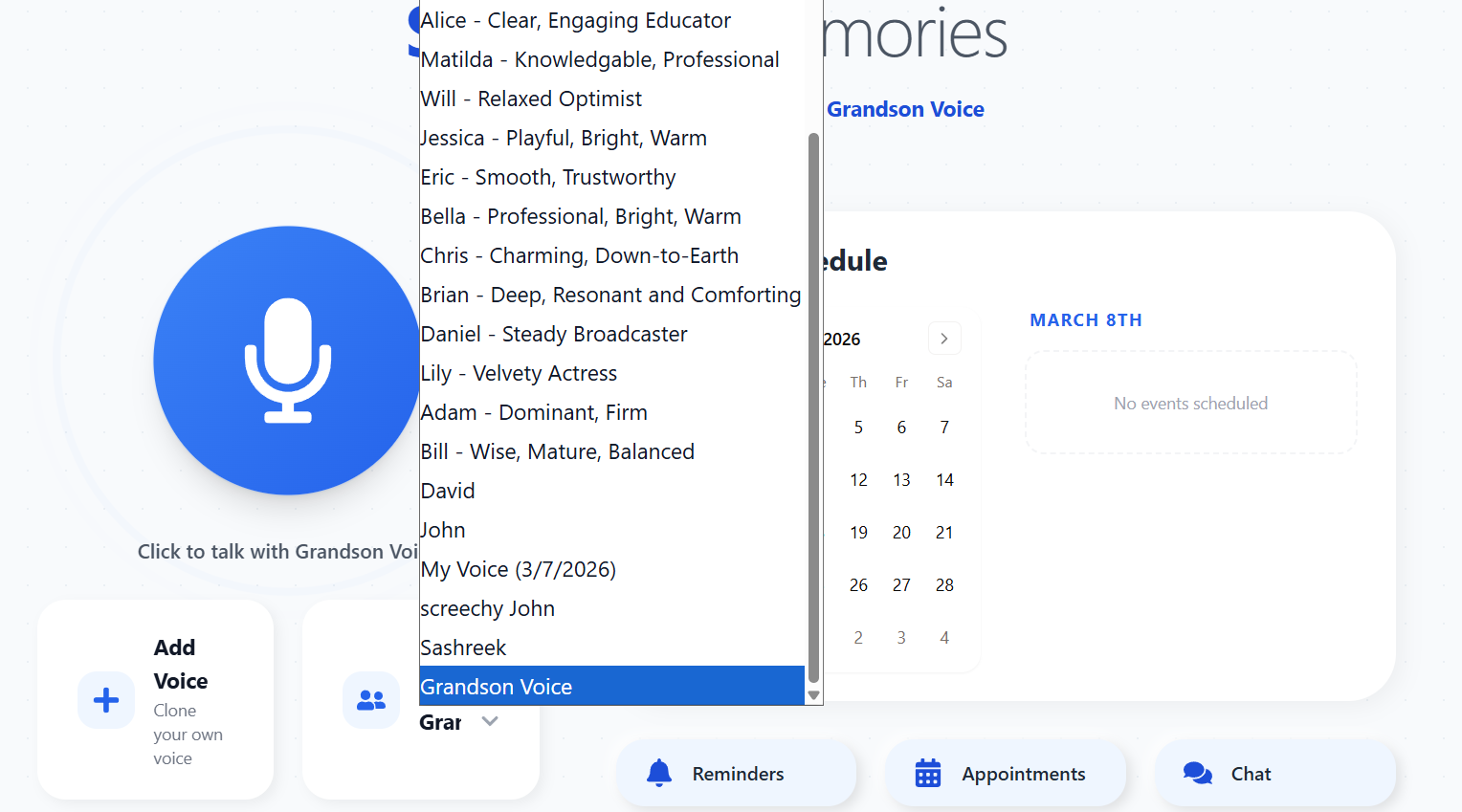
Select Voice
Inspiration
Both of us grew up very close to our grandparents, and we have volunteered at retirement homes. During those experiences, we noticed a common issue: many seniors struggle with loneliness and memory loss, especially those living with dementia or Alzheimer’s. We often saw elders become distressed when they couldn’t remember or hear from their children and loved ones.
Research shows that familiar voices can trigger strong emotional and memory responses for people with dementia. This inspired us to build a system that could bring comforting, recognizable voices back into daily interactions while also helping seniors manage everyday tasks. Our goal was simple: use AI to restore connection, comfort, and independence for elderly users.
What it does
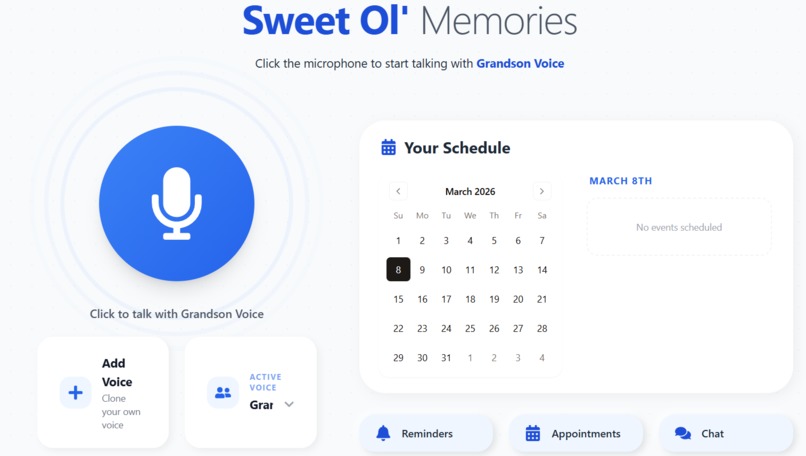
Sweet Ol' Memories is an AI-powered voice companion designed to support seniors in their daily lives. Users can talk naturally with the assistant, which helps manage routines and provides companionship.
The system can remind seniors to take medication, schedule appointments, and provide helpful updates like weather or daily reminders. It can also send alerts in emergency situations.
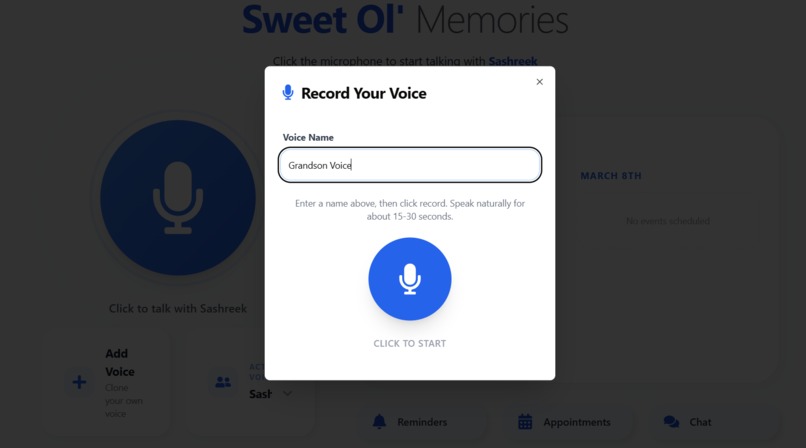
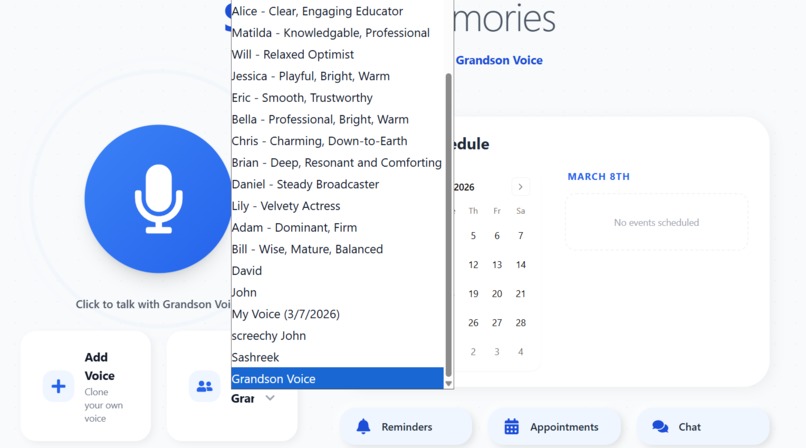
One of the most unique features is voice cloning. A family member can record a short 15–30 second audio sample, and the system can replicate that voice when speaking to the user. This creates a familiar and comforting experience for seniors, especially those experiencing dementia, whose brains often respond strongly to recognizable voices.
By combining practical assistance with emotional connection, Sweet Ol' Memories helps seniors stay organized while reducing feelings of loneliness.
How we built it
We built Sweet Ol' Memories using a modern full-stack architecture designed for real-time voice interaction. The application was built with Next.js and React, using Tailwind CSS to create a clean and accessible interface suitable for elderly users.
The voice interaction system was powered by ElevenLabs, which handled real-time speech recognition, natural voice responses, and voice cloning. To interpret natural language commands like “remind me tonight,” we used OpenAI’s GPT-4o-mini model to convert spoken phrases into precise timestamps that the system could schedule. Reminder tasks were stored in a PostgreSQL database and scheduled using Upstash QStash to ensure notifications trigger reliably even if the user closes the application.
Challenges we ran into
One major challenge was designing a system that seniors could use easily. We had to carefully simplify the interface and prioritize accessibility, using clear layouts and large visual elements. Another challenge was ensuring reliable voice interaction. Seniors may speak slowly or softly, which made speech recognition accuracy an important problem to solve.
Accomplishments that we're proud of
We are proud that we built a working prototype that integrates multiple AI technologies into a single, user-friendly system. The platform successfully supports real-time voice conversations, automatic reminders, and personalized voice cloning.
Most importantly, we created a project that demonstrates how AI can be used for meaningful social good by improving quality of life for elderly users.
What we learned
This project taught us the importance of user-centered design, especially when building technology for seniors. Simplicity and accessibility are just as important as technical capability.
We also learned how powerful modern AI tools can be when combined together, allowing small teams to rapidly build complex, impactful applications.
What's next for Sweet Ol' Memories
In the future, we want to expand Sweet Ol' Memories with additional safety and personalization features. This includes emergency voice dialing, automatic caregiver alerts, and smarter AI that learns user habits and preferences over time.
We also plan to bring in more seniors for real-world testing to make sure Sweet Ol’ Memories truly meets their needs.
Built With
- antigravity
- javascript
- next
- openi
- qstash
- react
- tailwind
- typescript

Log in or sign up for Devpost to join the conversation.