-
-
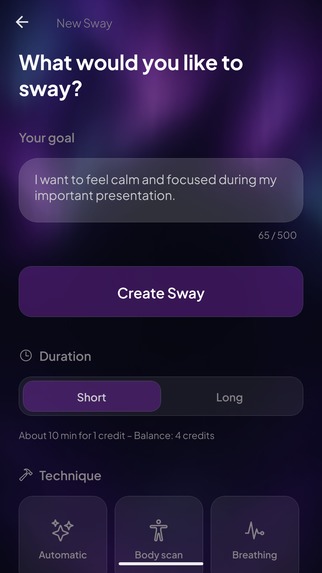
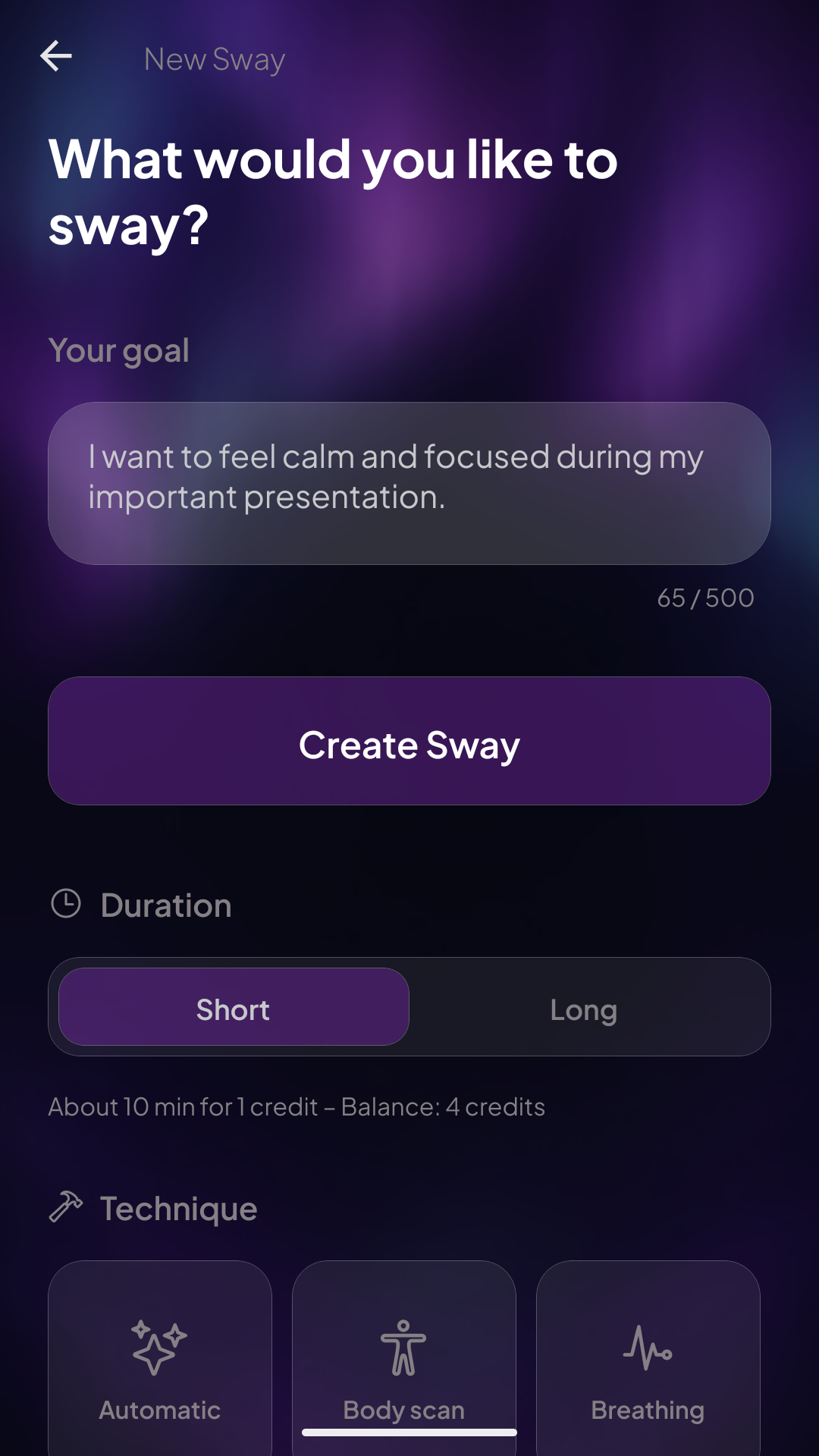
Describe what you want to work on, choose a technique, and create a meditation tailored to your goal.
-
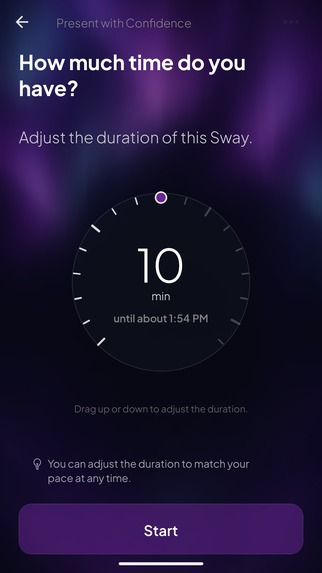
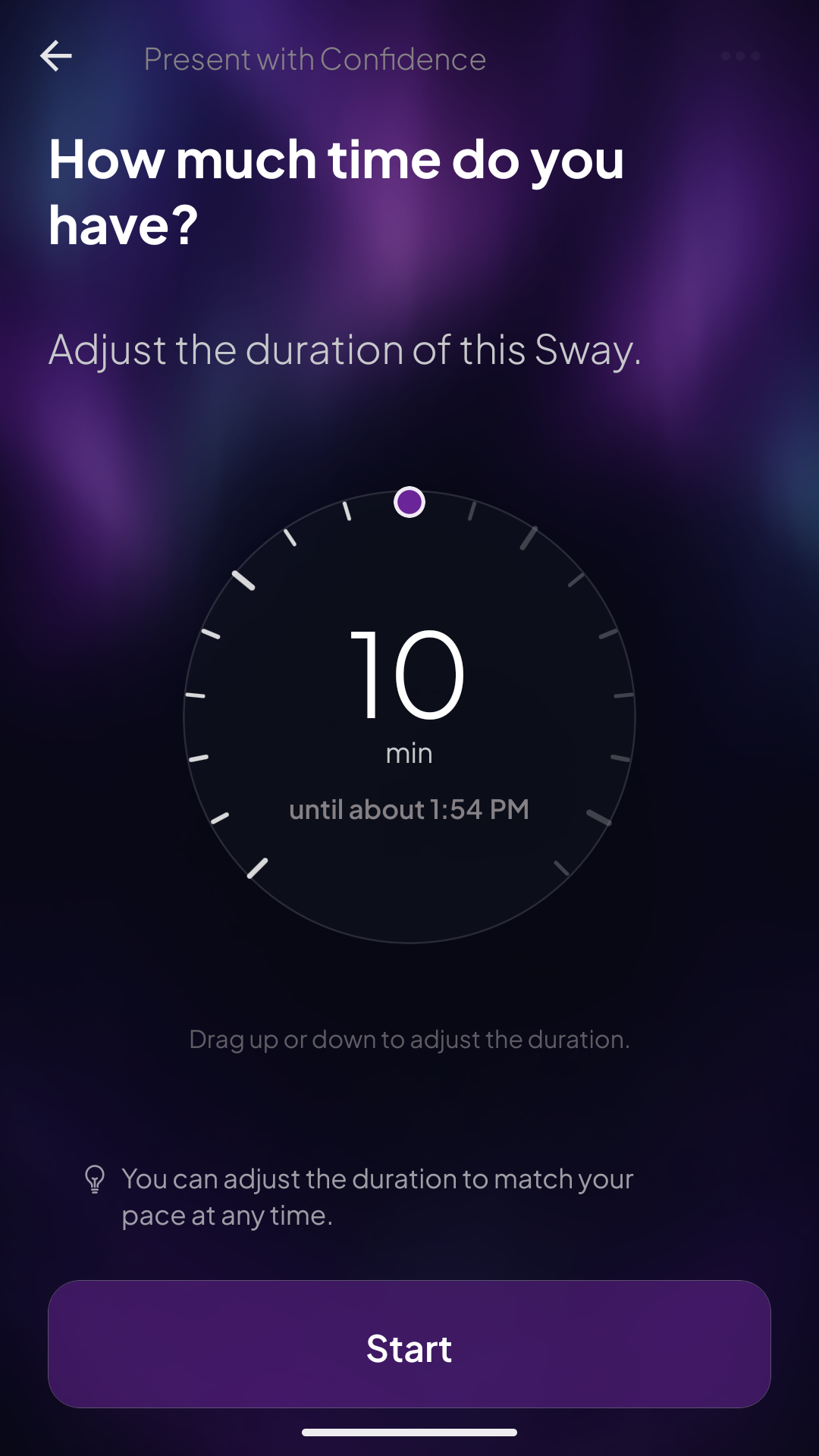
Make room for a mindful moment. Adjust your meditation to fit the time you have.
-
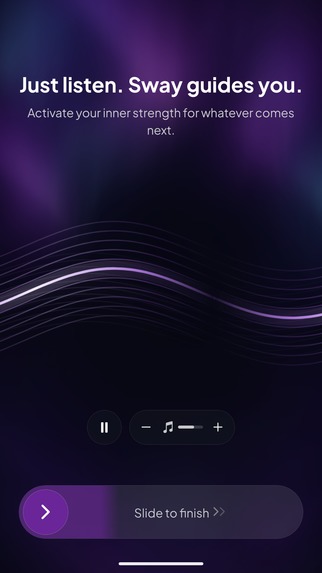
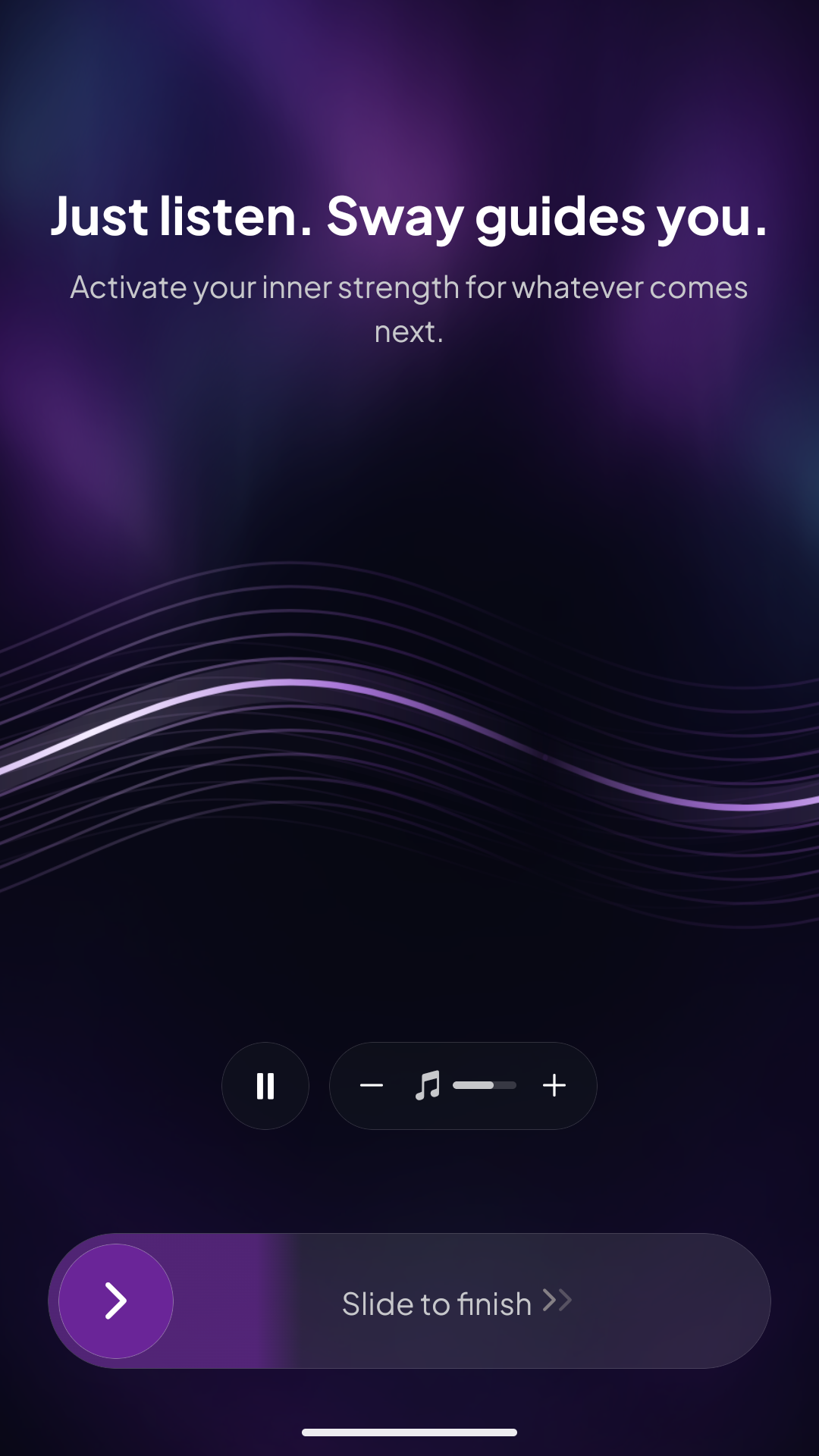
Just listen. Let Sway guide you through your meditation, with music you can adjust along the way.
-
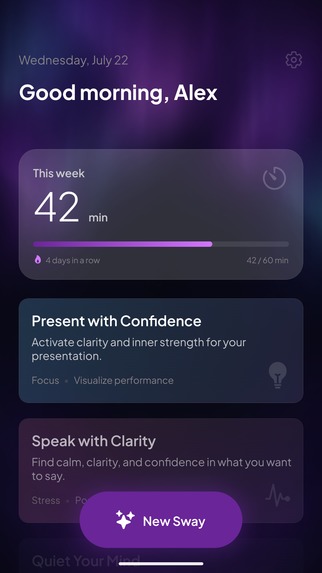
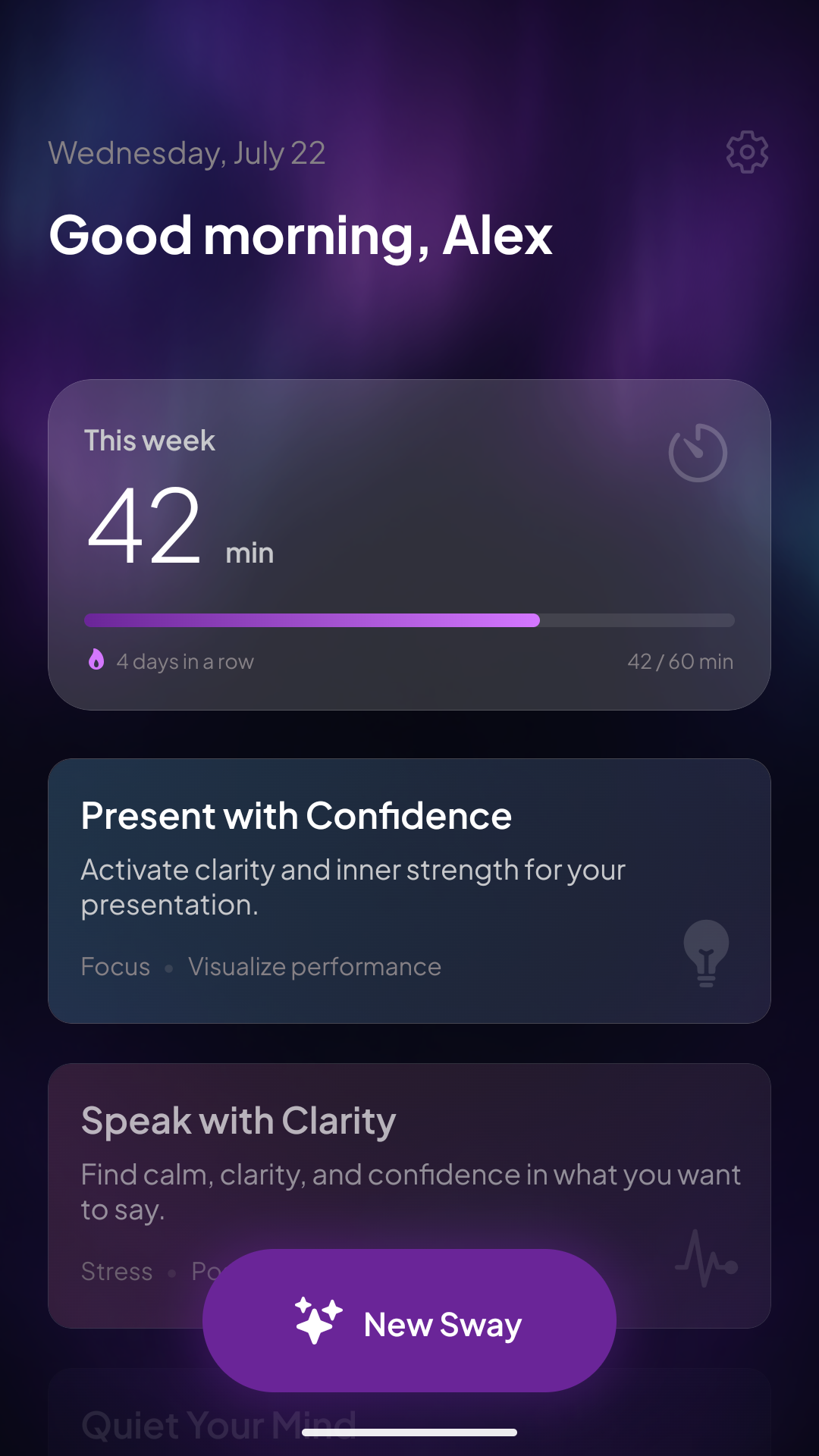
Your personal meditation library, weekly goal, and daily streak, all in one place.
-
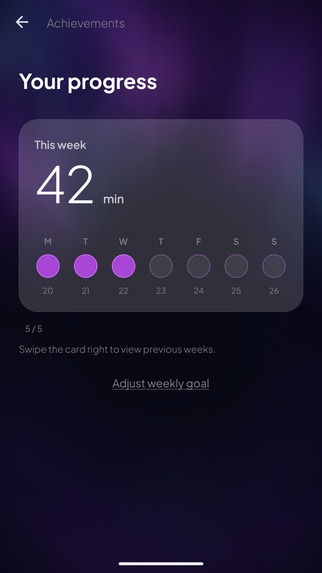
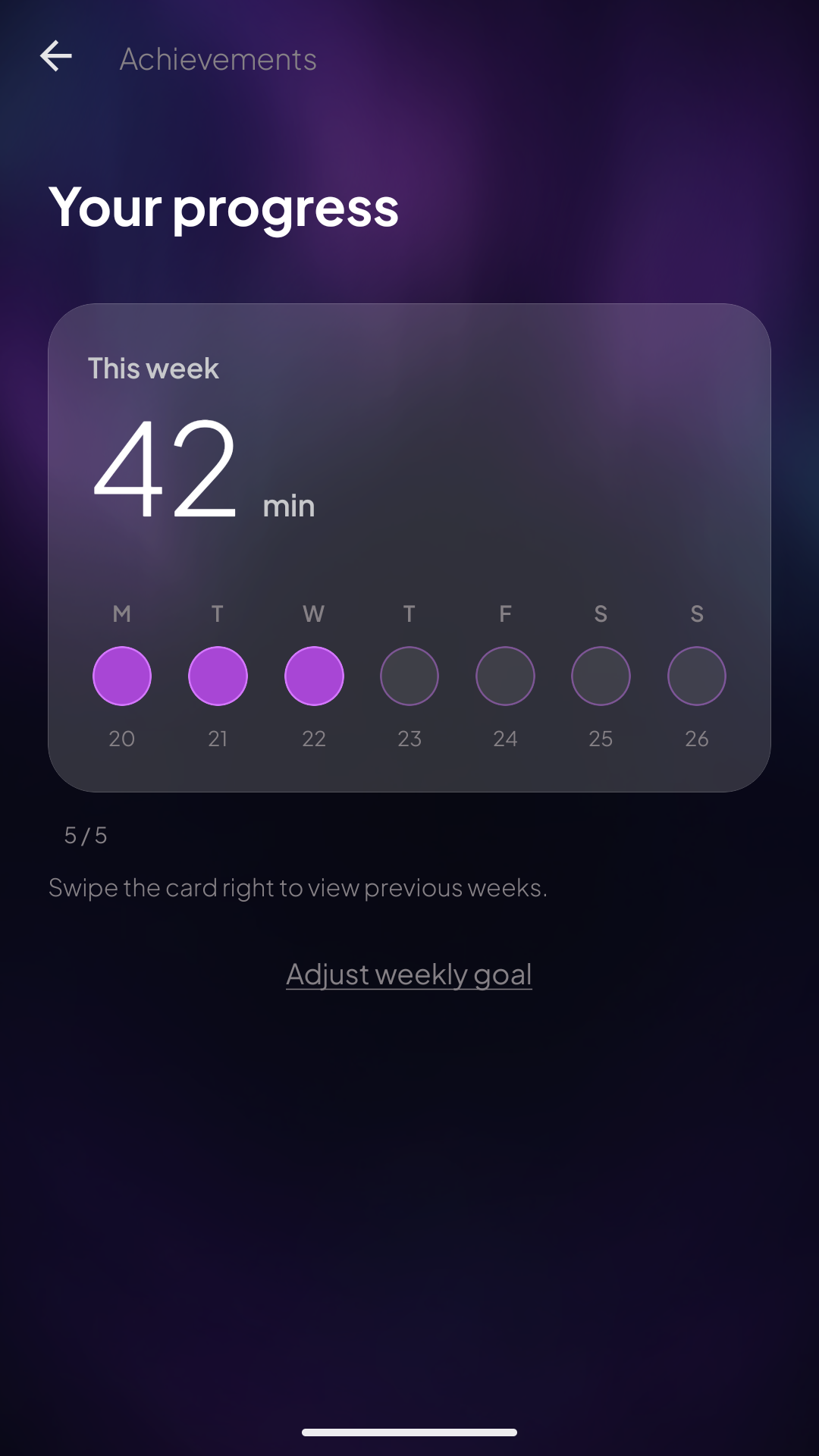
See your mindful minutes add up. Track your practice and explore your progress week by week.
-
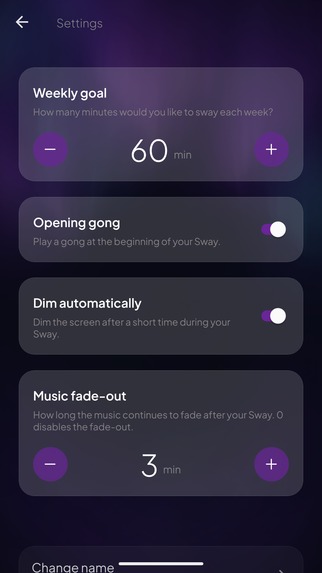
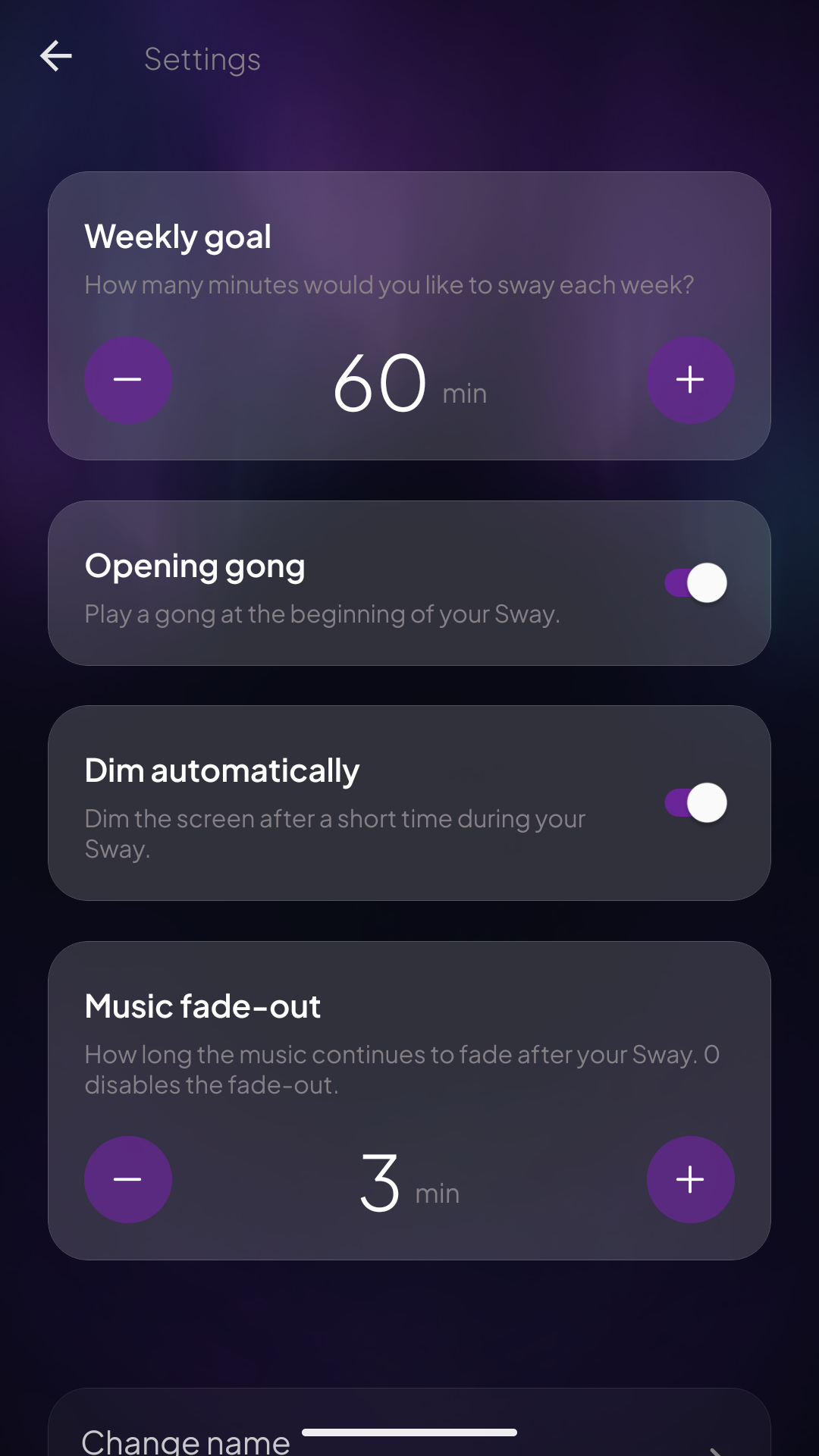
Make Sway your own with weekly goals, an opening gong, automatic screen dimming, and a gentle music fade-out.
-
Sway your state. Personalized guided meditations for the moments that matter to you.
Inspiration
Sway started with a personal frustration: the meditations I tried never quite matched what I needed in the moment. I wanted to choose what a session was about, adjust the background music, and fit it into the time I actually had.
That became Sway: personalized guided meditations built around a simple question—what would you like to change about how you feel right now?
What it does
You describe a personal goal, such as feeling calm and focused before an important presentation. Sway creates a guided audio meditation tailored to that goal.
Choose a technique, including breathing, body scans, or visualization, or let Sway choose for you. Adjust the background music and set the session duration to match your available time.
Your meditations stay in a personal library on your device. When you return to a session, you can adapt its duration again. Weekly goals and progress tracking help you make space for regular practice.
How we built it
We built Sway for iOS and Android using React Native, Expo, and TypeScript, with designs developed in Figma.
The app connects to our backend to generate a personalized meditation script and turn it into spoken audio. It downloads and stores the audio locally for repeat listening, while managing playback, background music, and session timing on the device.
We developed and programmed the app together, taking it from an idea we wanted to use ourselves to a complete mobile experience.
Challenges we ran into
A central design challenge was giving people meaningful control without making meditation feel like configuring software. Goals, techniques, timing, and audio settings all needed to feel approachable.
Reliable audio delivery was another challenge. Generating a session involves several steps, and an interruption should not cost someone a meditation credit. We designed the flow so a credit is consumed only after the audio has been successfully saved on the device.
Keeping meditation playback reliable in the background was also a challenge. Sessions needed to continue smoothly when users locked their phones or switched to another app, so they could simply listen without keeping the screen open.
We also wanted a saved meditation to remain useful when someone had a different amount of time available. Adapting the duration on repeat listens became an important part of the experience.
Accomplishments that we're proud of
We built an app together as father and son, with both of us contributing to its development and code.
We're proud of how the full experience comes together: describe a real situation, create a personal meditation, listen, and return to it when you need it again. Sway supports English, German, French, and Italian.
What we learned
Building Sway reinforced how much work sits between generating content and creating a useful product. Audio delivery, background playback, recovery from interruptions, and small interface decisions all shape the experience.
What's next for Sway
Our next focus is learning from people using Sway in everyday situations: what they create sessions for, which meditations they return to, and where the experience could feel simpler.
We want to keep refining the guidance and listening experience around those real needs.


Log in or sign up for Devpost to join the conversation.