-
-
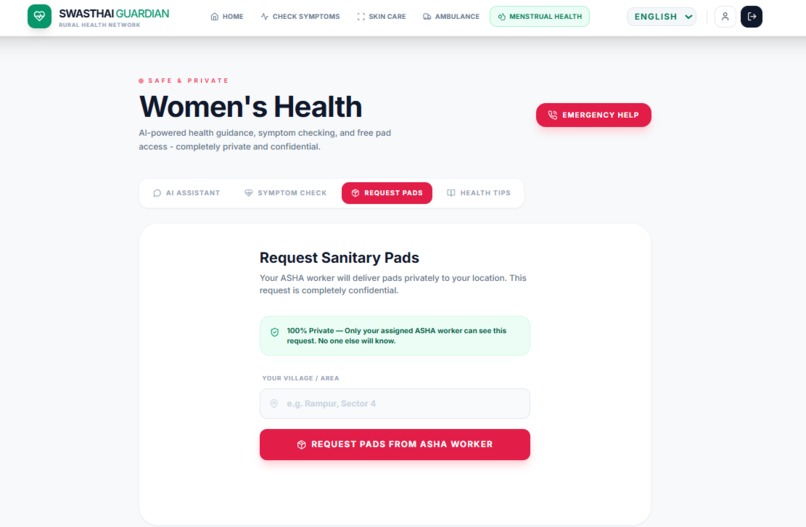
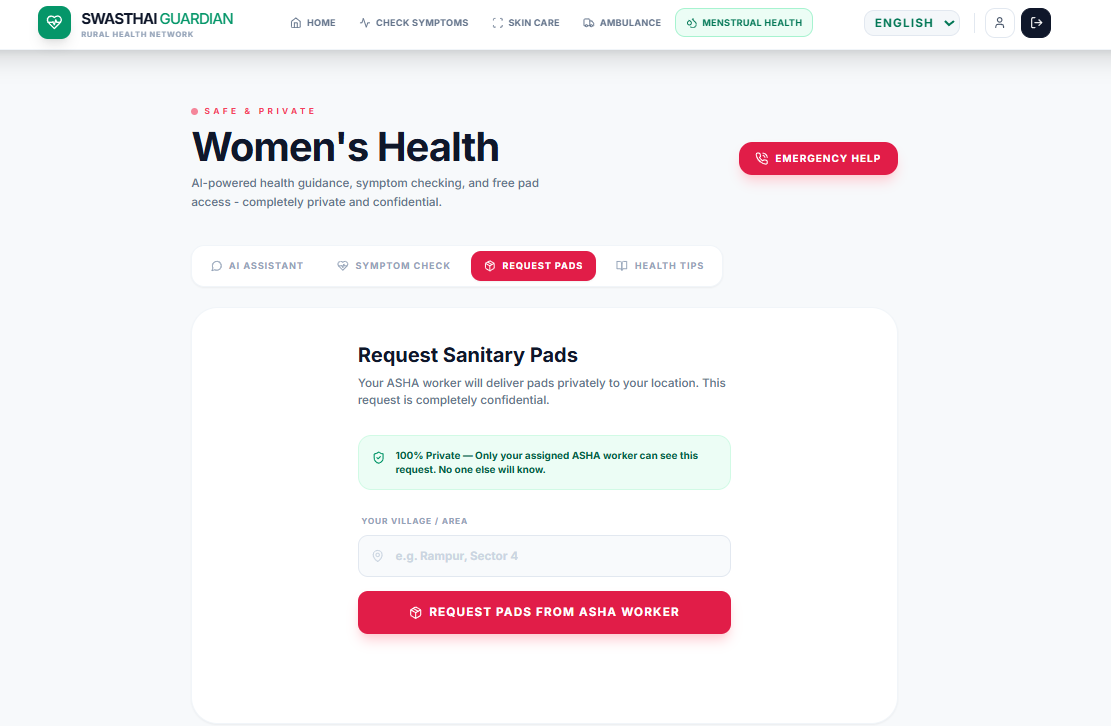
Live Sanitary Pad Request (Alerts NGO Workers)
-
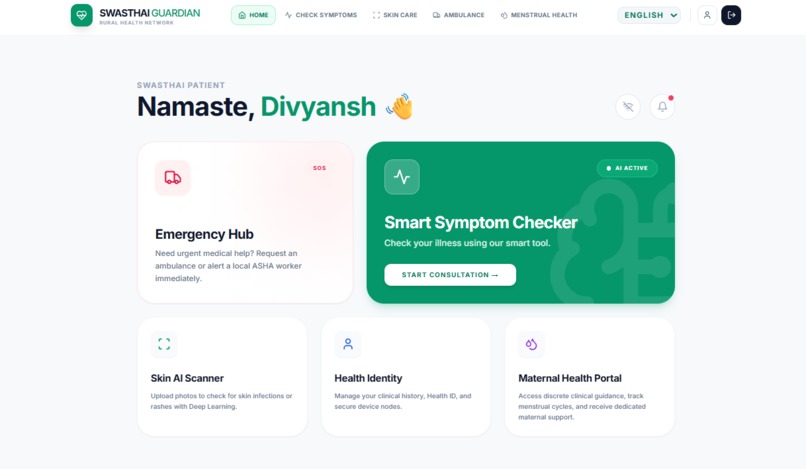
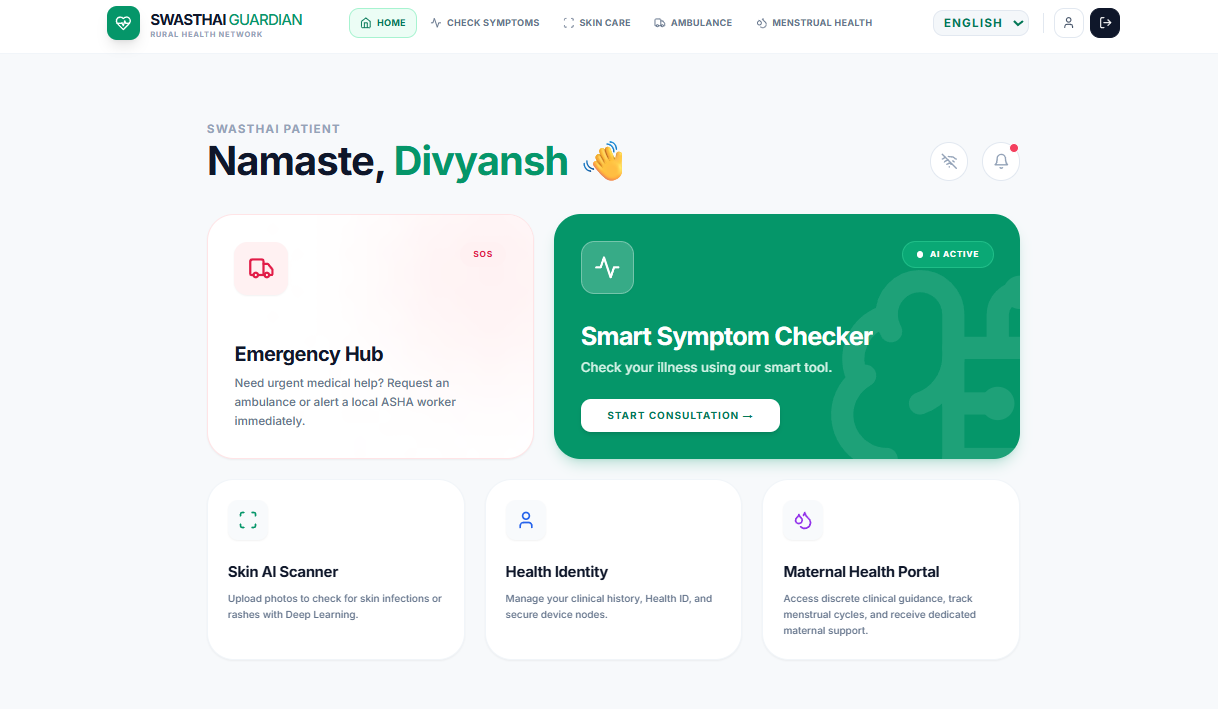
Villager Home Dashboard
-
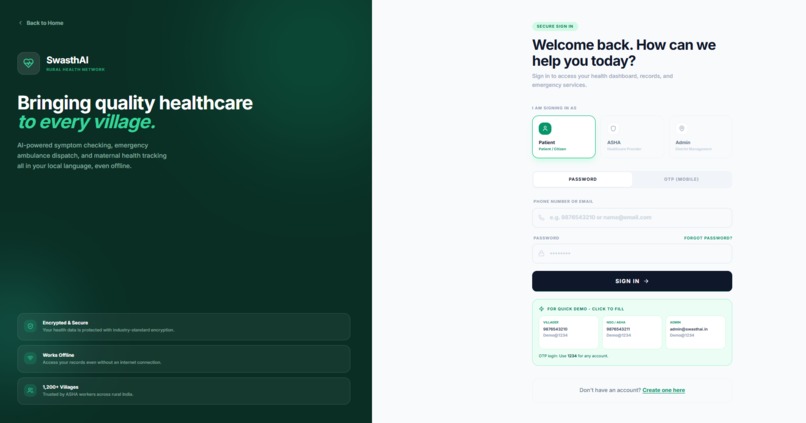
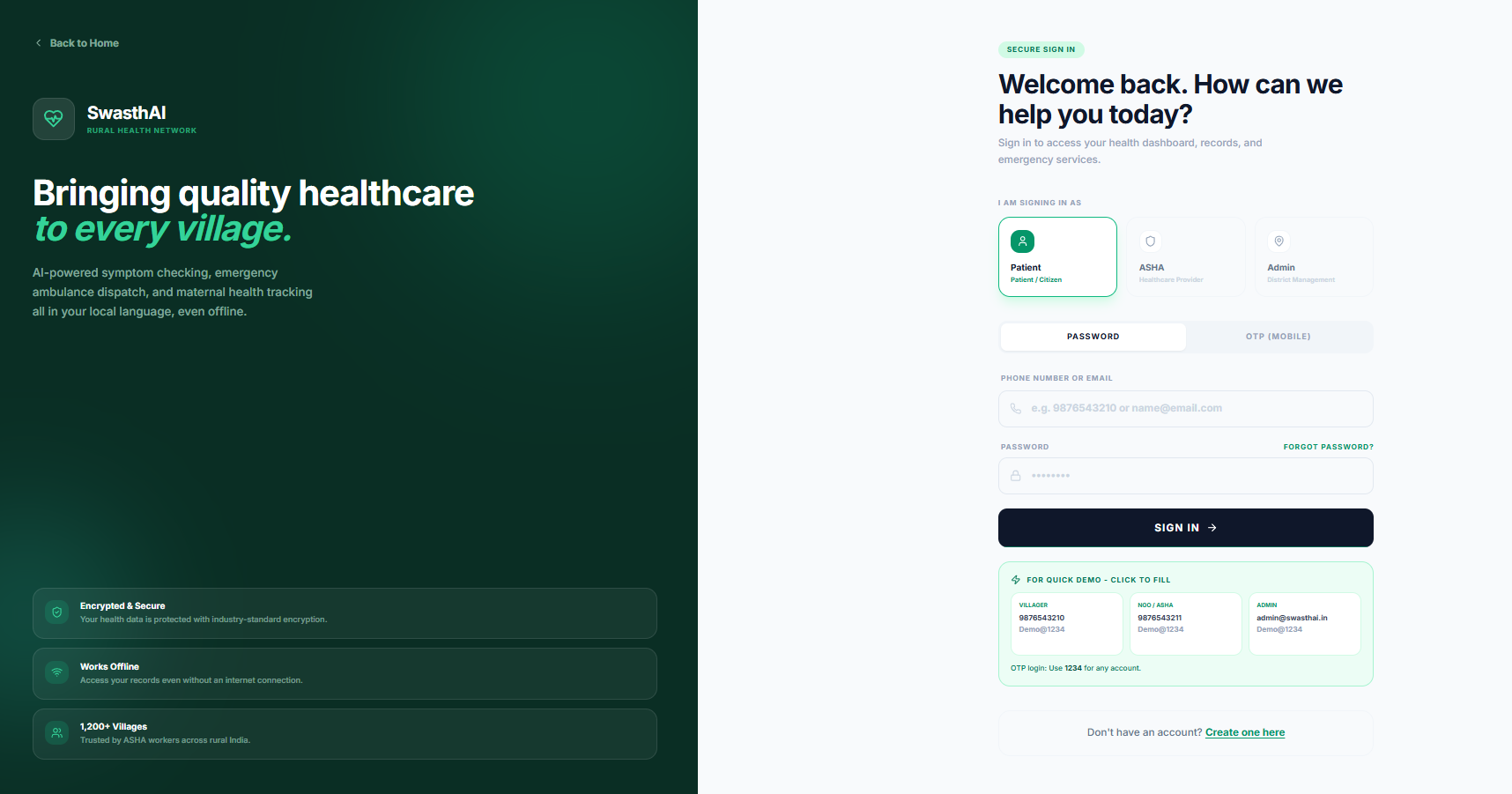
Secure Role-Based Login
-
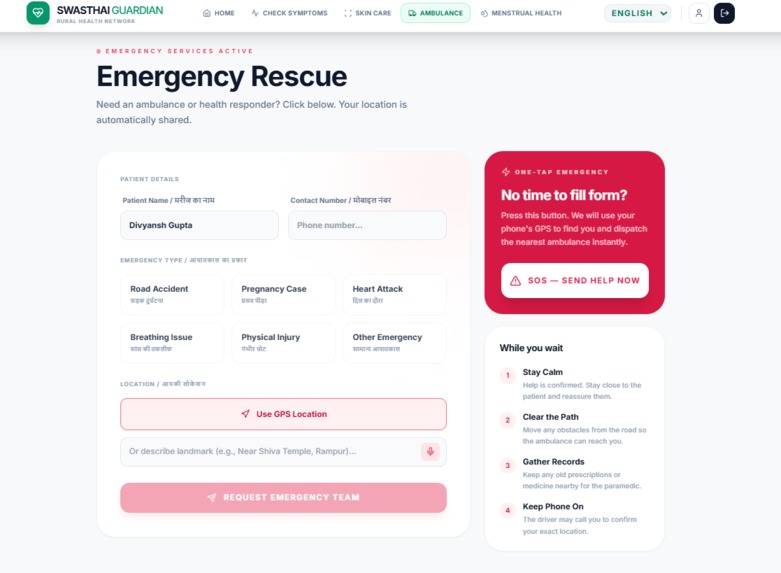
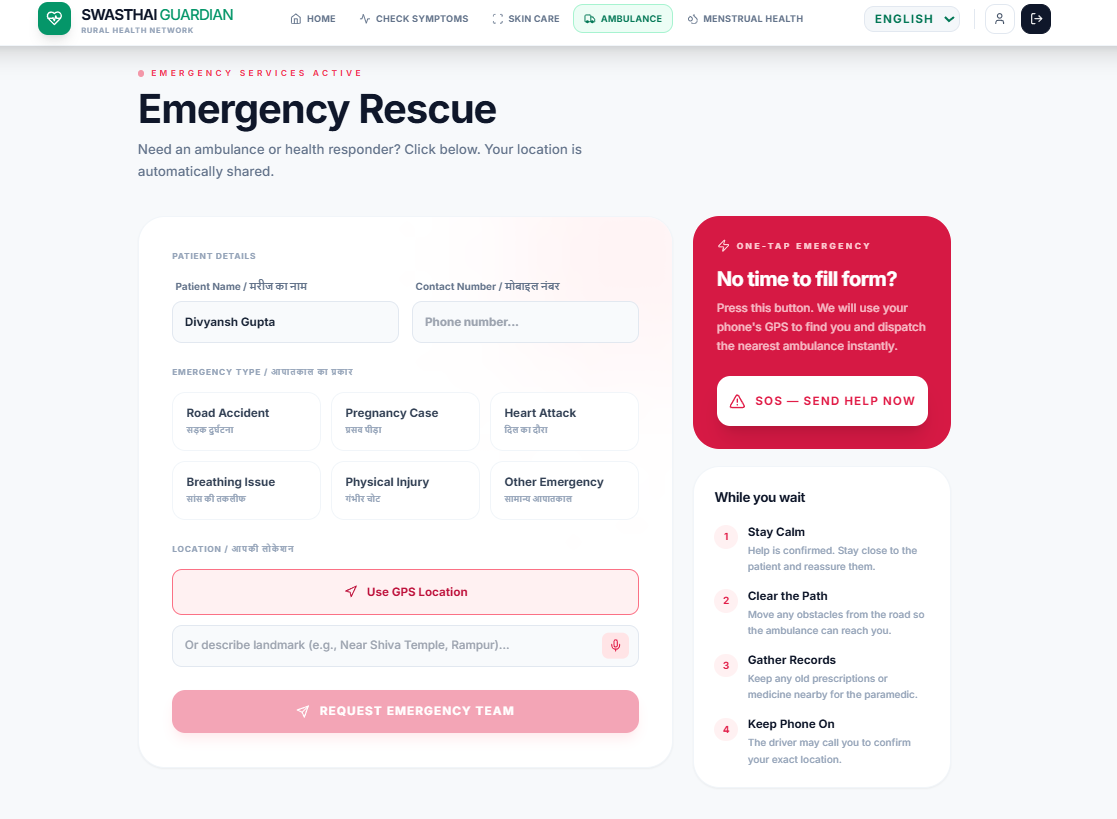
Live GPS Ambulance Request
-
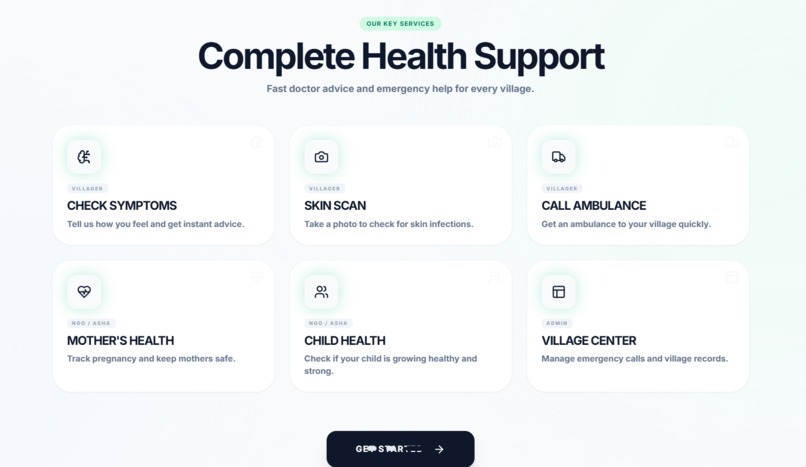
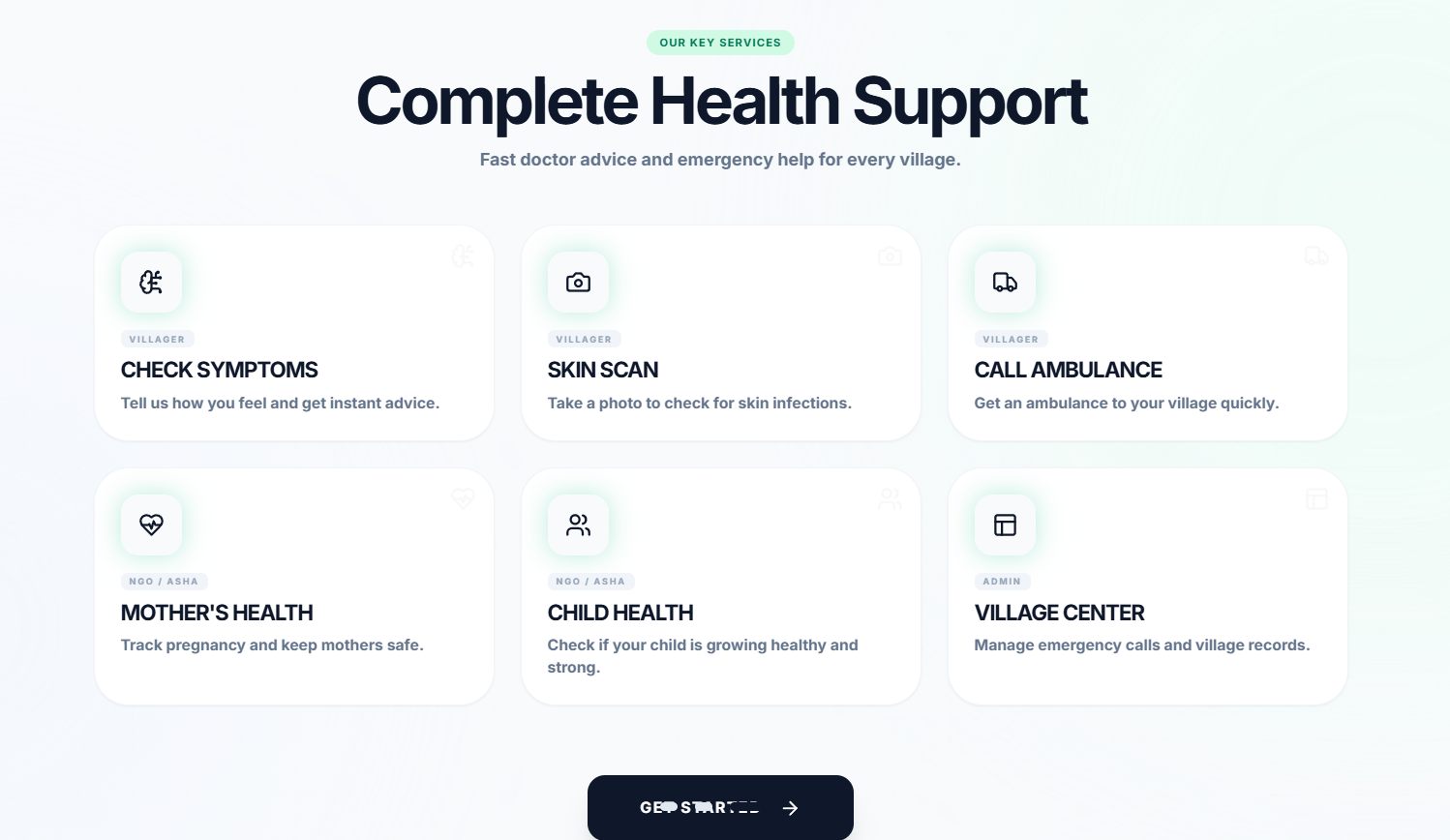
Services Introduction Page
-
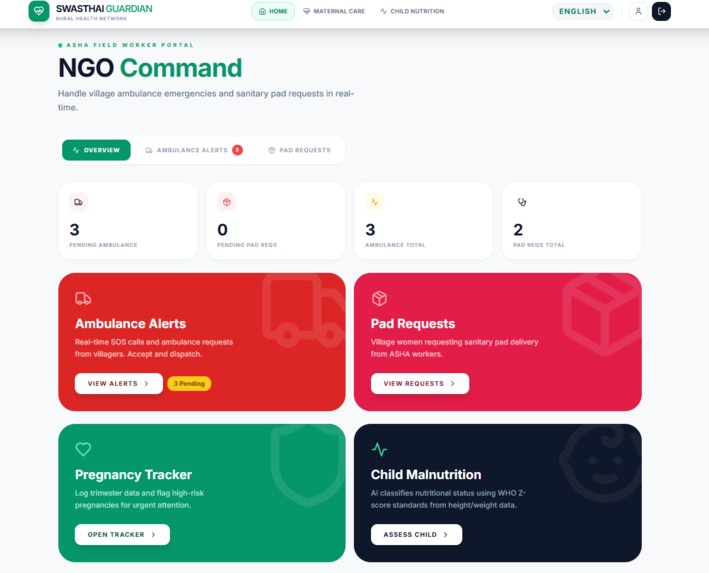
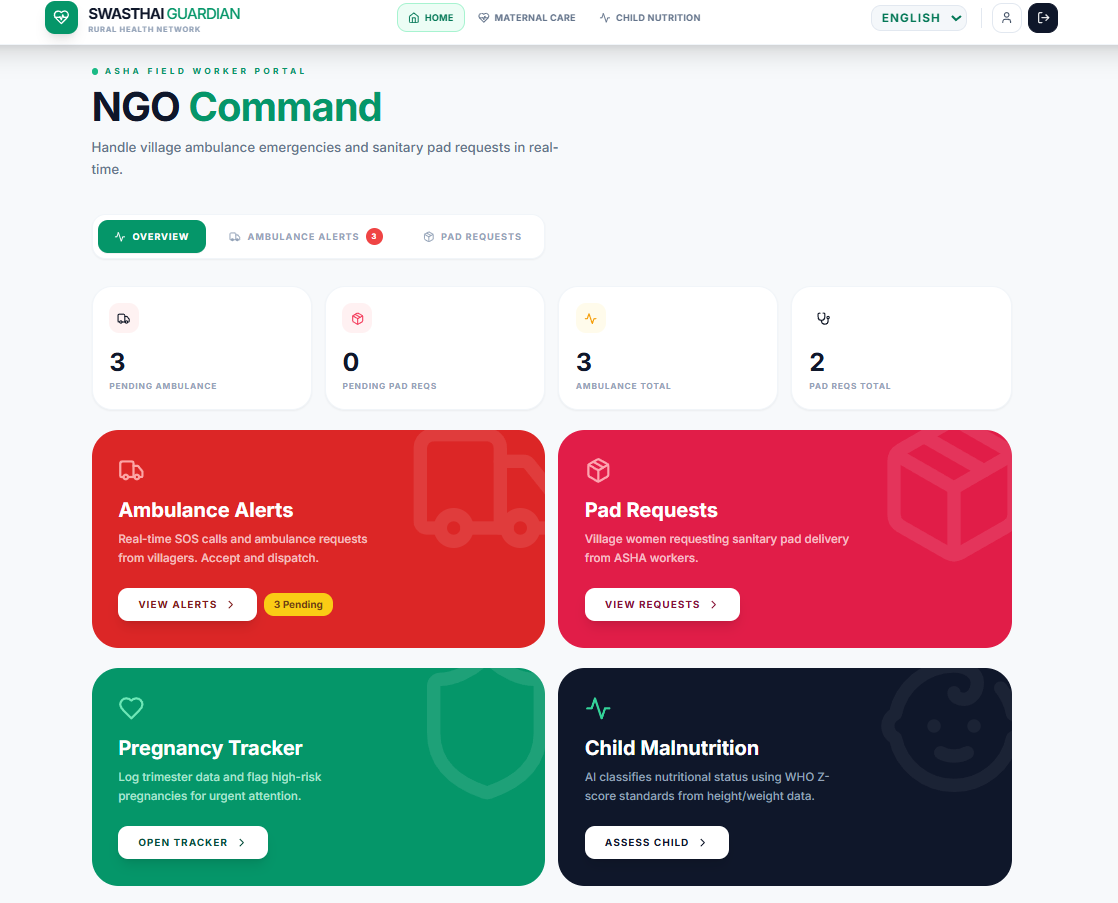
NGO Dashboard
-
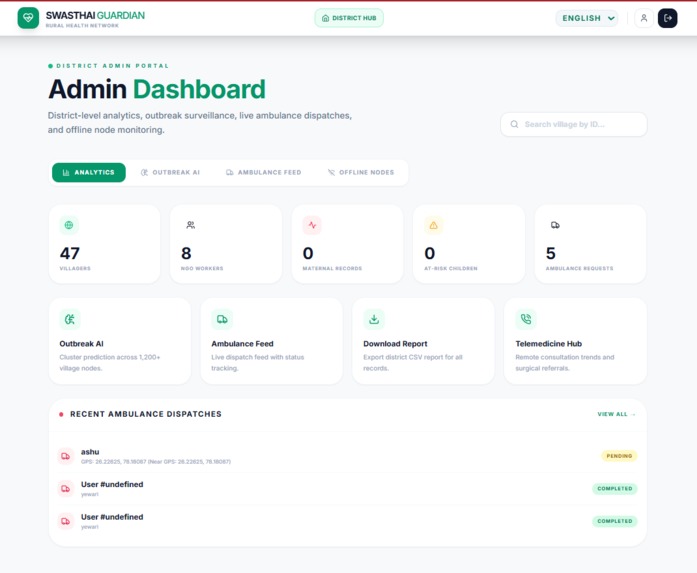
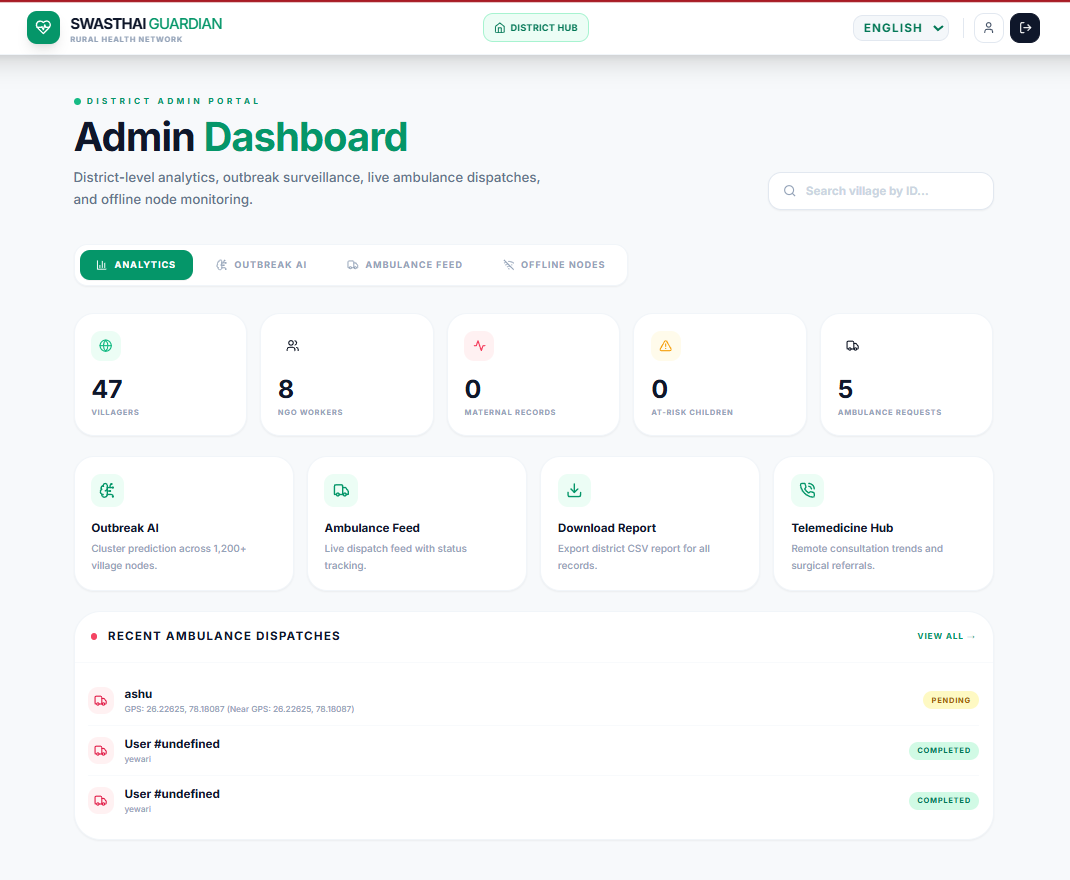
Hospital Admin Dashboard
Inspiration
Over 65% of India’s population resides in rural areas, yet access to healthcare infrastructure remains severely limited. We were inspired by ASHA (Accredited Social Health Activist) workers who tirelessly serve these communities, often relying on manual records and limited clinical tools.
Our goal was to build a scalable, AI-powered digital health ecosystem that bridges this gap providing villagers with immediate, accessible medical guidance in their native language, while equipping frontline workers and district authorities with real-time data for proactive healthcare decisions.
What it does
SwasthAI Guardian is an offline-first, role-based healthcare platform connecting Villagers, ASHA/NGO workers, and Hospital Administrators into a unified system.
For Villagers:
- Multilingual, voice-enabled AI Symptom Checker powered by a ML model (Random Forest) trained on rural disease patterns (e.g., Malaria, Dengue, Cholera)
- "Sakhi" – a private conversational AI assistant for women's health support
- AI Skin Disease Scanner – on-device image analysis for preliminary dermatological screening
- Emergency Request System – enables quick assistance requests even in low-connectivity areas
For ASHA/NGO Workers:
- Dashboard to monitor high-risk pregnancies using WHO-based scoring
- Child malnutrition tracking
- Management of emergency and sanitary requests
For Hospital Admins:
- District-level analytics dashboard
- Detection of 24-hour symptom clusters for early outbreak alerts
- Downloadable reports for operational insights
How we built it
We designed SwasthAI Guardian as a modular, resilient three-tier architecture:
Frontend:
- React 18 + Vite
- Tailwind CSS with custom design system
- Offline-first support using Service Workers and IndexedDB
Backend:
- Node.js + Express
- SQLite for lightweight deployment
- JWT authentication with bcryptjs password hashing
AI Service:
- Python FastAPI microservice
- Custom-trained Random Forest Classifier (~91.3% cross-validated accuracy)
- Groq-powered LLM for conversational AI ("Sakhi")
Challenges we ran into
Implementing a truly offline-first system was our biggest challenge. We had to:
- Store interactions locally without internet
- Sync data automatically when connectivity is restored
- Maintain consistent system state across offline and online modes
Additionally, optimizing the ML model for both accuracy and performance required multiple iterations to ensure real-time usability.
Accomplishments that we're proud of
- Built a custom ML diagnostic model with ~91.3% accuracy tailored to rural healthcare
- Developed a fully localized interface supporting English, Hindi, Marathi, Tamil, and Bengali
- Created a working multi-role healthcare workflow (User → NGO → Admin)
- Delivered a functional offline-capable system for real-world rural use
What we learned
We learned that building for underserved communities is about accessibility as much as technology.
Voice interaction and localization showed us that removing barriers like literacy and language is critical for true digital empowerment.
What's next for SwasthAI Guardian
- Expand dataset through partnerships with local clinics
- Add support for additional regional languages
- Implement SMS-based fallback for feature phones
- Improve real-time coordination between users, NGOs, and hospitals
Built With
- bcrypt
- css
- express.js
- fastapi
- groq
- jwt
- machine-learning
- node.js
- python
- react
- sqlite


Log in or sign up for Devpost to join the conversation.