-
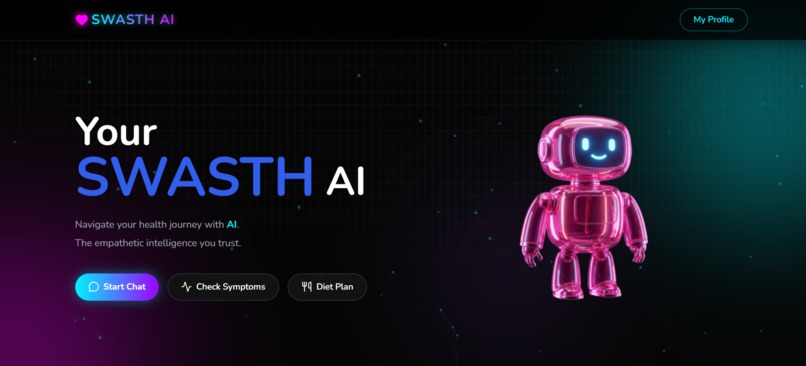
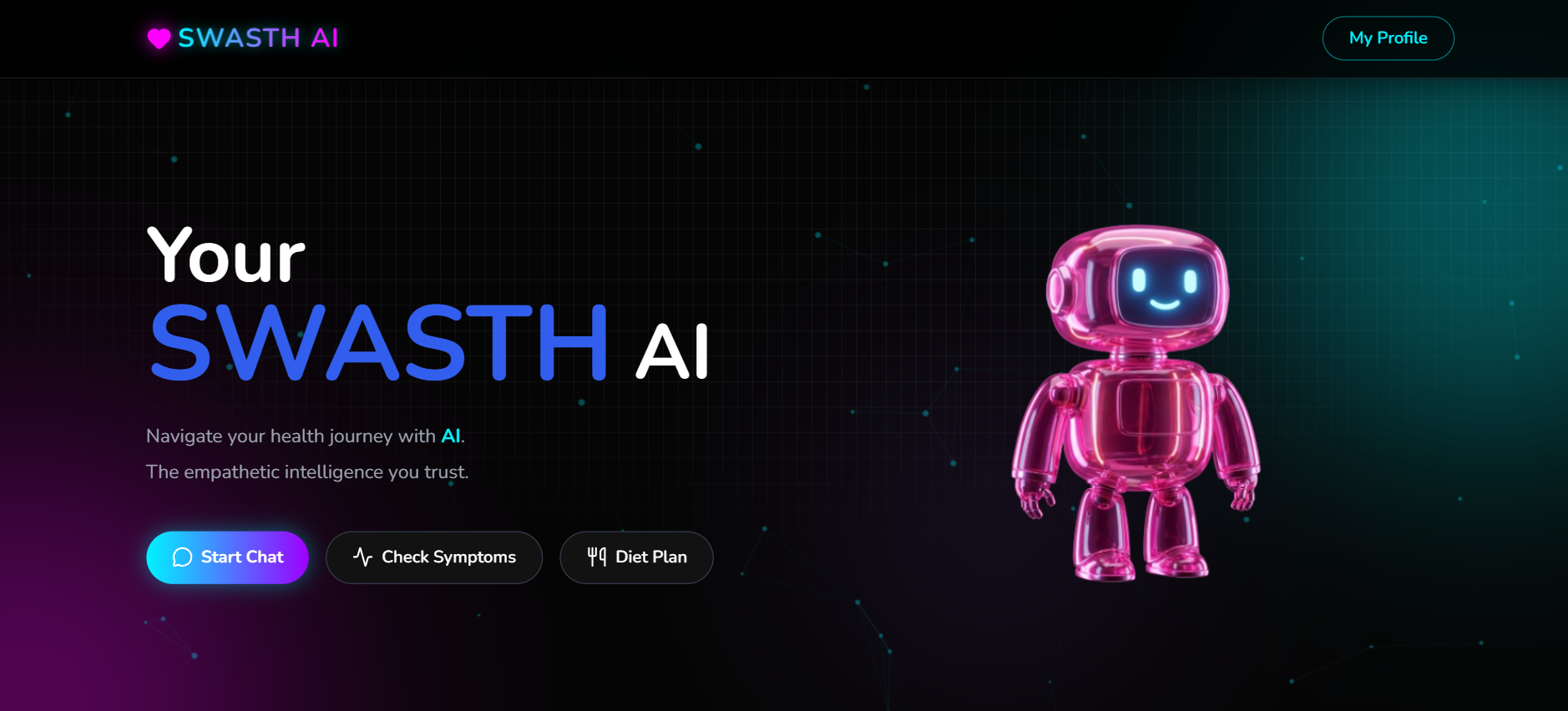
Swasth AI - Homepage
Inspiration
The inspiration for Swasth AI came from a simple but widespread problem: when people experience health issues, they often turn to random internet searches, leading to misinformation, panic, or delayed medical care.
What it does
Acts as a symptom checker, allowing users to describe symptoms in natural language Answers general health and medical queries using a curated knowledge base Provides basic diet and nutrition recommendations aligned with health conditions Encourages responsible healthcare decisions by guiding users on when to seek professional help
How we built it
Swasth AI was built using a Retrieval-Augmented Generation (RAG) approach to ensure accuracy and reliability.
Challenges we ran into
Handling medical content safely: Ensuring the bot provides guidance without making diagnostic claims Chunking large medical texts effectively for accurate retrieval Embedding model compatibility issues, especially with local setups Reducing hallucinations while keeping responses conversational
Accomplishments that we're proud of
Successfully built a working RAG-based healthcare chatbot Implemented manual chunking and structured metadata for better retrieval accuracy Integrated symptom checking, health queries, and diet guidance into one system Ensured responses remain grounded and responsible, not misleading
What we learned
High-quality data preparation matters more than model size RAG significantly improves trustworthiness for sensitive domains like healthcare Manual chunking and metadata drastically improve retrieval results Healthcare AI must prioritize safety, clarity, and transparency
What's next for Swasth AI - A Healthcare Chatbot
Adding personalized diet plans based on user preferences and conditions Expanding the medical knowledge base with more verified sources Introducing multilingual support for wider accessibility
