-
-
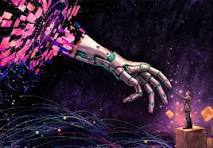
image isn’t just a “logo” it’s a compressed philosophy artifact

Inspiration
Most AI systems are black boxes. They produce results, but there is no clear way to understand how those results were generated or whether they can be trusted.
After building and testing multiple AI workflows over several weeks, I noticed a recurring problem: systems would appear to work, but their outputs were often unverifiable, inconsistent, or misleading. This inspired me to build a system that not only performs tasks, but also makes its reasoning visible and verifiable.
SwarmMind was created to answer a simple question:
Can AI systems explain themselves and prove their outputs?
What it does
SwarmMind is a multi-agent AI system designed to make reasoning transparent and verifiable.
It uses specialized agents working together:
- Planner – breaks down the task
- Coder – generates the solution
- Reviewer – evaluates correctness
- Executor – runs and validates the result
Key features include:
- Cognitive Trace Viewer – shows step-by-step reasoning across agents
- Experimentation Engine – compares single-agent vs multi-agent strategies
- Verification System – distinguishes between verified, measured, and untested results
Instead of acting like a black box, the system exposes how decisions are made and what can actually be trusted.
How I built it
The system was built using a modular Node.js architecture with an event-driven design.
Core components include:
- Agent framework with role-based execution
- Trace logging system for reasoning visibility
- Experimentation engine for performance comparison
- Verification layer to validate outputs and detect inconsistencies
A key focus during development was separating:
- Execution logic
- Observation (trace)
- Verification (truth layer)
This separation ensures the system can both operate and critically evaluate itself.
Challenges I ran into
1. False verification signals
Initially, the system reported successful results even when parts of the logic were incomplete or based on assumptions. Fixing this required removing hardcoded metrics and enforcing strict evidence-based reporting.
2. Trust vs output
Generating results was easy. Proving they were correct was not. Building a verification layer that distinguishes between measured, verified, and untested data was one of the most important challenges.
3. Managing system complexity
With multiple agents and continuous iterations, the system generated large volumes of data. Structuring this into something understandable and useful required focusing on clarity over scale.
What I learned
- Building AI systems is easier than verifying them
- Transparency is more valuable than raw performance
- Multi-agent systems are powerful, but require strong coordination and validation layers
- Clear structure and explanation matter as much as technical capability
Most importantly, I learned that:
A system that can explain and verify itself is far more valuable than one that only produces results.
What's next
Future improvements include:
- Real-time scaling of agents based on workload
- More advanced verification metrics (semantic correctness, not just structure)
- Integration with external tools for real-world use cases
- Enhanced UI for better visualization of reasoning and system state
Why this matters
As AI systems become more widely used, trust becomes critical.
SwarmMind demonstrates a different approach:
- Not just generating outputs
- But making reasoning visible
- And proving what actually works
This moves AI systems from black boxes toward transparent, trustworthy tools.## Inspiration
What it does
How we built it
Challenges we ran into
Accomplishments that we're proud of
What we learned
What's next for SwarmMind-Self-Optimizing-Multi-Agent-AI-System
Built With
- agent
- api
- architecture
- cli
- cognitive
- event-driven
- javascript
- logging
- modular
- node.js
- rest
- sqlite
- system
- trace


Log in or sign up for Devpost to join the conversation.