-
-
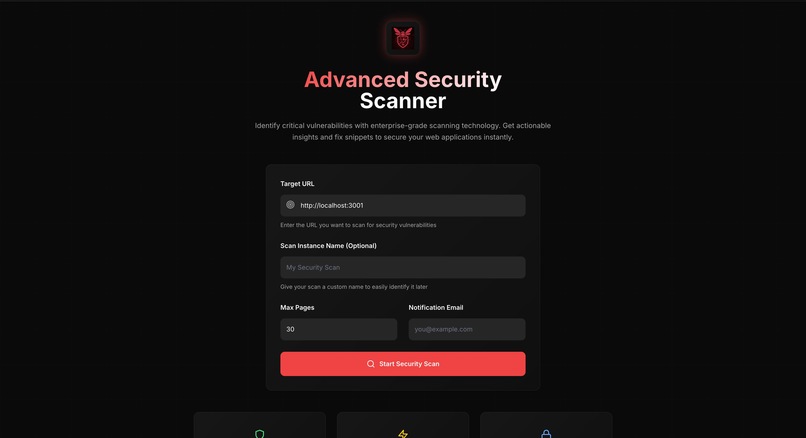
Dashboard
-
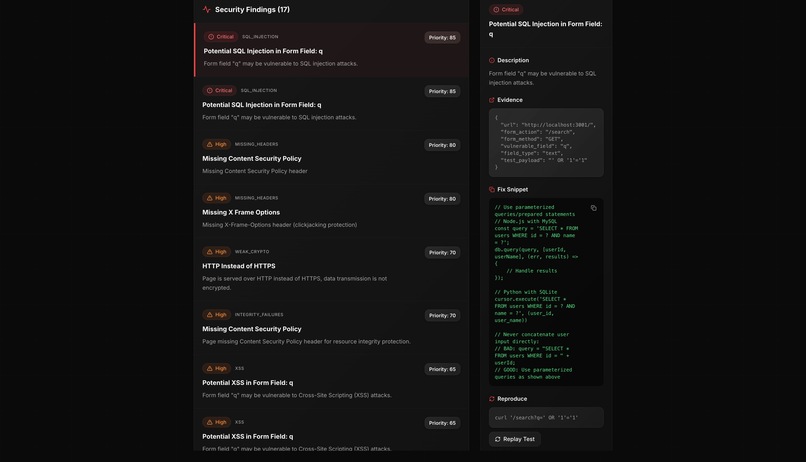
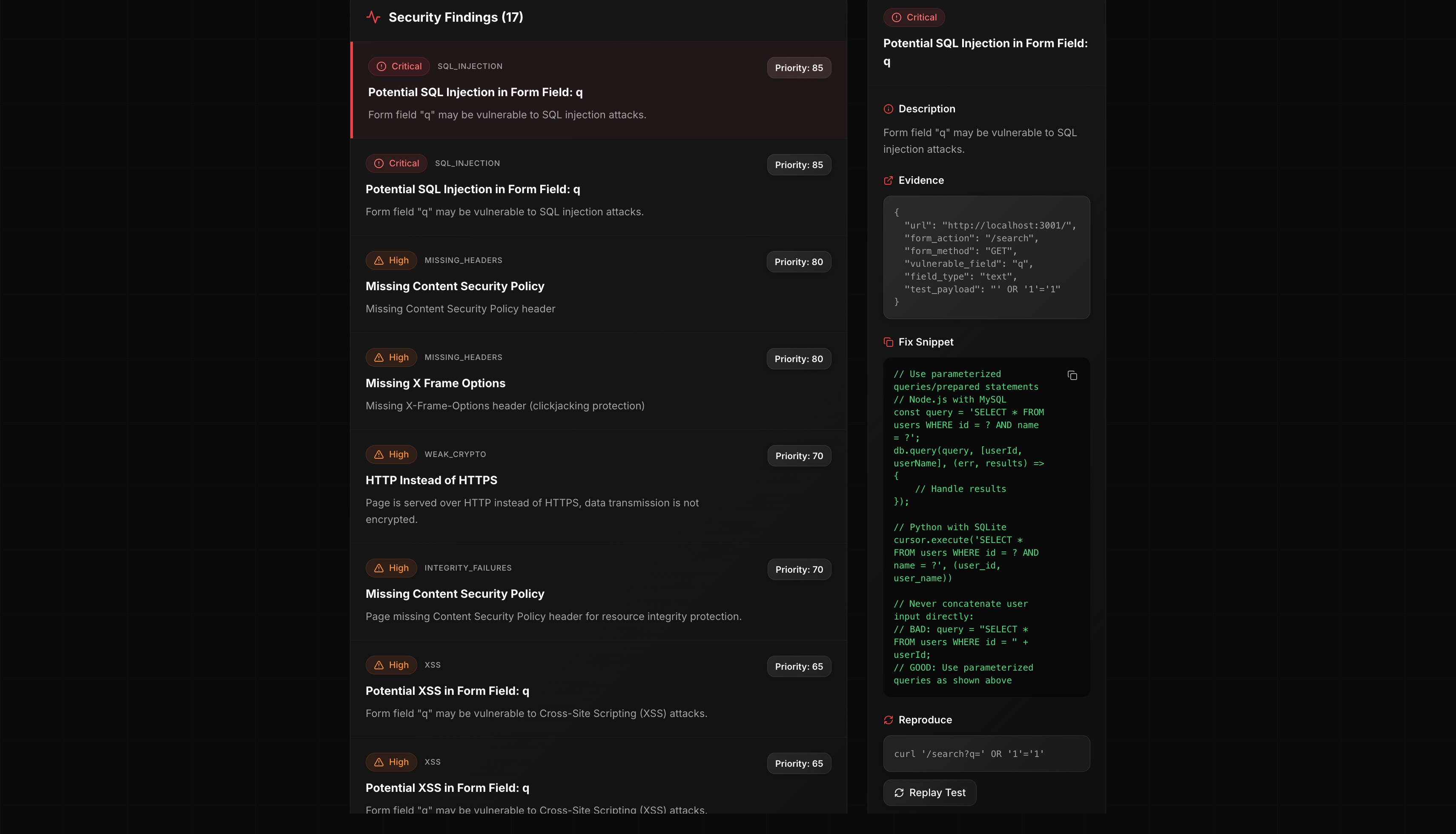
Scan Results Details
-
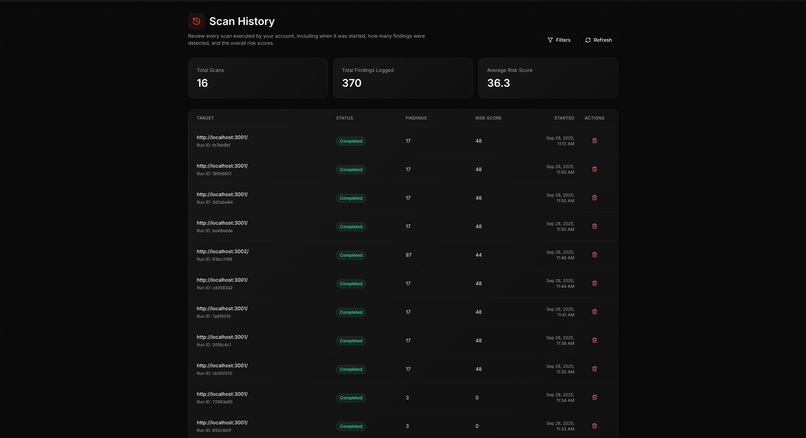
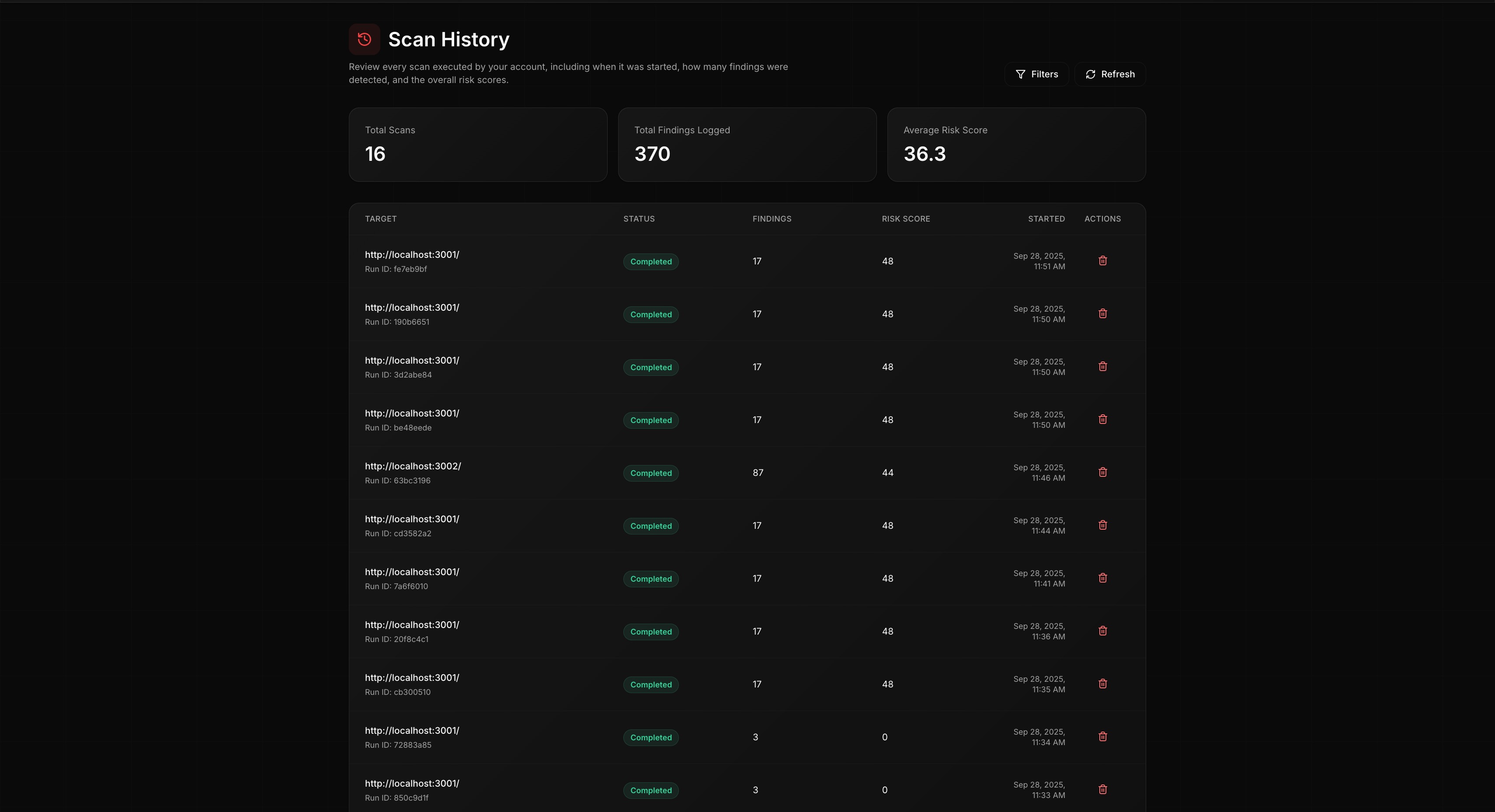
Scan history
-
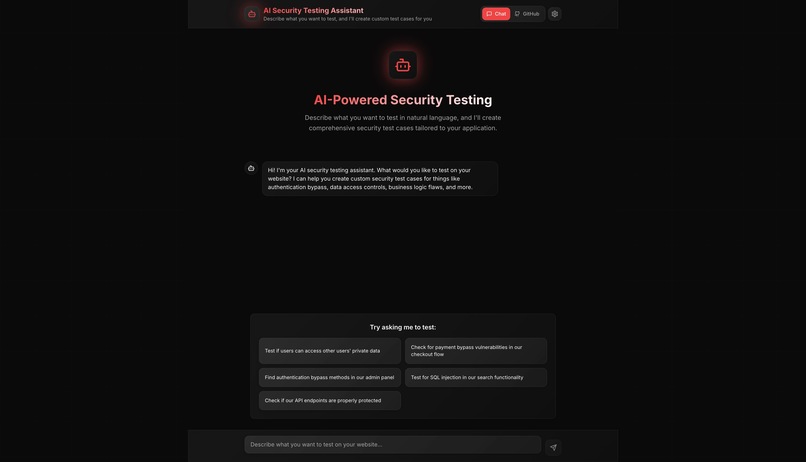
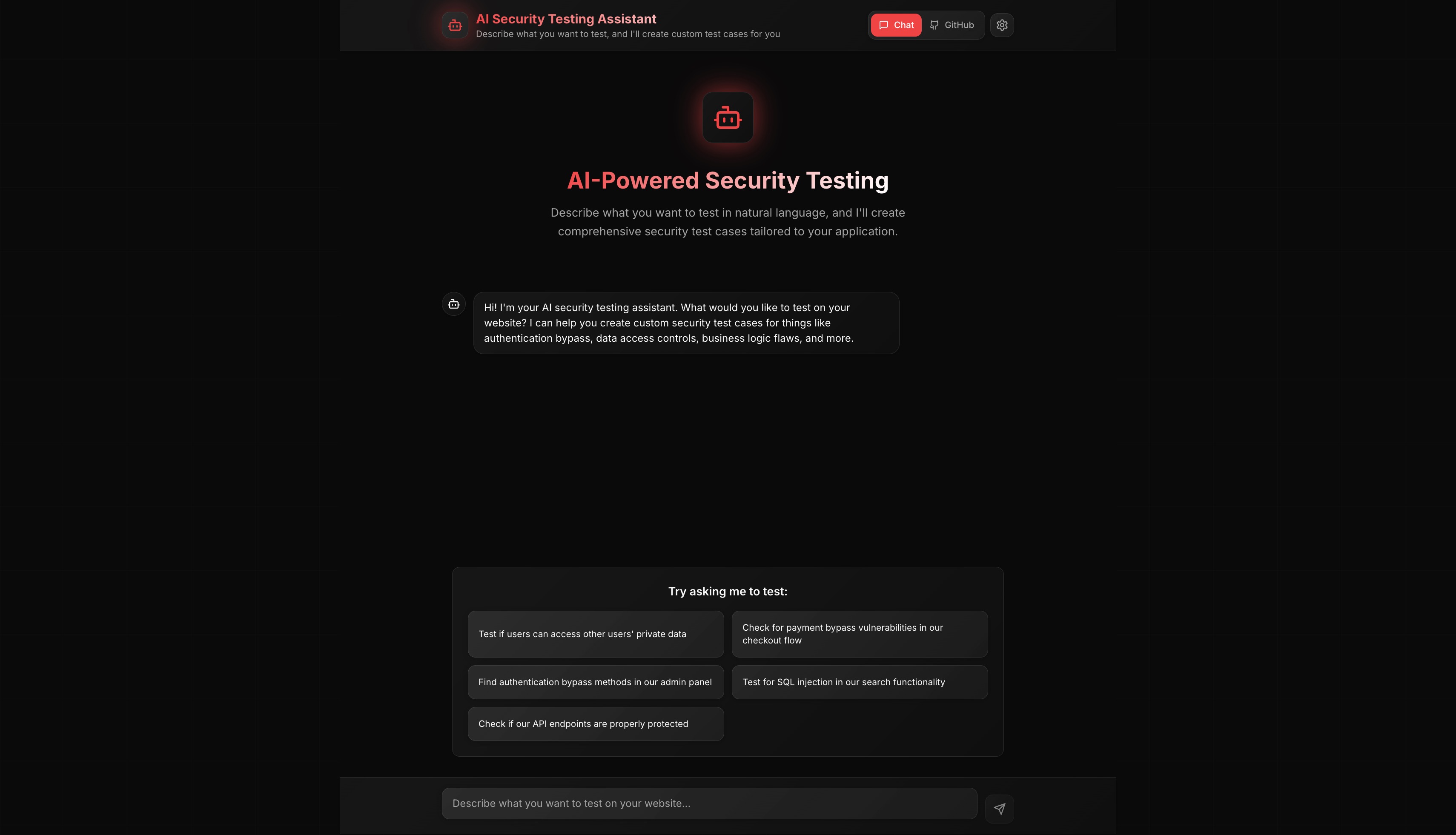
Testing assistant
-
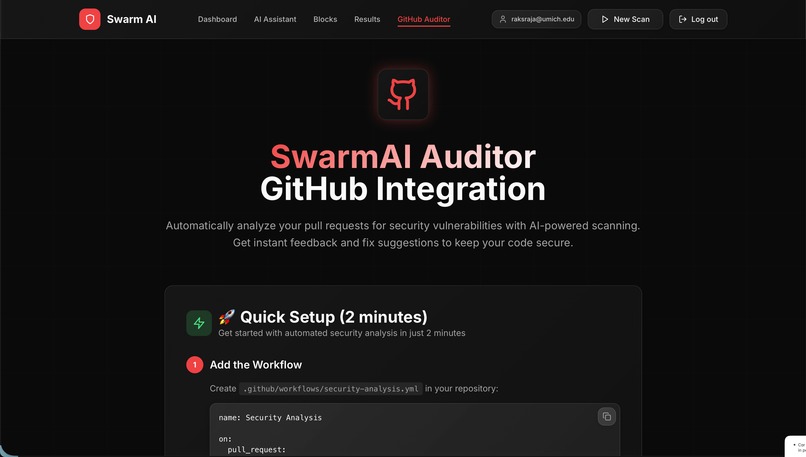
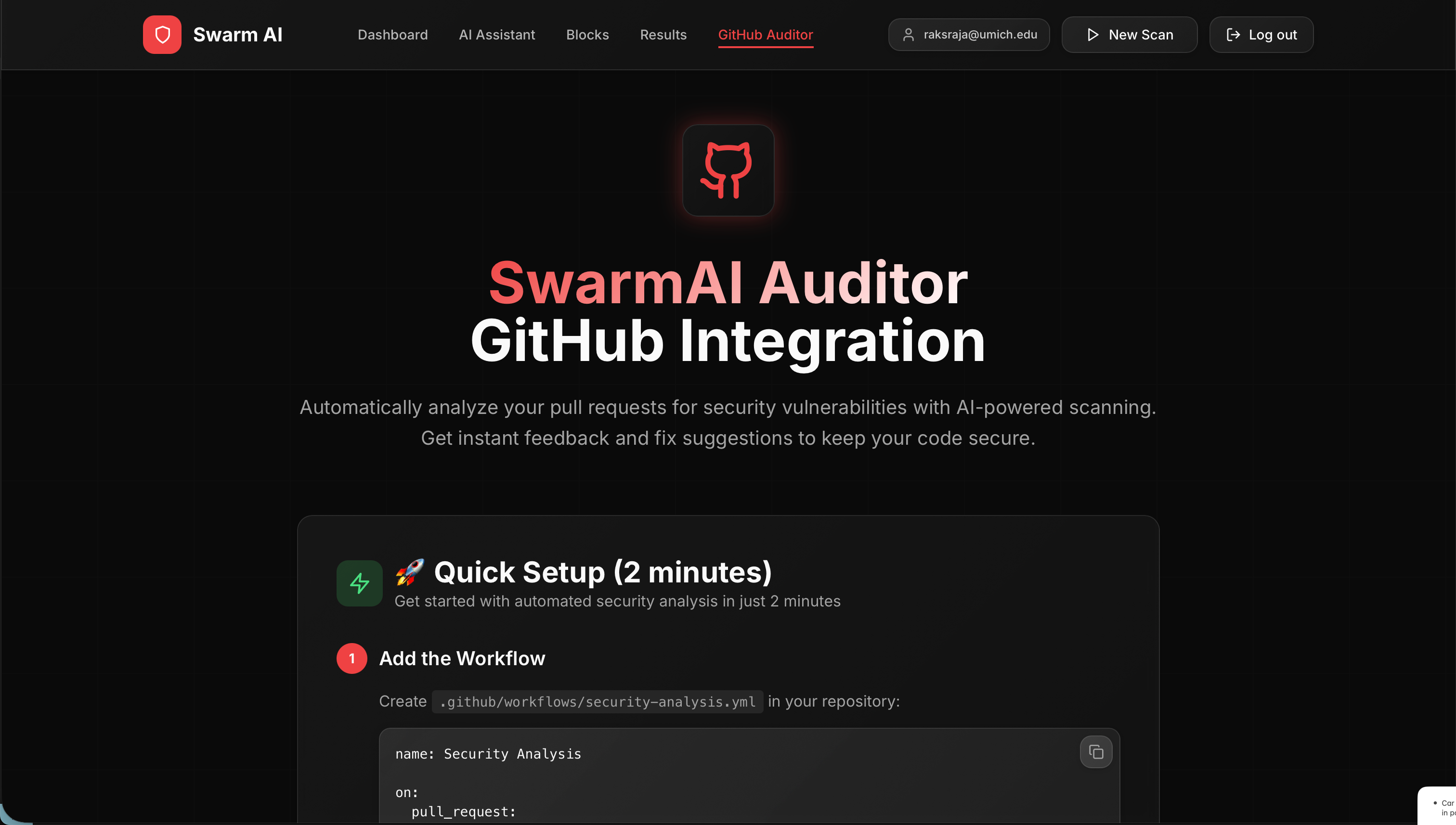
Github Integration
-
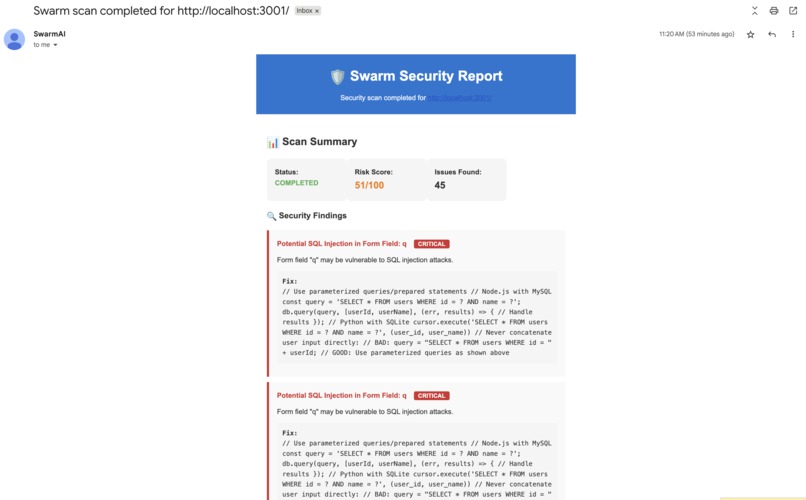
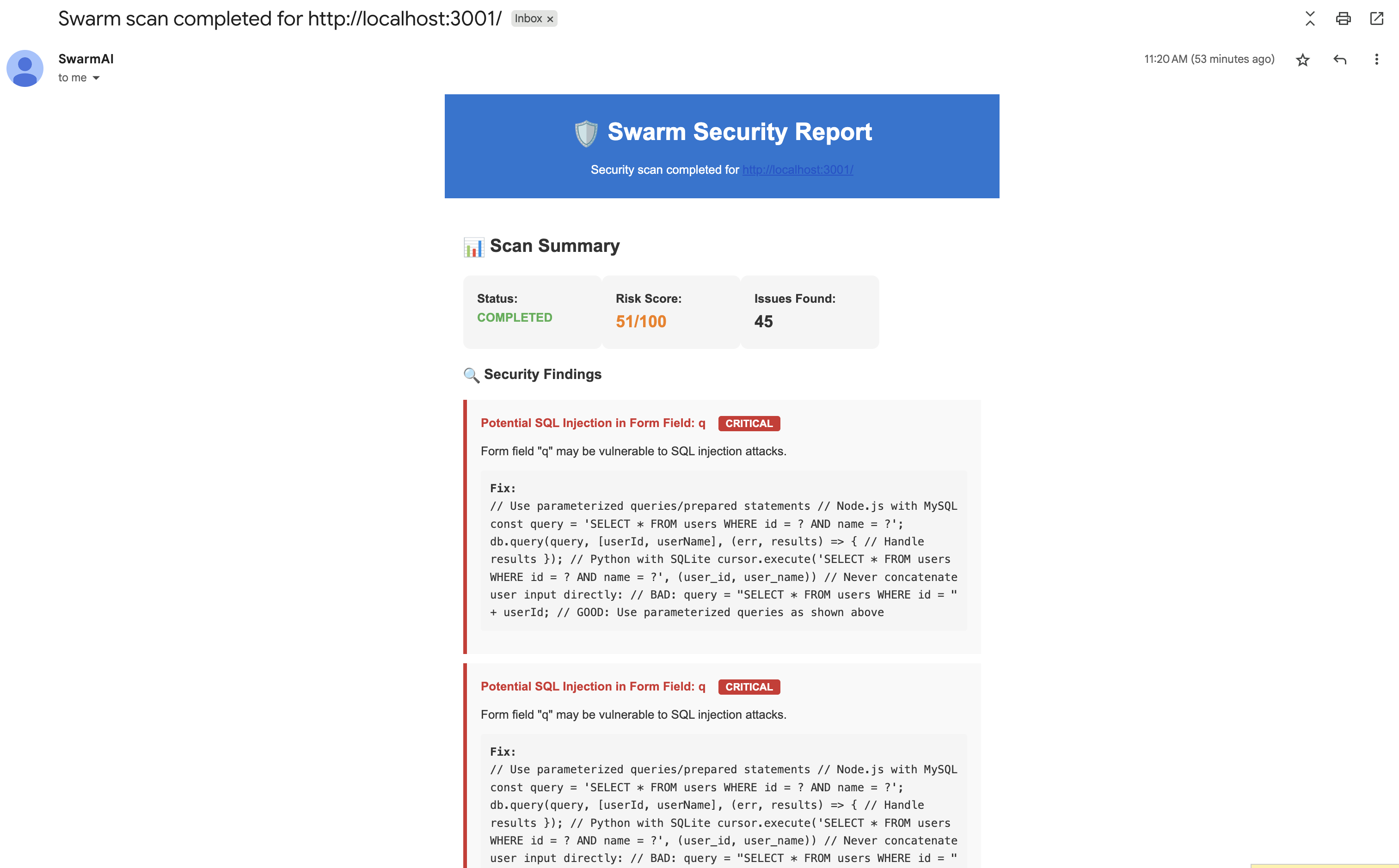
AgentMail Email
-

Logo

Inspiration
In today’s fast-moving startup world, shipping fast can come at a cost. One of our group members saw this firsthand when security researchers targeted his early product, exploiting vulnerabilities and later demanding payment for their findings. It reflected a broader trend we’ve seen in builder and founder culture: speed often takes priority over safety. Teams rush to launch products quickly, overlooking critical security practices. While this accelerates innovation, it also leaves applications vulnerable to attacks, breaches, and costly fixes down the road.
This experience showed us a bigger truth: security testing is too often fragmented, reactive, and inefficient—messy reports, duplicates, trivial findings, and no scalable way to separate the signal from the noise. We knew there had to be a better way.
That realization became the foundation for SwarmAI, our platform that automates security testing, delivers structured reports, and uses an AI chatbot with GitHub integration to guide developers in real time—catching vulnerabilities before they ever reach production.
What We Learned
Building the platform taught us important lessons across security, automation, and AI:
- Automation scales security. Manual testing can’t keep pace with modern development lifecycles.
- Structured reporting matters. Developers need actionable insights, not just raw logs.
- AI can shift security left. By integrating with GitHub, our chatbot provides real-time consultation after each pull request—examining vulnerabilities, suggesting fixes, and even generating corrected snippets. This turns security testing from a reactive step into a proactive safeguard.
How We Built It
We designed the system in three layers, with the chatbot and GitHub integration tying them together:
Frontend (User Portal)
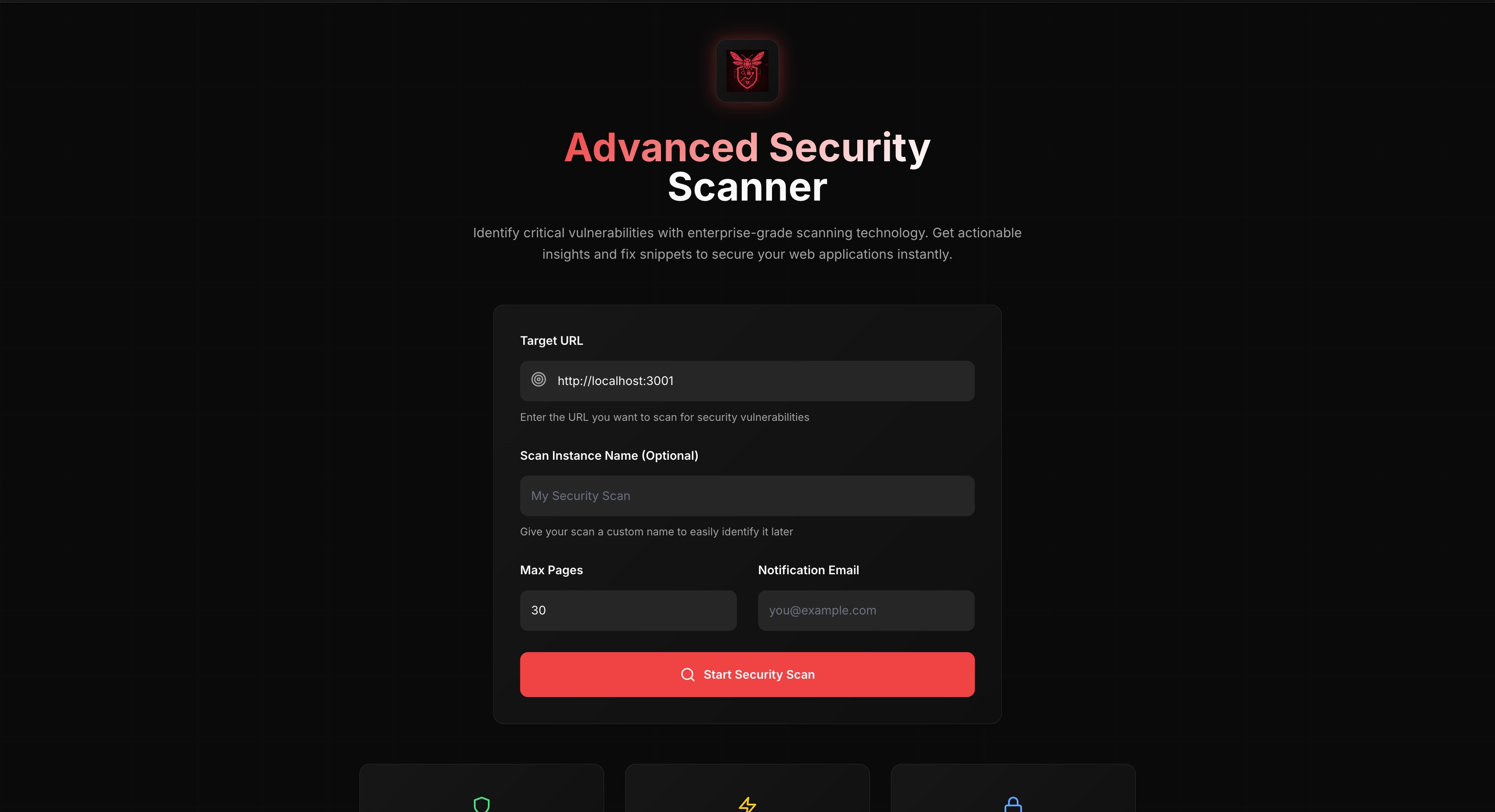
- React-based dashboard for managing scans.
- Users submit target domains and agree to terms, ensuring ethical use.
- React-based dashboard for managing scans.
Automation Engine (Backend)
- Playwright with Python executes vulnerability test vectors (SQLi, XSS, CSRF, etc.).
- Each test runs in isolated containers, supporting safe parallel execution.
- Playwright with Python executes vulnerability test vectors (SQLi, XSS, CSRF, etc.).
AI Chatbot (with GitHub Integration)
- A conversational AI agent available directly on our website.
- Reviews code linked from GitHub pull requests.
- Identifies vulnerabilities before merge, suggests fixes, and can generate corrected snippets.
- Works seamlessly with AgentMail to send comprehensive reports of the findings directly to the developer's email.
- A conversational AI agent available directly on our website.
This architecture ensures extensibility: we can add new attack vectors, enhance AI suggestions, and integrate with more CI/CD workflows.
Challenges We Faced
Our journey was not without obstacles: the
- Balancing scope vs. time. We had to narrow the initial vectors to a core set for the MVP.
- Concurrency bugs. Overloading the system with parallel scans caused memory contention and required careful tuning.
- Ethical guardrails. We implemented strict rules to ensure only authorized targets are tested.
- AI integration complexity. Linking our chatbot with GitHub workflows required careful coordination between automation logs, code parsing, and conversational feedback.
- Team synchronization. With frontend, backend, and AI components evolving in parallel, disciplined Git branching and merge practices kept us aligned.
Conclusion
What began as one teammate’s startup pain point evolved into a full-fledged platform:
- Automating attack vector testing.
- Delivering structured, actionable vulnerability reports.
- And now, empowering developers with an AI chatbot—accessible on our website and integrated with GitHub—to review code after each pull request, making security testing proactive, conversational, and seamlessly embedded in the development lifecycle.
We learned that with automation + AI, security can scale alongside modern software development. Our project is not just a tool—it’s a vision for how teams can ship faster while staying secure.
Built With
- 3.13
- agentmail
- auth0
- beautiful-soup
- docker
- fastapi
- gemini
- github
- graphql
- javascript
- jest
- langchain
- lucide
- mongodb
- node.js
- openai
- playwright
- pydantic
- pyjwt
- pytest
- requests
- rest
- selenium
- sse
- tailwind
- uvicorn
- vercel


Log in or sign up for Devpost to join the conversation.