-
-
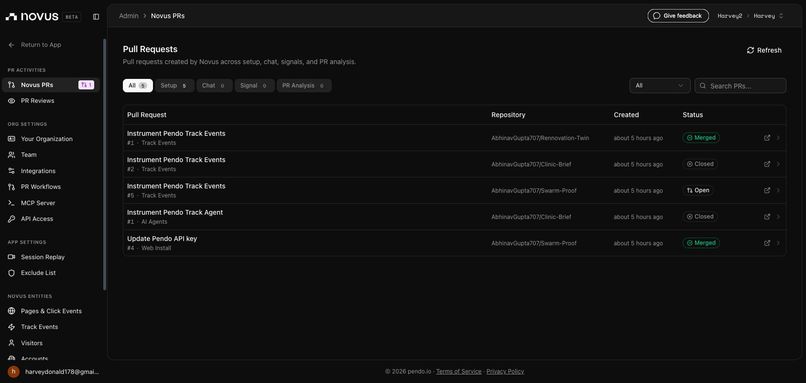
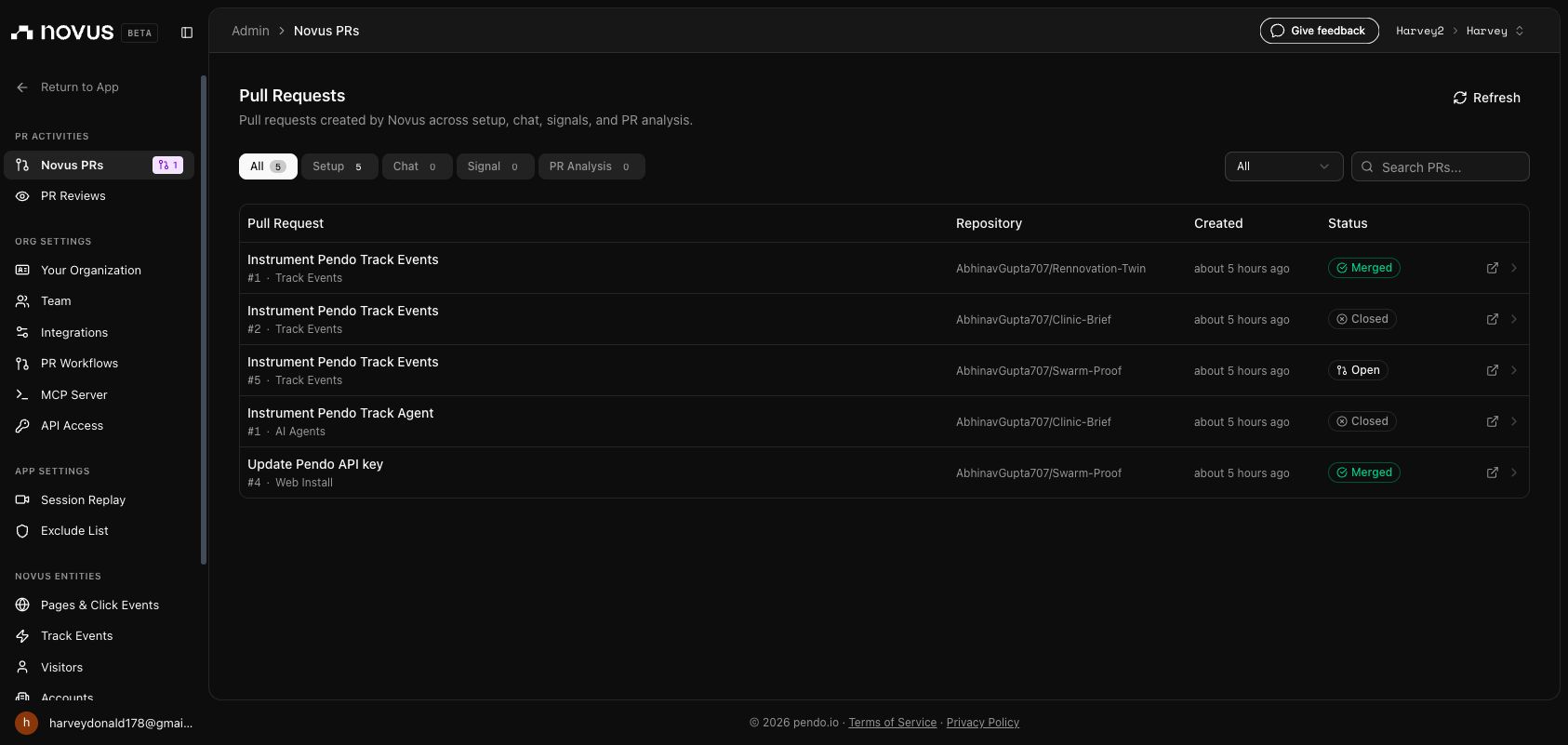
Novus PR Evidence for connected repos
-
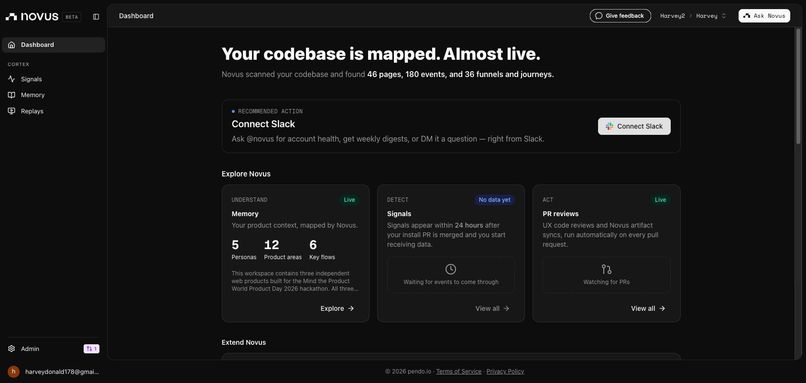
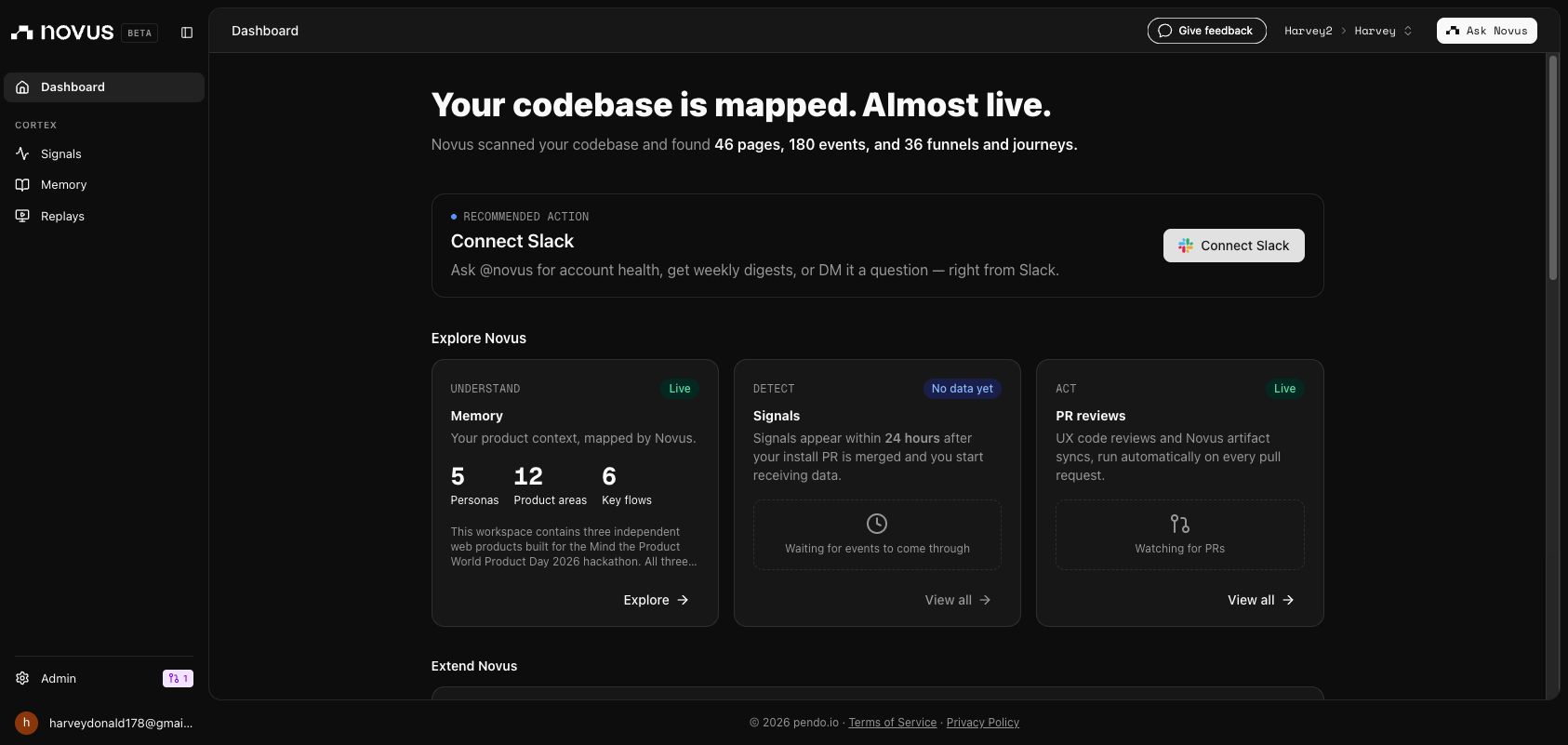
Novus dashboard showing all projects mapped
-
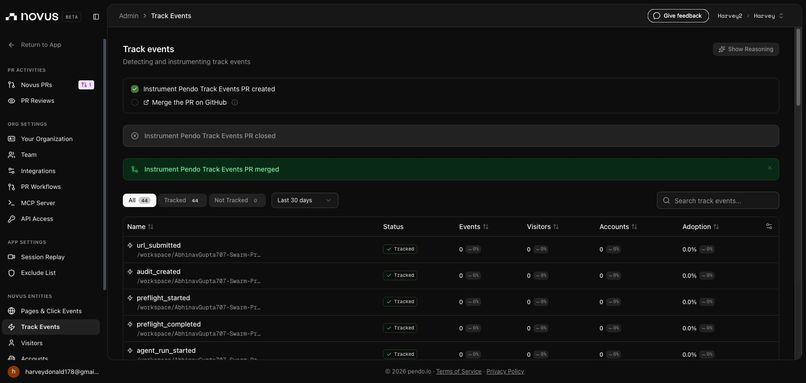
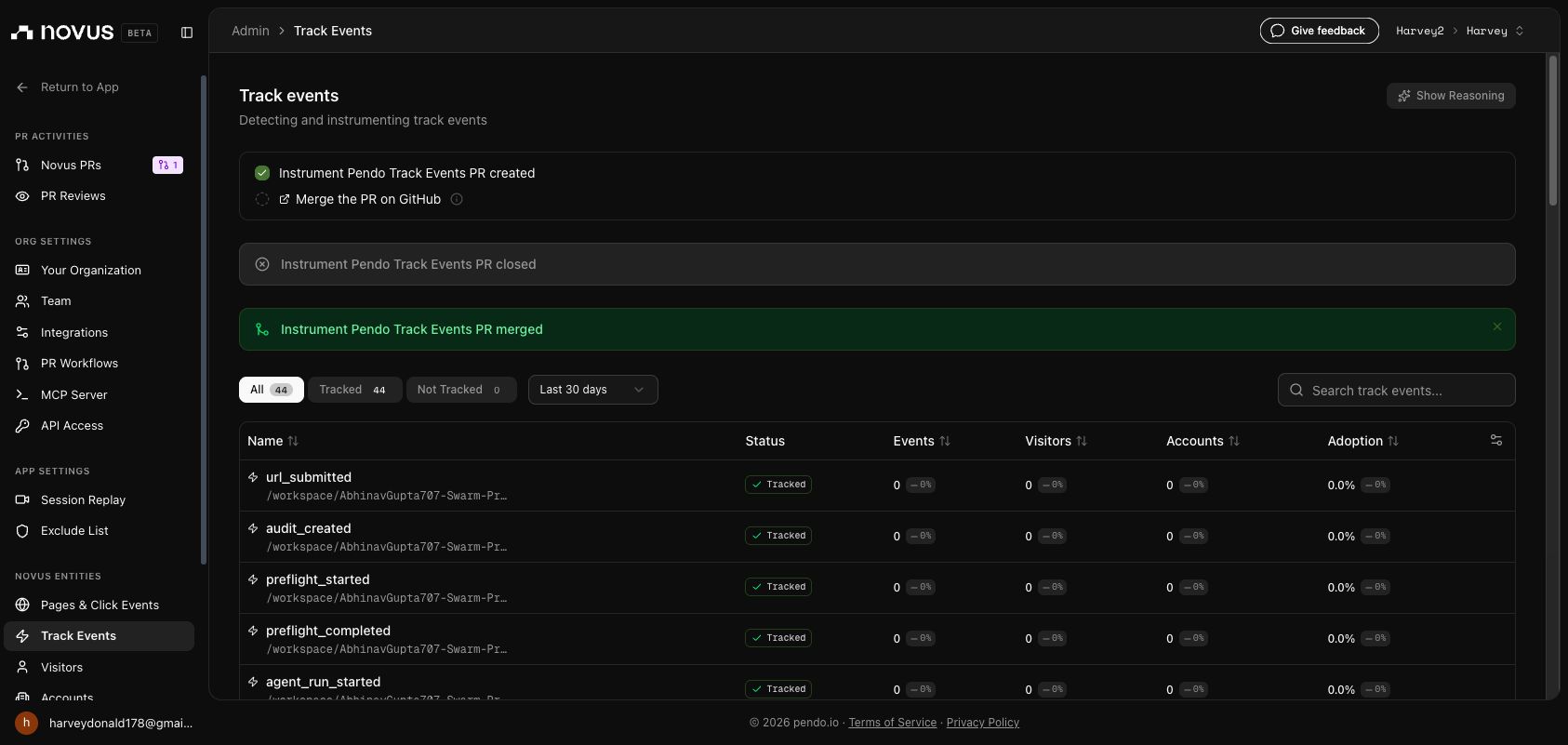
SwarmProof events tracked by Novus
-
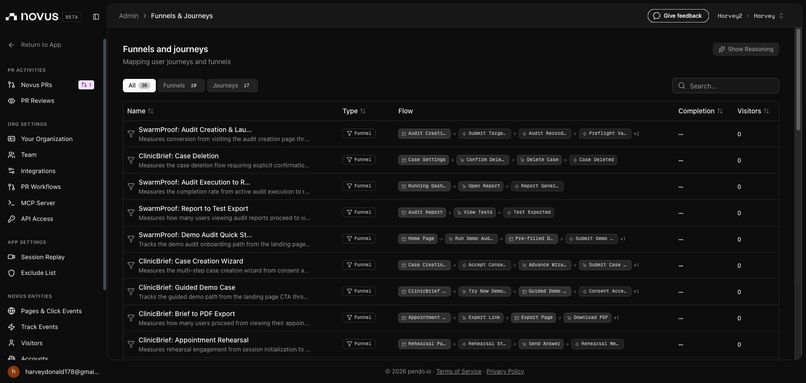
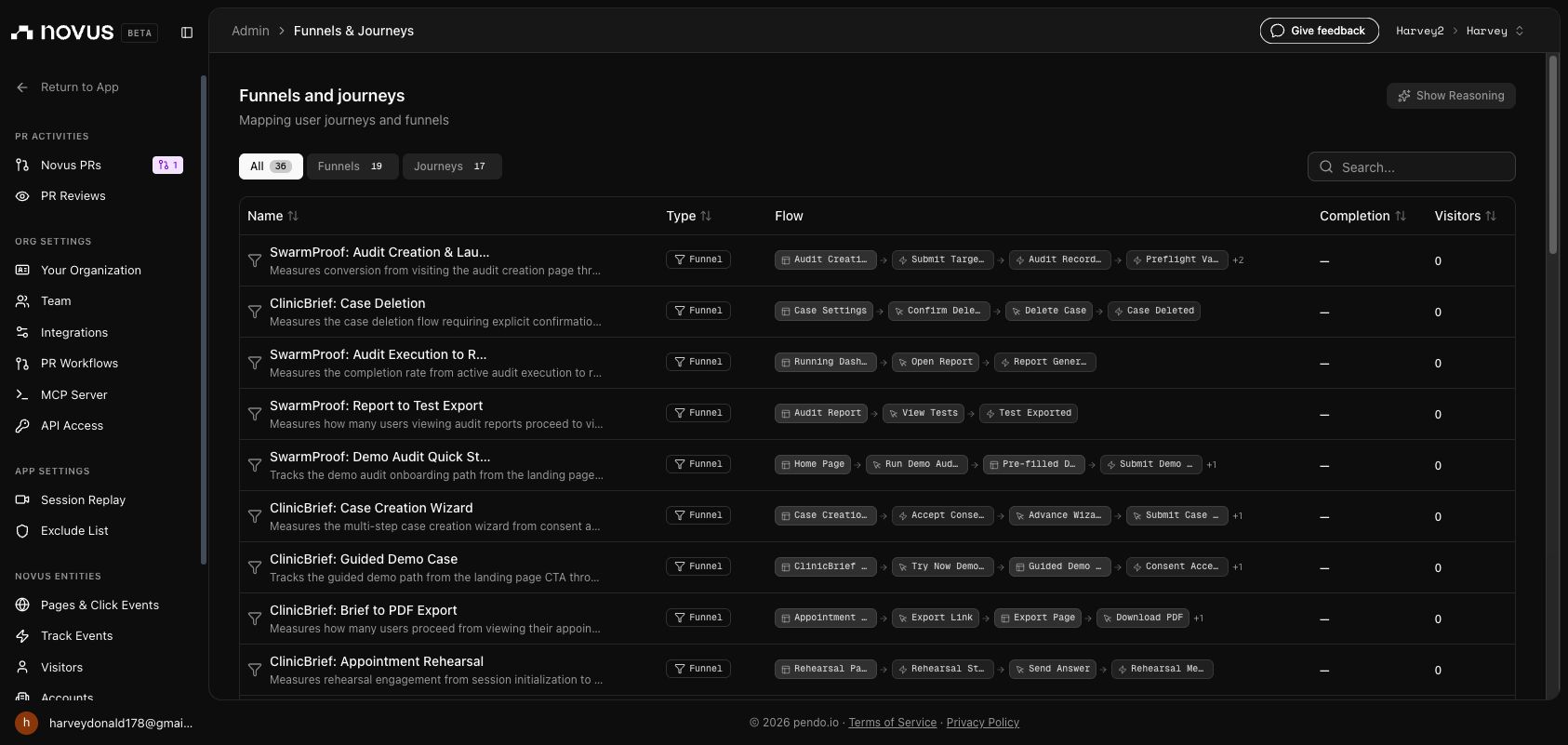
SwarmProof funnels mapped in Novus
SwarmProof
AI users test your product before real users suffer.
Inspiration
The inspiration for SwarmProof came from a very real shift in how products are made now: everyone can ship faster, but not everyone can test like a full product team.
A builder can launch a polished app in a day and still miss the things real users hit first: a hidden mobile CTA, confusing onboarding copy, a broken invite flow, a double-click that creates duplicate state, or a form that accepts bad input and fails later.
SwarmProof was built for that gap between shipping fast and knowing the product actually works.
What It Does
SwarmProof lets a user paste a public product URL, describe a goal, and watch AI browser personas try to complete that flow.
Instead of returning a vague score, SwarmProof produces useful product evidence:
- AI persona runs across normal, mobile, and chaos-style behavior.
- Live progress logs showing what each persona tried.
- Screenshots and friction points tied to specific moments in the flow.
- A clear product report with what worked, what failed, and why.
- Generated Playwright tests so teams can turn failures into regression coverage.
- Shareable reports so PMs, designers, and engineers can review the same evidence.
The core value is simple: SwarmProof gives builders a fast way to see whether a stranger can actually use what they shipped.
The AI Factor
The AI is not just a chatbot inside the product. The AI acts as the user.
SwarmProof uses browser agents to simulate different user behaviors: a normal user following the expected path, a mobile user dealing with layout constraints, and a chaos user who clicks impatiently or takes less forgiving actions.
That matters because many product failures are not code failures. They are comprehension failures, flow failures, mobile layout failures, or confidence failures. SwarmProof observes those behaviors and turns them into evidence a team can act on.
How We Built It
| Layer | What We Used | Why It Matters |
|---|---|---|
| Frontend | Next.js App Router, React, TypeScript, Tailwind CSS | Fast, polished, public product experience |
| Product UI | Landing, audit form, live dashboard, report, tests, share pages | End-to-end workflow judges and users can actually try |
| Browser automation | Playwright worker with AI personas | Lets SwarmProof test real user journeys, not just static pages |
| AI layer | Fireworks provider wrapper and persona logic | Turns goals into behavior-driven product testing |
| Reports | Evidence summaries, screenshots, suggested fixes, generated tests | Makes findings useful for PMs, designers, and engineers |
| Analytics | Novus/Pendo event tracking with safe metadata | Makes behavior measurable without exposing sensitive content |
| Deployment | Vercel web app and Railway-compatible worker | Public, usable, and built to run beyond a local demo |
Challenges
Making AI testing feel trustworthy.
A report saying “AI found friction” is not enough. We focused on evidence: steps, screenshots, persona behavior, and generated tests.
Testing behavior, not just code.
A selector can exist and the product can still be confusing. SwarmProof looks at whether a user can complete the goal, not just whether the UI technically renders.
Designing for different user types.
A happy-path user misses many issues. Normal, mobile, and chaos personas expose different classes of product risk.
Keeping the demo reliable.
External sites can block automation or require login. SwarmProof includes a reliable built-in product flow so judges can always see the full experience end to end.
Protecting user privacy.
Analytics events are metadata-only. SwarmProof avoids sending raw page content, credentials, screenshots, private URLs, or secrets into tracking tools.
Accomplishments
We are proud that SwarmProof is a real product, not just a concept.
It has a public product flow where a stranger can land on the site, start an audit, watch personas run, review a report, inspect generated tests, and open a shareable result.
The project combines product thinking, browser automation, AI reasoning, analytics, reporting, and test generation into one coherent workflow.
What We Learned
We learned that product confidence is becoming just as important as shipping speed.
AI is most useful when it produces evidence, not just opinions. The strongest version of AI product testing is one where the system shows what it tried, where it got stuck, and what a team should do next.
We also learned that a great hackathon product needs both ambition and reliability: a big idea, but with a path that works immediately for a judge or first-time user.
What's Next
Next, SwarmProof could support more personas, such as accessibility-style navigation, slow network users, international users, returning users, and admin/member role pairs.
It could also generate richer artifacts like Linear or Jira tickets, acceptance-criteria maps, full regression suites, and team dashboards for repeated release checks.
Longer term, SwarmProof can become a product confidence layer for modern teams: every important flow tested by AI users before real users suffer.
Built With
- api
- app
- css
- fireworks
- lucide-react
- next.js
- novus/pendo
- playwright
- postgresql
- prisma
- railway
- react
- router
- routes
- tailwind
- typescript
- vercel

Log in or sign up for Devpost to join the conversation.