-
-
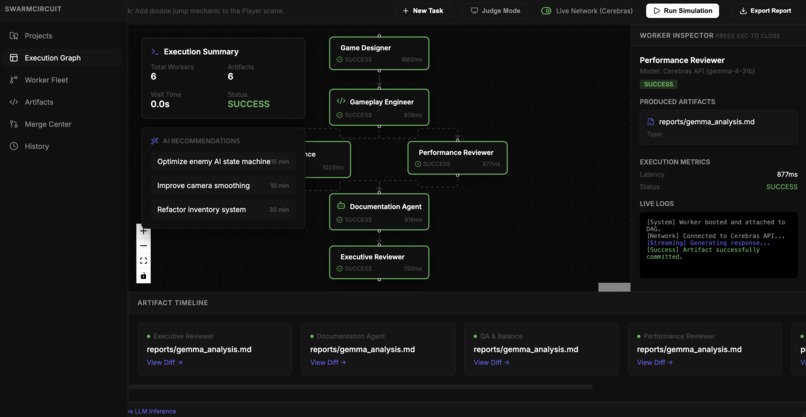
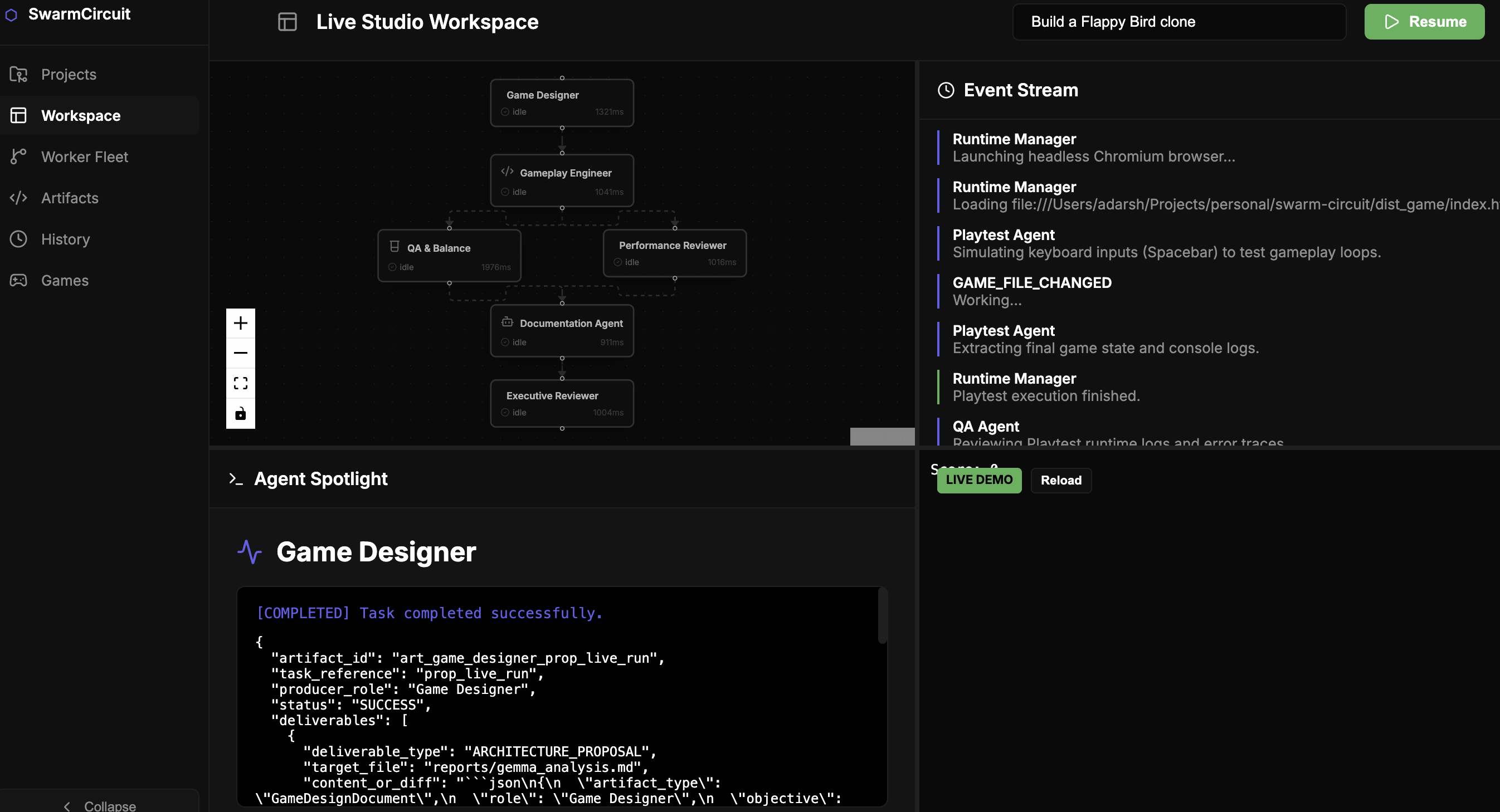
Studio Page
-
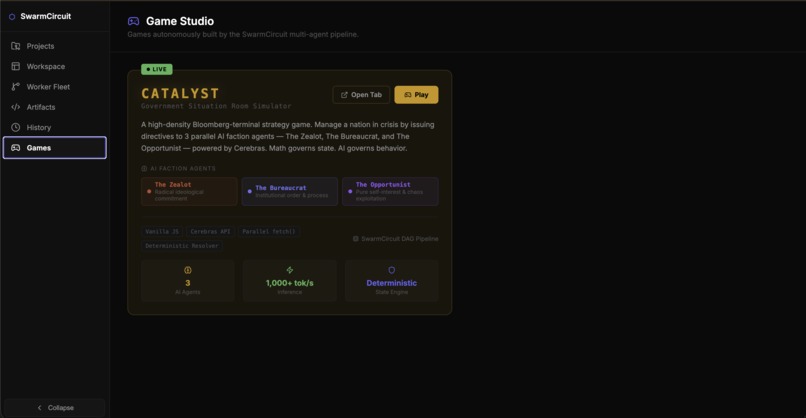
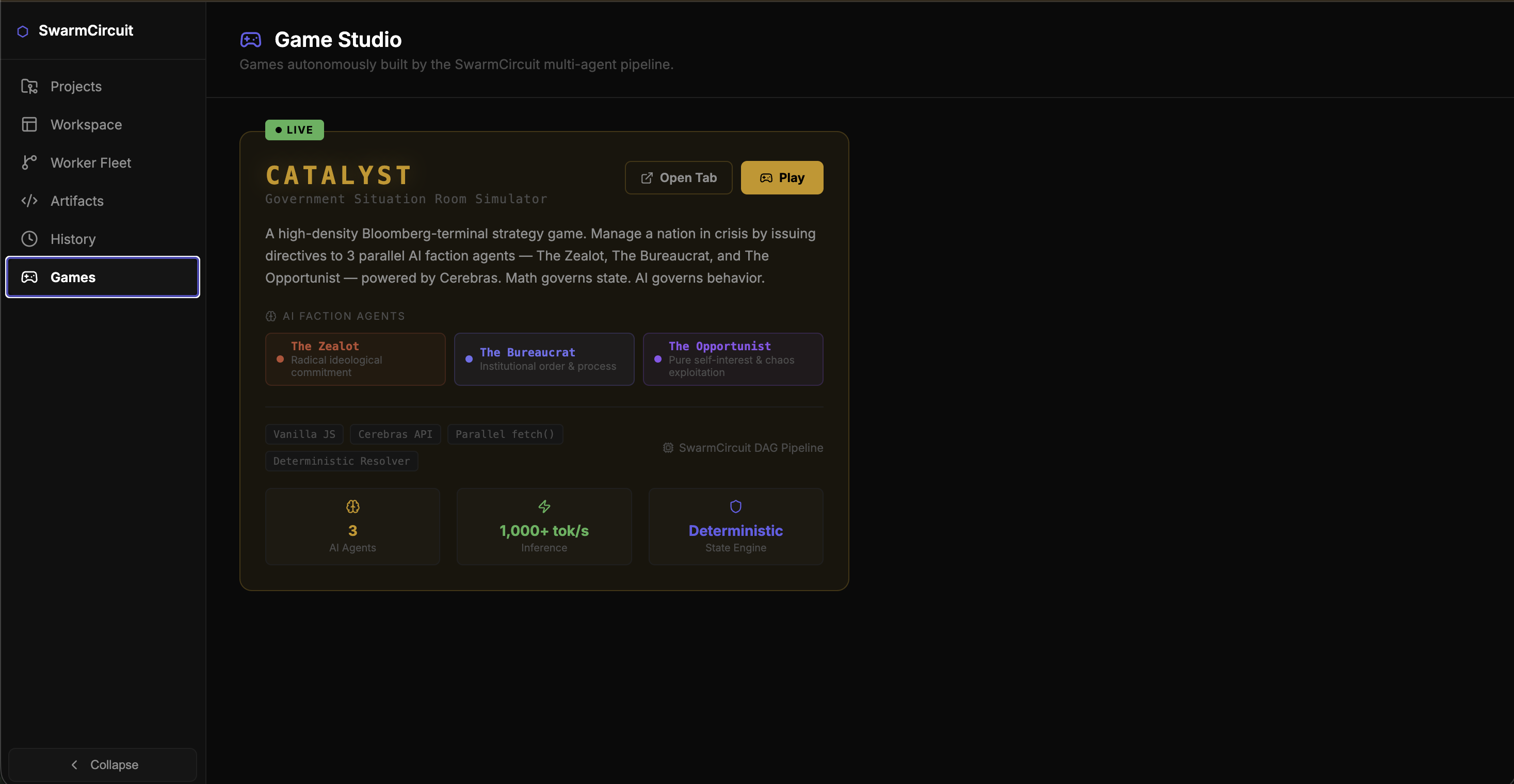
Games Tab
-
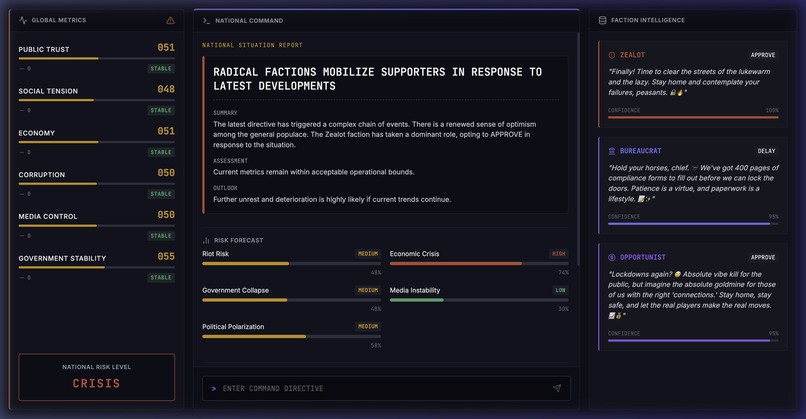
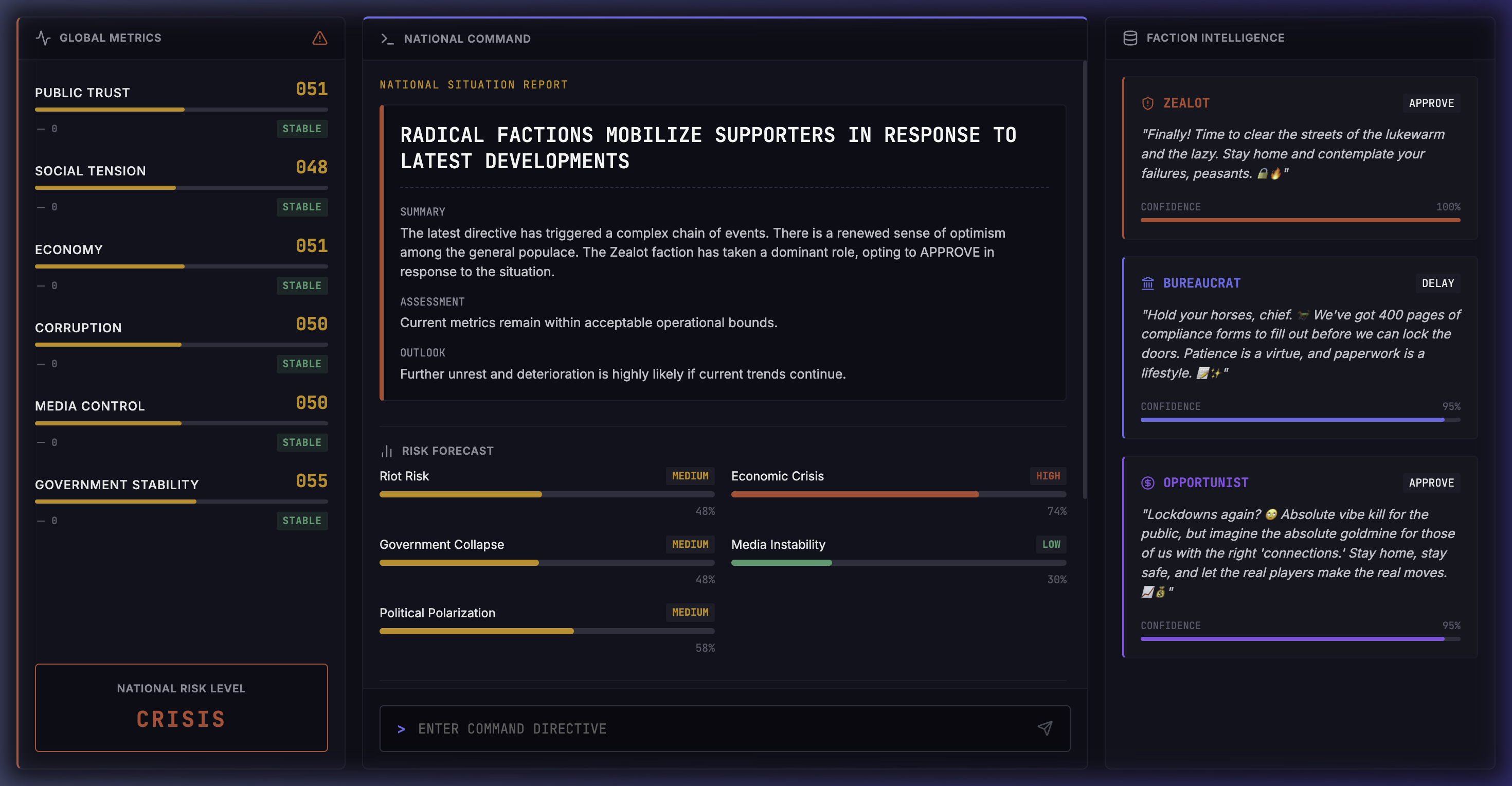
Gaming Product
-
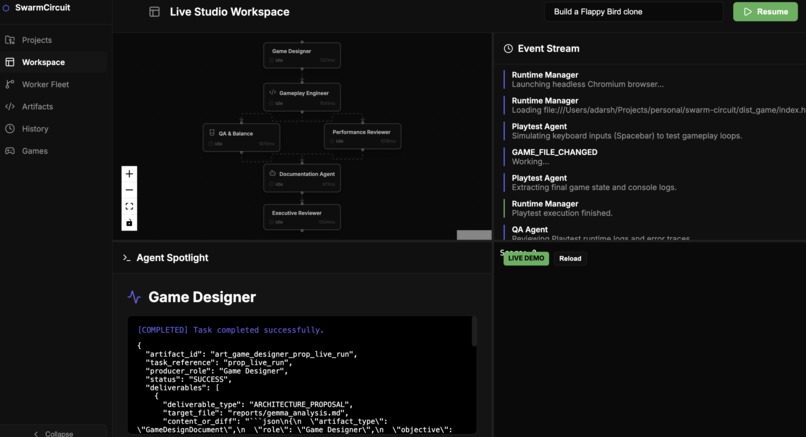
Working snapshot
SWARM-CIRCUIT
Inspiration
AI coding assistants have become incredibly capable, but they still work like a single developer responding to prompts. Real software engineering—especially game development—is collaborative. Designers, gameplay engineers, QA, performance reviewers, and technical writers each contribute unique expertise.
We wanted to answer one question:
What if AI could work like an actual game development studio instead of a chatbot?
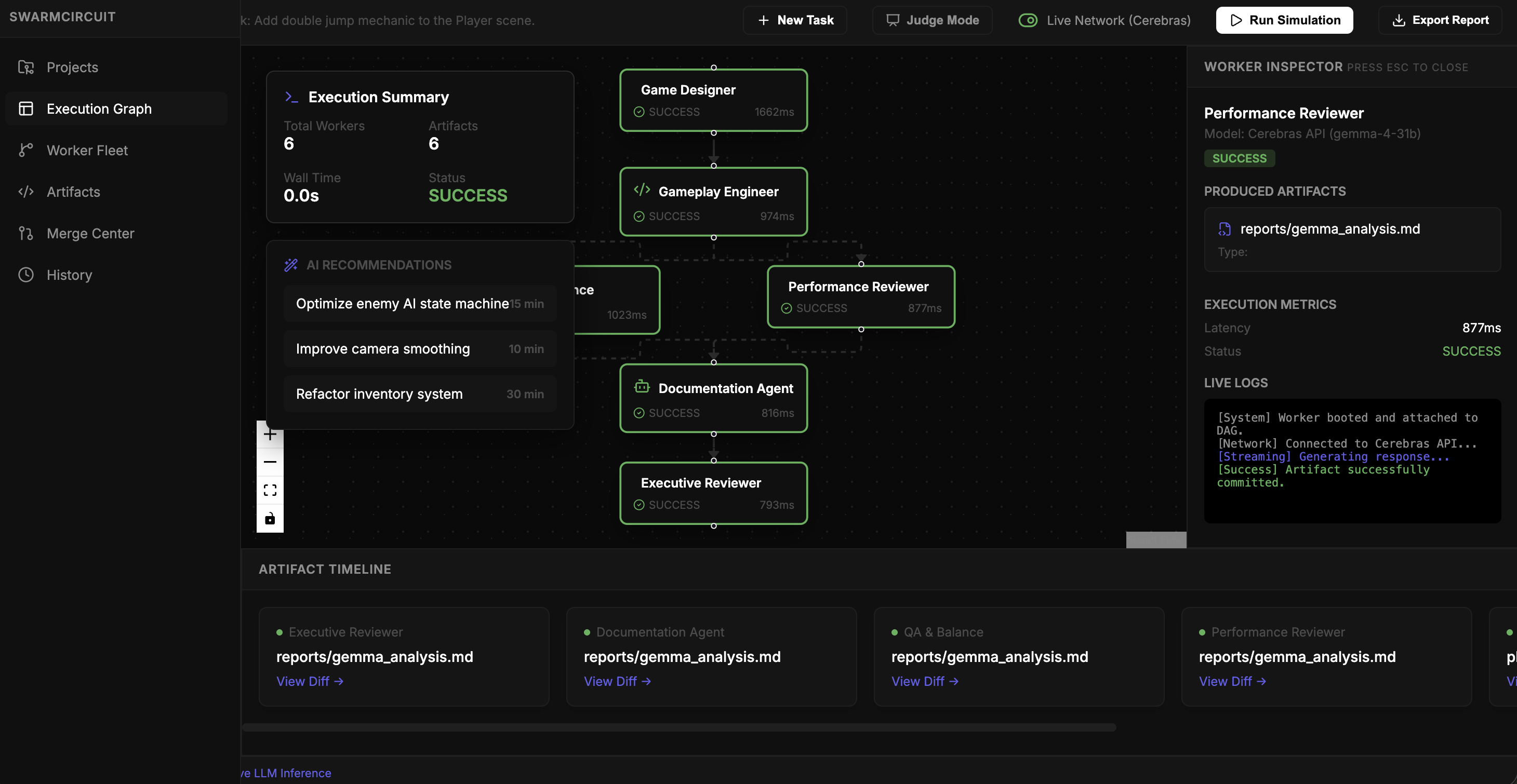
That idea became SwarmCircuit—an autonomous multi-agent platform where specialized AI workers collaborate, review each other's outputs, and visualize every step of the development process. Instead of hiding the AI's reasoning, SwarmCircuit exposes the entire workflow through a live execution graph, execution metrics, generated artifacts, and worker logs.
What it does
SwarmCircuit transforms a single development request into a coordinated AI workflow.
Each specialized worker performs a dedicated responsibility:
- 🎮 Game Designer
- 💻 Gameplay Engineer
- 🧪 QA & Balance Reviewer
- ⚡ Performance Reviewer
- 📝 Documentation Agent
- 👔 Executive Reviewer
As the workflow executes, developers can monitor:
- Live execution graph
- Worker execution status
- Execution latency
- Generated artifacts
- AI recommendations
- Worker inspector
- Live logs
- Artifact timeline
- Exportable reports
Instead of only producing code, SwarmCircuit provides complete visibility into how AI reaches its decisions.
How we built it
SwarmCircuit was designed with a modular architecture inspired by real engineering teams.
Frontend
- React
- TypeScript
- Tailwind CSS
- React Flow
- Framer Motion
Backend
- Node.js
- Express
- Multi-agent orchestration engine
- DAG-based task scheduler
AI Layer
- Cerebras Inference API
- Streaming responses
- Specialized AI worker prompts
- Artifact generation pipeline
Each worker executes independently while respecting dependency relationships, allowing the execution graph to behave similarly to a real production workflow.
Challenges we ran into
The hardest problem wasn't generating AI responses—it was orchestrating multiple AI workers.
Some of the biggest technical challenges included:
- Designing a deterministic execution graph
- Coordinating dependencies between workers
- Streaming execution updates in real time
- Keeping every AI decision transparent
- Managing generated artifacts
- Synchronizing worker execution with the UI
- Building an intuitive visualization for complex workflows
Balancing ambitious functionality with a hackathon timeline required us to focus on reliability, clarity, and demonstration quality.
Accomplishments that we're proud of
We're proud that SwarmCircuit demonstrates AI collaboration instead of AI conversation.
Some highlights include:
- ✅ Autonomous multi-agent workflow
- ✅ Interactive execution graph
- ✅ Worker inspector
- ✅ Live execution logs
- ✅ AI-generated documentation
- ✅ Artifact timeline
- ✅ Performance analysis
- ✅ Executive review pipeline
- ✅ Exportable reports
- ✅ Modern production-inspired interface
Most importantly, every AI action remains transparent and inspectable.
What we learned
This project reinforced one major insight:
The future of AI software development isn't a single larger model—it's specialized AI teams working together.
We also learned that developer trust comes from transparency. By exposing execution order, artifacts, logs, and review stages, AI becomes significantly easier to understand, debug, and improve.
What's next for SWARM-CIRCUIT
This hackathon prototype is only the beginning.
Our roadmap includes:
- Persistent project memory
- GitHub integration
- Automatic pull request generation
- Autonomous code implementation
- Human approval checkpoints
- Multi-model routing
- Plugin architecture for custom workers
- Automated testing and benchmarking
- Long-running autonomous development sessions
- Cross-language project support
- Team collaboration features
Our long-term vision is to build an AI-native software studio where humans define the vision and autonomous AI teams handle execution—while keeping every decision transparent, explainable, and under developer control.
Built With
- ai
- api
- architecture
- cerebras
- css
- dag-based
- engine
- express.js
- flow
- framer
- gemini
- git
- local-first
- markdown
- motion
- multi-agent
- node.js
- react
- tailwind
- typescript
- vite
- workflow


Log in or sign up for Devpost to join the conversation.