-
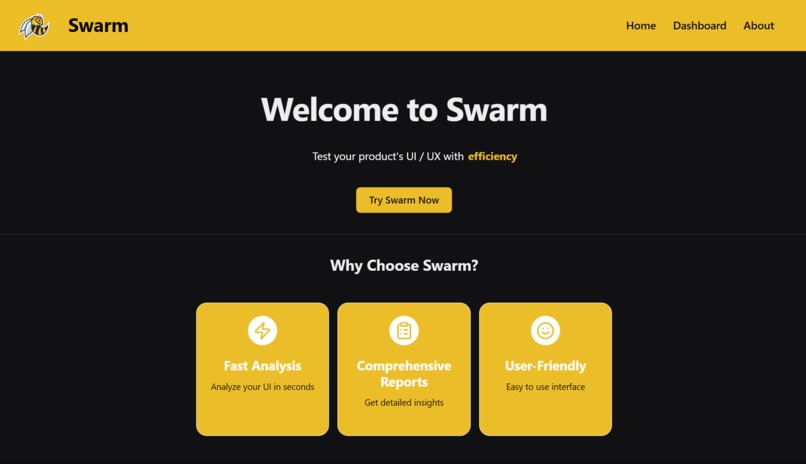
Home Page
-
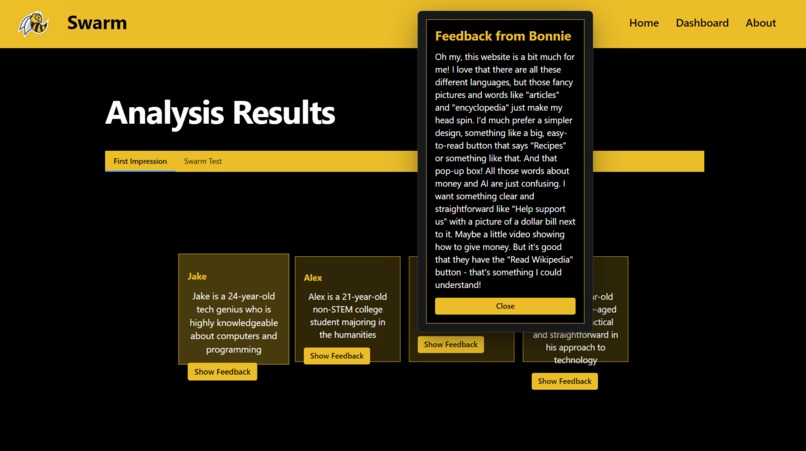
First Impression
-
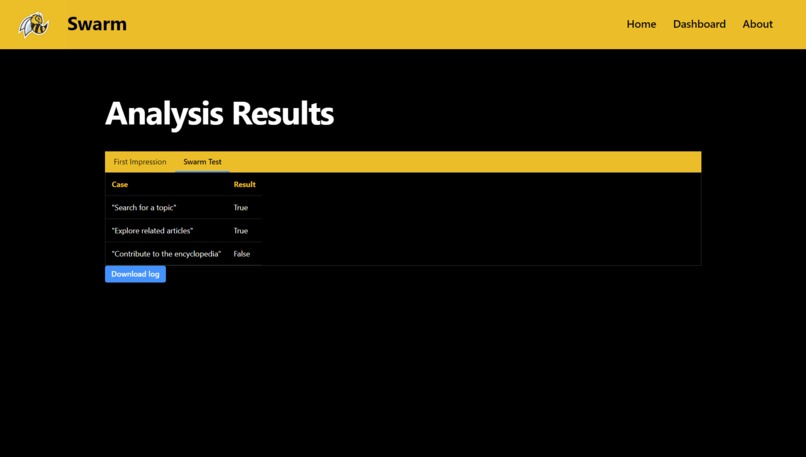
Swarm Test
Inspiration
Building websites is easy with Gen AI, but ensuring a seamless UX across various competencies remains a significant challenge🤔. Manual reviews struggle to keep pace with rapid development cycles, especially for websites with a lot of pages. We were inspired to develop swarm.ai to address these hurdles by automating UX testing with a scalable, efficient solution. 💡
What it does 💪
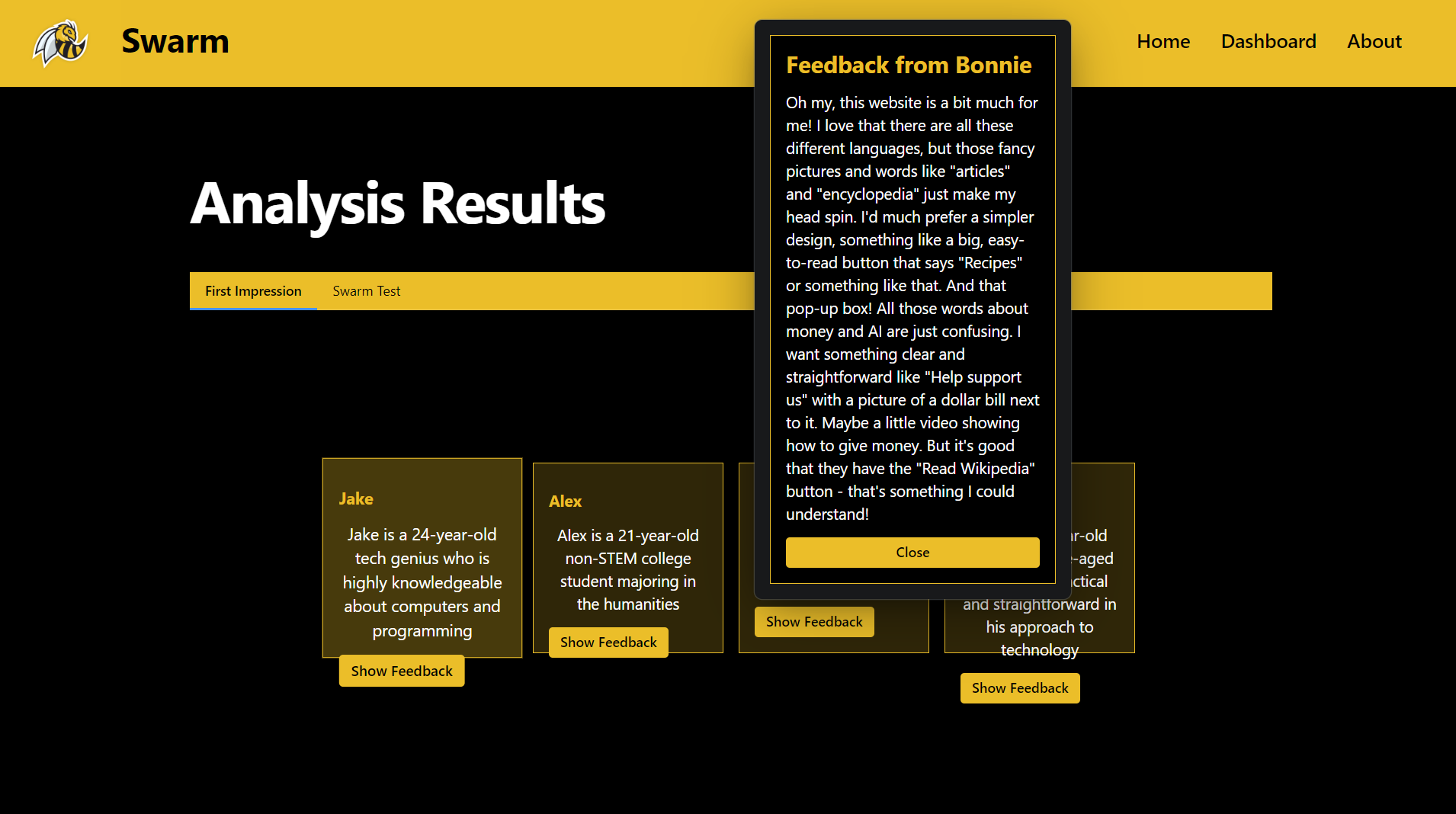
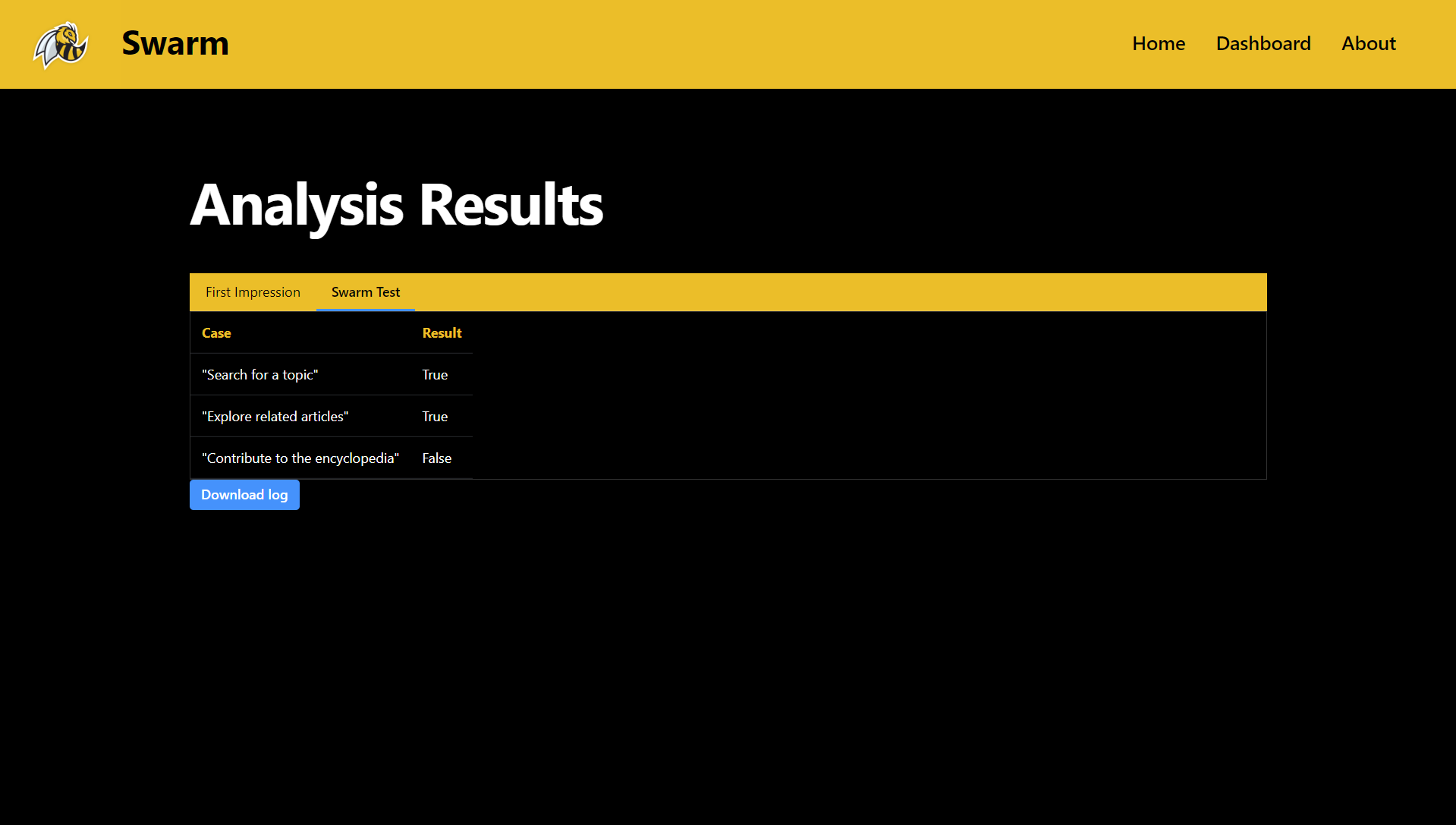
swarm.ai takes a 2️⃣ual approach: First Impression Analysis: Transforms user input into the best-match persona using semantic search, collecting feedback on visual components with Gemini Vision. 👁️ Swarm Test: Takes website links, generates specific use cases, and deploys a swarm of agents to simulate different user behaviors. Developers can access logs for detailed insights to improve the website experience. 🐝
How we built it ⚒️
We built swarm.ai using a combination of semantic search and AI-based agents. The personas were created with different user preferences in mind, and the tool runs both automated first impression analysis and use-case simulations. Technologies like Gemini Vision and agent-based testing allowed us to create a dynamic solution that adapts to varying user needs.
Challenges we ran into 🚧
Our main challenges were scalability and python dependency management. Managing different agents efficiently, especially for larger websites, required significant compute resources. Additionally, we faced difficulties maintaining a balance between speed and depth.
Accomplishments 🏆
We are super proud of implementing the cross-procedural Selenium loop 🔁, which allows for thorough testing. This loop uses Selenium to automate browsing across different pages of a website, ensuring that each component is tested in sequence while simultaneously simulating real-user interactions. This made it possible to thoroughly review websites with complex features quickly and efficiently.
What's next for swarm.ai
We plan to expand our swarm of agents to cover more diverse personas, further enhancing UX testing 🌍. We're also looking into adding features like a cool UI where developers can accept or reject potential changes and scaling the tool to reduce compute costs and improve overall performance.

Log in or sign up for Devpost to join the conversation.