Inspiration
This project was inspired by a pattern that kept disturbing me: whenever a child struggled in class, the default labels were “lazy”, “careless”, or “not serious about studies”. As I dug deeper into research on rural education and learning disabilities, I realized that 5–10% of students may have specific learning disorders, but almost none are ever diagnosed. In parallel, through my previous project on doom scrolling, I learned how invisible, tech amplified problems can quietly shape lives without being named. That pushed me to look for a similarly “silent” crisis in education and I found it in undiagnosed learning disabilities in rural India.
What it does
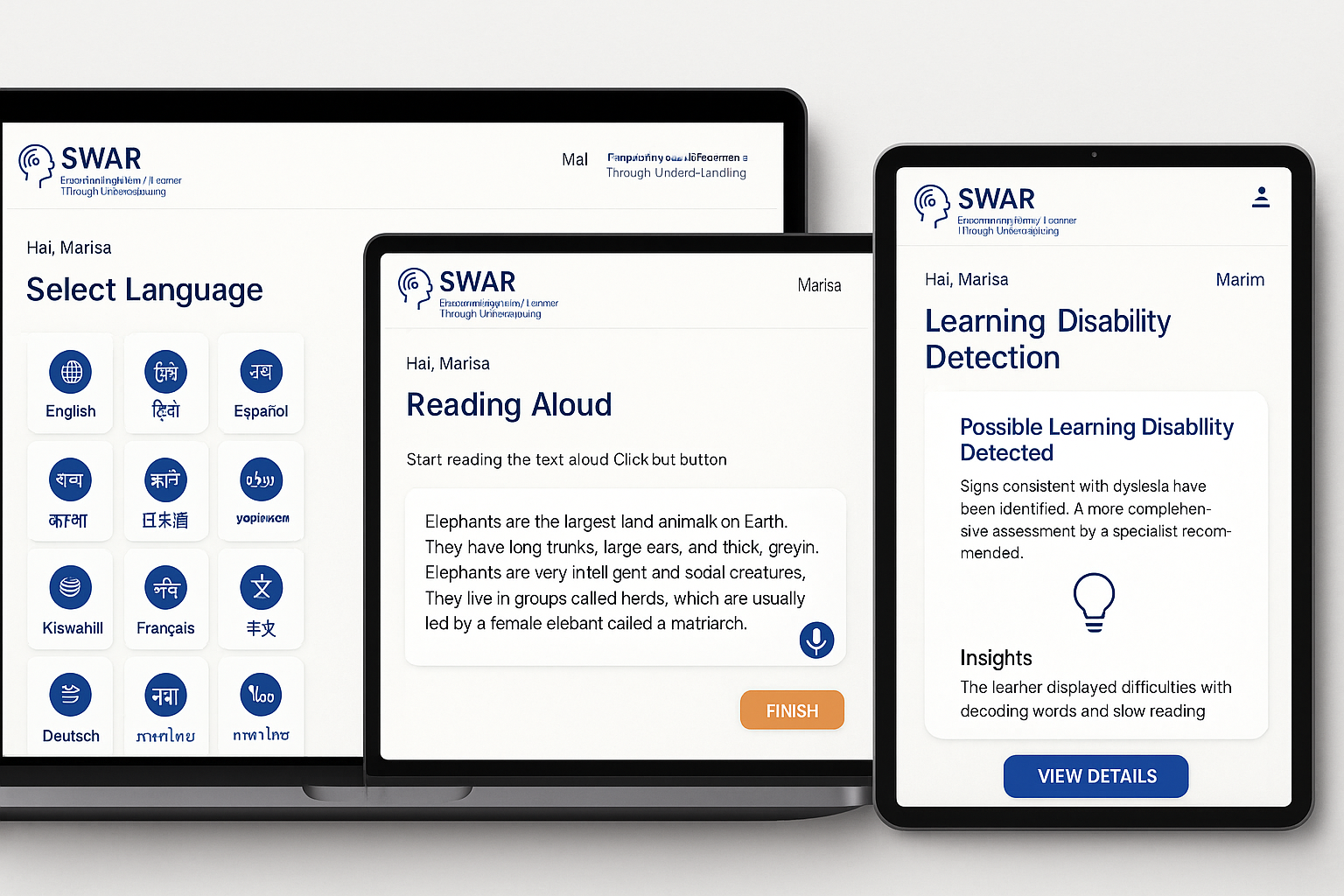
SWAR is a voice-first AI platform that listens to students in their mother tongue and detects early signs of dyslexia, dyscalculia, and other learning difficulties through how they speak, read, and respond. It then flags at-risk students to teachers, explains why the child might be struggling, and suggests simple, classroom-ready interventions instead of just giving a score. SWAR runs on low-cost Android phones, offline, and includes accessibility features (like text-to-speech and support for Indian Sign Language content) so rural students with disabilities can access learning in a way that works for them.
How we built it
We built Swar as a voice-first AI platform. The core stack combines automatic speech recognition in Indian languages, lightweight on-device models to analyze response patterns, and a rules/ML hybrid engine to flag possible dyslexia or dyscalculia. We then designed a simple teacher dashboard that translates these flags into concrete classroom strategies instead of abstract scores.
Challenges we ran into
The challenges were significant: collecting clean voice data in noisy rural environments, designing an interface that works for students with low digital literacy, and building trust with teachers who feared being “replaced” by AI. The biggest challenge, however, was ethical grounding every design choice in the question: Are we helping this child be understood, or just measuring them again in a new way?
What we learned
Through this project, I have learned three big things: first, that language and dignity matter as much as algorithms students open up when spoken to in their mother tongue. Second, teachers are not “anti-technology”; they are simply overwhelmed and need tools that fit their constraints. Third, building for low-end devices and offline environments forces more thoughtful, frugal design than a typical urban app.
What's next for SWAR
The immediate priority is to deepen the pilot, not just widen it: refining our dyslexia/dyscalculia models with more diverse rural speech data, co-designing interventions with teachers, and publishing our first research results on AI-based, mother-tongue LD screening. This will help validate SWAR scientifically, not just anecdotally.
Built With
- firebase
- google-web-speech-api
- isl
- n8n
- nltk
- node.js
- numpy
- pandas
- pytorch
- react-native
- restapi
- spacy
- sqlite
- tensorflow


Log in or sign up for Devpost to join the conversation.