Inspiration
As students, we often find that learning new skills outside of the classroom can be difficult due to time constraints or financial limitations. This got us thinking—why not create a platform where people could exchange their skills directly? SwapMeet was born out of the desire to empower students to learn from each other in a cost-effective, flexible, and community-driven manner. SwapMeet promotes inclusivity and peace by facilitating skill exchanges, bringing people together to learn from and support one another, regardless of background or financial status.
What it does
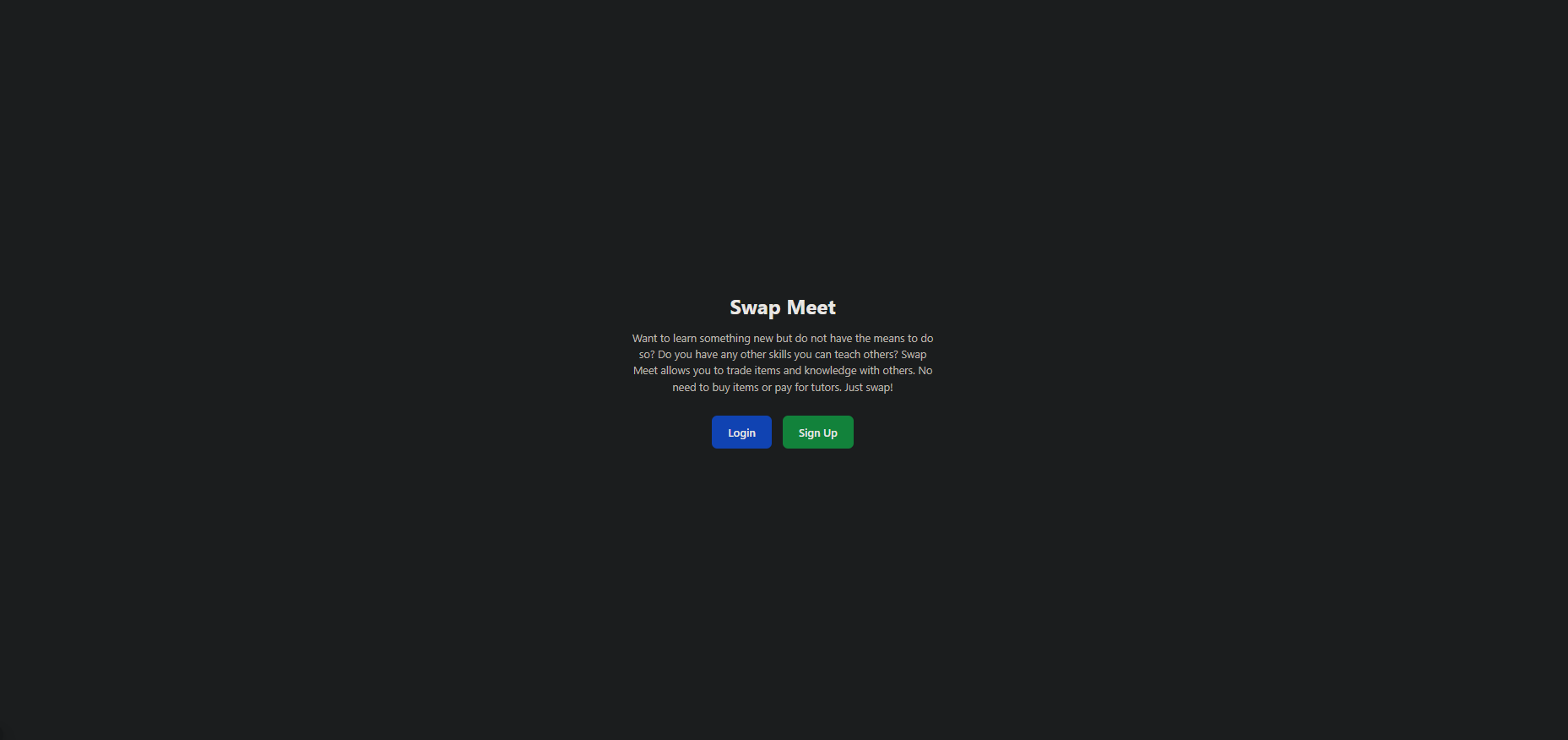
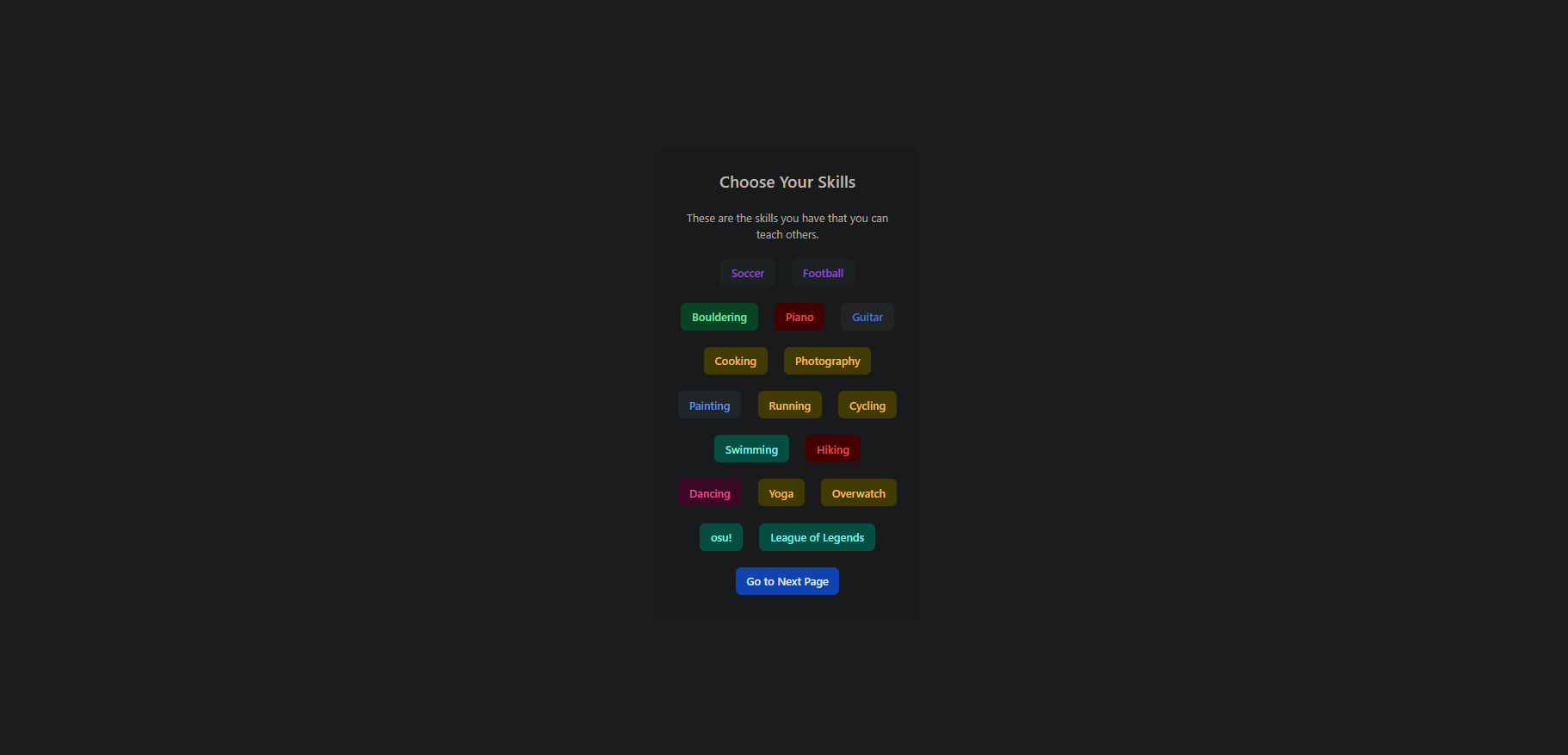
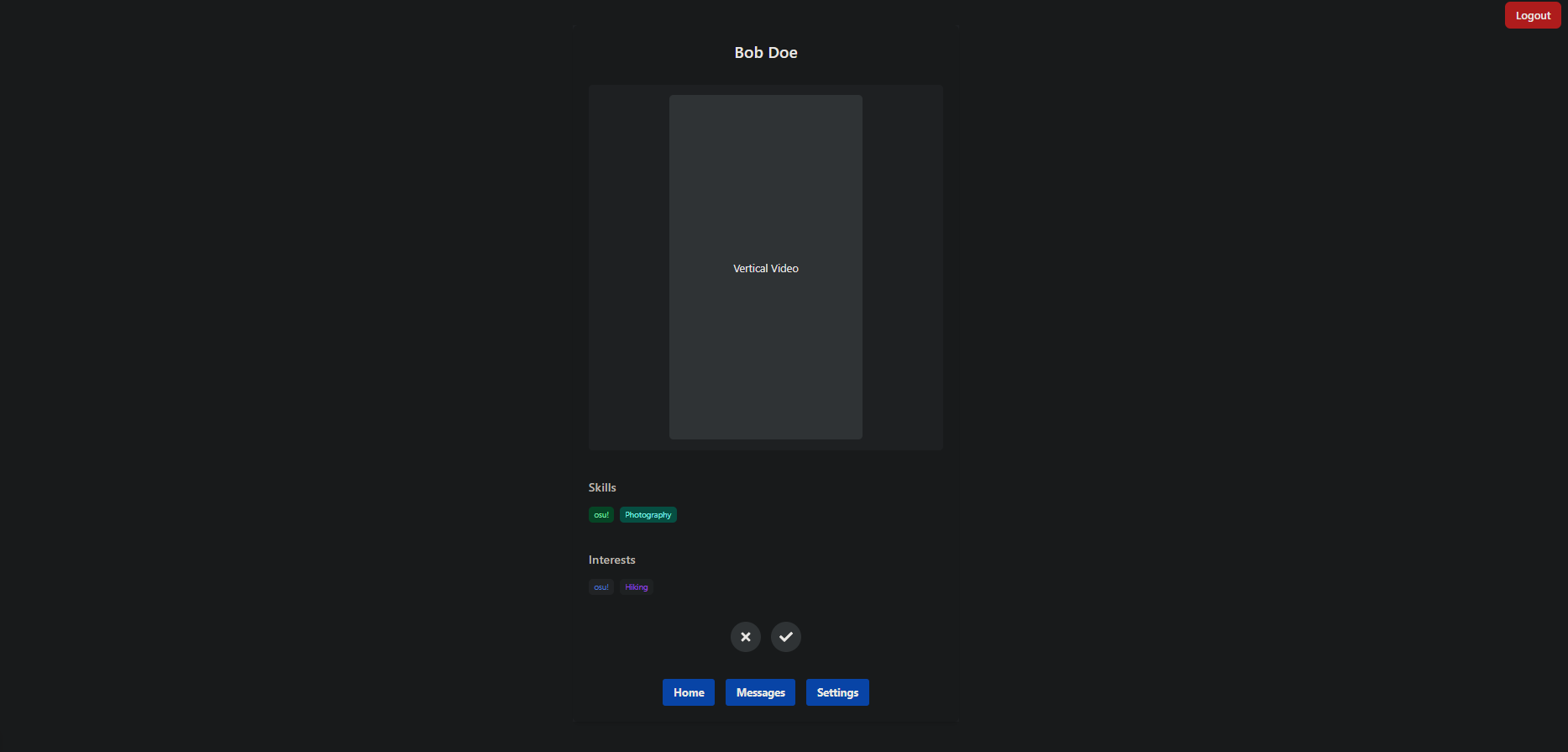
SwapMeet connects people with different skill sets who are looking to learn or teach something new. Users can browse a variety of skills they are interested in learning and offer their skills in exchange. The platform facilitates face-to-face or virtual meetups, making learning and sharing accessible to everyone. Regardless of whether it is coding, photography, cooking, or languages, users can swap skills with others who have complementary interests.
The platform features a smart matching system that pairs users based on their skills and interests. It matches you with individuals who are eager to learn the skills you are willing to teach, and vice versa, ensuring that every exchange is mutually beneficial. This system makes it easier to find people with the right skills to help you grow, while also allowing you to teach others in areas where you have expertise.
How we built it
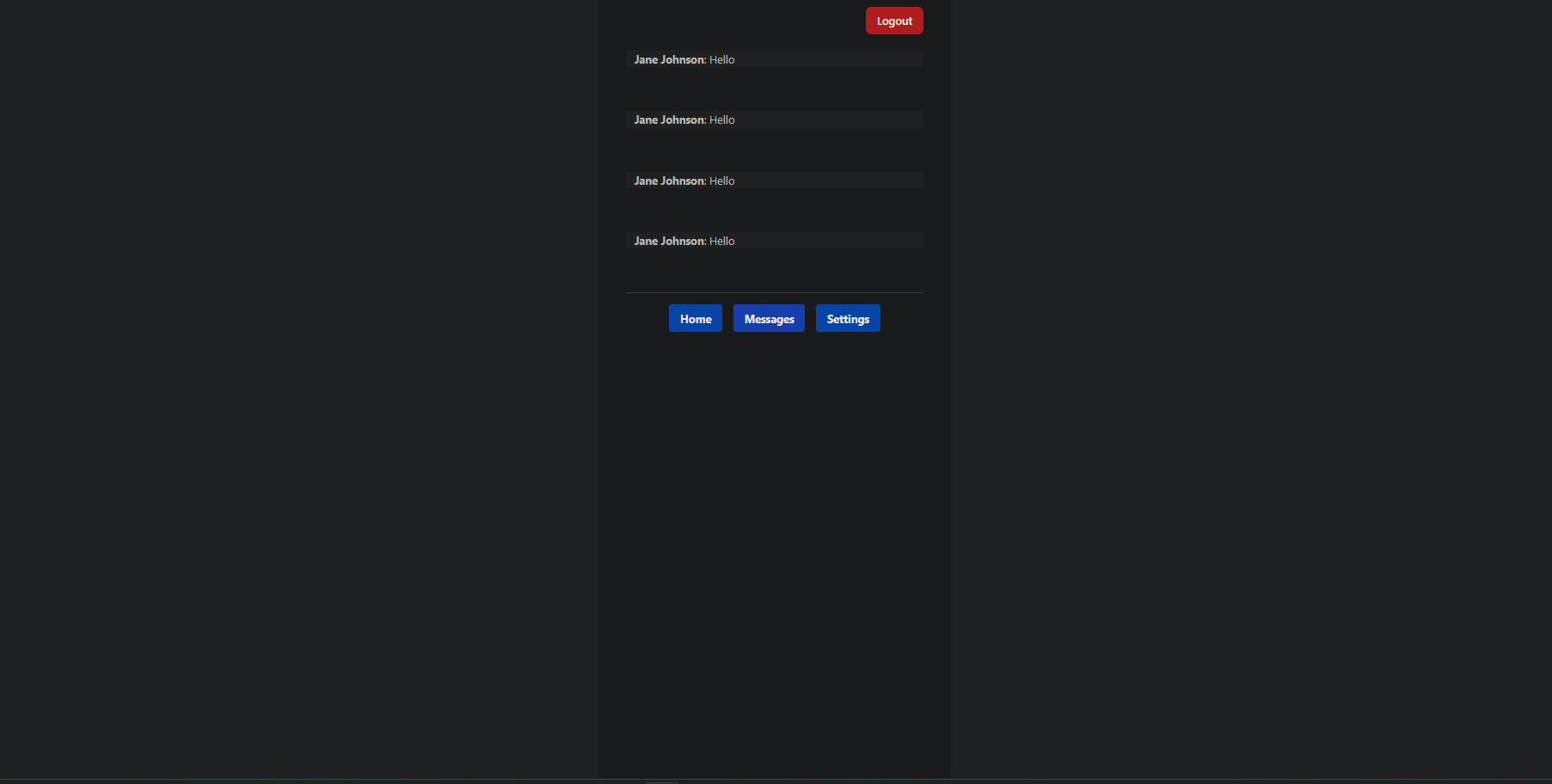
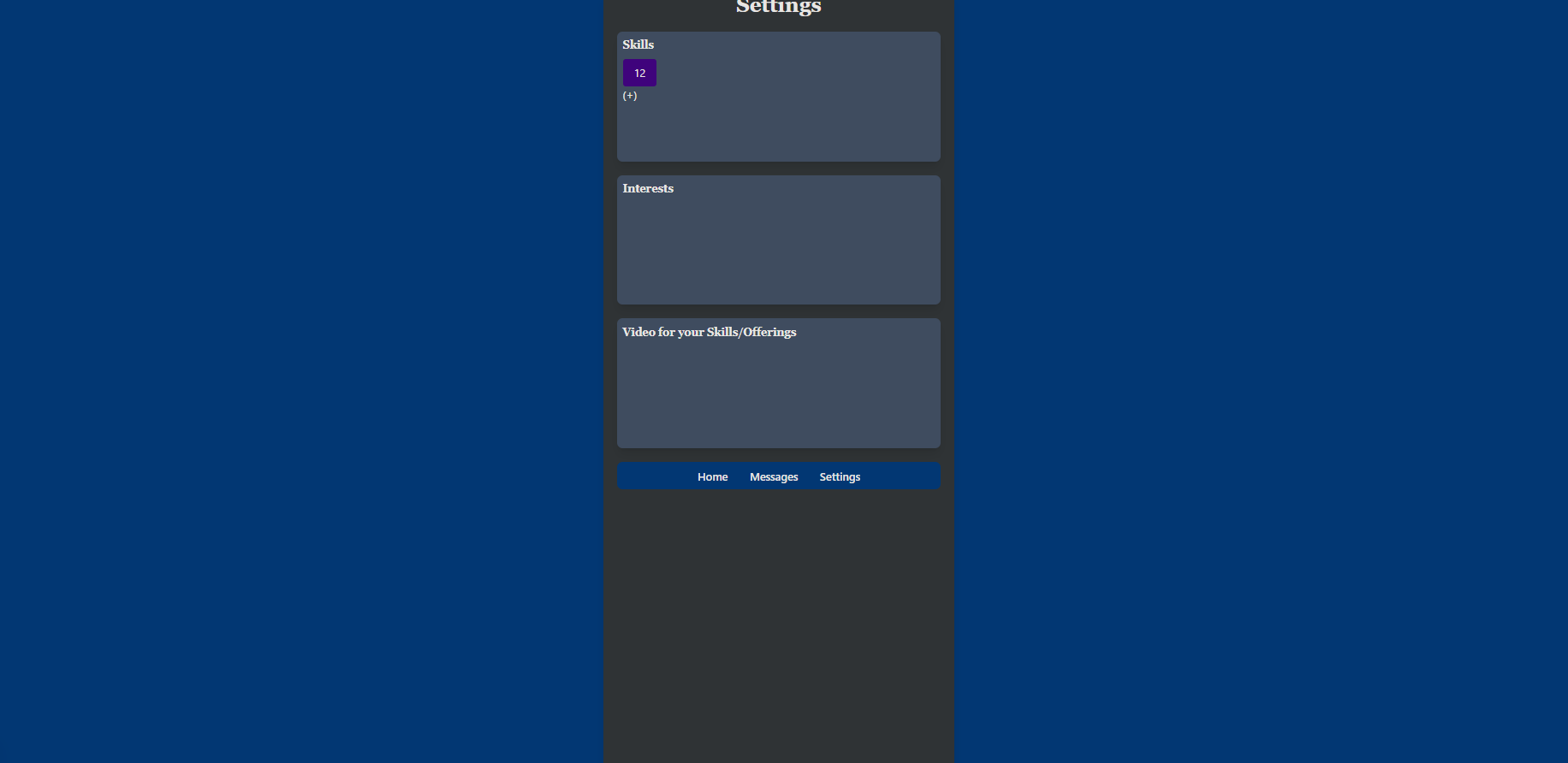
SwapMeet was built using modern web technologies to ensure a seamless and user-friendly experience. The front-end was developed with Next.js and React for a responsive and interactive UI, while Node.js and Supabase power the back-end for efficient data management and real-time updates. We used Prisma as an ORM for seamless database interactions with Supabase. Additionally, we implemented a messaging system to allow users to communicate and schedule swaps. Tailwind CSS was used for styling to ensure a clean and modern design throughout the platform.
Challenges we ran into
One of the main challenges we faced was learning new technologies that we had not worked with before. Some of our team members had not touched React or JavaScript before, while others were more experienced but wanted to dive into the backend and explore new tools like Supabase and Prisma. Coordinating our learning process and making sure everyone had the opportunity to gain new skills was key to the success of the project. We also had to ensure that the integration between the front-end and back-end was seamless, which required close collaboration and communication within the team.
Adding to the challenge was the 24-hour time constraint, which pushed us to work efficiently and prioritize key features while ensuring a smooth and functional product. Despite the time limitations, the collaborative effort helped us stay focused and allowed everyone to contribute meaningfully to the project, whether learning something new or enhancing their existing skill set.
Accomplishments that we are proud of
We are particularly proud of the fact that we were able to come up with the idea for SwapMeet and successfully build it in under 24 hours. Each of us learned new skills along the way—whether it was tackling the front-end with React for the first time, or diving into backend development with Supabase and Prisma.
We also faced some challenges during the 24-hour time frame, including one team member’s laptop bricking right in the middle of the project, but we pushed through and managed to get everything done on time. Despite the obstacles, we came together as a team and are proud that we were able to create a working product from scratch while learning and supporting each other throughout the process.
What is next for SwapMeet
Moving forward, we plan to enhance SwapMeet by adding skill-based ratings and reviews to allow users to showcase their proficiency in the skills they offer, as well as to provide trustworthy feedback on the exchanges. This will help ensure that users can confidently assess the expertise of others before committing to a swap.
We also aim to improve the platform’s search and filtering system, making it easier for users to find people who have the exact skills they want to learn and teach. We plan to integrate the Google Maps API to help users identify convenient meetup locations based on their proximity, simplifying the process of connecting for face-to-face skill swaps.
Additionally, we are working on integrating real-time chat functionality using web sockets, so users can interact instantly and coordinate meetups or ask questions about the skills being exchanged. This will make the platform more dynamic and user-friendly.
Another exciting feature we are planning to implement is the ability to swap physical items. For example, if a user wants to learn to play the saxophone but can not afford one, they could offer their piano in exchange. This feature would allow users to trade items they have for the things they need, facilitating a broader range of exchanges beyond just skills.
Ultimately, we want SwapMeet to be a trusted community where students can easily access learning opportunities, collaborate with others, swap items, and build meaningful skills. We look forward to continuing to improve the platform and making it even more accessible for students everywhere.
Built With
- laugh
- live
- love
- next.js
- prisma
- react
- supabase
- tailwind
- typescript


Log in or sign up for Devpost to join the conversation.