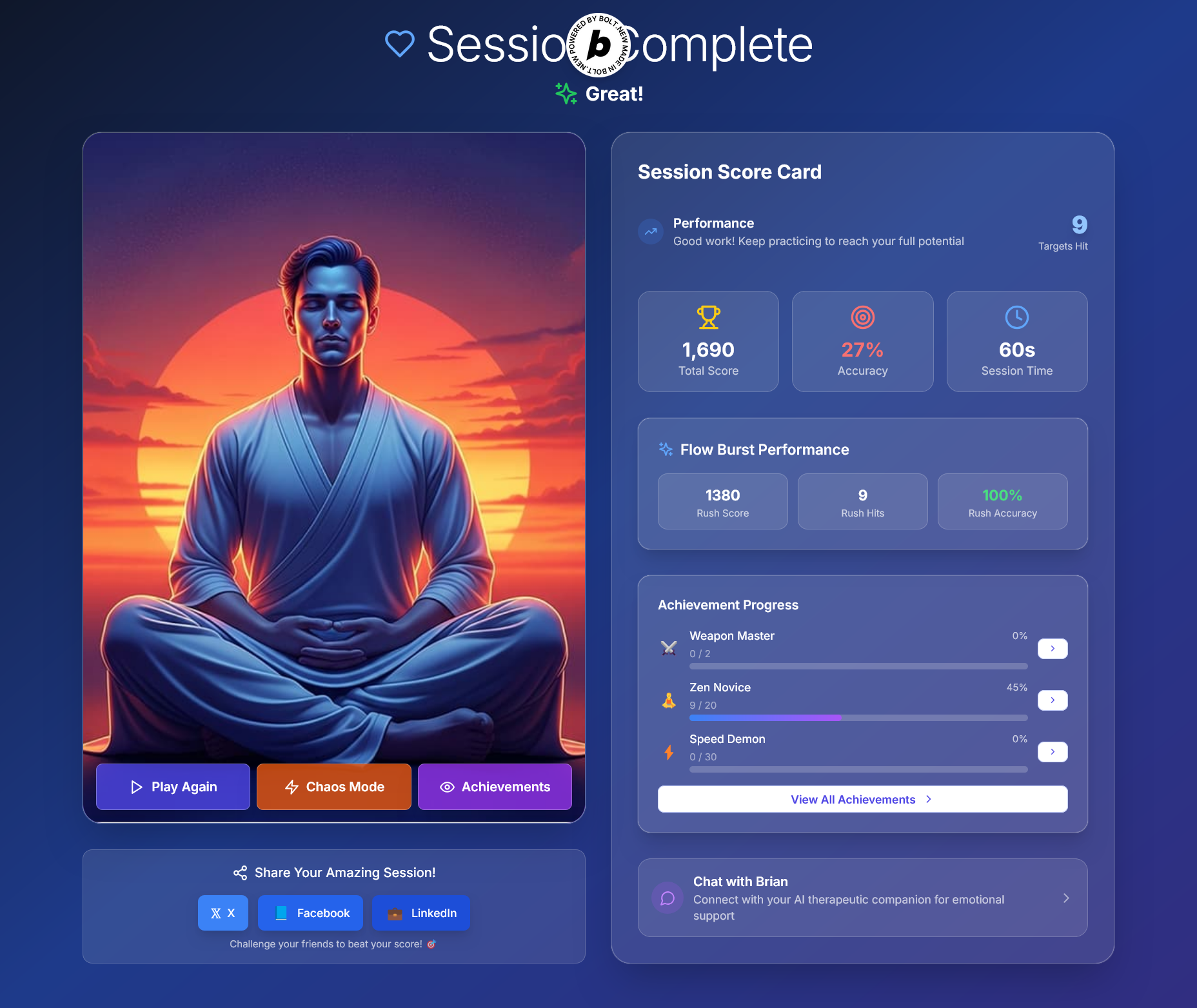
Svings Sanctuary - Project Story
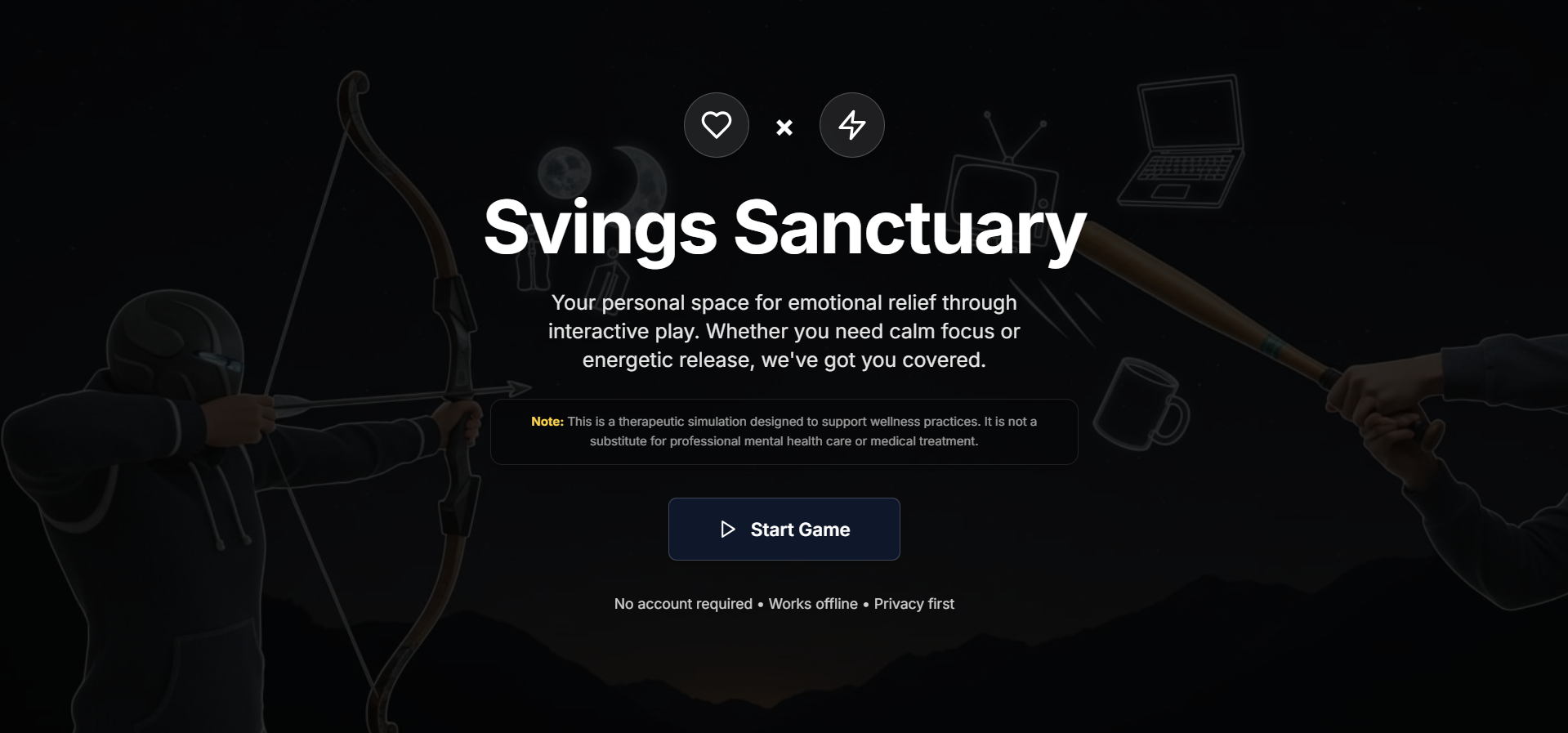
Svings Sanctuary represents a revolutionary approach to mental health support through interactive gaming. Born from the recognition that traditional therapy isn't accessible to everyone, this project bridges the gap between entertainment and emotional wellness by creating a therapeutic gaming experience that adapts to users' emotional states.
What Inspired Me
The inspiration came from observing how people naturally seek different outlets for emotional regulation - some need to release energy destructively when frustrated, while others prefer mindful, calming activities. I realized that gaming could provide both experiences safely, with an AI companion offering the kind of emotional validation and guidance that many people desperately need but can't access.
The core insight was: What if we could create a game that doesn't just entertain, but actually helps people process emotions and develop coping strategies?
What I Learned
Building Svings Sanctuary taught me invaluable lessons about:
Human-Centered Design: How subtle design choices (colors, sounds, pacing) can dramatically impact emotional states
Therapeutic Game Mechanics: Balancing engagement with genuine emotional benefit
AI Conversation Design: Creating empathetic, non-judgmental AI interactions that feel authentic
Audio Psychology: How different soundscapes can induce calm or release tension
Accessibility in Mental Health: Making therapeutic tools approachable for people who might never seek traditional therapy
How I Built It
The development process was both technical and deeply research-driven:
Phase 1: Research & Conceptualization
- Studied therapeutic gaming principles and emotional regulation techniques
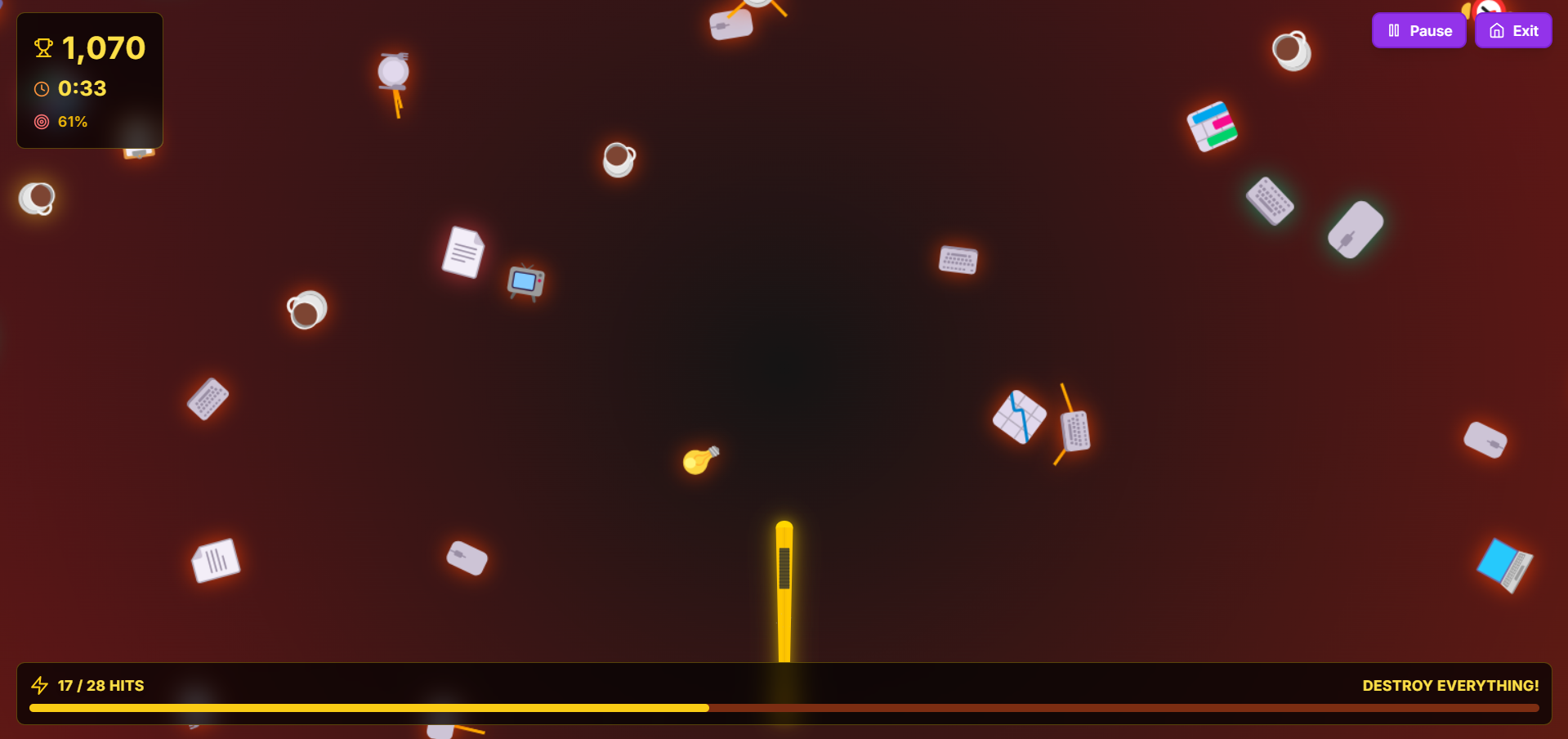
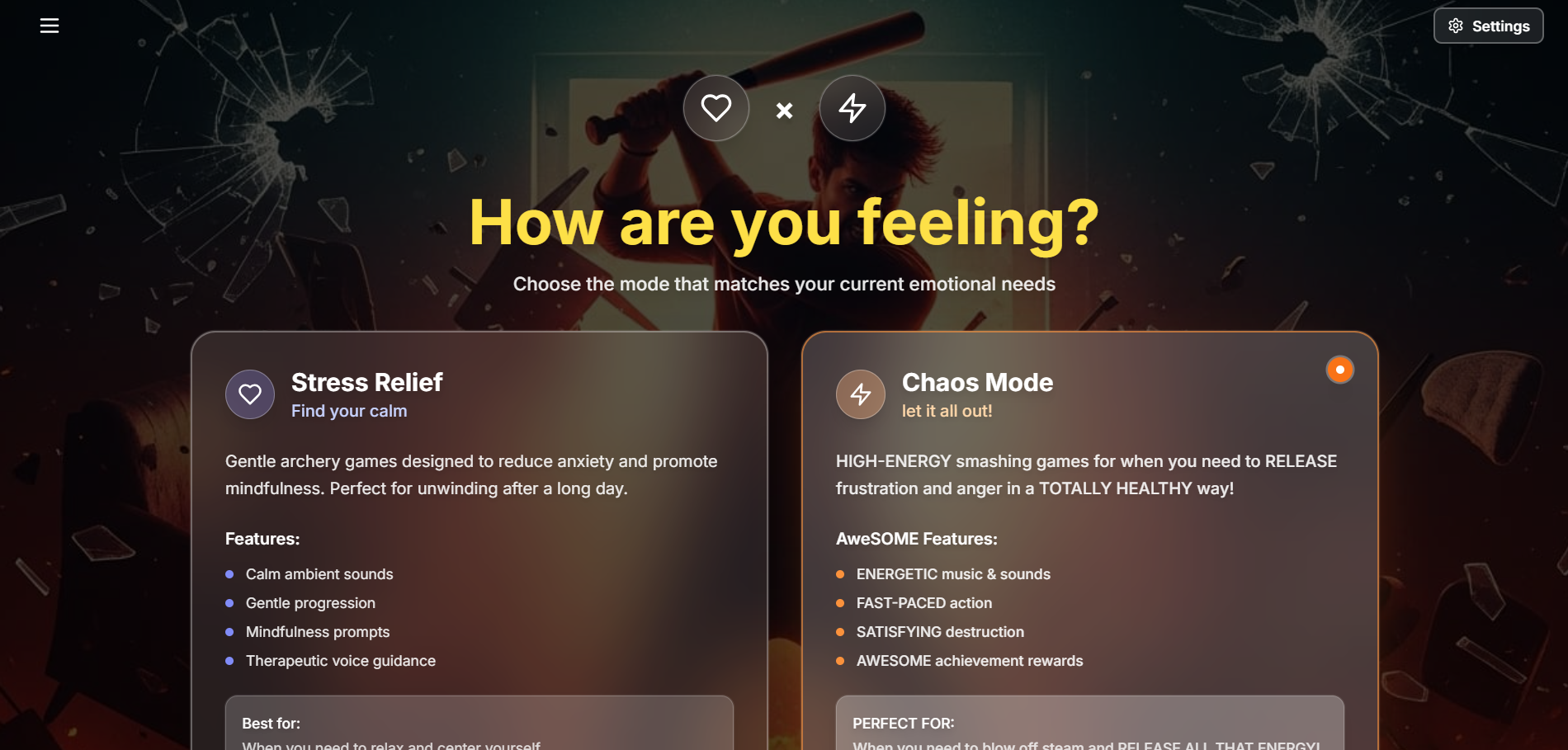
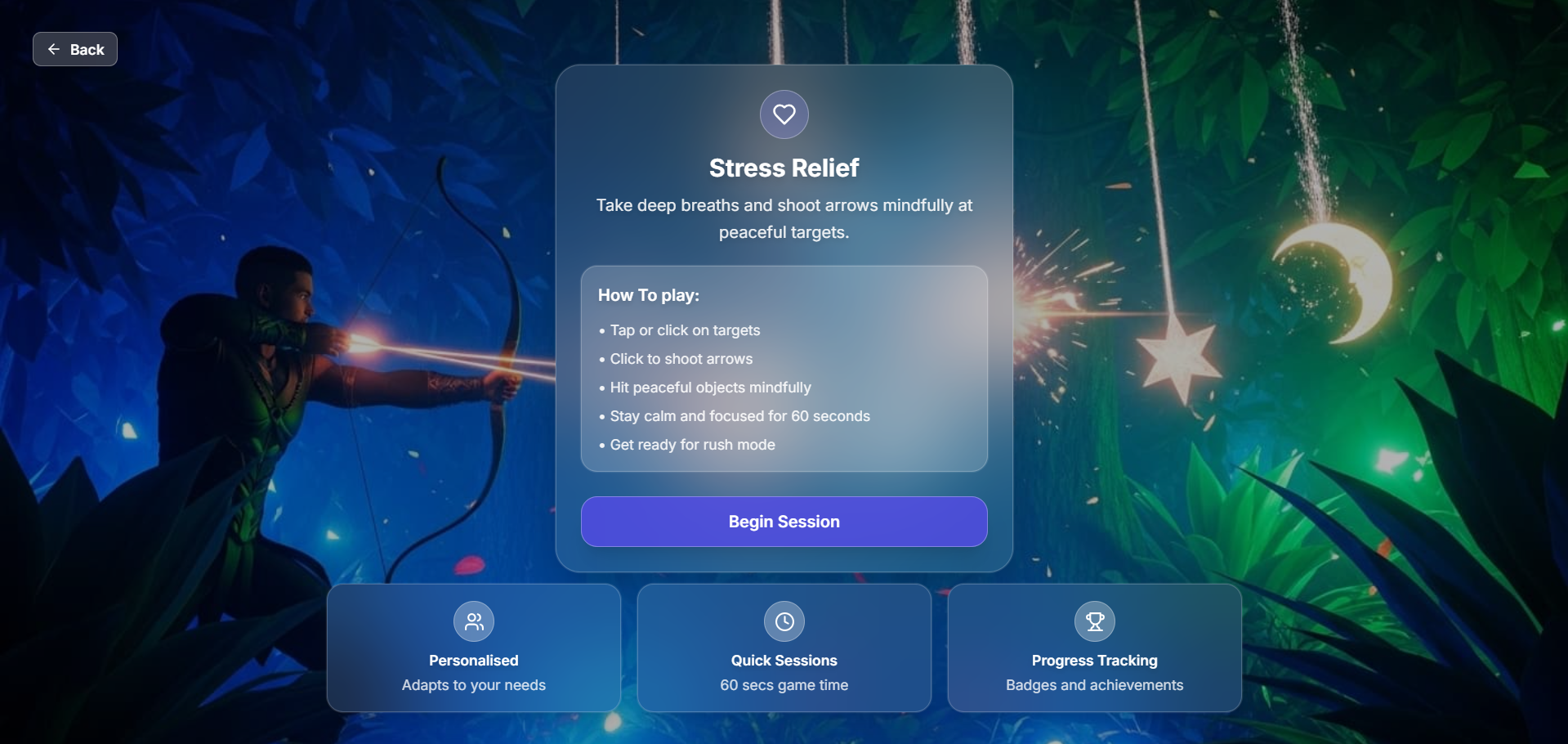
- Designed dual-mode system: Chaos Mode (destructive release) vs Stress Relief (mindful targeting)
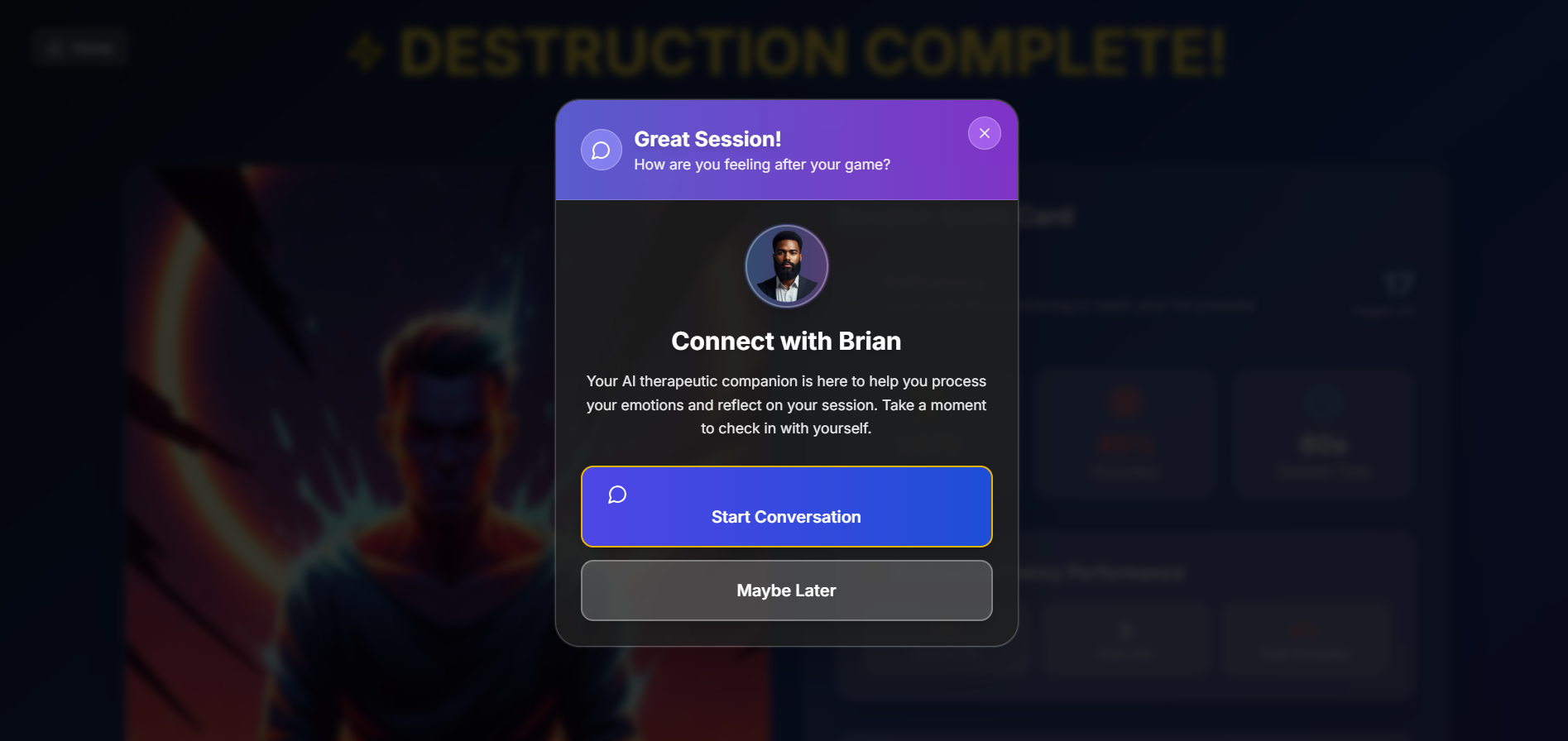
- Created Brian AI's personality and conversation flows based on therapeutic communication principles
Phase 2: Core Game Engine
- Built custom React/TypeScript game engine with HTML5 Canvas
- Implemented Rush Mode system with dramatic pause mechanics for peak engagement
- Developed combo system to reward skill and maintain flow state
- Created mode-specific weapon systems (baseball bat vs bow & arrow)
Phase 3: Therapeutic Integration
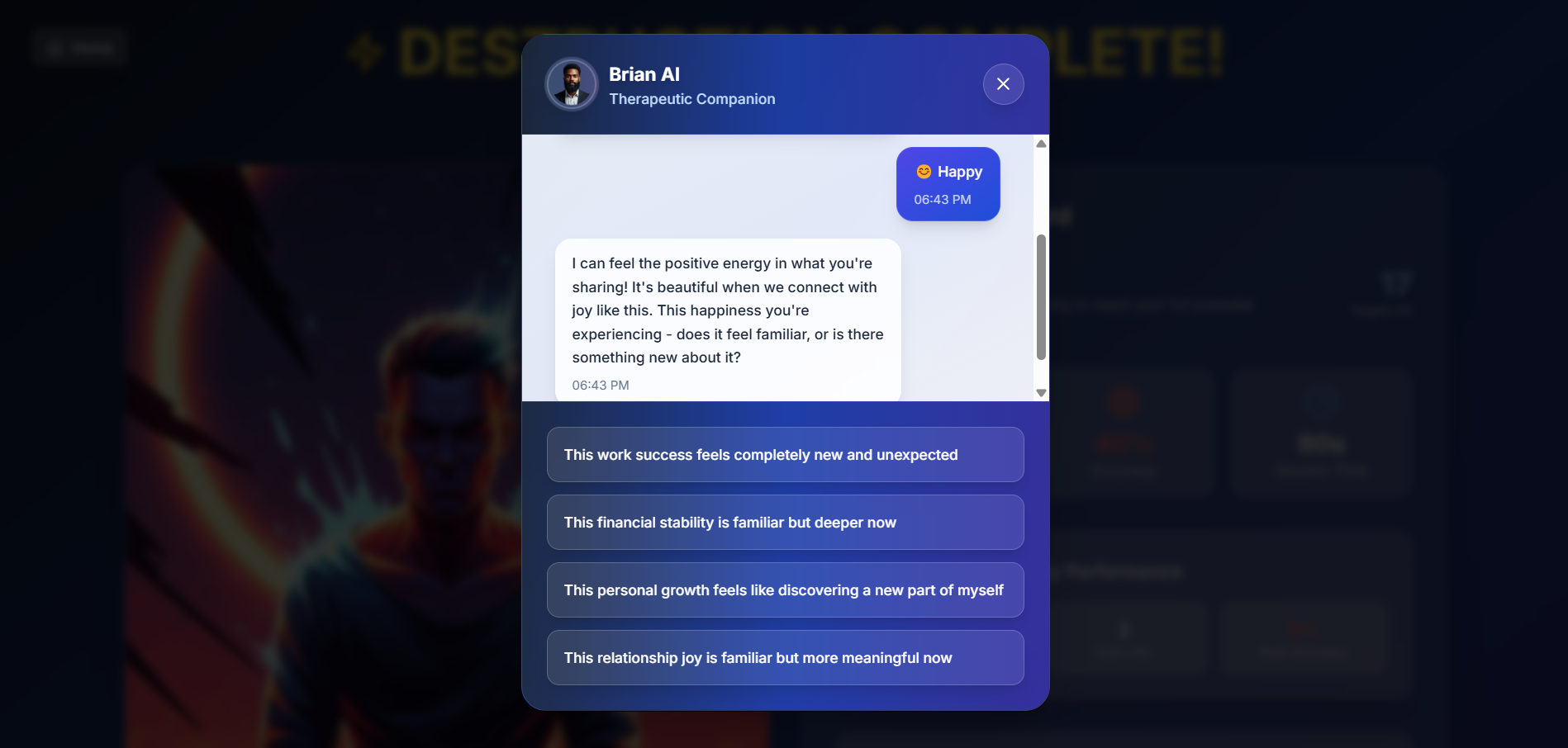
- Designed Brian AI companion with 200+ therapeutic responses
- Implemented mood-based conversation trees that adapt to user responses
- Built post-game reflection system that helps users process their experience
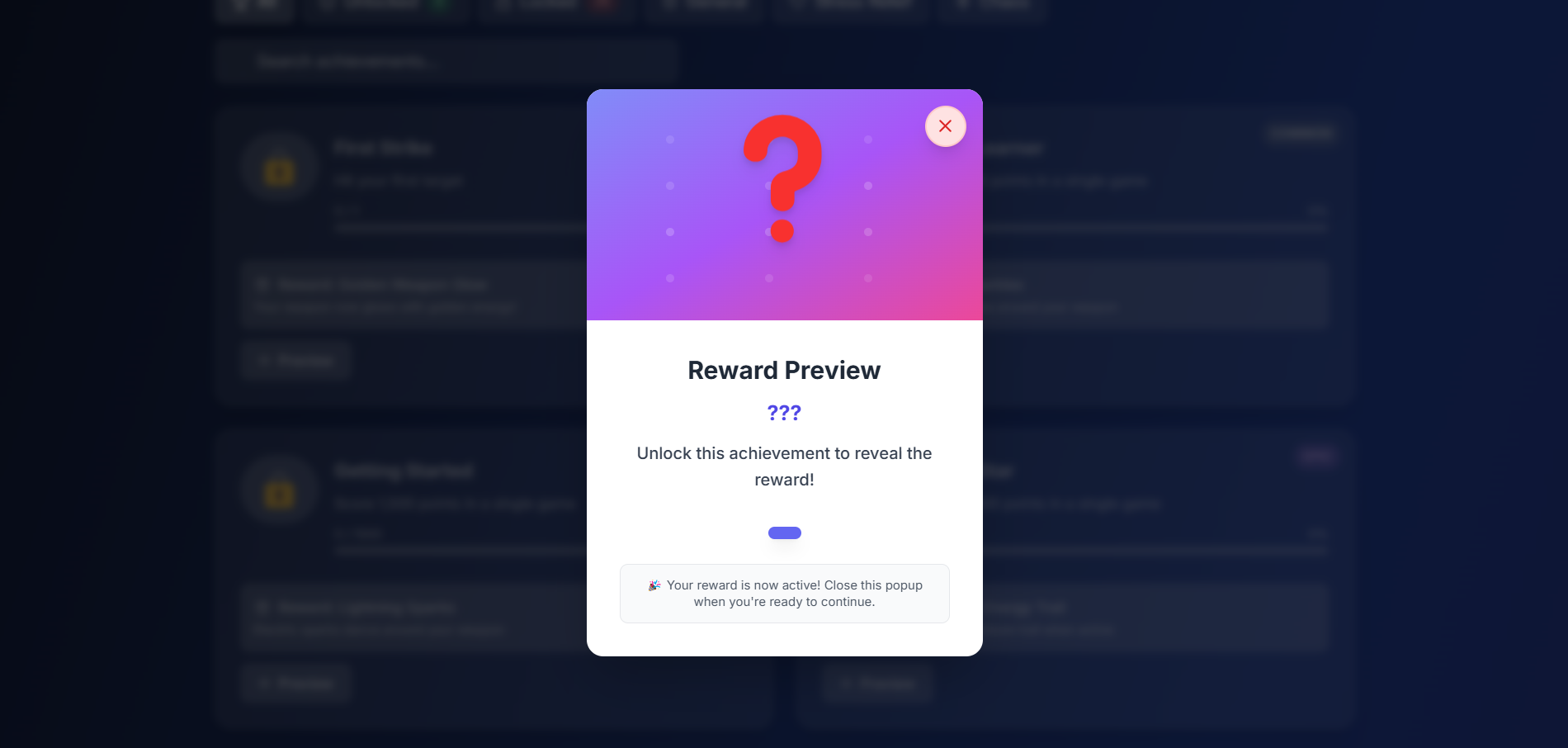
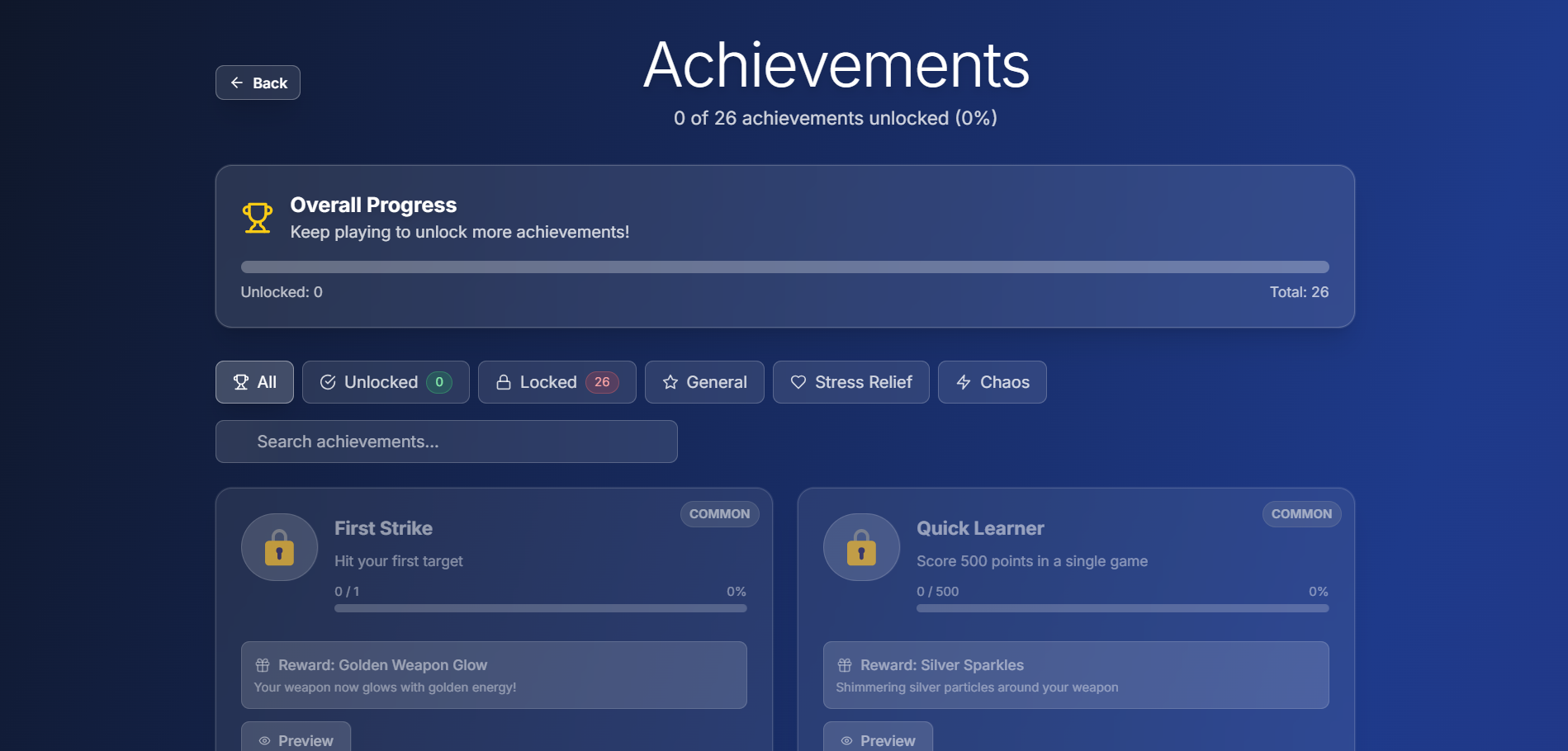
- Created achievement system focused on emotional growth rather than just performance
Phase 4: Polish & Accessibility
- Added glassmorphism UI with breathing avatar effects
- Implemented comprehensive audio system with mode-specific soundscapes
- Created accessibility features ensuring the experience works for diverse users
- Built progressive difficulty that adapts to user skill level
Challenges I Faced
Technical Challenges
- Audio Synchronization: Ensuring Brian's voice perfectly matched displayed text across all devices
- Performance Optimization: Maintaining 60fps gameplay while rendering complex visual effects
- Cross-Browser Compatibility: Making the audio system work reliably across different browsers and devices
Design Challenges
- Emotional Authenticity: Creating an AI that feels genuinely empathetic without being fake or patronizing
- Therapeutic Balance: Making the game engaging enough to hold attention while providing real emotional value
- Mode Differentiation: Ensuring Chaos and Stress Relief modes felt distinctly different in every aspect
Research Challenges
- Therapeutic Accuracy: Ensuring Brian's responses were psychologically sound and helpful
- User Safety: Building safeguards for users in emotional distress while maintaining engagement
- Accessibility: Making mental health support approachable for people who might resist traditional therapy
The Impact Vision
Svings Sanctuary isn't just a game - it's a mental health intervention disguised as entertainment. By meeting people where they are (in their phones, seeking distraction), it provides:
- Immediate emotional regulation tools
- Judgment-free emotional expression
- Skill-building for stress management
- Personalized support through AI companionship
- Accessible mental health resources
The project proves that technology can be genuinely therapeutic when designed with empathy and psychological understanding at its core.

Log in or sign up for Devpost to join the conversation.