-
-
Savak: Your Voice, Your Choice
-
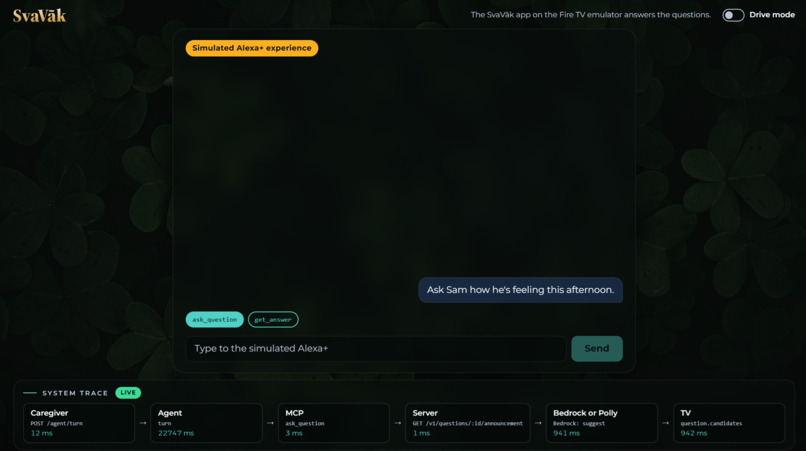
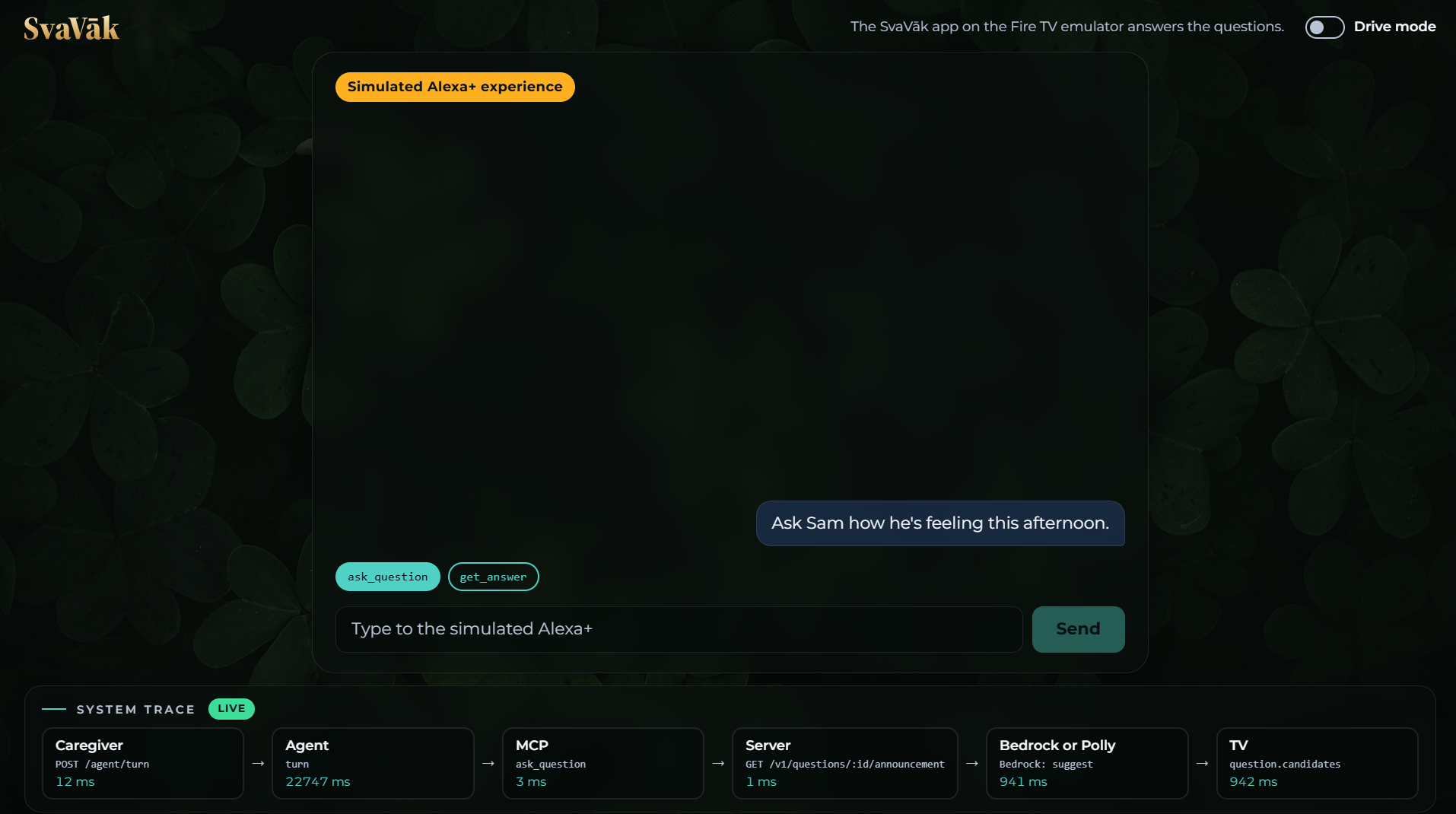
SvaVak Stuiod Layout - Caretaker's View - Simulated Alexa+ Experience
-
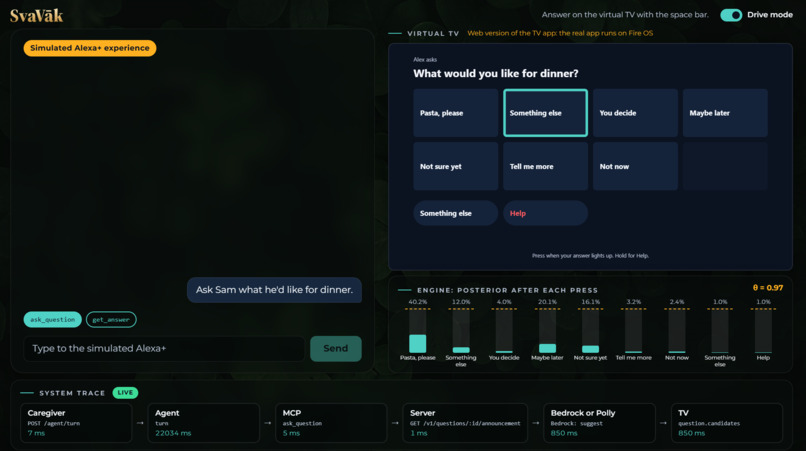
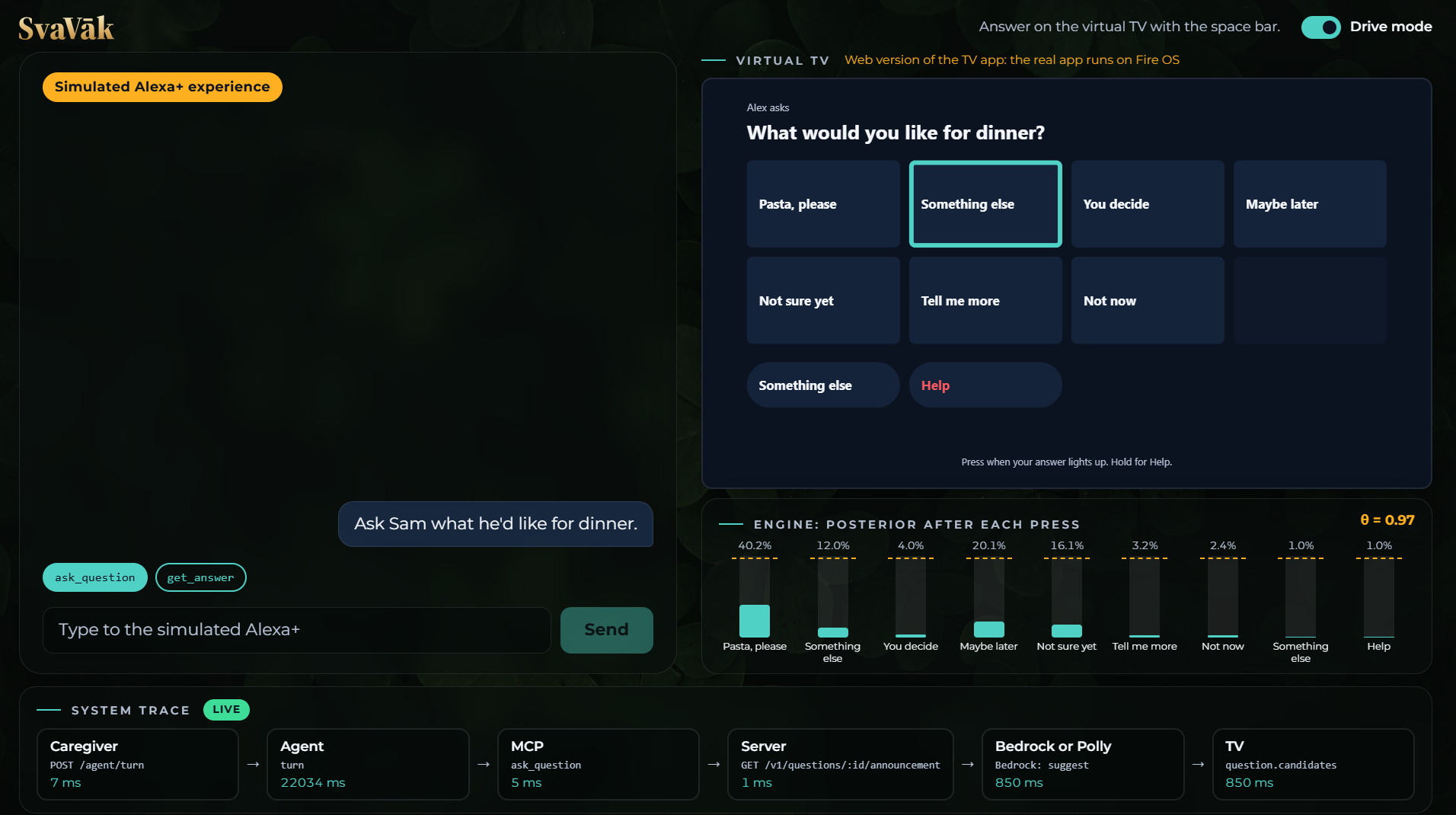
SvaVak Stuiod Layout in Drive Mode - Switch Clocking
-
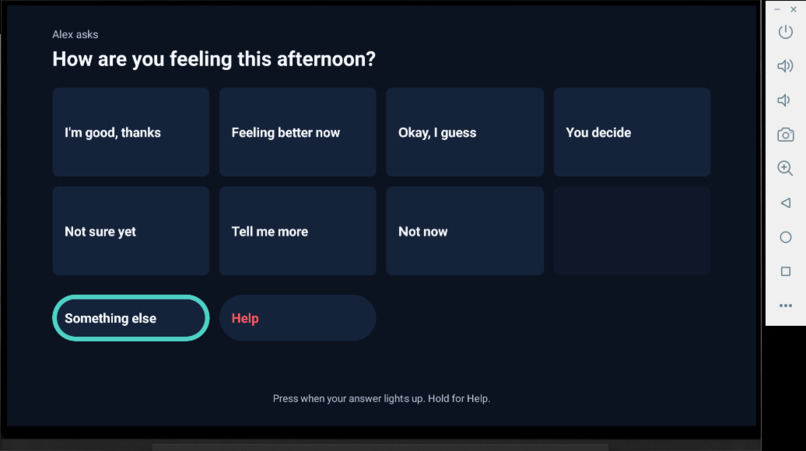
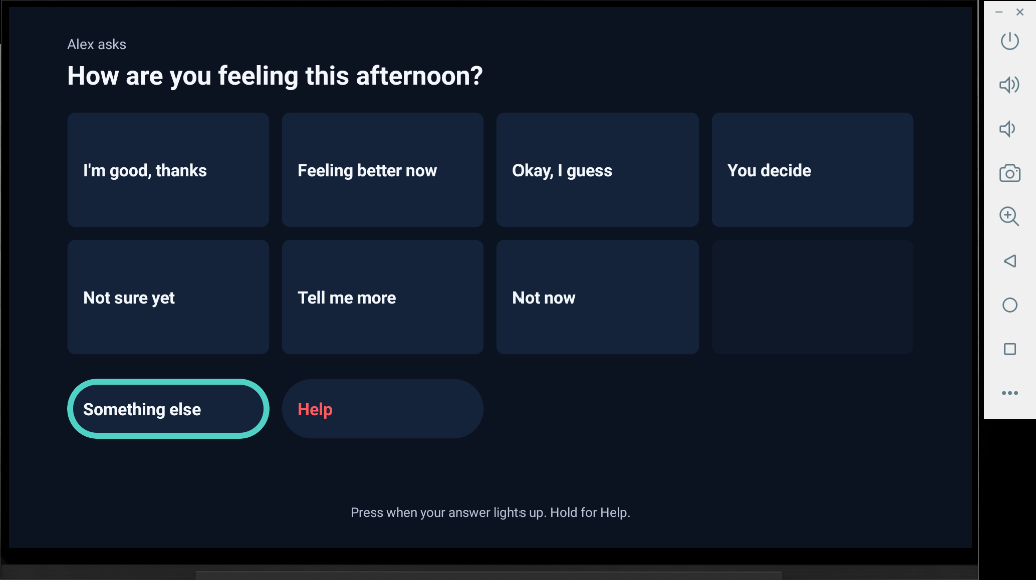
TV Emulator Screen with Sample Question and Tailored Options
-

TV Emulator Screen During HELP Request

SvaVak: Your Voice. Your Choice.
Inspiration
Imagine being asked, “What would you like to watch tonight?” You know the answer, but speaking or typing it may be difficult or impossible.
For people living with ALS/MND, cerebral palsy, locked-in syndrome after a stroke, or a brain injury, everyday conversations can take time and effort. Around 97 million people worldwide may benefit from augmentative and alternative communication (AAC), according to ASHA. With many single-switch tools, users navigate letters or symbols one at a time. Conversations can move on before an answer is ready, leaving loved ones to guess.
We asked: What if AI could suggest the words, while the person always made the choice?
SvaVak uses the familiar Fire TV environment and its select button as a one-button switch. Its name combines the Sanskrit words sva (“own”) and vāk (“voice”): one's own voice.
How we built it
- Fire TV app: React Native for TV (
react-native-tvos 0.81, Expo SDK 54), with a WebSocket-driven Smart Scan interface. - Server: Node.js, TypeScript, and Express 5, with REST endpoints, WebSockets, server-sent traces, and an in-memory store.
- MCP server: Official TypeScript SDK with
ask_question,get_answer,get_recent_messages, andadd_profile_fact. - Caregiver agent: Python Strands agent that communicates with SvaVak through MCP.
- AWS AI and speech: Amazon Nova 2 Lite on Amazon Bedrock, and Amazon Polly.
- Selection engine:
switchclock, a Bayesian single-switch selector that combines AI ranking with press timing and selects at a confidence threshold of (\theta = 0.97).
Challenges and lessons
We discovered that holding a button on an emulator can generate dozens of rapid press-and-release events. We redesigned press handling so a long hold can trigger Help at two seconds without confusing normal selections.
Nova Lite sometimes carried an earlier topic into a new question, so we restructured prompts to make the current subject explicit and treat previous turns as background. We also guarantee that essential yes-or-no answers appear among the first four suggestions.
The central lesson: AI can suggest likely words, but a separate, principled engine is needed to interpret uncertain presses. Both must be designed around real-world inputs-shaky presses, switch chatter, and delayed signals.
What we achieved
- Full live loop from a caregiver’s question to Sam’s spoken reply using AWS AI services.
- Accessible studio designed for WCAG AA contrast and responsive layouts.
These are early prototype results, not evidence that SvaVak is ready for real-world deployment.
What’s next
We want to co-design SvaVak with AAC users, families, and speech and language therapists. Planned improvements include:
- Reading questions and replies aloud through auditory scanning.
- Testing on real Fire TV devices and with accessibility switches.
- Connecting Help to real notifications and exploring a real Alexa+ caregiver integration.
- Adding more languages, neural voices, and personal voices.
- Releasing
switchclockas a standalone open-source package for other single-switch applications, including smart-home control and alternative input methods.
SvaVak is a prototype, not a medical device, and requires a thorough safety review before any real-world use.
At its heart, SvaVak is built on a simple belief: being able to express a choice should not depend on how quickly someone can speak or type. AI can help narrow the options, but the final choice belongs to the person.
SvaVak - Your Voice. Your Choice.
Built With
- bedrock
- mcp
- node.js
- nova2
- python
- react
- typescript
- websockets


Log in or sign up for Devpost to join the conversation.