-
-
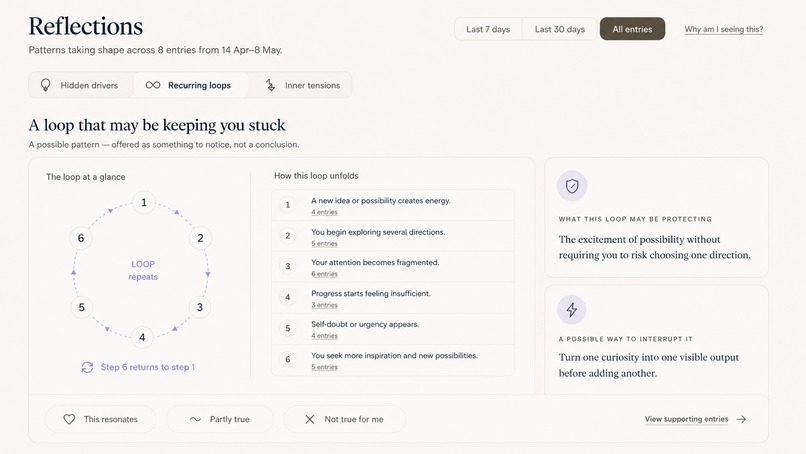
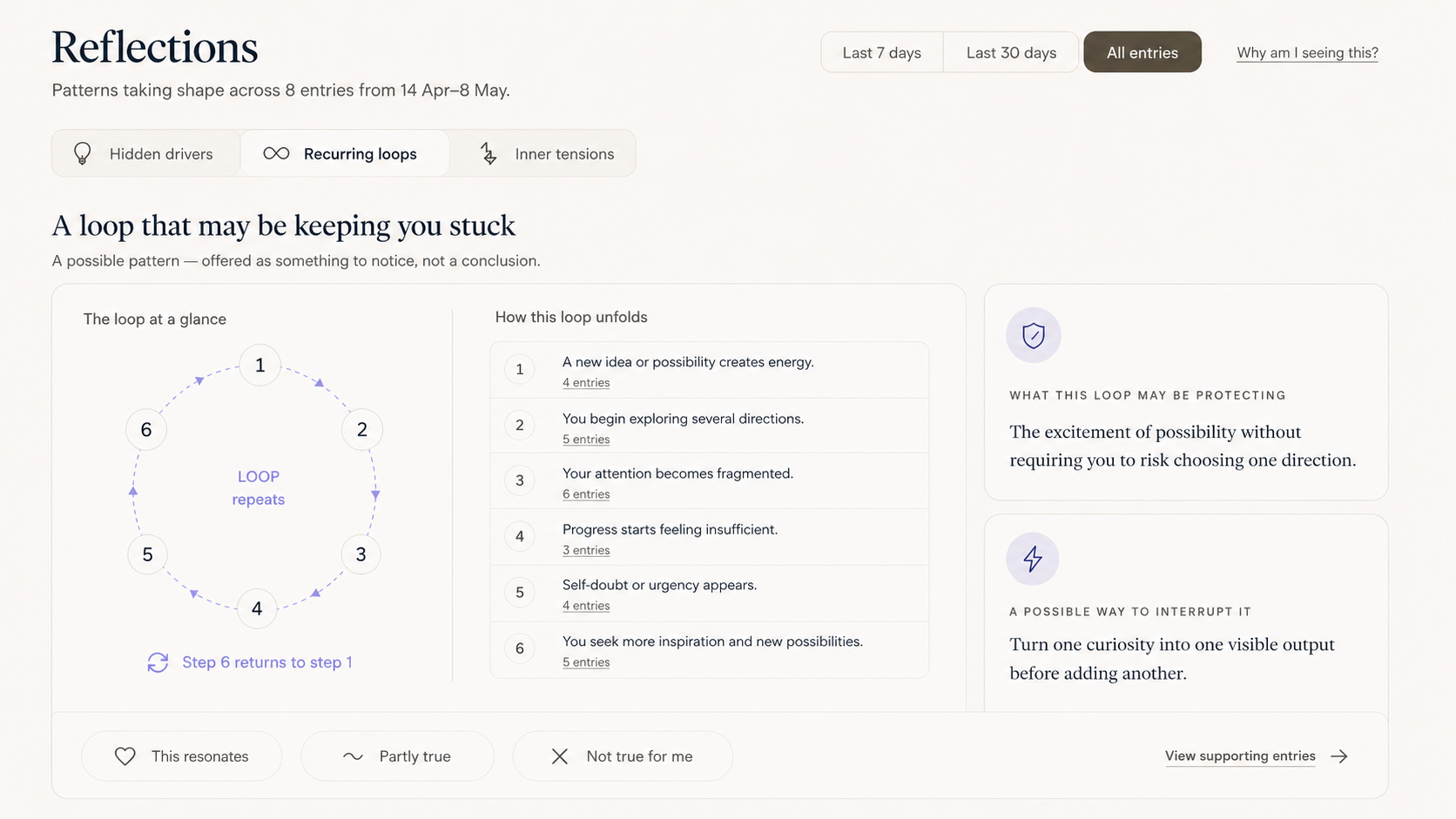
Reflection - Recurring loop
-
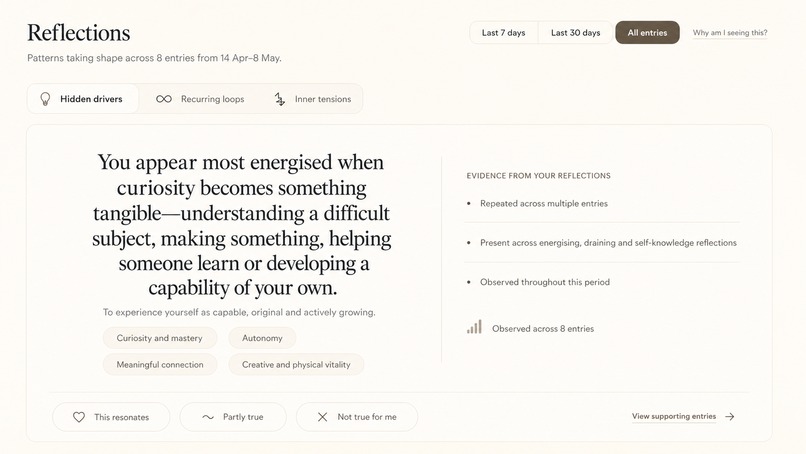
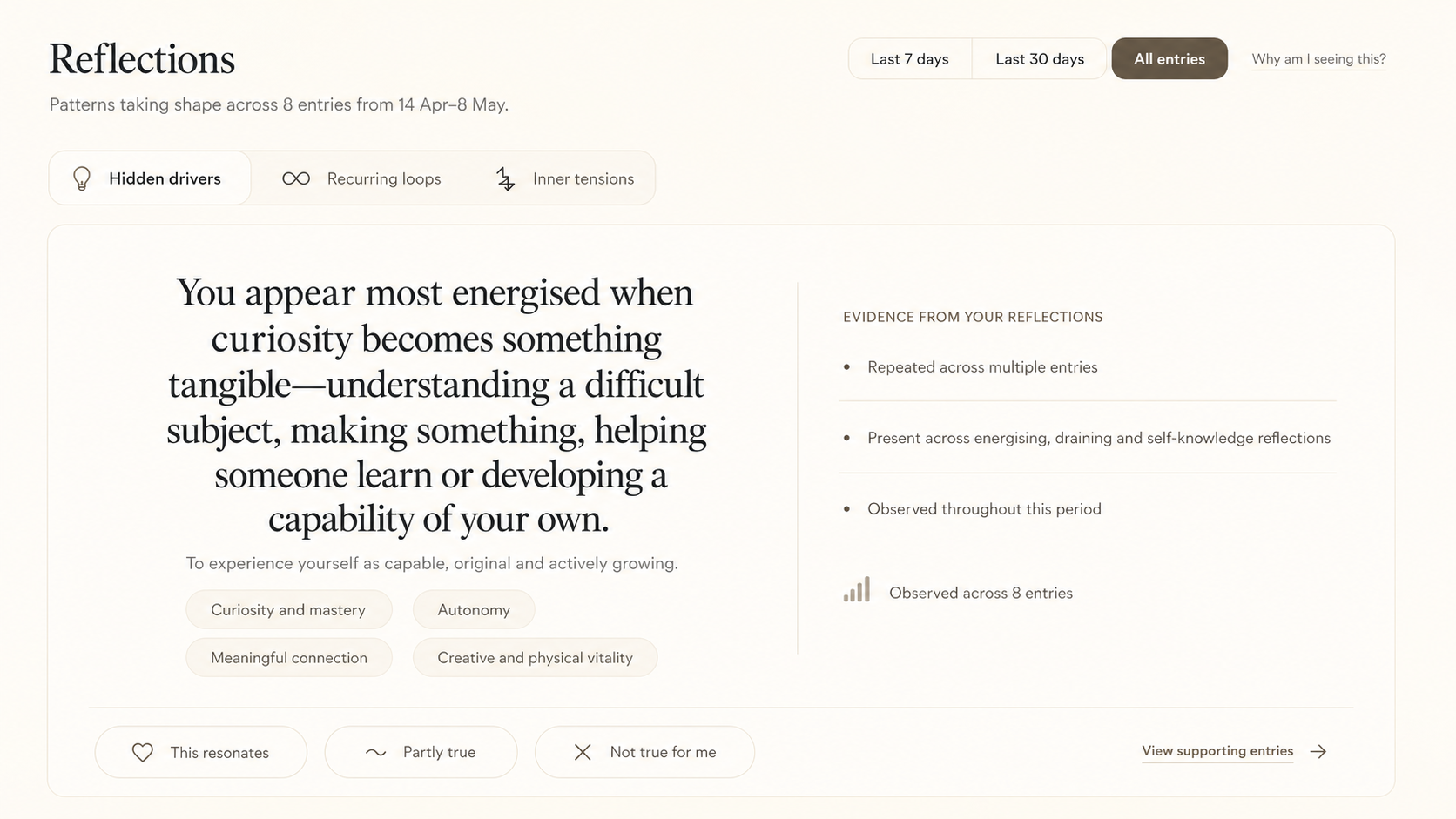
Reflection - Hiden driver
-
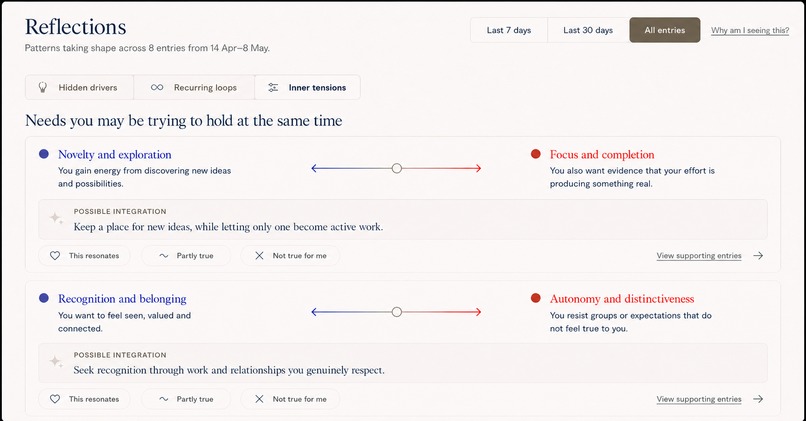
Reflection - Inner tension
-

Insights page
-
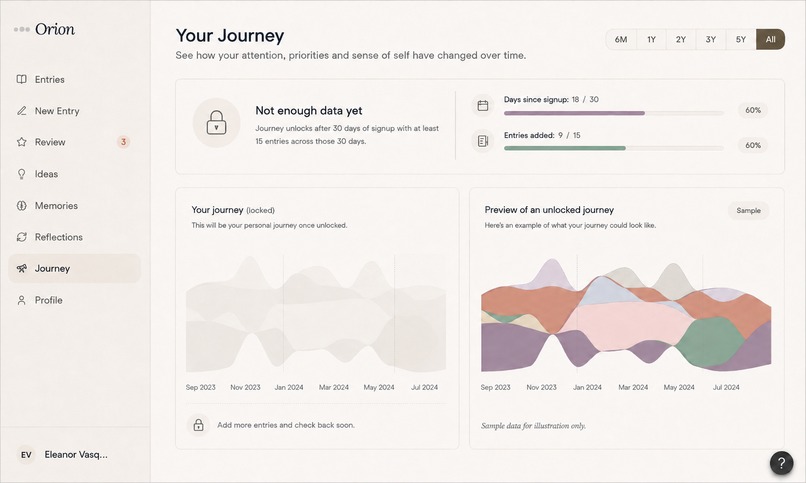
Journey page
-
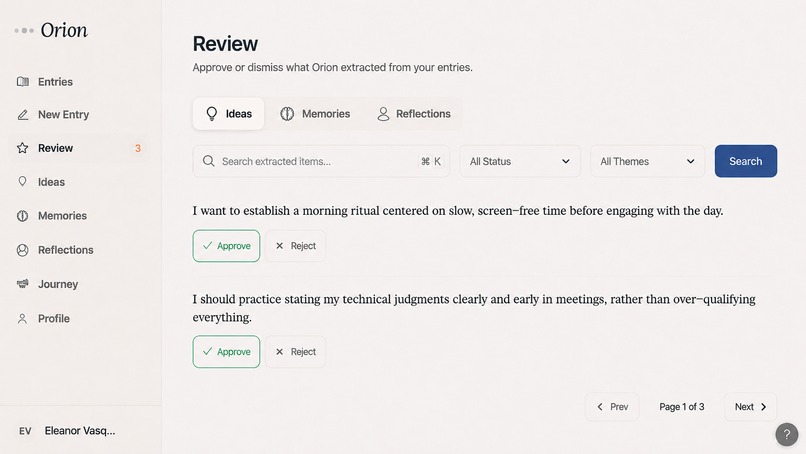
Review page
-
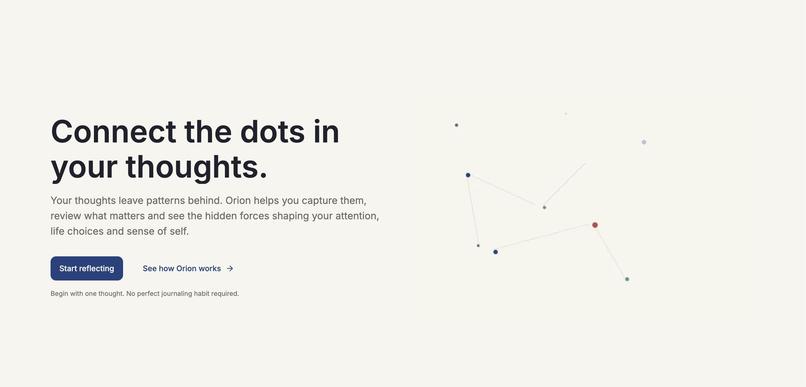
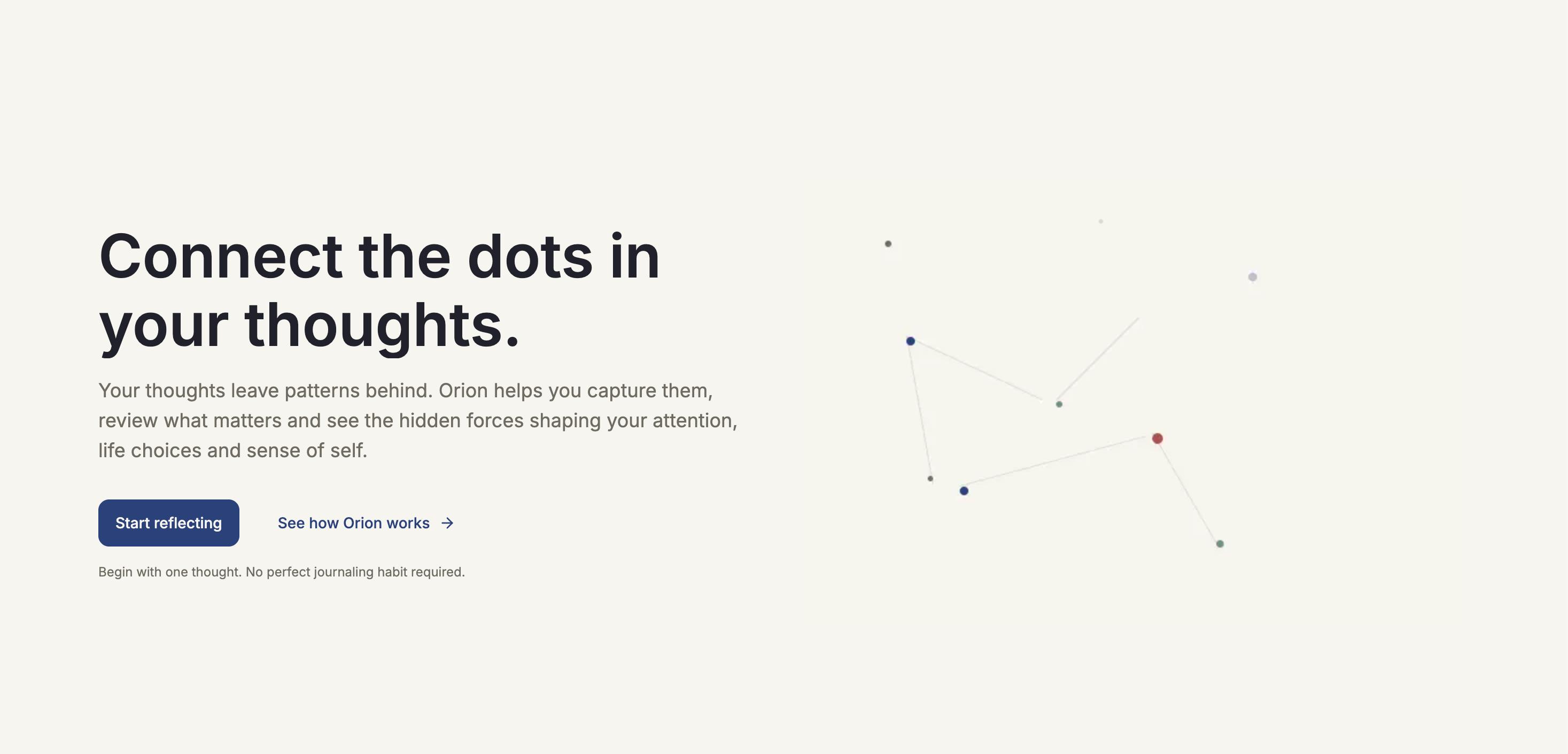
Orion - Home page
Inspiration
I fed my diary entries in clean JSON format to ChatGPT 5.6 Sol and found a shocking similarity between the mistakes I was making back in 2020 and the ones I am still making in 2026.
This sparked an interesting insight in me: AI can be used to find patterns across our thoughts and help us see what we cannot easily notice by looking at only one week or one month of our lives.
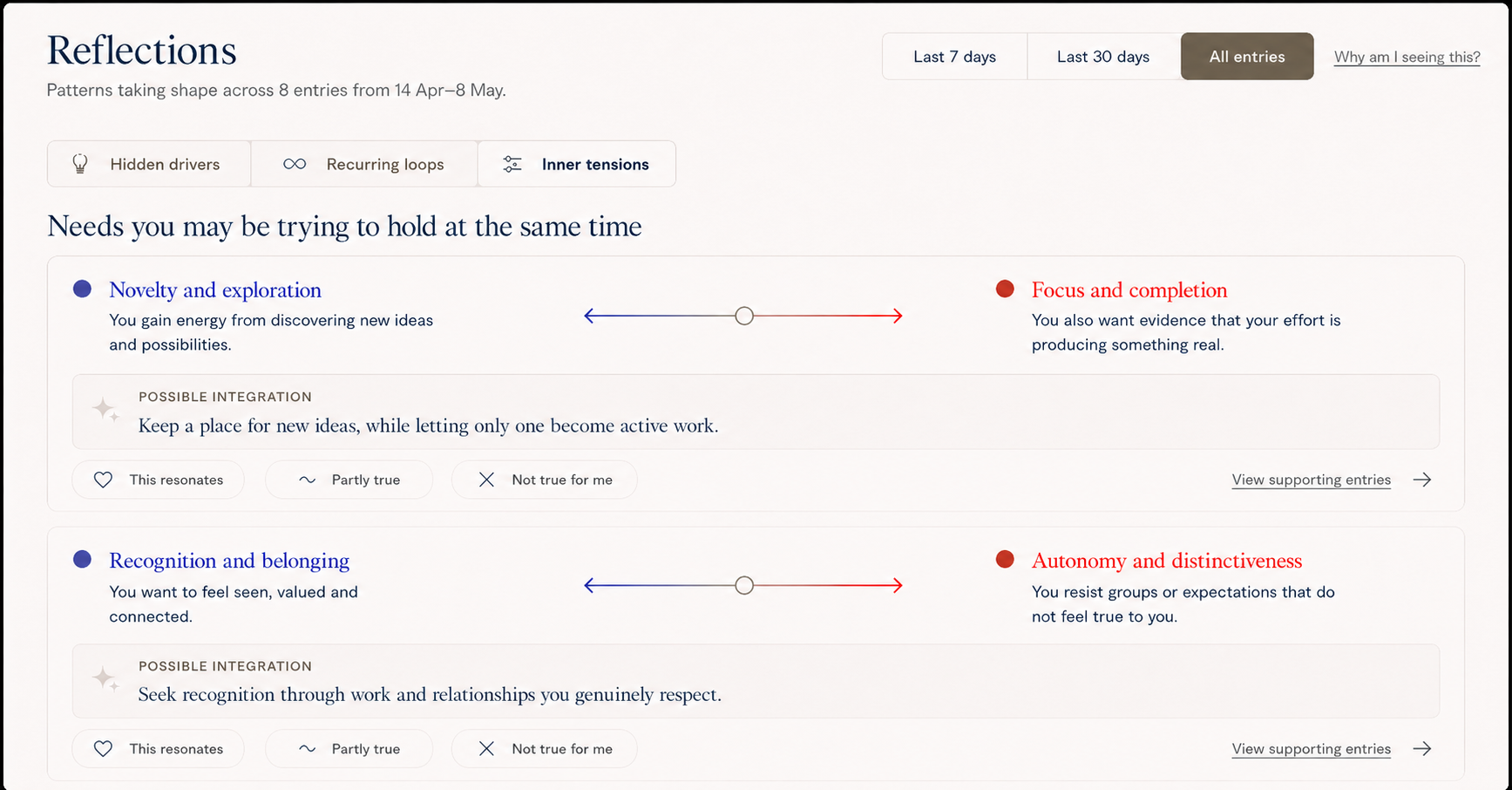
I decided to build a longitudinal, compounding solution that makes the hidden drivers, recurring loops, and inner tensions in a person's thoughts visible.
These hidden mental blockers are some of the biggest bugs in our thinking. They can affect our careers, lives, and growth, yet still remain unseen. I wanted to make them visible by connecting the dots between our thoughts.
What it does
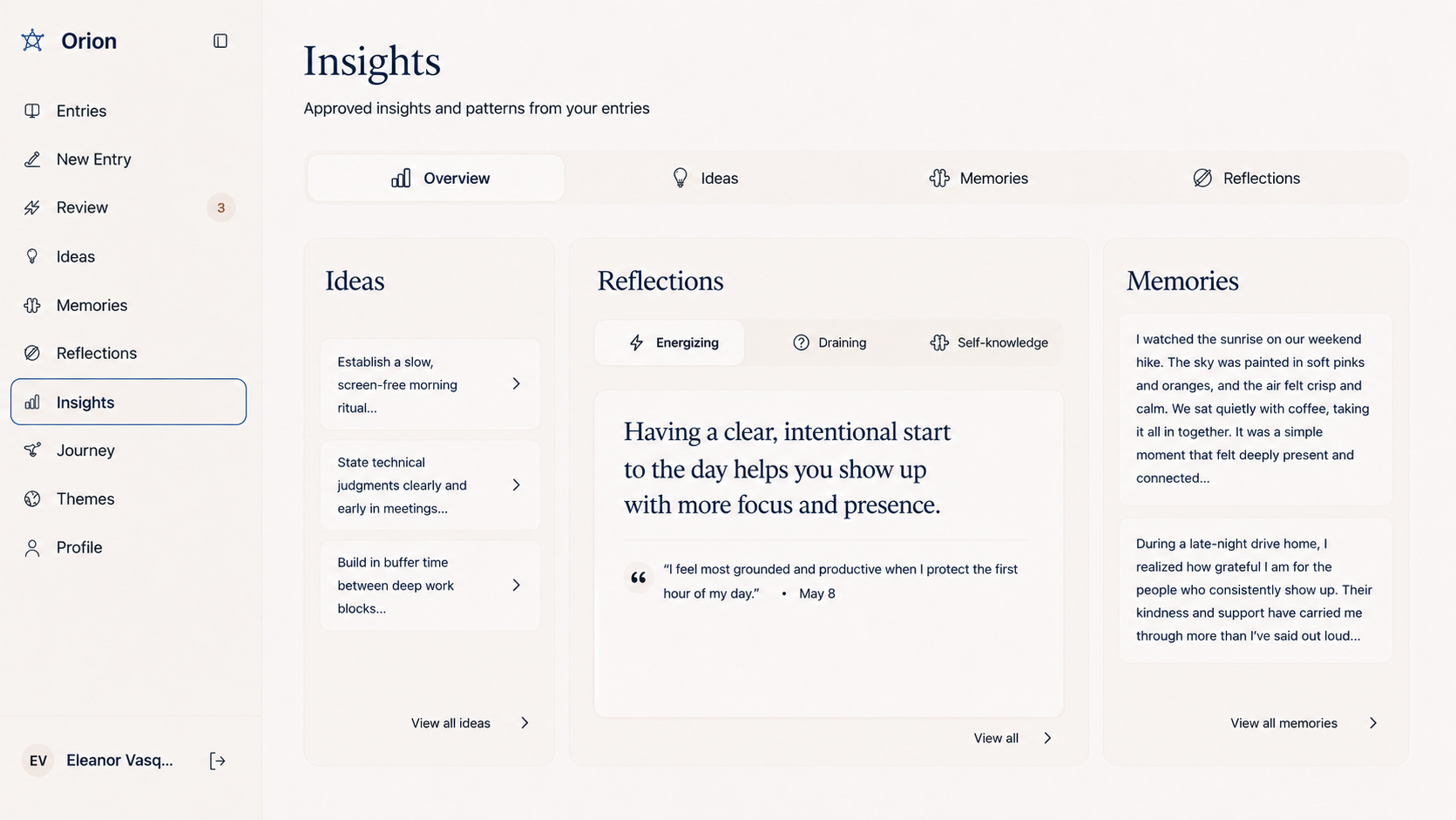
Orion surfaces hidden drivers, recurring loops, and inner tensions from diary entries once a certain threshold of entries or time has been reached.
It shows the common themes that have been occupying the user's life, what they may reveal about their current situation, and where their life may be heading.
Ultimately, it gives unconscious thoughts that are usually ignored or left unseen a place to rise to the surface by analysing the frequency and recurring patterns of a problem, idea, or area of life.
How we built it
I started by researching and reading a lot about how something as intangible as thoughts could be made visible in a richer and more data-driven way than a single diary entry.
Every new piece of information felt overwhelming, and after a point, I decided to subtract the information overload and focus on the minimum value the product needed to provide to make a person's thinking visible.
I finalised three reflection headers to measure and build around:
- Hidden Drivers
- Recurring Loops
- Inner Tensions
I also finalised eight themes for analysing entries and creating a journey streamgraph:
- Career
- Wealth
- Health
- Romantic Relationships
- Family and Friends
- Personal Growth
- Fun
- Home and Lifestyle
I then reverse-engineered everything else from there, including the user experience and the backend architecture required to support it.
Challenges we ran into
Figuring out how to measure reflection using only three buckets, and what signals to calculate from each entry so that they produce valuable and realistic outputs for the three tabs.
Keep the analysis backed by source entries (with evidence), while ensuring that patterns from the last 30 days were not blurred or overpowered by the most recent entries.
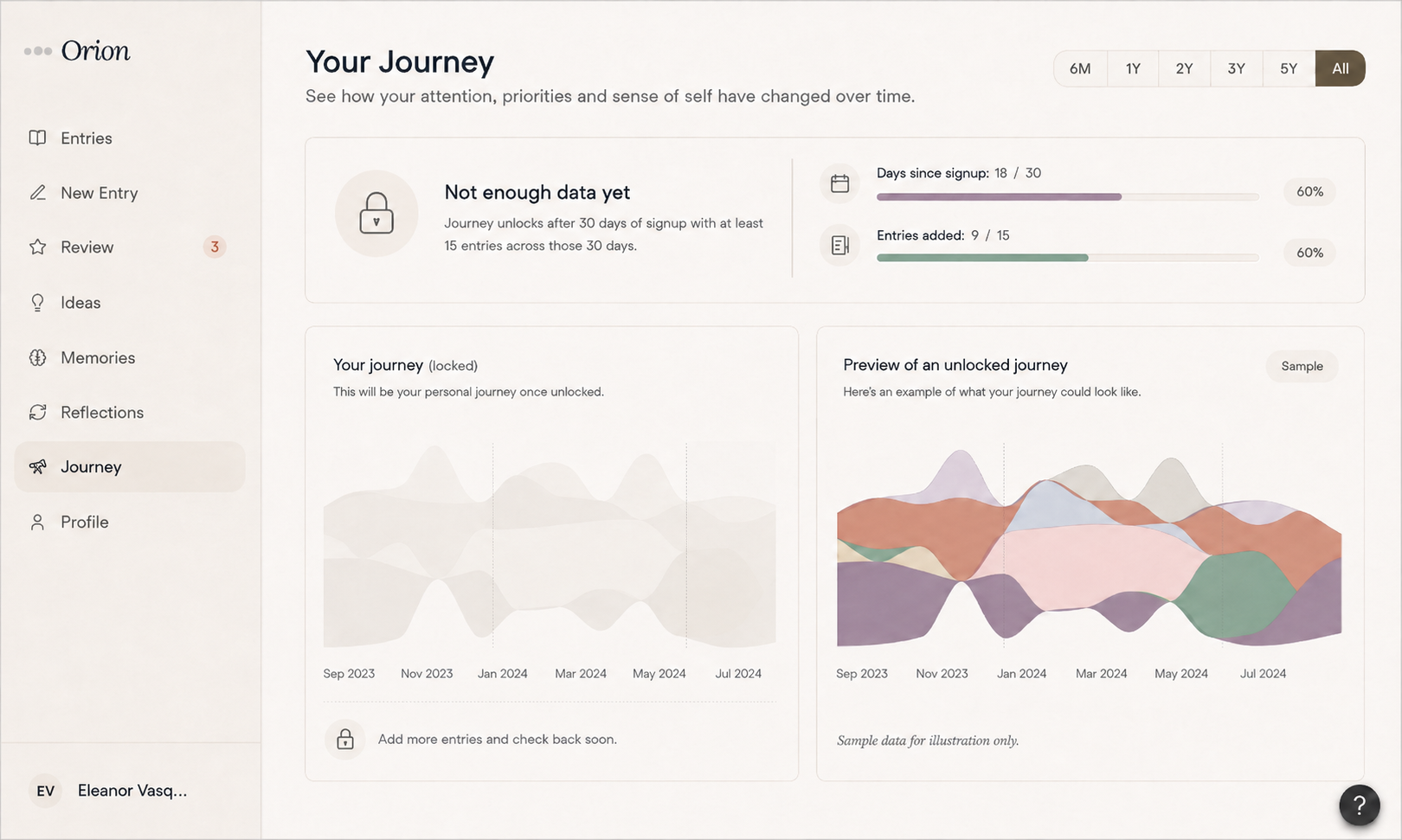
Building the journey map and chapter graph, and detecting chapter drift across entries with enough evidence and supporting entries to back it up.
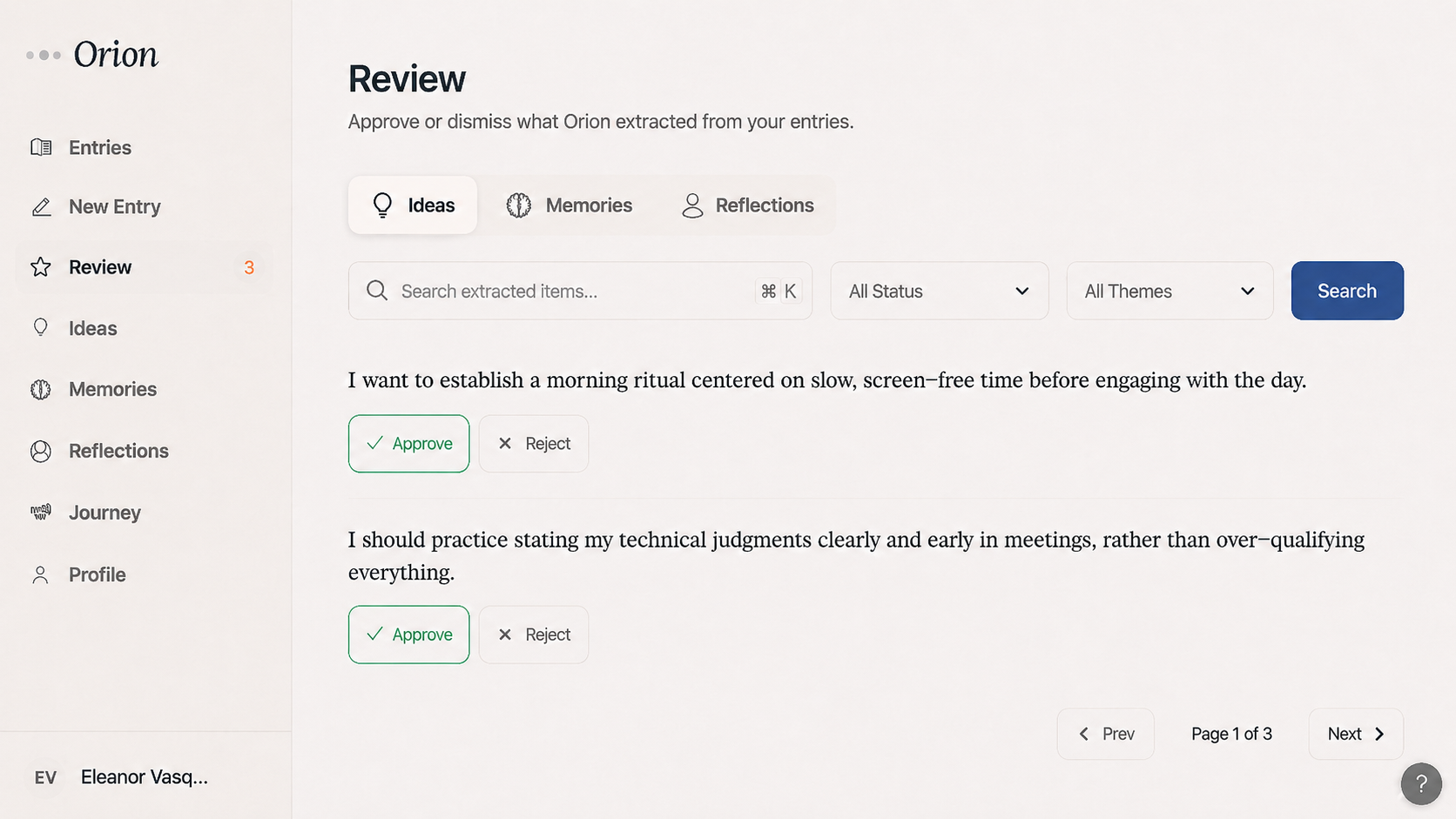
Finalising the user experience and presenting the reflection data in an intuitive and digestible way so that it remains useful, action-oriented, and backed by evidence.
Accomplishments that we're proud of
Building the first product in a larger suite of metacognition products that I am driven to create.
Making invisible thoughts, patterns, and recurring loops visible through evidence-backed reflection analysis.
Building a beautiful web app experience using a mix of tools, from Figma to Codex GPT 5.6 Sol.
Designing the algorithm and architecture of the reflection engine, which is the heart of Orion.
What we learned
How to take an idea, brainstorm it deeply with ChatGPT, and turn it into a working product and solution.
How to use different models for tasks with different levels of complexity, such as GPT 5.6 Luna for synthesis, GPT 5.6 Terra for analysis, and GPT 5.6 Sol for complex judgement inside the reflection engine, resulting in better output and a lower API bill.
How to design a reflection algorithm from scratch while taking privacy, PII protection, guardrails, and evaluations into account.
What's next for Orion
Build theme-categorised and chapter-diff-based life journey mapping by compiling patterns from more than 30 days of entries.
Add user feedback to the reflection loop and improve the reflection algorithm based on whether users find the AI analysis useful or accurate.
Add pgvector-based embedding similarity to find related entries from the past, use them as evidence, and build a stronger analysis loop over time.
Refine the current reflection algorithm and add richer segment-level analysis for much deeper data and insights.
Add a broader life-mapping layer based on the four classical categories of life: Dharma, Artha, Kama, and Moksha, and map entry themes and reflection results to show where the user's life may be heading.
Built With
- chatgpt
- codex
- fastapi
- nextjs
- python
- react
- typescript


Log in or sign up for Devpost to join the conversation.