-
-
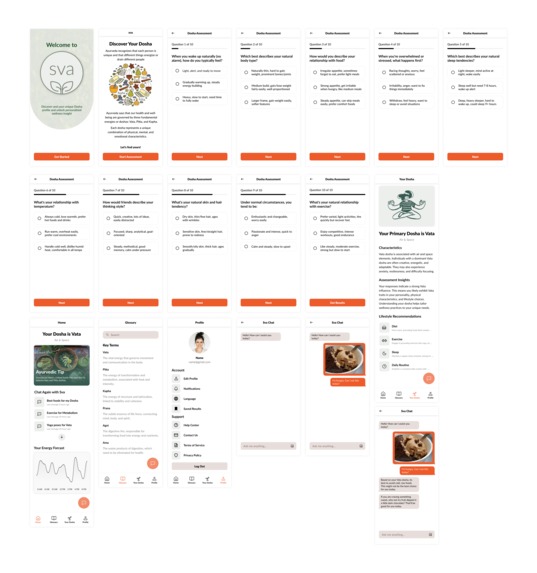
The screens
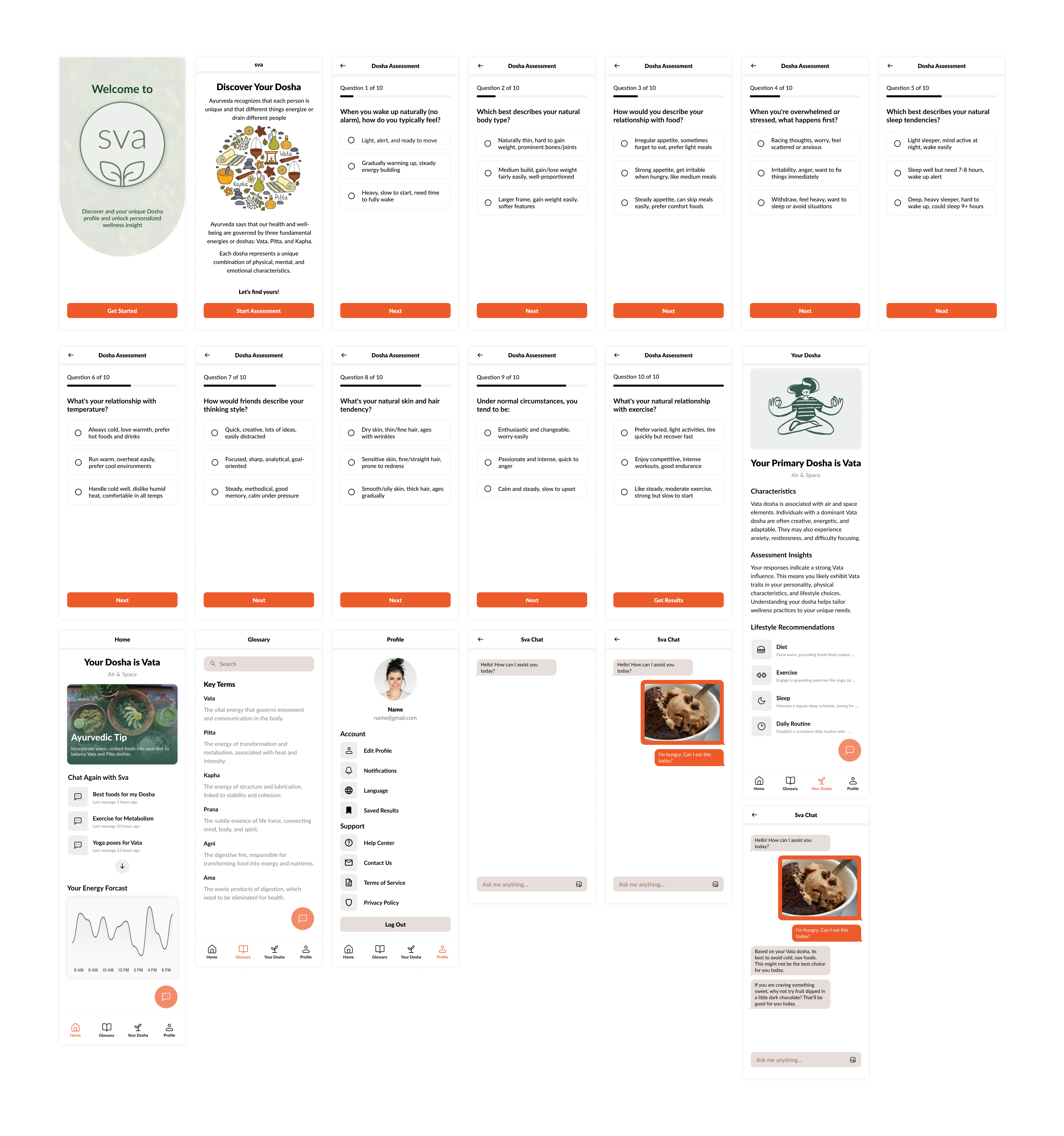
AI-Powered Ayurvedic Wellness Assistant
sva
Inspiration
Picture this: You're scrolling Instagram at 2 AM and see a post about "finding your dosha." Sounds cool, right? But when you try to figure it out... yikes. I discovered that 2.8 million Americans want Ayurvedic guidance, but only 12% can access it. Traditional consultations cost $200-400 with 6-week waits, and free online quizzes are either overwhelming or useless. The inspiration hit me: What if learning about your dosha felt like texting your wisest friend instead of taking a medical exam?
What it does
Sva is an AI chatbot that makes Ayurvedic wellness actually accessible. It does two main things: first, it guides you through a friendly 10-question assessment to discover your dosha (mind-body type) using conversation instead of intimidating medical forms. Then it becomes your ongoing wellness companion - you can chat with it about your day, how you're feeling, what you ate, and it remembers everything to give you personalized recommendations. Think of it as having a knowledgeable friend who understands both ancient Ayurvedic wisdom and your modern lifestyle, available 24/7 on your phone.
How I built it
I started by researching the existing dosha quizzes, and found that they're either overwhelming or oversimplified. Then I designed a conversational flow that teaches users about Ayurveda while gathering information about their constitution. I chose warm, earthy colors and friendly typography to make it feel welcoming, not clinical. The whole experience spans about 20 screens built as an interactive Figma prototype, from welcome and education through assessment, personalized results, and ongoing chat support. I included accessibility features like voice input, and simple language, plus unique features like daily energy forecasting based on your dosha.
Challenges I ran into
Cultural sensitivity was huge. How do you make 5,000-year-old wisdom accessible without being appropriative? I solved this with respectful explanations, pronunciation guides for Sanskrit terms, and acknowledging the tradition's origins. Making AI conversation feel human but not creepy required careful personality guidelines. Organizing complex Ayurvedic knowledge into digestible chunks meant using progressive disclosure. Building trust in AI health guidance required complete transparency about reasoning. The trickiest part was creating truly personalized results, I built a system that connects specific user responses to their dosha characteristics instead of giving generic descriptions.
AI-Powered Ayurvedic Wellness Assistant
sva
Problem Statement
Interest in Ayurveda is growing and more people seek holistic approaches to mental and physical wellbeing, but understanding one's dosha and what it means remains confusing and inaccessible to most. While the internet is flooded with overwhelming amounts of generic Ayurvedic content that could apply to anyone, it's hard to find personalized guidance tailored to one's unique constitution. This creates a critical gap between growing wellness curiosity and practical, personalized entry points for authentic self-exploration in Ayurveda.
Picture this: You're scrolling Instagram at 2 AM (we've all been there), and you see another post about "finding your dosha" and "balancing your chakras." Sounds cool, right? But then you Google it and... yikes.
The reality hit me hard:
- Want a real Ayurvedic consultation? That'll be $200-400, please. Oh, and there's a 6-week waiting list.
- Try those free online quizzes? Congrats, you're "mostly Pitta" with zero explanation of what that actually means for your Tuesday morning.
- 73% of people literally give up halfway through these assessments because they're just... overwhelming.
- Here's what really got me: 2.8 million Americans are actively seeking this ancient wisdom, but only 12% can actually access it.
Possible Solution
What if learning about your dosha felt natural instead of intimidating?
My idea is to build an AI that guides you through dosha discovery like a knowledgeable friend would - patient, encouraging, and educational without being overwhelming.
What I created:
- 10 conversational questions (not a medical interrogation)
- Results that explain what your dosha actually means for your life
- Ongoing chat support for daily guidance
- Cultural bridge-building that's respectful, not appropriative
- Accessible design that anyone can use
The goal: Make 5,000-year-old wisdom feel as accessible as checking the weather.
Analysis
Key insights:
- People want personalized guidance but feel overwhelmed by complexity
- Cultural barriers are real - no one wants to appropriate traditions
- Trust comes from understanding the "why" behind recommendations
- Mobile-first approach is essential
- Generic advice feels useless; personal insights feel valuable
Existing Solutions:
Banyan Botanicals Quiz:
- 60+ questions that feel clinical
- Generic results with no personal connection
- Poor mobile experience
Chopra Center Assessment:
- Mystical language assuming prior knowledge
- Expensive consultation upsells
- No educational guidance
Yoga Journal Quiz:
- Oversimplified with no explanation
- Generic lifestyle suggestions
- No cultural context
I tested every dosha quiz available. The results were as follows.
My Advantages:
- Conversational AI guidance throughout the process
- Cultural sensitivity with educational context
- Progressive disclosure to prevent overwhelm
- Personalized explanations connecting answers to results
Key Pain Points & Solutions
Pain Point 1: Information Overload
Solution: Progressive disclosure - introduce concepts gradually with visual aids and simple explanations.
Pain Point 2: Cultural Intimidation
Solution: Respectful integration - explain Sanskrit terms with pronunciation and cultural context.
Pain Point 3: Generic Results
Solution: Personal connection - link specific user responses to dosha characteristics.
Pain Point 4: Lack of Trust
Solution: Transparency - explain the reasoning behind every question and recommendation.
Pain Point 5: Poor Accessibility
Solution: Universal design - voice options, high contrast, adjustable text, simple language.
Pain Point 6: One-Time Experience
Solution: Ongoing support - daily AI chat for food guidance, lifestyle tips, and seasonal adjustments.
User Flow
Welcome → Intro to the App → 10 Question Assessment → Result (Your Dosha) → HomePage → AI ChatBot → Glossary → Profile
The 10 Assessment Questions:
- Energy patterns when waking naturally
- Natural body type characteristics
- Relationship with food and appetite
- Stress response patterns
- Natural sleep tendencies
- Temperature preferences
- Thinking and mental characteristics
- Skin and hair tendencies
- Baseline emotional patterns
- Exercise and movement preferences
Contents in Each Page:
HomePage:
- Ayurvedic Tip of the Day
- Previous Chats with sva ChatBot
- Your Energy Fluctuations
Your Dosha:
- Your Dosha
- It's Characteristics
- Lifestyle Recommendations
Typography & Colors
Font Used
Lato
Lato font is an elegant and modern sans serif font. It is very neat and clean. It has good readability and a variety of options. That's why I chose this.
- Lato Bold
- Lato Medium
- Lato Regular
- Lato Light
ABCDEFGHIJKLMNOPQRSTUVWXYZ
abcdefghijklmnopqrstuvwxyz
1234567890
Color Used
- #ED5B2B (Primary orange)
- #FFEEE9 (Light background)
- #000000 (Black text)
- #EDEFED (Light gray)
- #E7DEDB (Warm gray)
Accomplishments that I'm proud of
I created the first dosha assessment that actually educates while it evaluates. Instead of clinical questionnaires, users have conversations that build understanding naturally. The energy forecasting feature is completely unique, no other wellness app predicts when you'll feel your best based on your constitution and time of day. I bridged ancient wisdom with modern UX, making Ayurveda feel approachable instead of intimidating. The accessibility features make sure everyone can use it comfortably, and the ongoing chat creates a relationship that grows with users over time.
What we learned
People desperately want personalized wellness guidance but current solutions either overwhelm them or provide meaningless generic advice. Cultural barriers are real obstacles to accessing traditional practices. Trust in healthcare technology comes from understanding the reasoning, not just getting results. Conversational design can transform intimidating medical assessments into educational experiences. Accessibility features benefit everyone, not just users with specific needs. Most importantly, thoughtful UX design can democratize healthcare access and make ancient wisdom relevant for modern life.
What's next for Sva - AI-Powered Ayurvedic Wellness Assistant
I want to add seasonal guidance since Ayurveda emphasizes adjusting your routine throughout the year. Integration with wearables could provide real-time dosha balancing based on sleep, activity, and stress data. Multi-language support would make this accessible globally. A practitioner network could connect users with certified Ayurvedic professionals for deeper consultations. Advanced personalization through machine learning could refine recommendations based on user feedback over time. The ultimate goal is building a comprehensive wellness ecosystem that grows with users, helping them live in harmony with their unique constitution while honoring traditional Ayurvedic principles.
Links
For a detailed explanation of the UX process and methodology: [View UX Process Documentation]link
Interactive Prototype: [Try Sva Prototype]link
Thank you for your time :)
Built With
- figma

Log in or sign up for Devpost to join the conversation.