-
-
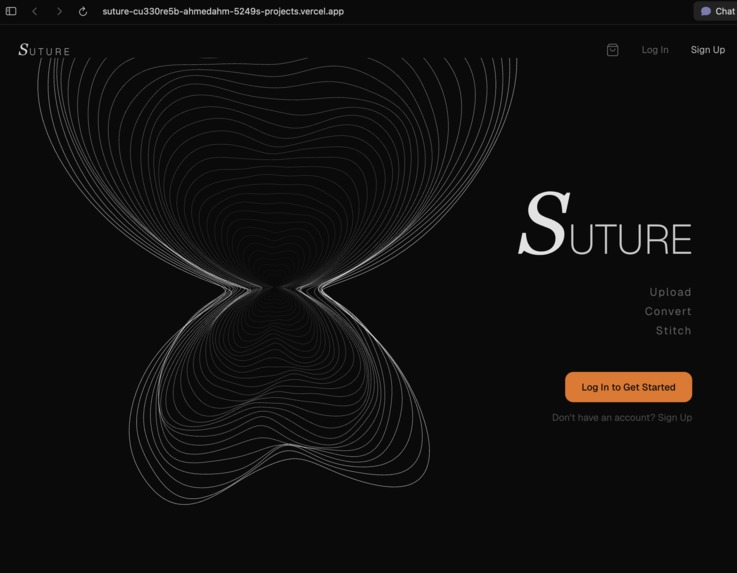
Home Page
-

UI design Page
-
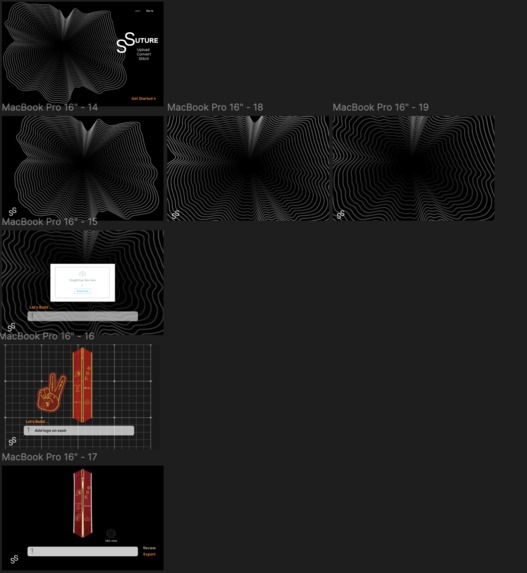
UI Initial Template


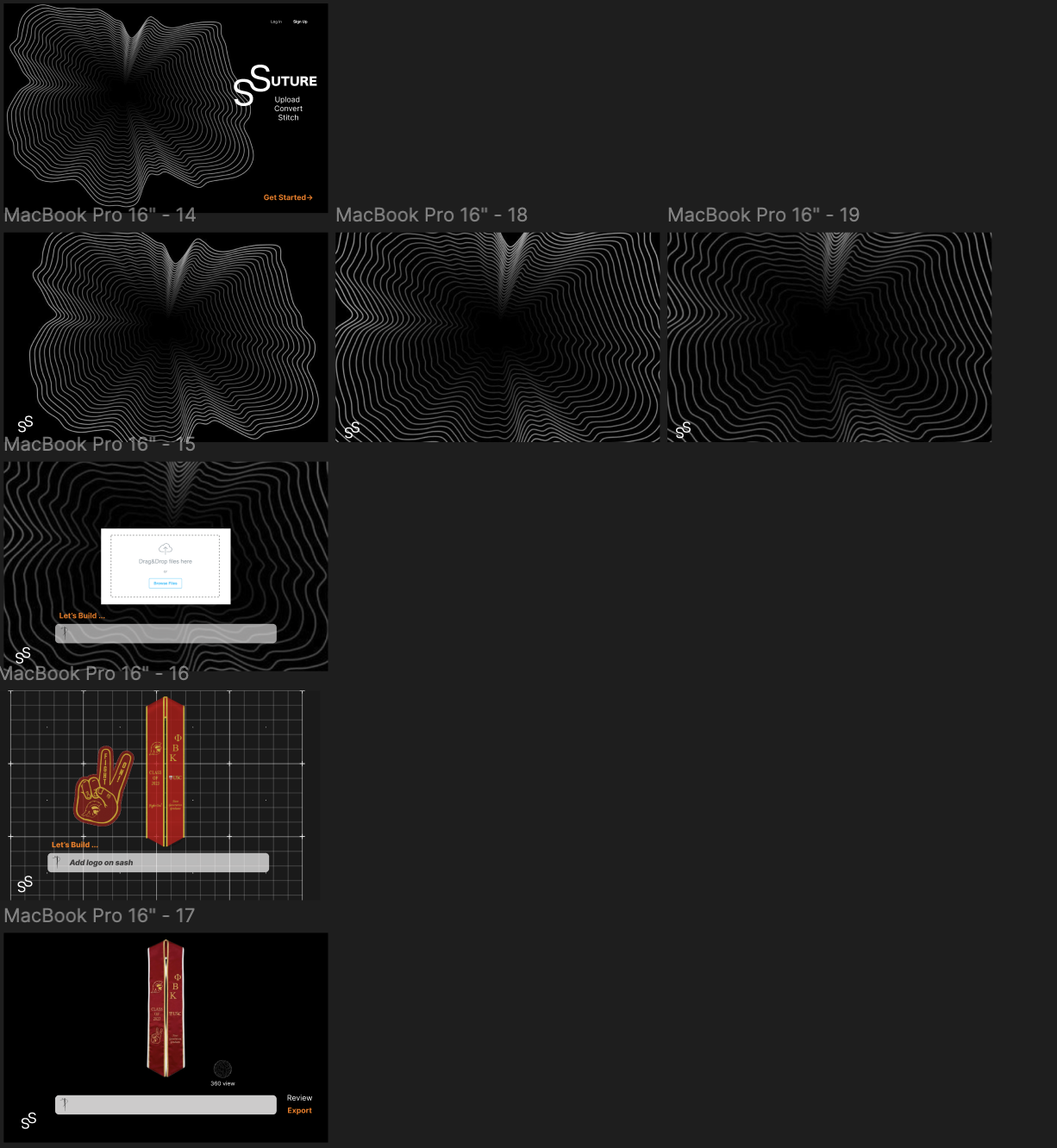
Inspiration
With graduation around the corner we were surrounded by Seniors who wanted custom embroidered sashes with their Greek letters, club logos, and personal designs. USC charges high prices ($250+) for these services because digitizing each design takes hours of manual work. The process is slow, technical, and expensive, even for simple text. We saw a market opportunity where the cost incurred wasn’t in stitching, but in preparing the DST file. We set out to automate digitizing setting up "Suture", a full-stack software so students could create custom embroidery more easily, cheaper, and without the long turnaround times that made personalization inaccessible.
What it does
The technical flow of Suture starts with text prompts or uploaded images to a Vector File (SVG) which is then converted to a DST file. The text gets converted to embroidery-optimized images using Google Gemini's Nano Banana (Gemini-2.5-flash-image). From there, the image goes through a preprocessing pipeline (background removal via Rembg, color quantization to 10 threads, resolution normalization) before being converted to SVG using VTracer. The AI agent then reviews the SVG for excess nodes, trace artefacts, and shapes too fine to stitch; if needed, it returns an improved version. Next, we convert the SVG to a DST embroidery file using a custom scan line fill algorithm with PyEmbroidery, handling proper stitch density, thread colors, and machine commands. The agent performs a final review, checking stitch density, jump stitches, and color order, optimizing the file if necessary. Finally, we generate a visual stitch preview and calculate manufacturing quotes based on stitch count and thread colors, pricing slightly below market average to stay competitive while remaining profitable. The entire platform runs on a FastAPI backend and a Next.js (React/Tailwind) frontend, utilizing JWT authentication and asynchronous processing for the AI review stages.
Suture’s key features include:
- Text-to-image generation using Gemini AI
- Image upload with automatic quality validation and enhancement
- Automated image preprocessing (background removal, contrast adjustment)
- SVG tracing with AI-powered quality review
- DST embroidery file generation with configurable stitch patterns
- Manufacturing quote calculator with garment selection
- Shopping cart for bulk orders
How we built it
Before the code was written, we built Suture in Figma. We mapped it out to ensure a complex industrial process felt like a simple web application. This UI/UX served as inspiration for how our product would be laid out.
We started building Suture with fully open-source models for image-to-embroidery conversion, but quickly hit a wall: embroidery files demand extreme precision, and too many outputs came back with corrupted file paths, subpar designs, or DST files that embroidery machines couldn't read.
The breakthrough came when through the integration of OpenCLAW, a custom AI agent system via Discord. We created specialized skills that allow the agent to review each step of the pipeline and actively modify files when issues are detected. This transformed the system from a rigid automation into an intelligent, self-correcting workflow that ensures production-ready output every time.
Challenges we ran into
One of the first challenges we faced was coming up with a startup idea that was both innovative and not already heavily saturated. Initially, we wanted to build a centralized platform that would analyze students’ resumes, tailor them to individual career goals, recommend relevant events and experiences to boost employability, and even facilitate cold outreach to industry professionals. While the concept was valuable and impactful, we realized that similar platforms already exist. Many services already offer AI resume reviews, job matching, networking recommendations, and outreach automation. This made it difficult to differentiate ourselves in a competitive market.
Our second challenge arose when we pivoted to the idea of DST file conversion and embroidery services. This niche had potential as it was far less saturated, but it introduced a new obstacle: domain expertise. Only one of our team members had prior knowledge of embroidery file formats and digitization processes. The rest of us had to learn how DST files work, how embroidery machines interpret stitch paths, and what clients actually need (e.g., file compatibility, stitch optimization, scalability). This learning curve slowed down development and required significant research before we could confidently build a solution. The issue wasn’t just technical understanding; it was also understanding the customer. We needed to learn industry standards, pricing models, common pain points, and workflows before designing a product around it.
The third challenge was translating a technically complex process into a simple, intuitive user interface. Our clients would expect a highly efficient and user-friendly platform. However, DST file conversion and embroidery digitization happen largely “behind the scenes,” involving technical processes users may not understand. We struggled with how to clearly show what happens after a file is uploaded, how much technical detail to expose versus keeping it simple, and designing a workflow that feels seamless rather than overwhelming. We wanted to make sure users could easily upload, convert, and download files without needing deep technical knowledge, while still feeling confident that the system was doing quality work in the background.
Our fourth challenge was the "precision gap" in existing open-source tools. We initially attempted to build Suture using standard open-source models for image-to-embroidery conversion, but we quickly hit a wall. Embroidery is a physical process that demands extreme mathematical precision; generic automation models lack the "spatial awareness" required for high-quality production. Too many of our initial outputs returned with corrupted file paths, subpar stitch designs, or DST files that industrial embroidery machines physically could not read. We had to move beyond a simple "input-output" script and engineer a self-correcting AI agent system (OpenCLAW) to audit and repair the files in real-time. This shifted our project from a basic converter to a complex, multi-stage defensive engineering pipeline.
Accomplishments that we're proud of
First, we recognized a saturated market early and had the discipline to pivot. Moving from a generic resume builder to a specialized industrial automation tool required us to scrap our initial work and rebuild a completely new logic provider in a fraction of the time. We didn't just change the idea; we successfully executed a much more technically demanding one.
Additionally, unlike many theoretical projects, Suture has immediate traction. We have already identified and secured interest from at least 15 potential customers within the USC community. By solving a real-world bottleneck, we’ve moved past the "idea phase" into a validated solution with a Day 1 user base. Furthermore, we are proud of our "Manufacturing-First" design. We took a high-barrier-to-entry process, embroidery digitization, and condensed it into a seamless, intuitive UI. We successfully visualized the "invisible" (the stitch paths and density) so that users feel confident in the output without needing a degree in textile engineering.
Finally, Suture is a pioneer in bringing Agentic AI to the garment industry. By integrating OpenCLAW, we moved beyond rigid automation and created a self-correcting system. Our AI agent doesn't just run a script; it reviews, audits, and modifies files in real-time, ensuring that every output is 100% production-ready.
What we learned
Our biggest takeaway is the importance of cross-functional communication and devising a strong working plan before onboarding different processes (whether it is coding or design). Pivoting from our initial idea 6 hours into the hackathon highlighted the importance of being adaptable, knowing when an idea is not working, and in the long-term to put more time into problem discovery and preparation.
Through building Suture, we learned that automating a physical production process requires a lot more precision than software output. Embroidery digitizing incorporates a variety of steps, from mathematical path optimization, stitch density control, fabric compensation, and machine-level command sequencing. We also learned that using a generic open-source automation tool was inaccurate, pushing us to pivot towards engineering a multi-stage, self-correcting AI pipeline. Finally, we also learned the importance of design: translating a complex industrial backend into a clean, intuitive full-stack web application to balance technical transparency with user simplicity.
What's next for Suture
First, we aim to start validating our platform with real users by developing our GTM strategy. Phase 1 will start with USC graduating students (individual buyers) who are looking for personalized graduation sashes, positioning the platform as the easiest way to design and order high-quality custom embroidery with AI-powered previews and instant pricing. By focusing on a concentrated, high-demand campus audience, we can drive rapid adoption through multiple distribution channels, securing Greek life bulk partnerships and targeting graduation fairs, as well as leveraging word-of-mouth and peer visibility during graduation season. This initial traction will generate orders, design data, and proof of operational efficiency. Using these successful case studies and demonstrated demand, we will then expand to mid-sized embroidery and apparel manufacturers, positioning the software as a proven AI automation solution that reduces digitizing time, improves stitch accuracy, streamlines quoting, and unlocks new customer segments. This bottom-up demand strategy allows us to enter the market with validated revenue, brand credibility, and clear ROI for manufacturing partners.
Secondly, to ensure strong operational reliability, we will conduct structured focus groups with graduating students (B2C). We will host small-group testing sessions (8–12 students per session) where users complete tasks such as designing a sash, previewing embroidery in real time, and checking out. We will measure friction points, pricing clarity, and preview accuracy perception.
Built With
- fastapi
- googlegeminiai
- next.js
- pillow
- pyembroidery
- react19
- rembg
- tailwindcss4
- vtracer


Log in or sign up for Devpost to join the conversation.