Inspiration: The Digital Divide in Global Trust
In today's globalized e-commerce landscape, verifying the authenticity of a product is a broken, anxiety-inducing experience. Consumers are forced to trust confusing paper tags or opaque supply chain data. On the other end of the spectrum, traditional artisans—like India's handloom weavers, who craft world-class textiles—are often excluded from digital verification systems because existing platforms are clunky, text-heavy, and intimidating for users with low tech-literacy.
We realized that trust is fundamentally a design problem.
Our inspiration for Sutradhar was to rethink how these two extremes interact with technology. We wanted to take a deeply complex backend problem (cryptographic verification and supply chain tracing) and wrap it in a beautiful, invisible, and frictionless digital experience. We wanted to build a bridge between the physical craftsmanship of a local artisan and the digital expectations of a global buyer.
How We Built It: Design at the Center
We built Sutradhar as a lightweight, scalable Progressive Web App (PWA) using Vue.js 3, Vite, and FastAPI. Instead of just building a database, we focused relentlessly on usability:
- For the Artisan (Visual-First Onboarding): We completely redesigned the onboarding experience. Instead of making weavers type complex GPS coordinates or read dense forms, we implemented a single-click "Capture Location" button. We introduced "Visual DNA"—a guided interface where artisans simply upload three macro-photos (the edge weave, pattern, and their signature mark) rather than filling out text descriptions.
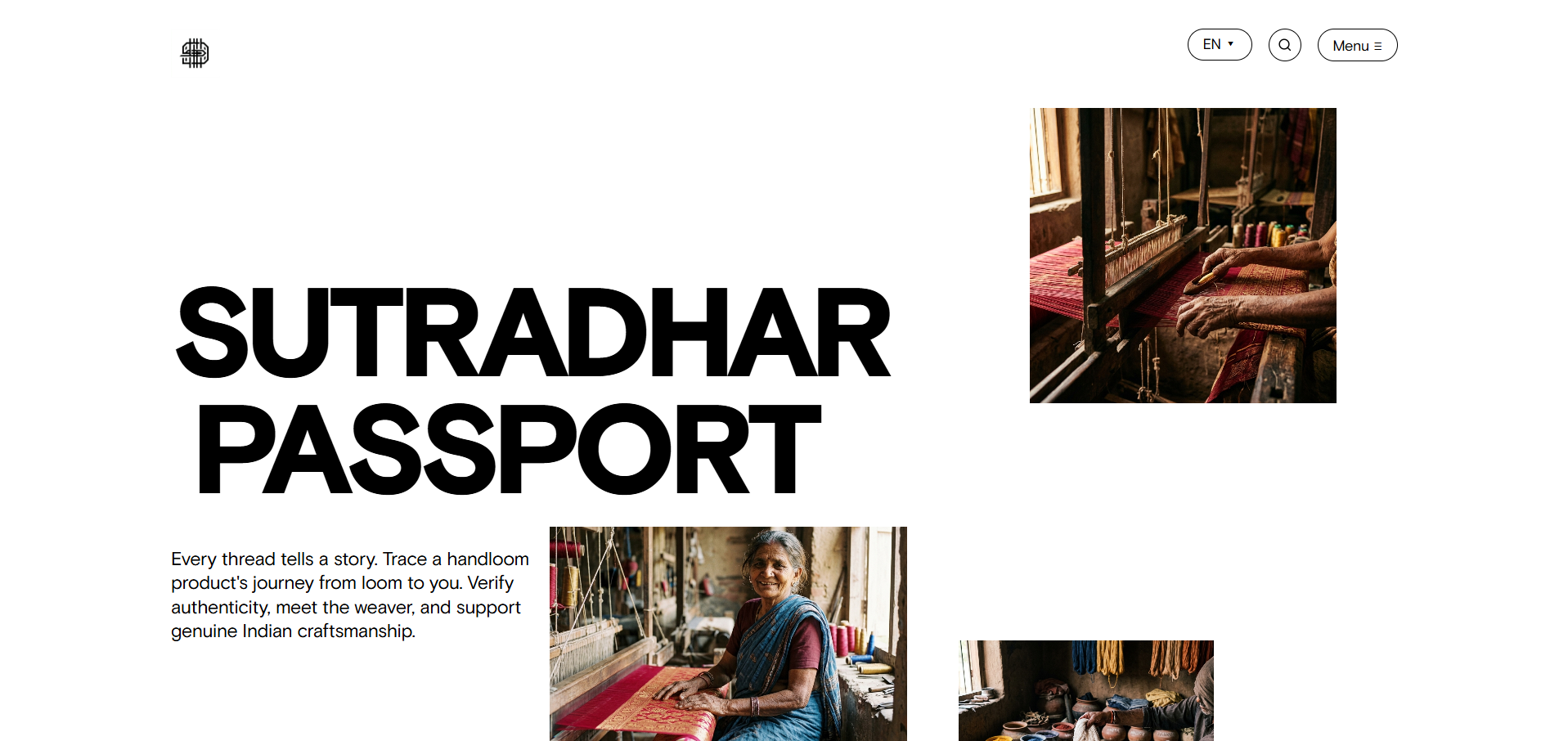
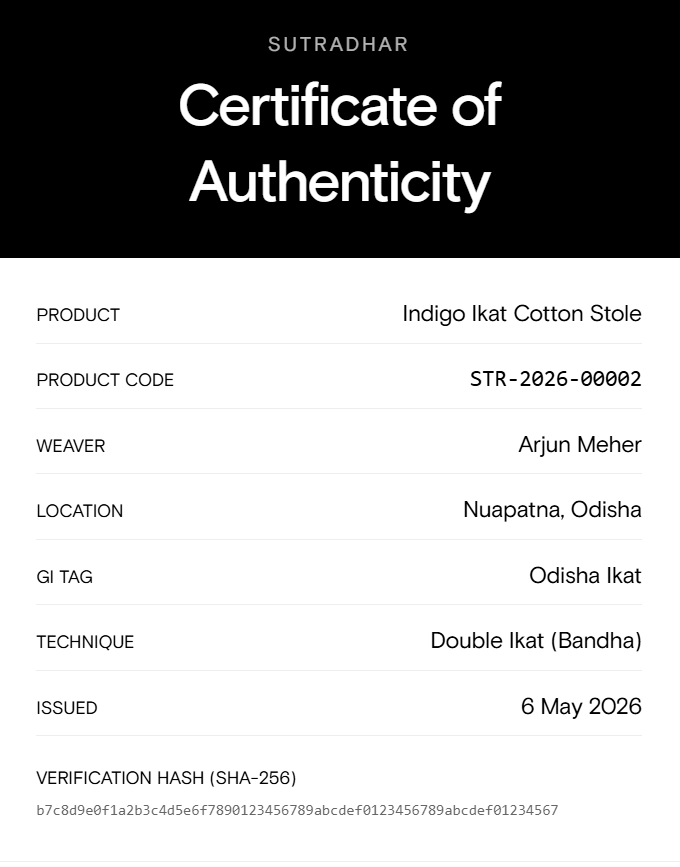
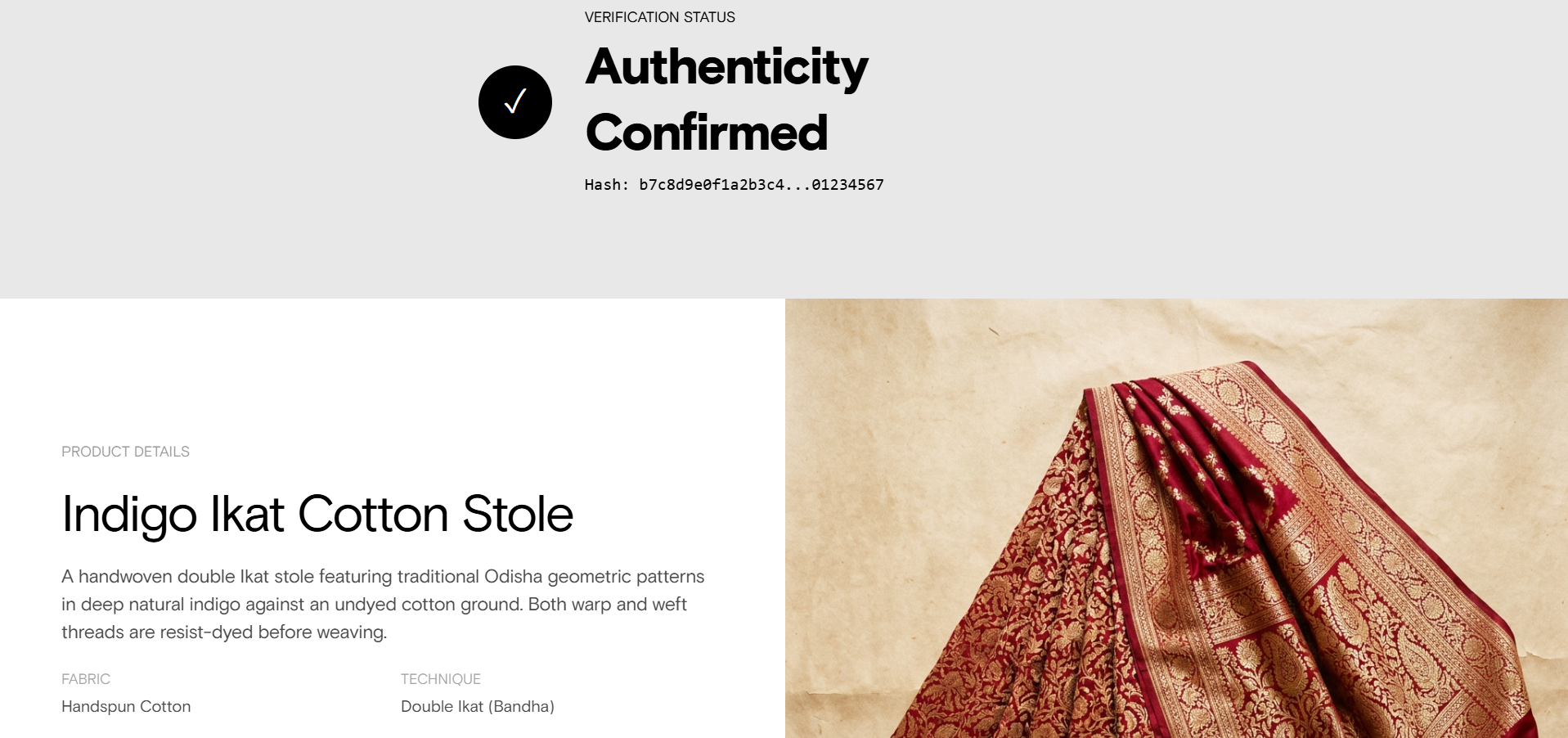
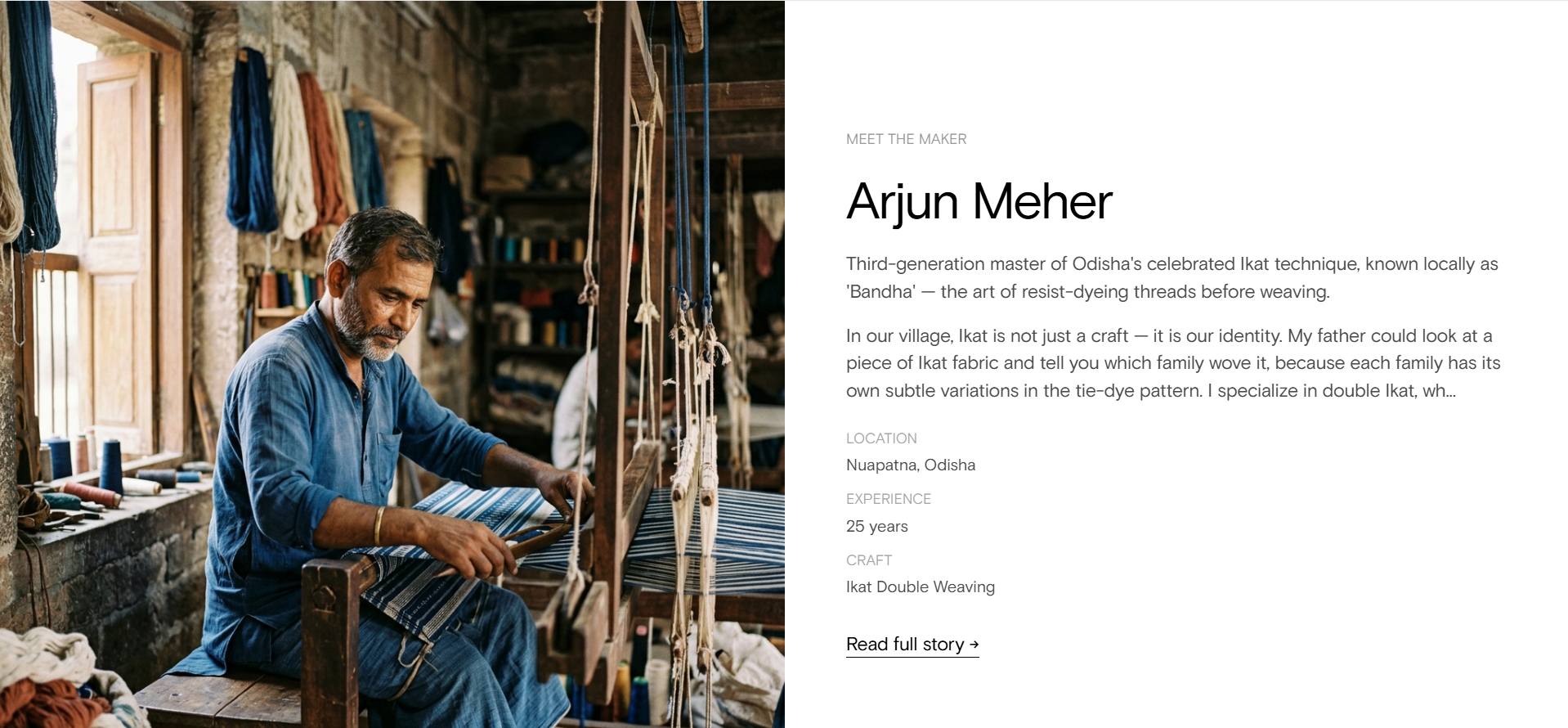
- For the Global Consumer (The Digital Passport): We replaced the boring PDF certificate with an interactive, magazine-like digital passport. Scanning a QR code opens a visually rich timeline that tells the emotional story of the product's creation.
- The Gamified UI (Crowdsourced Policing): To make enforcement engaging, we designed a simple, two-click interface for consumers to dispute fakes. We introduced a "Dispute Rewards Wallet" that visually reinforces their impact on cleaning up the global market.
The Math Behind the UI: Game Theory
To ensure the UI could actually be trusted, we backed the user experience with an economic deterrence model. The system relies on a Lifetime Trust Bond ($B$) and a Consumer Stake ($S$). A weaver only commits fraud if the expected profit ($P_f$) outweighs the total loss of the bond:
$$ E[Loss] = B + \sum_{i=1}^{n} (Lost_LTV_i) > P_f $$
Because our UI clearly visualizes this exact bond on the weaver's dashboard (in harsh red if suspended), the abstract math becomes a tangible, psychological deterrent.
Challenges We Faced
- Information Architecture: Our biggest hurdle was deciding what not to show. Supply chains generate a massive amount of data. Our challenge was curating that data into an emotional, easily digestible timeline without overwhelming the user.
- Bridging Physical and Digital: How do you prove a digital QR code belongs to a specific physical saree? We had to design a "Side-by-Side" visual comparison UI for admins to easily cross-reference consumer-uploaded photos with the original Visual DNA to detect cloned QR codes instantly.
- Designing for Low Tech-Literacy: We went through several iterations of the Weaver Portal, stripping away unnecessary jargon and replacing it with bold iconography, color-coded feedback (Green for authentic, Red for banned), and clear visual hierarchies.
What We Learned
We learned that transparency without usability is useless. You can have the most secure, cryptographically hashed database in the world, but if the artisan cannot figure out how to input the data, and the consumer is too bored to read it, the system fails.
By participating in this hackathon, we learned how to put the human experience first. We learned how to use typography, micro-interactions, and visual storytelling to transform a complex supply chain tool into a seamless, global passport that actually makes people feel trust.
Built With
- flask
- javascript
- lenis
- python
- vuejs

Log in or sign up for Devpost to join the conversation.