-
-
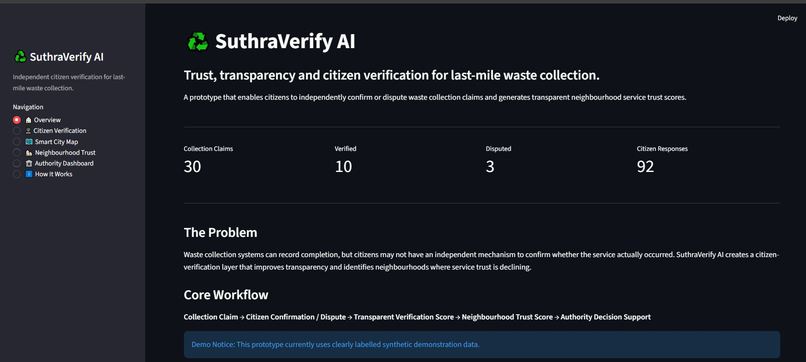
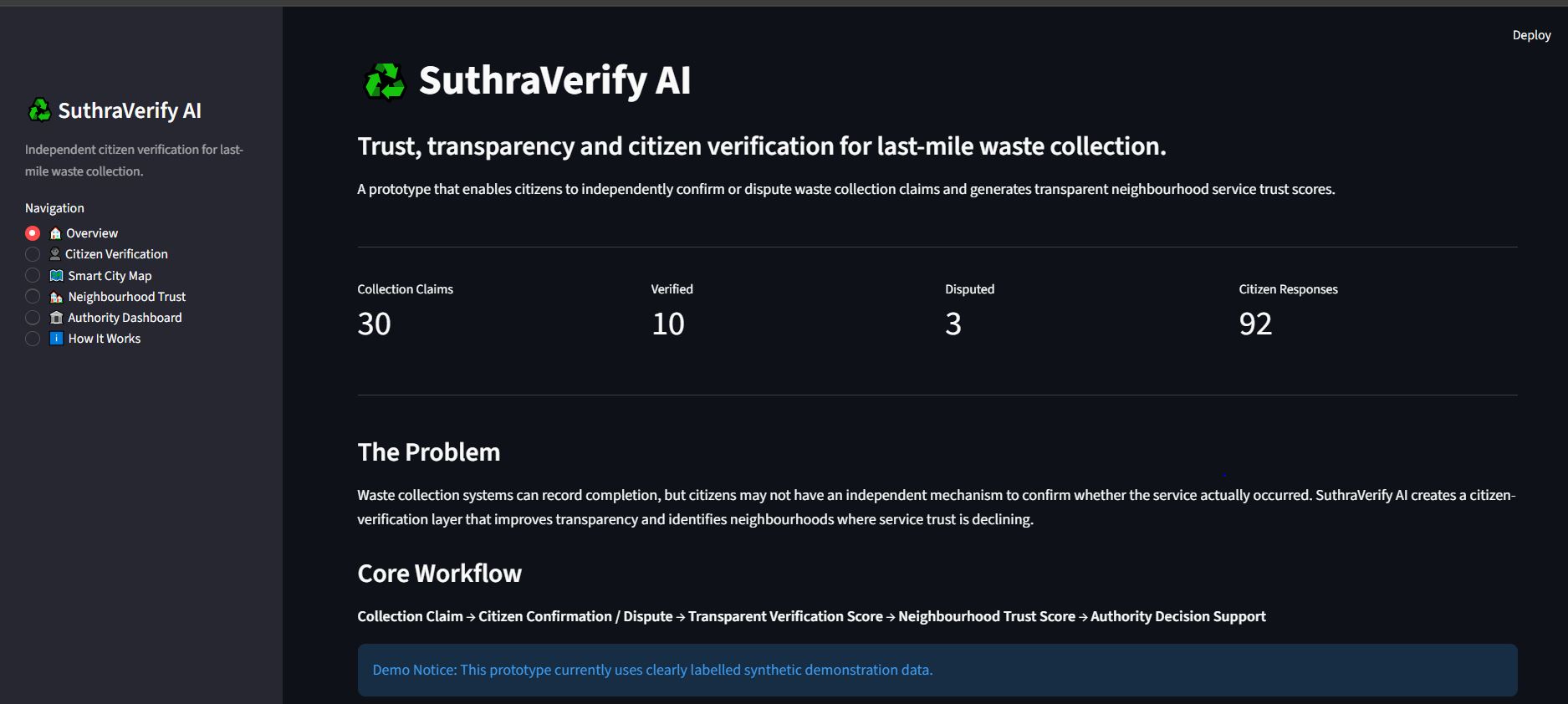
Landing page
-
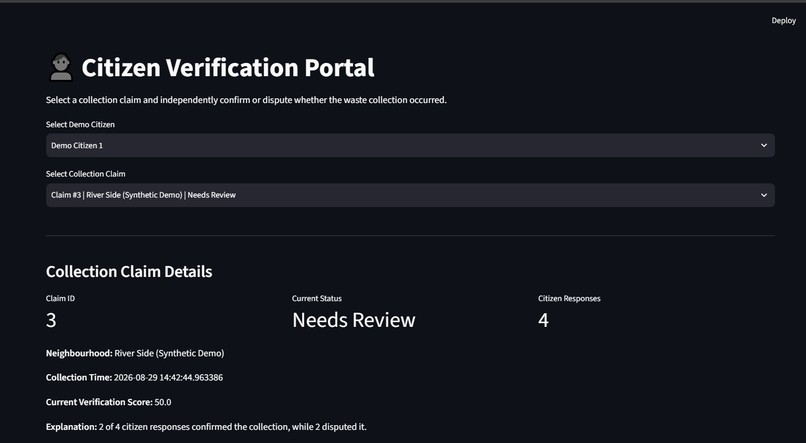
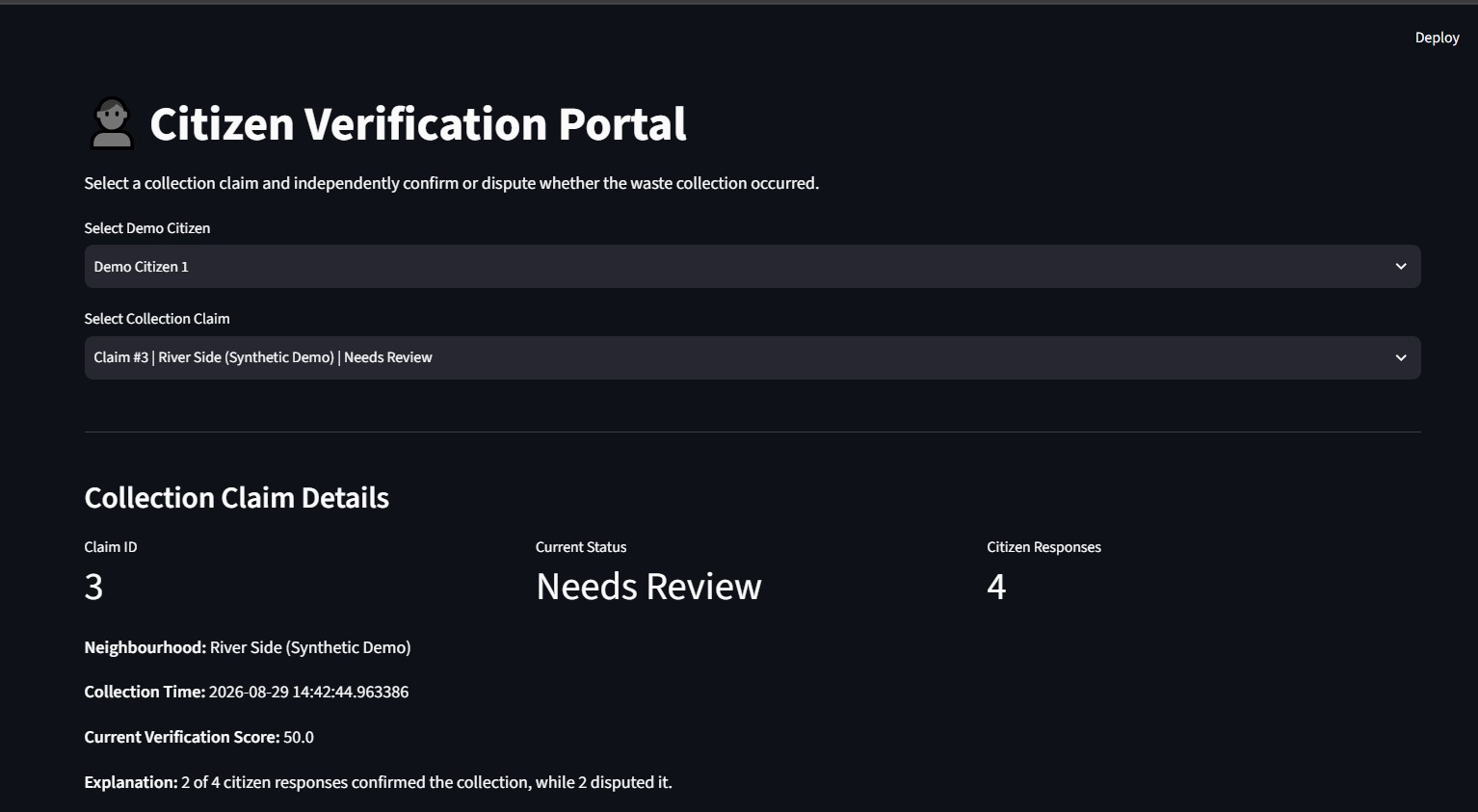
citizen verification portal
-
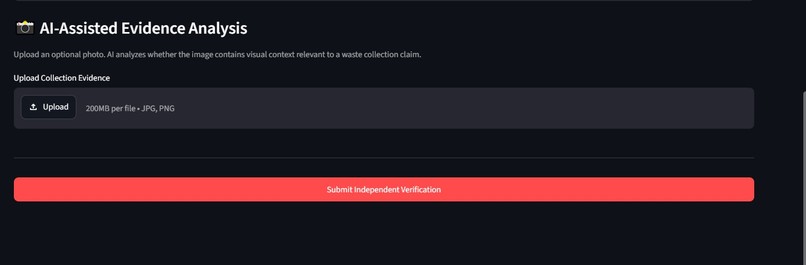
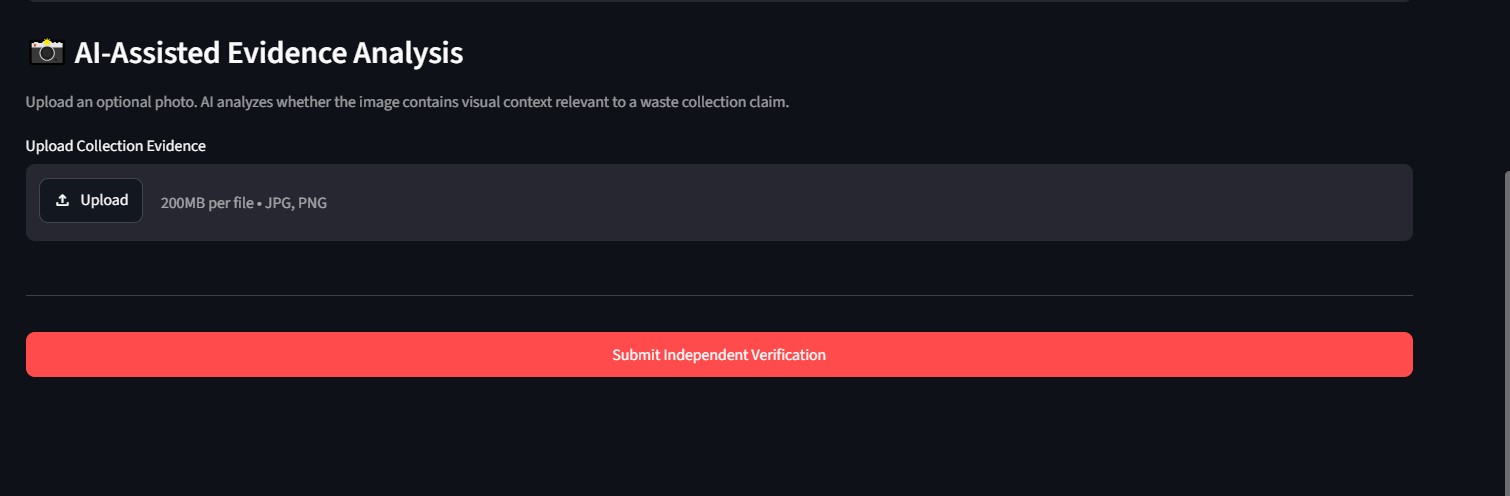
Ai Evidence Analysis
-
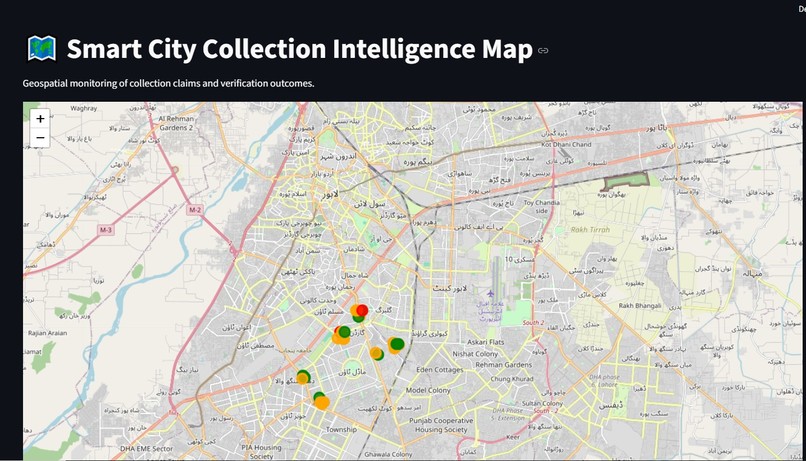
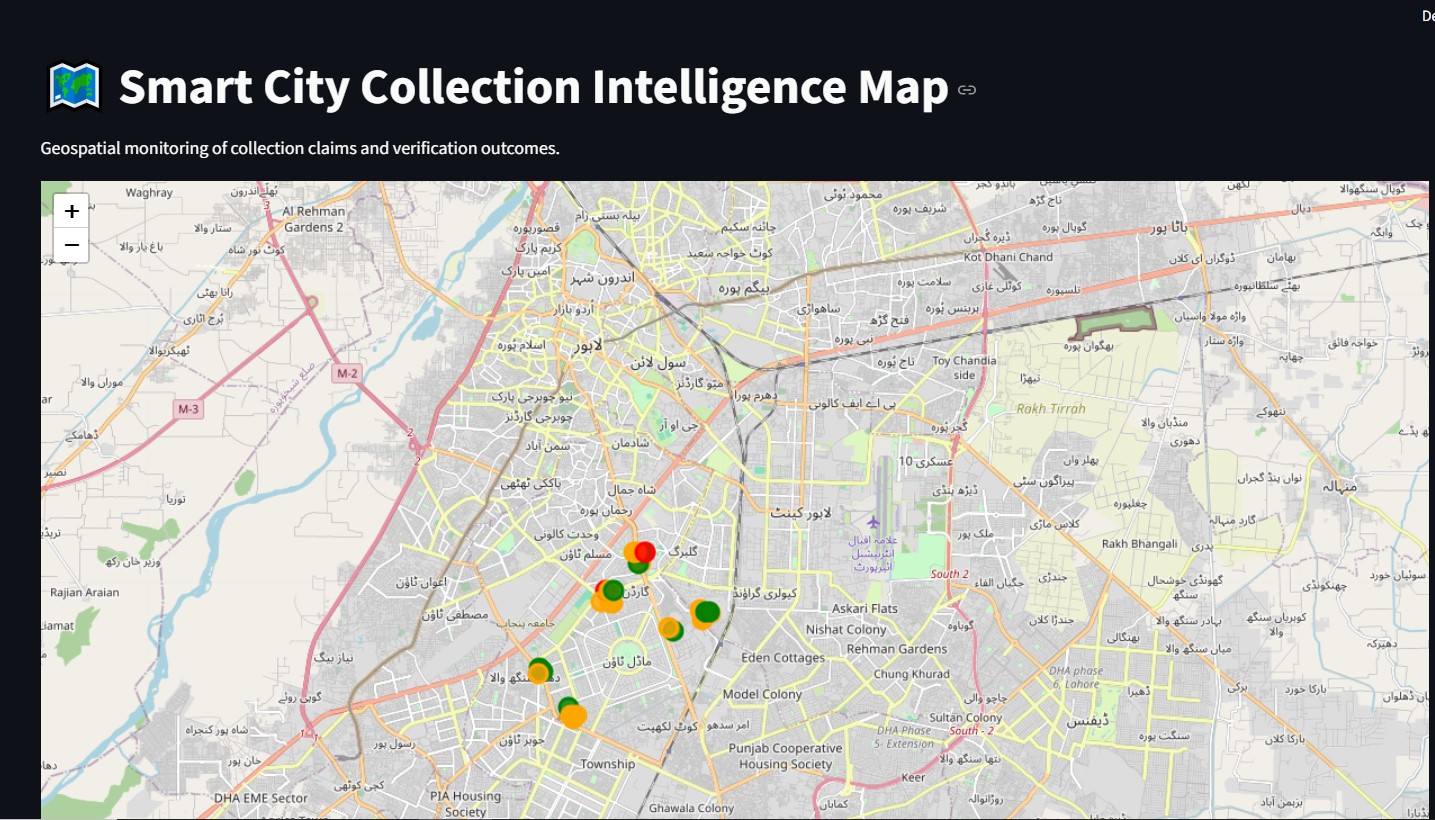
Smart City_Map
-
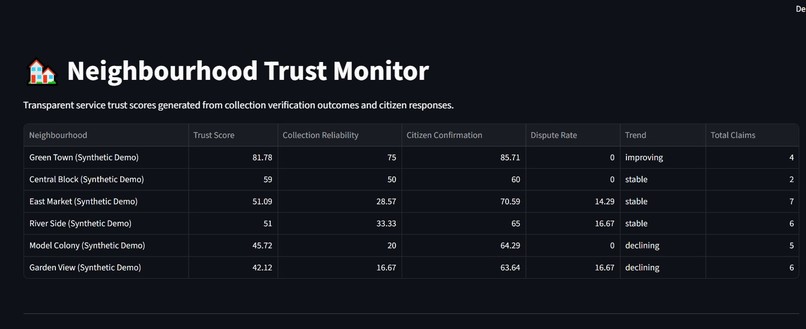
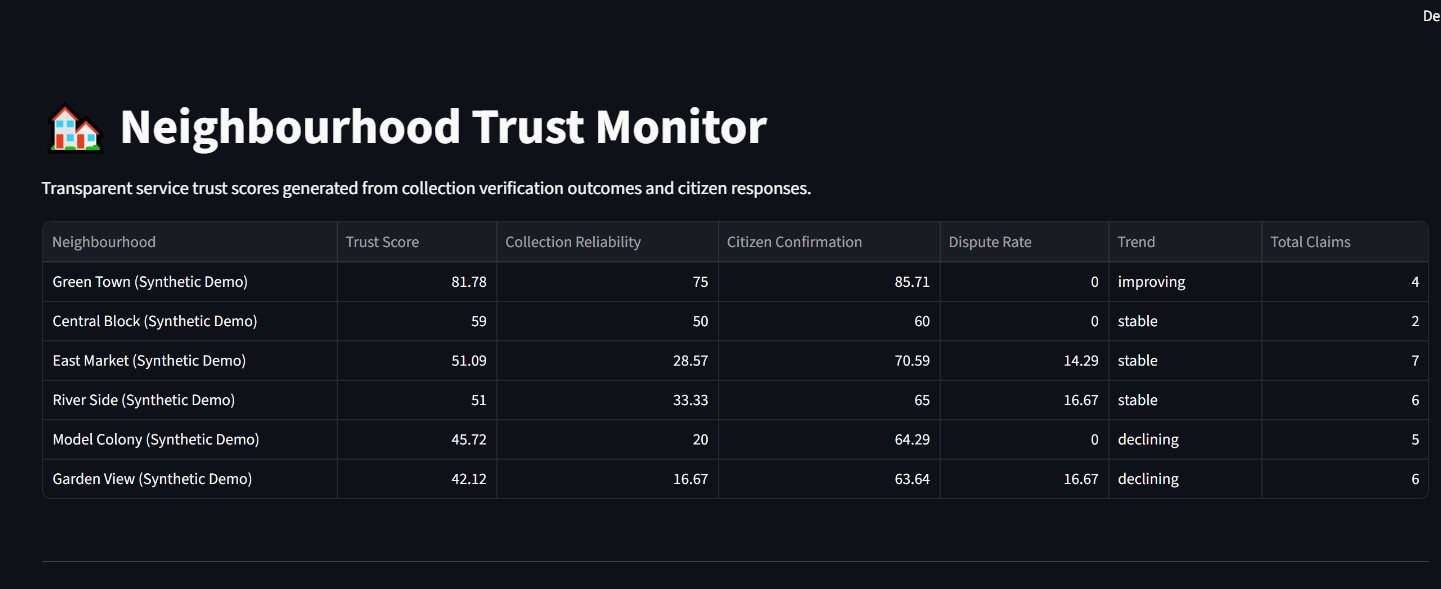
Neighbourhood Monitor
Inspiration
Waste collection is one of those services that people experience every day, yet verifying whether a collection actually happened at the last mile is difficult.
A collection request can be marked as completed in a system, while residents may still be dealing with uncollected waste.
This inspired us to ask:
What if citizens could become an independent verification layer for smart-city services?
We built SuthraVerify-AI around this idea — combining citizen participation, transparent verification, and AI-assisted evidence analysis to help bridge the gap between reported service delivery and real-world outcomes.
What it does
SuthraVerify-AI verifies waste-collection events using multiple evidence signals instead of relying only on an official completion claim.
Citizens can:
View collection events Confirm whether collection occurred Submit supporting evidence Participate without repeatedly verifying the same event
The platform then combines citizen confirmation, evidence, location, and temporal signals into an explainable verification score.
Collection events are classified as:
Verified Pending Needs Review Disputed
The system also provides neighbourhood-level trust indicators, an authority dashboard, and a Smart City map for understanding verification activity spatially.
An AI-assisted CLIP component analyzes visual evidence and contributes an additional evidence signal to the verification workflow.
How we built it
We built SuthraVerify-AI as a modular Python + Streamlit application.
The core system uses SQLite and SQLAlchemy for the MVP data layer. A verification engine combines multiple signals using a transparent weighted scoring model:
[ Score = 0.70C + 0.10E + 0.10L + 0.10T ]
where (C) represents citizen confirmation, (E) evidence, (L) location, and (T) temporal consistency.
For AI-assisted visual evidence, we integrated CLIP with PyTorch and Transformers.
The application is organized into separate components for the user interface, database layer, verification logic, AI evidence analysis, scripts, and tests.
We also built demonstration data and test images so the complete workflow could be evaluated without depending on a live municipal system.
Challenges we ran into
Designing a trustworthy verification system
The biggest challenge was deciding how to turn different types of citizen evidence into a meaningful verification result.
A simple vote was not enough, because citizen reports can also be incomplete or conflicting.
We therefore designed a multi-signal scoring approach that keeps the reasoning visible. Using AI responsibly
We did not want the AI model to simply say "true" or "false" and make the final decision.
Instead, CLIP is treated as an assistive evidence component whose output contributes to the broader verification process.
Preventing duplicate verification
Allowing the same user to repeatedly verify the same event could distort trust signals. We therefore incorporated duplicate-verification prevention into the workflow.
Balancing simplicity and scalability
For the MVP, SQLite keeps the project lightweight and easy to run. At the same time, we designed the system so the data layer can evolve toward PostgreSQL/PostGIS and larger-scale infrastructure.
Accomplishments that we're proud of
We are proud that SuthraVerify-AI became more than a simple reporting application.
We built a complete verification workflow that connects:
Citizen → Evidence → AI Assistance → Scoring → Verification Status → Neighbourhood Trust → Authority Dashboard
Some of the capabilities we are particularly proud of include:
A working Streamlit civic-tech application Citizen-based collection verification Duplicate-verification prevention Explainable multi-signal scoring Verified, pending, review, and disputed states Neighbourhood trust indicators Authority monitoring dashboard Smart City map visualization CLIP-based AI evidence analysis Modular project structure with automated tests A path toward production-scale geospatial infrastructure
Most importantly, we designed AI as a supporting component rather than hiding the verification process behind a black box.
What we learned
The biggest lesson was that building an AI system is not only about choosing a model.
For a real-world civic problem, the surrounding workflow matters just as much.
We learned how to:
Design verification workflows around uncertain evidence Combine deterministic rules with AI-assisted signals Prevent duplicate or misleading participation Build explainable scoring instead of relying on opaque decisions Separate evidence from the final decision Design an MVP with a realistic path toward future scalability Think about AI as an assistant to human and community evidence rather than a replacement for it
We also learned that even a technically simple component can become challenging when it has to operate as part of a complete end-to-end product.
What's next for SuthraVerify-AI
The current project is an MVP. Our next goal is to move from demonstration-scale verification toward real-world smart-city deployment.
Future development could include:
PostgreSQL + PostGIS for scalable geospatial data Integration with real municipal collection schedules Vehicle GPS and route verification Stronger multimodal evidence analysis Duplicate-image and fraud detection AI-based anomaly detection Learned and calibrated verification models Mobile citizen applications Real-time municipal monitoring Integration with existing smart-city platforms
Our long-term vision is to create a scalable verification layer for civic services — helping cities understand not only what was reported, but also what was independently verified by the community.
Built With
- ai
- civic-tech
- clip
- computer-vision
- folium
- machine-learning
- pandas
- plotly
- python
- pytorch
- smart-city
- sqlalchemy
- sqlite
- streamlit
- transform


Log in or sign up for Devpost to join the conversation.