-
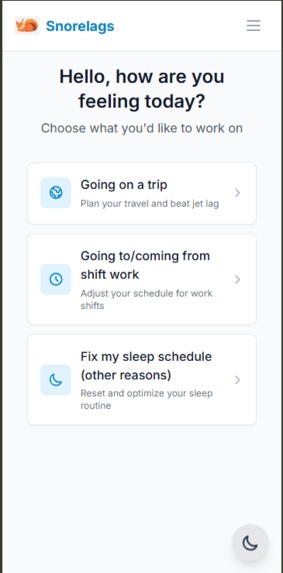
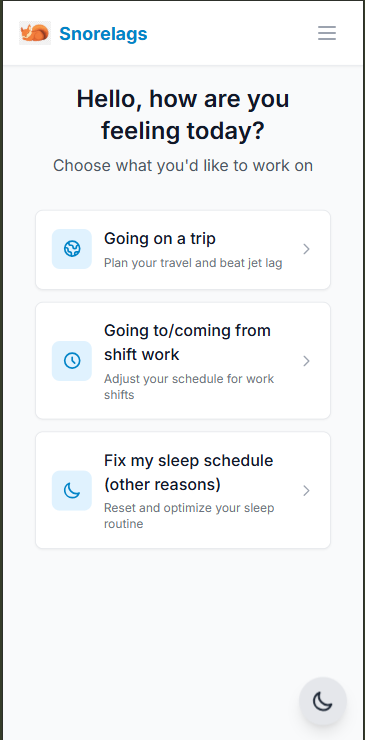
Home Page
-
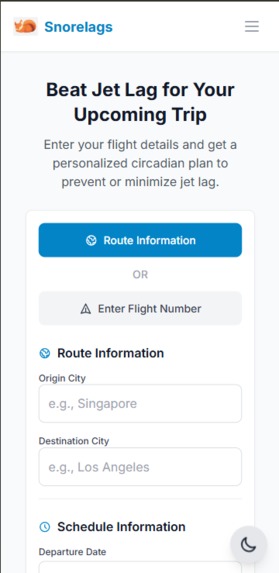
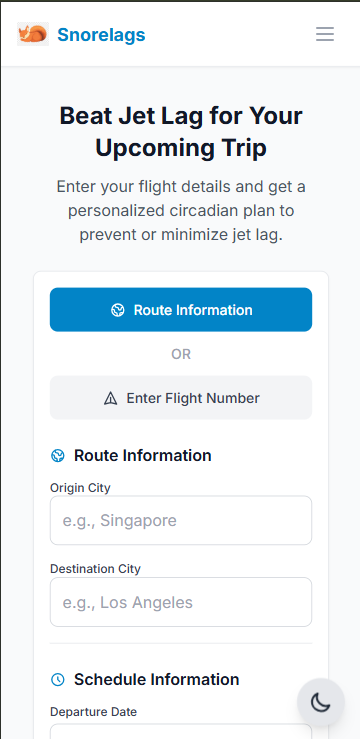
Jet Lag Travel Input Page
-
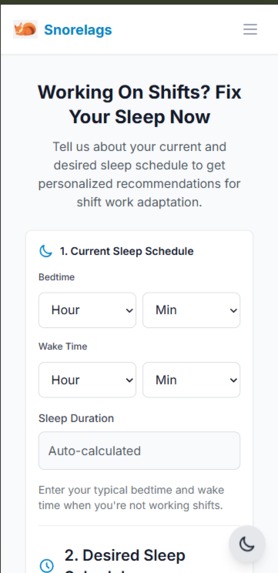
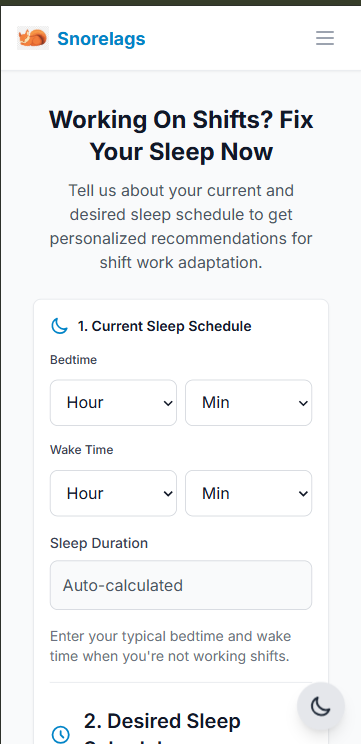
Shift Working Input Page
-
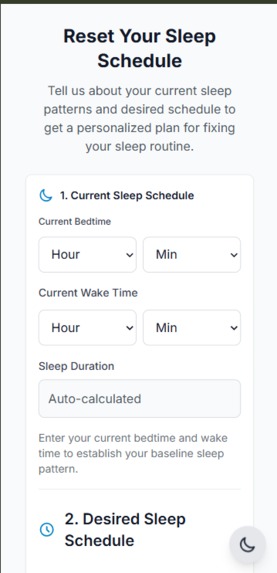
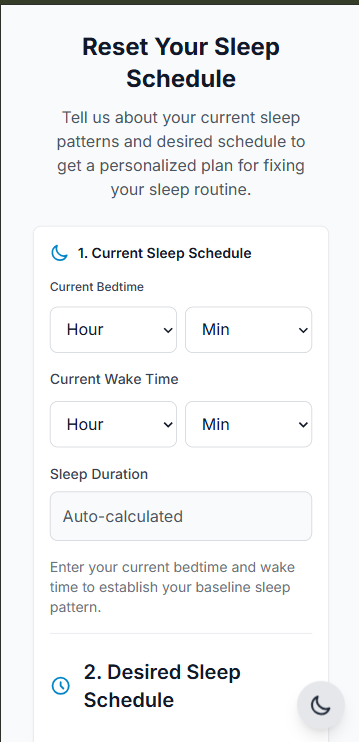
General Sleep Scheduler Input Page
-
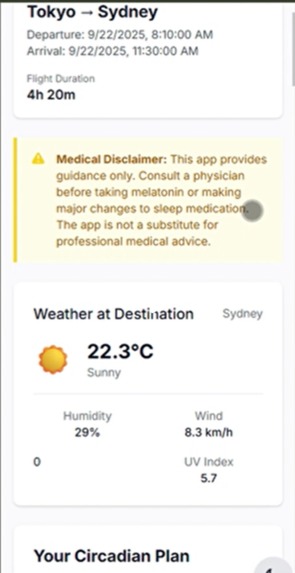
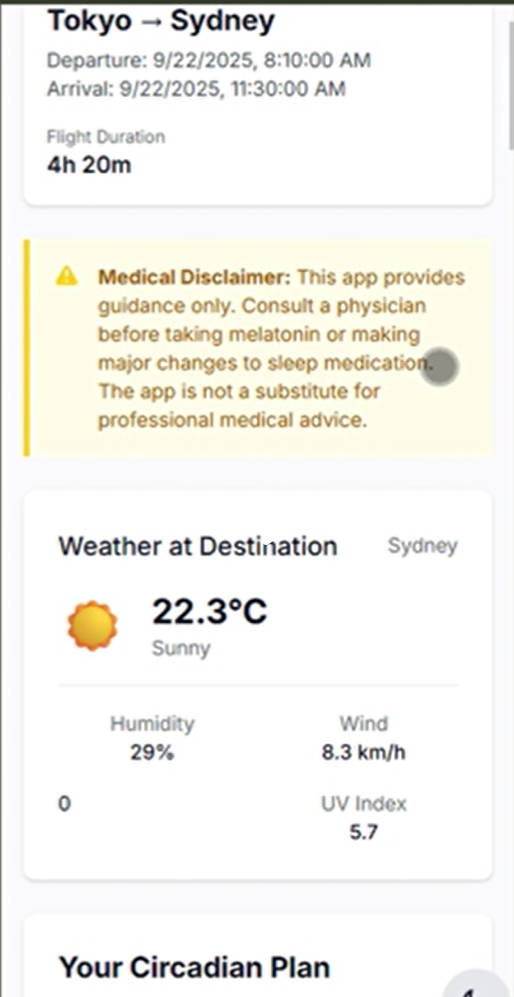
Example Generated Jet Lag Schedule
-
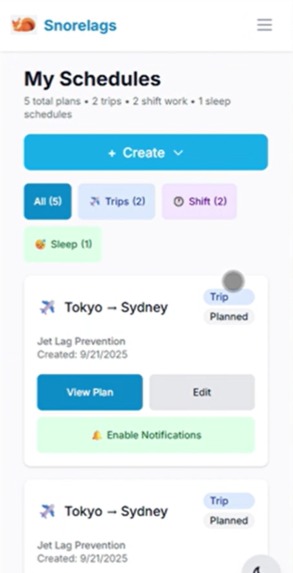
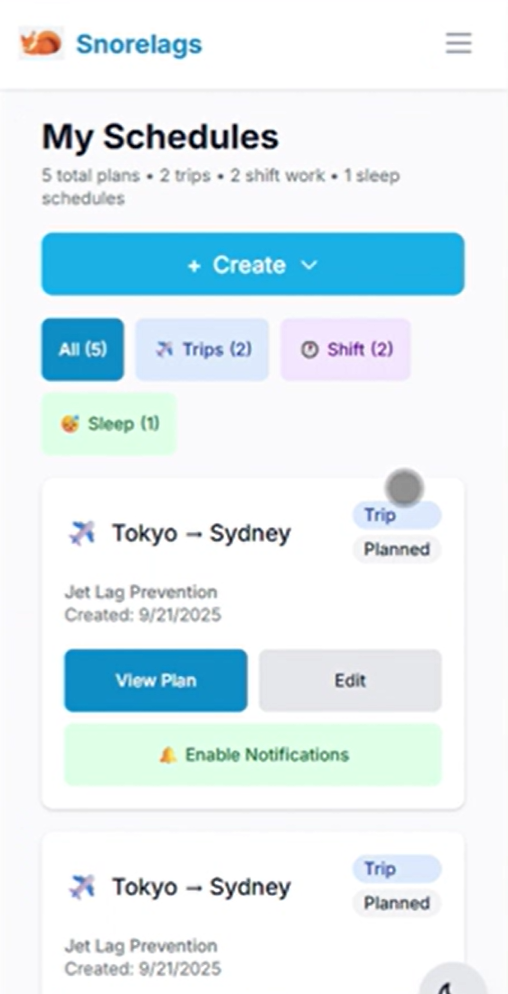
My Schedules
Inspiration
A significant portion of the population suffers from circadian rhythm misalignment, a condition where the body's internal clock is out of sync with their external schedule. This affects a diverse group, from international travelers experiencing jet lag to night-shift workers with Shift Work Sleep Disorder and individuals with natural Delayed or Advanced Sleep Phase Disorders. The resulting symptoms—including debilitating fatigue, insomnia, poor cognitive function, and negative health outcomes—are difficult to manage because they are rooted in complex chronobiology. Current solutions are often generic, inaccessible, and fail to provide a personalized, actionable plan for realigning the body's clock. This leaves individuals feeling powerless over their sleep, which significantly impacts their well-being, safety, and productivity.
What it does
SnoreLags is a personalized sleep and circadian rhythm management app that helps people regain control over their body clocks. It is designed to support:
- Aviation industry professionals – including pilots, flight attendants, and frequent travelers dealing with jet lag.
- Shift workers – who face irregular or rotating work hours.
- The general population – anyone struggling with irregular sleep cycles or looking to build a healthier routine.
Using AI, SnoreLags generates tailored schedules based on user inputs such as flight details, work shifts, or current sleep patterns. Each plan provides:
- Strategic light exposure guidance (when to seek or avoid light)
- Meal and hydration timing to support circadian adjustment
- Caffeine and melatonin suggestions (with clear disclaimers)
- Daily checklists and reminders to stay on track
- Trip history and progress tracking for better long-term sleep management
SnoreLags takes complex chronobiology and turns it into an easy-to-follow, actionable plan—helping users sleep better, stay alert, and feel their best no matter where they are or when they work.
How we built it
Our solution works by combining data ingestion, an AI engine, and an ML pipeline to deliver a personalized, real-time circadian adjustment plan. Users provide trip inputs (origin, destination, dates, times, flight details) which, along with flight data, weather feeds, and their stored profile, are ingested into a database. The AI engine, powered by chronobiology rules and a large-language model (Gemini), parses this data to create context-aware embeddings and generates an initial plan. This plan is refined through an ML pipeline consisting of a plan generator, light scheduler, sleep-shift simulator, and risk scoring module, ensuring recommendations are scientifically sound and tailored to the user’s specific journey. The final output—a real-time plan with checklists, reminders, and chatbot support—is delivered through the frontend, guiding users with actionable steps to minimize jet lag and reset their sleep schedule effectively.
Challenges we ran into
- Refining the problem statement: We went through multiple iterations. Our initial idea had to be dropped due to feasibility concerns, and we pivoted to focus on circadian rhythm and sleep management.
- Finding the right APIs: Selecting reliable APIs for time zones, weather, and schedule generation took significant effort.
- LLM JSON formatting: Ensuring the AI generated outputs in the correct JSON format was tricky and required careful prompt engineering.
- FastAPI integration: Integrating the backend smoothly with FastAPI presented challenges in structuring endpoints and handling data flow between the AI model and the app.
Accomplishments that we're proud of
We’re proud that we were able to tackle a real-world problem and turn it into a practical solution. Our project not only helps individuals manage their sleep and daily performance but also creates a broader social impact by supporting aviation professionals, shift workers, and anyone struggling with irregular sleep cycles.
What we learned
As engineers, we came to appreciate the critical importance of sleep for health and performance. In building this project, we dove deep into sleep research—not only around jet lag, but also broader topics such as lucid dreaming, narcolepsy, and sleep apnea. This gave us a stronger understanding of how technology can support better sleep and well-being.
What's next for SnoreLags
We plan to continue improving SnoreLags by adding features that make it even more personalized and convenient:
- User feedback: Let users share how they feel after completing tasks to improve AI recommendations.
- Smart home integration: Connect with smart lights to automate optimal light exposure.
- Wearable device sync: Incorporate data from smartwatches and fitness trackers for more precise schedules.
- Voice assistant support: Enable reminders and guidance through Siri, Google Assistant, or Alexa.
Our long-term vision is to make SnoreLags the go-to app for managing sleep and circadian health for travelers, shift workers, and anyone looking to optimize their sleep.


Log in or sign up for Devpost to join the conversation.