Inspiration
Rural communities are increasingly adopting renewable energy solutions like solar microgrids and wind installations. However, these systems often operate in isolation due to fragmented infrastructure, disconnected data pipelines, and lack of real-time monitoring. This leads to inefficient energy utilization, delayed maintenance, reduced trust in green energy claims, and vulnerability during environmental disasters.
We were inspired to build SustainLabs to bridge this technological divide — creating a unified platform that empowers rural energy ecosystems with intelligent monitoring, transparent transactions, and predictive insights to accelerate sustainable rural commerce.
What it does
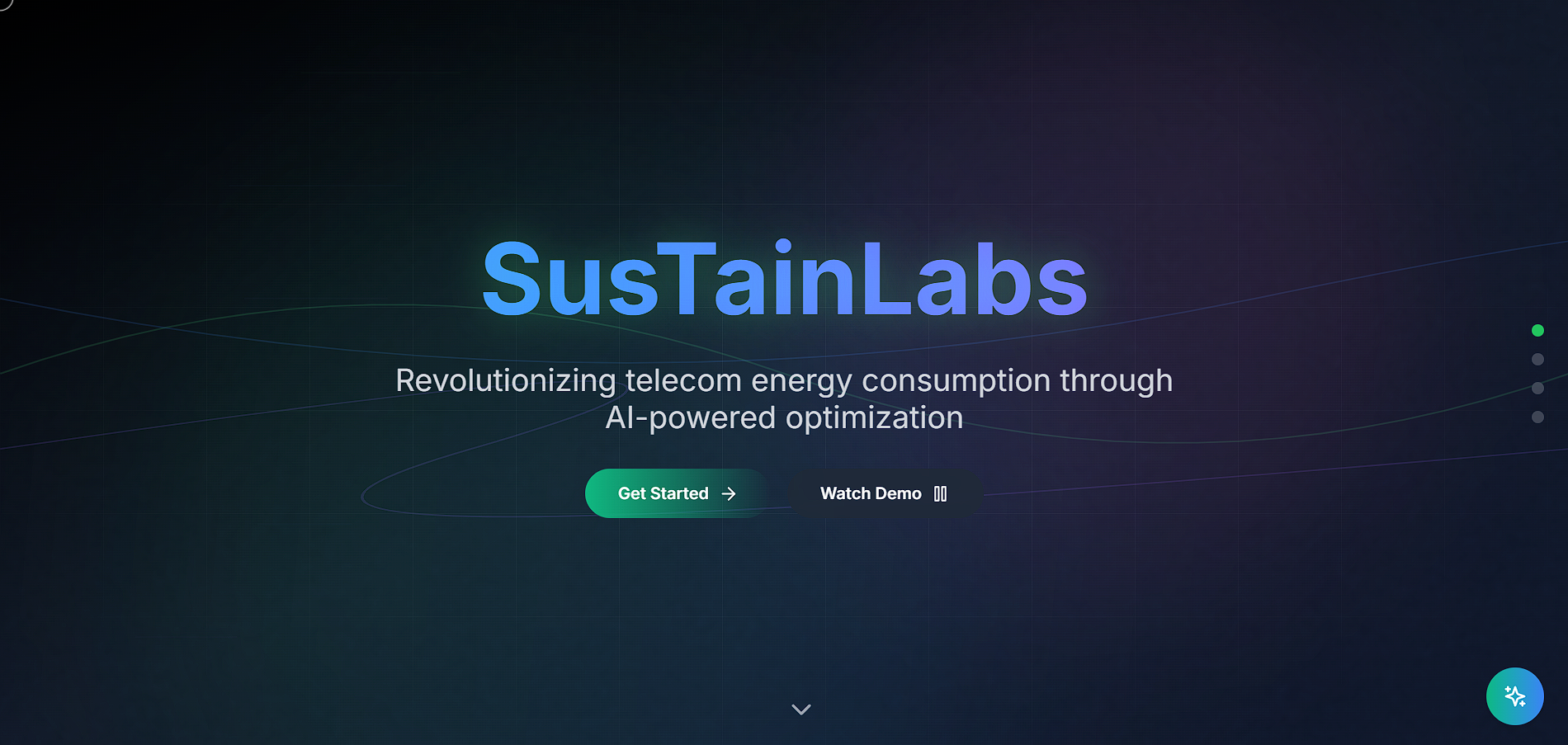
SustainLabs is an AI-powered renewable energy management platform that transforms fragmented energy infrastructures into unified, efficient, and trustworthy systems.
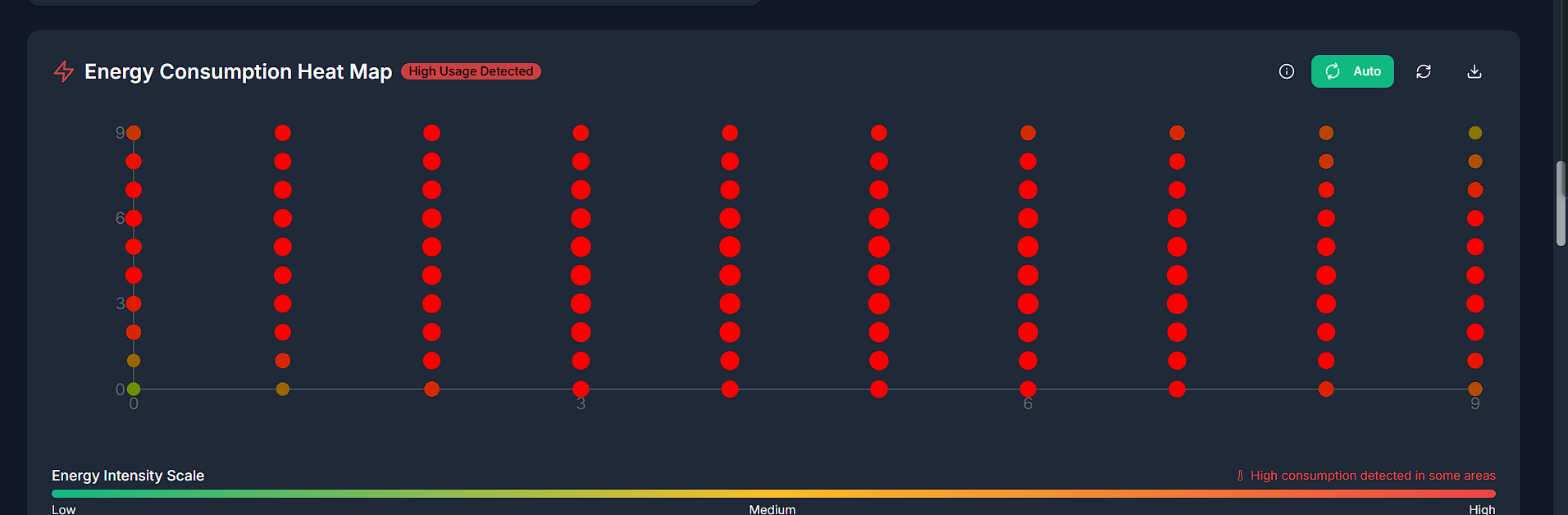
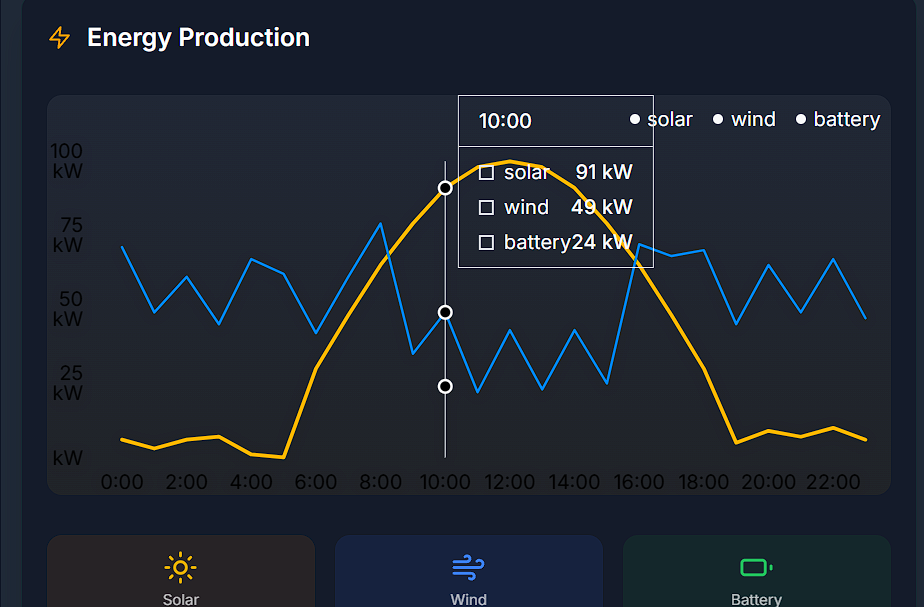
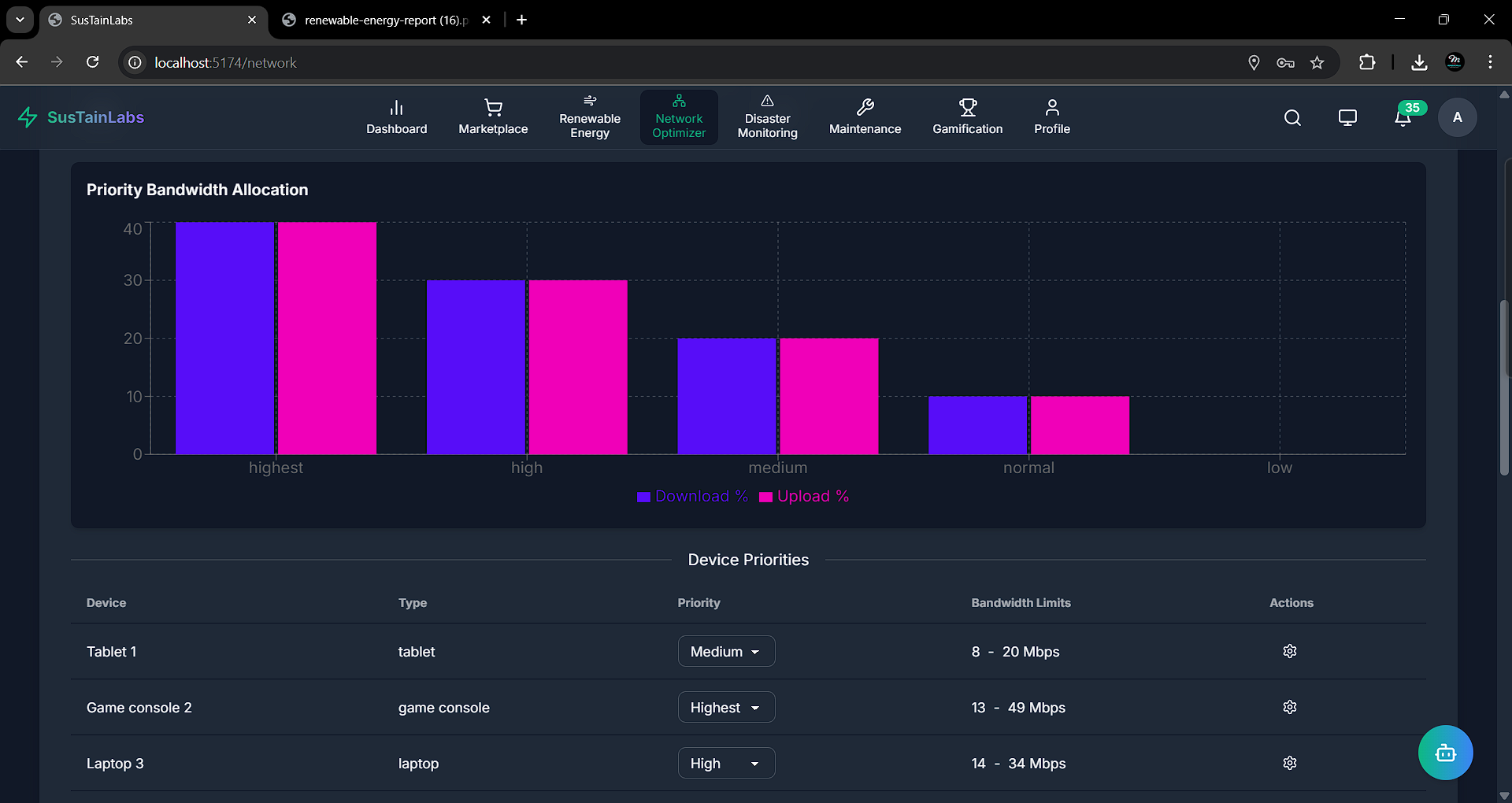
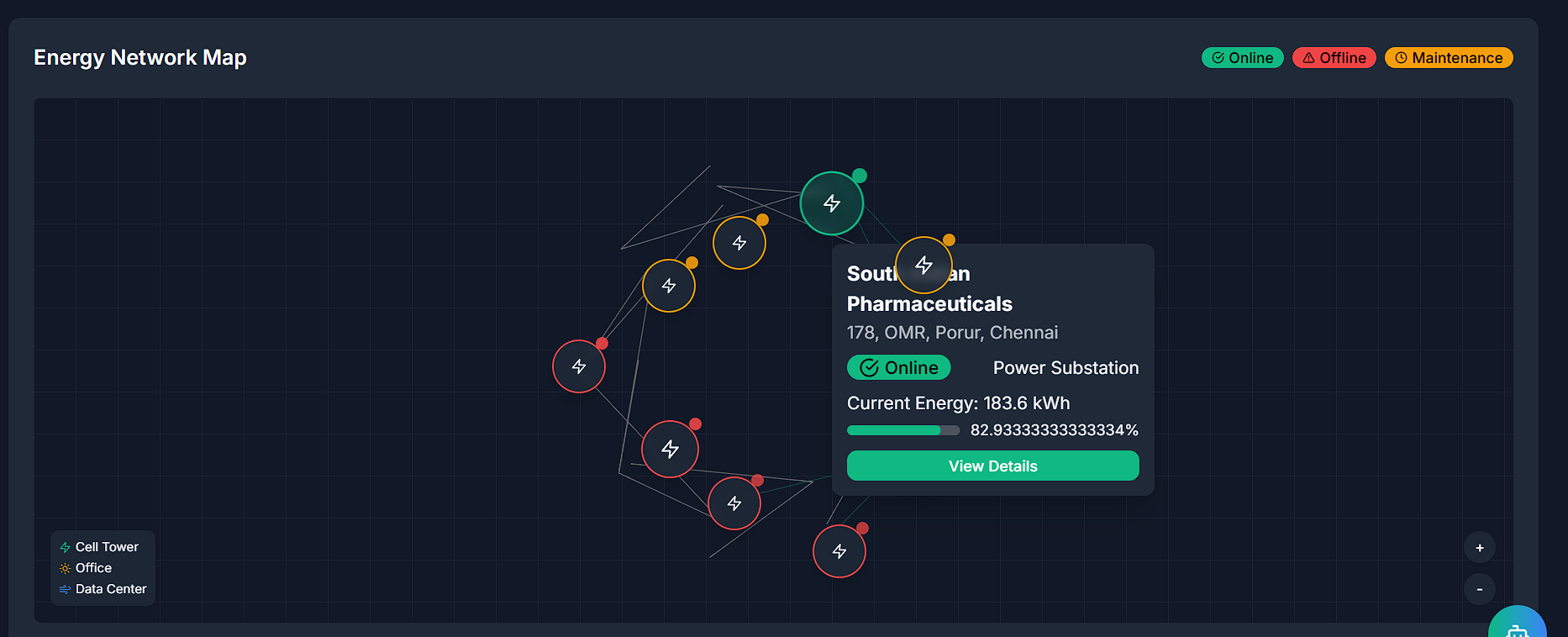
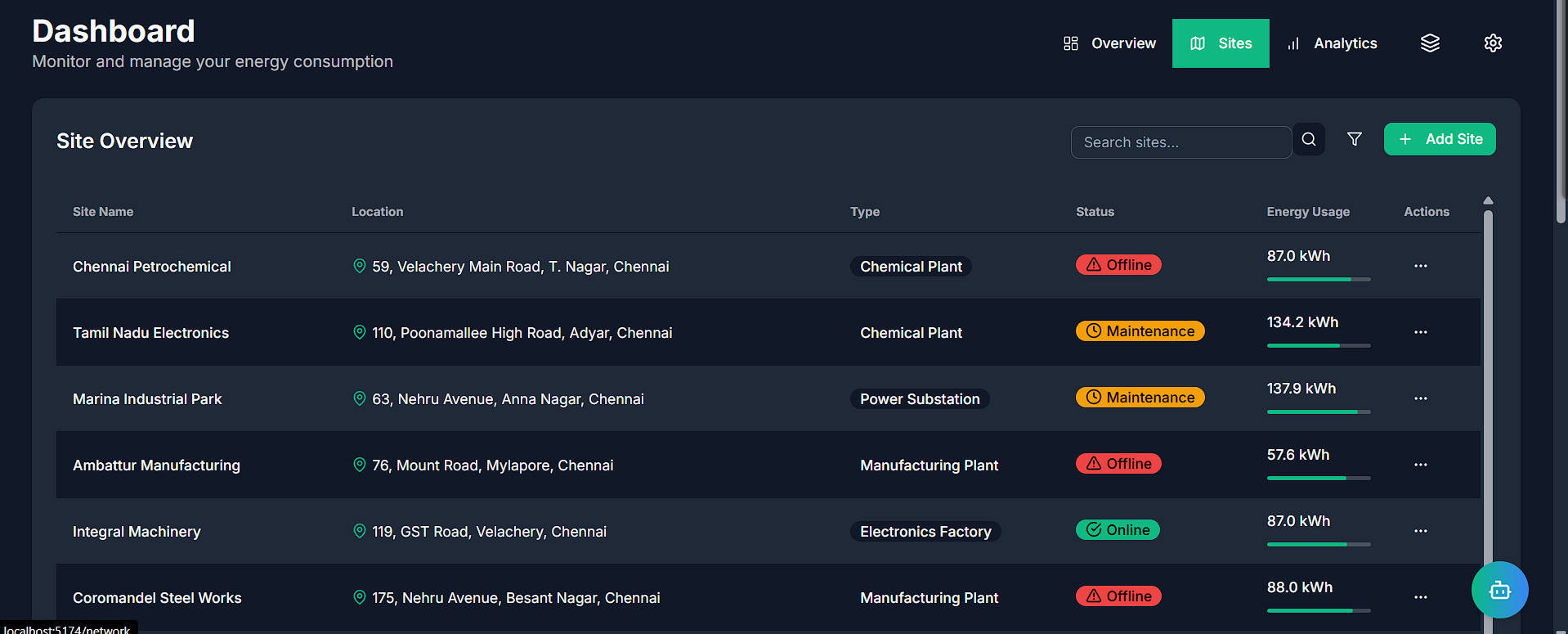
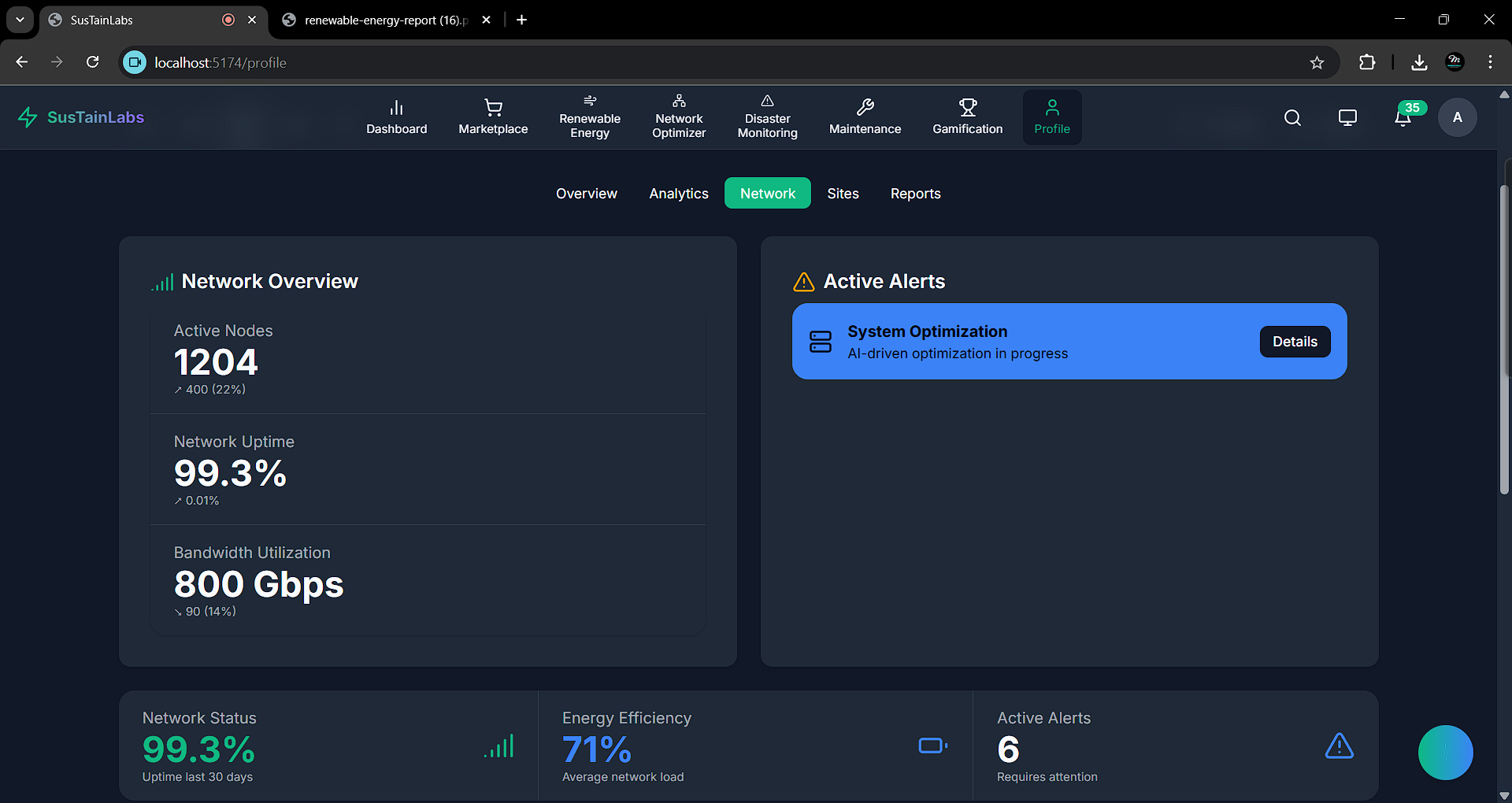
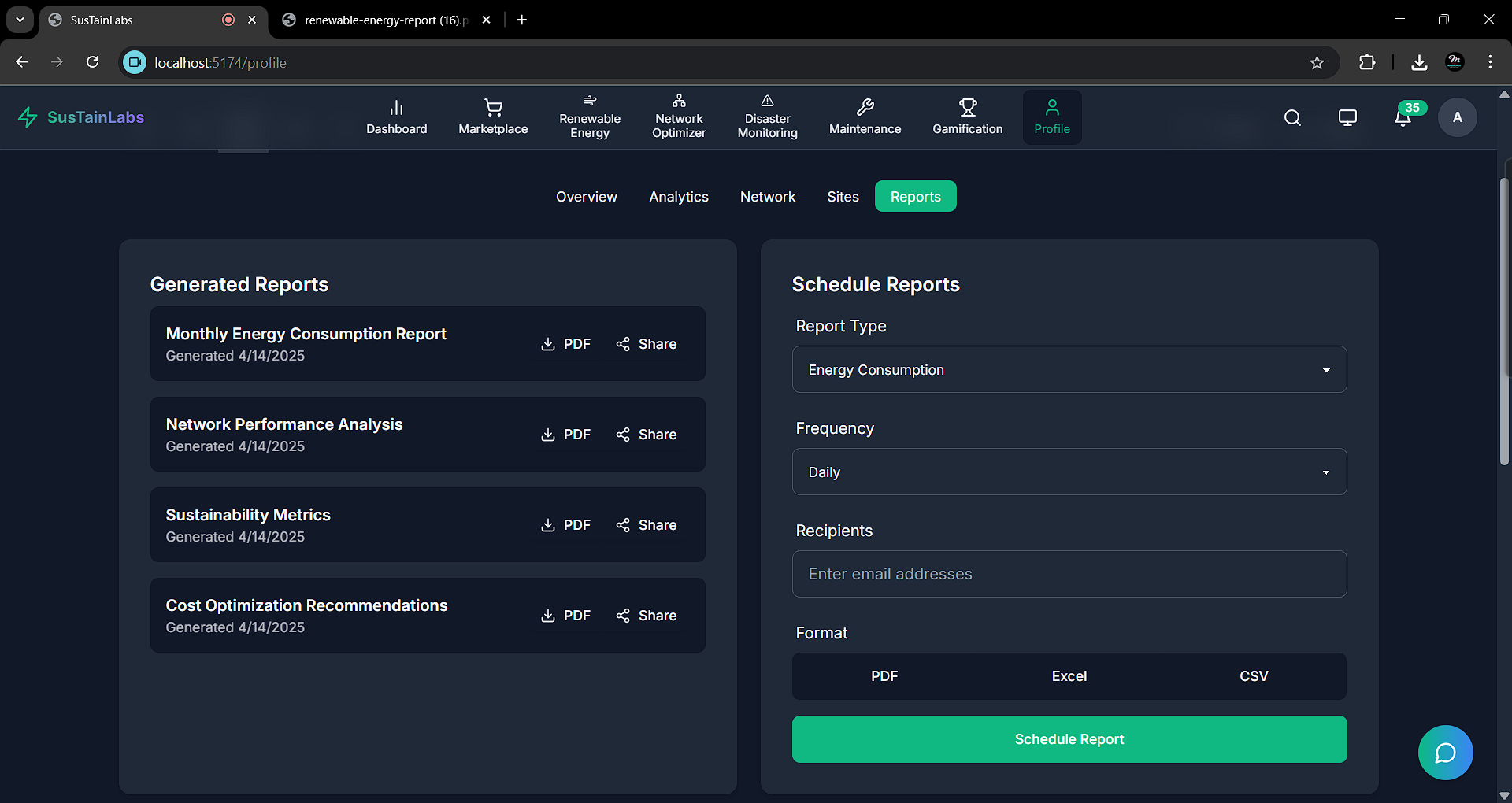
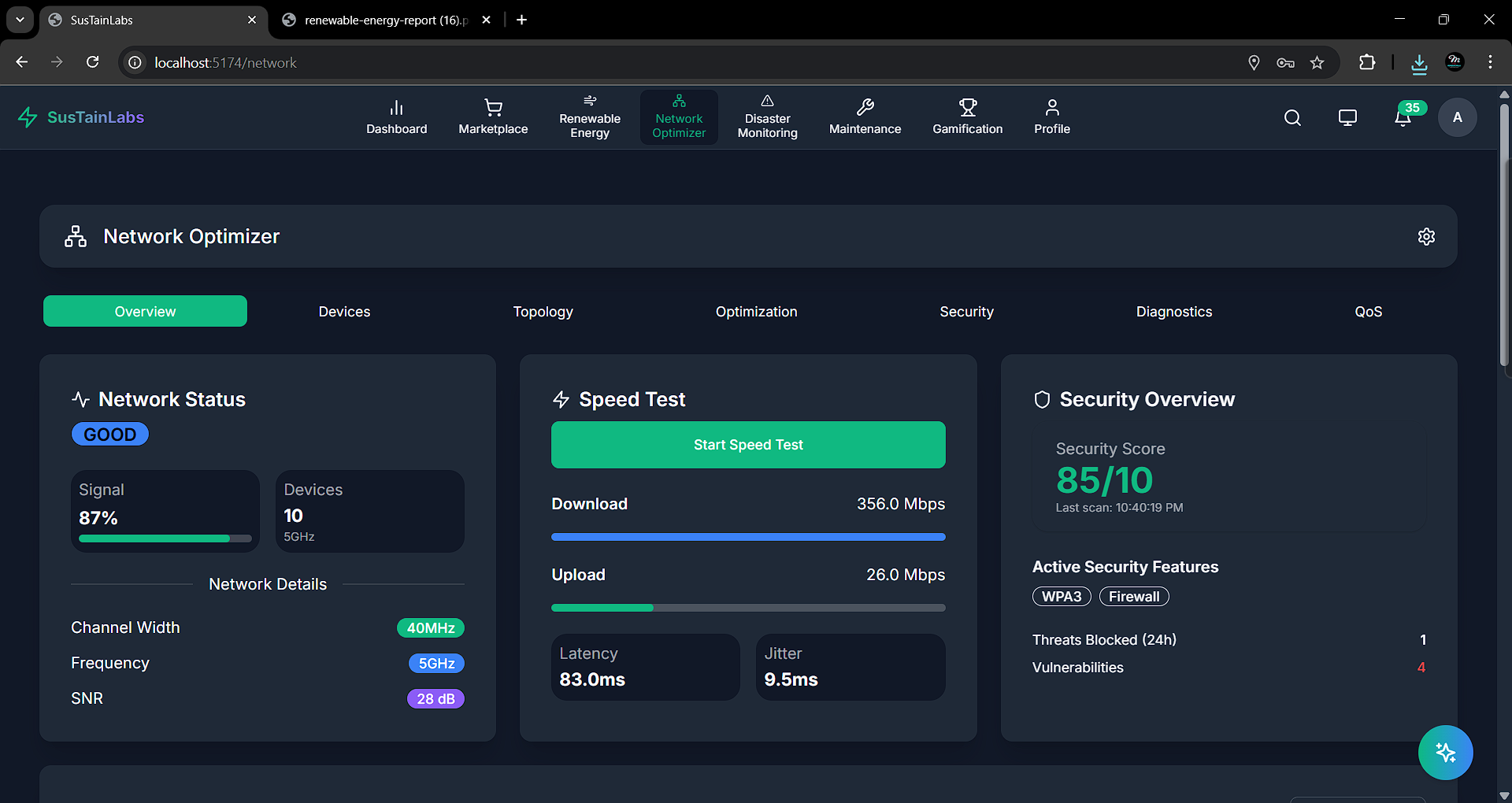
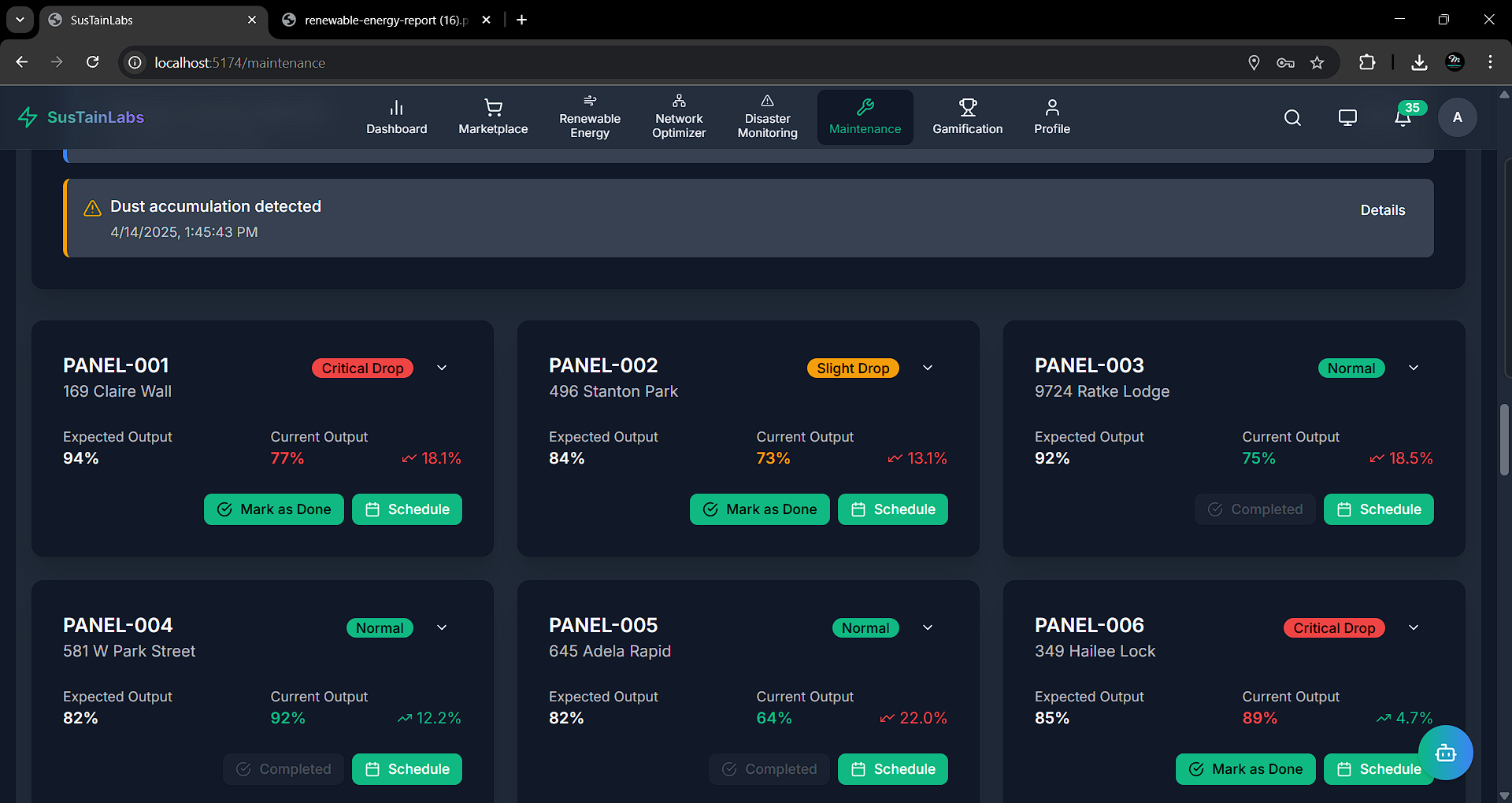
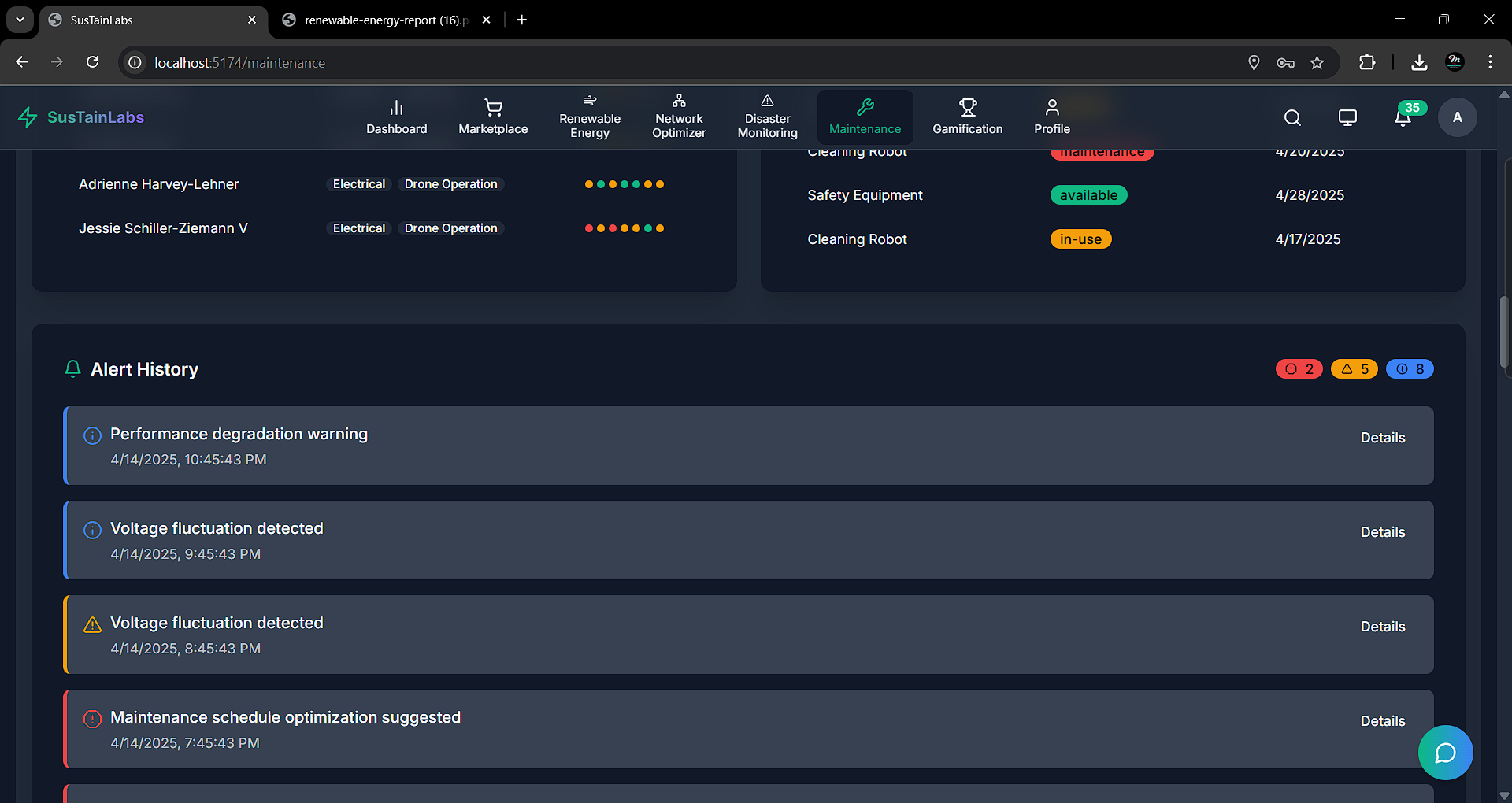
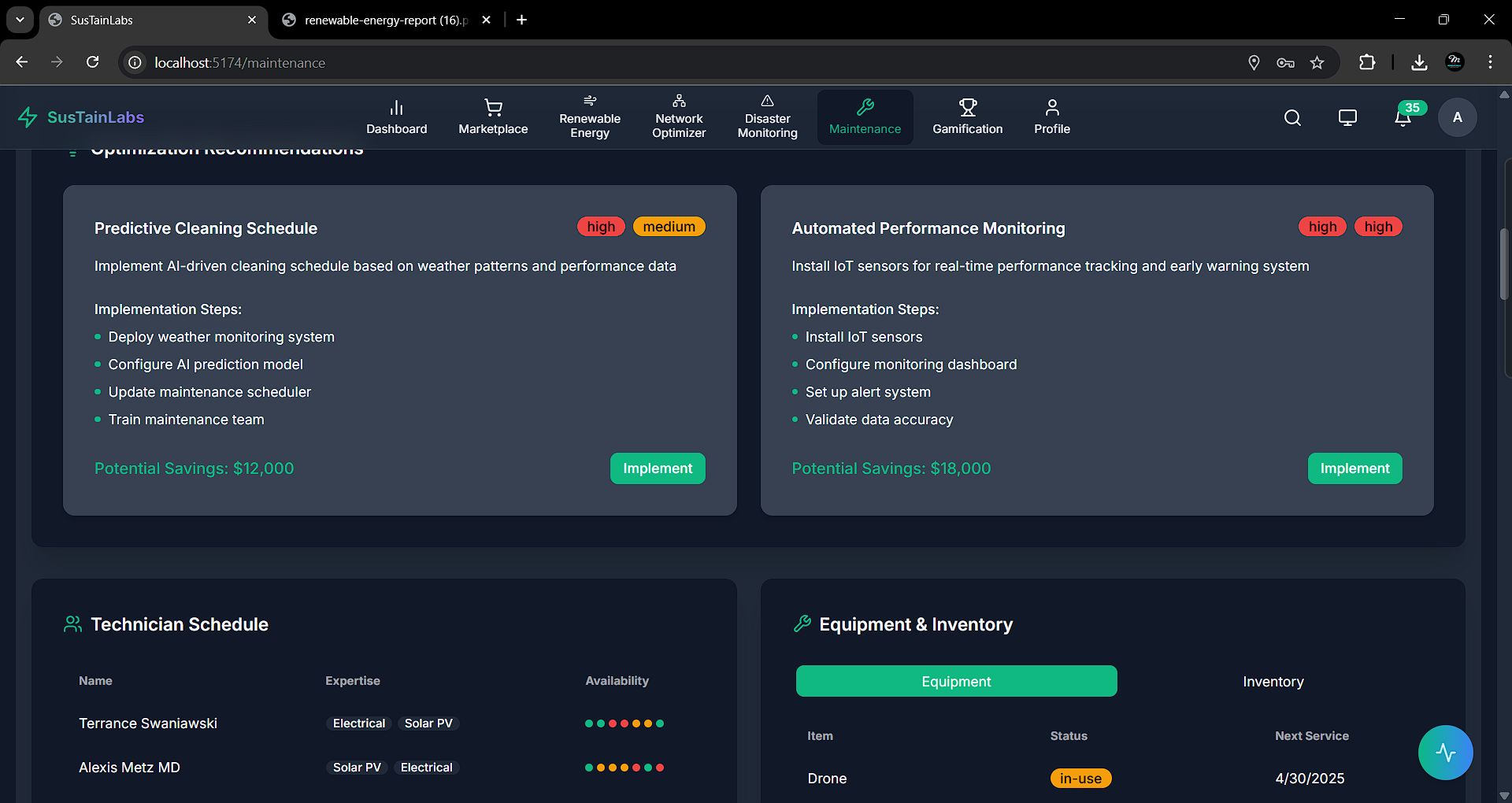
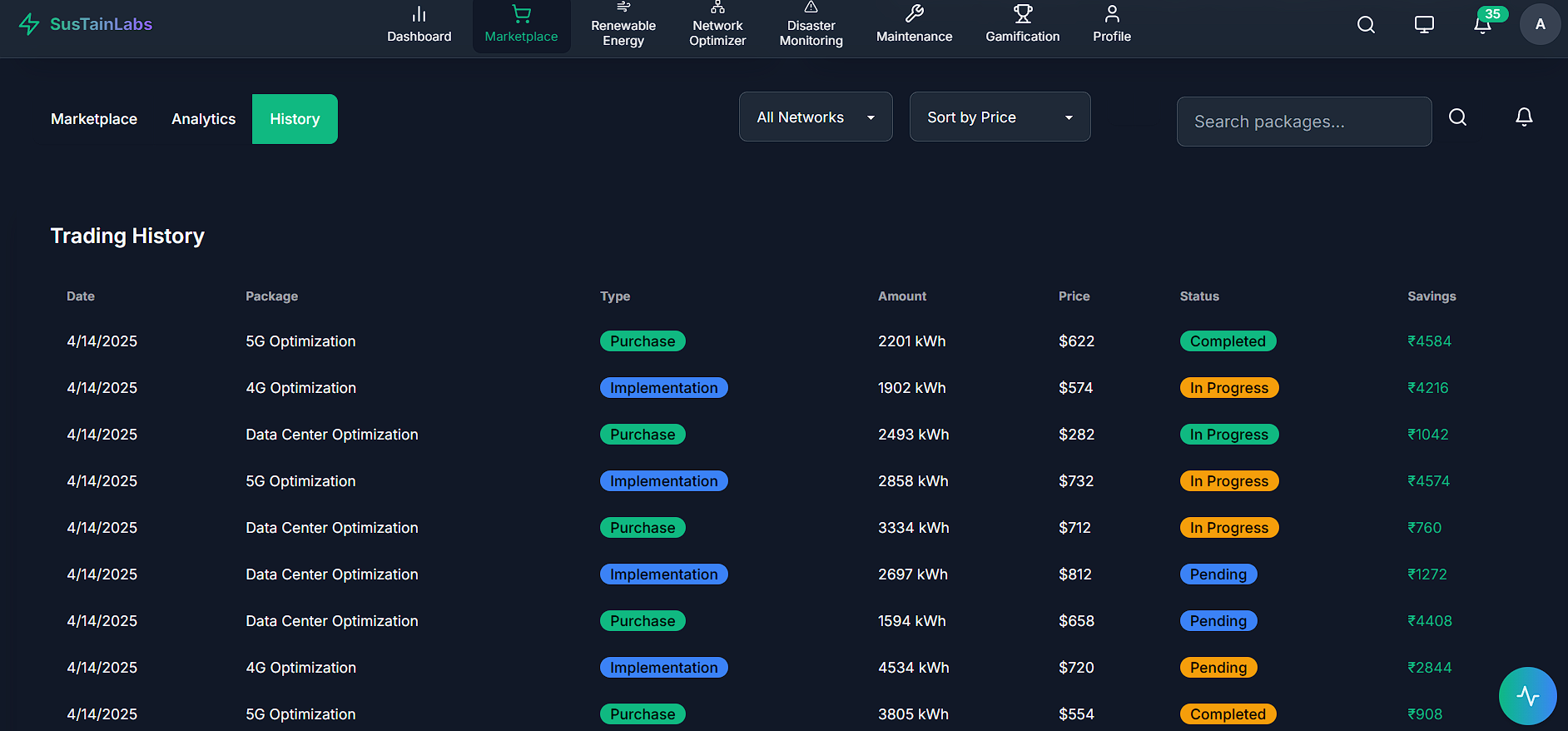
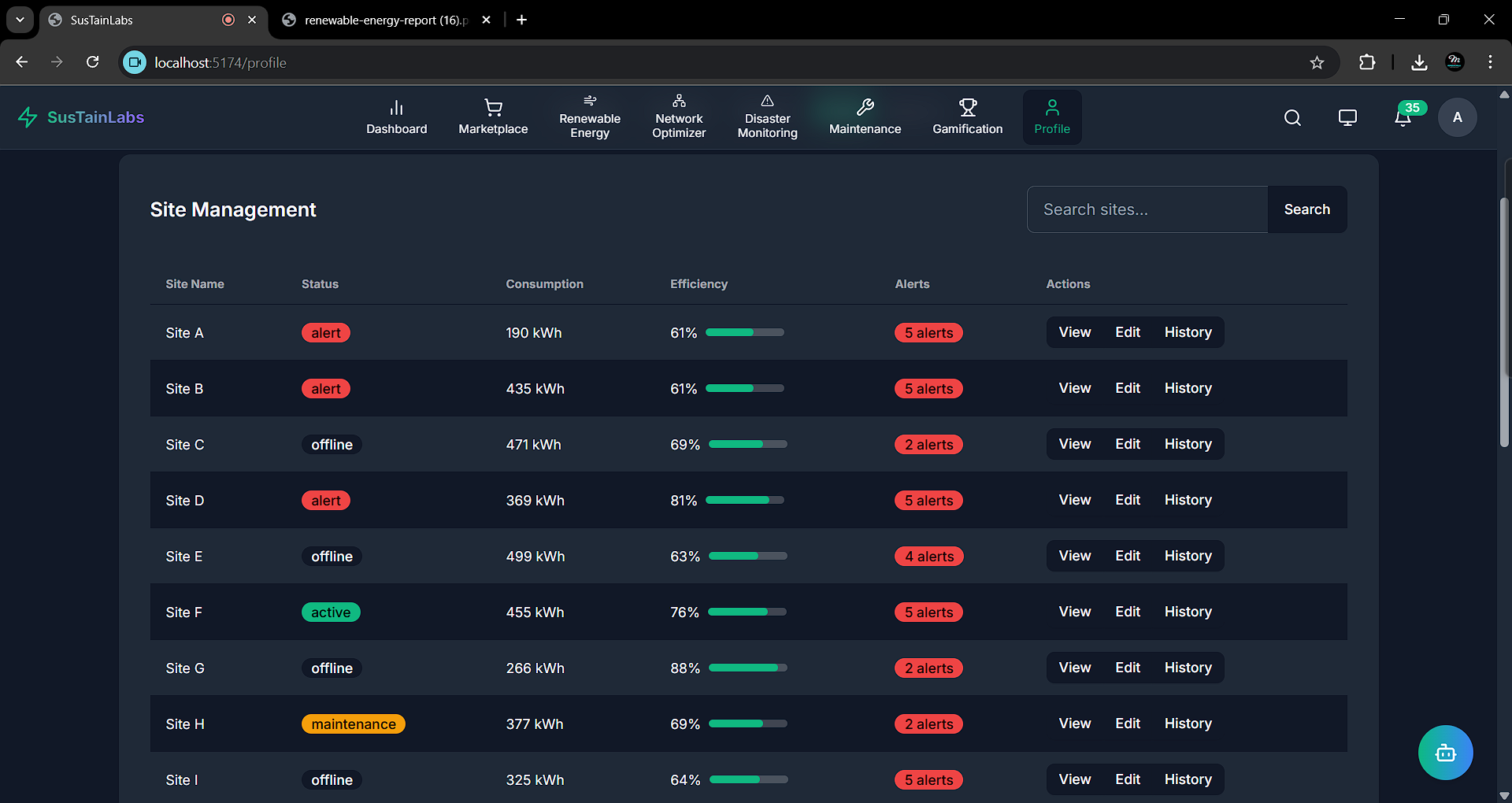
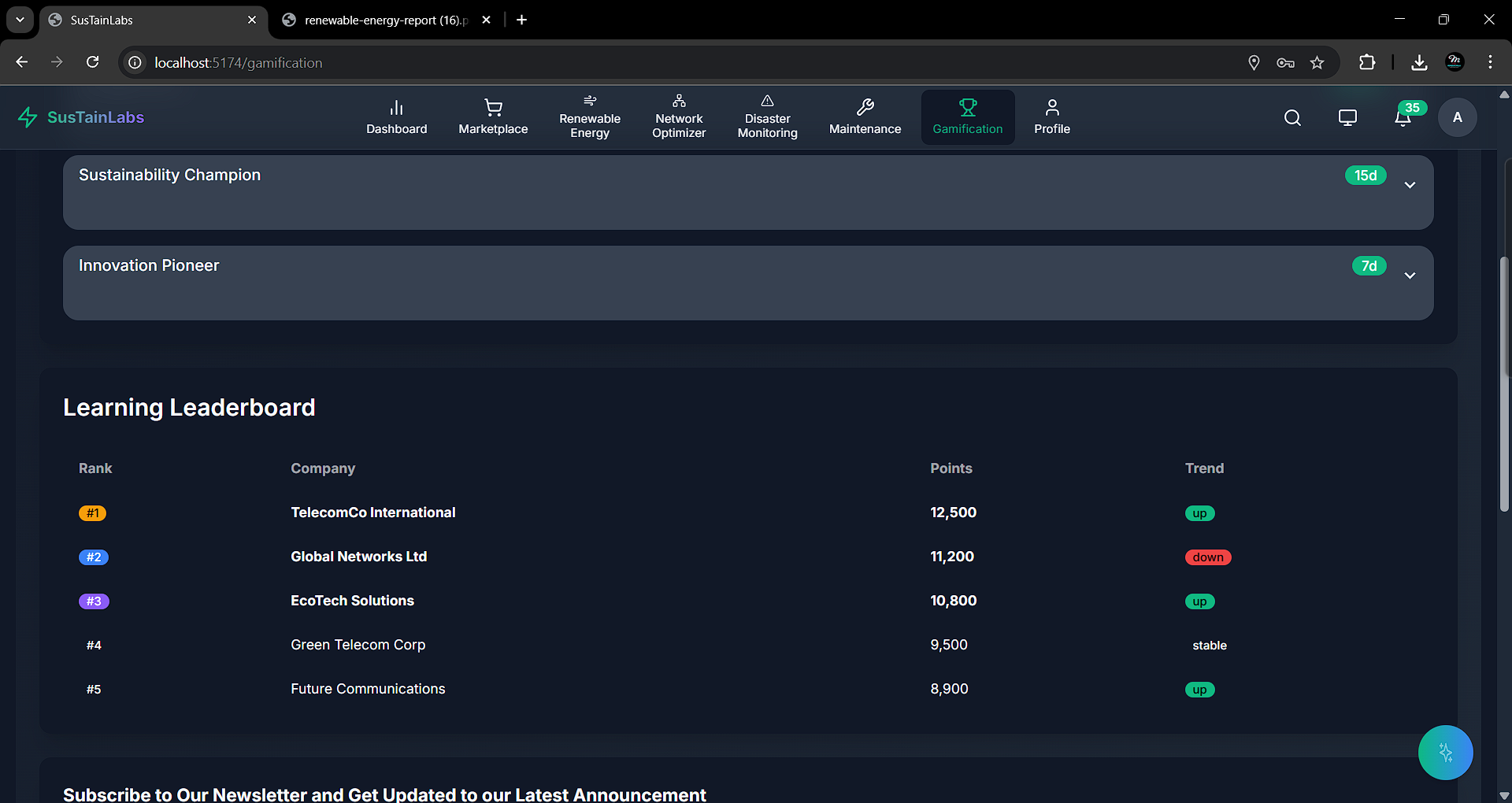
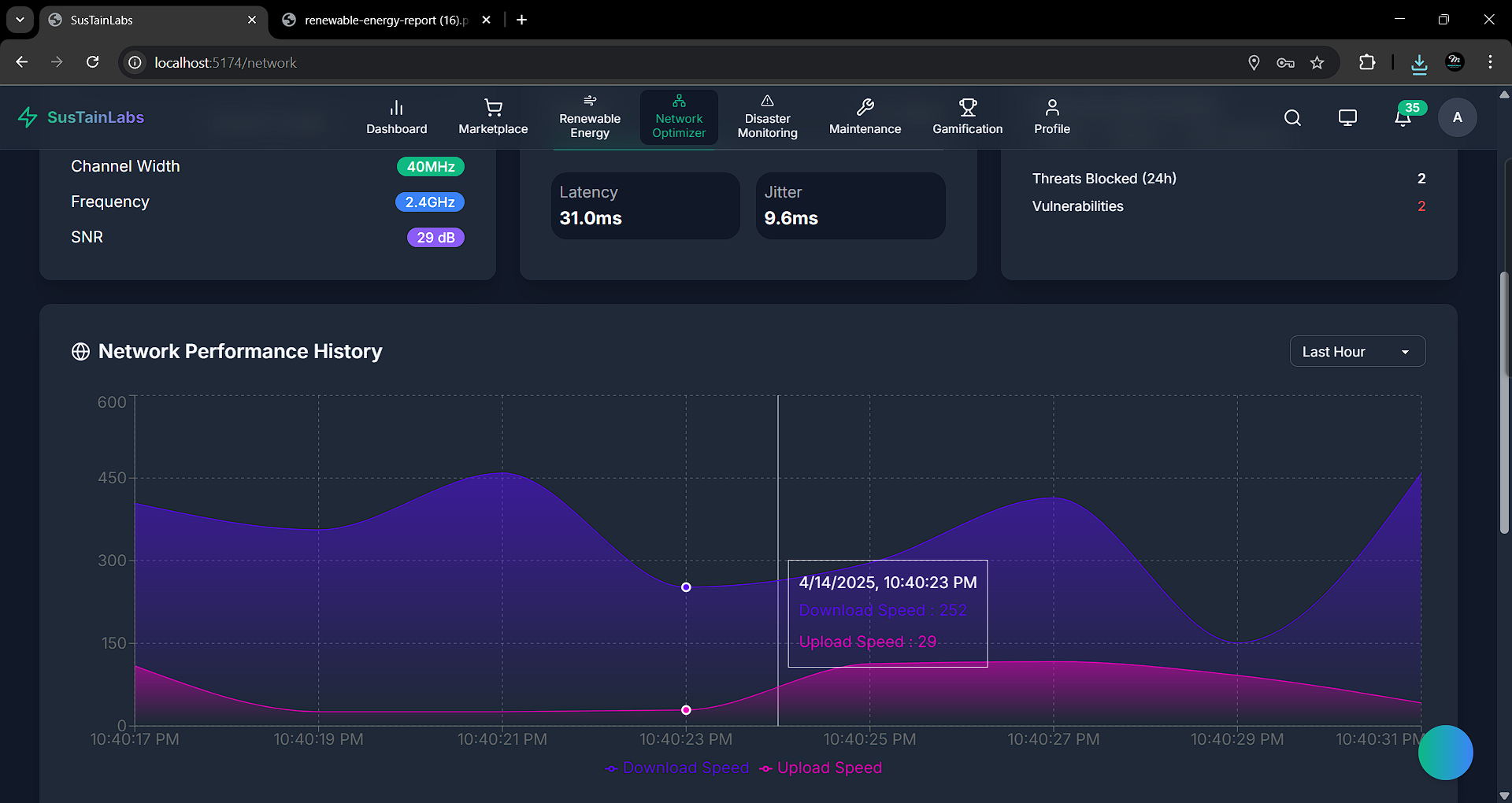
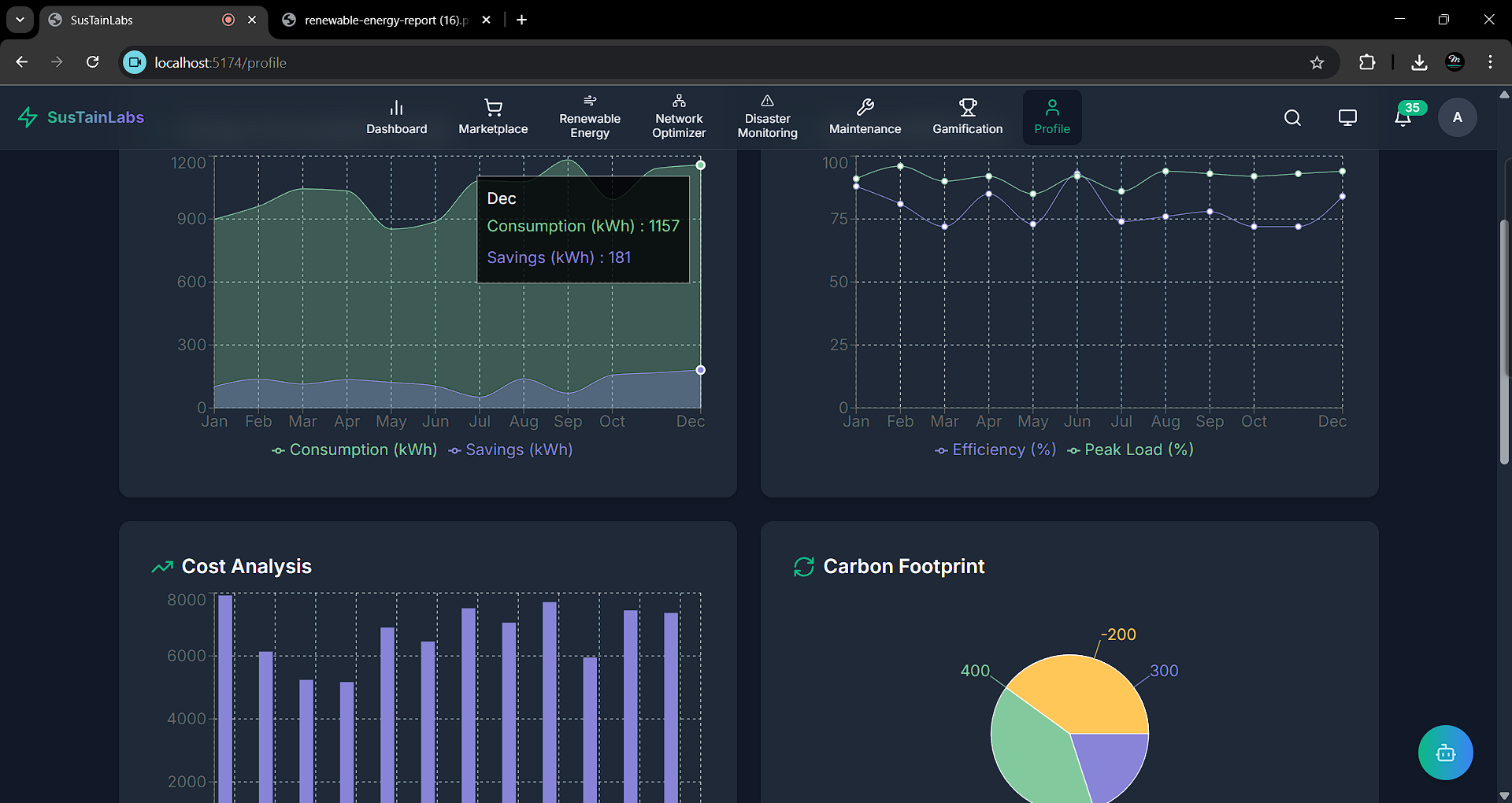
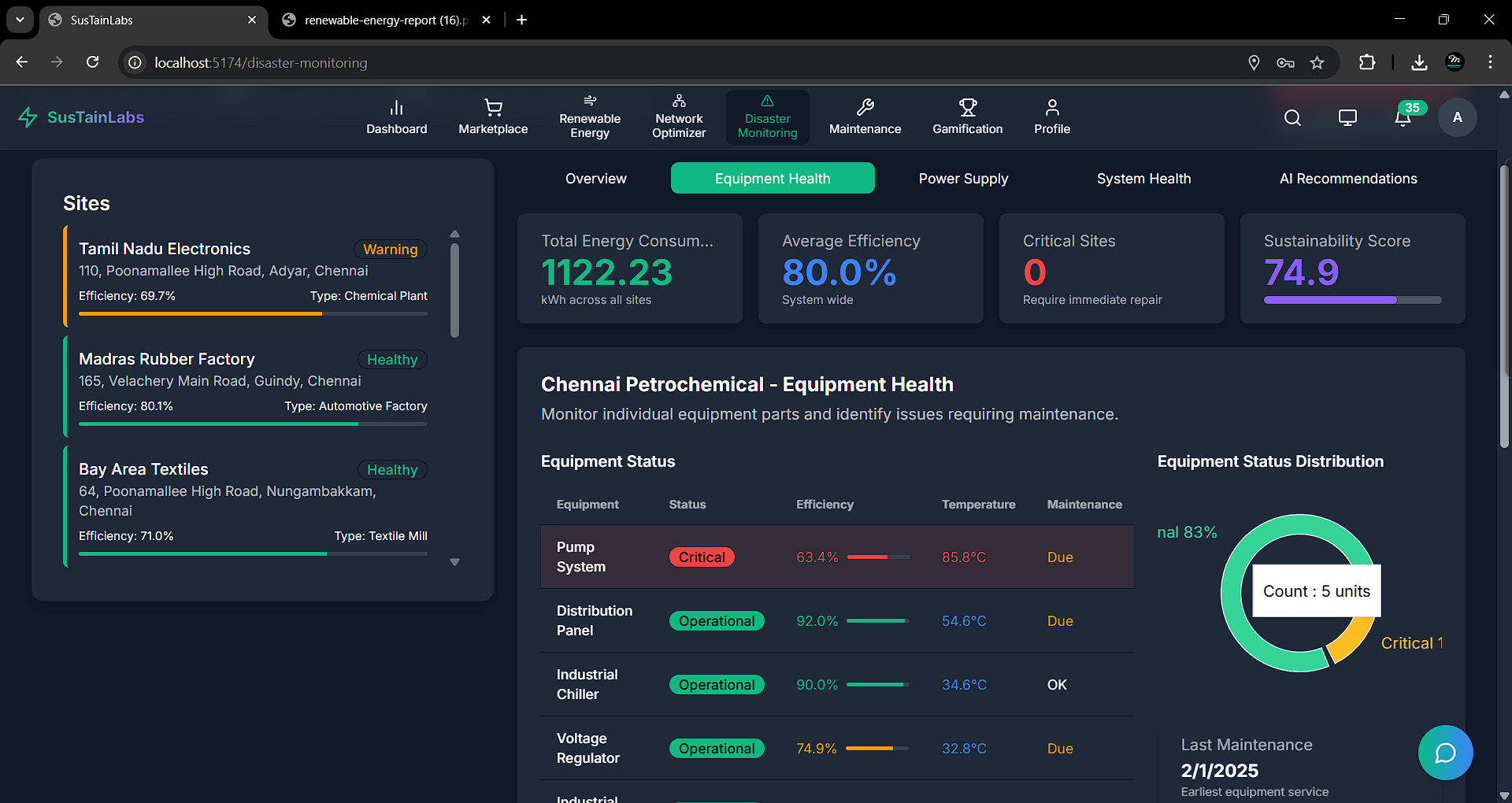
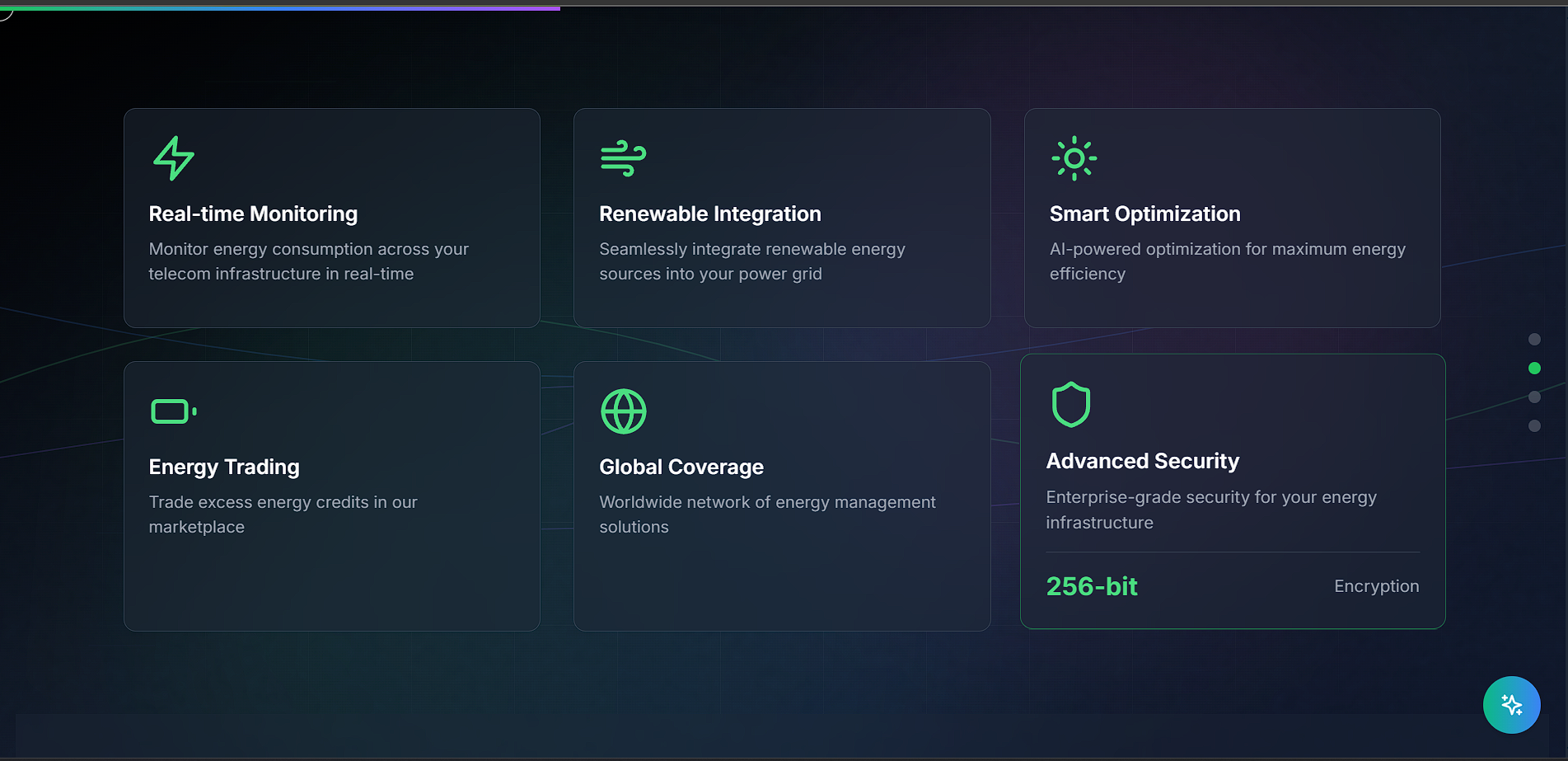
Our platform enables: ->Real-time monitoring of renewable energy production and consumption -> AI-driven optimization recommendations for efficient energy usage ->Predictive maintenance to prevent equipment failure and reduce downtime ->Blockchain-powered peer-to-peer energy trading with transparent verification ->Disaster monitoring and response through decentralized alert systems ->Carbon footprint tracking for environmental impact analysis
By integrating AI, IoT data streams, and blockchain technology, SustainLabs helps rural communities improve system reliability, reduce operational costs, and build trust in renewable energy adoption.
How we built it
We developed SustainLabs using a modular full-stack architecture:
Frontend: React + TypeScript for interactive dashboards and analytics
Backend: Node.js and Express for API orchestration and real-time communication
AI Layer: Python with TensorFlow for predictive analytics and optimization models
Streaming: Real-time IoT data ingestion using event-driven pipelines
Blockchain: Multi-chain integration for decentralized energy trading and transaction verification
Database: MongoDB and TimescaleDB for time-series energy data storage
Hosting: AWS and Vercel for scalable deployment
We also leveraged edge computing frameworks and Merkle tree-based verification to synchronize data securely across distributed renewable installations.
Challenges we ran into
->Integrating multiple blockchain protocols with different APIs and consensus mechanisms ->Managing high-frequency IoT sensor data without increasing latency ->Training AI models to handle time-series energy consumption patterns in real-time ->Ensuring secure and tamper-proof data exchange between rural energy nodes ->Designing dashboards that present complex analytics in a user-friendly way
Accomplishments that we're proud of
->Successfully built a unified renewable energy management system ->Implemented predictive maintenance that can anticipate equipment failures ->Enabled decentralized energy trading using smart contracts ->Reduced data latency through real-time streaming architecture ->Designed an intuitive command center for monitoring distributed energy systems
What we learned
->The importance of integrating AI with real-time infrastructure systems ->Blockchain’s role in establishing transparency and trust in energy markets ->Handling distributed IoT data at scale using streaming platforms ->Designing for usability in low-resource and rural environments ->Cross-domain collaboration between sustainability, AI, and decentralized systems
What's next for SustainLabs
->Advanced AI models for long-term energy demand forecasting ->Integration with smart battery storage systems ->Zero-knowledge proof implementation for private energy transactions ->Autonomous drone-based infrastructure monitoring ->Expansion to support rural energy ecosystems globally ->Development of self-healing microgrid networks
Built With
- backend:-node.js-/-fastapi
- computing:-amd-ryzen-embedded
- frontend:-react.js-/-next.js
- isolation-forestedge
- lstm-networks
- postgresqlredis-ai/ml:-tensorflow-/-pytorch
- tailwindcss

Log in or sign up for Devpost to join the conversation.