Inspiration 🌱
The renewable energy revolution is underway—but its progress is hindered by fragmented systems, inefficiencies, consumer distrust, and reactive maintenance . These barriers are especially detrimental in rural communities, where energy infrastructure must be affordable, reliable, and resilient.
We set out to create a single, intelligent platform that could seamlessly unify energy systems, optimize performance in real time, and build trust through transparency. SustainLABs emerged from the belief that sustainable energy should be efficient, reliable, and accessible for everyone, everywhere 🌍.
What it does ⚙️
SustainLABs is an AI- and blockchain-powered platform that transforms scattered renewable energy assets into cohesive, high-performance networks. It empowers users and communities through:
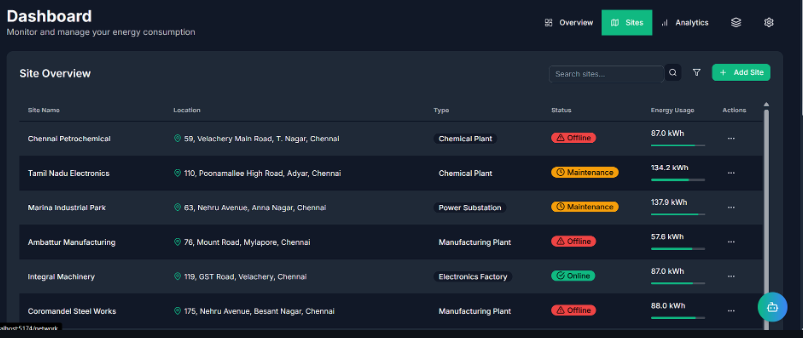
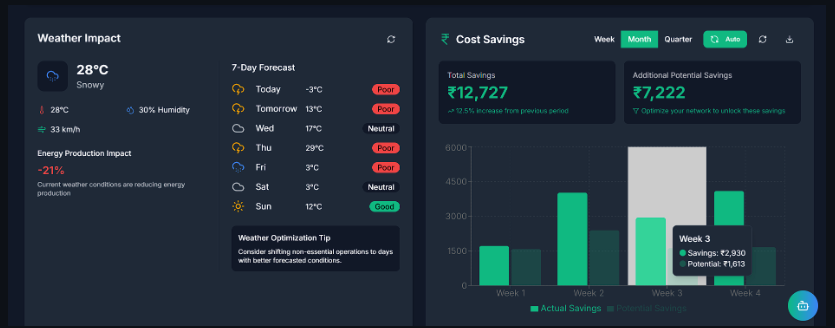
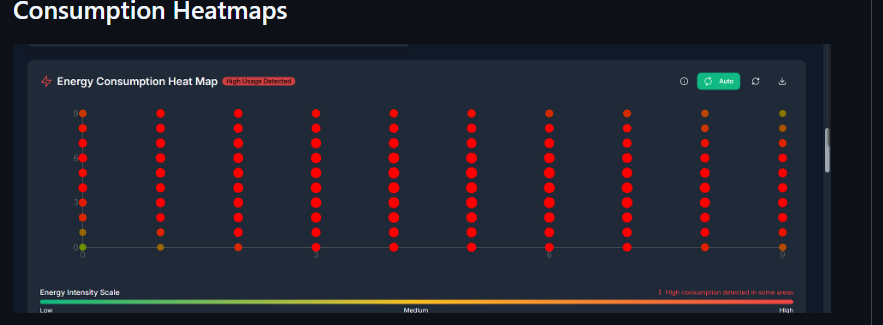
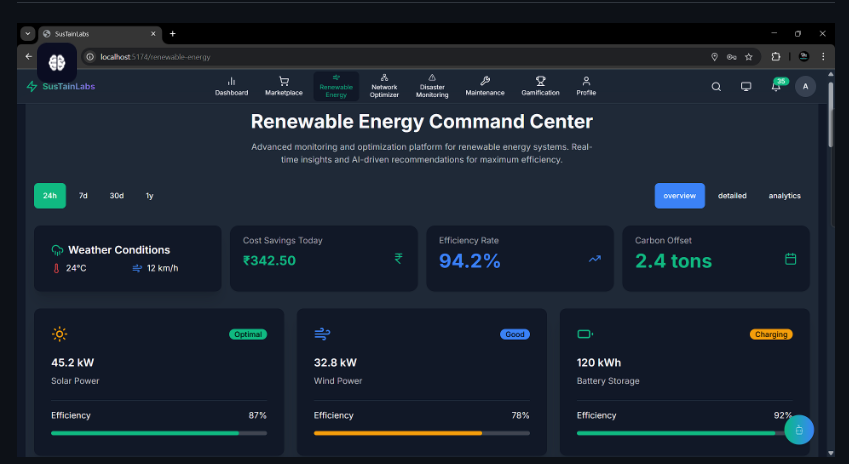
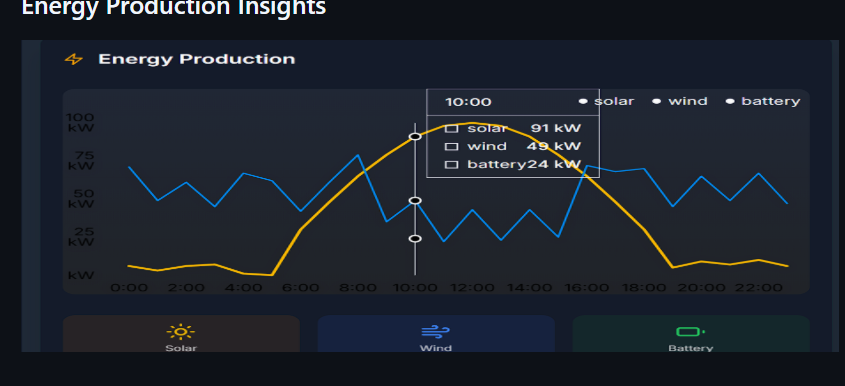
- Live Energy Monitoring 📊 – Interactive dashboards displaying production, consumption, and system health in real time.
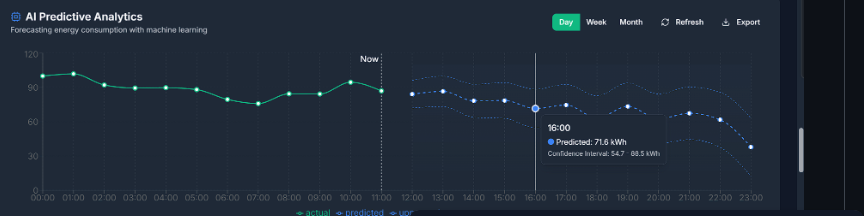
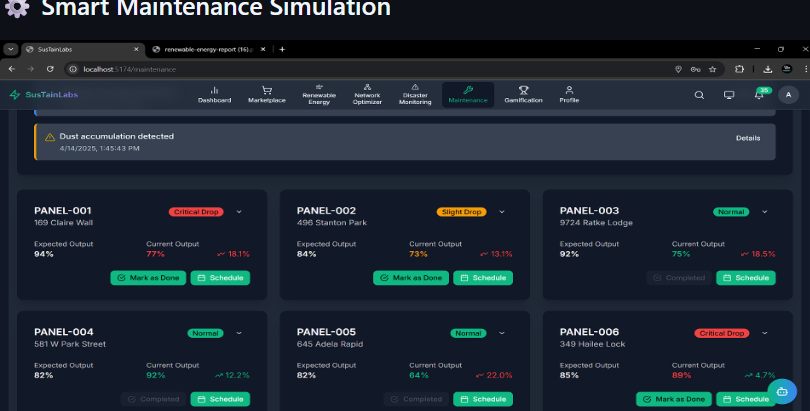
- AI-Driven Optimization 🤖 – Predictive maintenance and intelligent tuning to reduce downtime by up to 73%.
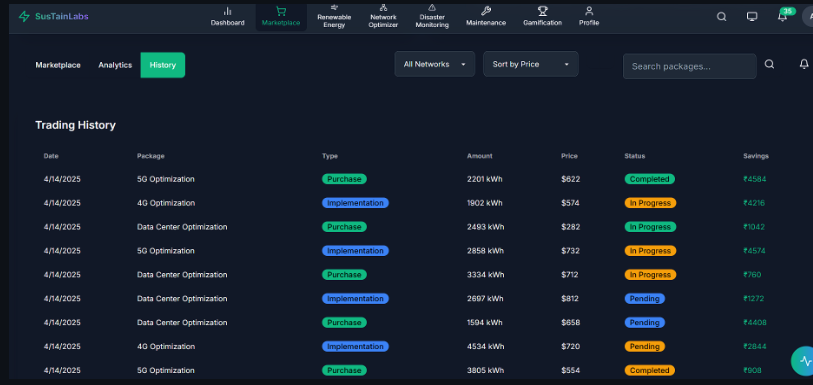
- Decentralized Energy & Carbon Credit Trading 🔗 – Blockchain-based smart contracts for transparent, trustless transactions.
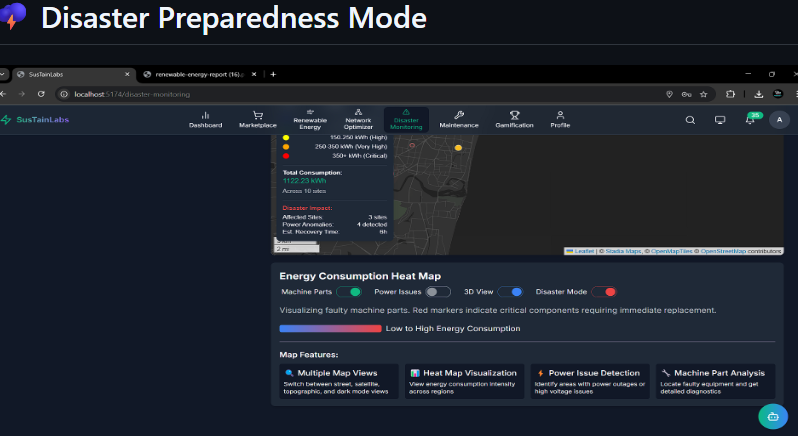
- Proactive Disaster Response 🚨 – Real-time anomaly detection and drone-assisted infrastructure inspections.
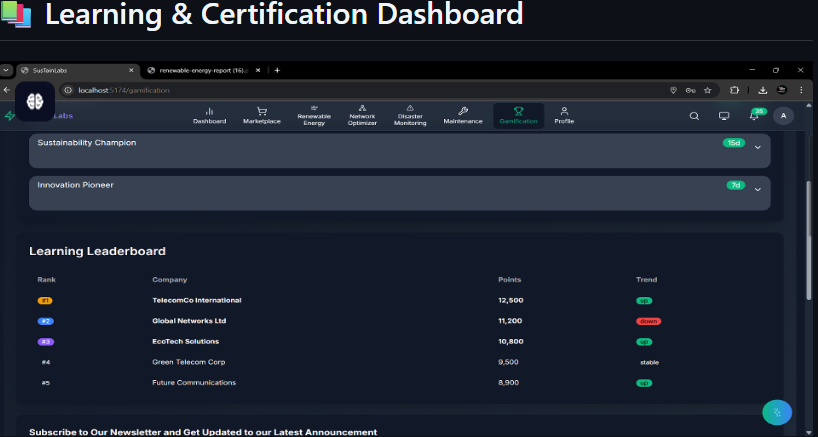
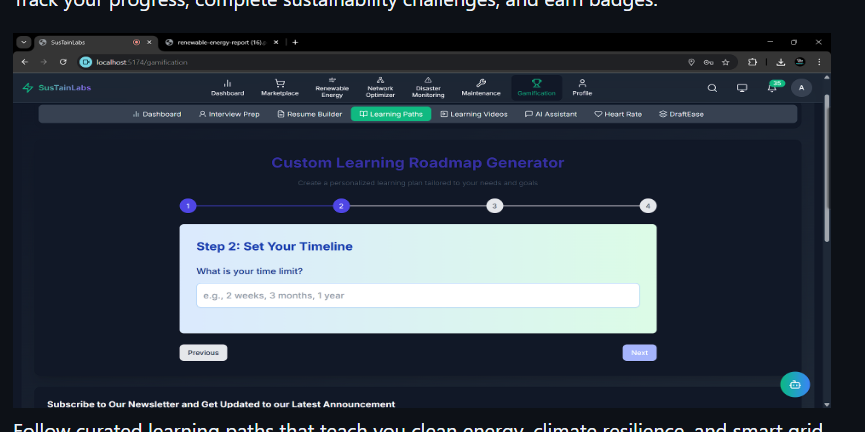
- Community Empowerment 🎯 – Gamified learning tools that make sustainable energy practices engaging and easy to adopt.
How we built it 🛠️
- Frontend: React + TypeScript with Framer Motion for dynamic, user-friendly interfaces.
- Backend: Python + Node.js + Express with Socket.IO for real-time communication.
- Databases: Supabase (authentication & users), MongoDB (configurations), TimescaleDB (time-series analytics).
- AI: TensorFlow + Google Generative AI accelerated by Groq LPU for high-speed optimization.
- Blockchain: Monad, Stellar, and Base L2 for secure trading and certification.
- Streaming: InfinyOn/Fluvio for continuous IoT data ingestion with minimal latency.
- Hosting: AWS and Vercel for global, scalable deployment.
Challenges we ran into 🚧
- Multi-Chain Complexity – Built a blockchain abstraction layer to harmonize diverse APIs and data structures.
- IoT Data Latency – Deployed an edge computing framework with Merkle tree verification to ensure speed and integrity.
- AI Throughput Limits – Overcame processing constraints with Groq LPU acceleration and federated learning.
- UI Information Overload – Introduced role-based progressive disclosure to tailor data visibility and enhance usability.
Accomplishments that we’re proud of 🏆
- Delivered a fully functional live platform integrating AI, blockchain, IoT, and disaster management.
- Achieved a 73% simulated downtime reduction through predictive maintenance.
- Seamlessly integrated nine advanced technologies into a unified system.
- Developed a gamified learning platform to make renewable energy literacy accessible to underserved communities.
What we learned 📚
- True interoperability requires flexible, modular architecture.
- Edge computing is essential for low-latency, high-volume IoT environments.
- User experience design is as critical as technical capability in driving adoption.
- Combining AI, blockchain, and sustainability unlocks scalable, transformative opportunities for energy equity.
What’s next for SustainLABs 🚀
- Privacy-First Analytics – Implementing Zero-Knowledge Proofs for secure, verifiable data sharing.
- Smart Battery Lifecycle Prediction 🔋 – Extending energy storage lifespans with AI-driven forecasting.
- Localized Deployments 🌐 – Adapting the platform for multilingual and region-specific requirements.
- Self-Healing Energy Grids ⚡ – Enabling autonomous recovery from faults with minimal human intervention.
- Strategic Partnerships 🤝 – Collaborating with renewable energy providers and rural development agencies for pilot programs.
Built With
- acceleration
- ai
- amazon-web-services
- base
- express.js
- fluvio)
- framer
- generative
- groq
- infinyon
- lpu
- monad
- mongodb
- motion
- node.js
- python
- react
- recharts
- screenpipe
- socket.io
- stellar
- supabase
- tensorflow
- timescaledb
- typescript
- vercel

Log in or sign up for Devpost to join the conversation.