-
-
SustainaSwap
Inspiration
As college students, we didn't know anything, so we thought about how we can change that. One way was by being smarter about the way we take care of our unused items. We all felt that our unused items could be used in better ways through sharing with other students on campus. All of us shared our items on campus with our friends but we felt that there could be better ways to do this. However, we were truly inspired after one of our team members, and close friend, Harish, an Ecological Biology major, informed us about the sheer magnitude of trash and pollution in the oceans and the surrounding environments. Also, as the National Ocean Science Bowl Champion, Harish truly was able to educate the rest of the team on how areas such as the Great Pacific Garbage Patch affect the wildlife and oceanic ecosystems, and the effects we face on a daily basis from this. With our passions for technology, we wanted to work on an impactful project that caters to a true need for sharing that many of us have while focusing on maintaining sustainability.
What it does
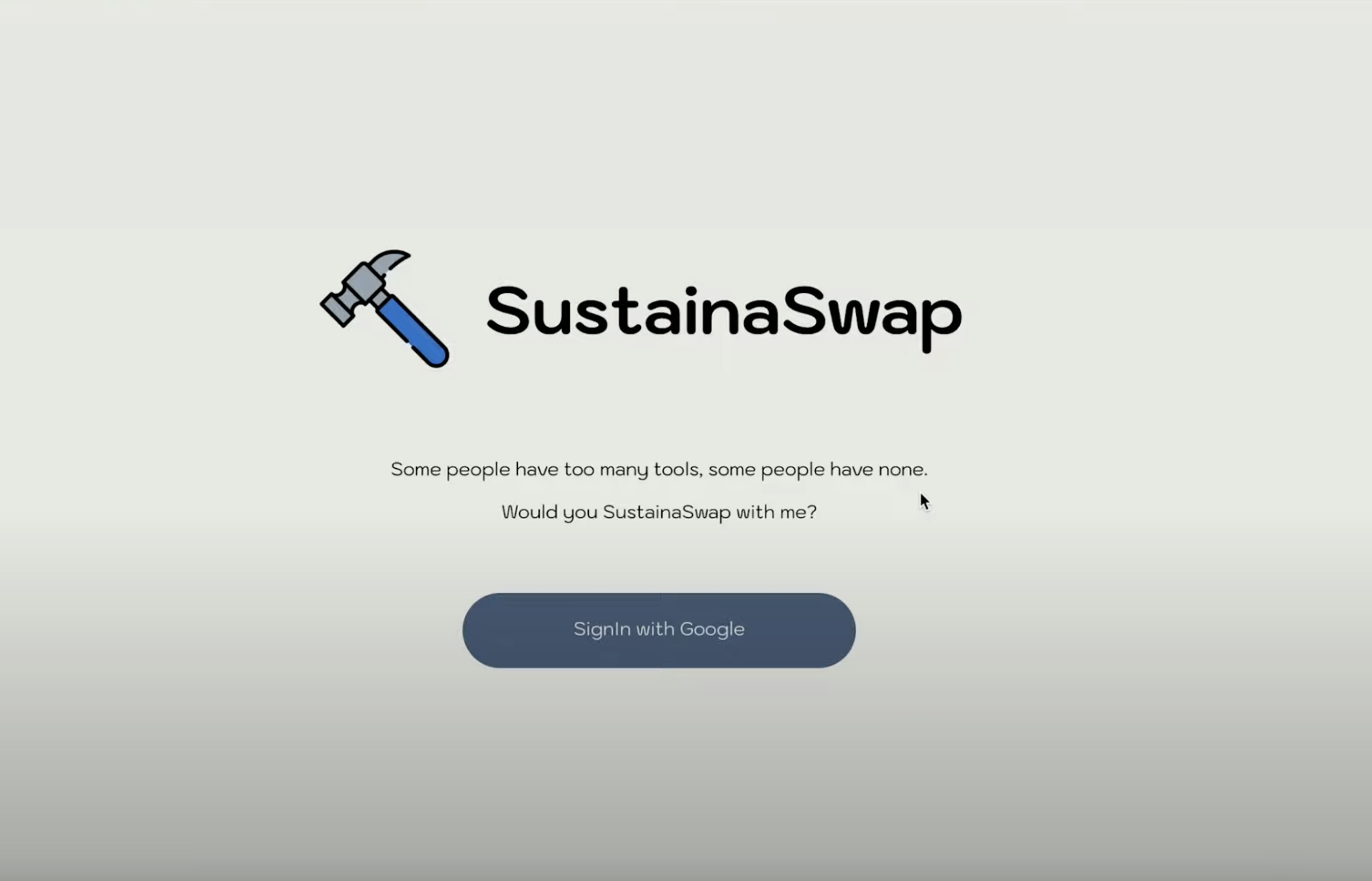
The application essentially works to allow users to list various products that they want to share with the community and allows users to request items. If one user sees a request they want to provide a tool for or an offer they find appealing, they’ll start a chat with the user through the app to request the tool. Furthermore, the app sorts and filters by location to make it convenient for users. Also, by allowing for community building through the chat messaging, we want to use
How we built it
We first, focused on wireframing and coming up with ideas. We utilized brainstorming sessions to come up with unique ideas and then split our team based on our different skill sets. Our front-end team worked on coming up with wireframes and creating designs using Figma. Our backend team worked on a whiteboard, coming up with the system design of our application server, and together the front-end and back-end teams worked on coming up with the schemas for the database. We utilized the MERN technical stack in order to build this. Our front-end uses ReactJS in order to build the web app, our back-end utilizes ExpressJS and NodeJS, while our database utilizes MongoDB. We also took plenty of advice and notes, not only from mentors throughout the competition, but also our fellow hackers. We really went around trying to ask for others’ advice on our web app and our final product to truly flush out the best product that we could. We had a customer-centric mindset and approach throughout the full creation process, and we really wanted to look and make sure that what we are building has a true need and is truly wanted by the people. Taking advice from these various sources helped us frame our product and come up with features.
Challenges we ran into
Integration challenges were some of the toughest for us. Making sure that the backend and frontend can communicate well was really tough, so what we did to minimize the difficulties. We designed the schemas for our databases and worked well with each other to make sure that we were all on the same page for our schemas. Thus, working together really helped to make sure that we were making sure to be truly efficient.
Accomplishments that we're proud of
We’re really proud of our user interface of the product. We spent quite a lot of time working on the design (through Figma) before creating it in React, so we really wanted to make sure that the product that we are showing is visually appealing. Furthermore, our backend is also something we are extremely proud of. Our backend system has many unconventional design choices (like for example passing common ids throughout the systems) in order to avoid more costly backend operations. Overall, latency and cost and ease of use for our frontend team was a big consideration when designing the backend system
What we learned
We learned new technical skills and new soft skills. Overall in our technical skills, our team became much stronger with using the MERN frameworks. Our front-end team learned so many new skills and components through React and our back-end team learned so much about Express. Overall, we also learned quite a lot about working as a team and integrating the front end with the back-end, improving our software engineering skills
The soft skills that we learned about are how we should be presenting a product idea and product implementation. We worked quite a lot on our video and our final presentation to the judges and after speaking with hackers and mentors alike, we were able to use the collective wisdom that we gained in order to really feel that we created a video that shows truly our interest in designing important products with true social impact. Overall, we felt that we were able to convey our passion for building social impact and sustainability products.
What's next for SustainaSwap
We’re looking to deploy the app in local communities as we’re at the point of deployment currently. We know there exists a clear demand for this in college towns, so we’ll first be starting off at our local campus of Philadelphia. Also, after speaking with many Harvard and MIT students on campus, we feel that Cambridge will also benefit, so we will shortly launch in the Boston/Cambridge area. We will be looking to expand to other college towns and use this to help to work on the scalability of the product. We ideally, also want to push for the ideas of sustainability, so we would want to potentially use the platform (if it grows large enough) to host fundraisers and fundraising activities to give back in order to fight climate change. We essentially want to expand city by city, community by community, because this app also focuses quite a lot on community and we want to build a community-centric platform. We want this platform to just build tight-knit communities within cities that can connect people with their neighbors while also promoting sustainability.


Log in or sign up for Devpost to join the conversation.