-
-
-
-
-
-
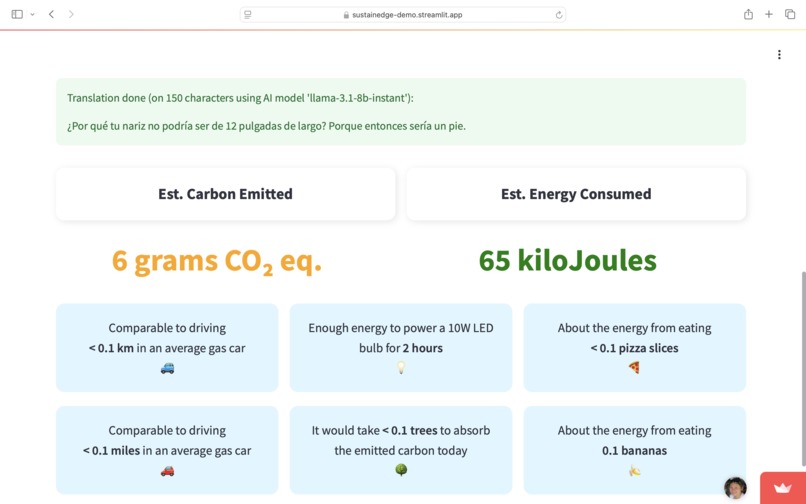
Demo app providing more visibility into impact of AI queries
-
-
-
Inspiration
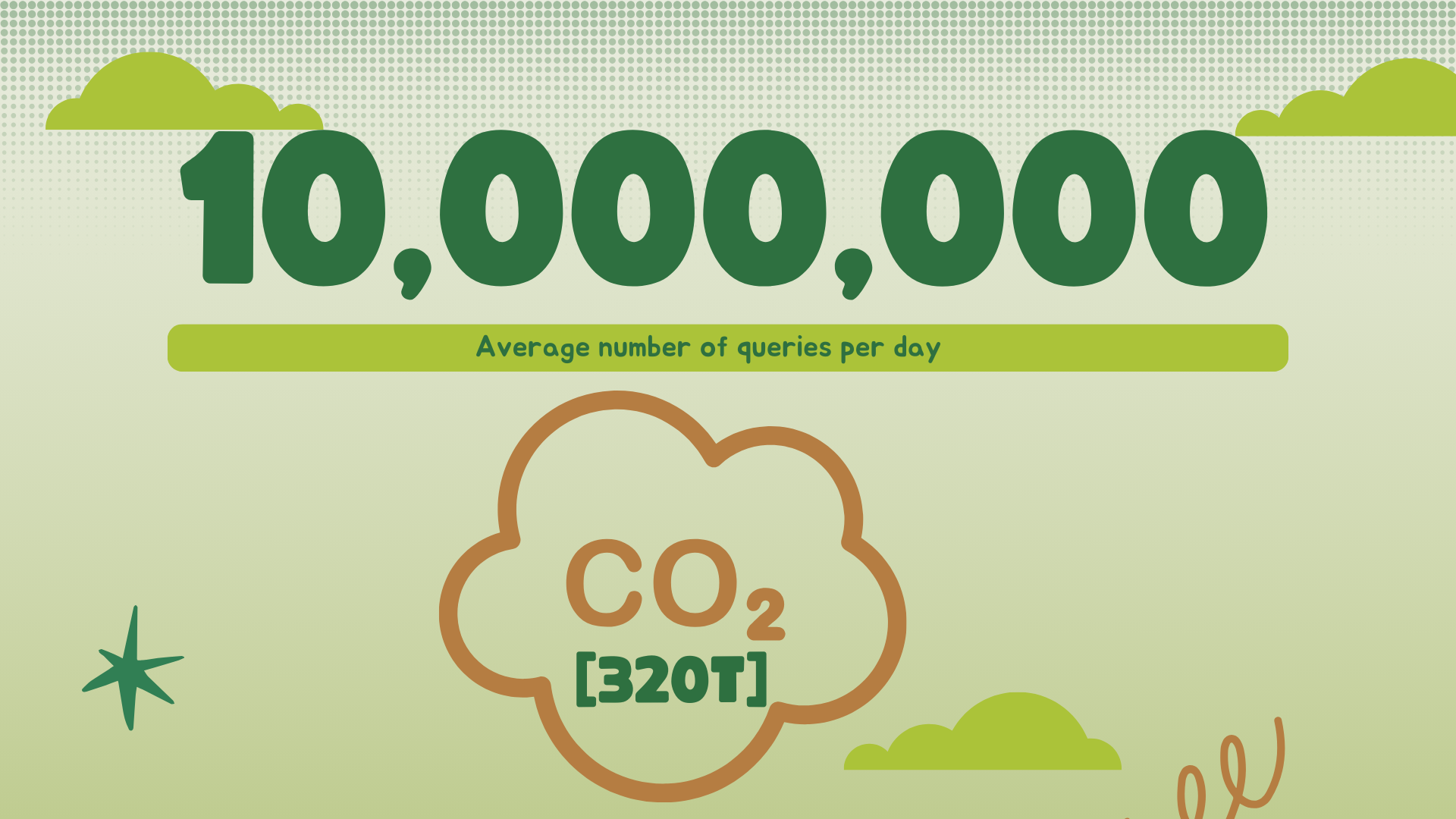
Artificial Intelligence (AI) is rapidly transforming industries, but its environmental impact is often overlooked. Training large AI models can consume vast amounts of energy — for instance, Training GPT-3 emitted about 500 metric tons of CO2, which means You’d need to plant 8,400 trees and let them grow for 10 years to offset that carbon.
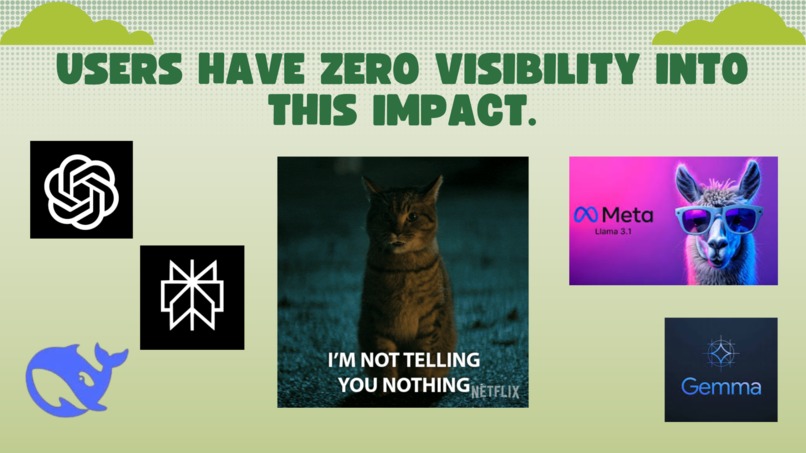
With the growing reliance on AI for everyday tasks, from language processing to data analysis, the energy footprint is only set to increase. However, not all AI models are created equal — some are significantly more energy-efficient than others. The problem is that users, from researchers to developers, have little visibility into the energy consumption of AI models and no easy way to choose greener alternatives. This lack of transparency creates an "invisible" carbon footprint, reinforcing unsustainable tech practices.
Our project addresses this gap by empowering users to make informed choices — providing real-time insights into the energy efficiency of AI models, helping them reduce their digital carbon footprint without compromising on performance.
What it does
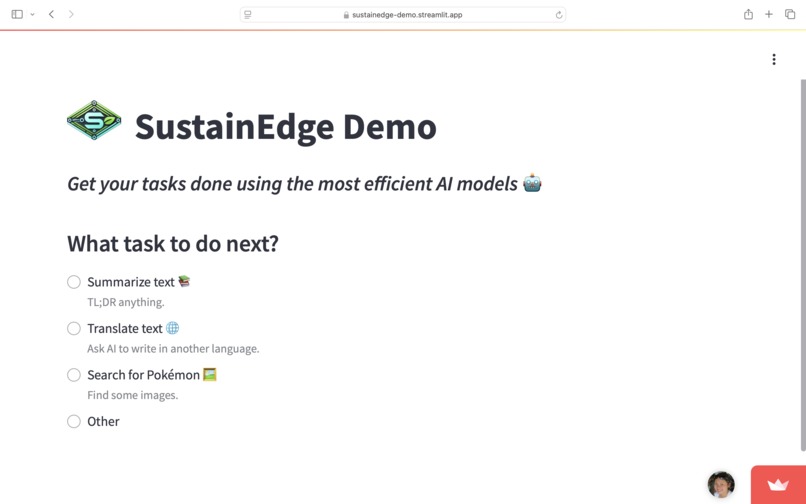
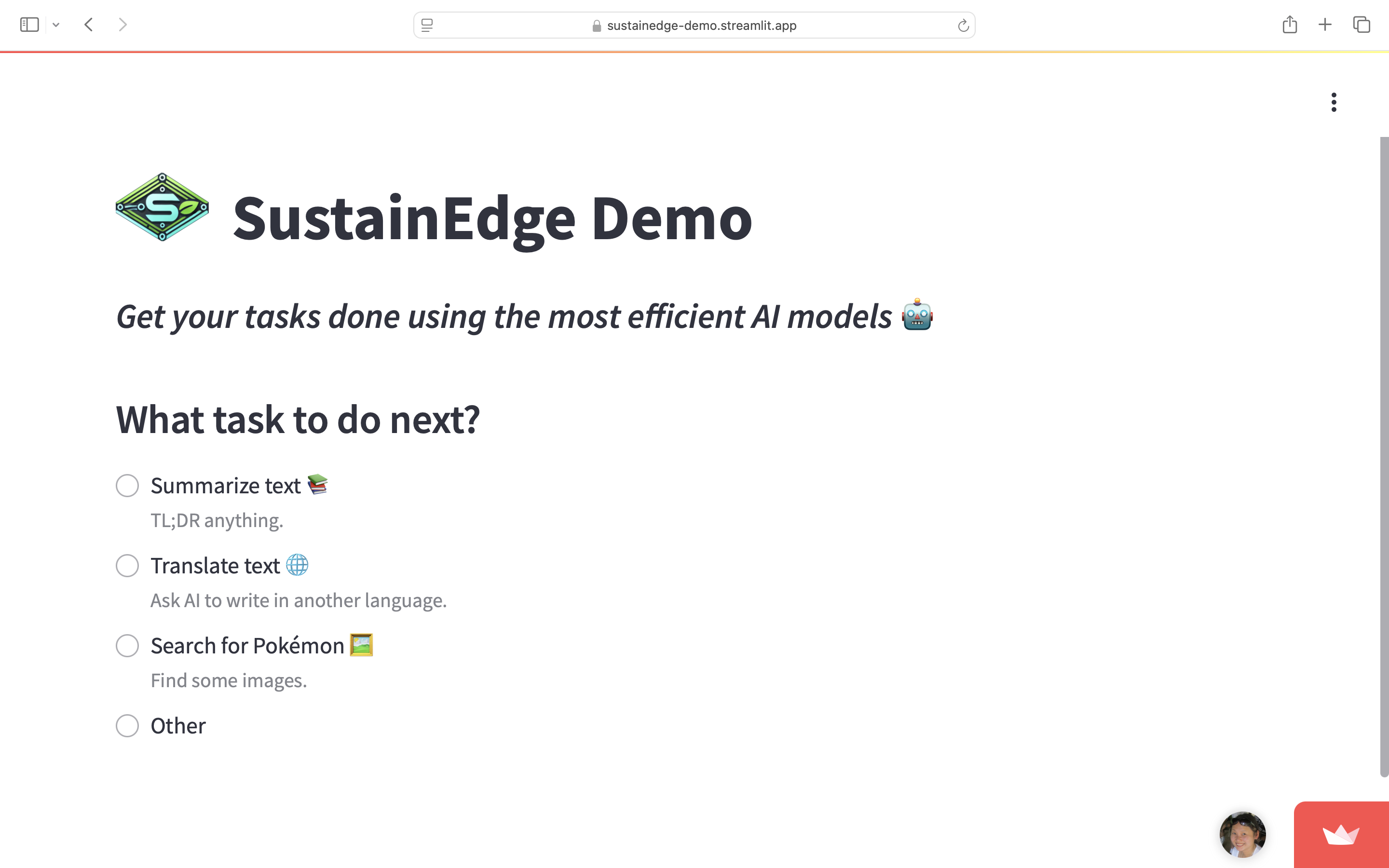
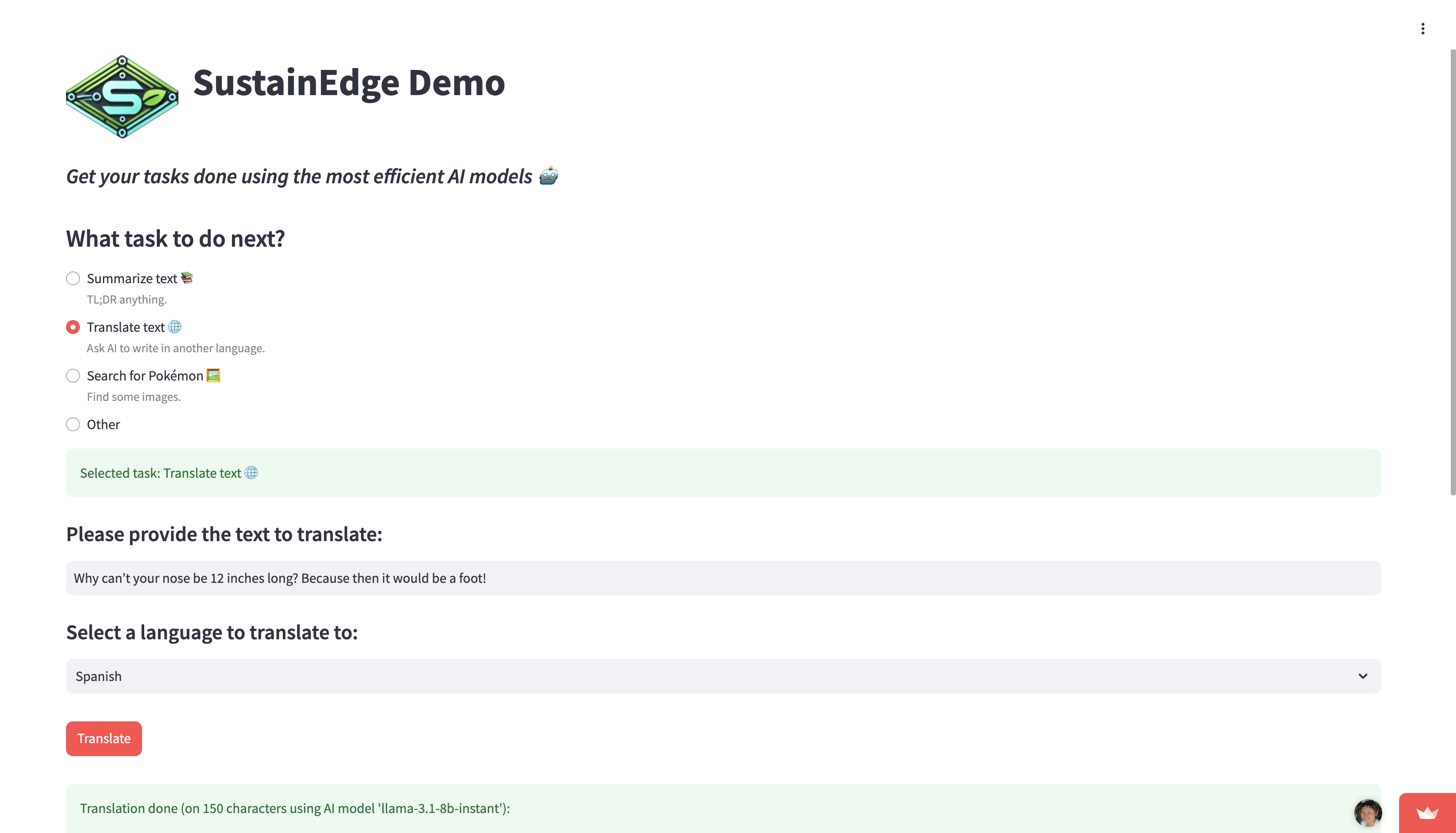
- User goes to web app that provides them some tasks that involve AI
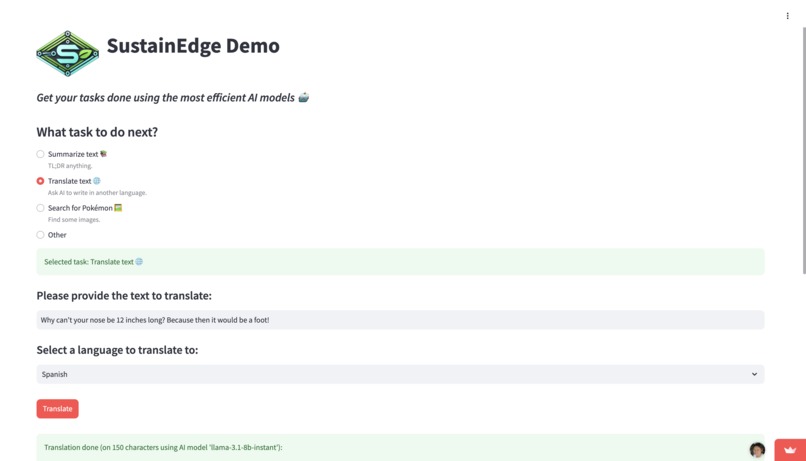
- User selects one of the tasks, and provides relevant input for the task
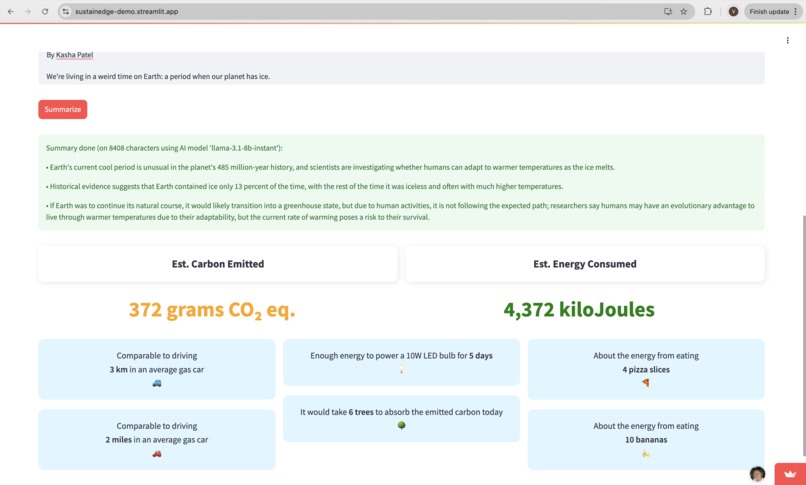
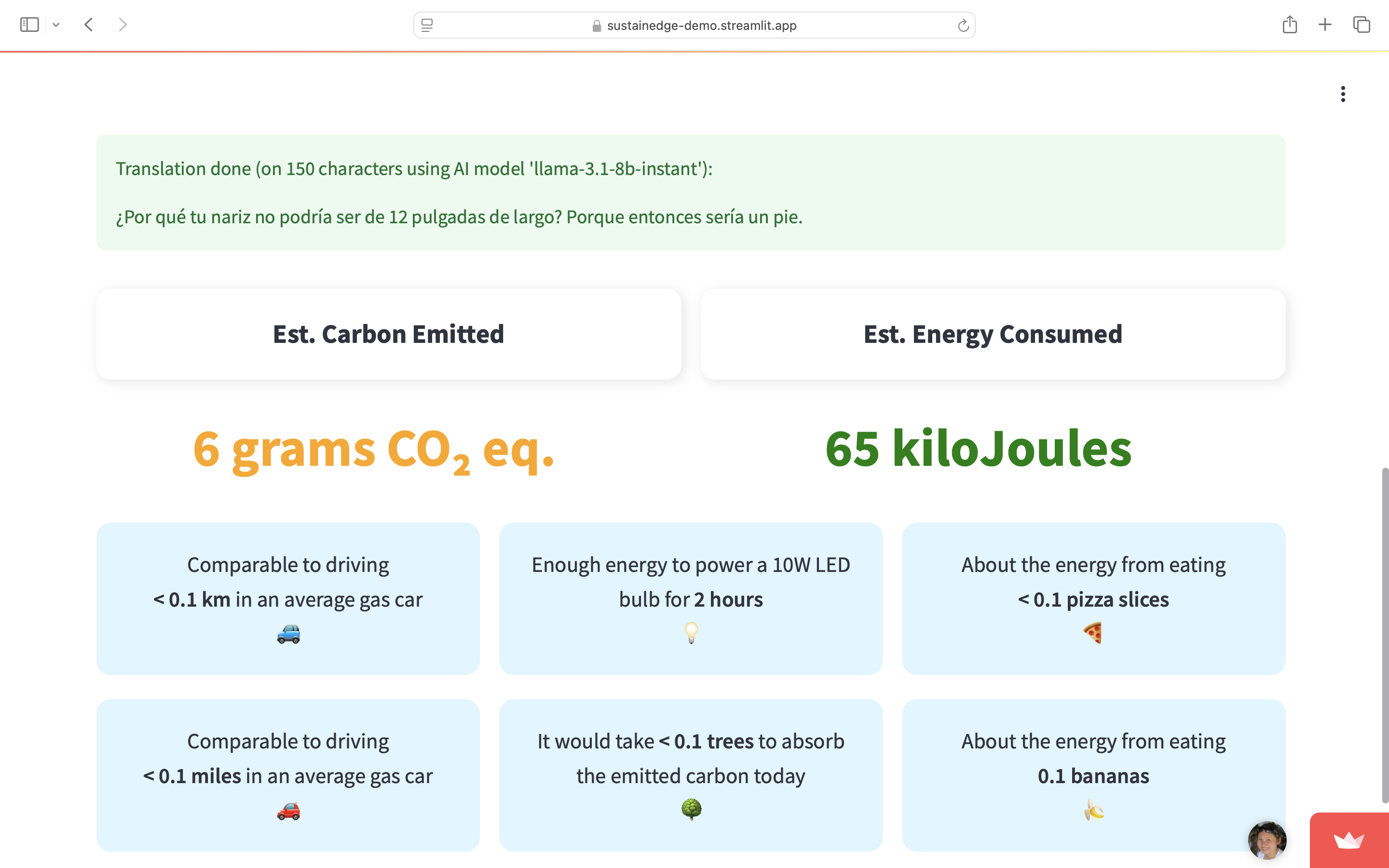
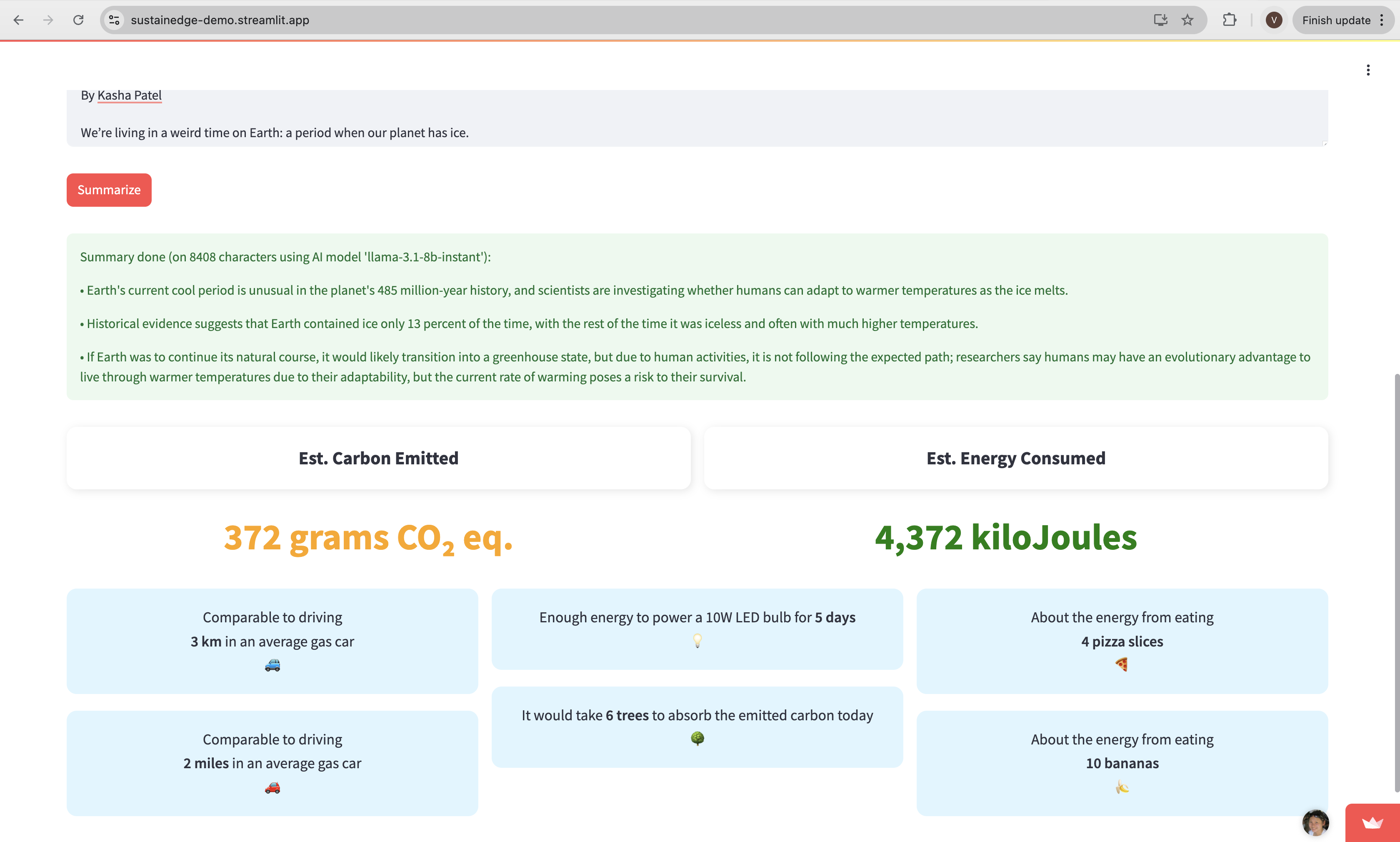
- App shows them an energy-efficient AI to use for the task, along with the task output and stats on CO2 emission and energy consumed
How we built it
- Researched data on CO2 and energy impacts of AI models
- Came up with understandable tasks that users would want to use AI to do
- Chose energy-efficient AI models to provide task outputs
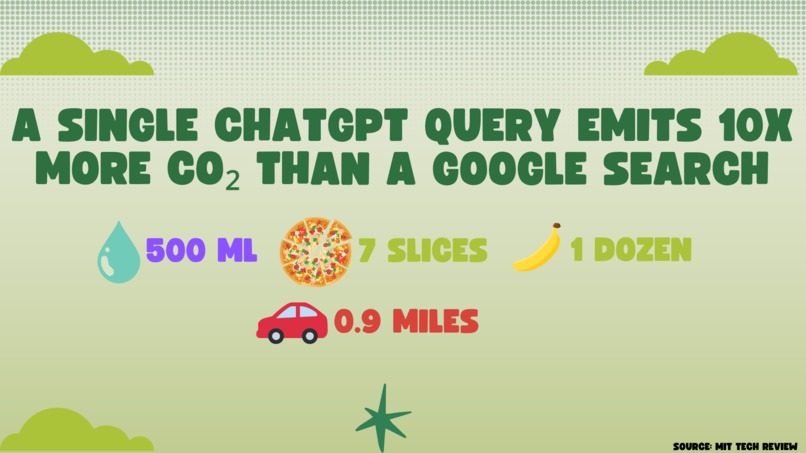
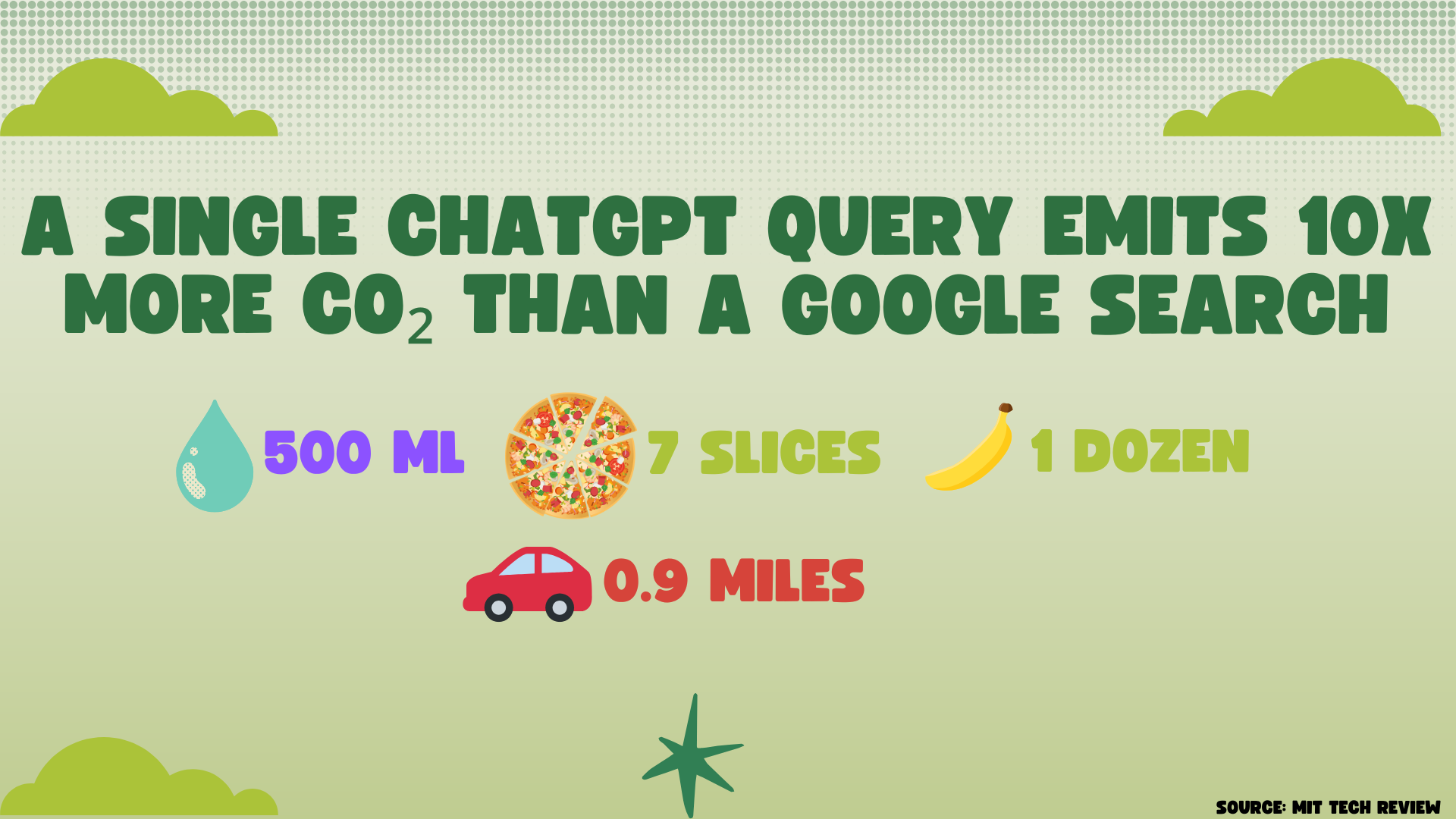
- Provided stats on CO2 emission and energy consumed by the AI query, along with translating these stats into driving, lighting, trees, and even pizza and bananas!
Challenges we ran into
- Not every energy-efficient AI model is directly usable by a web app, so we had to pick and choose among available models.
- Team members were globally distributed in varied time zones (North America, Asia), and we had to find meeting/collaboration times that worked well for everyone during the 2-day weekend.
- The problem we decided to tackle during this weekend hackathon is actually quite large, so we had to find ways to research and compute data, and display them in ways that are do-able in 2 days.
Accomplishments that we're proud of
- High-energy, positive team collaborations! We were able to meet relatively frequently, including excellent brainstorming before we started prototyping/implementing ideas -- and multiple review/feedback sessions as the weekend progressed.
- Participations in various hackathon workshops and the Game Night!
- Working code!
What we learned
Each team member brought their skills and background to make the project better! Besides hackathon-organized events, we learned a lot from our fellow team members. For example, learning more about AI models (only one of us knew about the BLOOM models), about how to build web apps, about user research, about ML research, about converting grams of Co2 emissions into kiloJoules and to the energy consumption from pizzas and bananas!
What's next for SustainEdge
We brainstormed more ideas than we were able to research/prototype/implement in 2 days. For example, in the future, more AI models and tasks can be supported and tested. Also, we can look into different product implementations (e.g. browser extension, client app, product/business partnerships) and having local/downloadable AI models. It would also be interesting to have company sponsorships to help make their usage of AI more efficient in terms of both emissions, energy usage, and also financial costs.


Log in or sign up for Devpost to join the conversation.