-
-

Logo
-
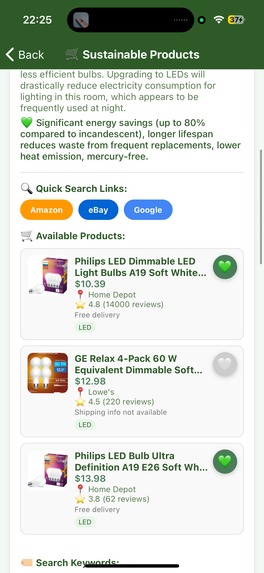
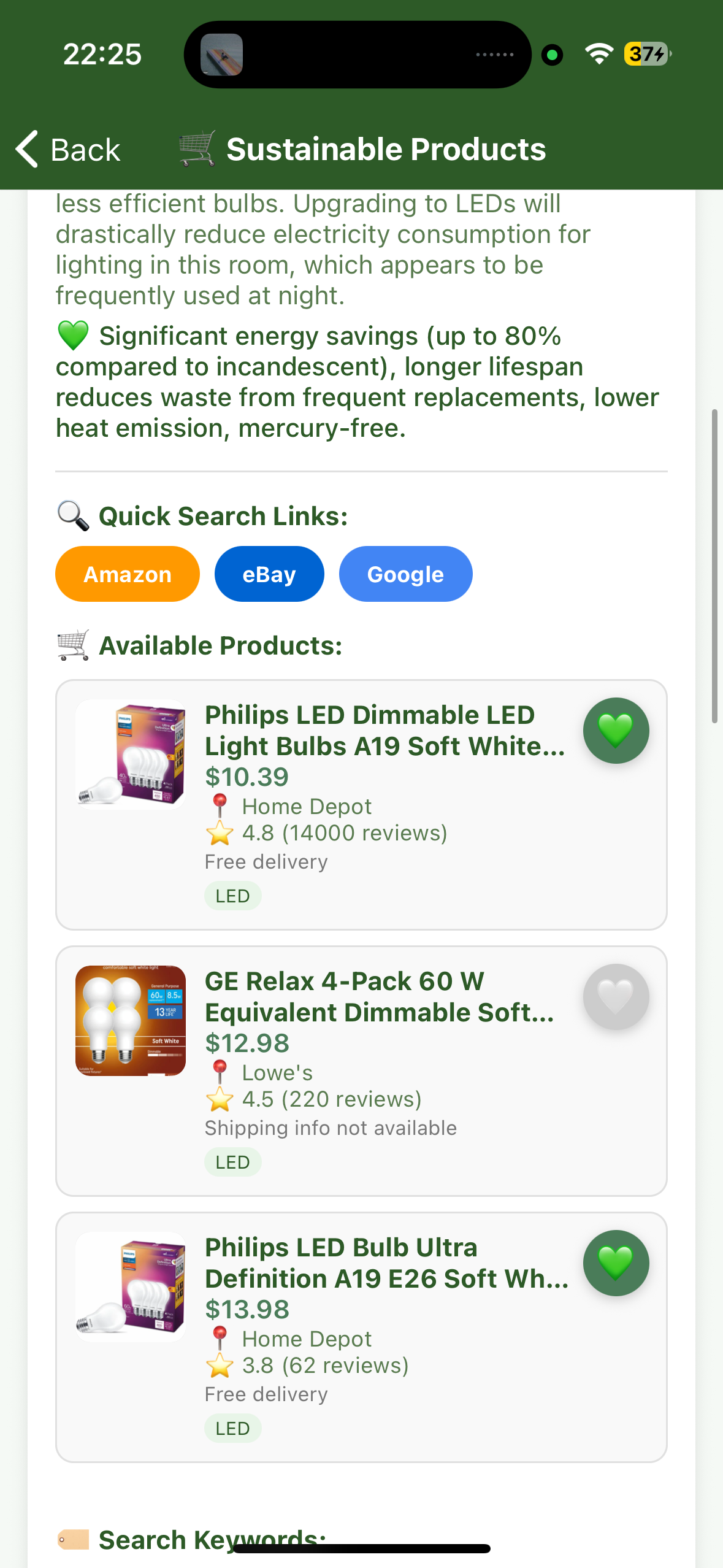
Product Listing UI
-
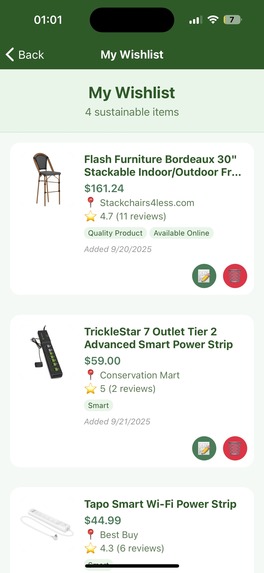
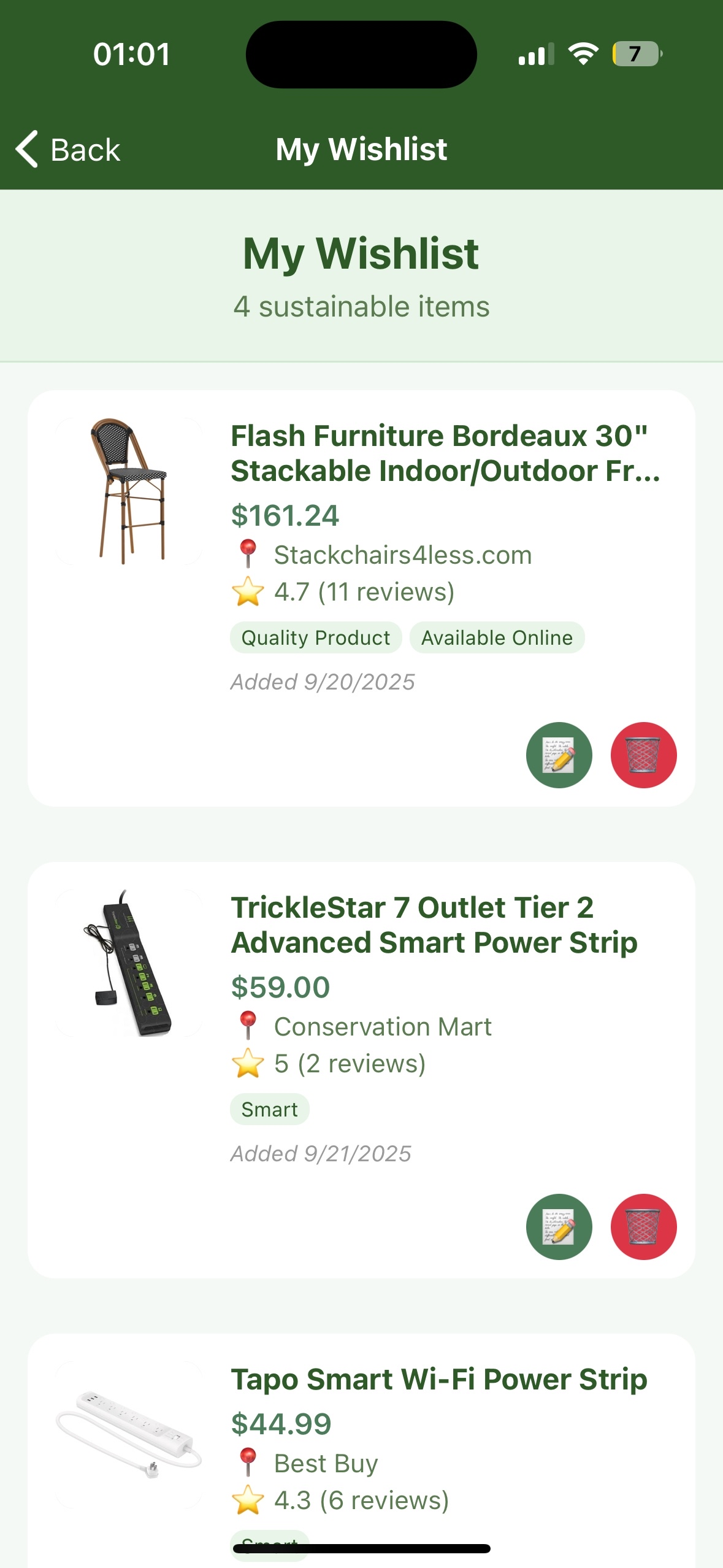
Wishlist UI
-
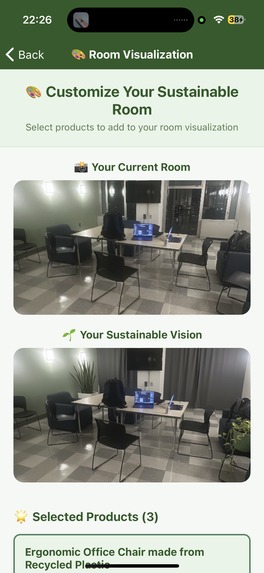
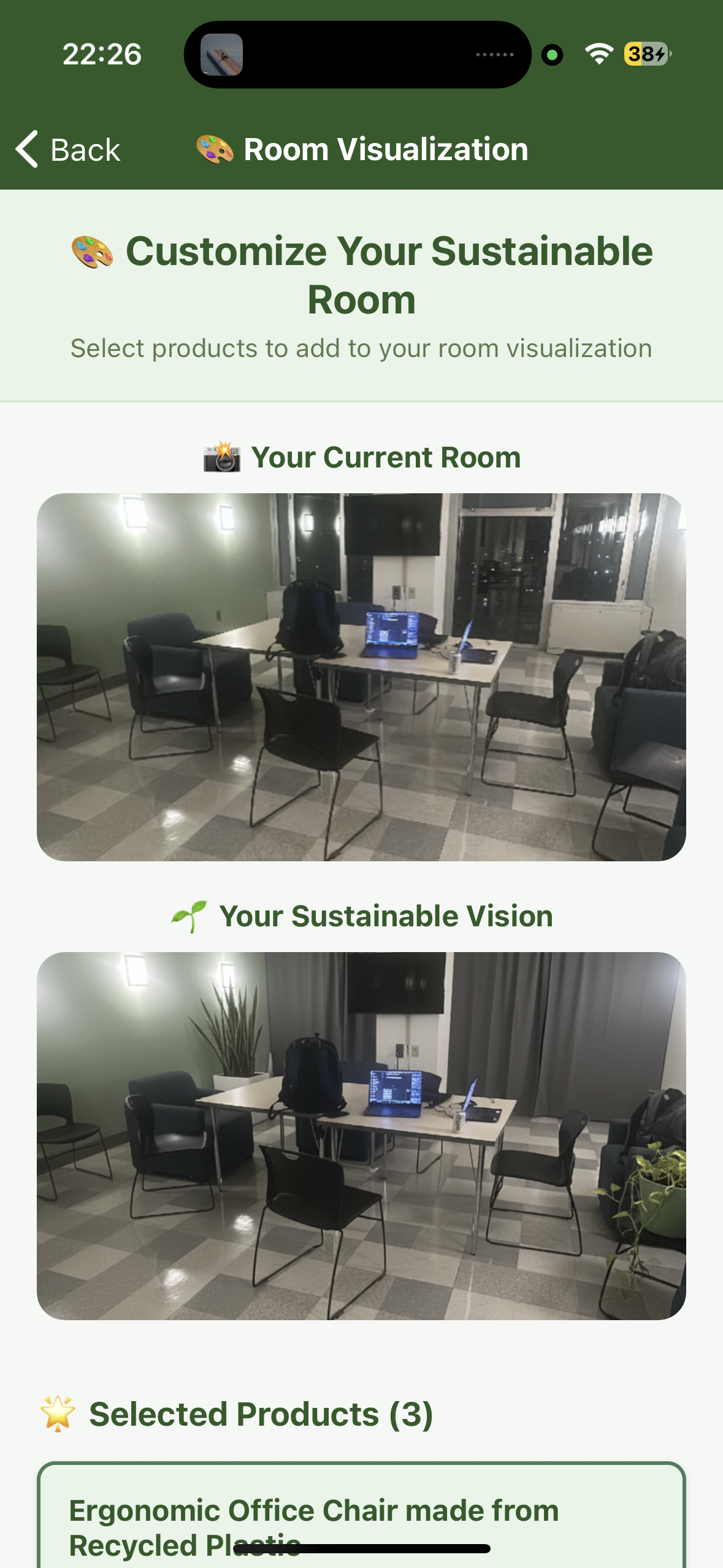
Sustainable Vision AI Image Gen
-
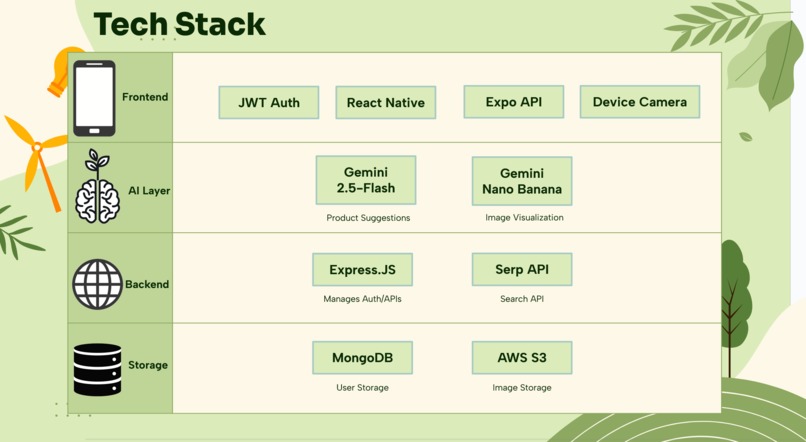
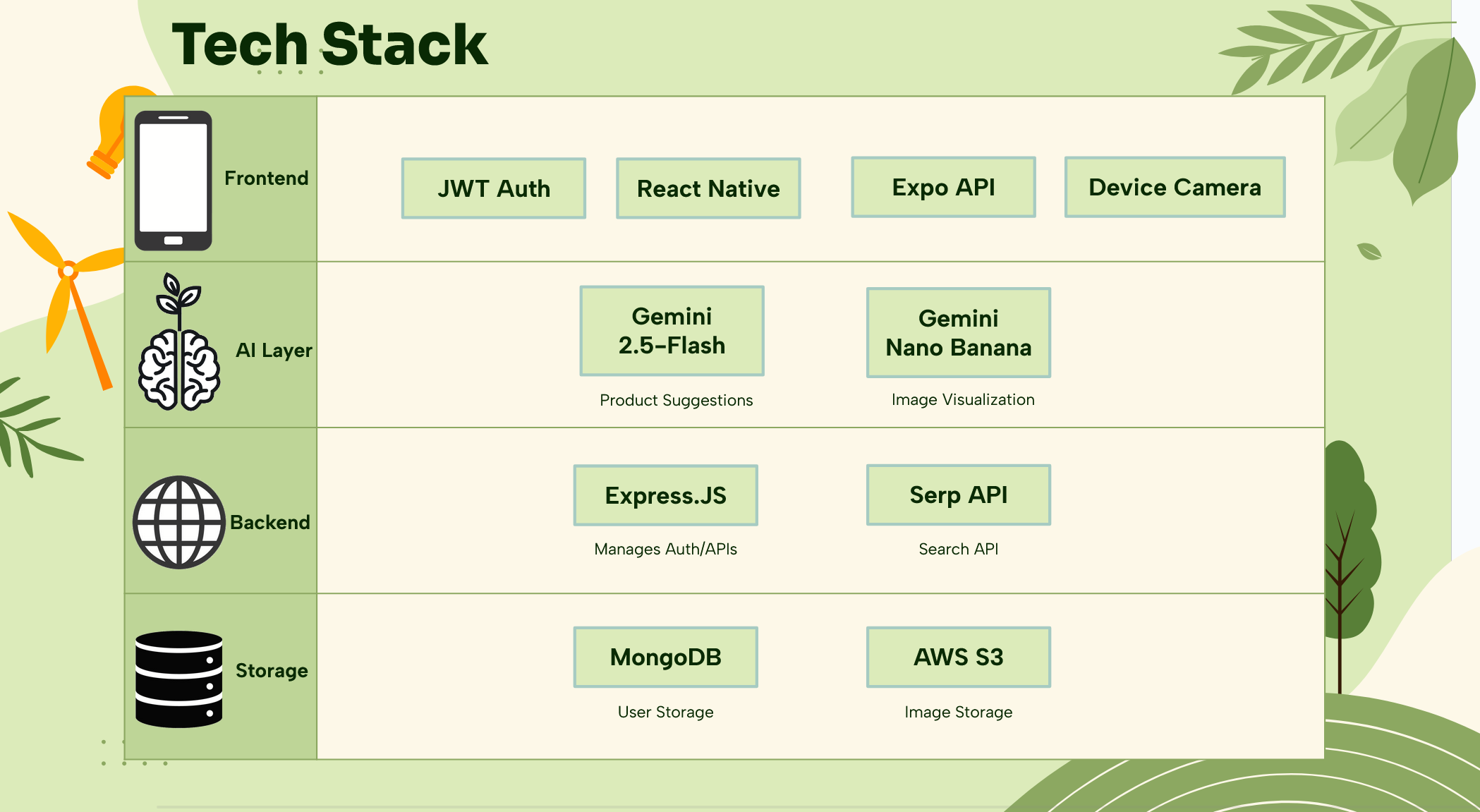
Tech Stack
SustainaView - AI-Powered Sustainable Room Makeover
Turn any room into an eco-friendly space effortlessly, with a little help from AI.
SustainaView is a mobile app that makes sustainable interior design easy and fun. Just snap a photo of your room, and our AI will give you personalized, eco-friendly suggestions, show you what your space could look like after a green makeover, and even break down the costs for you. It’s like having a sustainability expert and designer in your pocket!
Project Members
- Arjun Suryawanshi - Frontend Development and UI/UX Design
- Chinmay Govind - Full-Stack Developer and AI Integration
- Akash Sarode - Backend Architecture and Database Design
Motivation
- Energy Waste & Unsustainable Furniture Choices lead to a Massive Carbon Footprint
- The average person won't know which green tech and furniture is economical
- Existing apps can only do product recommendations, not holistic room-aware suggestions
Interior design generates 10.5 million tons of waste a year in the US alone.
Our solution is SustainaView, an app that lets you take a photo of your room, and visualizes suggestions for green products. The app uses Gemini and SerpAPI to generate product suggestions, providing green substitutes for items in your room. You can select items you like and Transform your room, using Gemini's Nano Banana model to visualize an image of the room with green products.
Features
- Product Suggestions with Quick Buy Links
- Product Wishlist and Price Comparisons
- Transformed Room Images & Cloud-saved Portfolio
- Authentication & Sharing Features
How we built it
We implemented a sophisticated two-stage Gemini AI pipeline that first analyzes room photos to generate structured JSON data with sustainability scores and eco-friendly product recommendations, then feeds this data along with the original image into Gemini's image generation model to create realistic before/after visualizations of the sustainable room makeover. The mobile app was built using React Native and Expo for cross-platform compatibility, with a Node.js/Express backend handling user authentication via JWT tokens. Images are securely stored in AWS S3 with signed URLs, while user data, wishlists, product information, and signed URL image links are managed through MongoDB Atlas. We integrated SerpAPI / Google Shopping API for real-time product search and price comparisons across multiple retailers.
Challenges we ran into
We found it difficult to connect the Express server running on our computer to the mobile app on our phone during development. nGrok solved this issue by providing an API gateway that created a secure tunnel between our local server and the mobile device. Another significant challenge was that wishlisted items wouldn't be marked as wishlisted when they appeared in product listings because we had no reliable way to identify specific products across different API calls. To fix this, we implemented a system that stores the unique product ID from the Google Shopping API in MongoDB for each user, allowing us to accurately track which specific items have been wishlisted and maintain consistency across the app.
Accomplishments that we're proud of
We're most proud of implementing Google Gemini's advanced vision API for intelligent room analysis and sustainability assessment, followed by seamlessly integrating Gemini's image generation capabilities to create realistic room transformation visualizations. The integration of multiple shopping APIs (SerpAPI and Google Shopping) to provide real-time product recommendations with price comparisons was technically challenging but resulted in a comprehensive product discovery system. We also successfully built a robust user authentication system using JWT tokens combined with MongoDB Atlas for persistent wishlist and image storage, all while maintaining secure AWS S3 integration for scalable image management. The end result is a full-stack mobile application that combines cutting edge AI with practical e-commerce functionality.
What we learned
Throughout this hackathon, we learned how to develop a cross-platform mobile app using React Native and Expo, including integrating native features like camera functionality and navigation systems. We gained valuable experience implementing secure user authentication with JWT tokens and learned how to design flexible MongoDB schemas for storing user data, wishlists, and product information. Additionally, we mastered AWS S3 integration for image storage with signed URLs and learned how to implement multiple shopping APIs to create a comprehensive product search and comparison system. The project taught us how to orchestrate complex AI workflows using Google Gemini's vision and image generation capabilities while managing data synchronization across mobile and backend systems.
What's next for SustainaView
Our immediate next steps include deploying the app on both the Apple App Store and Google Play Store to reach a wider audience of sustainability-minded users. We plan to deploy our backend Express server using AWS EC2 for improved scalability and reliability in production. We're also excited to implement social features that will allow users to share their wishlists and room transformation images with friends and the broader SustainaView community, creating a network of people committed to sustainable living. Additionally, we want to expand our AI capabilities to provide even more personalized recommendations.
Built With
- amazon-web-services
- android
- copilot
- expo.io
- express.js
- gemini
- gemini-nano-banana
- ios
- javascript
- jwt-auth
- mongodb
- mongoose
- ngrokapigateway
- react
- serpapi
- sharp


Log in or sign up for Devpost to join the conversation.