Inspiration
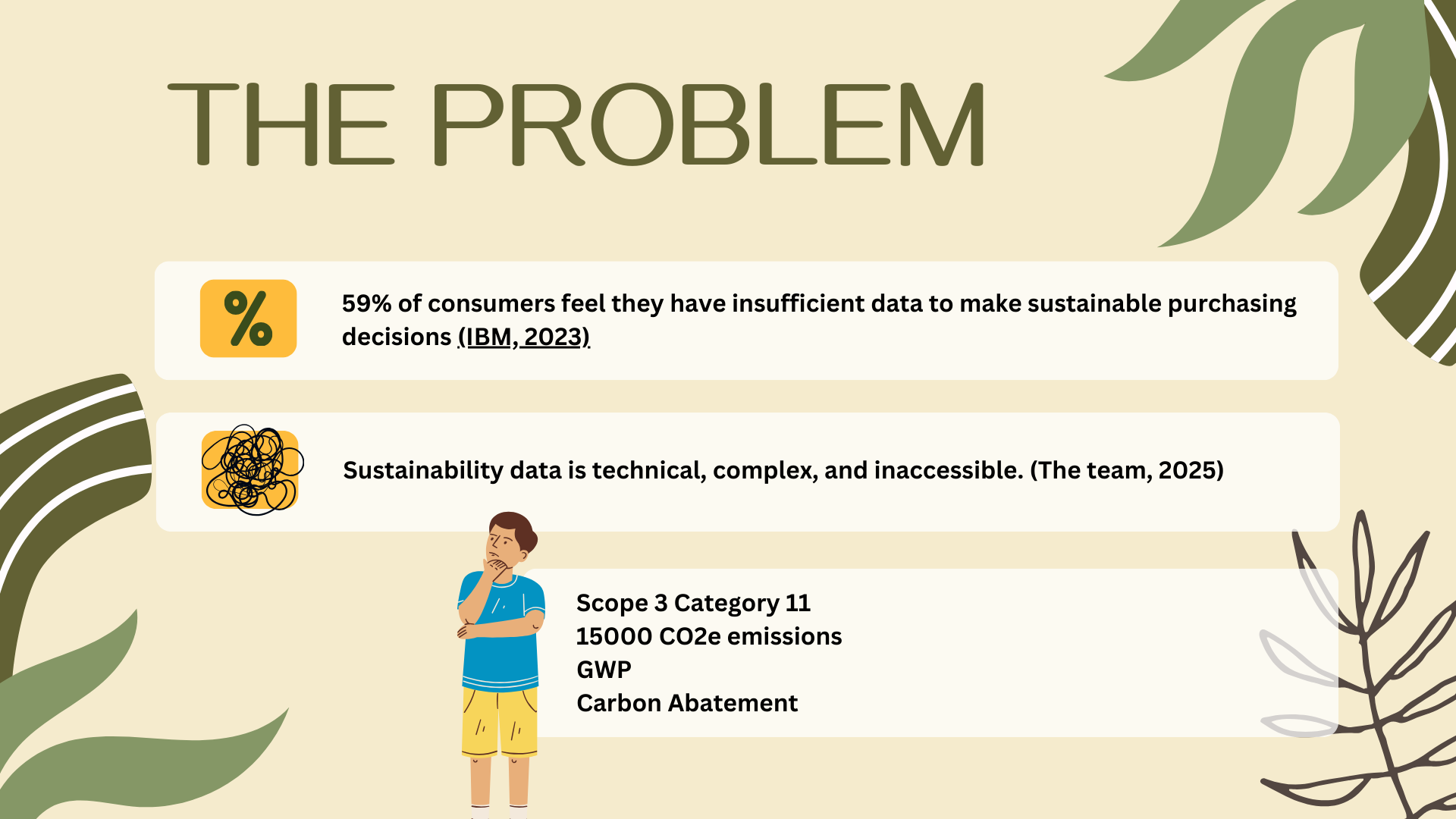
Scope 3 Category 11 15000 CO2e emissions GWP Carbon Abatement
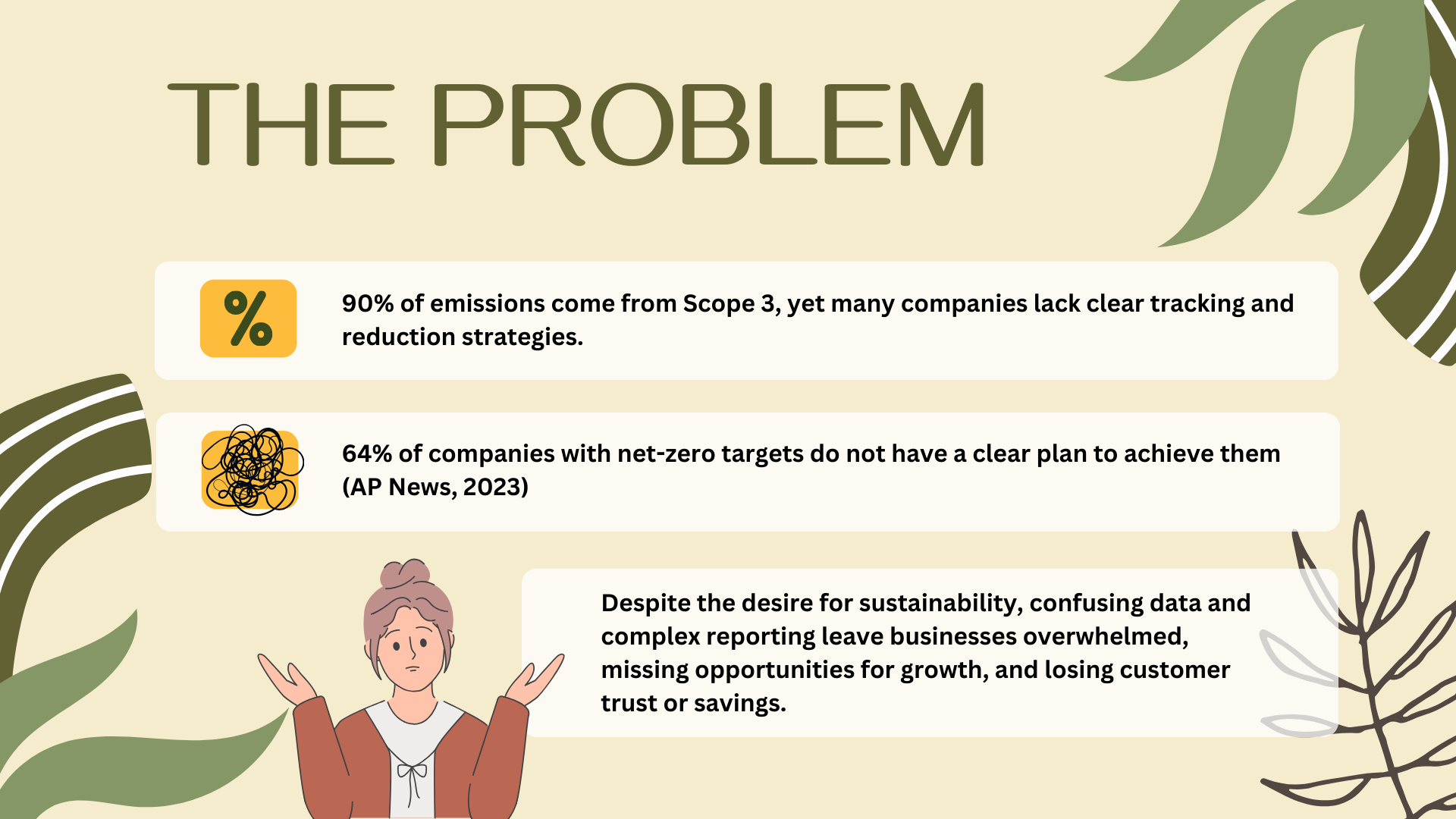
As a team of people passionate about sustainability and ensuring that every one of our actions is both informed and taking a considered approach towards the multiple issues going on, we're used to hearing these terms.Each one of us has a different level of knowledge when it comes to different sustainability terms. Despite the varying levels of knowledge, all of us find it difficult sometimes to understand different data that is essential when making decisions. For example, federally mandated reports regarding corporate emissions. That struggleopened our mind towards the vast amount of people who deeply care about sustainability but have no way of easily interpreting the data to make efficient decisions. This meant that we had to rely on corporate statements regarding sustainability which were often outdated or didn't take into consideration all of the factors that we would like to consider when deciding what brand to purchase from. Additionally we are a team of impact leaders and many of us know small business owners- and after voicing our frustrations to them, it became clear that this issue is much deeper rooted- and includes corporations not being able to keep up with data or make informed decisions in order to actually fulfill their sustainability goals to an accurate level and convey the same information to their end consumers.
What it does
Consumer side:
- Educated regarding scope 3 emissions and their impact
- More informed, and able to support businesses that care
- Look for businesses via a tag/search-based system, to find businesses that align with your sustainability goals or find more sustainable alternatives
- Follow businesses to keep track of their progress
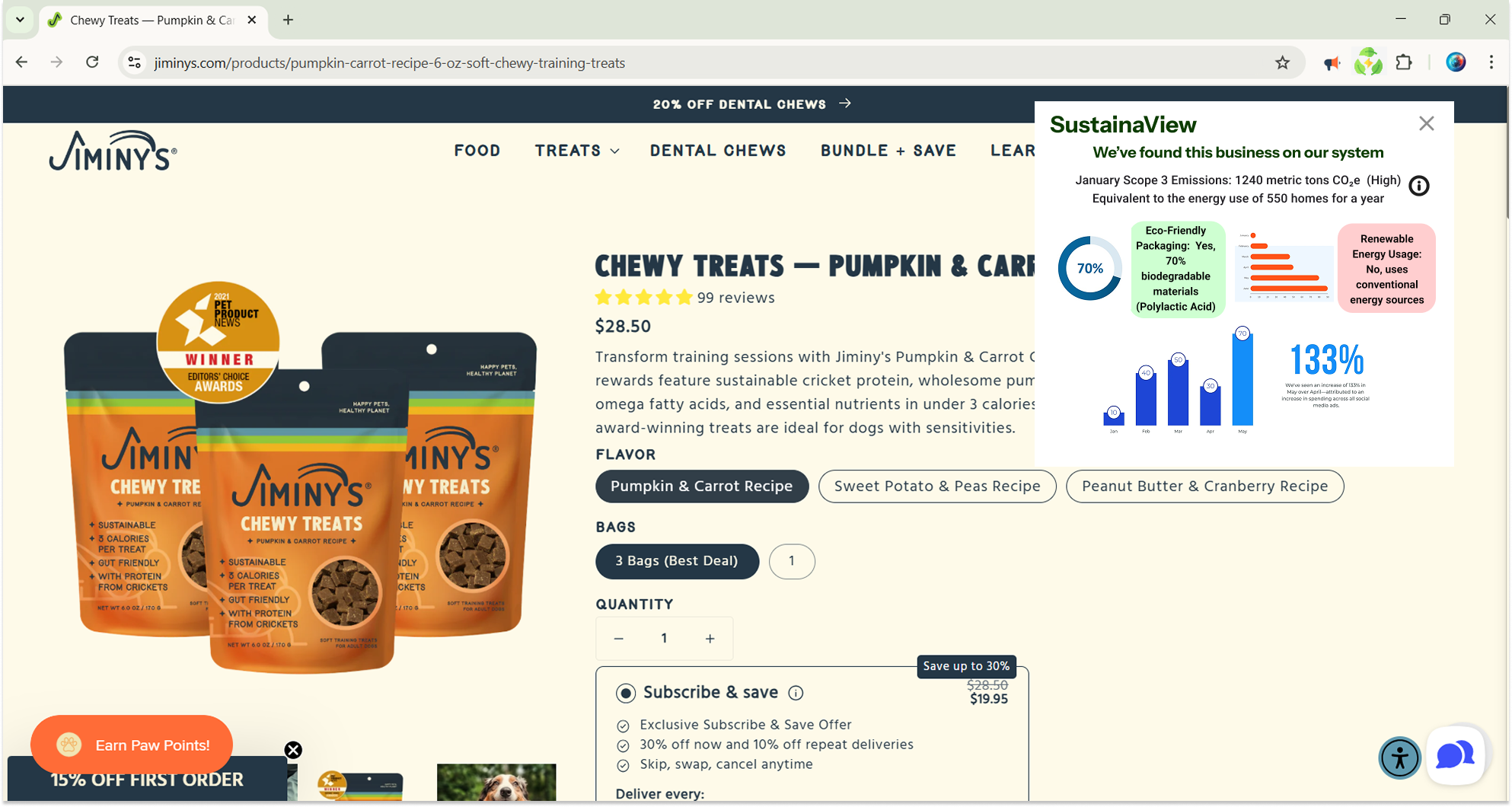
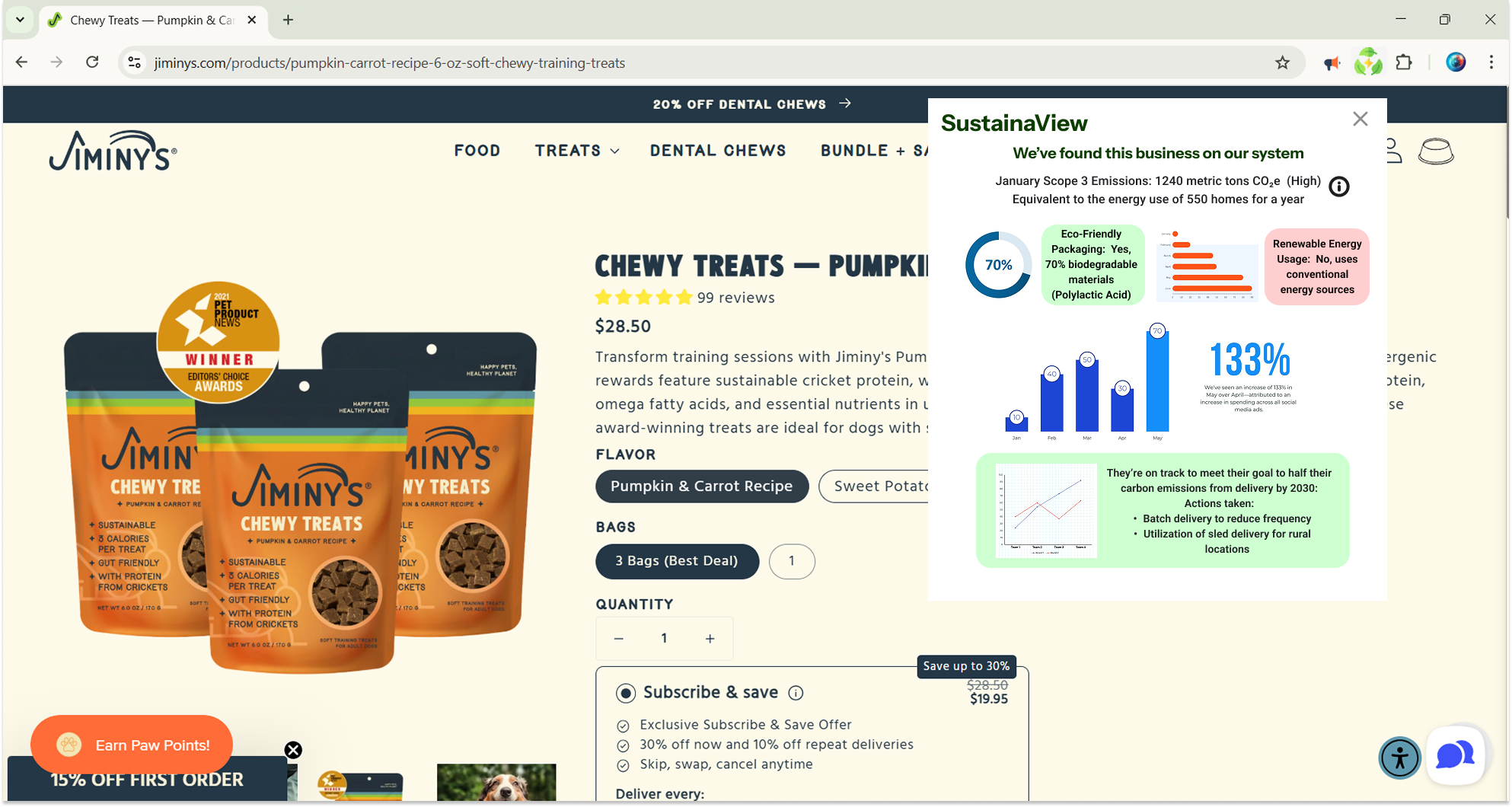
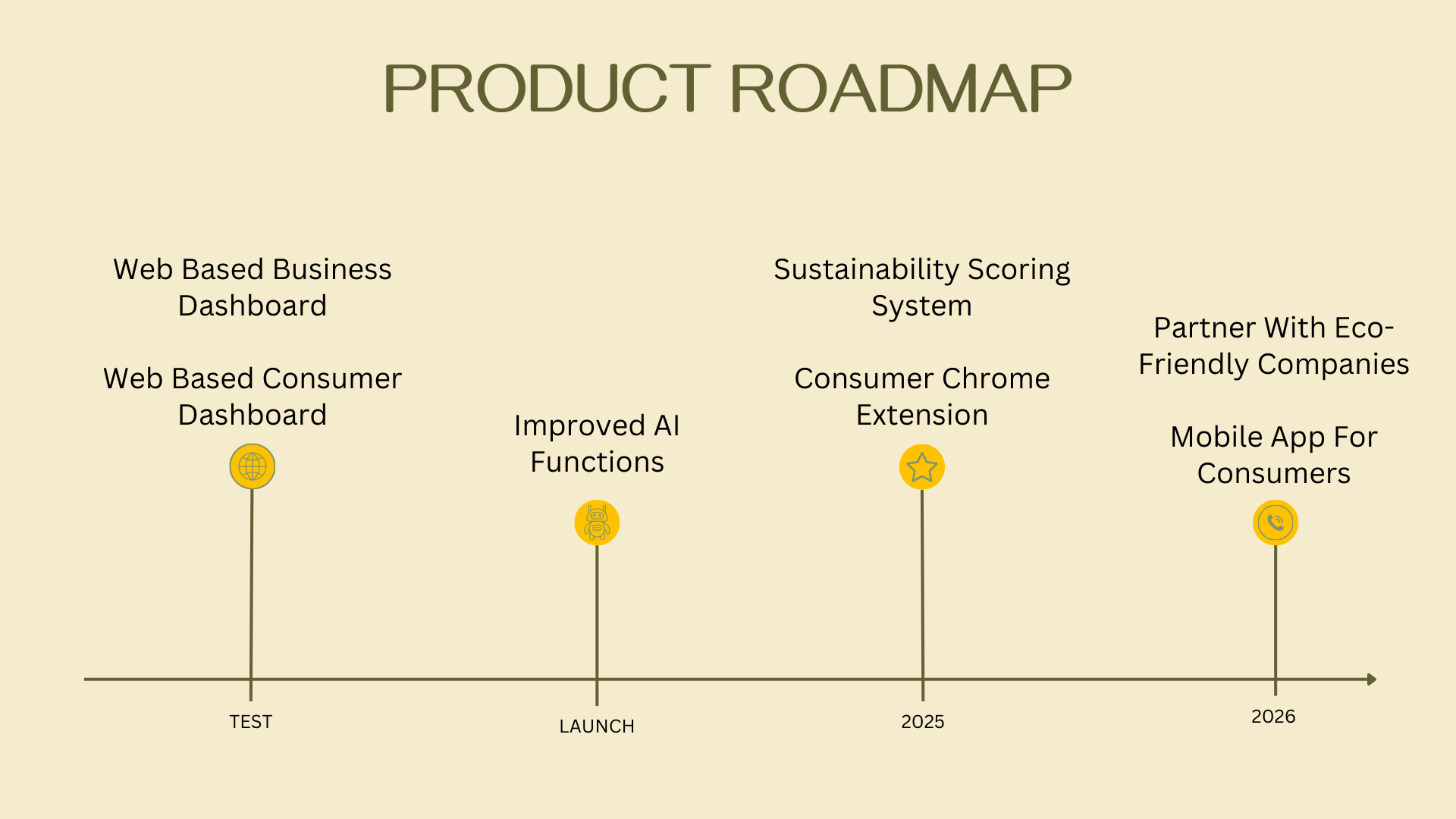
- Chrome extension when consumers are looking at the business website/product
- Consumers can see this information and make more informed decisions
- Seamlessly integrated into purchasing
- Auto trigger popup when the customer visits the website (the business provides where they sell their product)
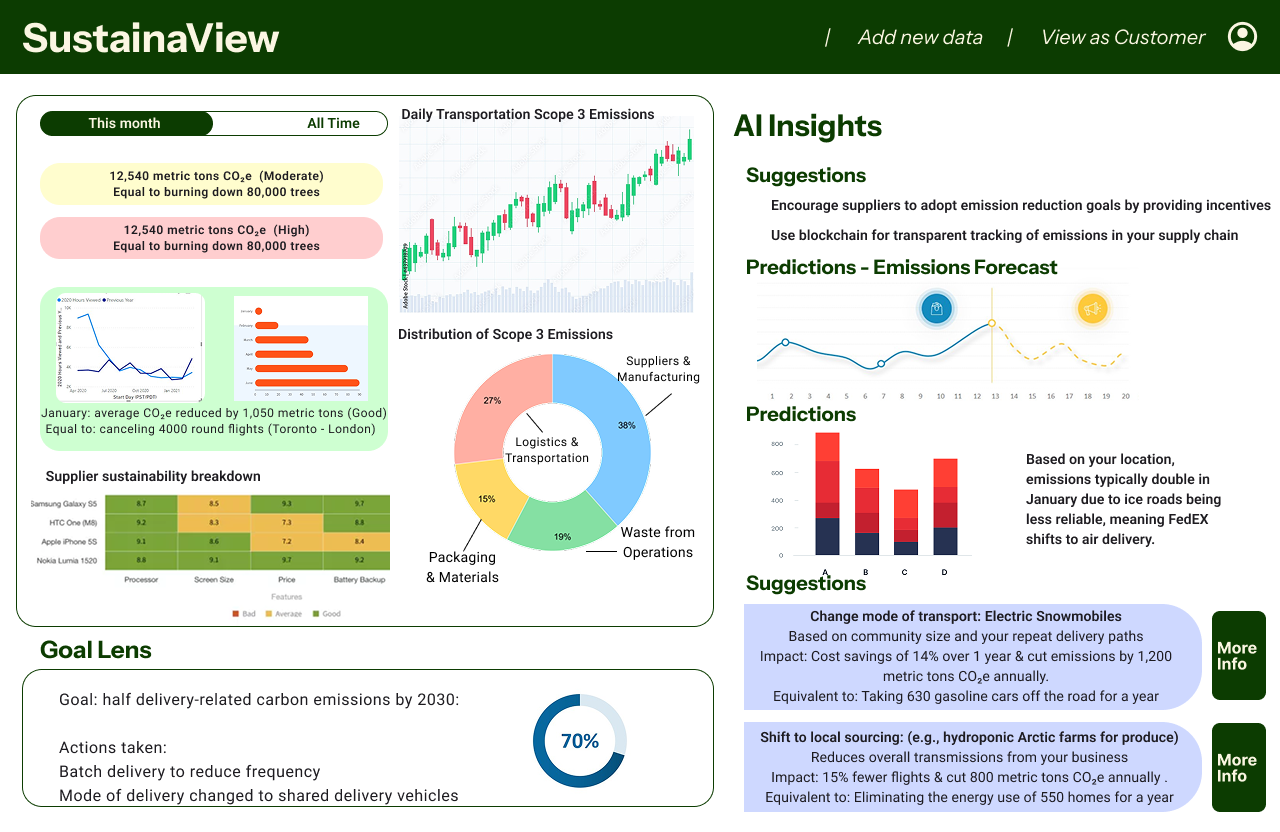
- Simple dashboard mirroring the business side
- Data that is easily readable by those not familiar with it
Business side:
- Web-based software
- Basic dashboard UI, minimal pages to start with
- AI Deciphers Emission Data into readable information
- From data provided from the business (ie. regarding outsourcing and transport), verified databases, sustainability reports, and blockchain records.
- Gather information like packaging, where materials are being imported from, and transportation (distance, mode of transport, constraints like time/frequency)
- How businesses enter their data into the AI training program
- Upload documents containing the relevant information for the AI to scan through and pick out the data it needs
- If any data cannot be found, then prompt to manually enter the data
- Scope 3 Emissions Calculation: AI analyzes data from suppliers, logistics, and operations to estimate carbon footprints.
- Visualize historical and current data
- Easy-to-use interface that shows the data in different ways: line graph, bar graph, pie chart
- Businesses would get all of their data with the ability to customize to their needs
- Customize a customer view to share
- Data that is easily readable by those not familiar with it
- Provide predictions of emissions based on trends and causal data
- Allowing companies to be proactive and save money or legal issues from increases in emissions
- Demand Prediction: Suggest carbon-neutral shipping partners and route optimization for lower emissions. AI analyzes seasonality, and external factors (e.g., weather and social trends) to reduce shipping emissions.
- Color-coded rating (e.g., Green = Sustainable, Yellow = Moderate, Red = High Emission)
- Provide suggestions: on how to reach goals, improve sustainability
- AI-powered supply chain optimization
- Sustainable Shipping & Routing: AI optimizes delivery routes to reduce fuel consumption and carbon emissions.
- Sync with major couriers (FedEx, UPS, etc.) to track emissions from shipping without manual entry.
- If relevant sustainability options are available in the news, they can be suggested
- Businesses can gain visibility by improving their sustainability scores.
- Businesses can pick and choose what goals and information are shared with consumers
- Category and tagging system to help get businesses in front of their target customers
- The company will then boost them to end customers more as they progress better, which leads to a better public image, marketing, and closer relationship with customers
- The system would prompt asking if they’d like to share their progress
- Based on predefined markers (in terms of progress towards a goal or how much time has passed)
How we built it
Our team is extremely passionate about innovation and looking at the real root causes behind a problem, so we conducted many ideation sessions. Working as a team to throw together as many solutions as we could. This was followed by a ton of additional research into competitors to discover market gaps, market research via surveys, and a feasibility analysis on potential solution (which included closing our eyes and visualizing how we would benefit from the solution, as well as those around us).
Challenges we ran into
A significant challenge we ran into during development was considering the data being used for the AI. What data would we need to collect from businesses? What data would we use from publicly available information? How would we train the system on sustainability data directly? The data portion was a significant challenge that we ran into however this was mitigated by talking to multiple different people and breaking our solution into feasible parts- the division being heavily based on the AI demands. For instance we decided to begin by tackling only small businesses and scope 3 emissions specifically in the United states and Canada in order to prevent data that might not be accurate for somebody living in a different country or for larger size businesses especially that contain a significantly higher amount of data.
Accomplishments that we're proud of
We're proud of being able to create how much we did with the resources that we have on hand. We consulted people and tools available to us in order to get accurate estimates of how long our solution would take, costs, and feasibility. This serves as a great reminder that anything is possible!
What we learned
We learned the importance of breaking down a problem into further root causes, identifying niches and gaps in the market, and being cautious of our own personal limits (keeping in mind what's feasible and diving things into separate launches if needed)
Built With
- figma
- hardwork
- streamlit


Log in or sign up for Devpost to join the conversation.