-
-
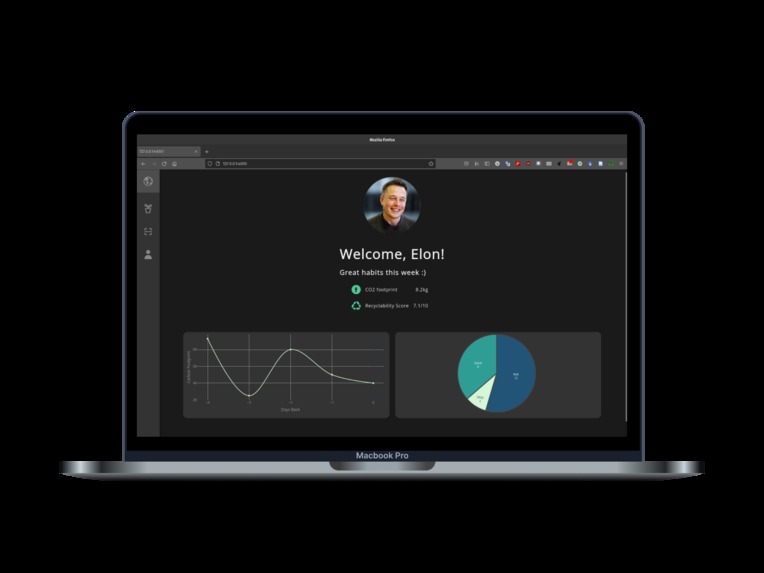
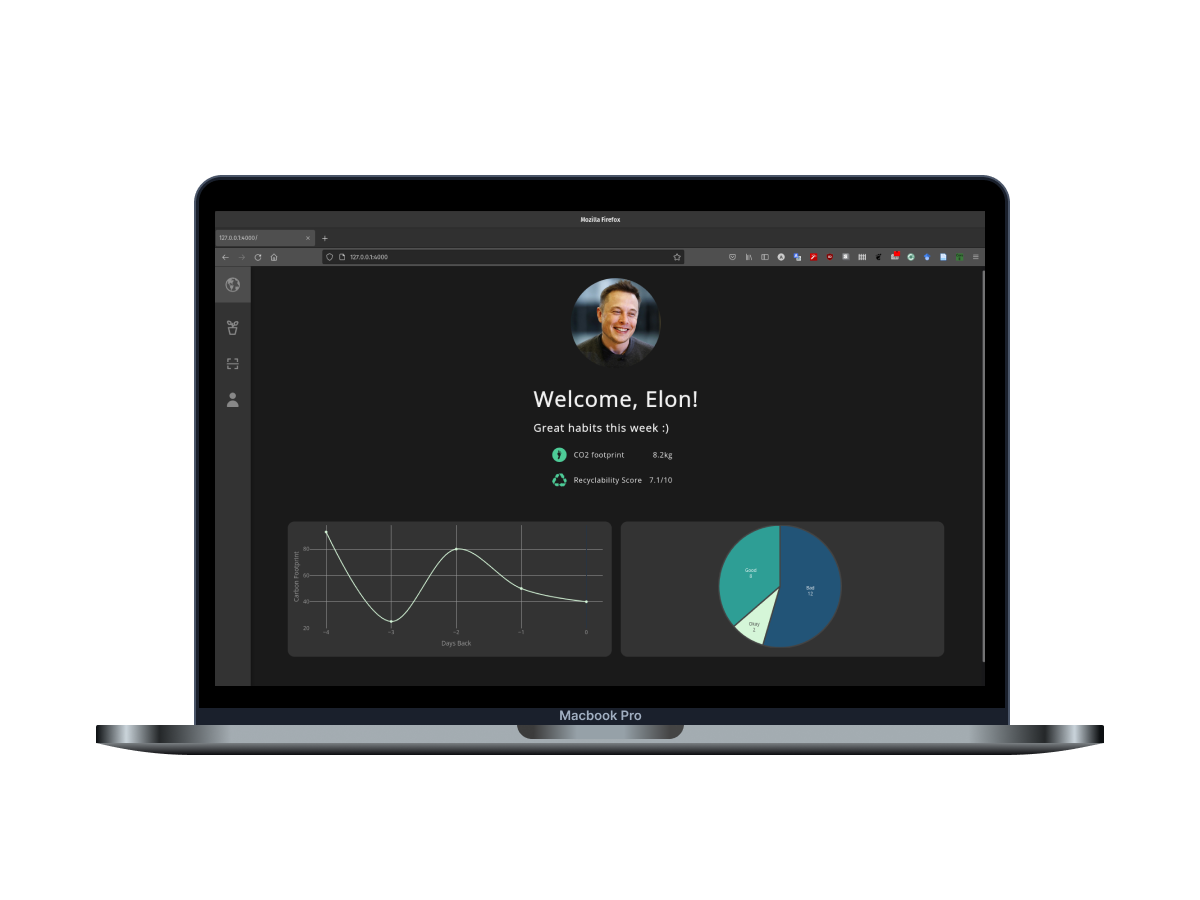
The Web-Interface on a Laptop
-
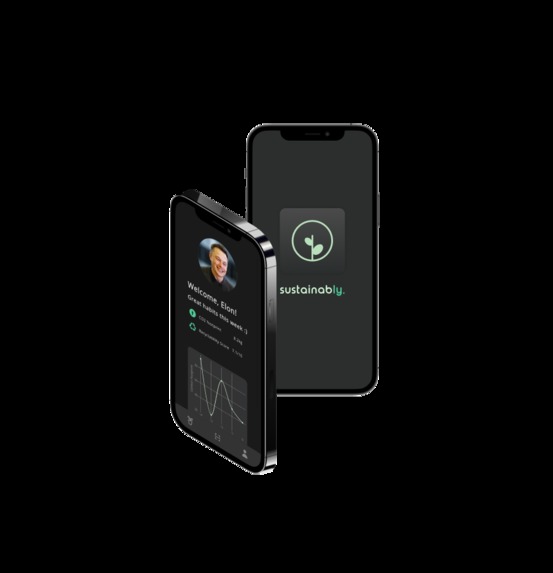
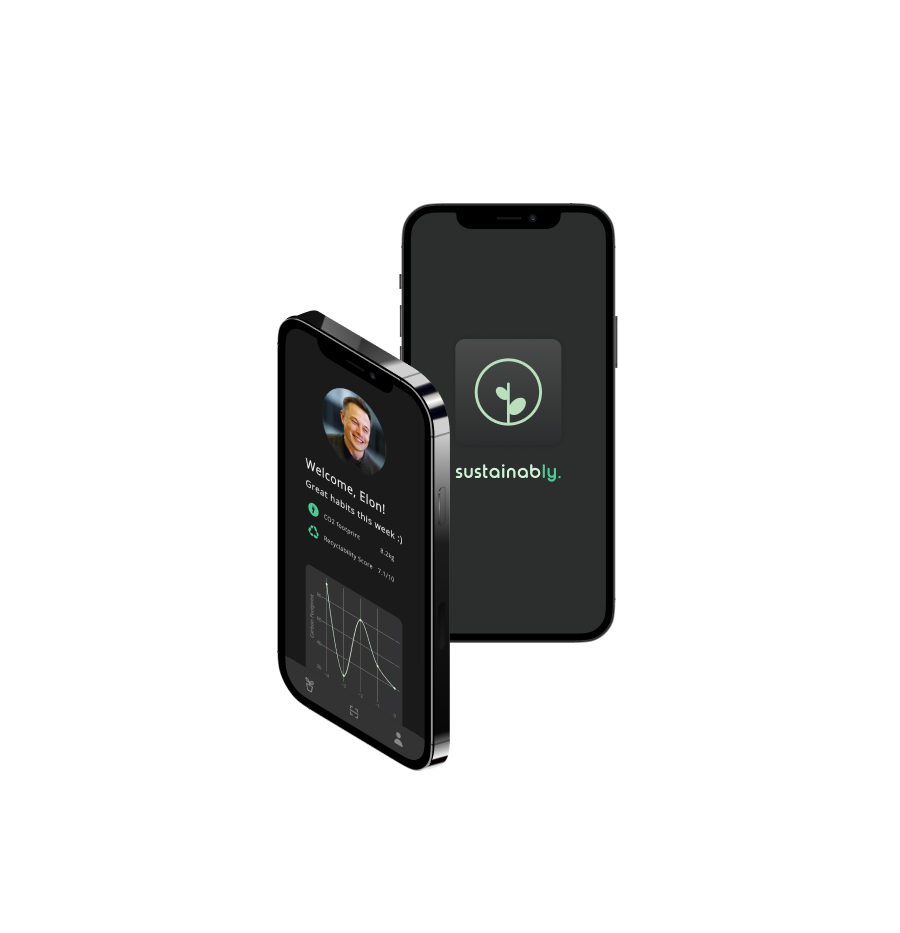
Our Webapp on Mobile
-
Cool logos, right?
-
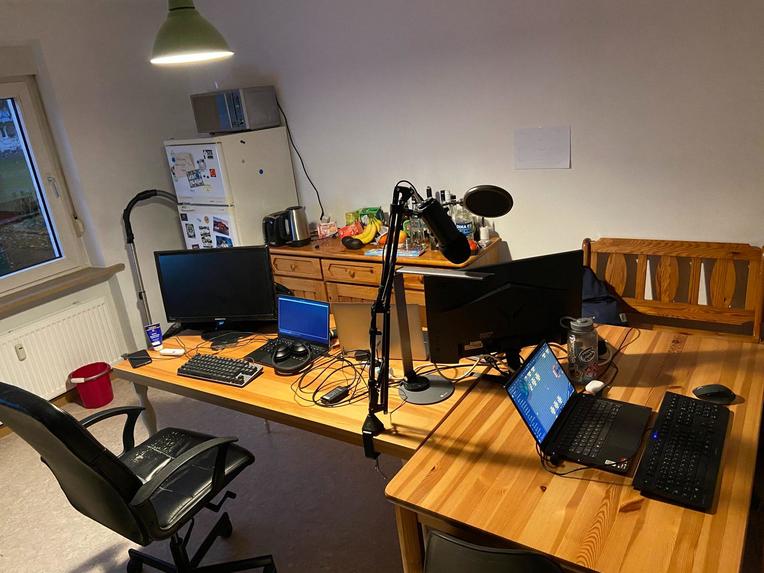
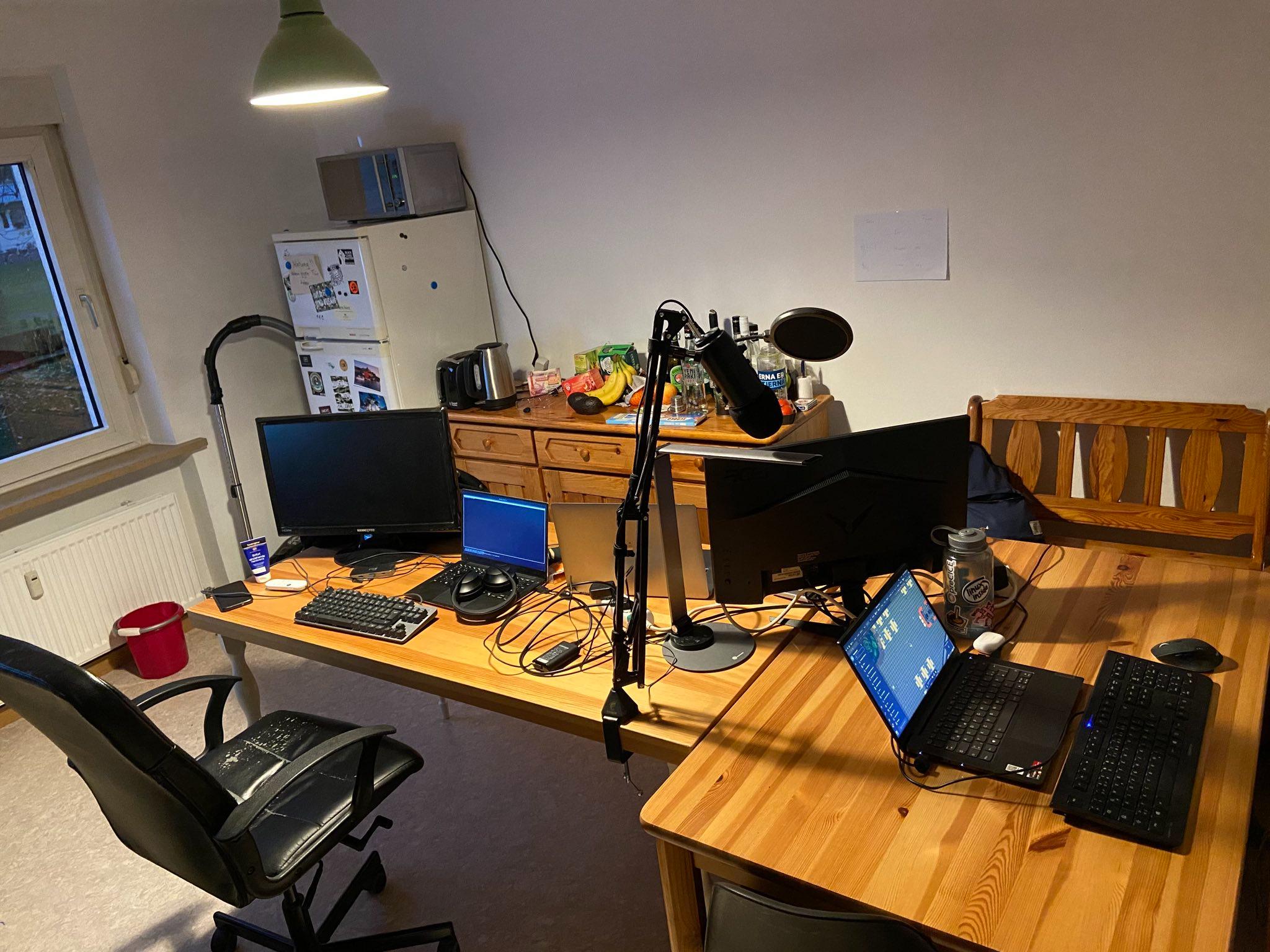
Our Hacking Headquarters powered by Lieferando
Executive Summary
- Your Smartphone
- Scan Barcode
- Get Environmental Impact Information
- Make more conscious purchase decisions
- Access your overall carbon footprint
Inspiration
Making good decisions always comes down to having decent information. If you want to live more sustainably, you might not always have this information at hand. Actually, we are flooded by new headlines regarding which products are superior over other ones.
How about linking this information to the Barcode of a product? And present it in an easily digestible fashion. That could have an immense impact on reducing the environmental impact of entire societies. Additionally, companies' products are more transparent, forcing them to additionally invest in their climate change mitigation actions. Our App can significantly contribute to achieving the set goal of limiting the temperature rise to 1.5 °C until the end of the century.
One major inspiration for us were the CSR reports produces by companies every year. These are hard to parse, and crucial information might be well hidden. Additionally, you are not reading them while grocery shopping in the supermarket.
What it does
Scan Barcodes of Products to get information on their environmental impact. Use the scans over multiple days to access your carbon footprint.
How we built it
We use a front-end written in Jekyll together with the Barcode Scanner from Scandit. It accesses a backend written in Flask and queries information we have collected from publically available data. The backend relies on Firebase as well as some self-implemented functions in Pandas and NumPy. The charts are created using Plotly. We host the application on Google Cloud Platform.
Challenges we ran into
We are all no Javascript Developers. That naturally led to a lot of debugging in that regard. Hence, we wanted to rely on Python as much as possible. Have you ever tried to export Plotly charts as div containers and embed them into Jekyll Apps? Don't! Just use iframes. That's what we settled with in the end.
And wtf is "CORS" in a web browser?! Why can the browser not access resources on different ports on the same machine? Luckily, there is a browser plugin to deactivate that.
Bottom line, we learned a lot of front-end.
Accomplishments that we're proud of
Boy, it was really cool to learn about the environmental footprint of certain products. We truly believe that our concept is really nice. Information condensation is something modern technology can do quite well, why not just by scanning the barcode of a product?
On a tech side: Sooooo much front-end. That's a real science for itself. Not our field of expertise and probably will never be, but it was nice to be exposed to.
What we learned
Isn't that already part of the previous section? Whatever: First, it was an amazing event and a great time spent with friends. We all learned a lot of front-end.
And we have some interesting observations on the delivery times of Lieferando.
What's next for Sustainably
These kinds of products not just rely on a good tech stack, but by a wide and detailed database of products. This is the first thing that has to be vastly extended.
After that, why not go native on mobile? We think that people most certainly would prefer that over a WebApp.


Log in or sign up for Devpost to join the conversation.