-
-
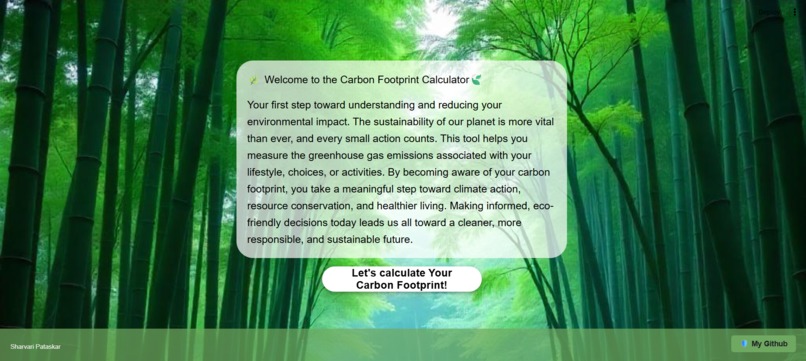
Project preview
-
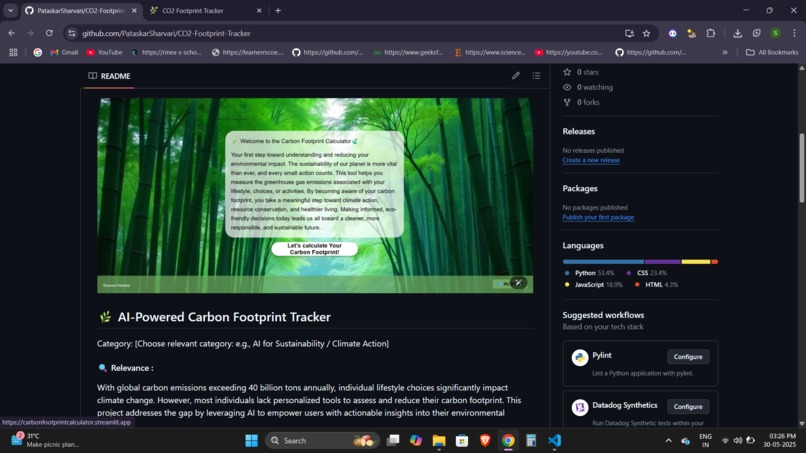
Github Repository
-
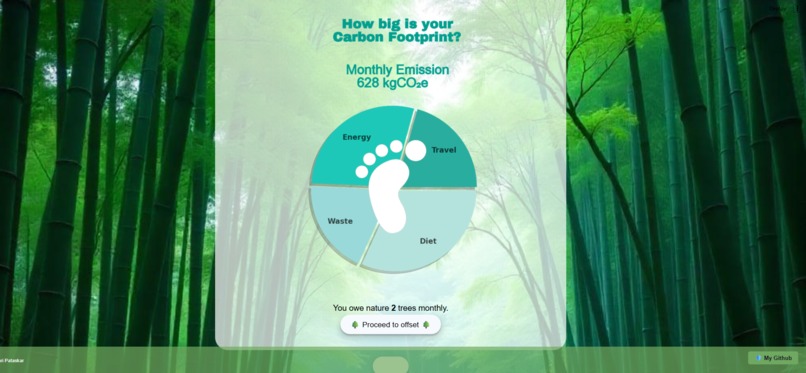
Results & Outcome
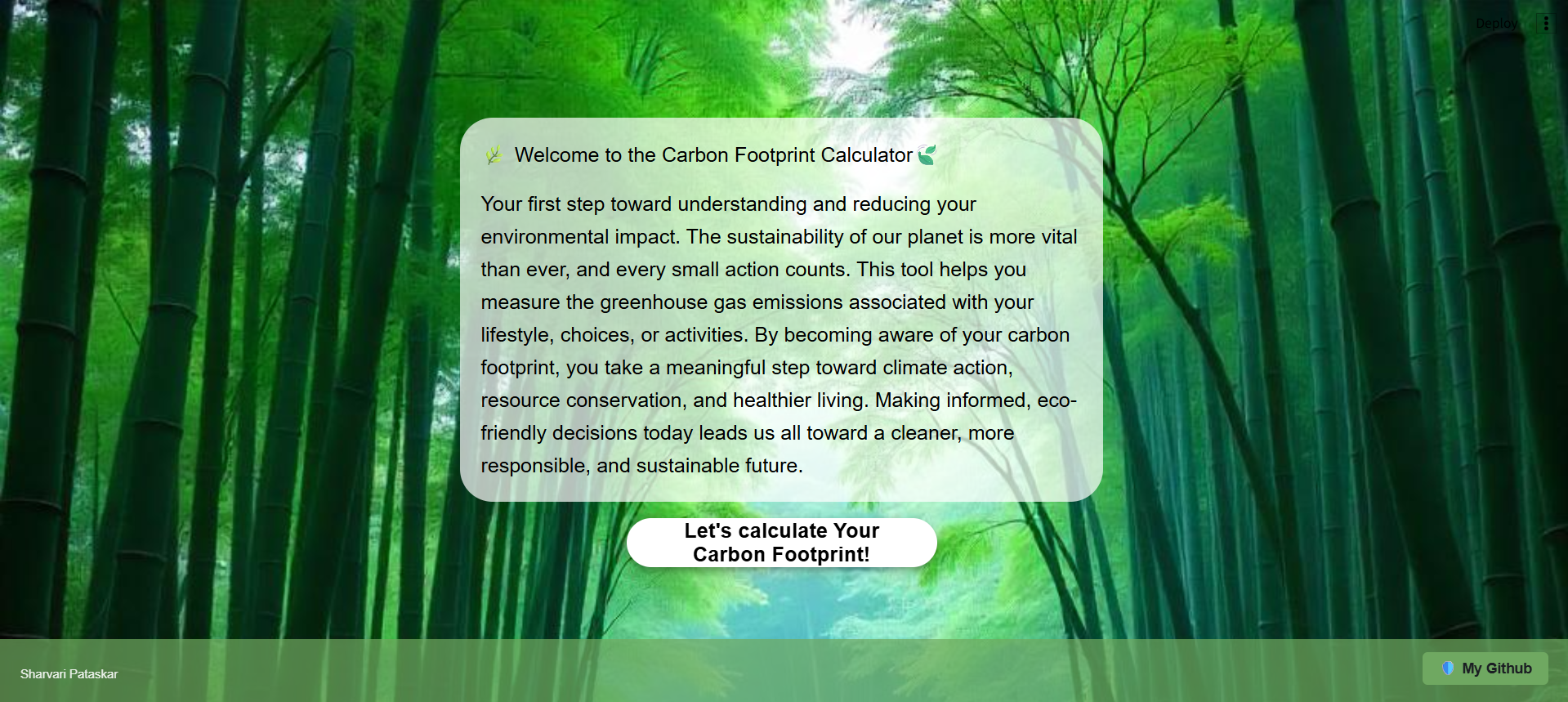
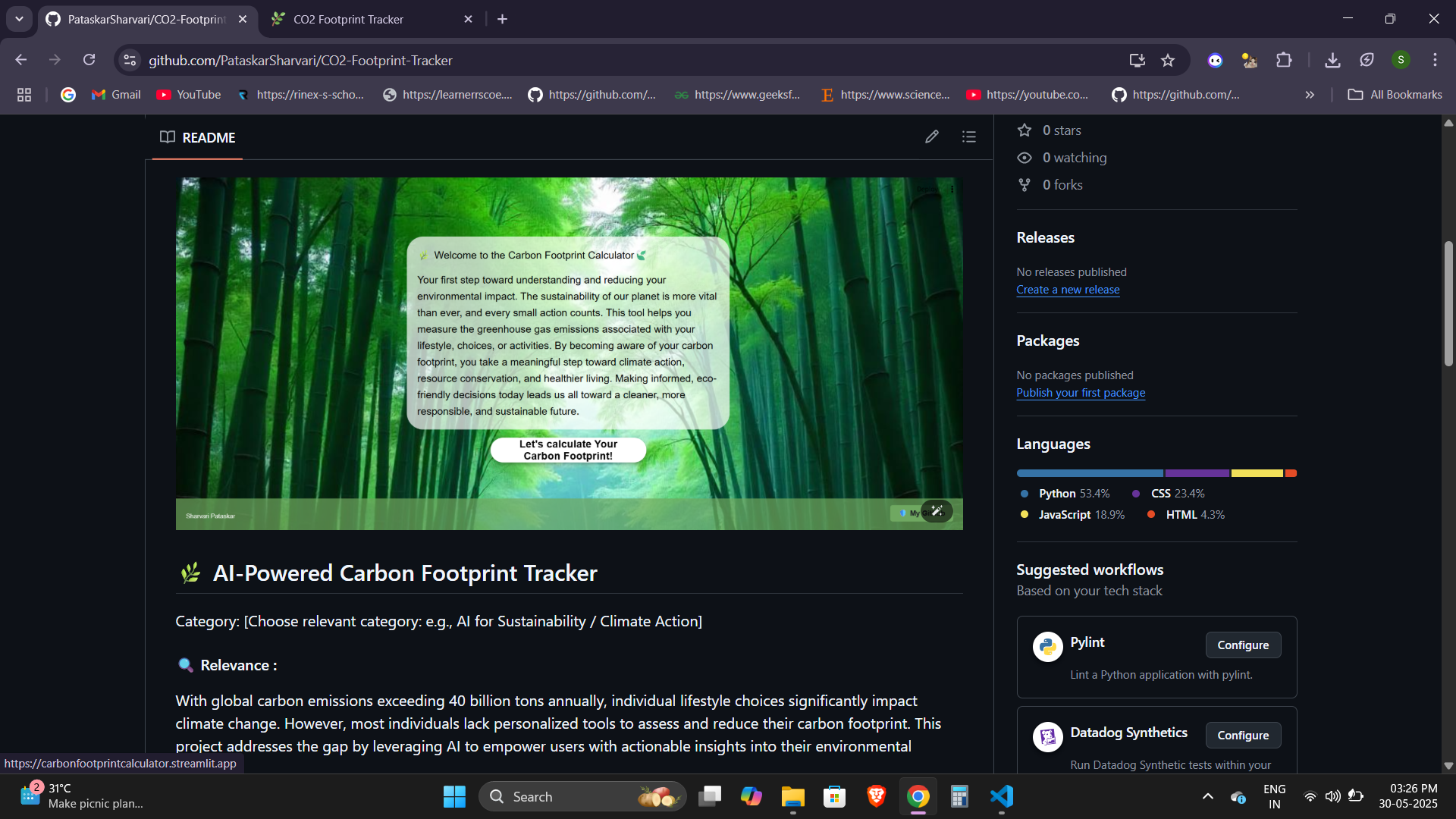
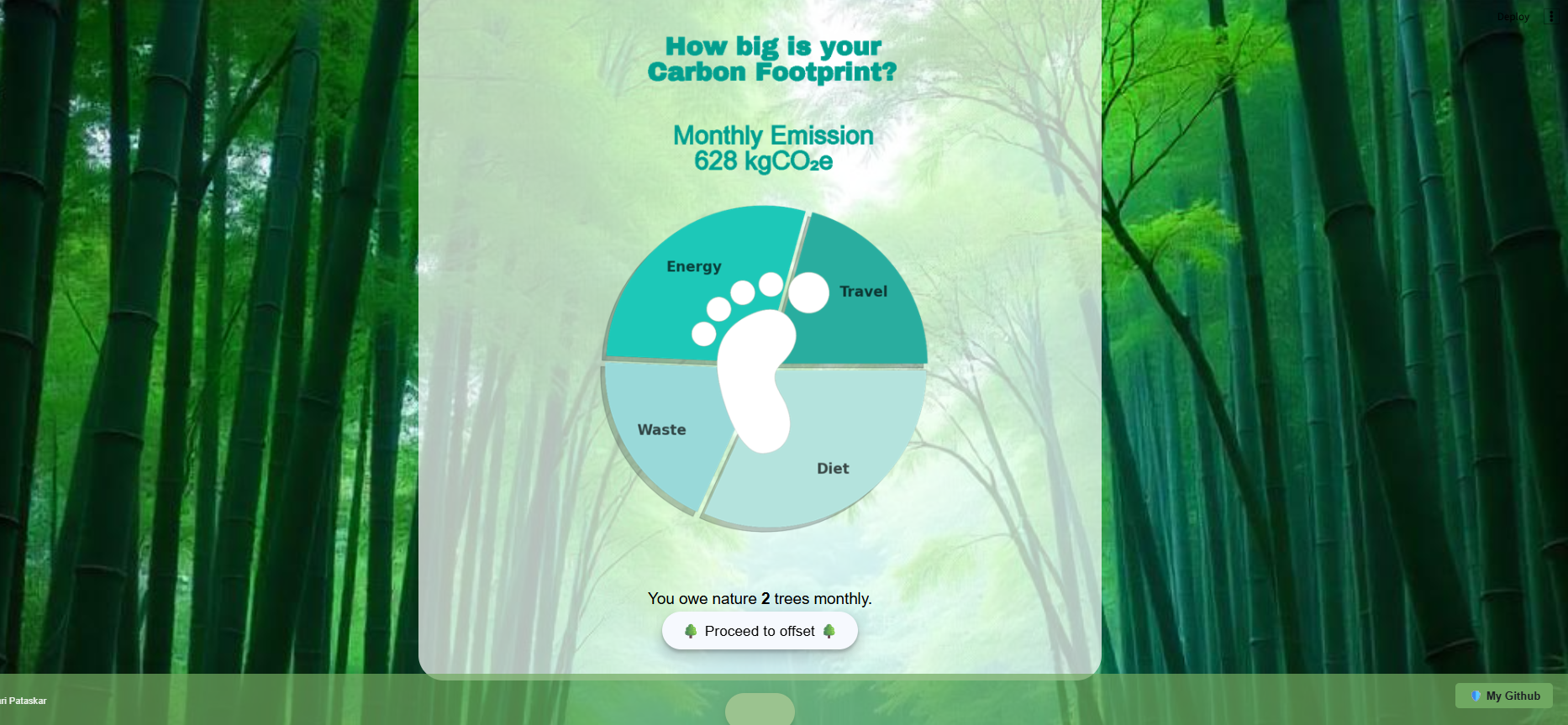
🌍 Sustainable_Coder – Carbon Footprint Tracker
🧠 Inspiration
As global awareness of climate change continues to grow, I felt a strong personal and social responsibility to contribute to a more sustainable future. I realized that many individuals, including myself, lacked awareness of how daily actions—like commuting, energy usage, or diet choices—directly impact our planet.
This inspired me to build Sustainable_Coder, a Carbon Footprint Tracker: a simple, intelligent, and user-friendly tool that helps people calculate and reduce their carbon emissions through small, conscious decisions—powered by AI, ML, and an intuitive Streamlit app interface.
💡 What I Learned
How to build an end-to-end web app using Streamlit, which greatly simplifies deployment and interaction.
How to collect and process user input dynamically to provide real-time feedback.
Learned how to use AI models to classify user behavior patterns and provide eco-friendly suggestions.
Understood how to train simple ML models (e.g., regression models) to estimate carbon emissions based on lifestyle data.
Mastered base64 image embedding for inline media representation in web apps.
Explored environmental datasets and CO₂ emission standards for accurate footprint estimations.
Gained experience integrating AI-powered recommendations using basic Natural Language Processing (NLP) for eco-tips.
🔧 How I Built It
Frontend: Developed entirely in Streamlit, allowing rapid UI creation with widgets, input forms, and live feedback.
Backend: Written in Python, handling emission calculations, logic, and ML model integration.
ML Model: A regression model trained on sample lifestyle and carbon footprint data. Predicts estimated emissions and classifies users into low/medium/high footprint tiers.
AI Recommendations: Based on footprint category, an NLP model suggests personalized sustainability tips (e.g., reduce meat consumption, switch to public transport).
Media Handling: Used base64 encoding for embedding background images and icons. Ensured compatibility across devices using responsive design elements.
Deployment: Deployed as a Streamlit web app, which simplifies hosting and user interaction without needing a traditional Flask or Node.js backend.
🚧 Challenges Faced
Model accuracy: Gathering relevant training data for the regression model was challenging due to sparse public datasets on personal carbon footprints.
Streamlit limitations: Custom CSS for background images in Streamlit required workarounds using base64 and HTML injections.
Base64 Image Embedding: Formatting background images using base64 in CSS within Streamlit's limitations was tricky and required experimentation.
AI tip generation: Generating meaningful and context-aware tips with lightweight NLP required balancing between usefulness and performance.
Integration of ML and Streamlit: Had to manage model loading time, avoid slow user experience, and cache outputs correctly.
🌱 Outcome and Impact
This project turned into more than just a technical challenge—it became a platform for promoting sustainability through AI. By helping users understand their own impact and offering intelligent suggestions, it empowers them to make better choices daily.
It gave me a strong sense of purpose and showed how AI and machine learning can be used for environmental good, not just business or entertainment. I now feel more confident in building ethical, AI-driven tools that can benefit both people and the planet.
🏆 Accomplishments That We're Proud Of
Built a fully functional AI + Streamlit-based carbon tracker from scratch.
Successfully trained and integrated a lightweight ML model for emissions estimation.
Developed an eco-conscious app that encourages users to take real action.
Created a UI/UX that's accessible, responsive, and doesn’t require any installation.
Learned how to merge sustainability science with practical technology.
📚 What We Learned
Importance of good data collection and preprocessing for ML models.
How to combine ML predictions with human-readable AI suggestions.
End-to-end project management: from ideation, design, backend logic, to deployment.
How to make a tool both intelligent and meaningful for a real-world cause.
Worked on making** AI transparent** and actionable, not just a black-box.
🚀 What's Next for Sustainable_Coder
📈 Improved ML models: Expand training data to improve prediction accuracy and adapt to regional differences.
🌐 API integration: Fetch live electricity and transport data for dynamic footprint estimation.
🧠 Conversational AI: Introduce a chatbot (via LangChain or GPT API) to answer user questions and offer guidance.
🔐 User accounts: Let users log in, save results, and track their footprint over time.
📊 Data visualization: Add graphs and emission breakdowns using libraries like Plotly or Altair.
📱 Mobile-first design: Make the UI even more responsive and possibly deploy as a PWA (Progressive Web App).
🌎 Localization: Adapt the app for users in different countries with region-specific data and tips.
Built With
- ai
- base64
- css
- html
- javascript
- machine-learning
- matplotlib
- numpy
- pandas
- python
- streamlit
- uiux


Log in or sign up for Devpost to join the conversation.