-
-
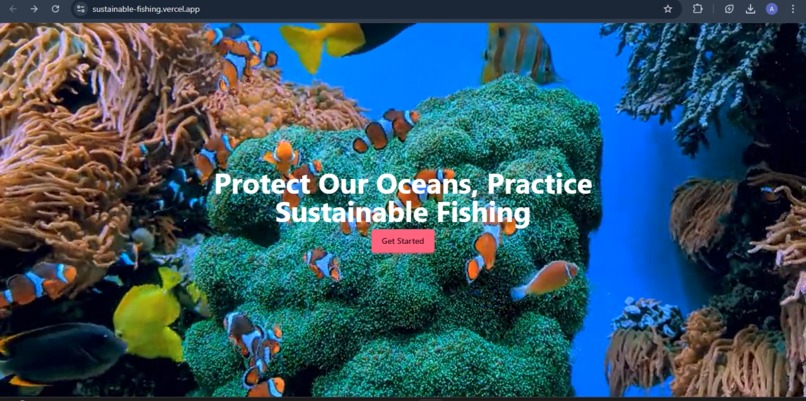
Home Page
-
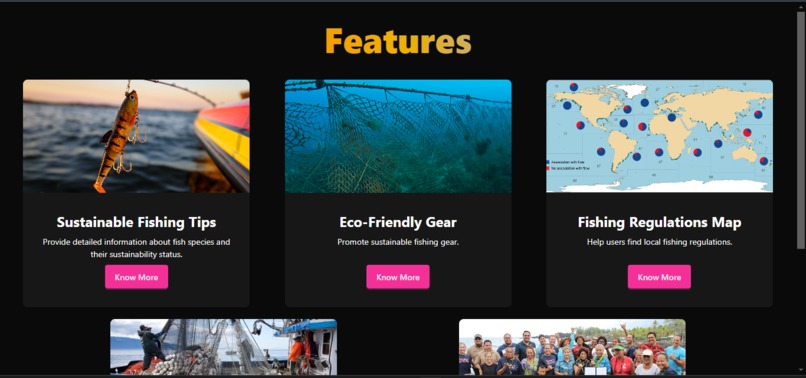
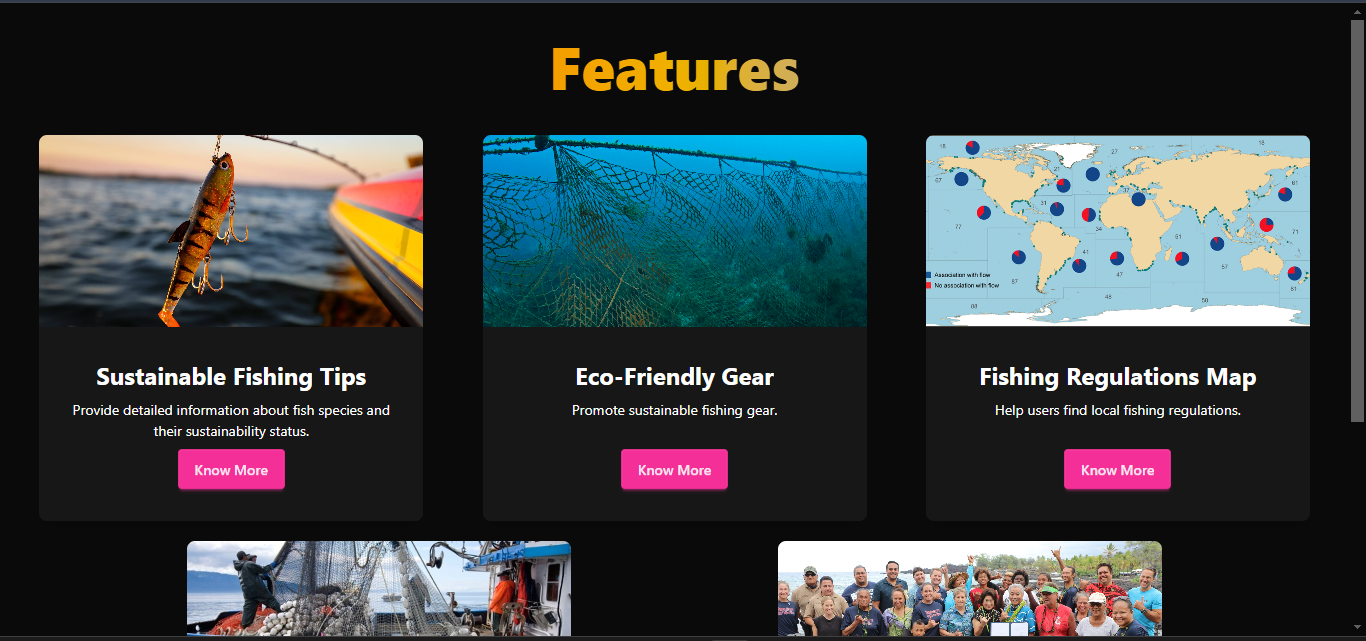
Feature Page
-
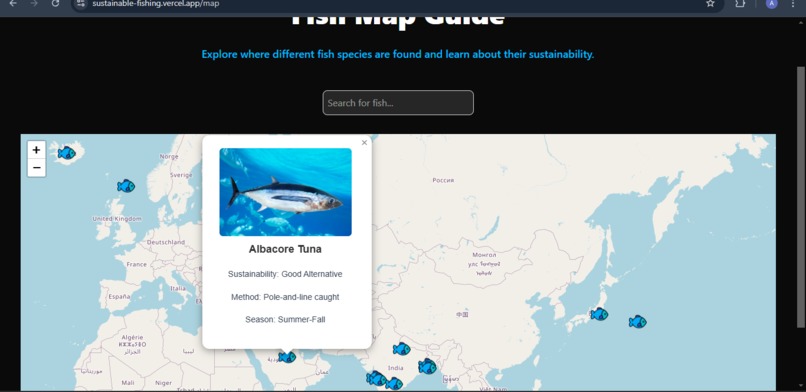
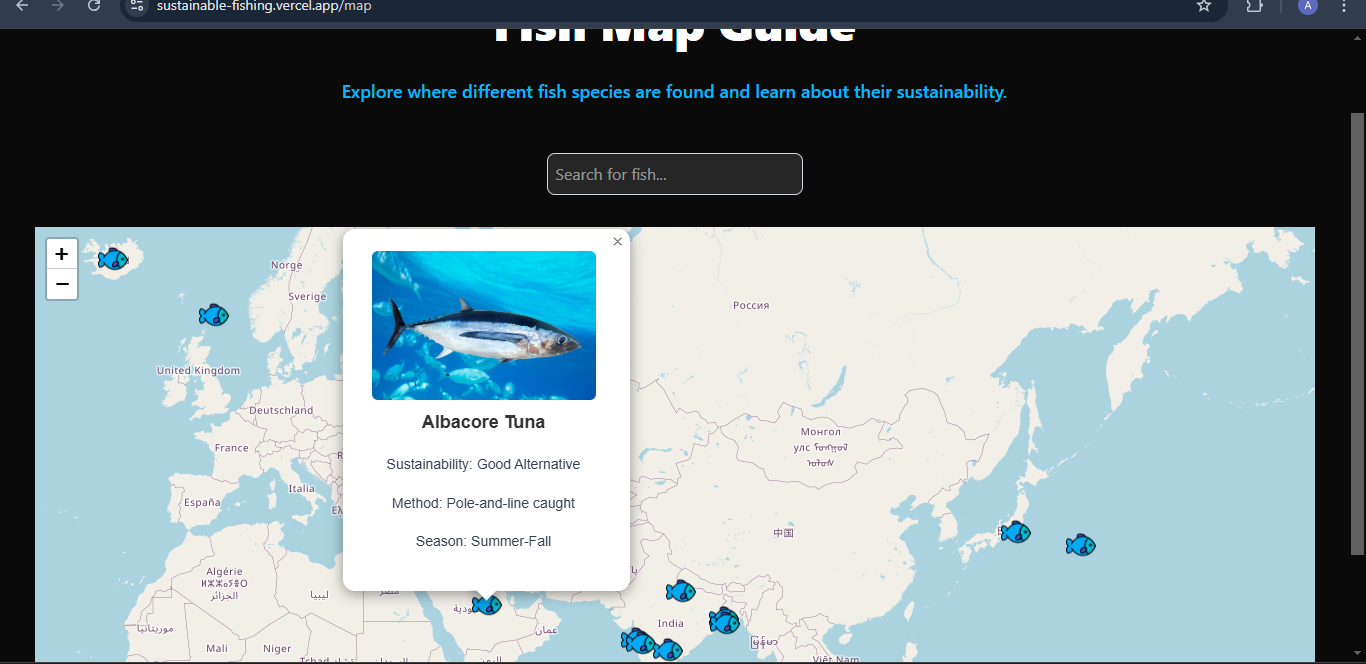
Map Guide
-
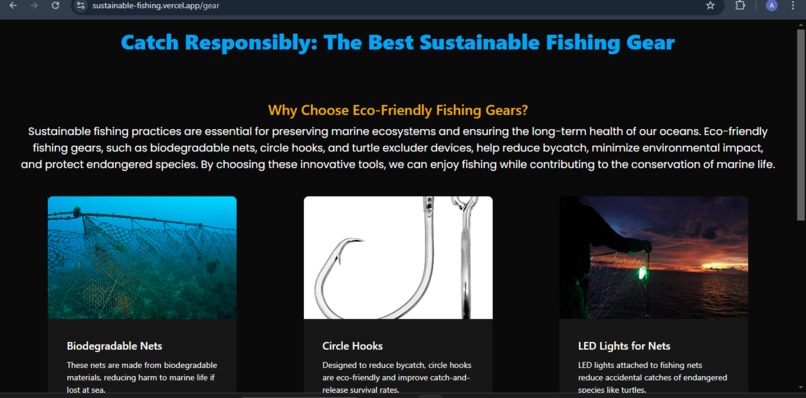
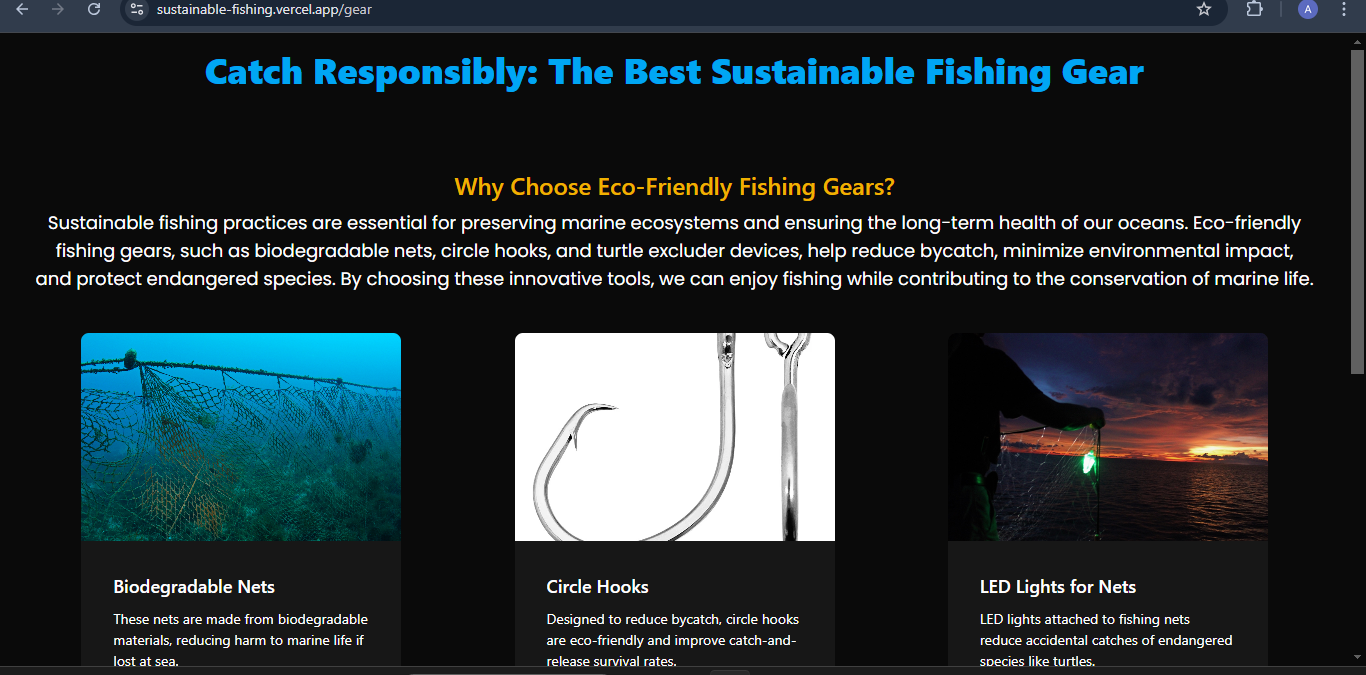
Eco-friendly Guide
-
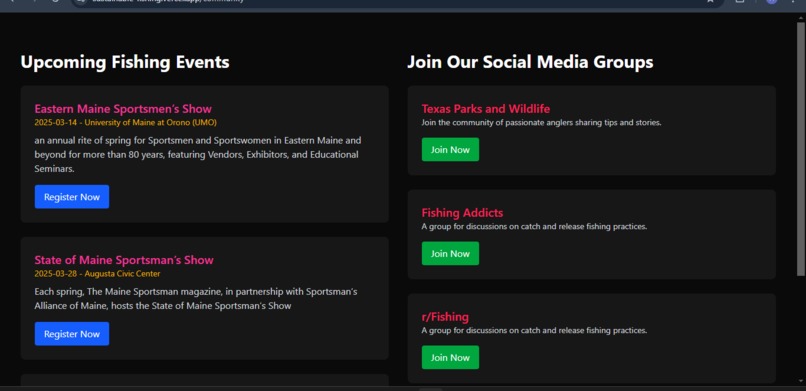
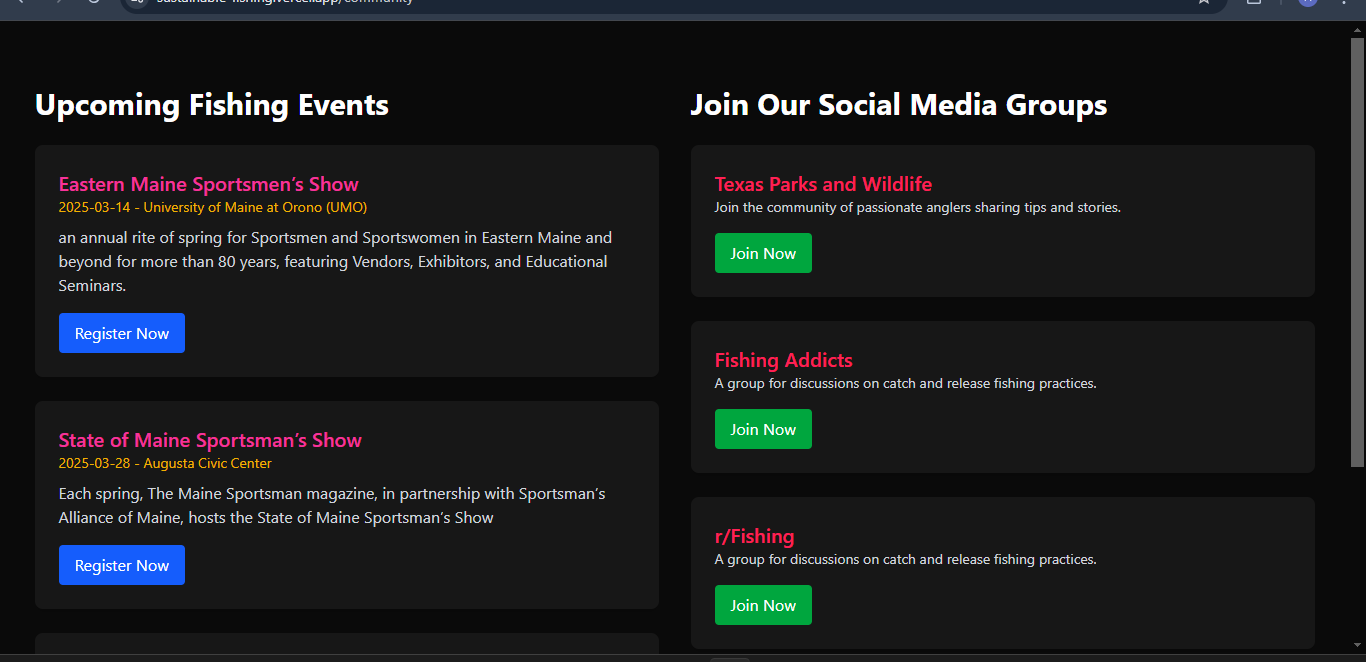
Community Page
Inspiration
Our oceans are home to millions of species, yet overfishing and unsustainable practices threaten marine biodiversity. Every year, billions of fish are caught at unsustainable rates, leading to ecosystem imbalances, species extinction, and food insecurity for coastal communities. We wanted to build a solution that raises awareness and encourages responsible fishing. We hope this platform encourages people to adopt responsible fishing habits, support sustainable seafood choices, and contribute to ocean conservation. Together, we can protect marine life and ensure that future generations can enjoy thriving oceans.
What it does
The Sustainable Fishing Practices App is designed to educate and empower users with knowledge about responsible fishing, marine conservation, and the impact of overfishing. Here’s what it offers:
🌍 Key Features
1️⃣ Educational Articles 📝:- Learn about sustainable fishing practices, marine conservation, and the effects of overfishing. Access regularly updated content from marine experts and conservation organizations.
2️⃣ Interactive Map 🗺️:- Explore global fish populations and their conservation status. Identify sustainable fishing zones and overfished areas. Visualize data on endangered fish species worldwide.
3️⃣ Fish Species Guide 🐟:- Discover detailed information on various fish species. Learn about their conservation status, fishing methods & their location
How we built it
🚀 Tech Stack The app was developed using the Express.js, React.js, Node.js to ensure a full-stack and efficient solution.
🏗 Development Process
1️⃣ Planning & Research 📖:- Studied the impact of overfishing and sustainable fishing practices. Defined core features: educational content, interactive maps, and species guides. Created wireframes and UI/UX designs for a smooth user experience.
2️⃣ Frontend Development 🎨 (React.js):- Built a responsive UI using React.js ,Daisy UI and Tailwind CSS. Integrated React Router for smooth navigation. Used Leaflet.js for the interactive map.
3️⃣ Backend Development ⚙️ (Node.js & Express.js):- Developed a REST API to serve articles, fish species data, and user authentication. Implemented JWT authentication for secure user sessions. Used MongoDB to store articles, fish species, and user data.
4️⃣ Data Collection & Integration 🌍:- Curated fish species data and conservation status from reliable sources. Integrated sustainability reports and real-time fishing data APIs
Challenges we ran into
Challenge: Finding up-to-date and credible information on fish species, conservation status, and sustainable fishing practices. Solution: We sourced data from trusted conservation databases (e.g., FAO, NOAA) and implemented an third party API-driven approach to fetch accurate fish data
Challenge: Balancing educational content with an interactive and engaging UI without overwhelming users. Solution: Designed a clean, intuitive UI with Tailwind CSS, and Daisy UI used progressive disclosure for content, and implemented dark mode support for better readability.
Accomplishments that we're proud of
1. Developing an Interactive Map for Fish Populations 🐟:
Successfully implemented a global fish tracking system using Leaflet.js. Allowed users to explore sustainable fishing zones and overfished areas in real time.
2. Making a Difference in Ocean Conservation 🌊:
Built an app that can contribute to reducing overfishing and raising awareness about marine sustainability. Inspired users to make more informed choices about seafood consumption and ethical fishing.
What we learned
- We gained a deeper understanding of overfishing and its impact on marine biodiversity.
- Learned how technology can help promote sustainable fishing practices and educate users.
- Strengthened our skills in MongoDB, Express.js, React.js, and Node.js. 4.Learned how to implement Leaflet.js for creating an interactive fishing map.
What's next for Sustainable Fishing Practice App
- Add real-time ocean data on fishing activities, water temperature, and pollution levels. 2.Implement image recognition AI to help users identify fish species using their phone cameras.
- Provide real-time recommendations on whether a fish is sustainably caught or overfished.
- Collaborate with NGOs and fisheries to promote responsible fishing campaigns.
Built With
- api
- daisyui
- express.js
- node.js
- react.js
- tailwind


Log in or sign up for Devpost to join the conversation.