-
-
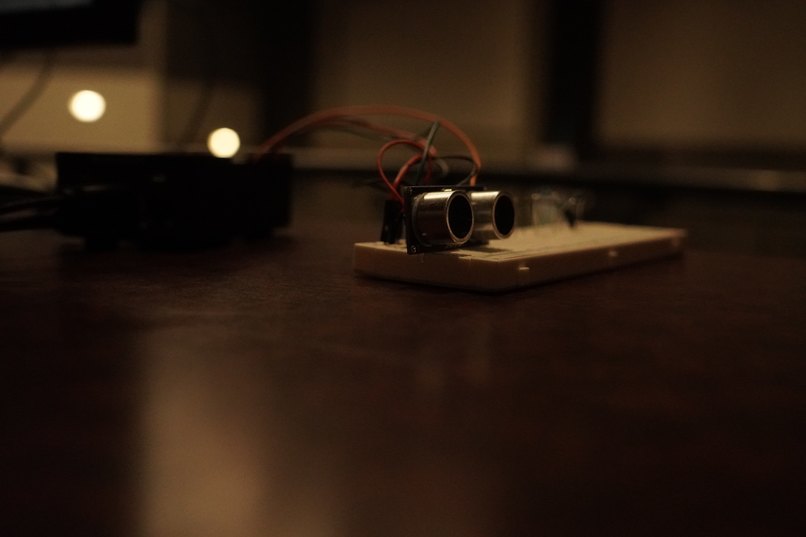
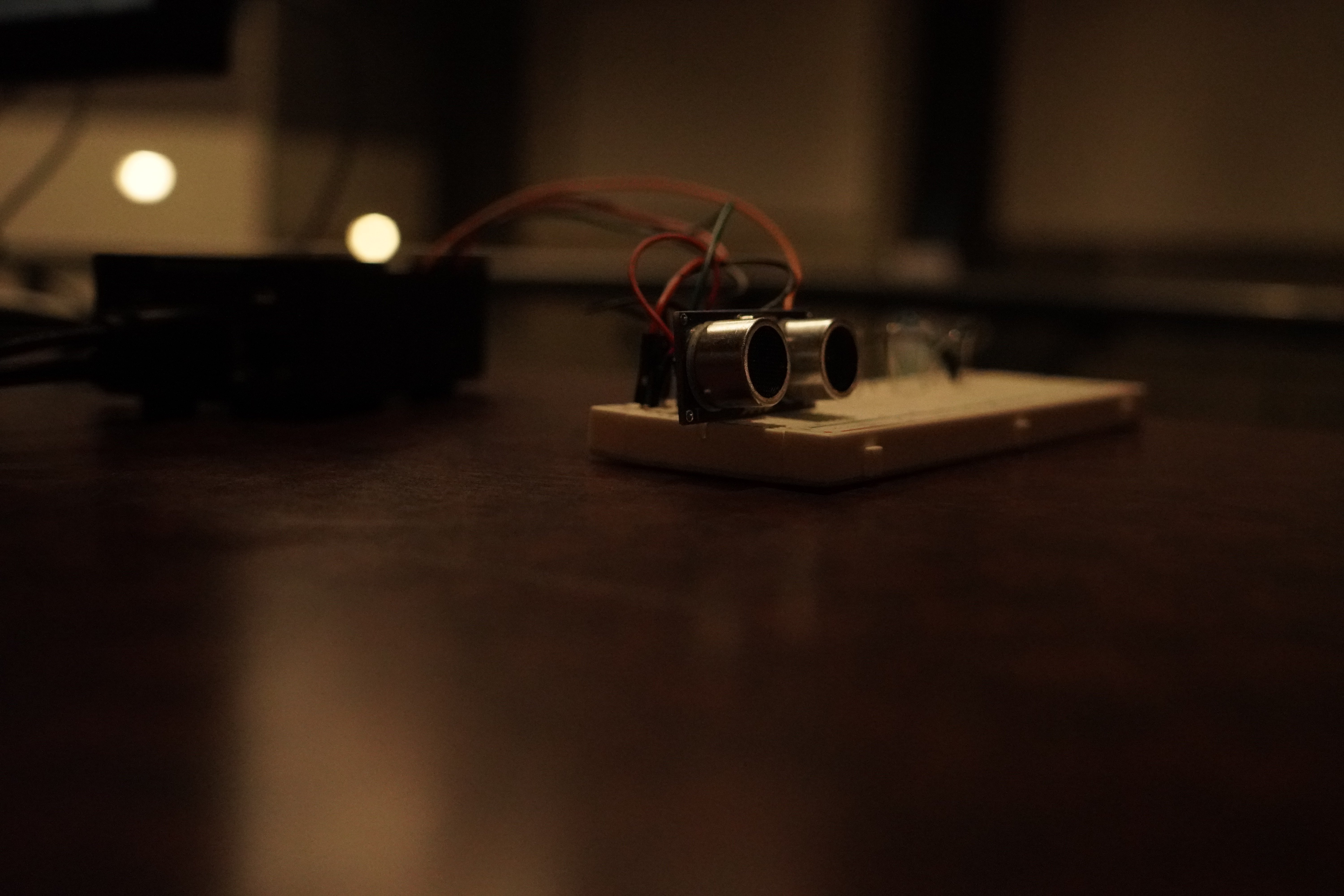
Ultrasonic sensor utilized in our project
-
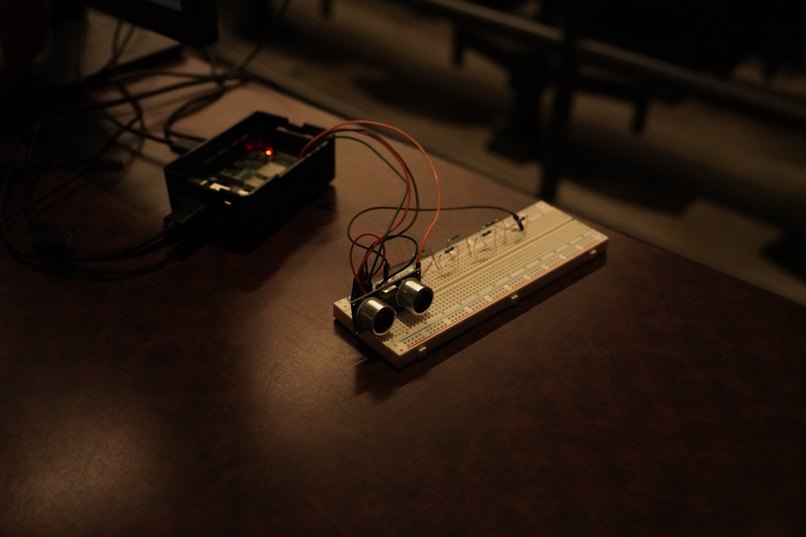
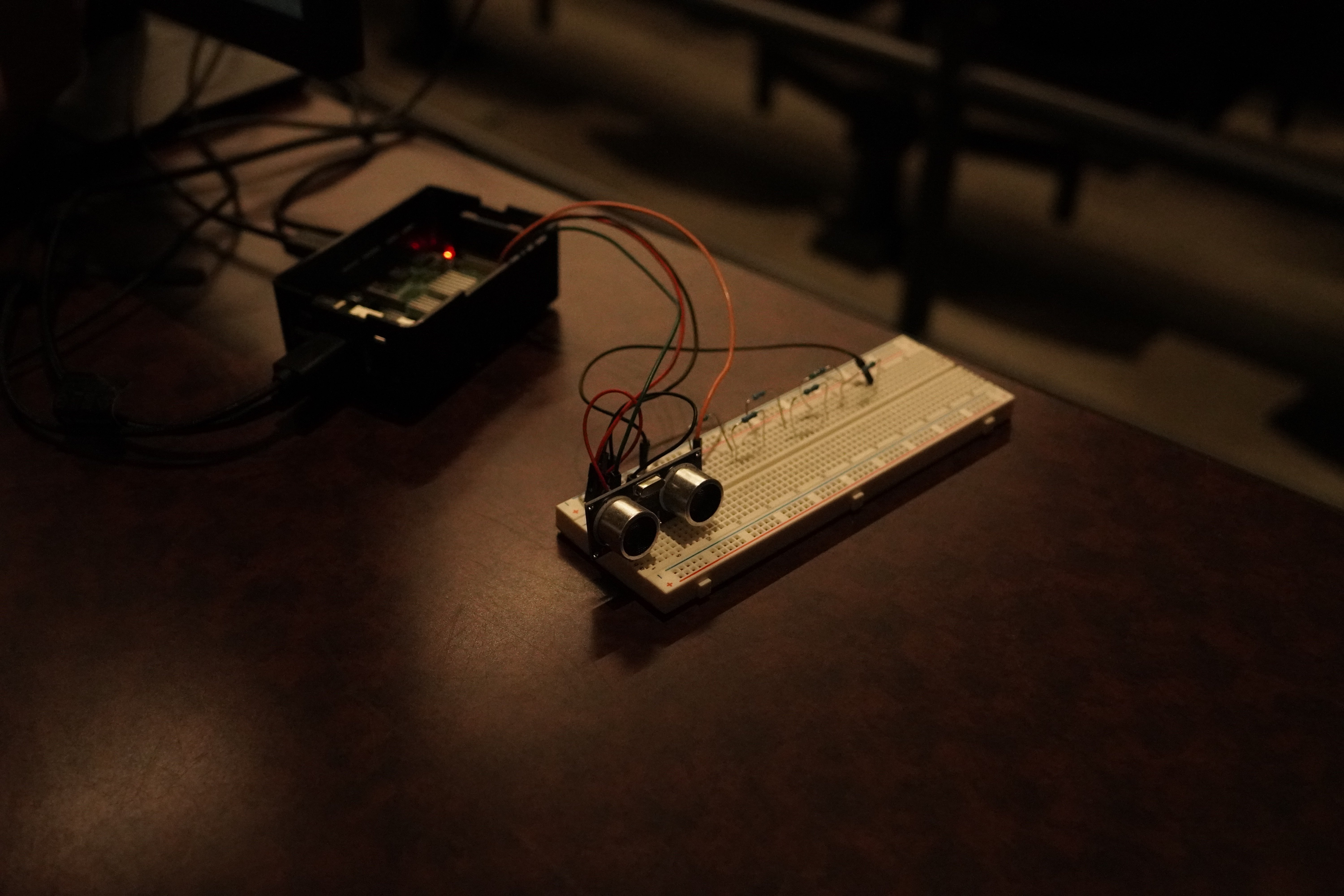
Raspberry pi wired to the sensor
Inspiration
When thinking about ideas for the third prompt, we liked how it was tailored to "general populations". This got us thinking about how the everyday person goes about their usual business in our local university, and how a program could allow them to make a conscious decision to make a sustainable difference in their usual day. With our university as a local example, we realized that elevator usage was something that the average person could avoid by choosing to take the stairs. This was also very scalable to general populations as it works for every building that has an elevator, and the basic idea for the project was born. From here, we decided our project will make the user consciously think about the stairs as an alternative, to possibly make a sustainable difference in their day.
What it does
As someone walks up to the button of an elevator, our project detects them and starts displaying some information on a nearby dormant monitor. Catching their attention, the monitor cycles between some windows telling them facts about the energy consumption of elevator rides, while putting a suggestion on the last window of taking the stairs as an alternative. When finished displaying to the user, the screen goes back to blank and waits to detect another motion in front of the elevator button.
How we built it
Our project first utilizes an ultrasonic sensor to detect motion in front of the elevator. It is wired to a raspberry pi to communicate when it detects that motion, all running using the GPIO library in python scripts on the pi itself. Once the ultrasonic sensor tells the python program that motion has been detected, the pi sends an output to the monitor connected to it. This output is a GUI created with the Tkinter library, which shows the viewer all the information we want to show them. Once the cycle of information is finished being displayed, the program switches to a blank screen. Here waits again for the ultrasonic sensor to say that motion was detected and displays everything again for the next viewer.
Challenges we ran into
Specific challenges we faced were as follows: Coding the calculations of the sensor to only detect people close enough to the elevator button took a good amount of time to become reliable Properly getting the GUI to switch between windows Setting up proper timings of switching the windows of the GUI, and being in a constant loop to run for many viewers
Accomplishments that we're proud of
For this program, there are a number of things we are very happy we figured out and implemented, such as: Using this setup in the real world is applicable as once you set it up, it can essentially run forever and not need much operator maintenance, making it realistic for helping in global populations Using Tkinter for the very first time gave the bulk of the coding challenges, and getting this GUI to fundamentally work the way we first envisioned it to is a great accomplishment for us.
What we learned
We learned many things, one such being how to use Tkinter in our projects effectively. The more problems we faced trying to get the GUI to work, the more we learned about how expansive and powerful the Tkinter library is. We also figured out a lot about using the ultrasonic sensor in python projects, specifically how to get reliable input from it.
What's next for Sustainable Elevator Informant
The biggest thing we would want to improve is the GUI for our project. There are many further ideas to spice it up that we thought of in the design process, but due to the first time using the library and time constraints, we didn’t get to implement all of them. Additionally, an extra touch sensor would help to get user input from the viewer, but we didn’t have an extra sensor capable of doing this.
All in all, we are very happy with the project we were able to produce here at this hackathon. This event gave us a project we are greatly inspired by, and this will fuel our creative minds for all projects we work on in the future!
Built With
- gpio
- python
- raspberry-pi
- tkinter
- ultrasonic-sensor


Log in or sign up for Devpost to join the conversation.