-
-
App icon
-
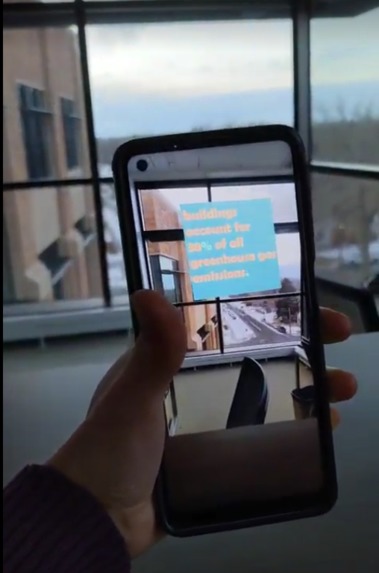
Information about buildings
-
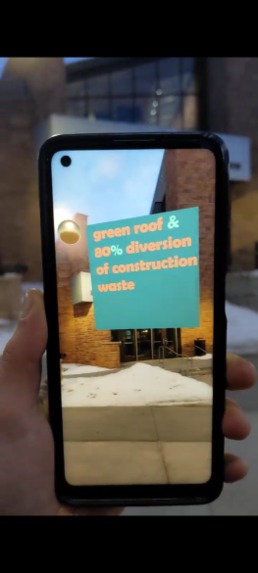
Information about the construction of a specific building + LEED Gold Certification
Inspiration
We are strong advocates for environmental protection policies, and we decided to create an app that reflects these desires. We wanted college students to understand the impact of their own campuses and reflect on the sustainability of their own communities.
What it does
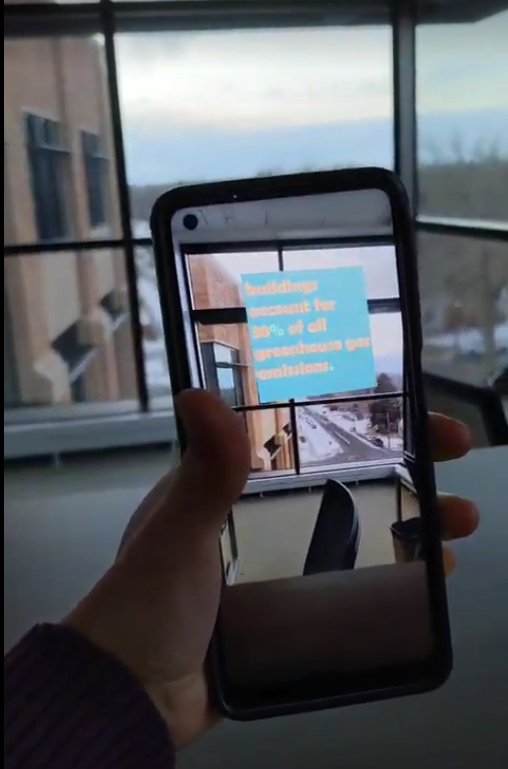
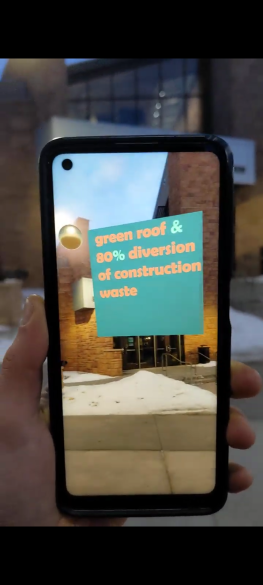
Our app utilizes an AR/VR platform to scan buildings and give relevant sustainability information about each building, including LEED Certification status. For instance, the video shows the Michael B. Enzi STEM building on the University of Wyoming campus, with a LEED Silver status, and the Berry Biodiversity Conservation Center, with a LEED Gold Status. It then displays the information in an easy-to-view format while also informing the user about how eco-friendly it is. If no specific data is available, the user sees a fact about building sustainability in general. The data is then transmitted to a website that geotags the buildings and displays information about how environmentally sustainable the buildings are. In our video, we show this website in use at the University of Florida.
How we built it
We built the AR/VR component of the app using Unity and Vuforia. The website was built using the MERN stack (MongoDB, Express, React, Node).
Challenges we ran into
We were challenged by the integration of the website's backend to the frontend, particularly when interacting with the MongoDB database.
Accomplishments that we're proud of
We're proud of the success that we had with the AR/VR platform especially as we believe it can revolutionize the way we imagine sustainability.
What we learned
We learned so much about mobile app development, and we gained immense knowledge about Unity and Vuforia.
What's next for Carbon
We plan to update the app by using more descriptive data identifiers such as percentage of carbon emitted for significant landmarks.

Log in or sign up for Devpost to join the conversation.