-
-
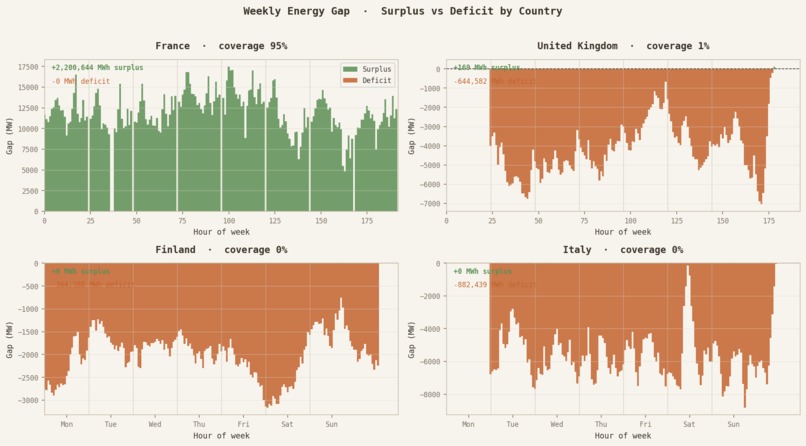
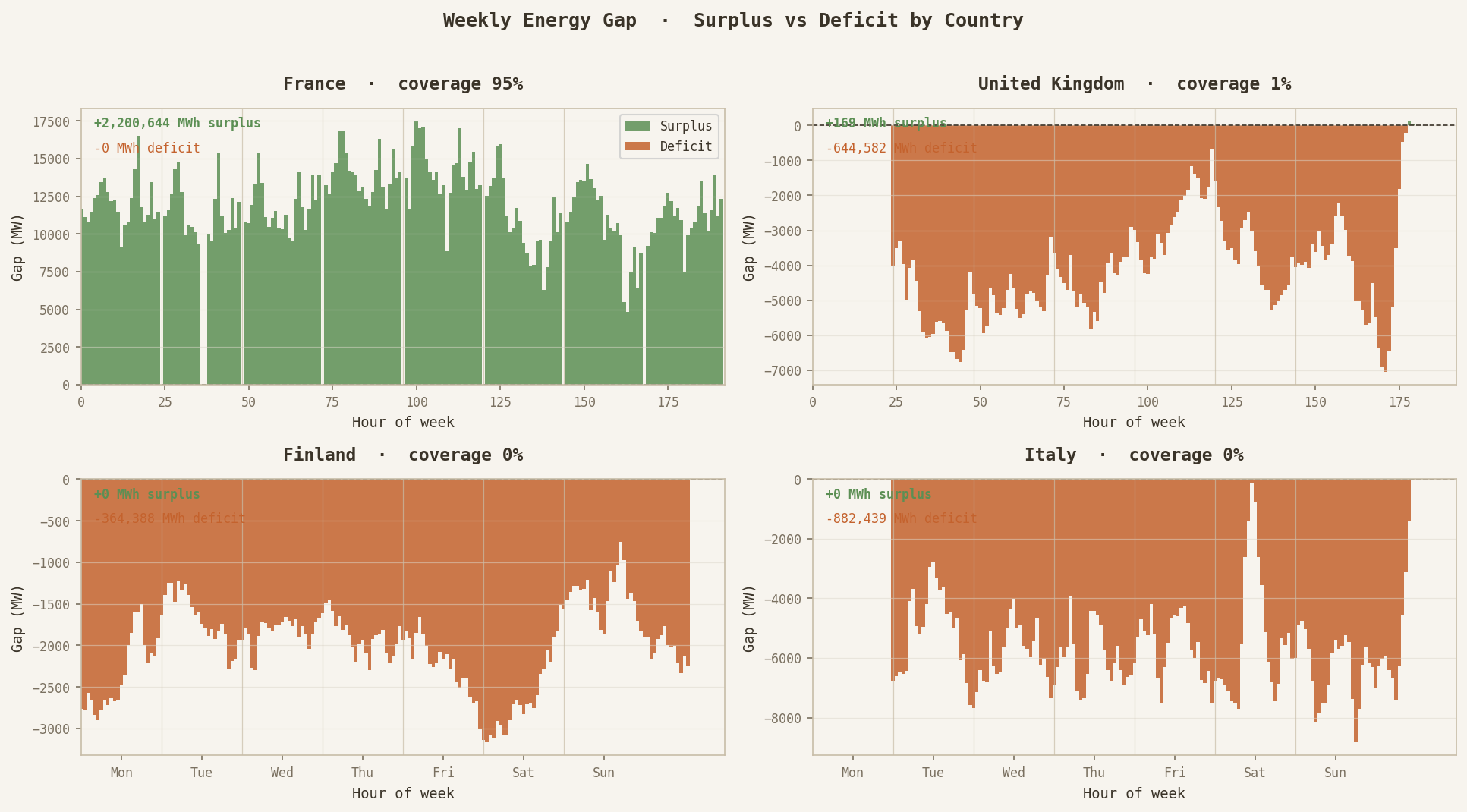
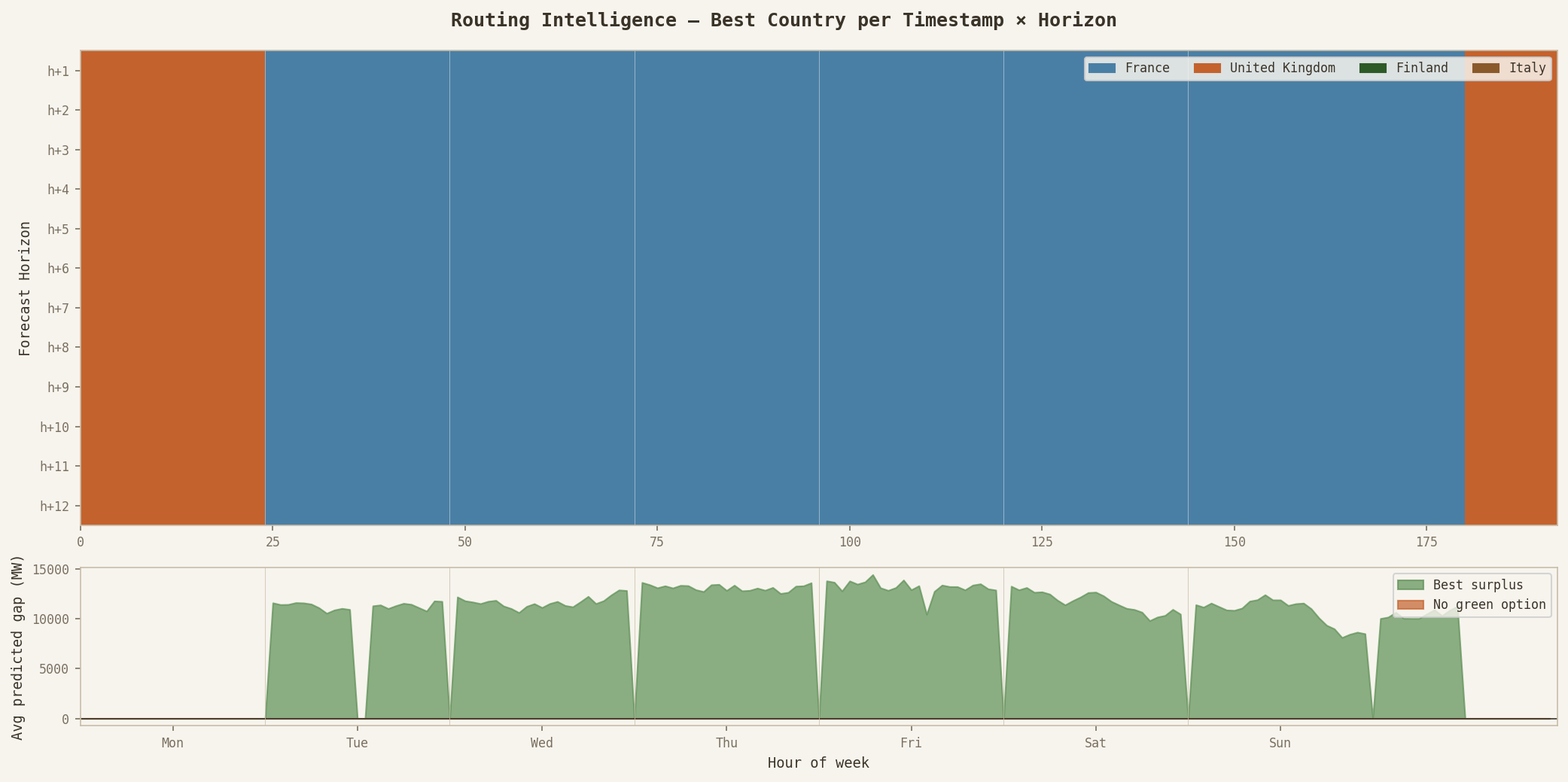
Weekly Energy Gap
-
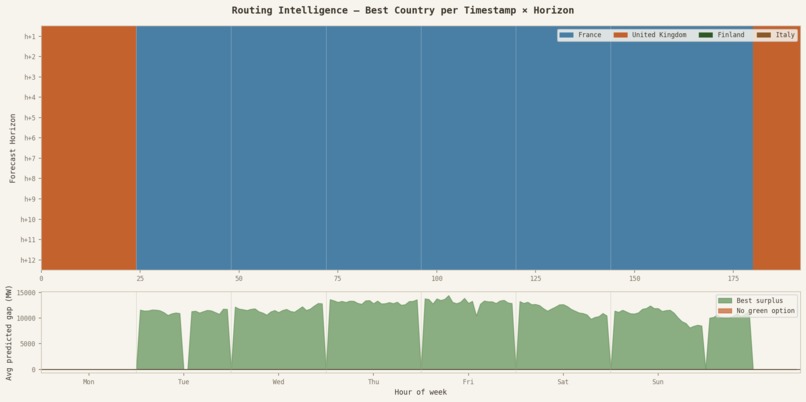
Routing Intelligence
-
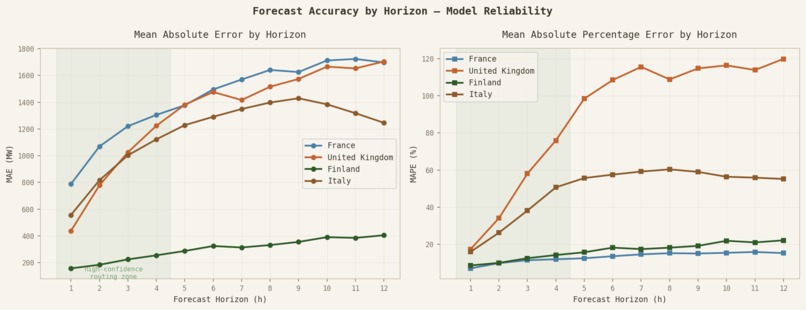
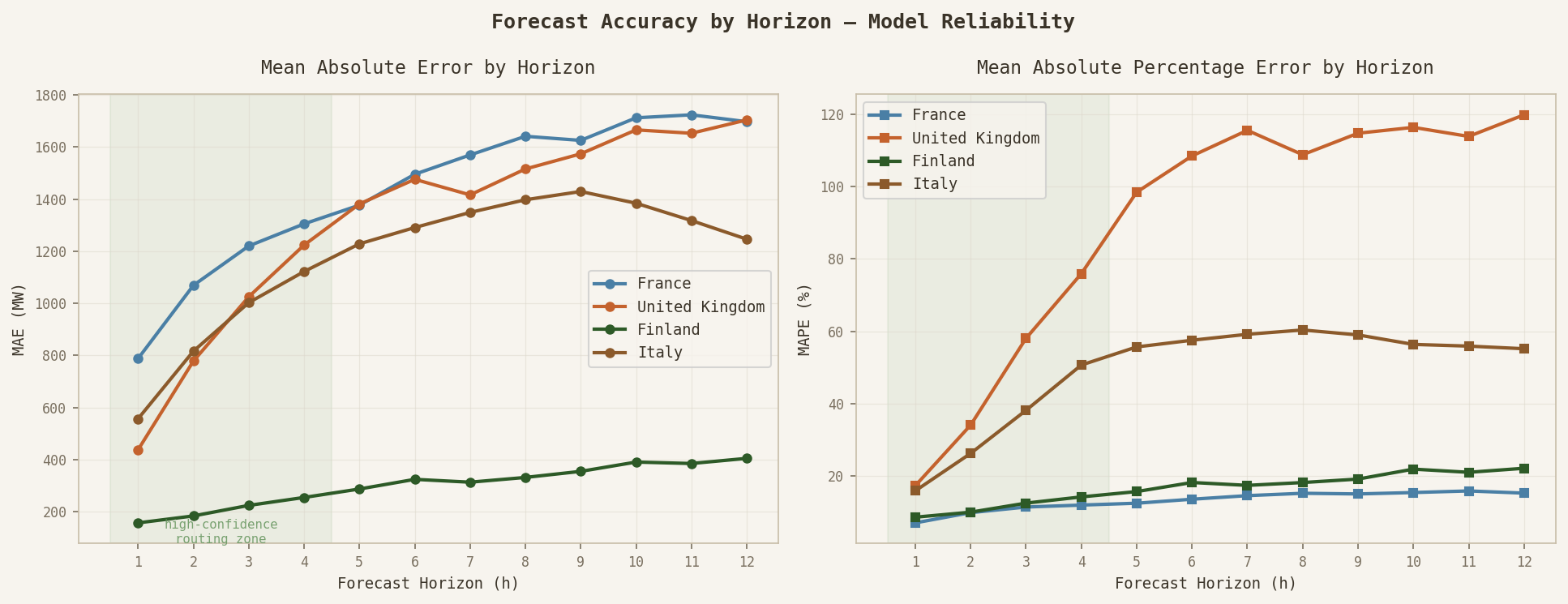
Metrics and KPIs
Inspiration
Hours of painful MLOps and the growing guilt of knowing every GPU training run is quietly destroying the planet. AI compute is expensive, we're talking real dollars and we're broke students. Like most entrepreneurs and SMEs trying to build ML systems, we're cost-sensitive and environmentally conscious, but the tooling rarely reflects that. We wanted to change that.
What it does
A carbon-aware job scheduler for ML workloads. You submit a GitHub link and your scheduling preferences (max wait time, country allow-list), and the platform handles the rest forecasting energy supply-demand gaps across the EU using ML models trained on historical environmental data and live weather signals, then routing your job to the cheapest green window. Carbon monitoring is injected directly into the runtime, and the job deploys automatically on AWS, Azure, or GCP using spot infrastructure to keep costs low.
How We Built It
Multi-layered: Redis queues for job ingestion and enrichment, Claude Code as an AI agent to restructure code and estimate runtime, Railway for ML model orchestration, and Docker for bundling carbon hooks with the compute job. Individual forecasting models (one per country), each with 12h horizon gap predictions in MW.
Challenges
The integration surface was enormous: data engineering, MLOps, signal processing, cloud deployment, microservice orchestration, all in under 24 hours. Sourcing clean energy market data per country was painful. Red Hat OpenShift API integration was particularly rough.
Accomplishments
How far we got in under a day. The backend architecture genuinely reflects the depth of what we know, stitched together under pressure.
What We Learned
OpenShift API, building a multi-region scheduler from scratch, and training separate predictive models per energy grid.
What's Next
Expanding across the EU, building it as an open-source library, and connecting with teams who actually need this.
Built With
- celery
- claude-code-sdk
- code-carbon
- fastapi
- next.js
- open-meteo
- openrouter
- openshift
- postgresql
- python
- pytorch
- railway
- ruby-on-rails
- scikitlearn
- typescript


Log in or sign up for Devpost to join the conversation.