-
-
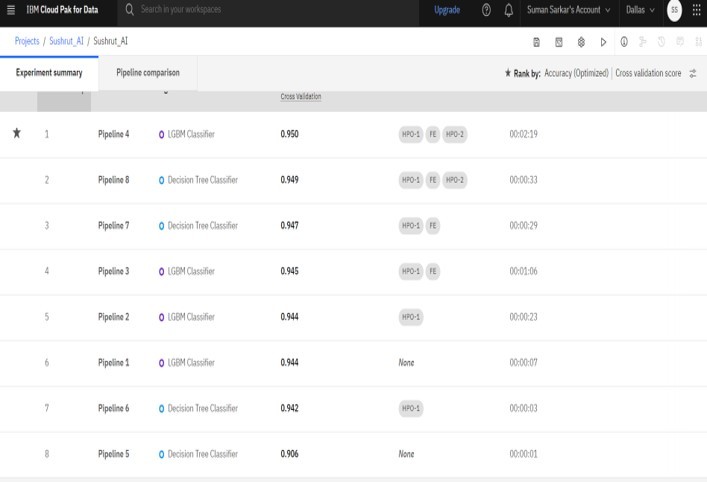
The various classifiers used to train ML model to detect Alzheimers
-
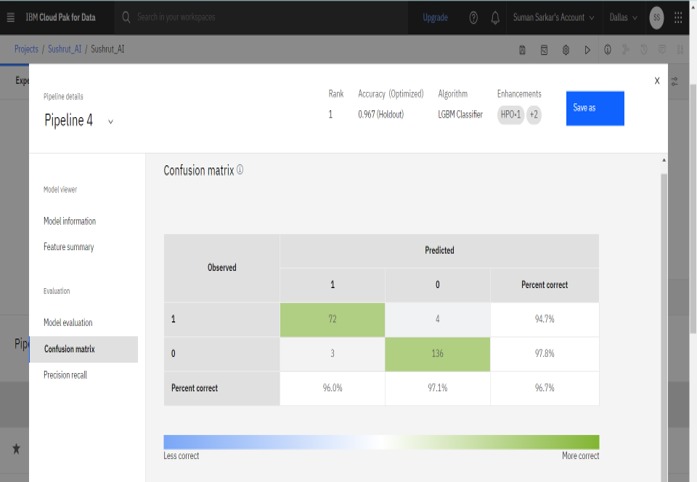
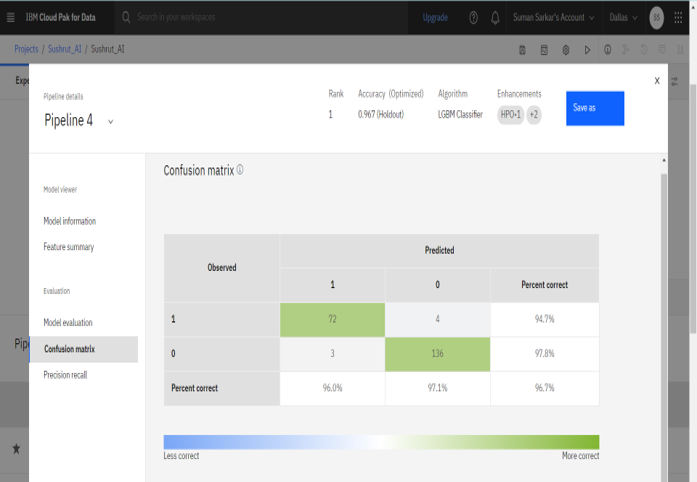
Confusion Matrix for LGBM Classifier
-
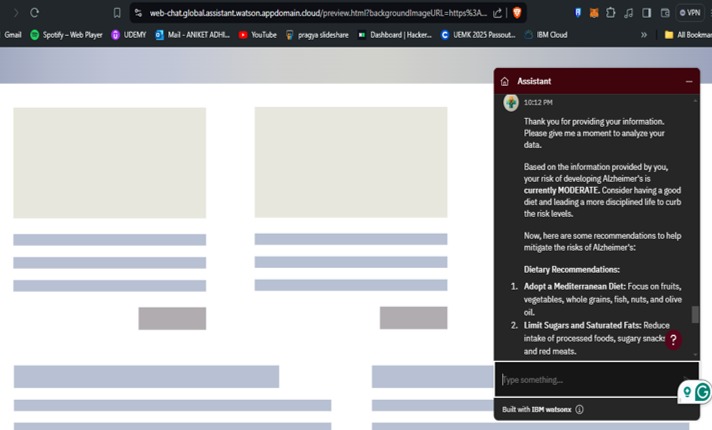
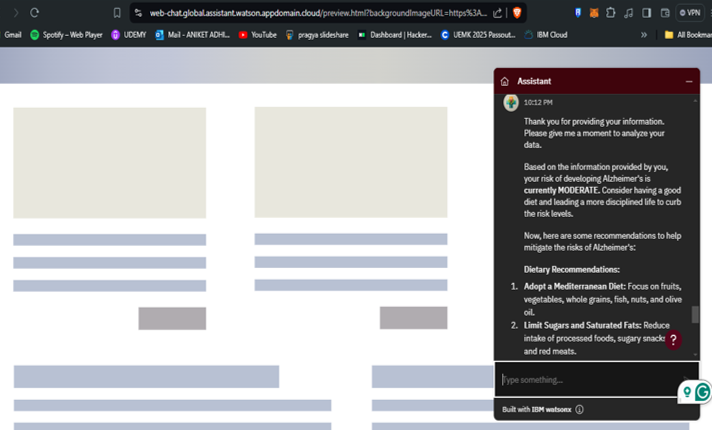
Chatbot for personalised help
Inspiration
Alzheimer's disease is a progressive neurological disorder that leads to memory loss, cognitive decline, and eventually, an inability to carry out simple tasks. As the global population ages, the incidence of Alzheimer’s is expected to rise, making early detection and proactive management crucial. Advances in machine learning (ML) and artificial intelligence (AI) provide opportunities to analyze complex patient data and predict the likelihood of developing Alzheimer's, enabling timely interventions and personalized treatment plans. This project leverages IBM Watson Studio and IBM Watson Assistant to develop a predictive model and a chatbot for personalized recommendations, contributing to the United Nations’ Sustainable Development Goal (SDG) 3: Good Health and Well-being.
What it does
Alzheimer's disease remains a major public health challenge with no known cure. Early diagnosis is difficult due to the subtle and gradual onset of symptoms. Current diagnostic methods often fail to detect the disease in its early stages, resulting in delayed interventions. There is a pressing need for an efficient, scalable solution to predict the likelihood of developing Alzheimer’s disease using available patient data and to provide personalized recommendations for risk mitigation.
Objective
The primary objective of this project is to develop a machine learning model to predict the likelihood of developing Alzheimer's disease based on patient data. Additionally, the project aims to integrate this model with a chatbot to deliver personalized health recommendations, thereby enhancing patient outcomes and quality of life.
How we built it:
Overview
The solution comprises two main components: an ML model for predicting Alzheimer's disease and a chatbot for providing personalized recommendations. The ML model analyzes patient data to identify early biomarkers and risk factors, while the chatbot engages with users to offer tailored health advice based on the model's predictions.
Features
- Data Analysis and Prediction:
- Comprehensive data analysis to identify potential biomarkers and risk factors.
- Predictive model to assess the likelihood of developing Alzheimer's.
- Personalized Recommendations:
- Customized health advice based on individual risk profiles.
- Tips for lifestyle modifications, cognitive exercises, and medical follow-ups.
- User Engagement:
- Interactive chatbot for continuous user engagement.
- Educational resources and reminders for health management.
Technical Implementation
Data Collection and Preprocessing
- Patient data, including demographics, medical history, genetic information, lifestyle factors, and cognitive assessments, was gathered.
- Data cleaning and preprocessing were conducted to address missing values, outliers, and ensure standardization.
- The dataset was sourced from Kaggle, providing a comprehensive collection of relevant patient data.
Feature Engineering
- Key features that may serve as early indicators of Alzheimer's, such as age, genetic markers and cognitive test scores, were identified.
- Additional features were engineered to enhance the predictive power of the model.
Model Development
- Appropriate ML algorithms (e.g., Logistic Regression, Random Forest, Gradient Boosting, Neural Networks) were selected and trained.
- Model performance was evaluated using metrics such as accuracy, precision, recall, F1- score, and ROC-AUC.
- The LGBM classifier from Pipeline 4 was found to be the best model, achieving an accuracy of 96.7%, and hence was utilized in the final model.
Model Deployment
- The trained model was deployed on IBM Watson Studio for scalability.
- APIs were created to facilitate integration with other applications and systems.
Chatbot Integration
- The chatbot was developed using IBM Watson Assistant.
- Integration of the chatbot with the deployed ML model was carried out to provide real- time, personalized recommendations.
Summary of Alzheimer’s Risk Assessment Chatbot:
The Alzheimer’s Risk Assessment Chatbot evaluates an individual's risk of developing Alzheimer's through a structured conversation. It gathers information in four key areas:
- Dietary Habits: Questions about diet, including consumption of balanced diet, junk food and hydration.
- Lifestyle Choices: Inquiries on exercise, mental activities, sleep patterns, and stress management.
- Medical History: Data collection on chronic diseases like diabetes, cardiovascular diseases, and other health conditions.
- Social Metrics: Exploration of social engagement, smoking, and alcohol consumption habits. Based on the responses, the chatbot assesses Alzheimer’s risk and provides personalized recommendations for risk mitigation, promoting better brain health. This structured and user-friendly approach ensures that individuals receive a thorough risk assessment and actionable advice, contributing to better brain health and potentially reducing the risk of Alzheimer’s disease.
Challenges we ran into
Detecting Alzheimer's disease using machine learning involves several challenges, including the acquisition of sufficient and diverse data, the selection of relevant features from complex datasets, and the balancing of accuracy with interpretability in model choice. Validation across different datasets and ensuring ethical data handling are considered crucial, along with the effective integration of models into clinical settings. Collaboration across disciplines, including medicine and data science, and the navigation of regulatory and ethical considerations are required to address these challenges. Overcoming these obstacles successfully can lead to the development of effective tools for early diagnosis and management of Alzheimer's disease, thereby enhancing patient care and outcomes.
Accomplishments that we're proud of
The Alzheimer's Prediction and Personalized Recommendations System demonstrates strong business feasibility due to several factors:
- Market Demand: ○ Increasing prevalence of Alzheimer’s with an aging population. ○ Emphasis on preventive healthcare and early intervention.
- Financial Viability: ○ Reduces long-term healthcare costs through early detection. ○ Scalable solution, reaching many patients without proportional cost increases.
- Competitive Advantage: ○ Utilizes advanced machine learning and AI technologies. ○ Personalized recommendations enhance patient engagement and satisfaction.
- Partnership Opportunities: ○ Potential collaborations with hospitals, clinics, and healthcare organizations. ○ Opportunities to partner with pharmaceutical companies for early-stage interventions.
- Revenue Streams: ○ Subscription model for healthcare providers. ○ Licensing technology to other firms or institutions. ○ Offering anonymized data insights to research institutions.
- Regulatory Compliance: ○ Ensures data security and compliance with regulations like HIPAA. ○ Ongoing clinical validation for reliability and medical acceptance.
What's next for Sushrut_AI
The Alzheimer's Prediction and Personalized Recommendations System addresses a critical societal challenge by offering early detection and personalized care for Alzheimer’s disease. It solves the problem of late diagnosis and lack of tailored interventions, which are common barriers in managing the disease effectively. By predicting the likelihood of Alzheimer’s based on comprehensive patient data and providing personalized recommendations through a chatbot, the model empowers individuals to take proactive steps towards managing their cognitive health. This approach not only improves patient outcomes and quality of life but also reduces healthcare costs associated with advanced-stage care. The model’s integration of advanced machine learning and AI ensures its effectiveness in analyzing complex data patterns, making it well-suited to adapt and scale within diverse healthcare settings, ultimately contributing to better public health outcomes. The integration of IBM Watson Studio and IBM Watson Assistant ensures a robust, scalable, and user-friendly solution that aligns with the Sustainable Development Goal for good health and well-being. Through proactive intervention and personalized care, this project has the potential to significantly impact the management of Alzheimer's disease.


Log in or sign up for Devpost to join the conversation.