-
-
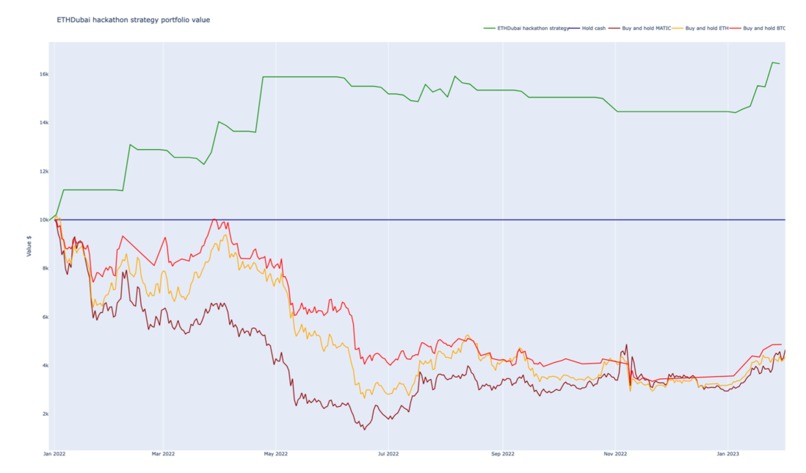
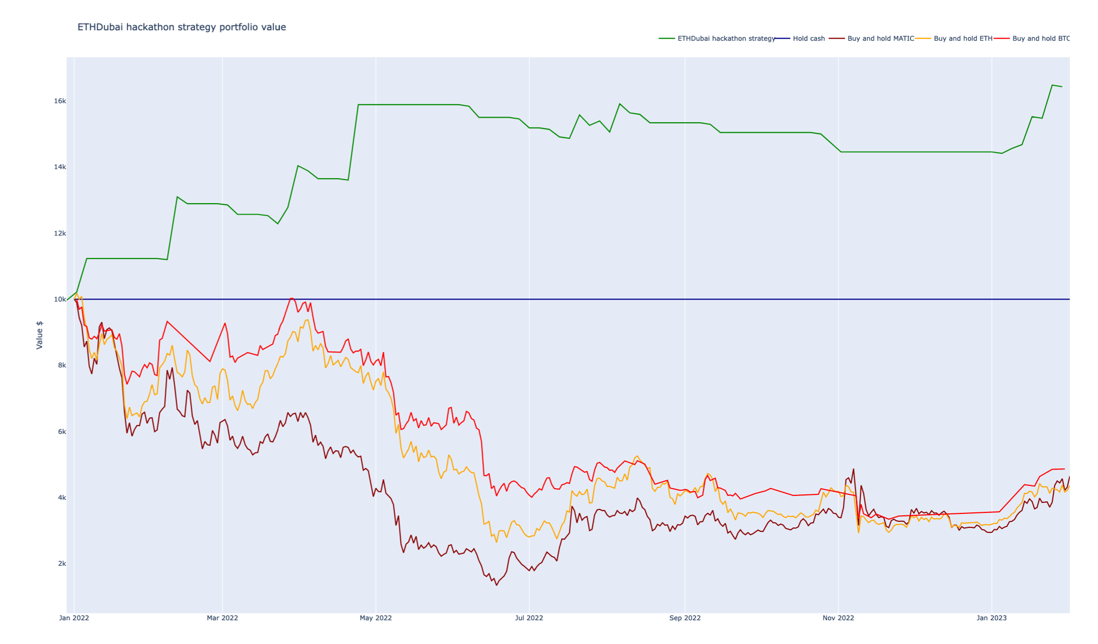
Equity curve of the example trading strategy vs. buy and hold major cryptos
-
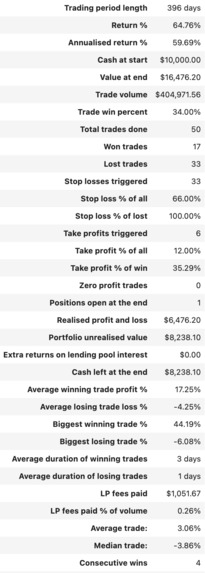
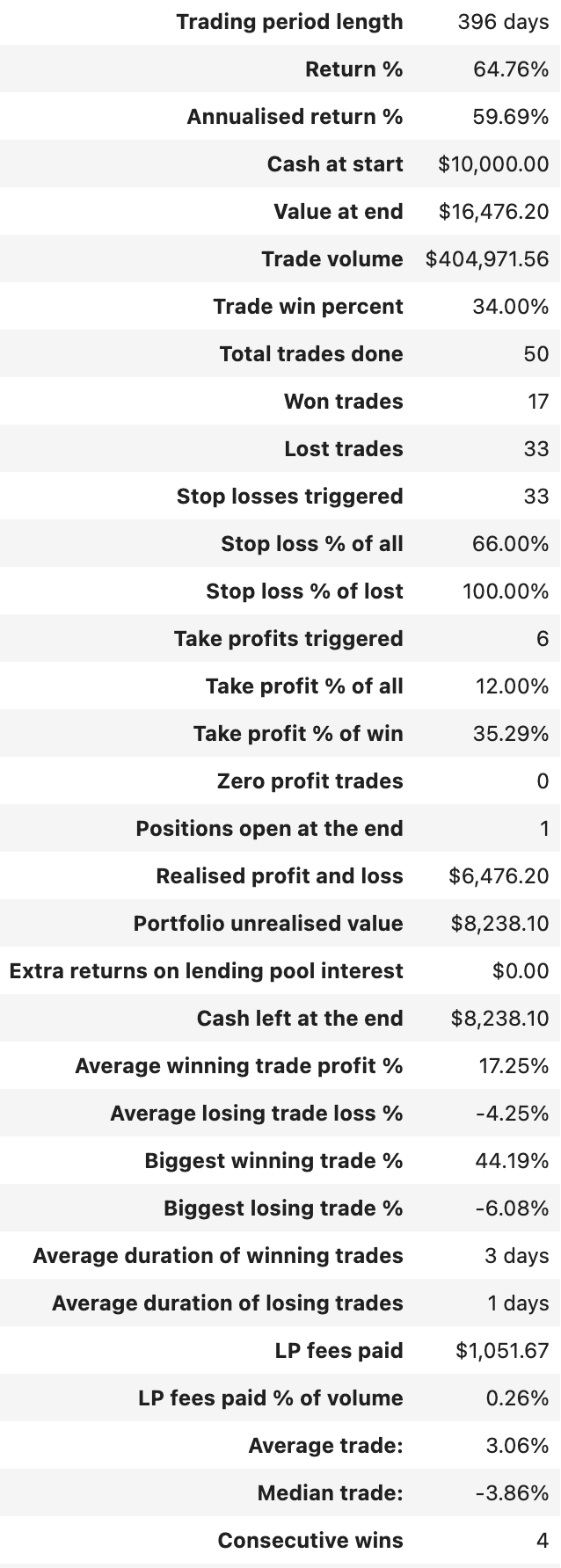
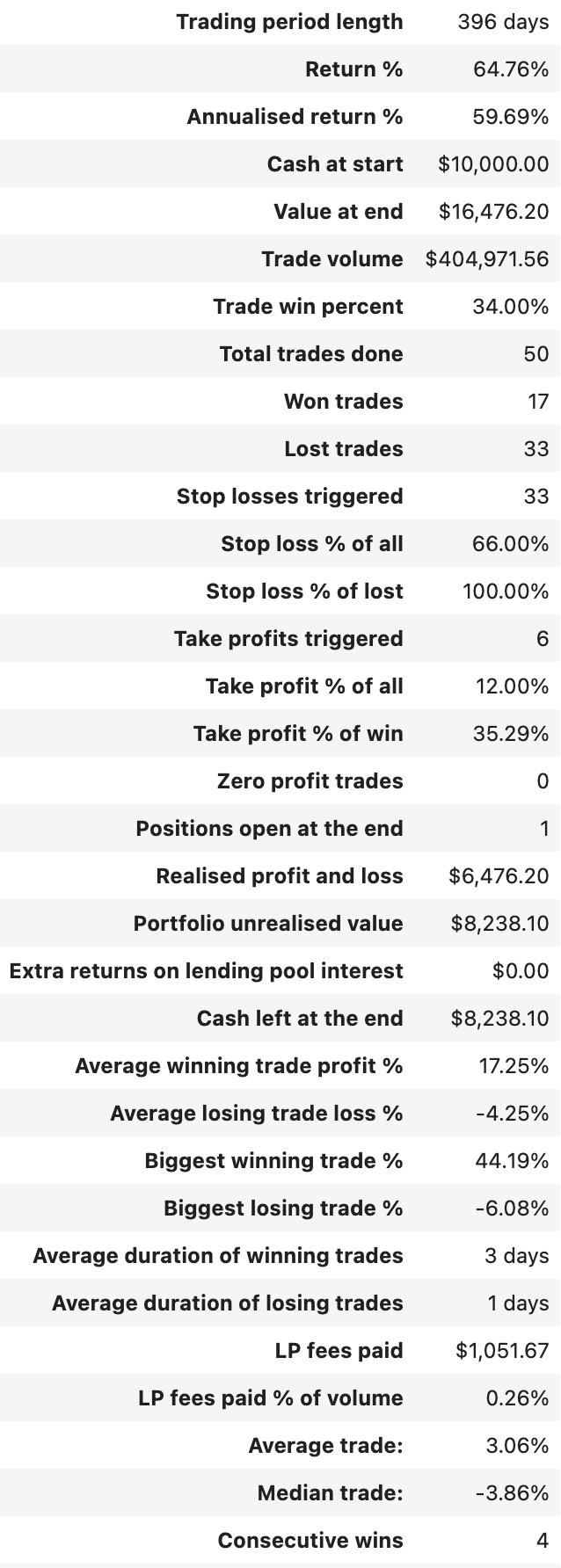
Trading summary statistics showing overall performance and risks of individual trades
-
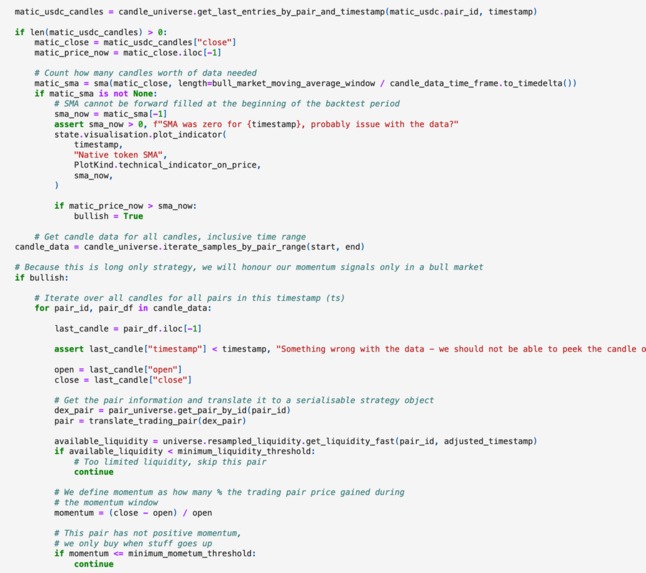
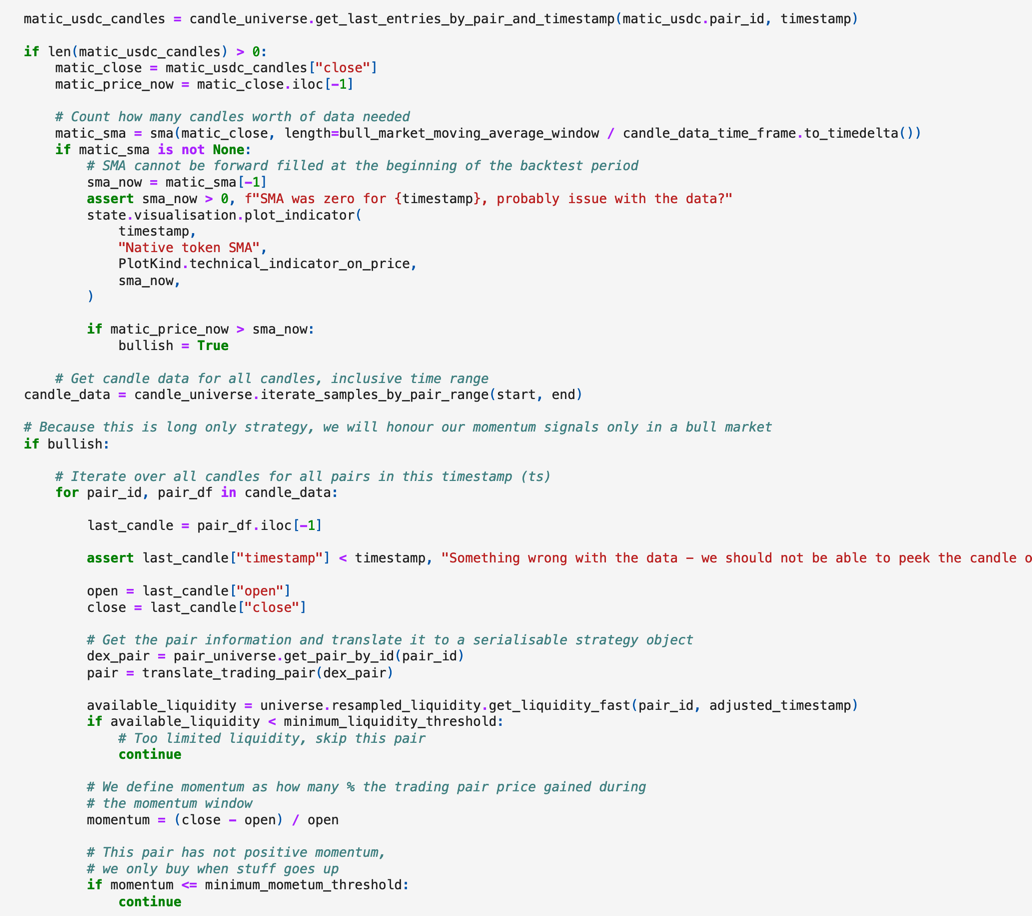
Strategy example Python source code
Inspiration
Trading is the killer application of Web3.
Citade-Sashimi is an algorithmic trading project for Sushi. It is inspired by how Wall Street investment banks do automated trading strategies.
Citade-Sashimi brings professional-grade quant finance trading algorithms and tools for Sushi. Professional algotrades can come to Sushi to trade with their volume instead of going to risky centralised exchange.
DeFi users get high-quality risk automated, easy-to-invest, trading strategies with risk management and profit sharing, making the non-custodial DeFi trading as good as any Wall St. hedge fund. Sushi DEX offers better fees and security than what normal users would get in exchanges like FTX and centralised API services like 3commas.
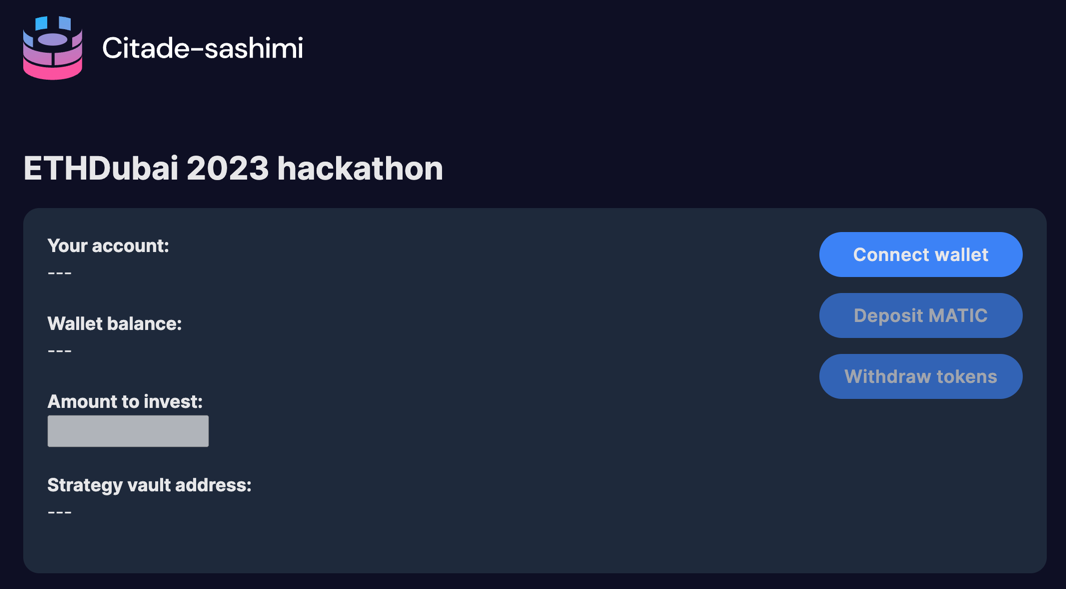
Citade-Sashimi automated trading strategies are available in an easy yield farming-like user experience with Connect wallet, Deposit, and Withdraw buttons. The yields are real based on real trading profits. Trading is a sustainable way to generate yields in DeFi long term, regardless of whether crypto markets go up or down.
What it does
Citade-Sashimi enables Enzyme Protocol based investment vaults that trade on Sushi using Trading Strategy oracles.
- The strategy developers can write and backtest trading strategies using high-level Python-based development framework, similar to TradingView. No Solidity knowledge is needed. The strategies have 150+ technical indicators and 10,000+ Sushi trading pairs available, with historical data.
- The strategy developers can deploy their strategies using Enzyme Finance vaults, making strategies investable to any DeFi user with profit-sharing fee models
- The DeFi user can invest in the strategies using a familiar yield farming user interface directly from their MetaMask using USDC
- The Trading Strategy off-chain oracle network keeps executing algorithms and instructs vaults to make the trades
How we built it
We developed an integration smart contracts which connects Sushi, Enzyme and Trading Strategy. We also created a strategy development and backtesting environment for Sushi based on Jupyter Python notebooks.
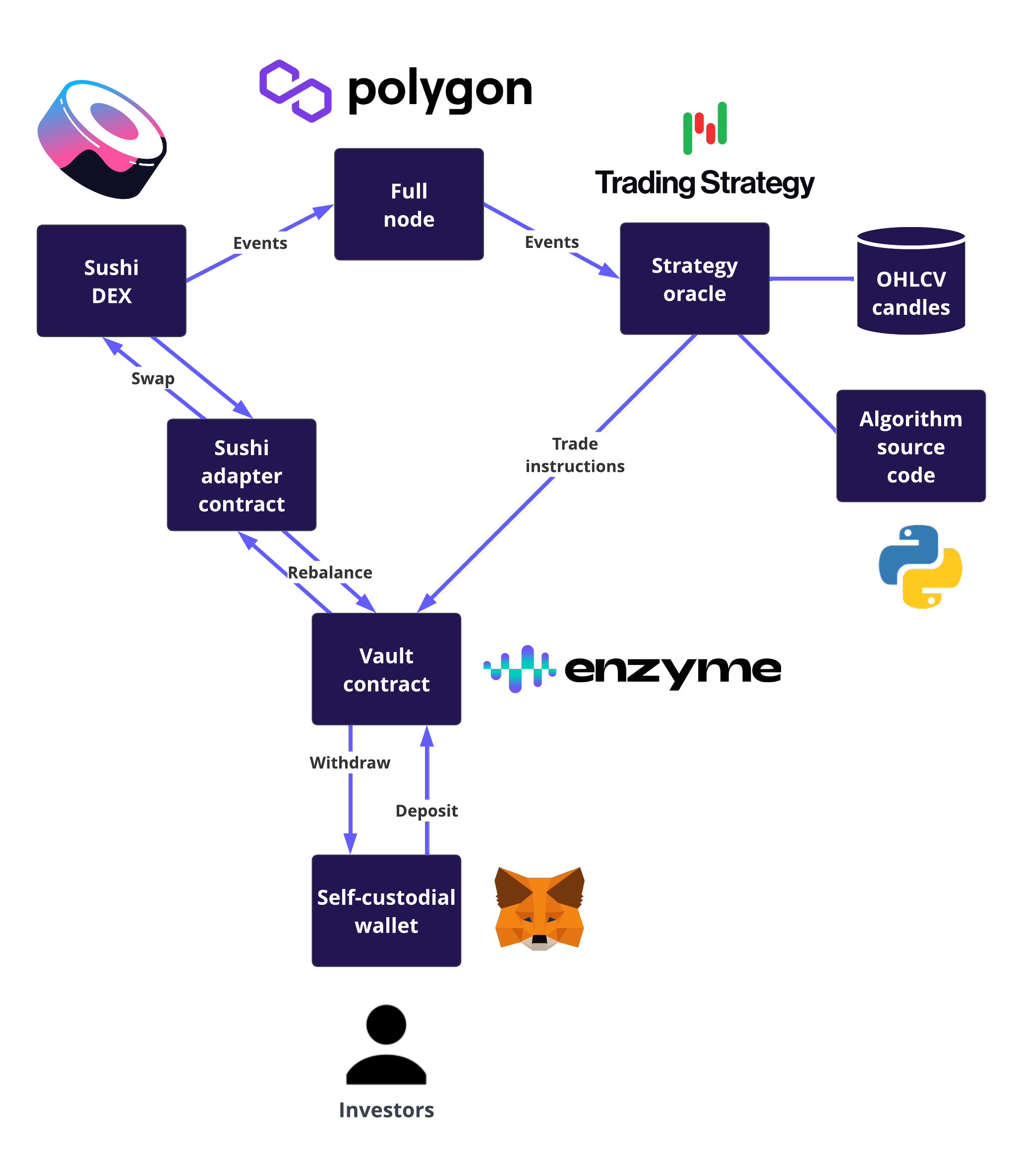
We integrate and deploy:
- Polygon blockchain for the underlying chain
- Sushi DEX for the trading venue
- Enzyme Finance vaults smart contracts for managing strategy portfolio, investor shares and profit sharing
- Trading Strategy oracle for market data feeds, strategy development and backtesting
- Sushi adapter smart contract is written in Solidity that integers Sushi, Enzyme and Trading Strategy
- Foundry for smart contract development
- MetaMask as a self-custodial wallet solution
- SvelteKit frontend for the website
You can find our smart contracts deployed on Polygon mainnet
Challenges we ran into
- Integrating multiple DeFi protocols is complicated because all protocols use different Solidity versions
- The standard interfaces for vaults are still too early, although there are promising future EIPs
- The standard interface for DEXes is missing, making us write our integration smart contracts - this would mean hundreds of smart contracts to cover a few DeFi protocols
Accomplishments that we're proud of
The example strategy we provide gives DeFi users good risk-adjusted returns. The automated trading solution is a better option for most DeFi traders, as automated 24/7 solutions outperform most ordinary traders by a far margin. We believe having automated risk-managed tools through automated trading strategies is what we offer is the key to better DeFi.
- We show that with tight risk controls and good DEX fees, automated trading strategies can fly
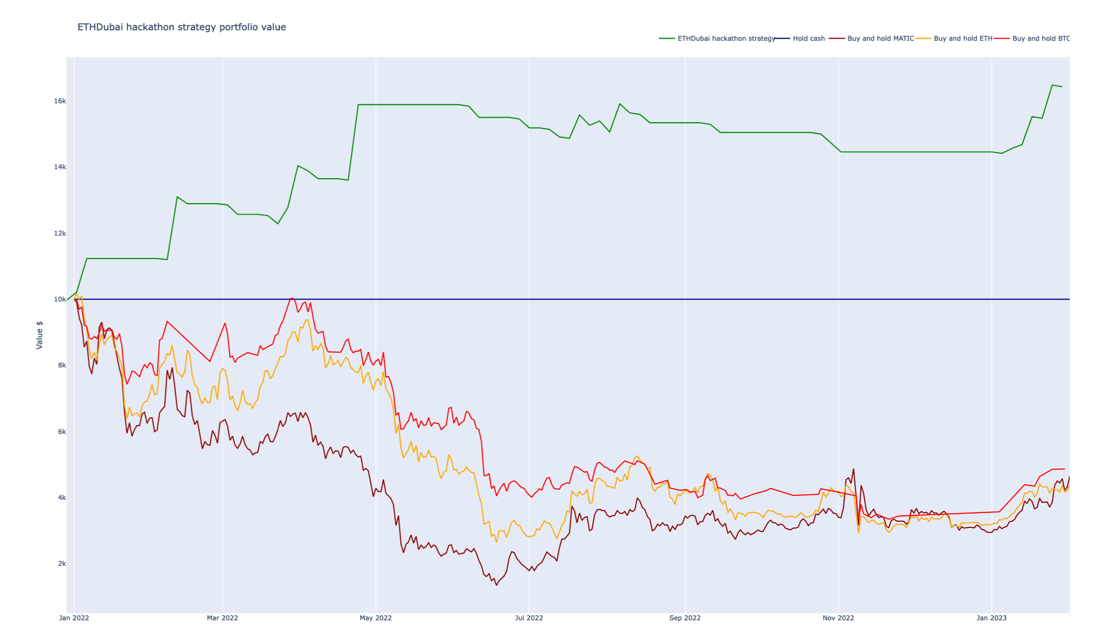
- Our example portfolio construction strategy for Sushi gives annualised 60% return
- Maximum pullback 10%, maximum capital at risk per position 2.5%
The equity curve of the example strategy (vs. buy and hold BTC, ETH, MATIC). We show that the dips are much lower with tight stop loss:
Trading statistics of the example strategy. We show what kind of expected wins and losses individual trades may have:
What we learned
- Sushi offers a robust set of DEX technologies on multiple chains, competitive with centralised exchanges
- Polygon transaction fees are good enough even for small trades
- Foundry is a very good SDK for building smart contracts
- PolygonScan contract verification is annoyingly buggy -we wish there would be a decentralised and open-source contract verification service
What's next for Sushi portfolio optimiser DeFi trading strategy
We hope to launch live trading strategy vaults in partnerships with Enzyme and Sushi.
Further questions
Built With
- enzyme
- foundry
- metamask
- polygon
- python
- sushi
- svelte


Log in or sign up for Devpost to join the conversation.