Inspiration
Many cooking games turn the shop into a business, and the part that takes years to learn is left out. A sushi chef's training is in the hands: how the knife is drawn, how much rice the hand brings up, how a piece is pressed and turned in a few beats. Hand tracking lets you practice those motions, so I built a craftsman-training game. There is no money in it, on purpose.
What it does
Play: https://sushi-vr.vercel.app (open in the Meta Quest browser)
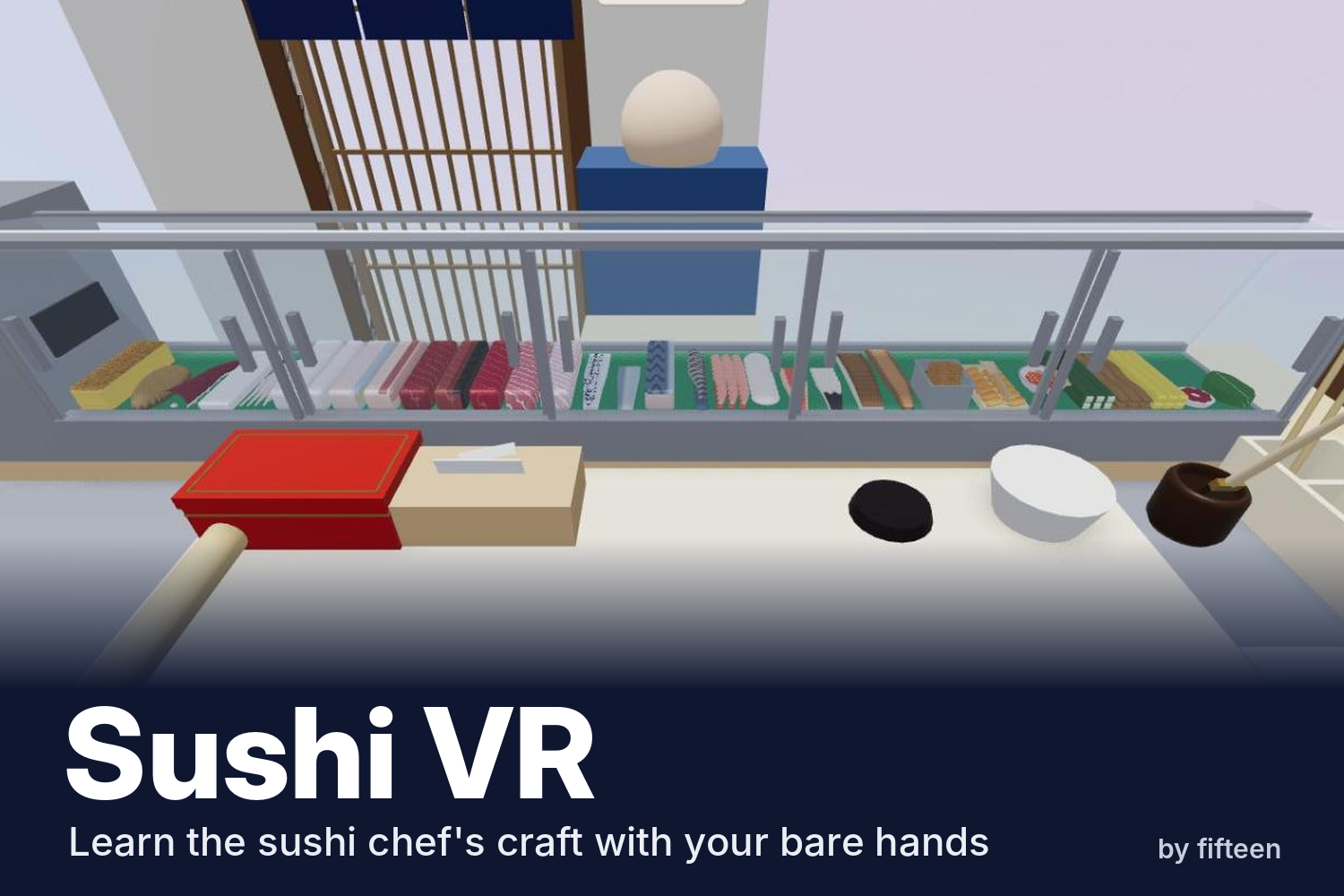
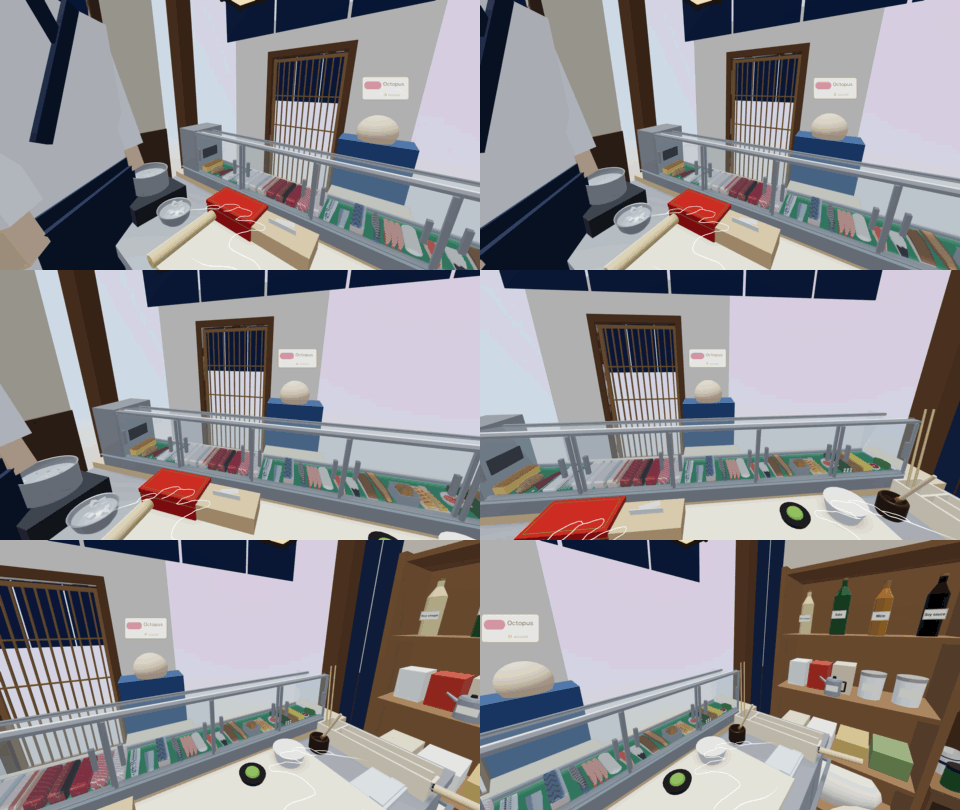
You sit behind the counter of a small sushi bar and work with your bare hands, from the first step to the last. No controllers.
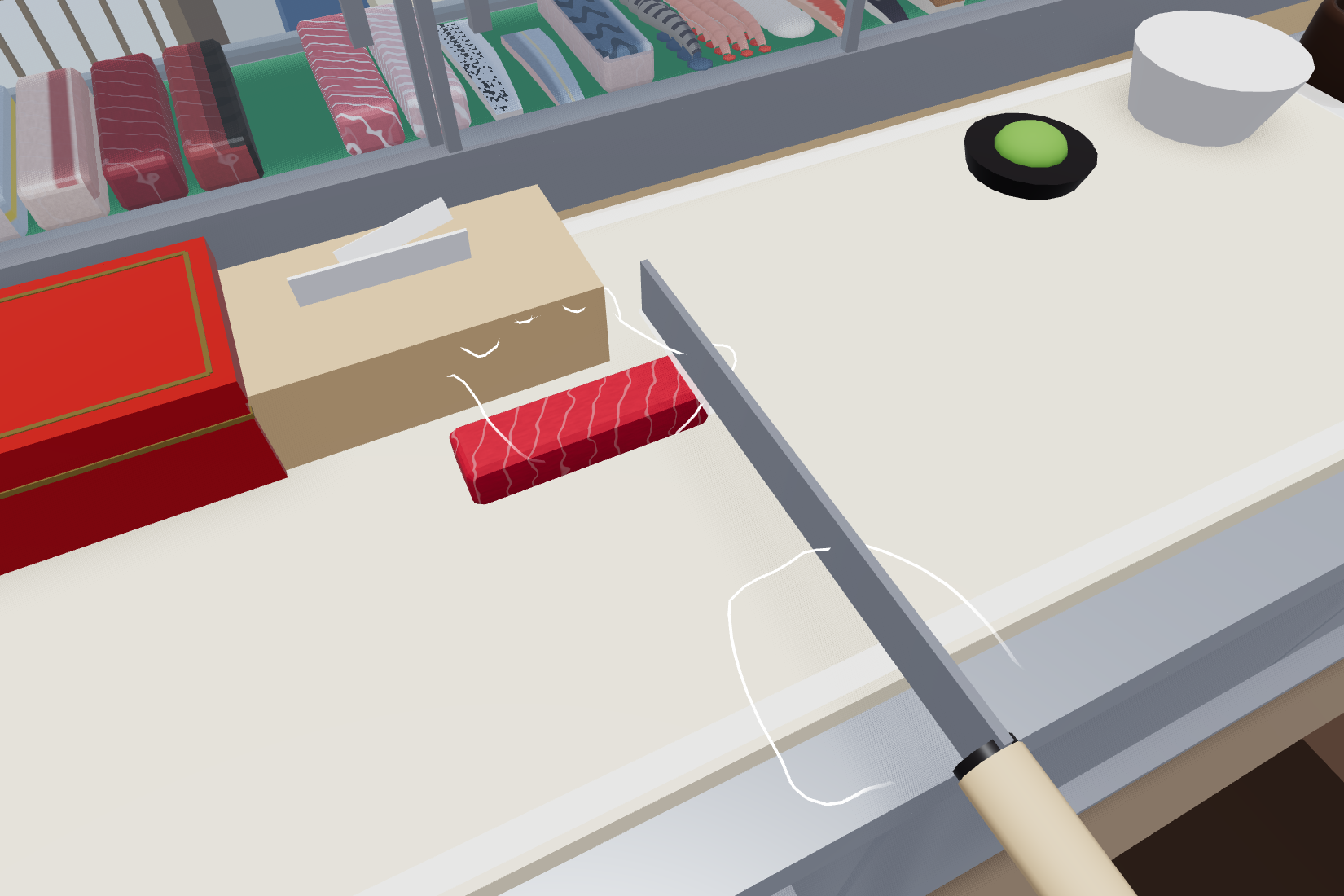
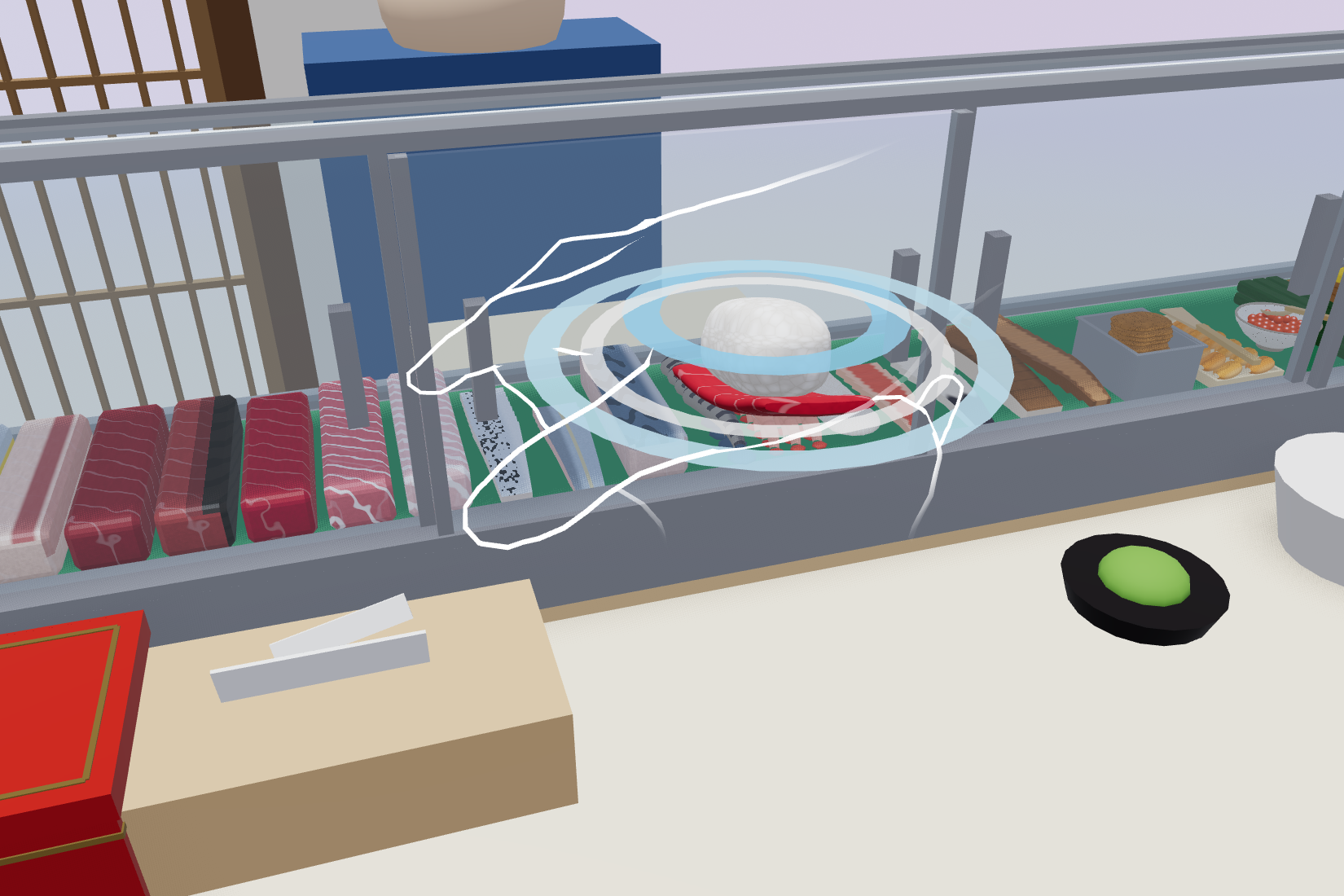
A customer orders. You take the fish from the case, cut one slice and wipe the blade. You dip your fingers in vinegar water, take the rice, add wasabi if it was ordered, bring your palms together, and shape the piece in three touches on the beat. Then you set it in front of the customer and serve.
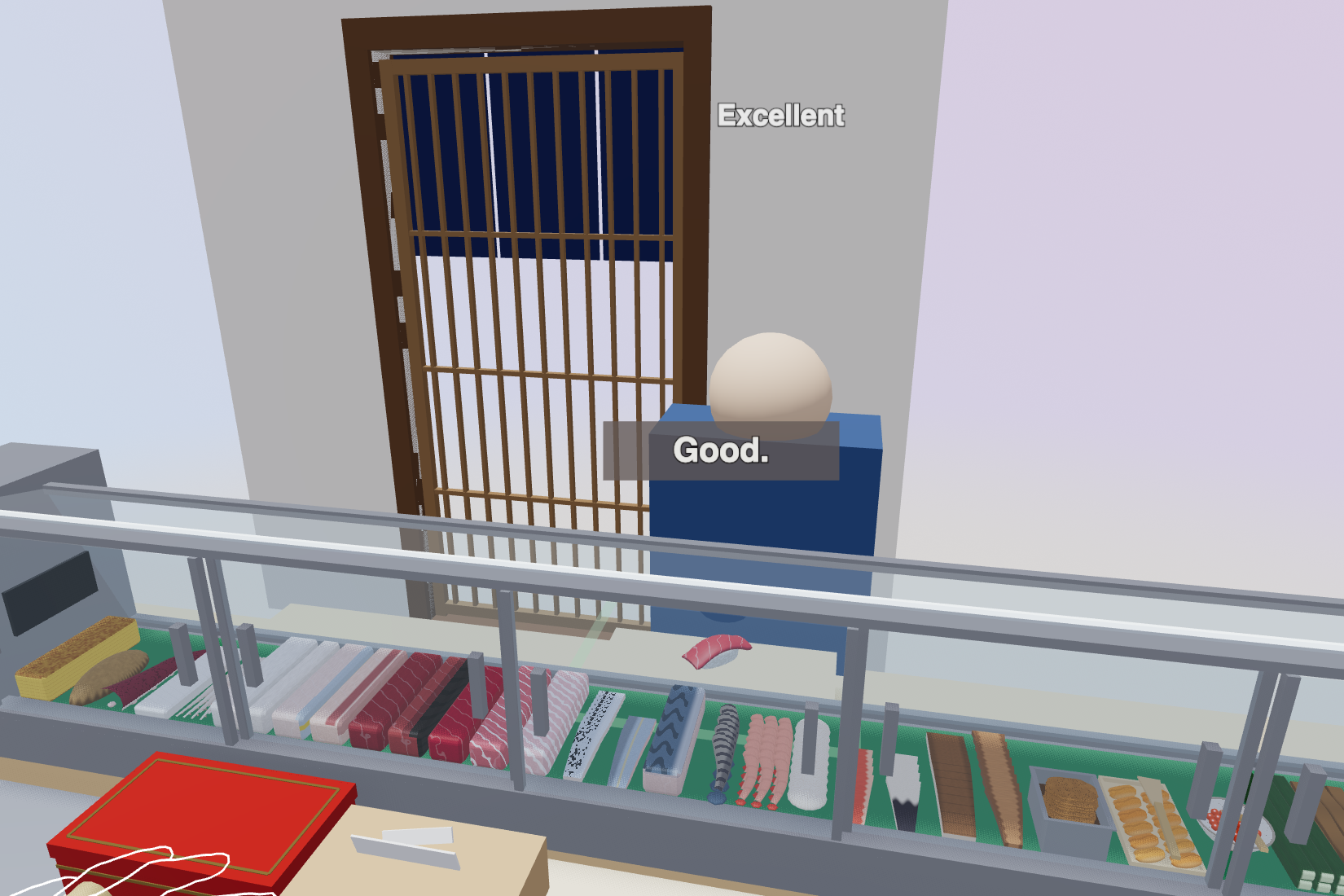
Every piece is graded Excellent, Good, Poor or Bad on rhythm, the right topping, wasabi, orientation, freshness and hygiene. If the customer is left-handed, the piece faces the other way. A master stands beside you. He says the next step in two or three words, and if you hesitate, he shows the motion with see-through hands.
There are three ways to play:
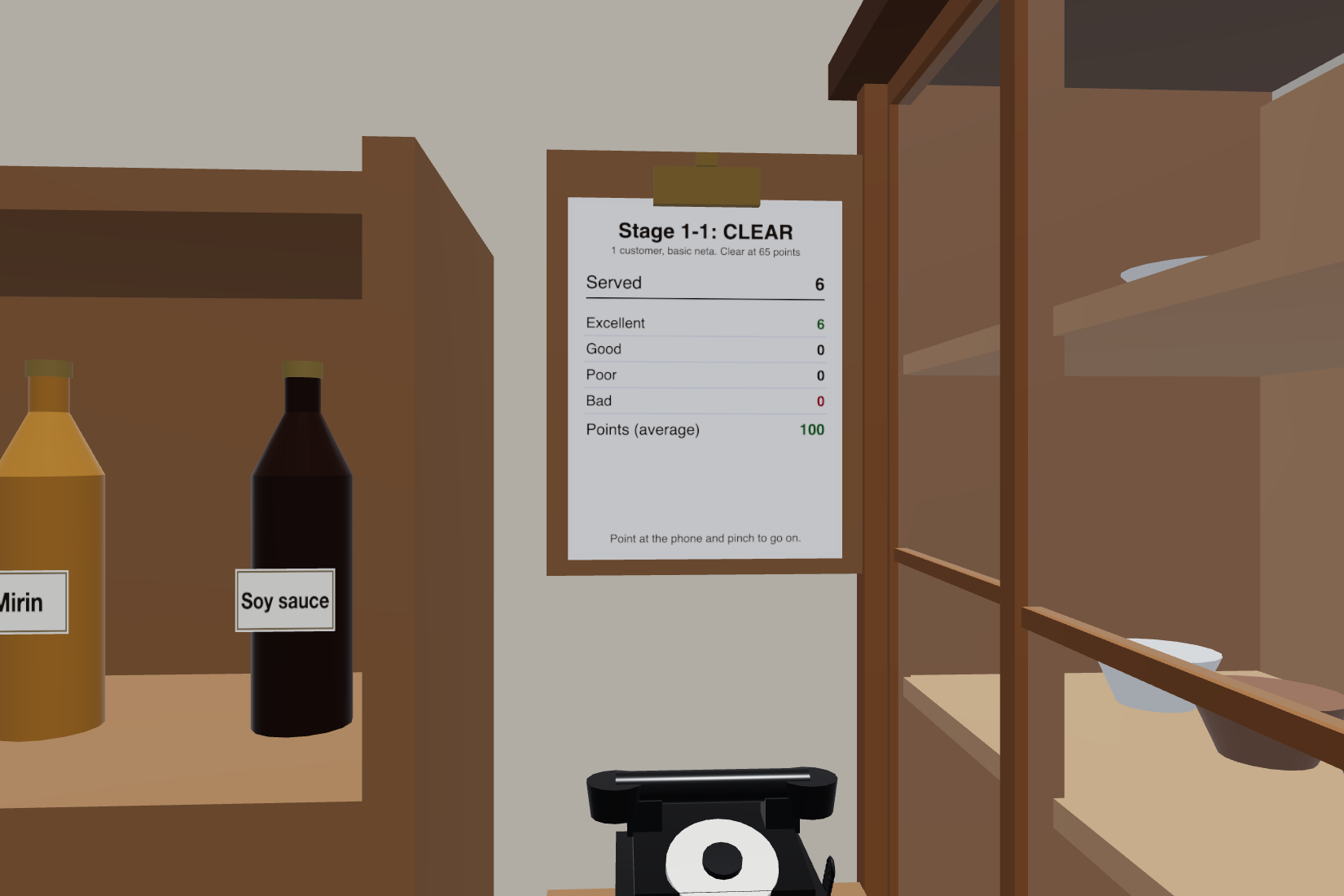
- Nigiri stages (start here): wash your hands and the customer is already seated and ordering. Three worlds of four stages, 12 in all; the world number is the number of customers. The menu grows the same way in every world: stage 1 has six items, including lean tuna, squid and tamago; stage 2 adds fatty tuna, flounder, sweet shrimp and more; stage 3 adds cured fish, shellfish, gunkan and inari; stage 4 has everything, including rolls, anago, simmered clam and prawns. An average of 65 points clears a stage and opens the next.
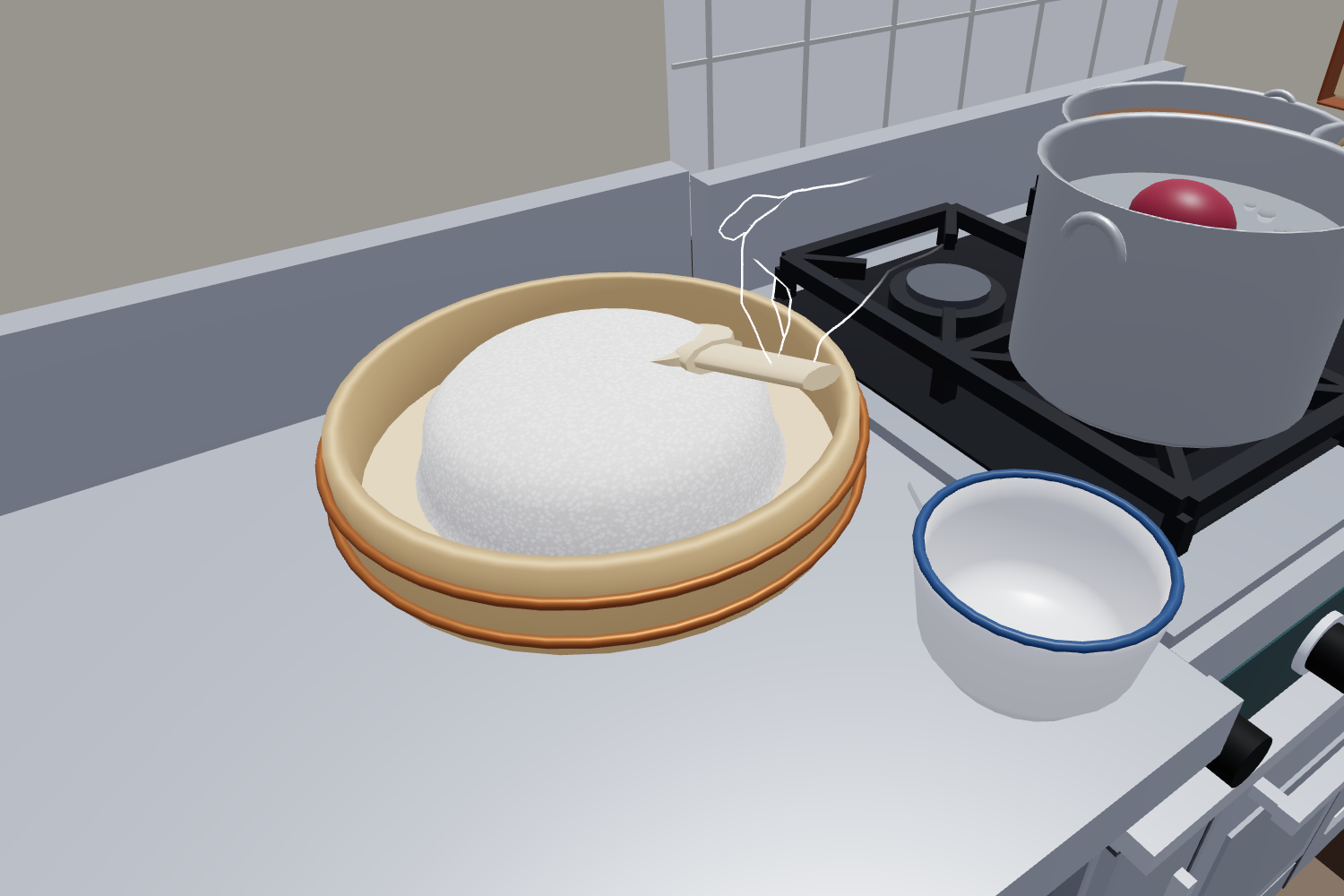
- Prep stages: eight stages that teach the morning's prep one step at a time, before you run a whole day.
- A day in the shop: the morning prep (cooking and seasoning the rice, filleting fish, curing with salt and vinegar, simmering) through service to closing.
When a stage or a day ends, point at the shop phone and pinch to go to the next stage, try again, or start the next day. The game pauses when the headset menu opens or the headset is taken off, and continues where it stopped, with whatever was in your hands.
How I built it
Sushi VR is a WebXR app built with IWSDK, Meta's Immersive Web SDK, in TypeScript. It runs in the Quest browser from a URL. Every 3D model is made in code. There are no external models, images, audio files or fonts, and the sounds are synthesized.
The steps follow real sushi-shop practice: which hand takes what, the order of the work, when to wash your hands, and how a piece is placed for a left-handed guest.
Challenges
- Turning a craft into rules a game can judge, one piece at a time, without making it a business sim.
- Designing every step for seated play with hands only.
- Making everything in code, with no outside assets.
- I did not have a headset during development. The game was built and checked only in IWSDK's desktop emulator, and it has not yet been tested on a Quest.
What I'm proud of
A full nigiri, from order to serve, is made with hand motions that follow the real ones.
What I learned
A craft can be the whole game. Taking money out made the design clearer: every rule that is left is about the work.
What's next
- Testing and tuning on a Meta Quest headset
- The same counter, other crafts: a ramen shop and a food stall (yatai) version on the same hands-first base
- Training for the food industry: a version that restaurants and cooking schools can use to teach new staff the order of the work and kitchen hygiene
- Partnerships and licensing, to bring this kind of hands-on training to more kitchens and platforms
Target launch on the Meta VR Store: [ここに予定時期]
Built With
- hand-tracking
- iwsdk
- meta-quest
- three.js
- typescript
- vercel
- webxr

