Inspiration
Modern power grids are becoming increasingly vulnerable to extreme solar weather, renewable-energy fluctuations, and sudden load changes. Geomagnetic disturbances caused by coronal mass ejections can induce Geomagnetically Induced Currents (GICs) in high-voltage transmission networks, potentially saturating transformer cores, creating dangerous thermal stress, and causing catastrophic equipment failure. We were inspired by the idea that instead of waiting for SCADA systems to report damage after it happens, we could use physics-informed AI to predict the threat early enough for operators to take preventive action.
What it does
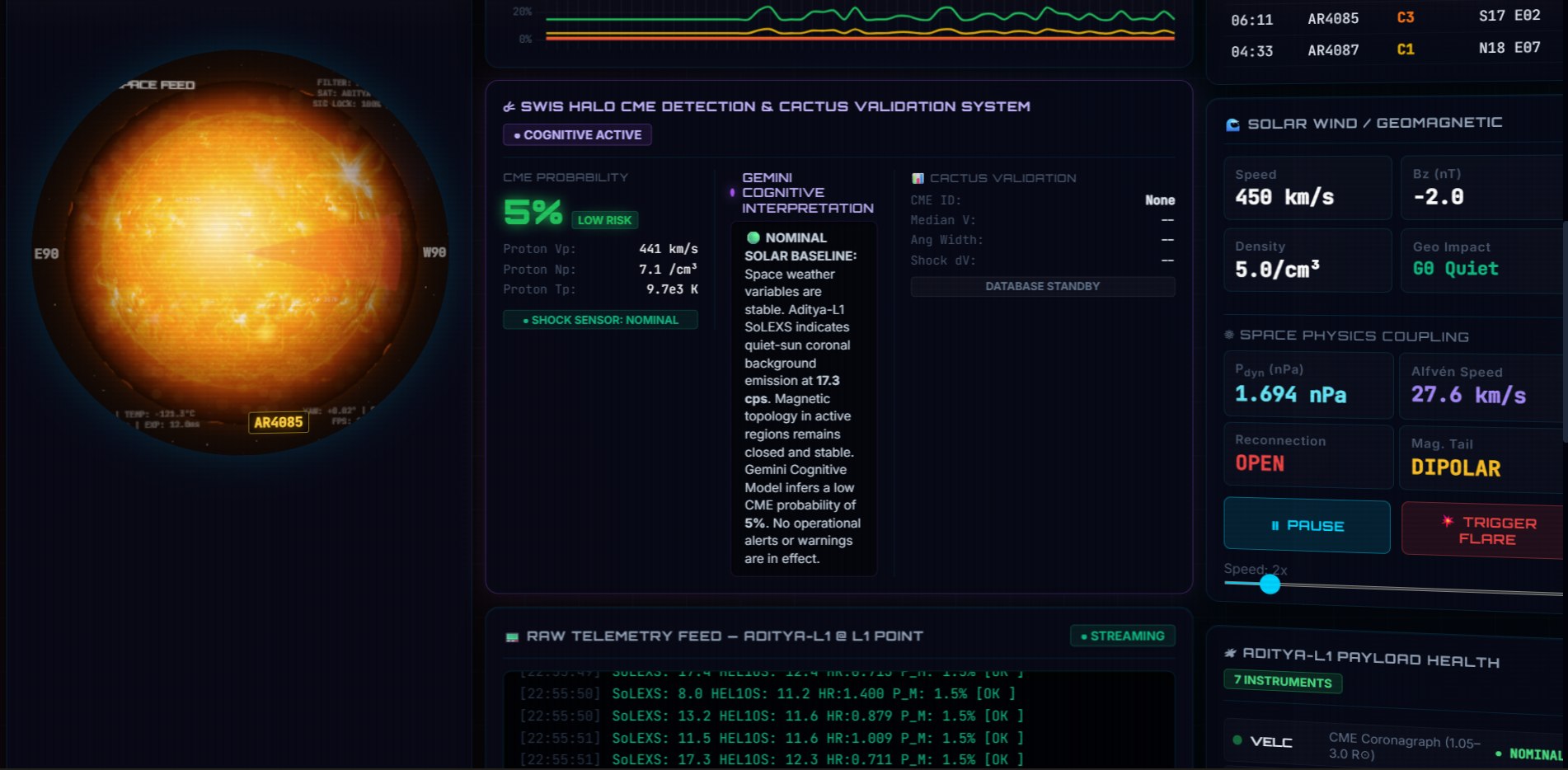
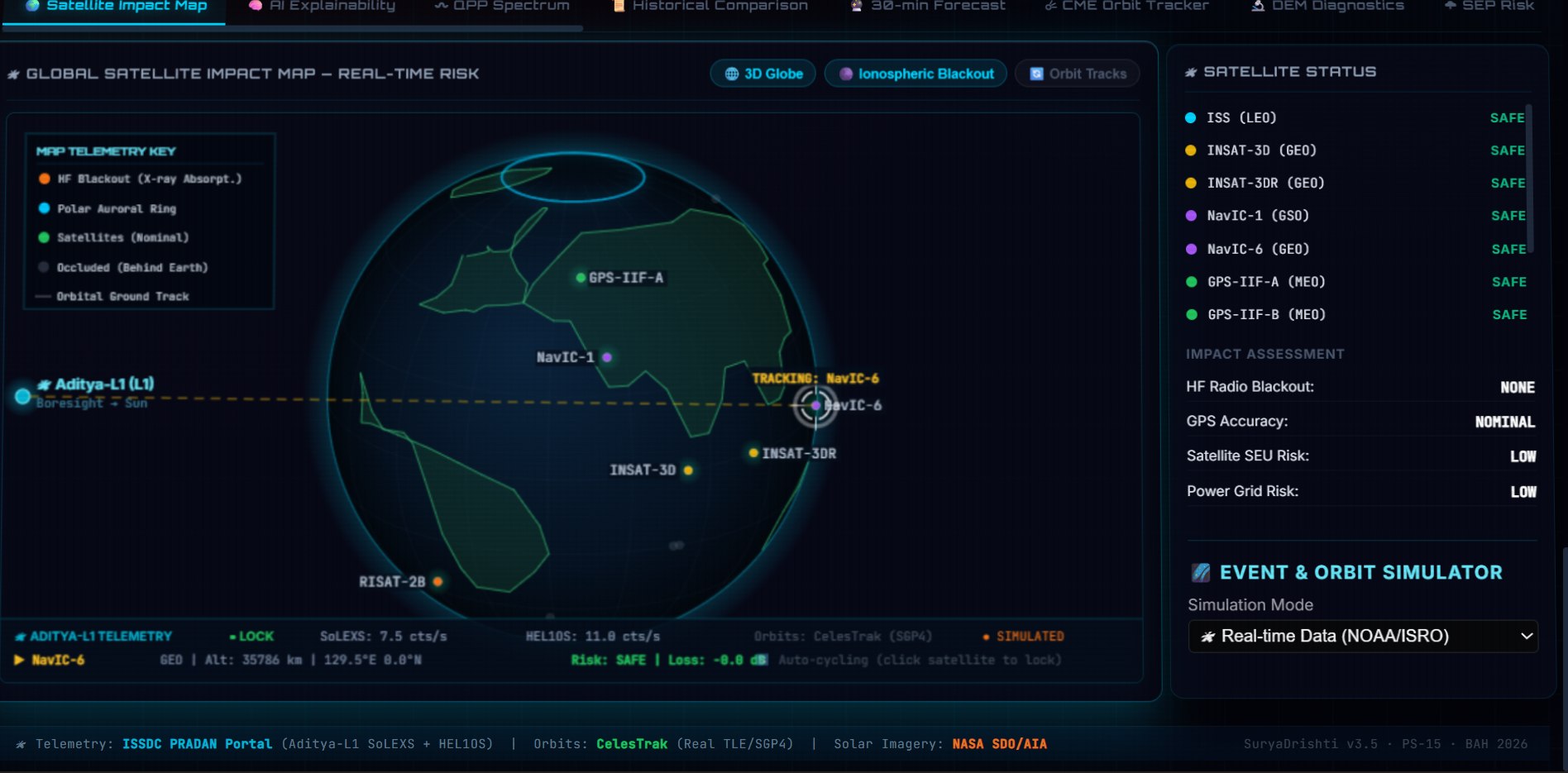
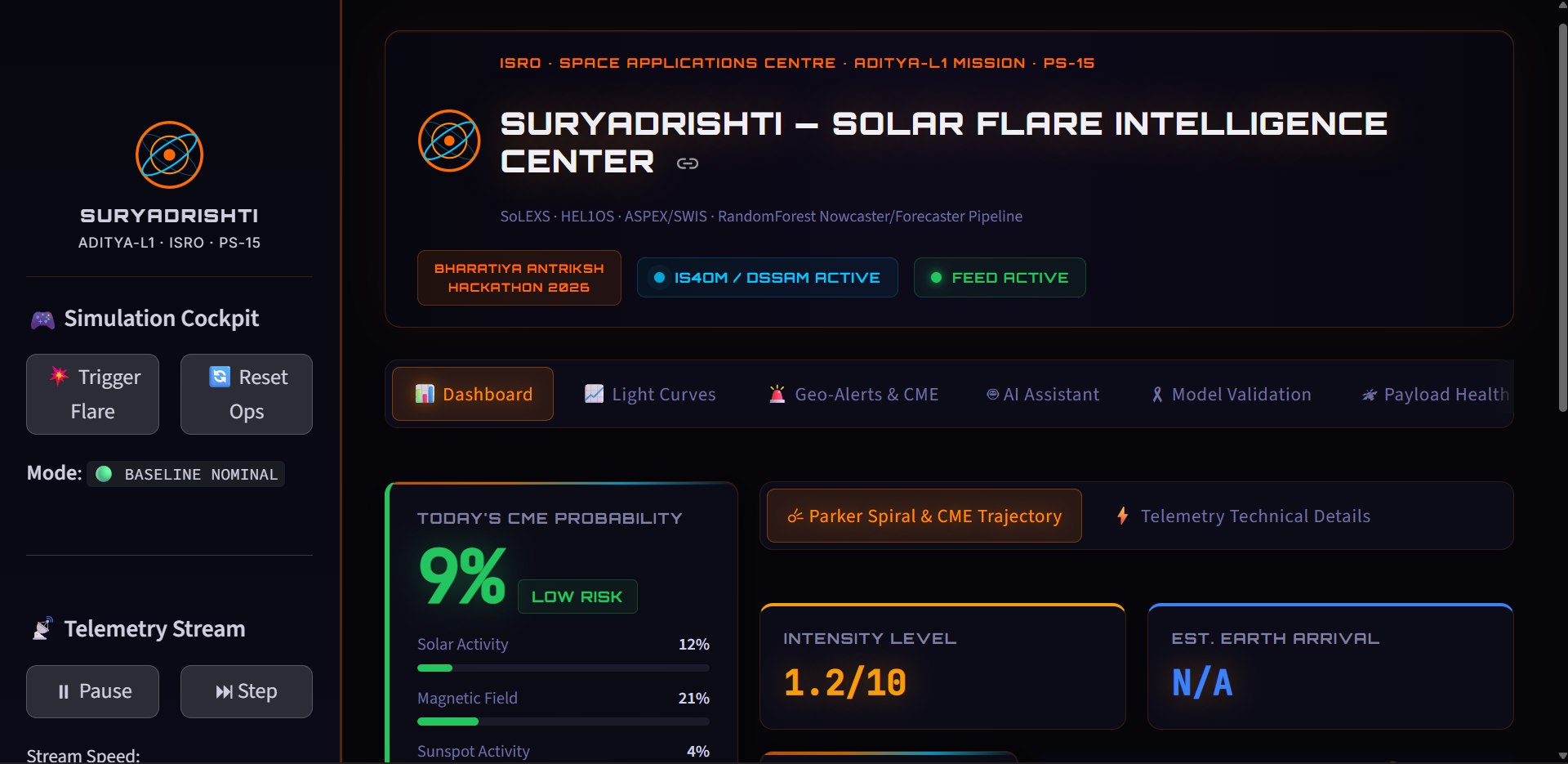
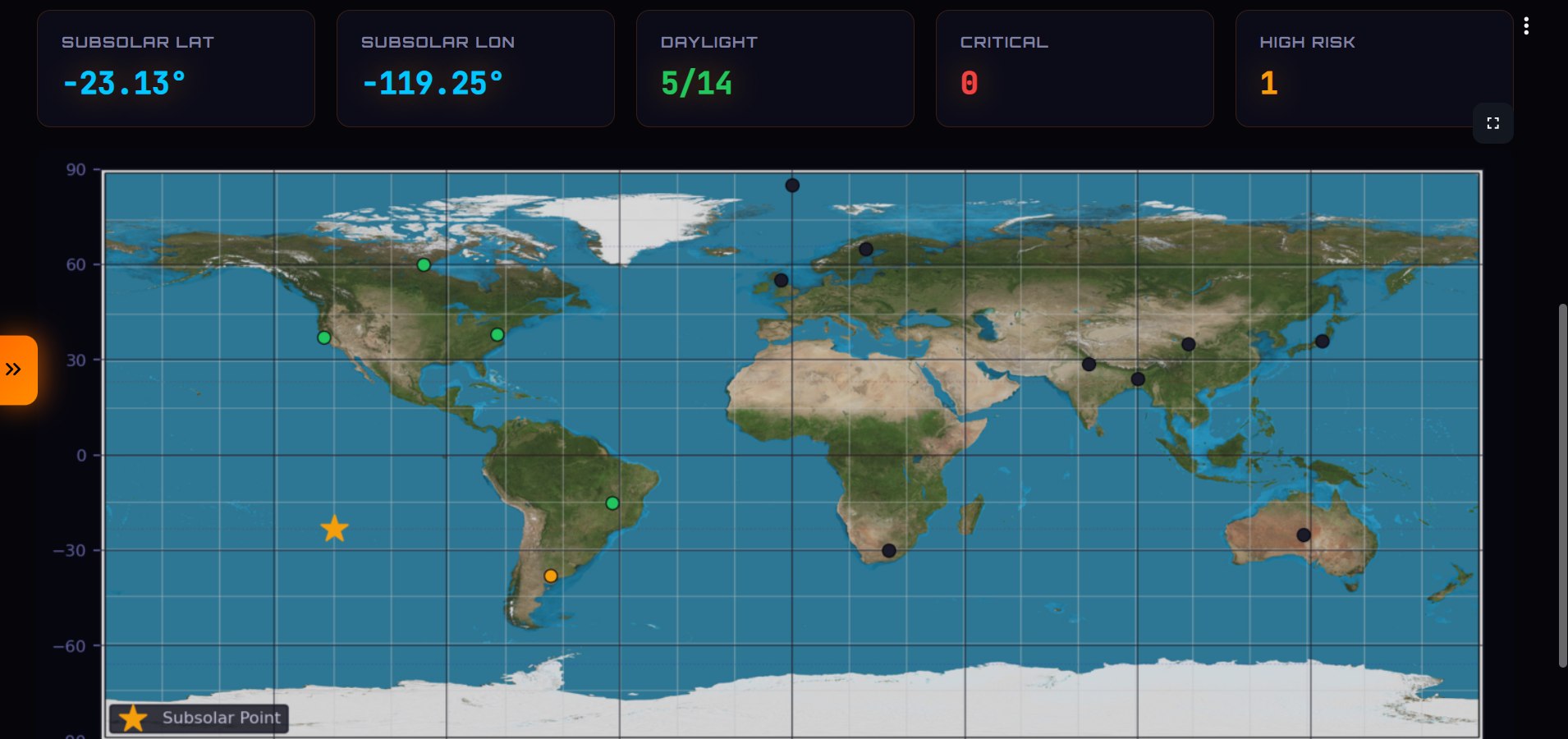
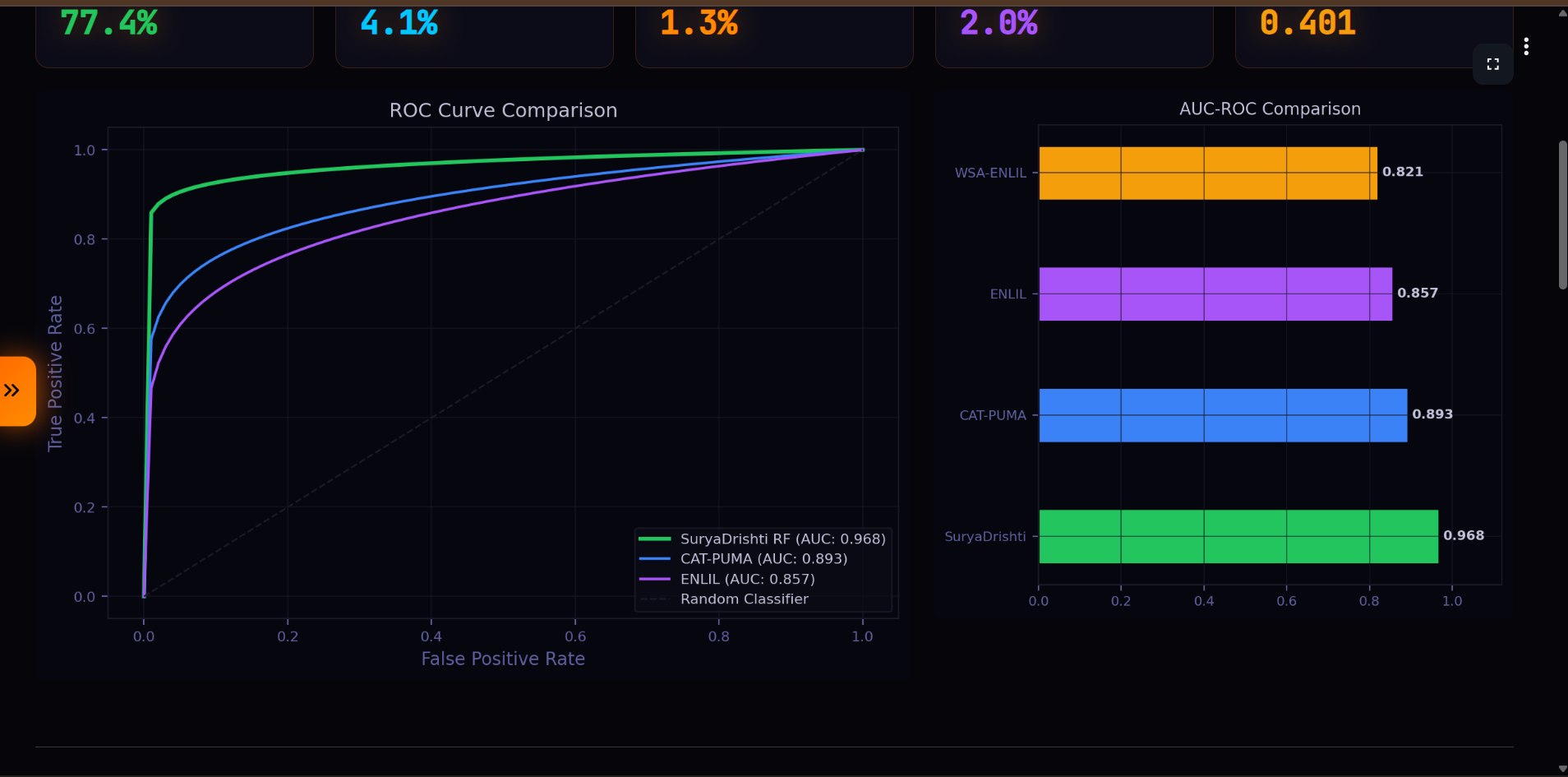
SuryaGrid is a Physics-Informed AI platform for proactive power-grid resilience. It combines solar-weather telemetry, terrestrial magnetometer readings, SCADA/PMU data, and grid information to forecast geomagnetic disturbances and estimate their impact on transmission infrastructure. Its PINN engine incorporates electromagnetic physics and grid constraints to predict dB/dt, GIC magnitude, transformer saturation, and failure risk ahead of critical conditions. A real-time 3D digital-twin control center visualizes the affected infrastructure and provides actionable mitigation recommendations such as neutral grounding resistor insertion, series-capacitor switching, reactive-power compensation, and load redistribution.
How we built it
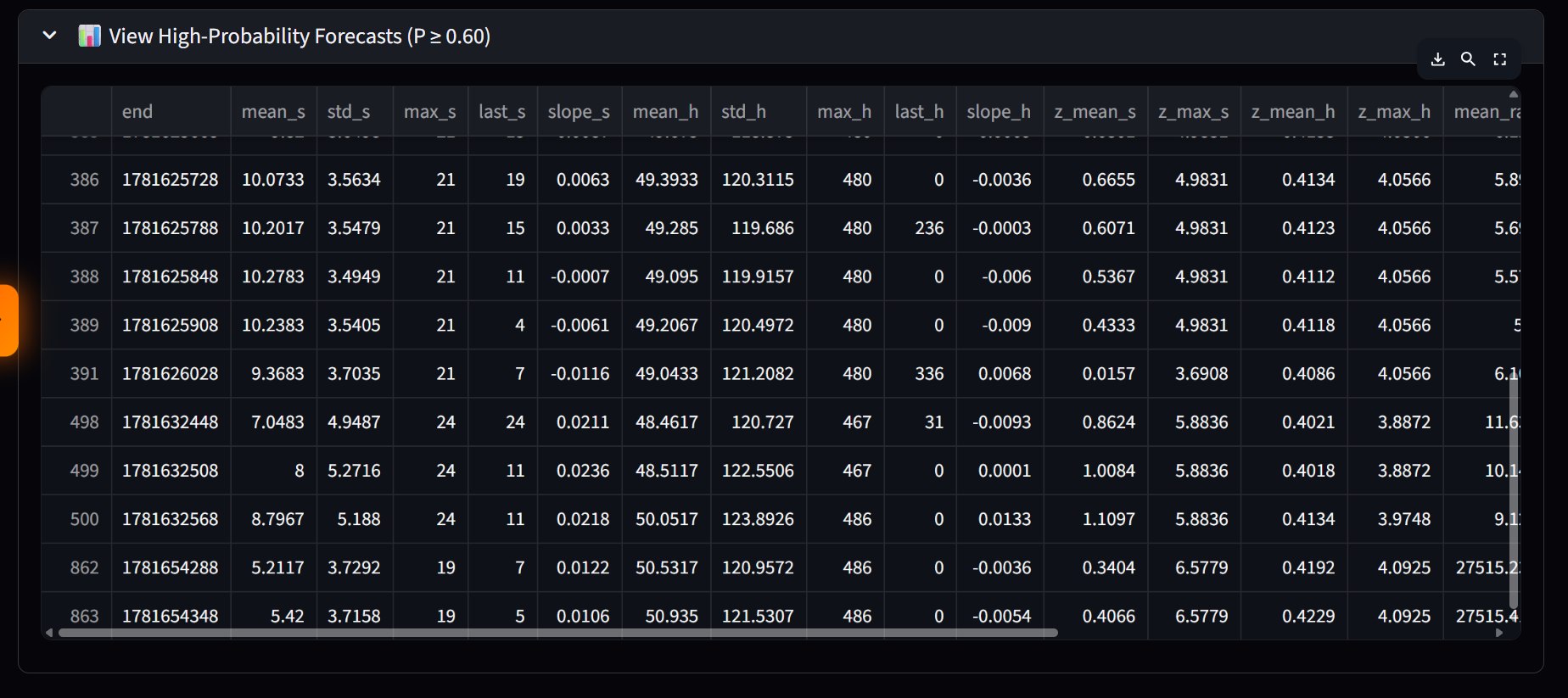
We built SuryaGrid using a combination of Python, PyTorch, NumPy, Pandas, SciPy, and Physics-Informed Neural Networks (PINNs) for prediction and modeling. Maxwell-based electromagnetic relationships, GIC equations, transformer saturation models, and thermal constraints are incorporated into the AI's physics-informed loss function. Real-time data can be ingested through REST APIs, MQTT, WebSockets, and Apache Kafka, while FastAPI, PostgreSQL/TimescaleDB, and Redis support the backend and time-series data pipeline. The operator interface uses React, TypeScript, Tailwind CSS, and Three.js/WebGL, with Unity as an option for a more immersive 3D digital twin. CUDA/TensorRT can accelerate inference, while Docker enables reproducible deployment.
Challenges we ran into
The biggest challenge was modeling extremely rare and severe geomagnetic events where historical training data is limited. Conventional machine-learning models can struggle when asked to extrapolate beyond the conditions represented in their training data. We addressed this by incorporating physical constraints into the learning process rather than relying exclusively on historical correlations. Another challenge was connecting multiple time-series sources with different sampling rates and uncertainties while maintaining a sufficiently fast prediction pipeline for real-time grid operations. We also had to balance sophisticated physics and AI models with an interface that remains understandable and actionable for grid operators.
Accomplishments that we're proud of
Our biggest accomplishment is bringing space-weather intelligence, electromagnetic physics, AI prediction, and grid-control decision support into a single platform. Instead of simply displaying an alert, SuryaGrid aims to answer three critical questions: What is happening? Which assets are at risk? What should the operator do next? The digital-twin concept makes complex GIC behavior visually understandable, while the physics-informed approach provides an additional layer of physical consistency compared with purely statistical prediction. We are particularly proud of designing SuryaGrid around prevention rather than post-failure diagnosis.
What we learned
We learned that solving critical-infrastructure problems requires much more than building an accurate AI model. The system must combine domain physics, reliable data pipelines, uncertainty handling, real-time inference, cybersecurity, and human-centered decision support. We also learned that PINNs are most valuable when they complement—not replace—traditional physics simulations and conventional machine-learning baselines. Most importantly, we learned to treat AI predictions as decision-support signals that require validation, confidence estimates, and appropriate operational safeguards.
What's next for SuryaGrid
Our next step is to validate SuryaGrid against larger historical geomagnetic-event datasets and increasingly realistic power-grid simulations. We plan to integrate additional satellite and ground-station data, improve transformer thermal and aging models, and develop uncertainty-aware predictions for extreme events. We also want to connect the digital twin with realistic grid simulators and hardware-in-the-loop testing so mitigation strategies can be safely evaluated before deployment. Ultimately, our goal is to evolve SuryaGrid into a scalable AI-powered early-warning and resilience platform for transmission networks, microgrids, data centers, hospitals, and other critical infrastructure, helping utilities move from reactive grid protection toward predictive, physics-aware resilience.


Log in or sign up for Devpost to join the conversation.