Inspiration
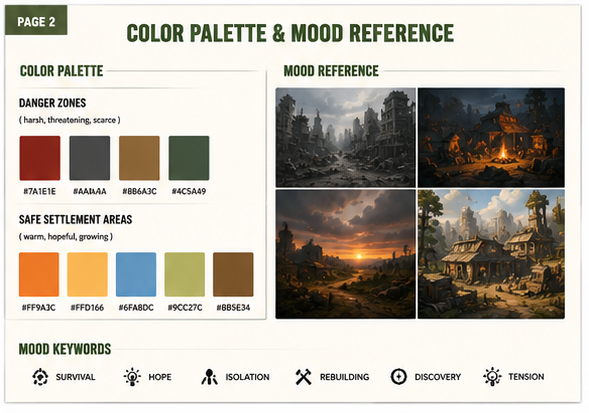
The inspiration for Survive the Wasteland came from my interest in survival games and the idea of rebuilding hope after disaster. Many survival experiences focus primarily on combat, but I wanted to create a game where every resource, every survivor, and every decision contribute to the larger goal of rebuilding a community.
I was inspired by stories of resilience and how people come together during difficult times. The concept of starting with almost nothing and gradually creating a thriving settlement felt both rewarding and meaningful. I wanted players to experience the tension of survival while also feeling optimistic about the future they are creating.
The central theme of the game is that survival is not just about staying alive—it is about rebuilding something worth living for.
What it does
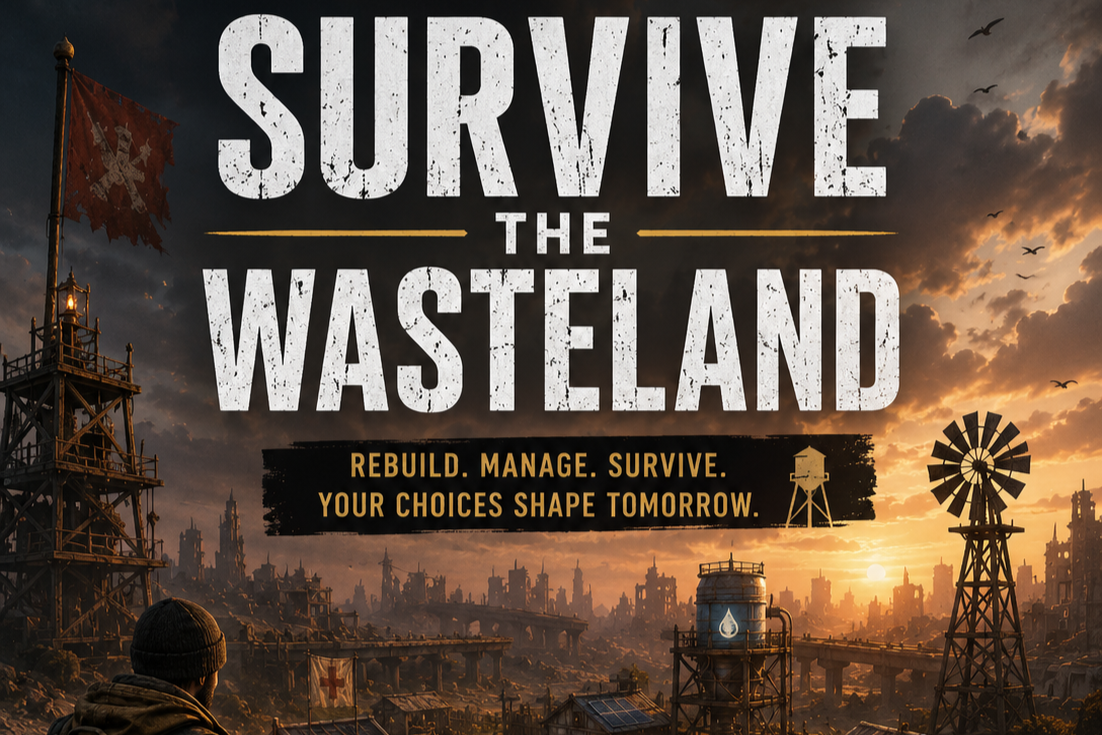
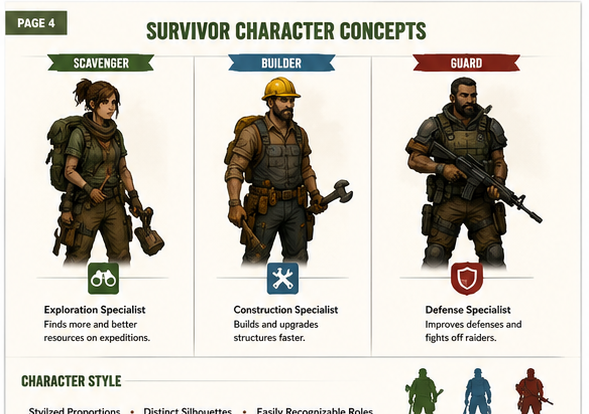
Survive the Wasteland is a survival and resource management game where players rebuild civilization after a global collapse. Players gather resources, manage survivors, construct and upgrade buildings, explore dangerous regions, and make strategic decisions to keep their settlement alive. As the settlement grows, players unlock new technologies, survivor roles, and exploration opportunities while overcoming challenges such as resource shortages, natural disasters, and raider attacks. The game focuses on balancing survival, progression, and meaningful decision-making as players transform a small camp into a thriving community.
How we built it
I began by defining the core gameplay loop:
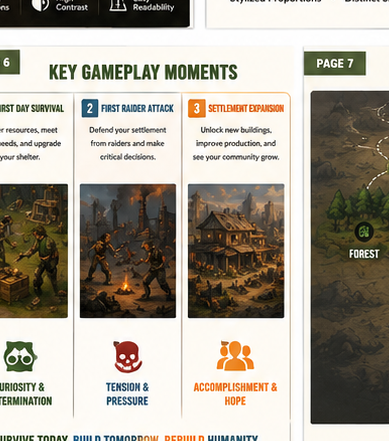
Gather resources Manage survivors Upgrade the settlement Explore dangerous areas Respond to dynamic events Repeat with greater challenges and rewards
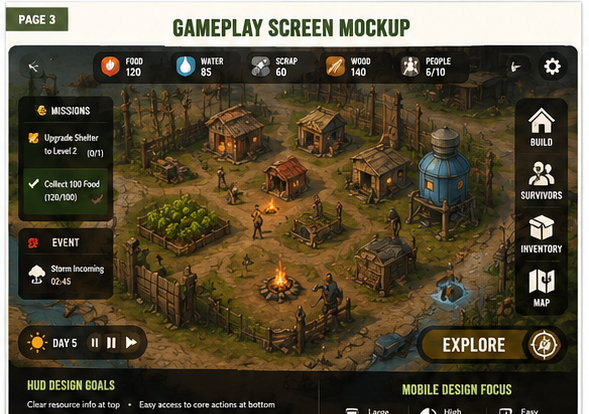
From there, I designed the progression systems to ensure players would always have meaningful goals. I created resource categories such as food, water, wood, and scrap metal that interact with building upgrades and survivor assignments.
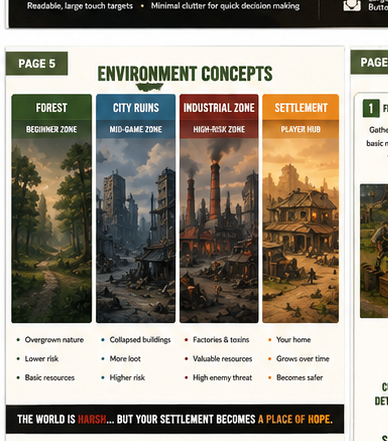
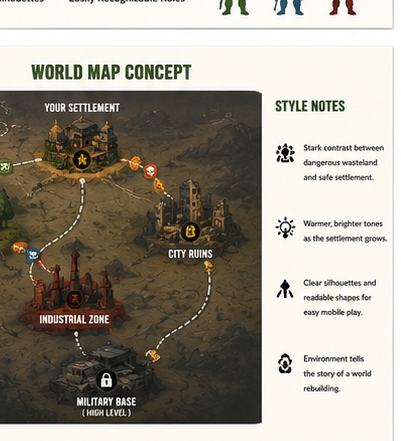
The settlement acts as the player's home base and grows visually as the player progresses. Exploration zones provide opportunities for rewards while introducing risk-versus-reward decision-making.
One of my goals was to keep the game approachable for mobile players while still offering strategic depth. This influenced many design decisions, including simplified interfaces, short gameplay sessions, and clear progression systems.
Challenges we ran into
One of the biggest challenges was determining the scope of the project.
There were many exciting features I wanted to include, such as multiplayer settlements, procedural exploration, seasonal world events, and advanced survivor relationships. While these features could add depth, they also significantly increased development complexity.
To address this challenge, I focused on building a strong Minimum Viable Product (MVP) first. This allowed me to identify the most important gameplay systems and ensure the core experience was enjoyable before expanding further.
Another challenge was balancing resource scarcity. If resources are too abundant, survival loses its tension. If resources are too scarce, players become frustrated. Finding the right balance required careful planning and iteration.
Finally, designing for mobile required simplifying interfaces while still presenting enough information for strategic decision-making. This influenced the placement of UI elements, resource displays, and progression indicators.
Accomplishments that we're proud of
Successfully designed a survival and resource management game that combines settlement building, exploration, and strategic decision-making into a cohesive gameplay experience.
Created a meaningful progression system that allows players to grow from a small shelter with limited resources into a thriving settlement.
Developed engaging gameplay mechanics where player choices directly impact survival, resource management, and long-term success.
Designed a balanced core gameplay loop focused on gathering resources, managing survivors, upgrading structures, exploring new regions, and responding to dynamic events.
Established a realistic and achievable MVP (Minimum Viable Product) that delivers the core experience while providing a strong foundation for future expansion.
Created a clear visual direction, player journey, production plan, and game design documentation that align with the overall vision of the project.
Built a game centered around resilience, growth, and rebuilding civilization, giving players a rewarding sense of accomplishment as they transform a struggling camp into a thriving community.
Planned future expansion opportunities, including multiplayer features, seasonal events, advanced survivor systems, and additional exploration regions to support long-term player engagement.
What we learned
Throughout the design process, I learned the importance of balancing complexity with accessibility.
Initially, I wanted to include a large number of resource types and advanced systems. However, I realized that too many mechanics introduced unnecessary friction and could overwhelm new players. By focusing on the most important systems first, I was able to create a clearer and more engaging player experience.
I also learned that player motivation is strongly connected to visible progression. Players enjoy seeing direct results from their actions. This influenced the decision to make settlement upgrades visually transform the environment over time.
Another important lesson was understanding how risk and reward create engagement. Players become more invested when they must make meaningful choices with limited resources.
What's next for Survive the Wasteland
The next step for Survive the Wasteland is expanding beyond the core survival experience by introducing new systems that increase player engagement and replayability. Planned additions include cooperative multiplayer gameplay, seasonal world events, deeper survivor relationships, and new exploration regions filled with unique challenges and rewards.
Future development will focus on enhancing player choice, expanding progression systems, and creating more opportunities for strategic decision-making. As the game evolves, players will have greater control over how they build, manage, and defend their settlements while uncovering new stories and threats throughout the wasteland.
The long-term vision is to transform Survive the Wasteland into a rich survival experience where every playthrough feels unique, every decision matters, and every settlement tells its own story of resilience, growth, and rebuilding civilization.
Looking Forward
If given additional development time, I would expand the game with cooperative multiplayer systems, seasonal events, deeper survivor interactions, and additional exploration regions.
My goal for Survive the Wasteland is to give players a genuine sense of accomplishment as they transform a struggling camp into a thriving community. Every building constructed, every survivor recruited, and every challenge overcome contributes to a larger story of resilience, growth, and rebuilding civilization.
This project taught me that successful game design is not about adding as many features as possible. Instead, it is about creating meaningful choices, rewarding progression, and memorable experiences that stay with players long after they stop playing.
Built With
- english
- microsoft


Log in or sign up for Devpost to join the conversation.