-
-
SurroundSpace
-
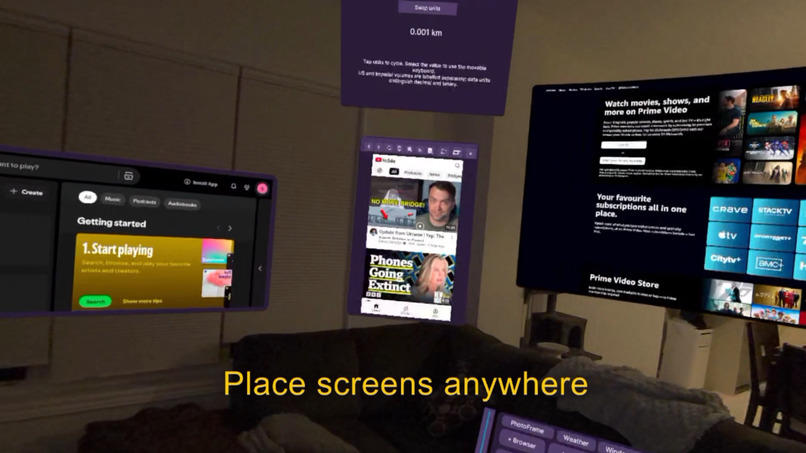
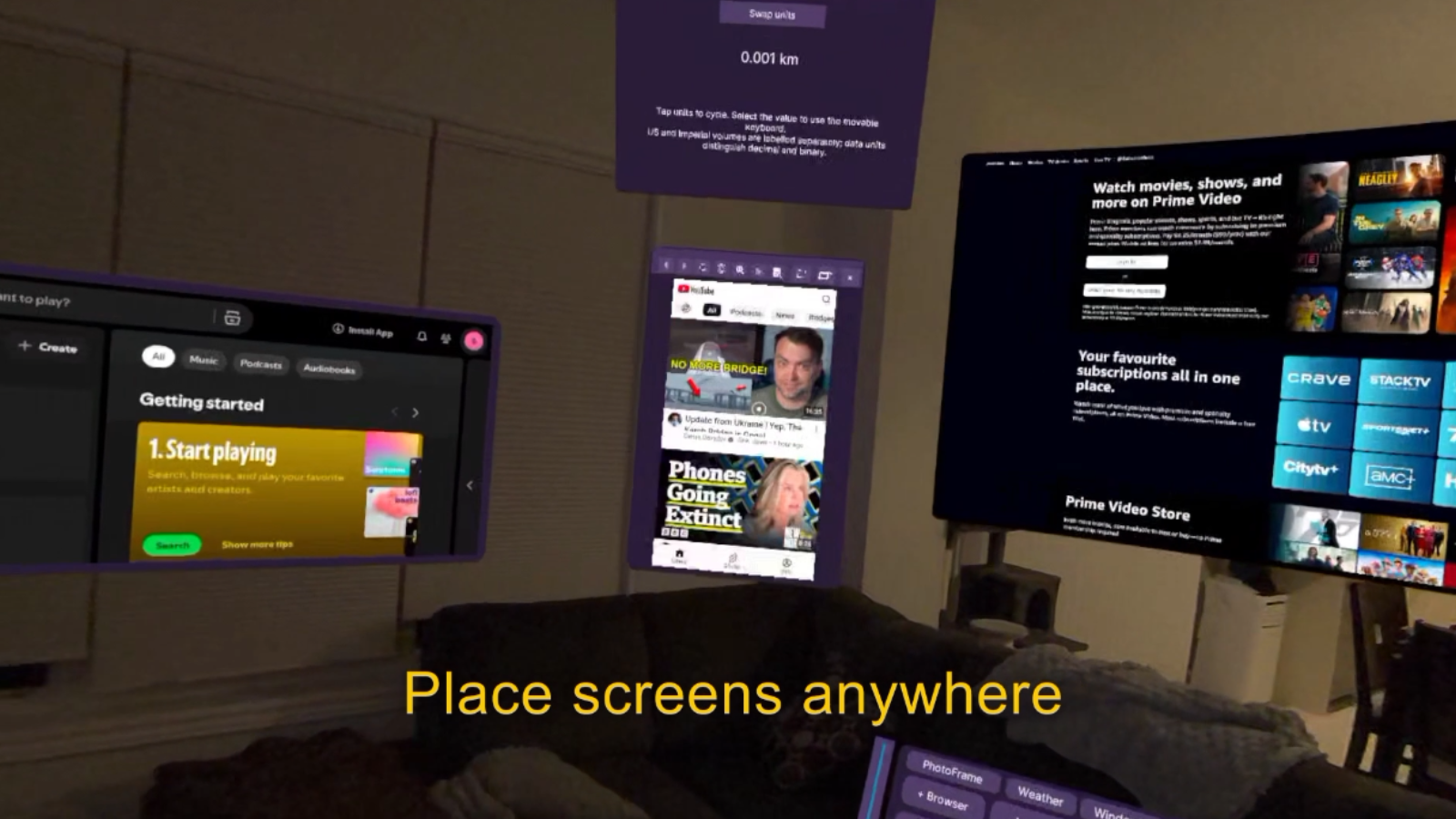
Place screens anywhere
-
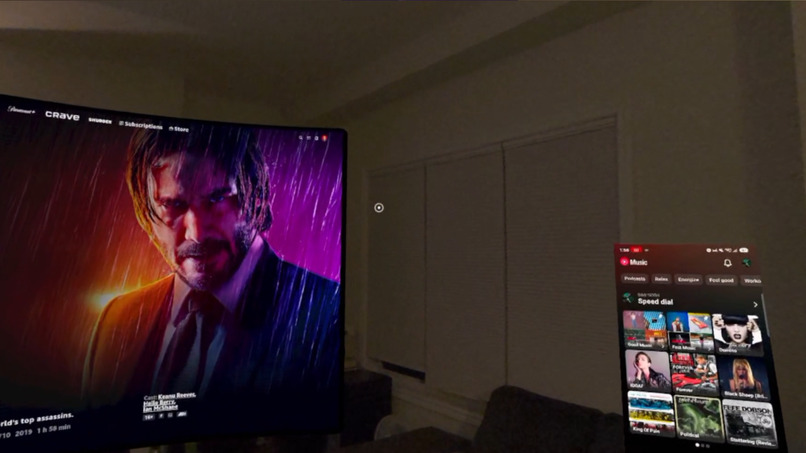
Control your phone
-
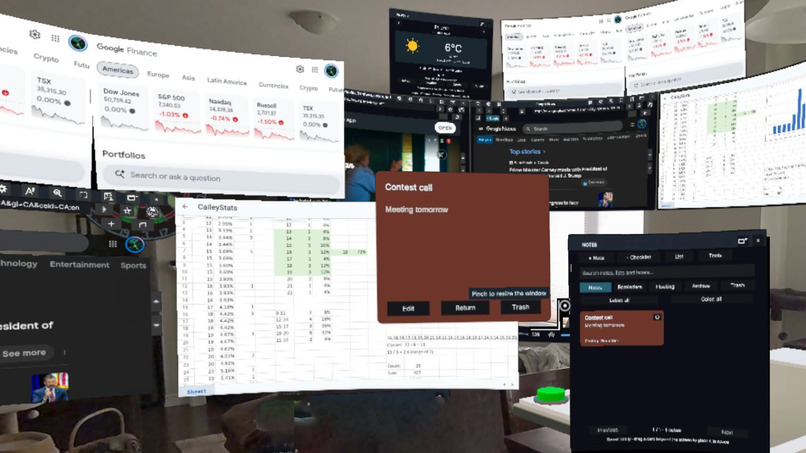
Your office anywhere
-
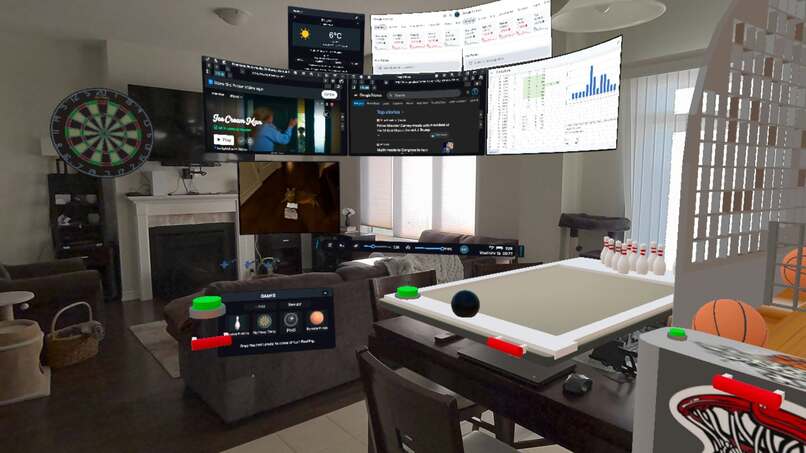
Games room
-
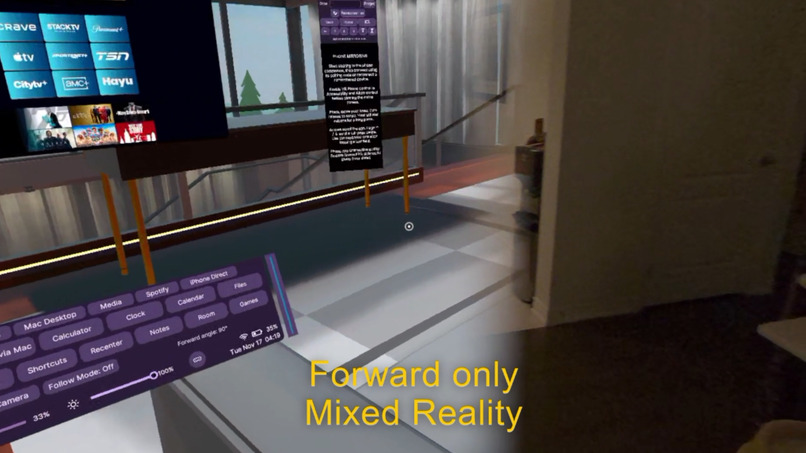
Blended reality views
-
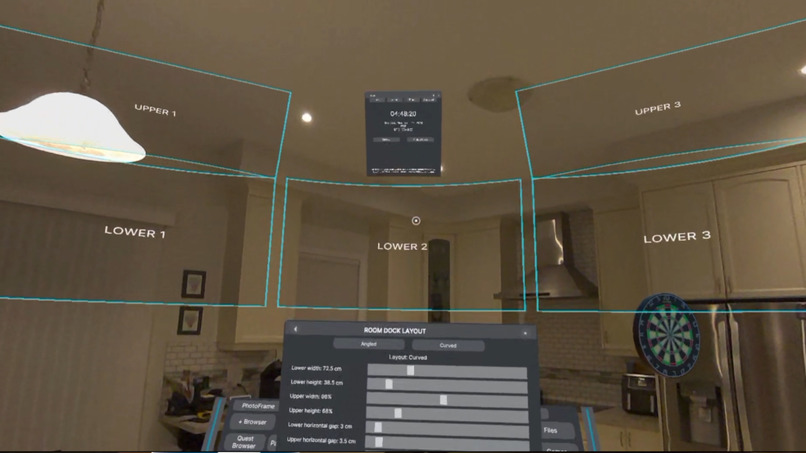
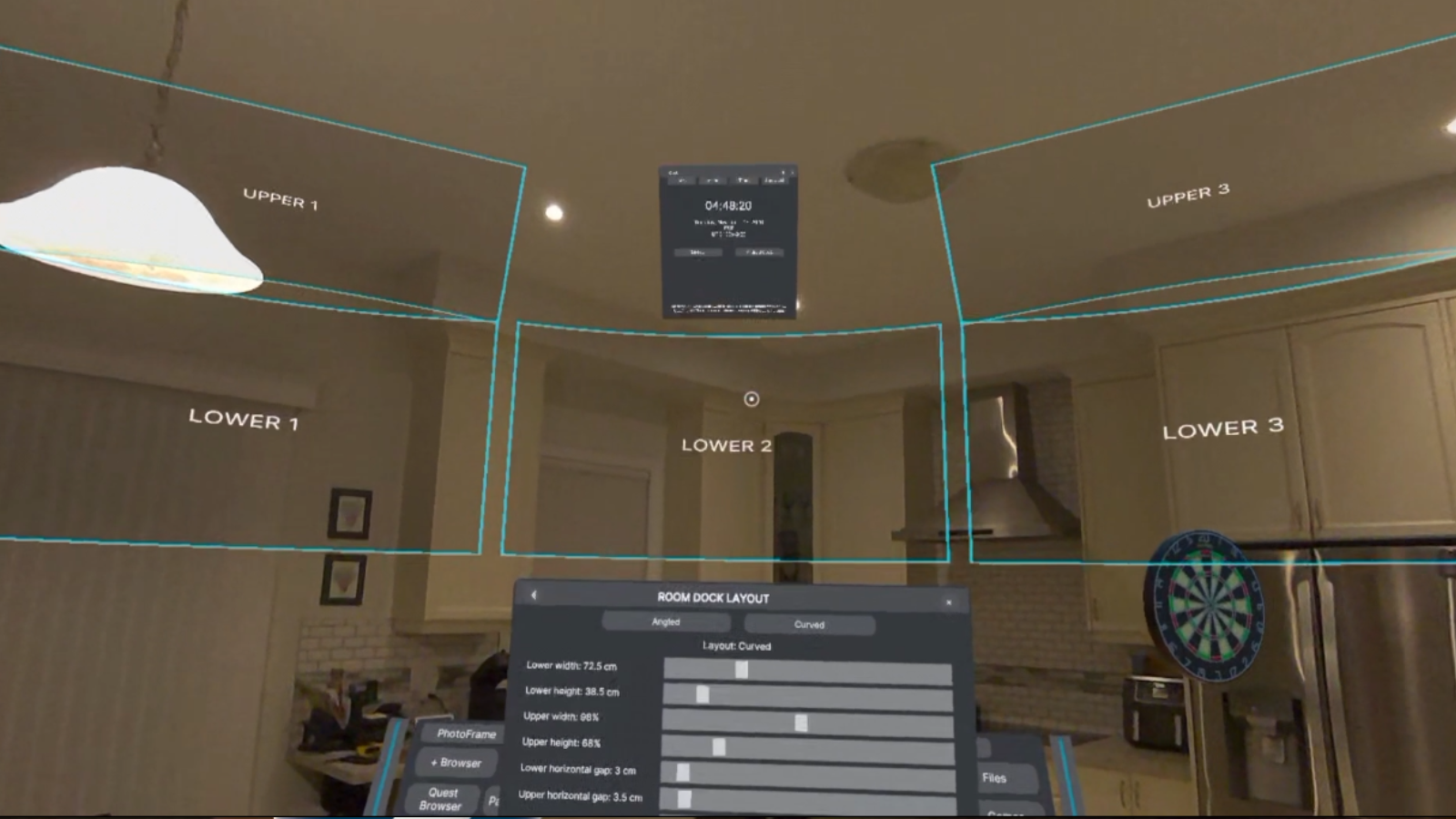
Customize your layout
-
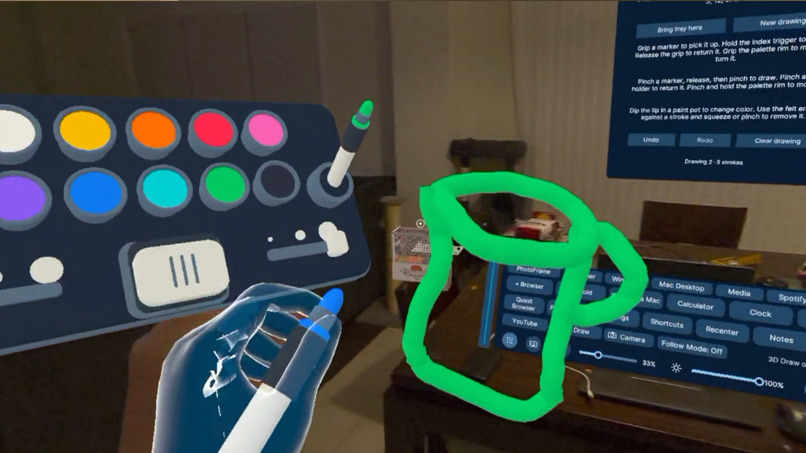
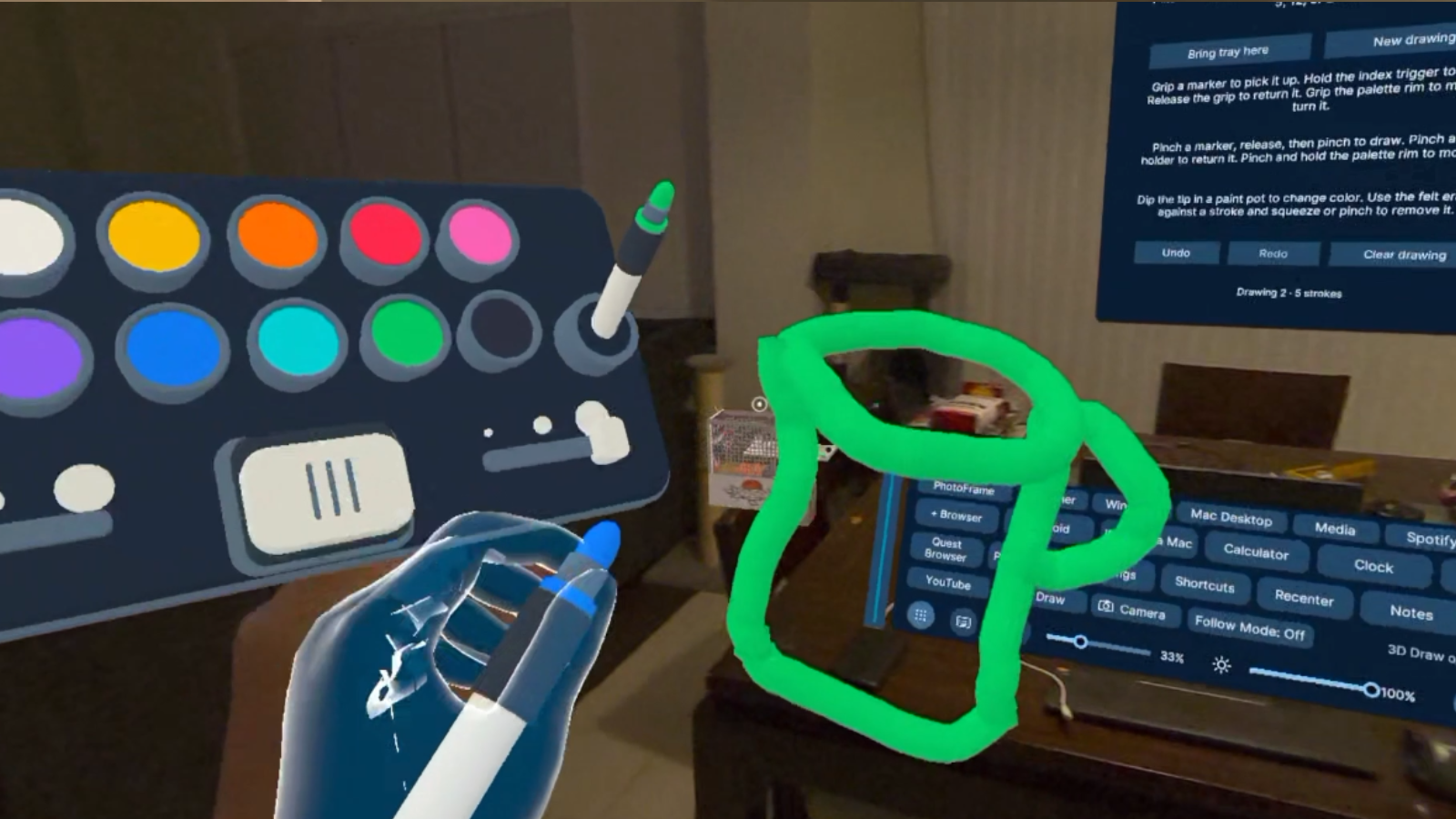
Save 3D drawings in your space
-
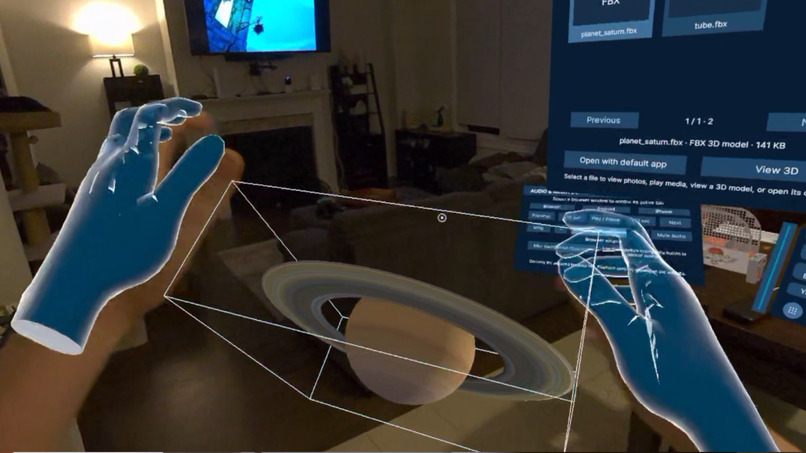
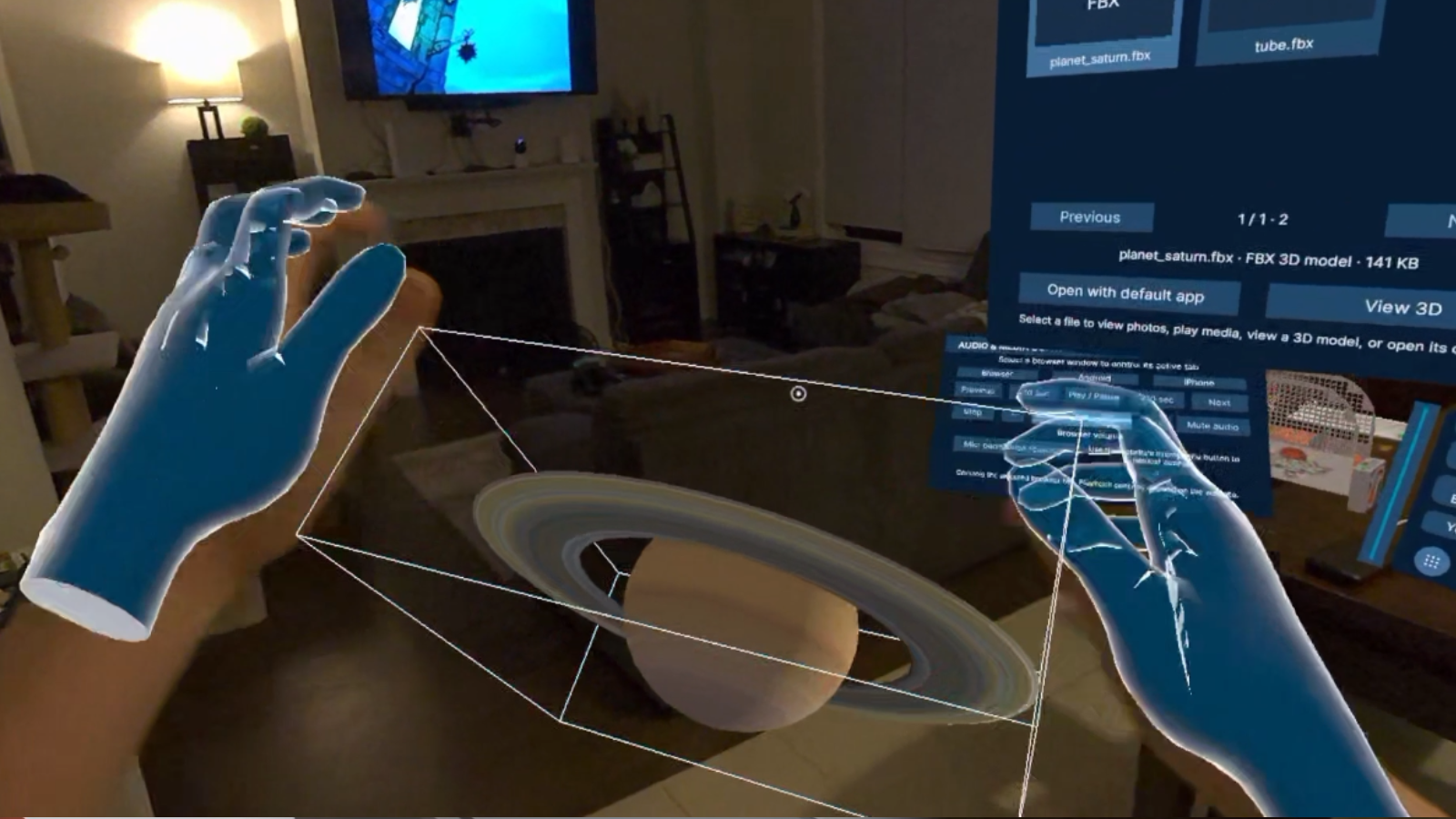
Import 3D objects in your space
-
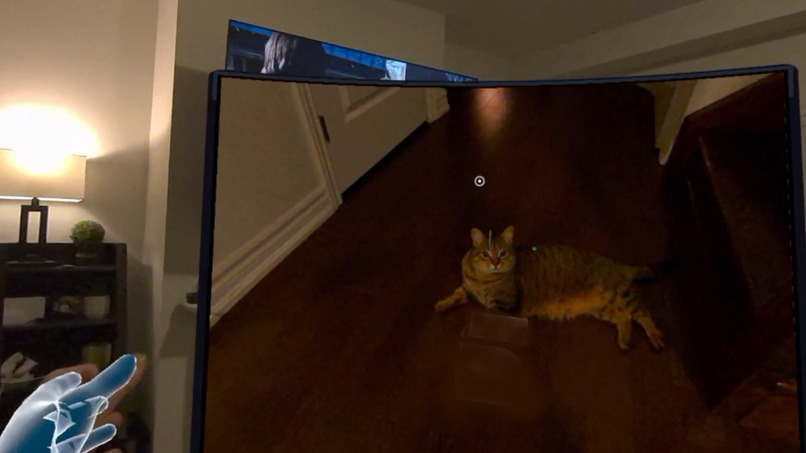
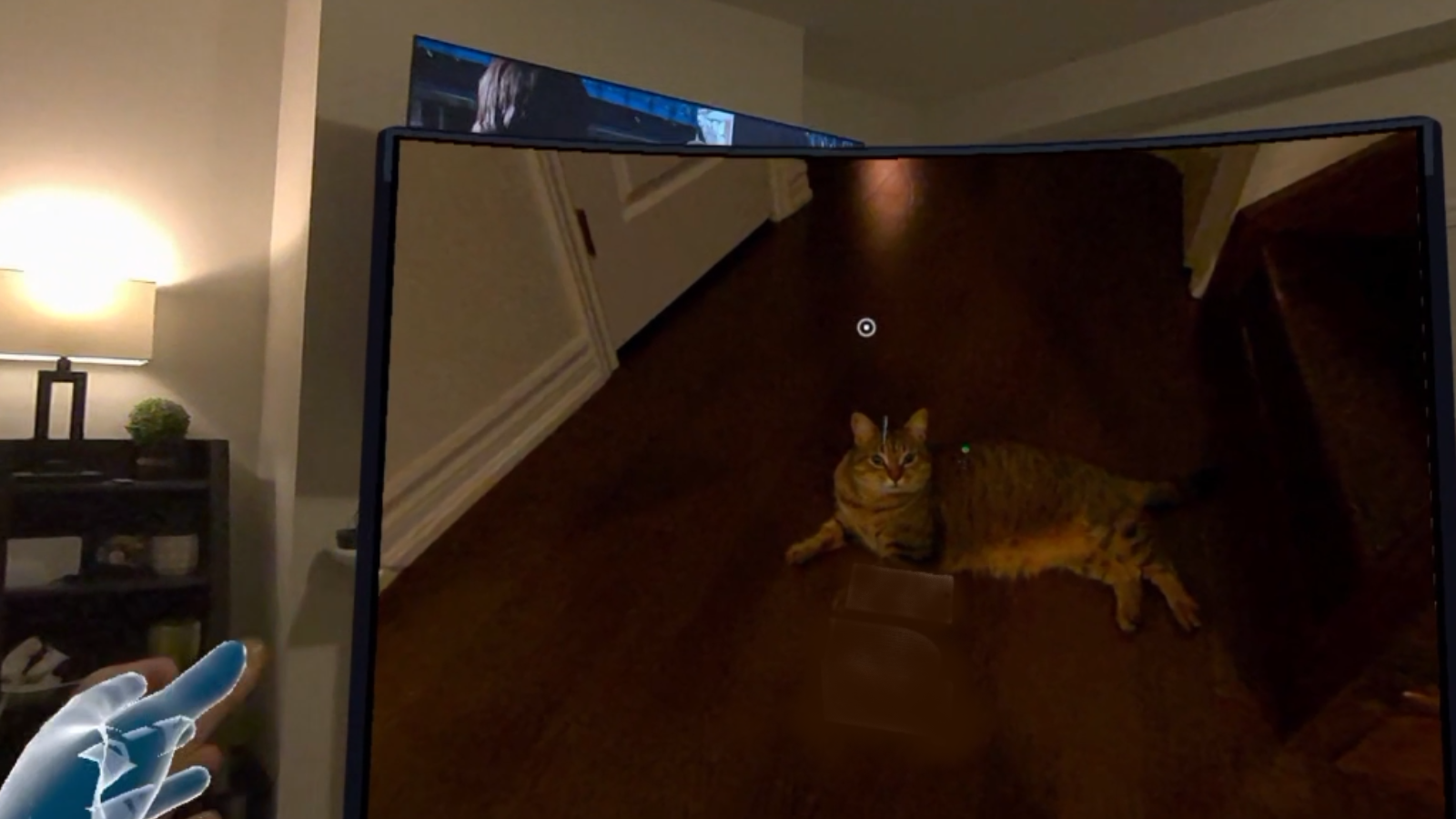
Frame your photos
Inspiration
The first time I put on the original Quest and saw the VR room boundary appear like something from Star Trek, I knew mixed reality had even more possibilities than virtual reality. I wanted to bring my home space with me wherever I went: a familiar place with the screens, tools and entertainment I needed, whether I was working, gaming, or watching movies and shows. That idea became SurroundSpace: a personal space I could arrange around myself and adapt to whatever I wanted to do.
What it does
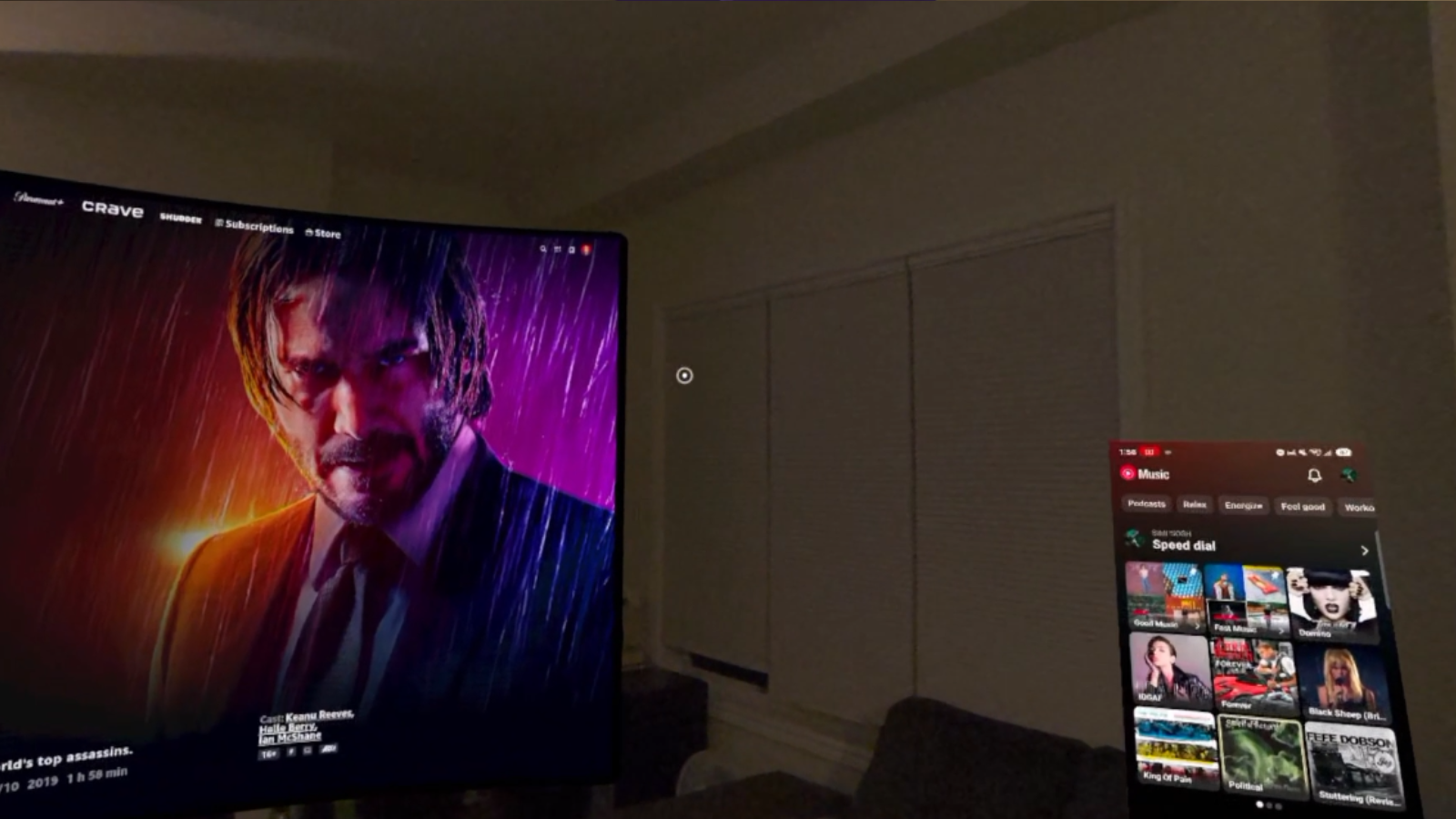
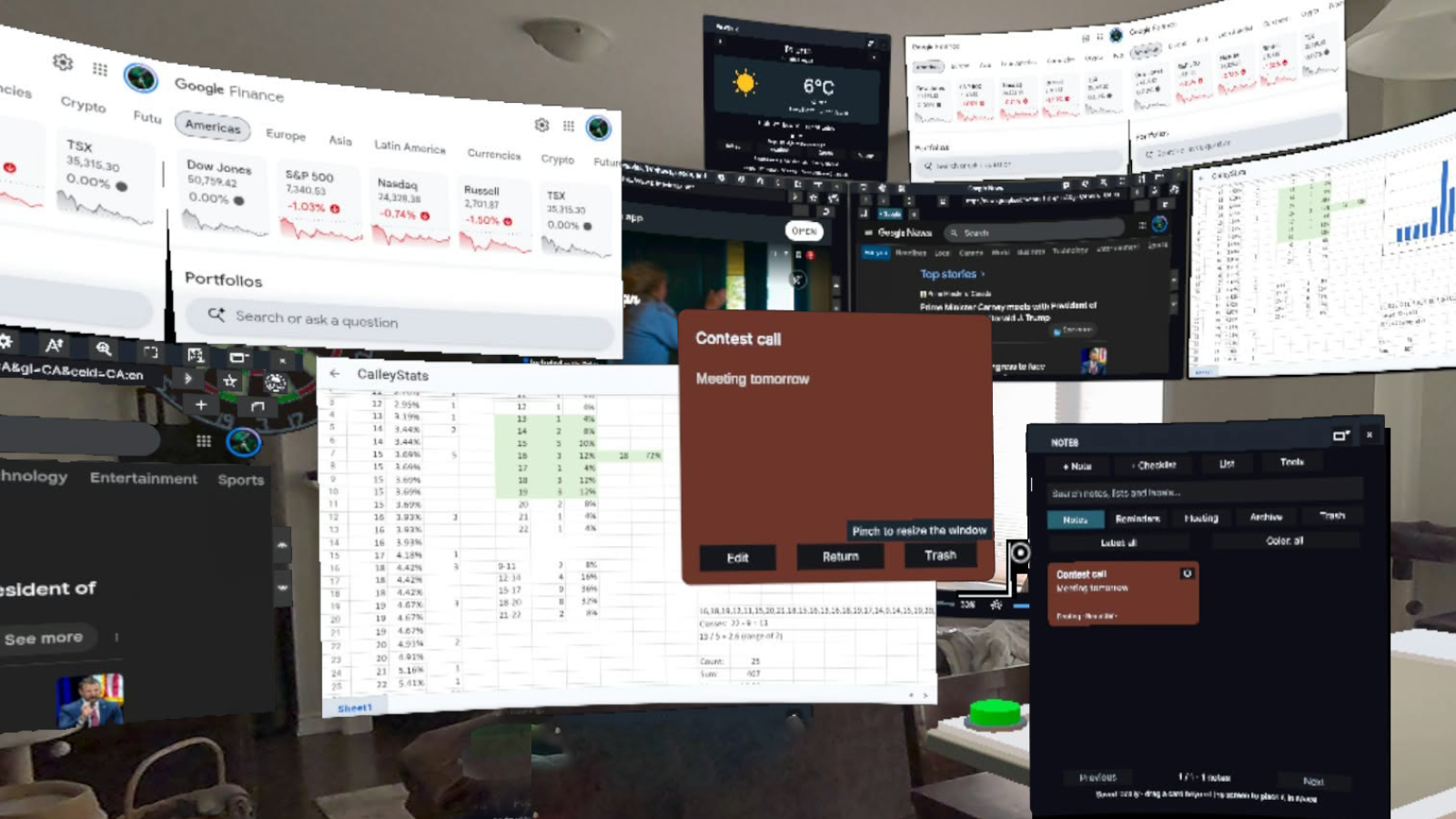
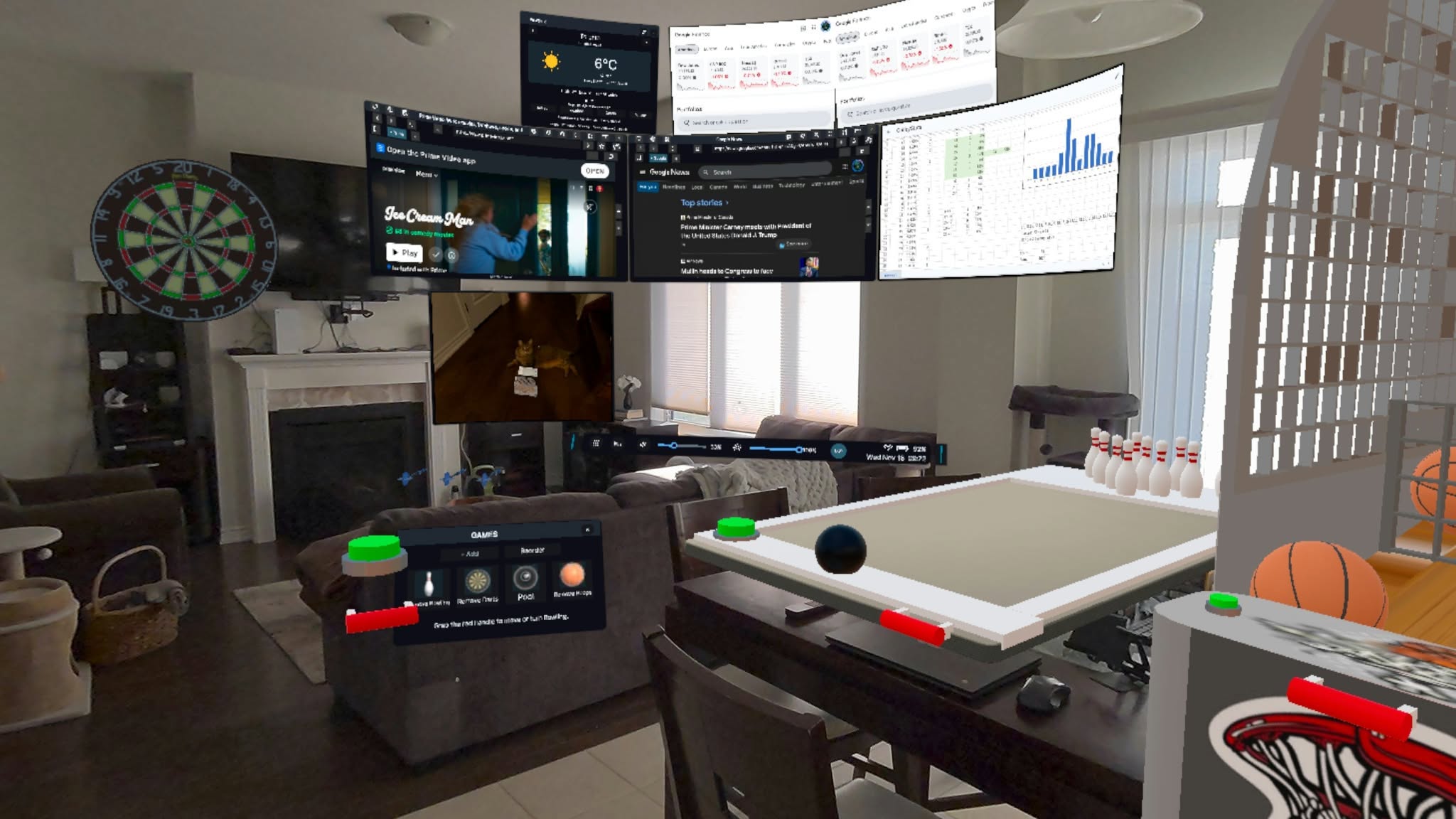
SurroundSpace brings browser windows, media, built-in activities and connected devices into a shared workspace, so those experiences can exist alongside one another. One of my biggest motivations came from something ordinary: watching a show while browsing social media or playing a game. Outside a headset, those activities naturally happen together. I wanted that same freedom in mixed reality, without having to leave one VR app and launch another.
How I built it
I built SurroundSpace in Unity using C#, Meta’s mixed-reality tools, and hand and controller interactions. The workspace grew through repeated cycles of building, testing in the headset, and refining how everything behaved together. Movable windows, docking, resizing, keyboards and saved layouts became the foundation that connected the individual features.
Integrating phones and desktops was central to the idea. I wanted access to the devices and applications I already used, with their familiar content and workflows, so I added support for Bluetooth keyboards and other devices paired with the headset. Making all that happen involved screen capture, audio, remote input, pairing and the different permissions each platform requires. I also added Home Assistant integration and worked on direct controls for televisions and Cast-compatible speakers and displays, extending the idea beyond virtual windows and back into the physical home.
Challenges I ran into
Streaming was one of the hardest technical challenges. Getting the image onto the screen was only the start. It also needed to update smoothly while the rest of the workspace remained responsive. I improved the browser’s hardware-accelerated rendering, moved expensive streaming work away from Unity’s main thread, and reduced the buildup of old video frames and audio packets. Gaze-based throttling also helped keep the workspace responsive by reducing the display update rate of unattended desktop windows and restoring it when the user looks back. DRM introduced a different set of problems. A service loading successfully did not necessarily mean its videos would play, and content that worked in a normal browser could behave differently inside an embedded browser or through screen mirroring.
Window jitter was another major challenge. A floating screen needs to feel steady when you move your head. I had to untangle interactions between tracking, player physics, window placement and rendering stalls. Keeping the stationary workspace independent of locomotion, correcting blocking rendering work, and waiting for tracking to settle before startup placement helped improve stability. I also added recovery for floating windows that ended up out of reach.
Many other challenges became obvious only through use. Phone swipes needed to behave like complete touch gestures. Resizing a browser had to keep its content and click targets aligned. Windows needed to dock predictably when released, and layouts needed sensible behavior after restarting or returning from a system screen. Remembered pairing and saved layouts mattered because rebuilding a personal workspace every session would undermine the whole idea.
Accomplishments that I'm proud of
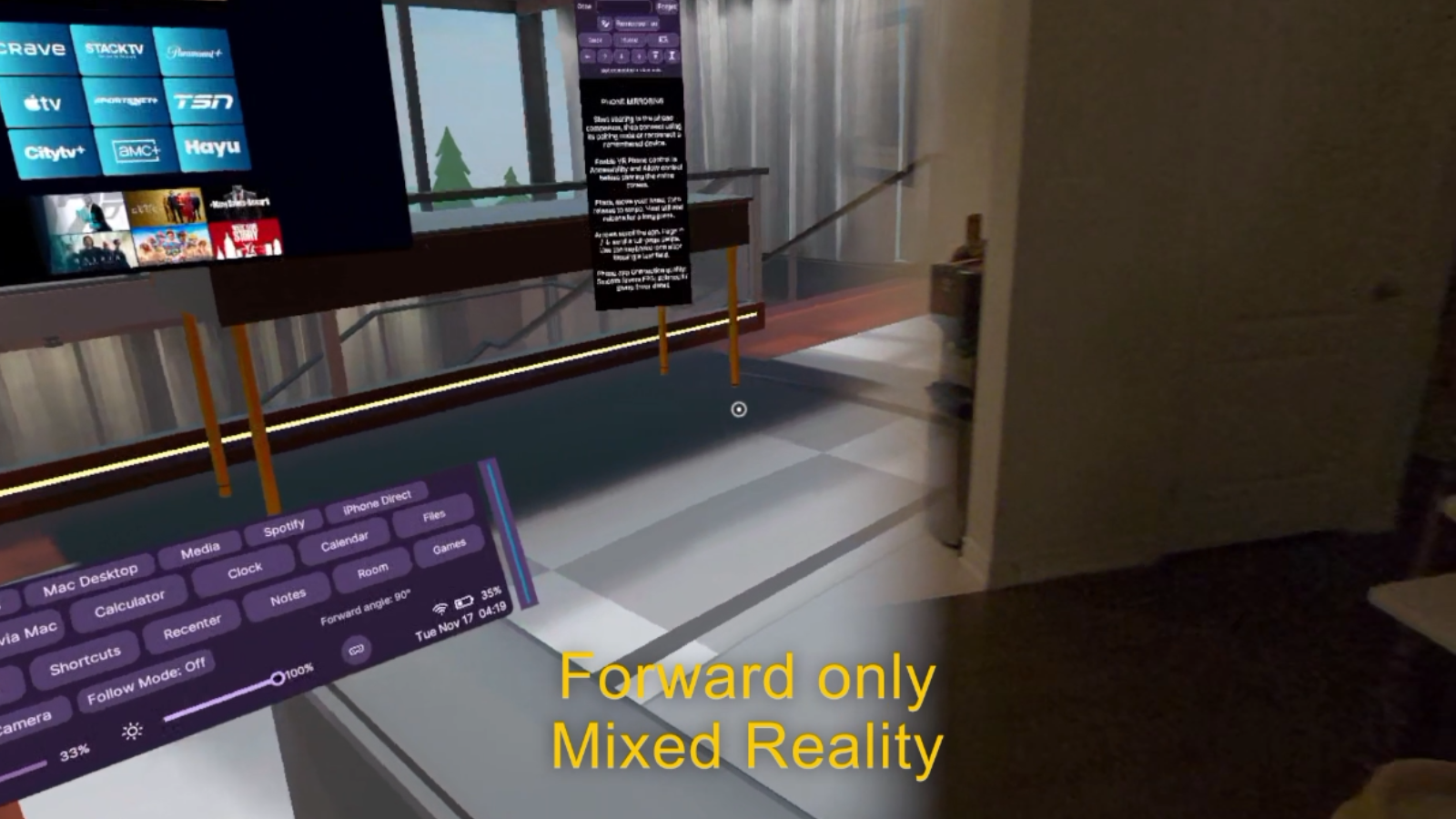
I wanted to explore how blending the virtual and real worlds could make headsets more approachable to a wider audience. Being completely separated from your surroundings can make VR feel like a commitment. Mixed reality lets you remain aware of your room and the people around you while adding useful and playful things to that space. A familiar desk or living room can become somewhere to work, watch a movie, browse, or interact with virtual objects. I'm proud of the combination I've created in SurroundSpace and the future possibilities.
What I learned
The biggest lesson was how closely performance, interaction and reliability are connected in mixed reality. A small delay, misplaced control or unstable window can affect the entire experience. Testing individual features was useful, but testing them together in the headset was essential.
What's next for SurroundSpace
SurroundSpace grew from that first moment of seeing science fiction appear in my own room. My goal is to turn that feeling into something useful every day: a familiar space that travels with me, keeps the real world within reach, and brings work, play and entertainment together. Next, I plan to integrate social features and AI assistants.
