-
-
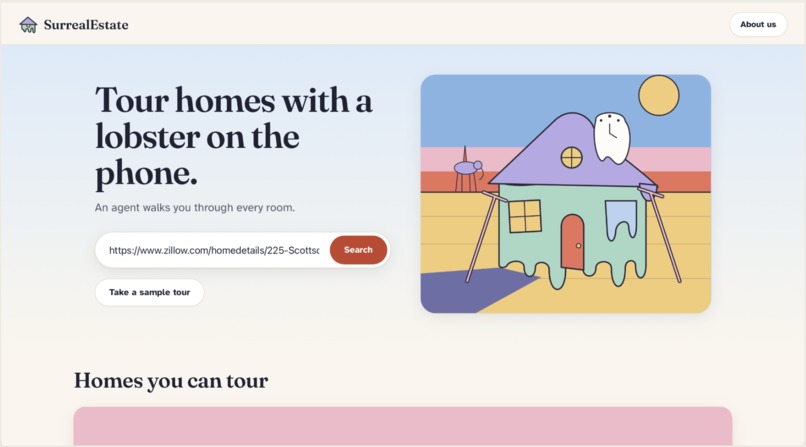
Landing Page
-
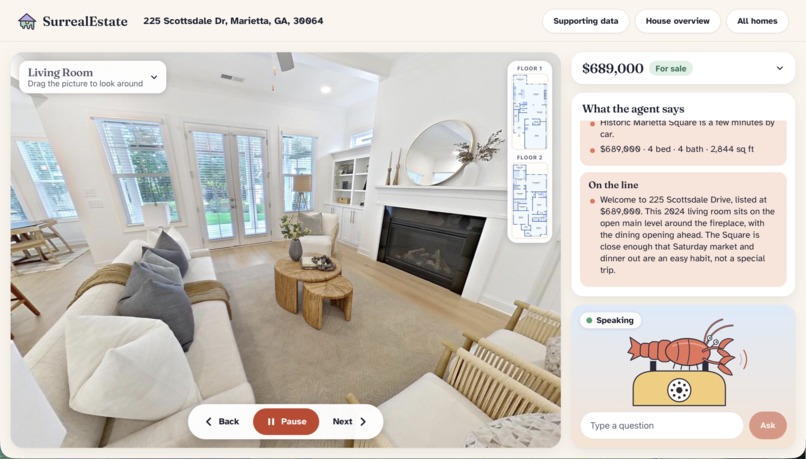
Main Page
-
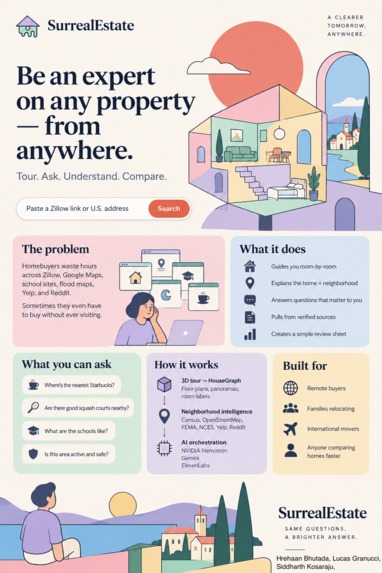
One Page Flyer
Inspiration: Our Unique Backgrounds
Our team has lived across five countries—Switzerland, China, South Africa, India, and the United States—so we know firsthand how difficult it can be to find a home somewhere you don’t know.
When Hrehaan’s family moved to South Africa, his parents had to fly back and forth from the U.S. just to make sure the homes they were considering were in safe, active communities. Lucas’s family faced an even bigger challenge: while living in Shanghai, they had to buy a house in the United States without ever seeing it in person.
That made us ask: What if you could become an expert on any property, from anywhere in the world, in minutes?
Instead of spending hours researching neighborhoods, schools, parks, safety, amenities, and the property itself—or traveling just to meet with an agent—buyers could instantly understand what living there would actually be like before ever stepping through the door.
What it does
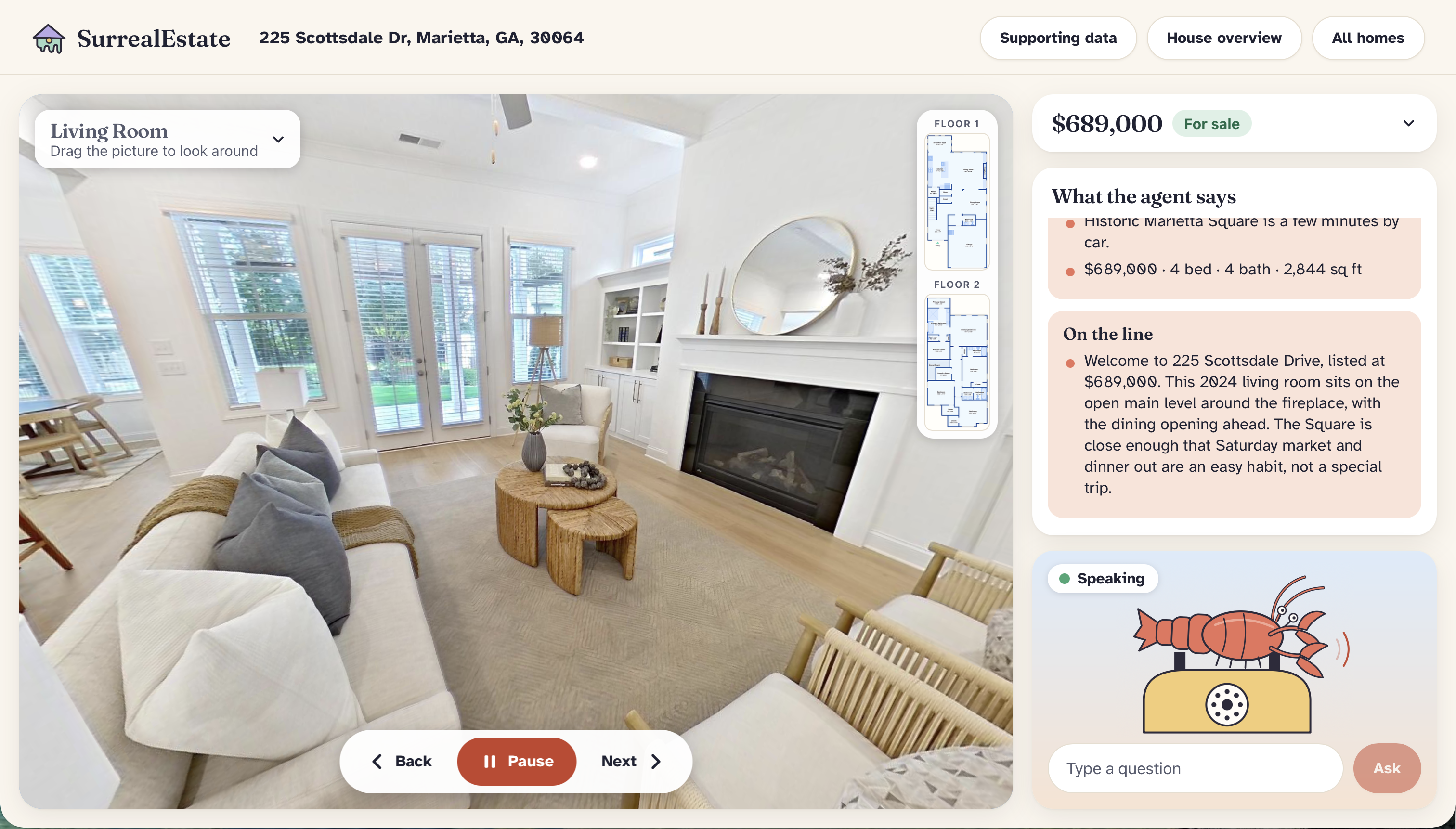
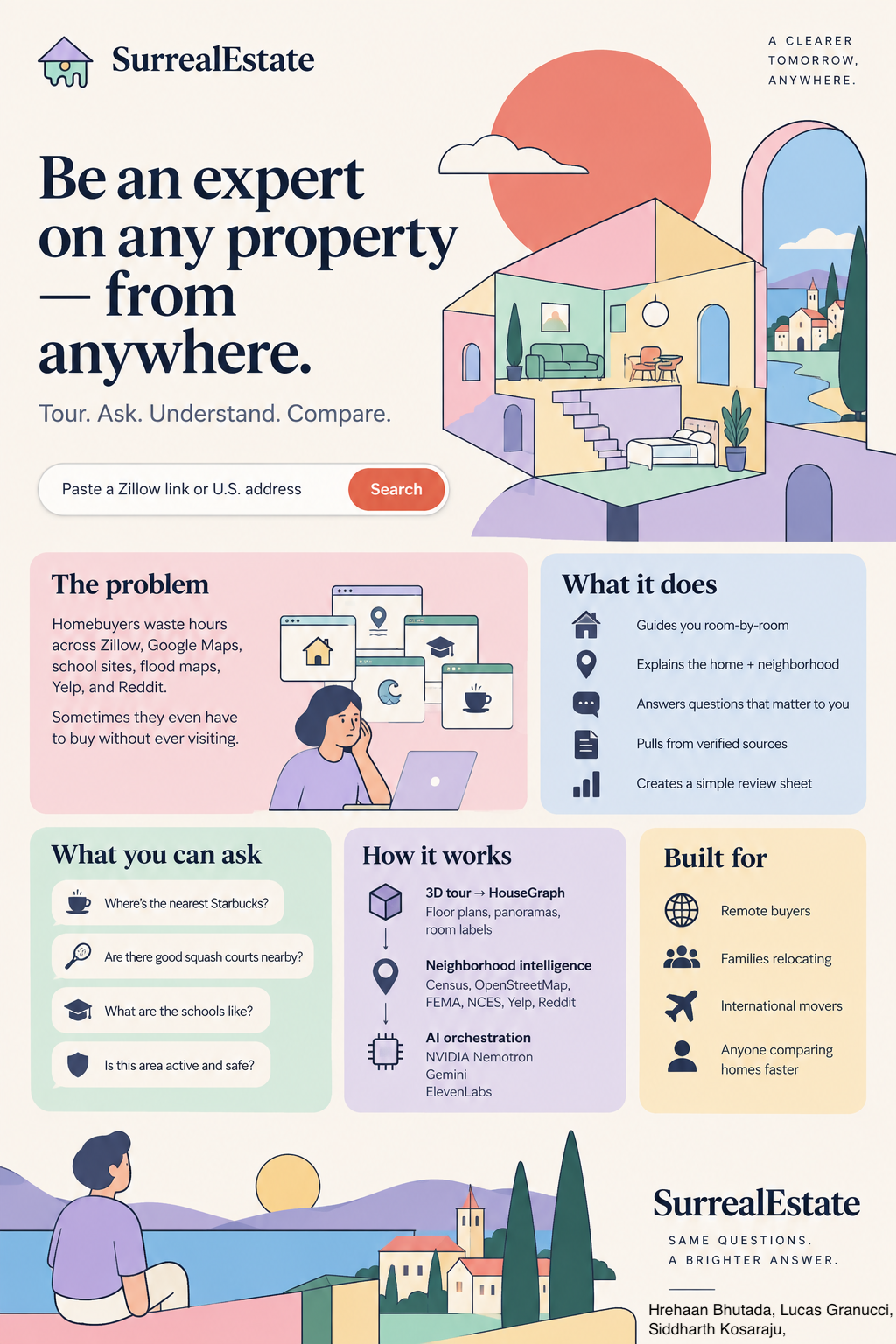
Once you paste in the Zillow link of a listing you’re interested in, SurrealEstate connects you with Sir Real Estate—an evidence-backed virtual agent that guides you through the home, helps you explore each room, and answers the questions that actually matter to you. Whether you want to know where the closest Starbucks is, whether there are good squash courts nearby, or what the surrounding schools and neighborhood are like, SurrealEstate pulls together verified property and local data into one interactive experience. Instead of opening ten tabs and researching everything yourself, you can tour, ask, understand, and compare, all in one place.
How we built it
We built SurrealEstate to be first and foremost evidence-grounded. A user starts with a Zillow listing or U.S. address; the system gathers neighborhood data from public sources like Census, OpenStreetMap, FEMA, NCES, Yelp, and Reddit, while NVIDIA Nemotron orchestrates follow-up research and keeps every claim tied to source evidence. For the property itself, we convert the 3D-home tour into a structured HouseGraph, using floor plans, room IDs, and panoramas, with Nemotron vision labeling rooms so buyers can navigate the home digitally. The final experience combines the house model and verified research into an interactive walkthrough where buyers can explore rooms, see concise source-backed insights, ask questions to Sir. Real Estate, and export a simple one-page review sheet to compare listings later.
Challenges we ran into
Our main challenge was project direction - specifically, we knew we wanted to make SurrealEstate, but weren't sure the most effective way. While developing draft one of SurrealEstate, we deduced that our intent for the first version was right, but our execution was wrong. We knew we wanted to make the home-buying process more informative and intuitive, but early on, we were too focused on showcasing the technology itself rather than solving the buyer’s actual problem. That gave us something technically impressive, but not necessarily something that felt useful. In our second iteration, we changed the way we approached the project. Instead of asking, “How can we use this technology?”, we asked, “What does a buyer actually need? What did our parents need?” From there, we focused directly on reducing the friction of researching, touring, and comparing homes—even if that meant cutting features or sacrificing some of the initial “wow factor.” That shift in direction is what ultimately shaped SurrealEstate into a much stronger, scalable product.
Accomplishments that we're proud of
We’re proud of fighting off the sunk-cost fallacy and choosing the customer over the concept. When we realized our first execution wasn’t matching the problem we actually wanted to solve, we scrapped nearly 10 hours of work and started over. That decision forced us to get much clearer on SurrealEstate’s value proposition: not building the flashiest demo, but building something buyers would actually care about and use. It taught us that strong product development means being willing to let go of good work when it isn’t serving the story, the market, or the customer. One of the technical accomplishments we’re most proud of is how far we pushed NVIDIA Nemotron. We initially challenged it with extremely ambitious tasks, including ideas around 3D reconstruction, and that process helped us learn where the model was strongest and how to use it more effectively. From there, we built a broader agentic system around it: Nemotron helps label floor plans, select relevant facts, orchestrate research, and verify AI-generated responses, while our backend connects multiple external APIs and keeps everything grounded in source evidence. More than just integrating an AI model, we learned how to build a reliable system around it and push the technology to its practical limits.
What we learned
One of our biggest lessons was to start small and make the value obvious. William Hill from NVIDIA challenged us with ideas like “try to do more with less,” “give us a reason why we should care,” and, most importantly, “know your story.” We took that seriously. Instead of trying to win through sheer technical complexity, we focused on what makes SurrealEstate meaningfully different: bringing the home, neighborhood research, and buyer questions into one evidence-backed experience. We learned that strong technology only matters if the customer immediately understands why your product should exist and why they should choose you over what’s already on the market. On the technical side, we learned a lot about agentic orchestration and keeping AI systems constrained. Rather than asking one model to do everything, we built a backend pipeline where different components have specific jobs: research providers collect evidence, Nemotron helps select and verify information, Gemini turns that information into buyer-friendly language, and ElevenLabs handles speech. Our API layer ties those pieces together while preserving source IDs and failing safely when information cannot be verified. We also learned that model capability is about more than a benchmark number. Pushing Nemotron toward ambitious tasks helped us understand where it performed well in our actual workflow and where a more focused role created better results. That same lesson applies to API integration and GPU-backed AI infrastructure: the challenge isn’t just getting a model running—it’s designing the orchestration, latency, reliability, and verification around it so the technology actually serves the product.
What's next for SurrealEstate
The next step for SurrealEstate is getting it into the hands of real buyers and real estate professionals. We want to explore pilot opportunities with platforms like Zillow and with local Pittsburgh real estate agencies to see how the product performs in actual home-search and showing workflows. That hands-on feedback would help us understand where SurrealEstate creates the most value, refine the experience around real buyer and agent needs, and validate how well our combination of interactive tours, neighborhood intelligence, and evidence-backed AI can fit into the existing real estate ecosystem. From there, the goal is to turn SurrealEstate from a hackathon prototype into a product people can actually use while making one of the biggest decisions of their lives.
Built With
- elevenlabs
- gemini
- nemotron


Log in or sign up for Devpost to join the conversation.