Inspiration
SurplusLink was inspired by a real-world problem we see every day: large amounts of perfectly good food are wasted while many people struggle to afford meals.
We realized the issue is not a lack of resources — it’s a lack of connection. People who need help often don’t ask due to friction, embarrassment, or lack of awareness, while surplus food sits unused.
This inspired us to build a system that proactively connects needs to resources using AI, instead of relying on users to search or ask.
What it does
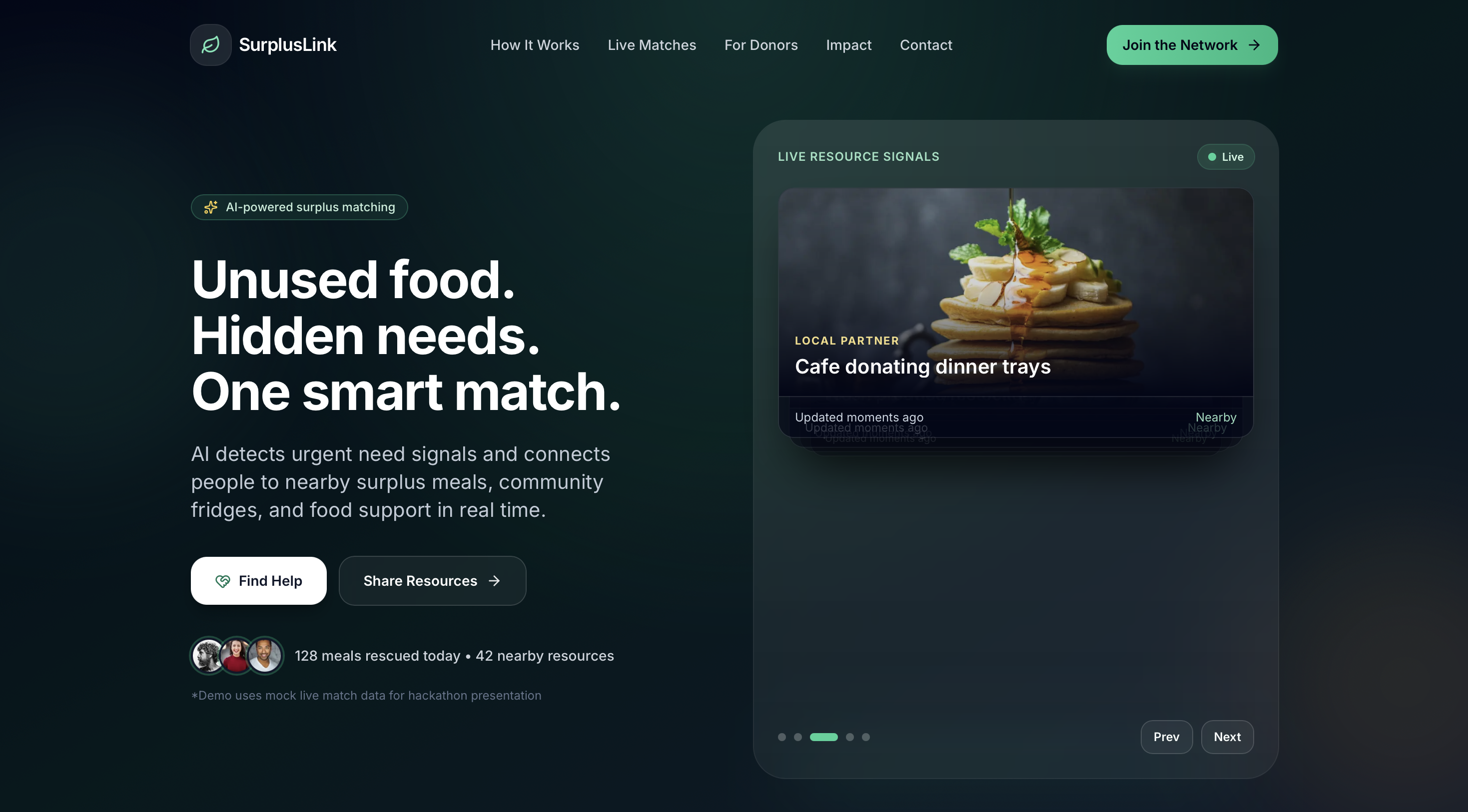
SurplusLink is an AI-powered surplus food marketplace that connects people to nearby food in real time.
- Users describe their situation in natural language
- AI detects need, urgency, and preferences
- The system finds nearby surplus food using location data
- Users receive multiple smart recommendations
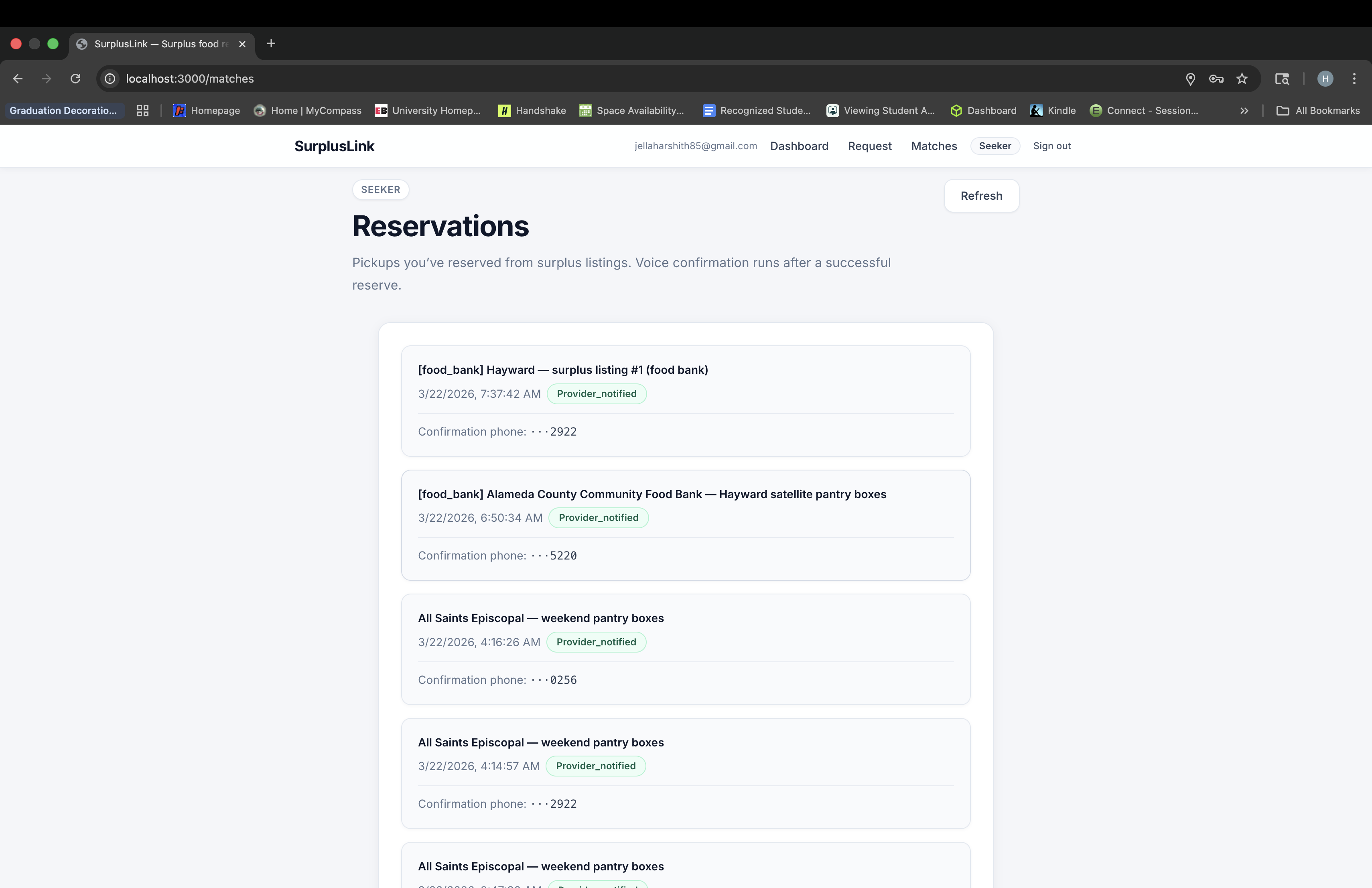
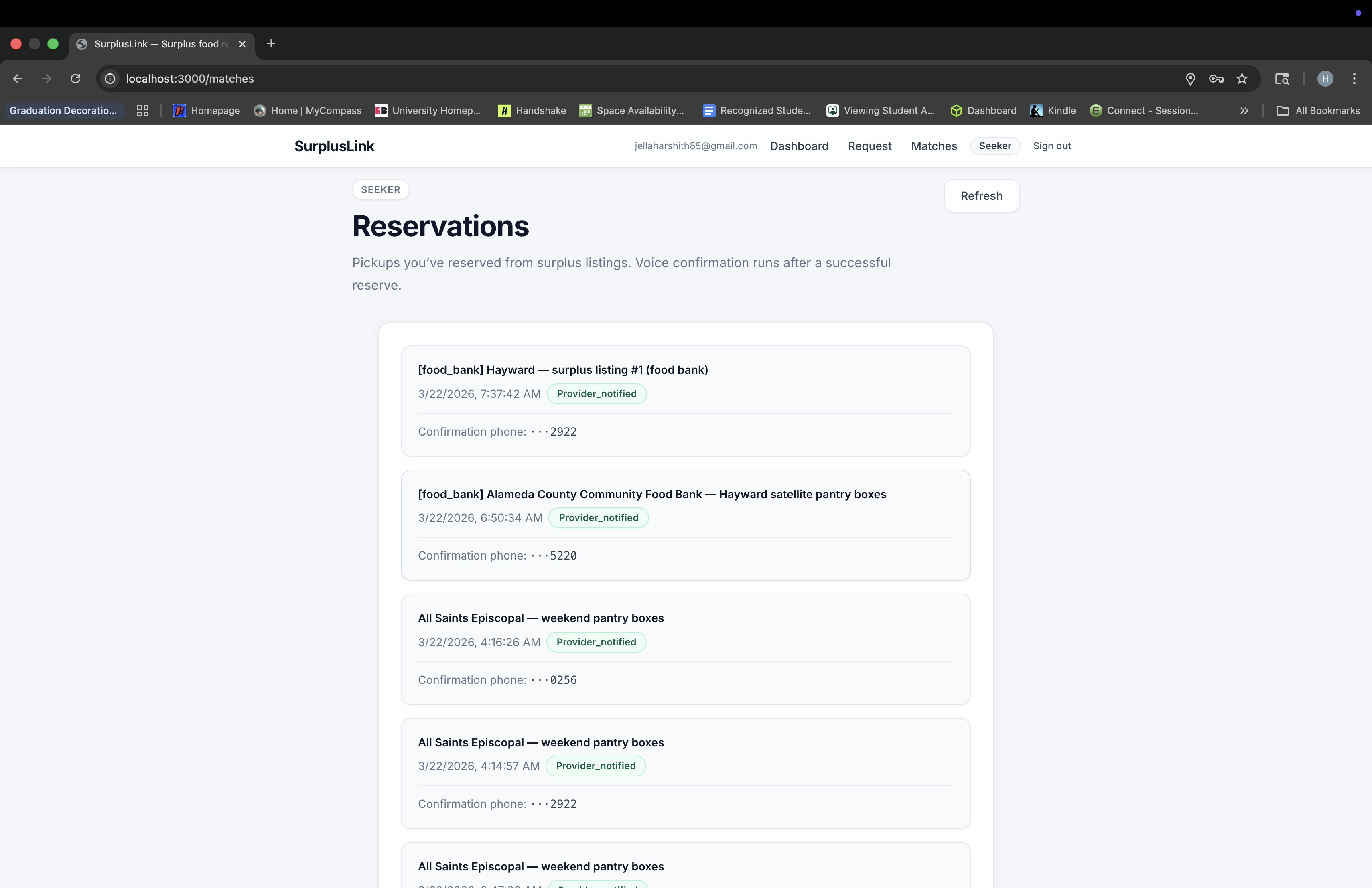
- They can instantly reserve food and navigate to pickup
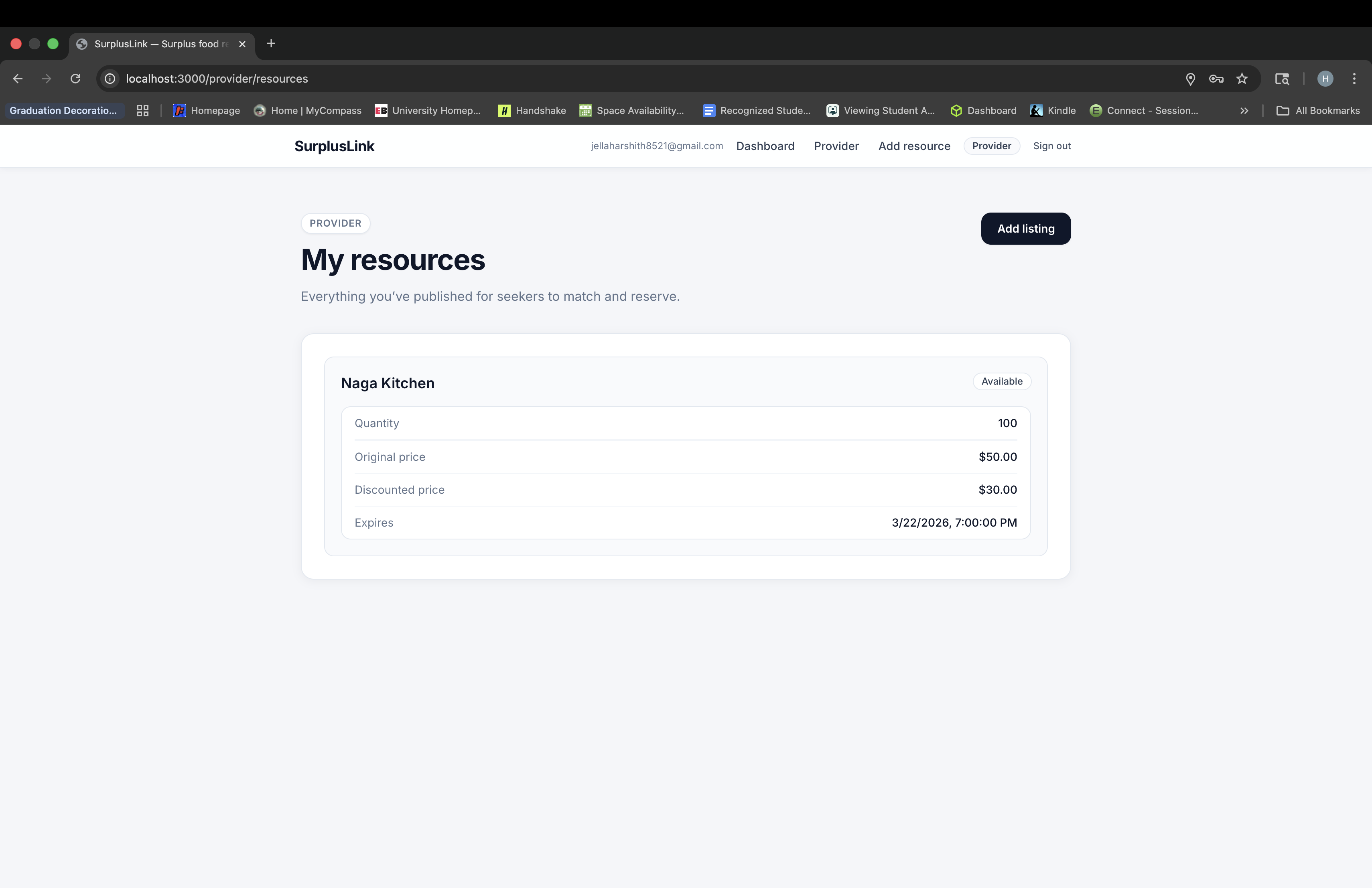
- Providers can list surplus food before it goes to waste
- Automated voice and notification systems improve coordination
Instead of searching manually, the system acts on behalf of the user, making access faster and more intuitive.
How we built it
We built SurplusLink as a full-stack application:
- Frontend: Next.js + Tailwind CSS
- Backend: Node.js + Express
- Database: Supabase (PostgreSQL)
- AI Layer:
- OpenAI for reasoning
- Hugging Face for classification
- OpenAI for reasoning
- Maps: Google Maps API
- Communication: Twilio + ElevenLabs
The system processes user input, detects intent using AI, retrieves nearby resources, ranks them using a matching algorithm, and returns the best options in real time.
Challenges we ran into
One of the biggest challenges was integrating multiple systems together — AI, database, maps, and communication APIs — while keeping everything stable.
We also faced:
- evolving database schemas during development
- handling API limitations and permissions (like AWS Bedrock)
- coordinating multiple AI models
- managing time under hackathon pressure
Despite this, we focused on building a working end-to-end flow.
Accomplishments that we're proud of
- Built a fully working end-to-end system (AI → match → reserve → confirm)
- Created a proactive AI system, not just a search tool
- Implemented real-time location-based matching
- Added multiple recommendation options instead of one result
- Integrated voice confirmation for reservations
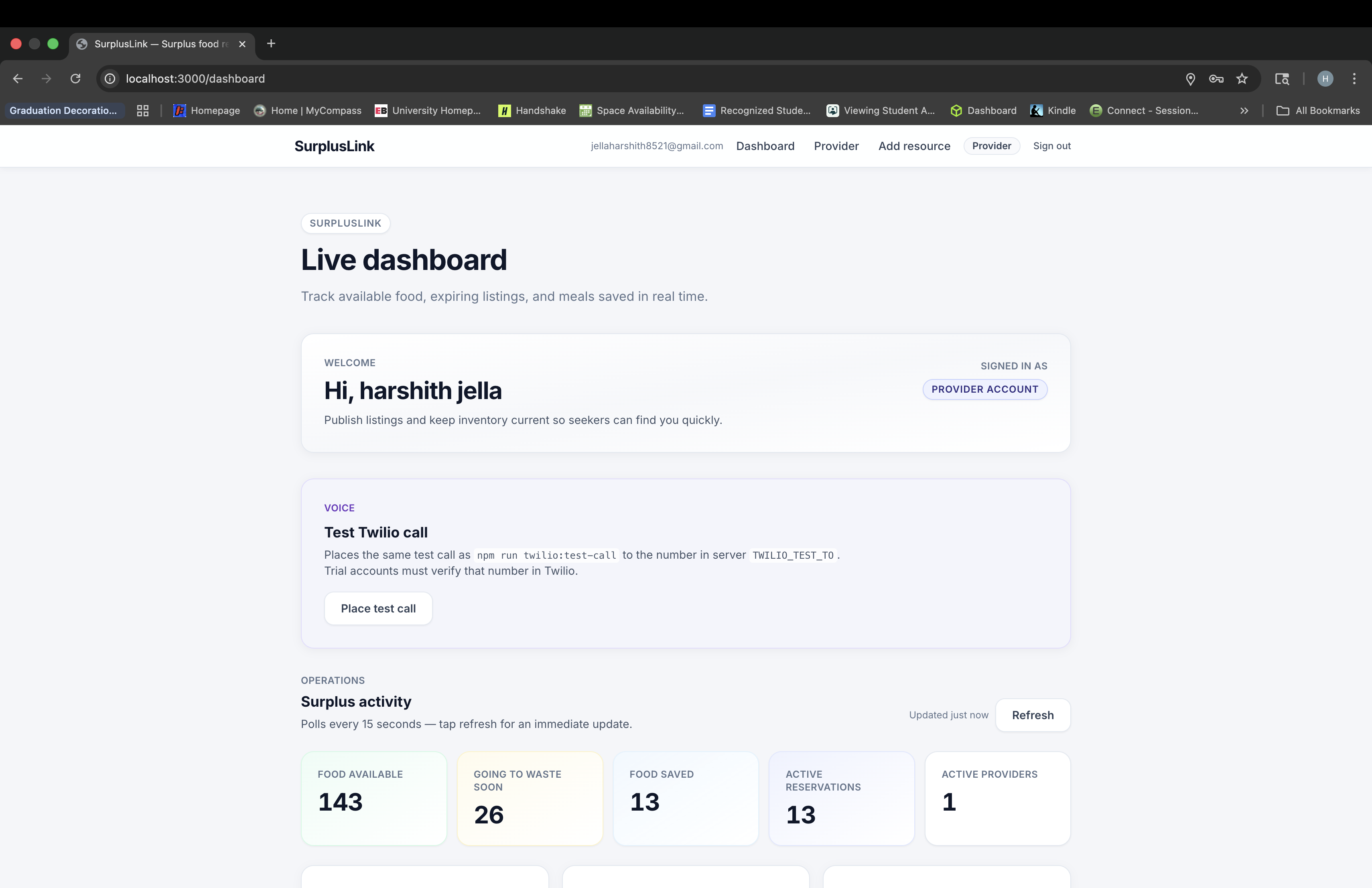
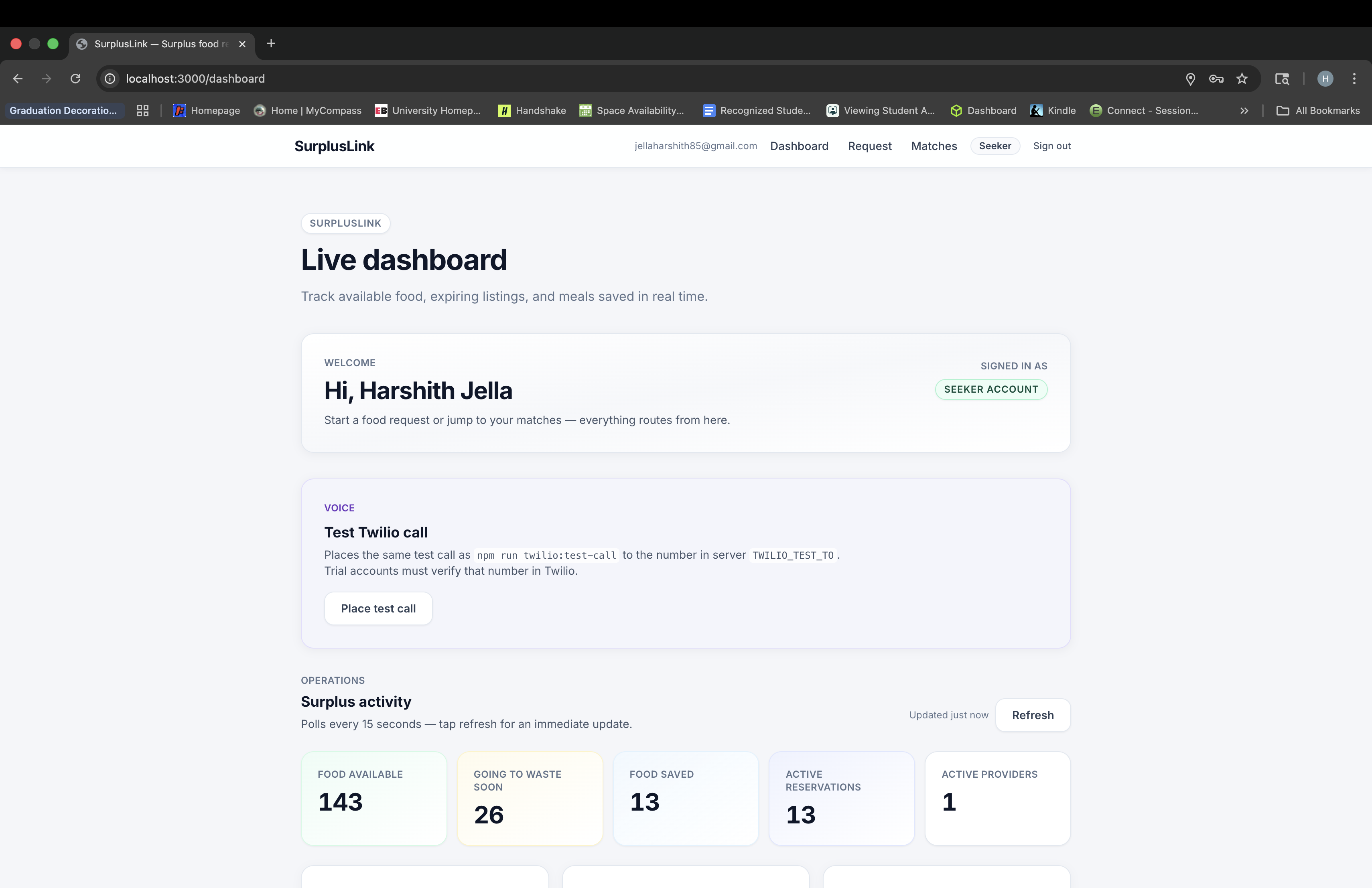
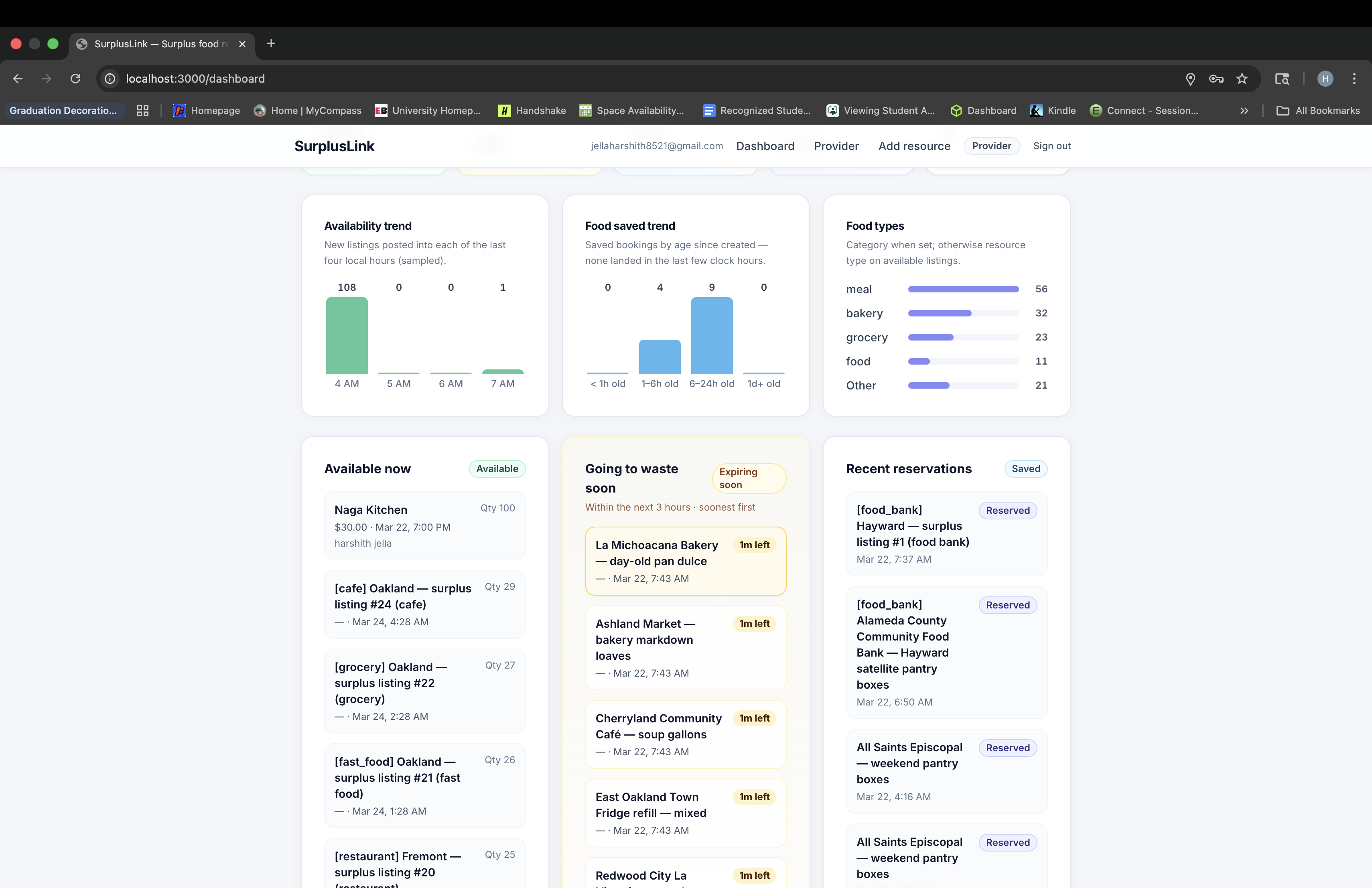
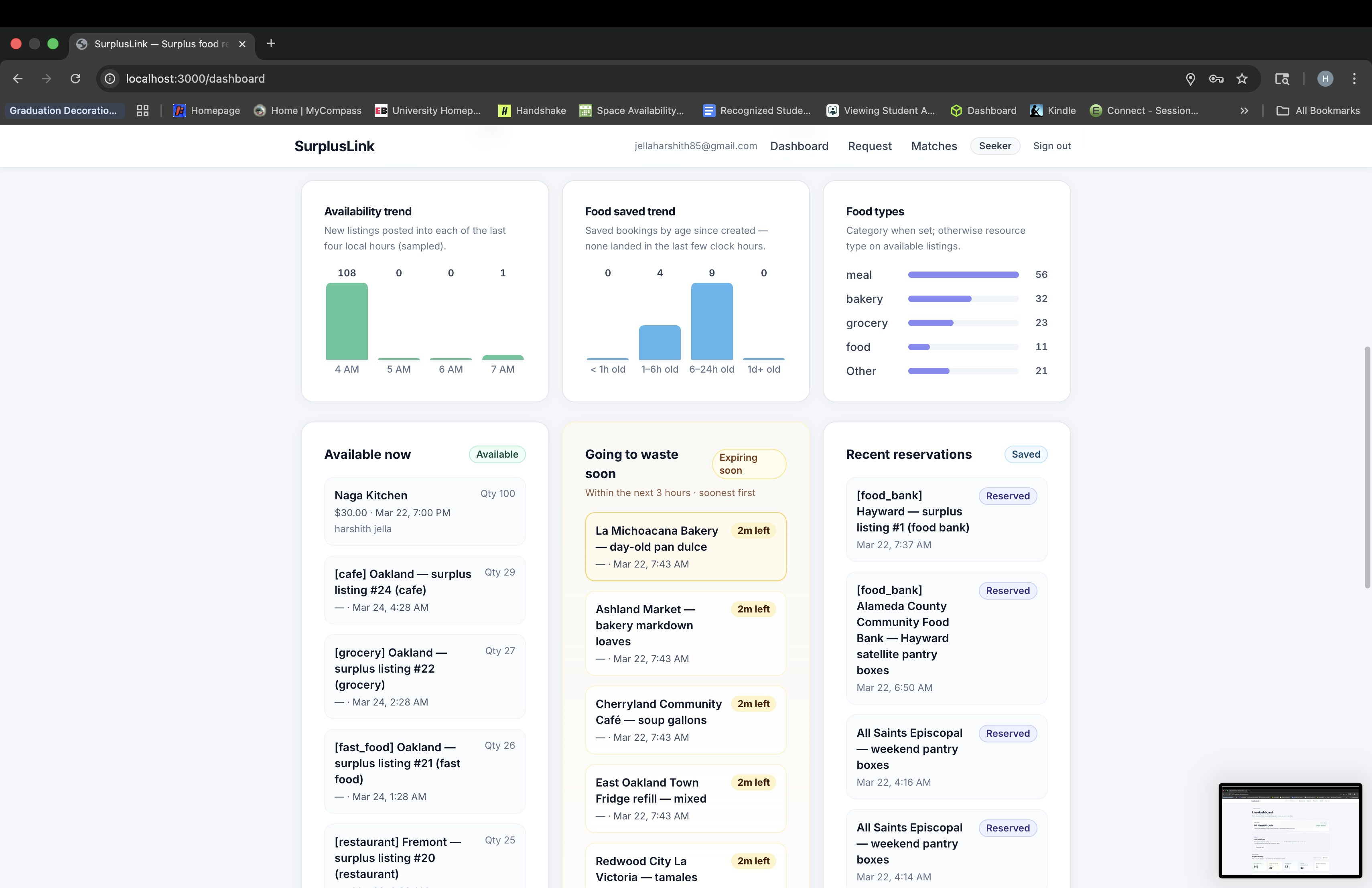
- Designed a live dashboard for food availability and usage
- Delivered a clean and responsive UI
What we learned
We learned that AI can go beyond generating responses — it can understand intent and guide real-world decisions.
We also gained experience in:
- full-stack development
- integrating multiple APIs
- designing scalable systems
- improving UX with AI
Most importantly, we learned how to prioritize features and collaborate effectively under time constraints.
What's next for SurplusLink
We plan to expand SurplusLink into a real-world platform:
- real-time updates and live data streams
- smarter recommendation engine
- provider-user communication features
- dynamic pricing for surplus food
- mobile app development
- integration with real-world food networks
Our goal is to build a system that reduces waste and improves access to essential resources at scale.

Log in or sign up for Devpost to join the conversation.