-
-
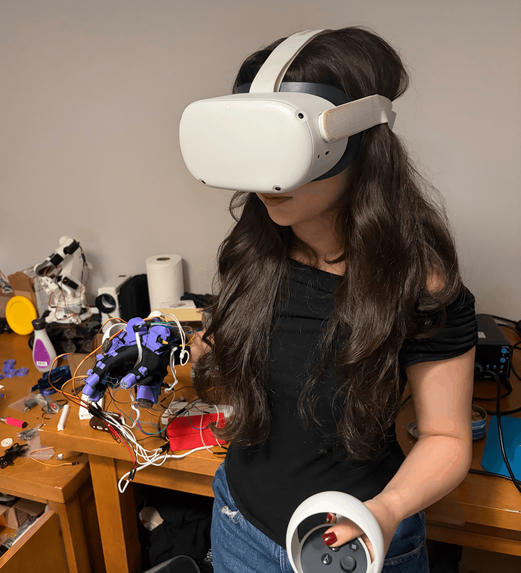
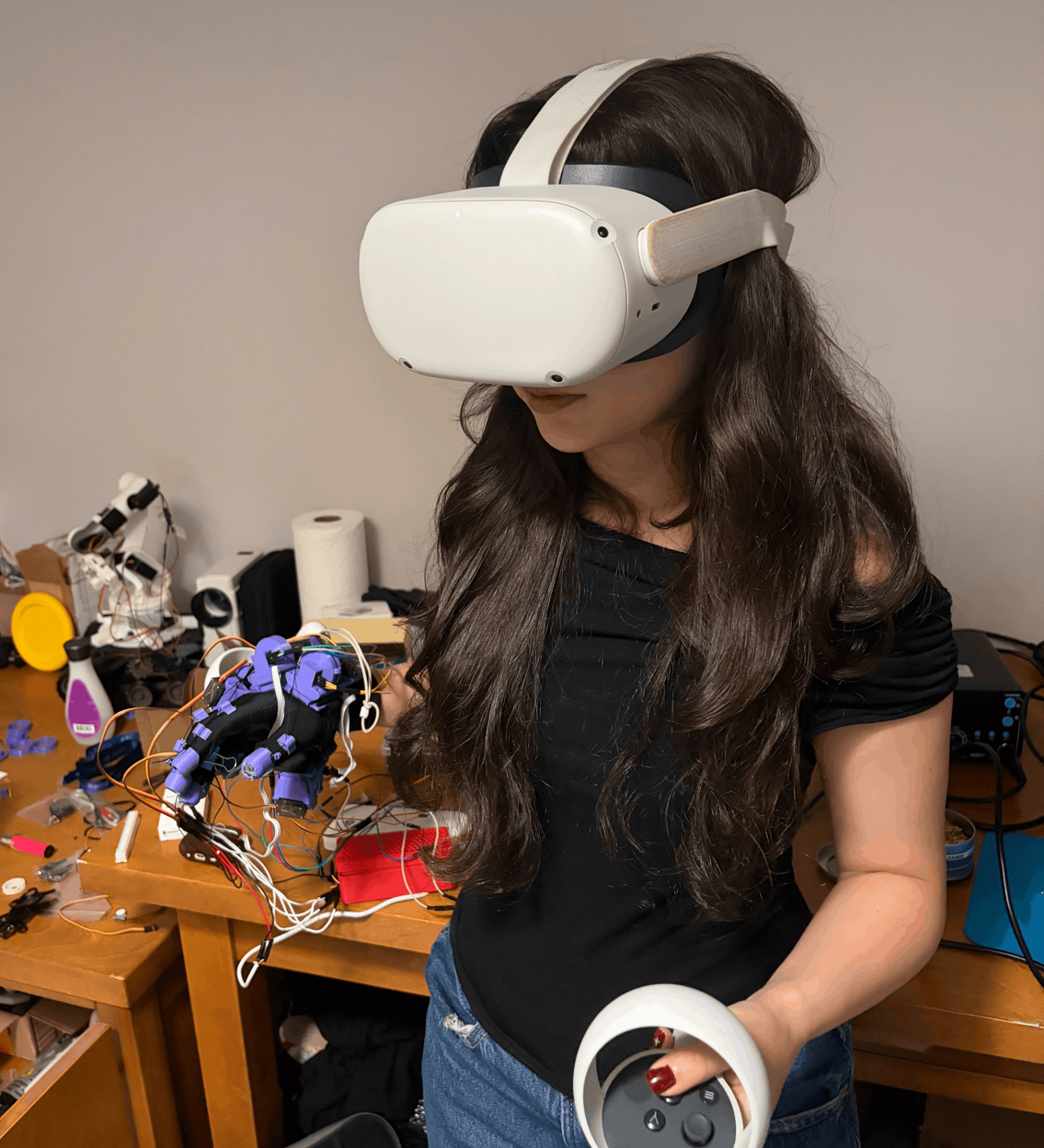
Meta Quest Headset with Haptic Gloves
-
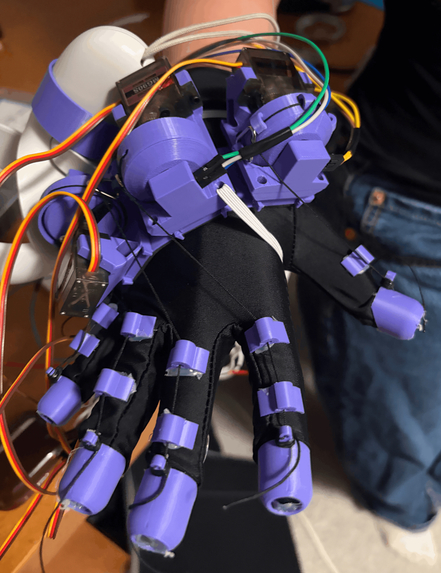
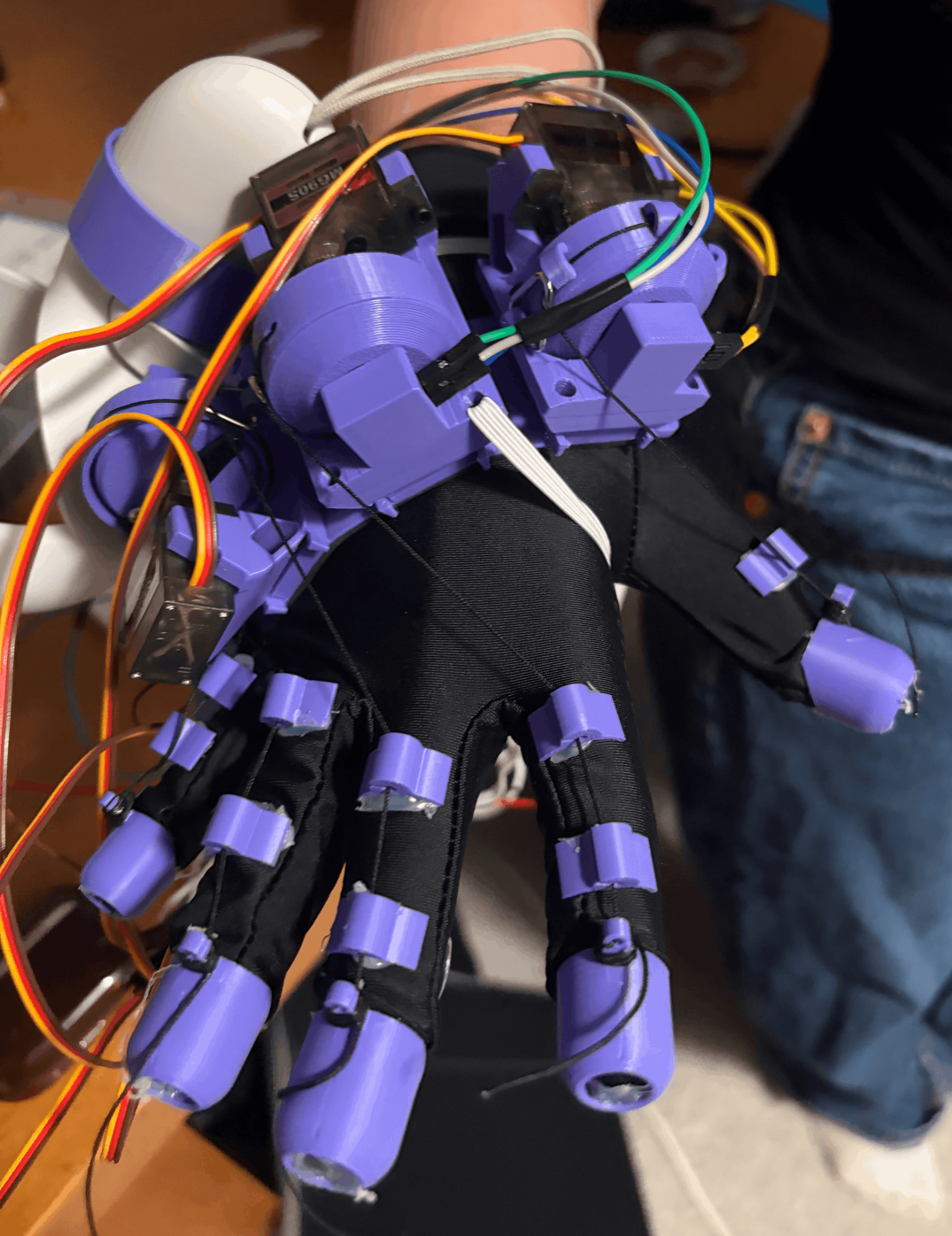
Haptic Gloves Close Up
-
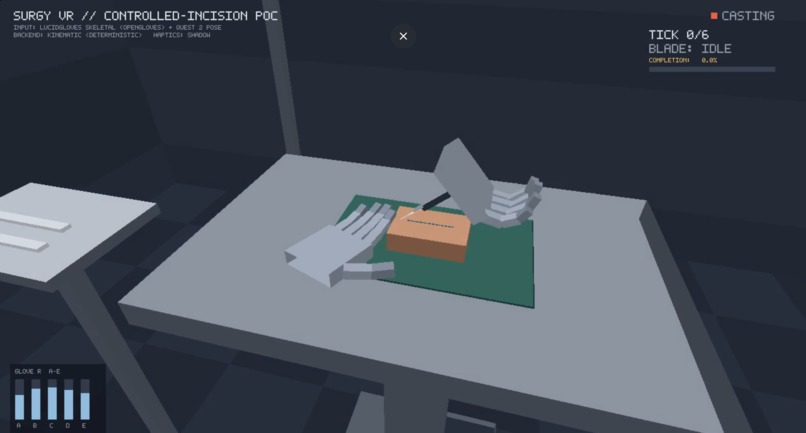
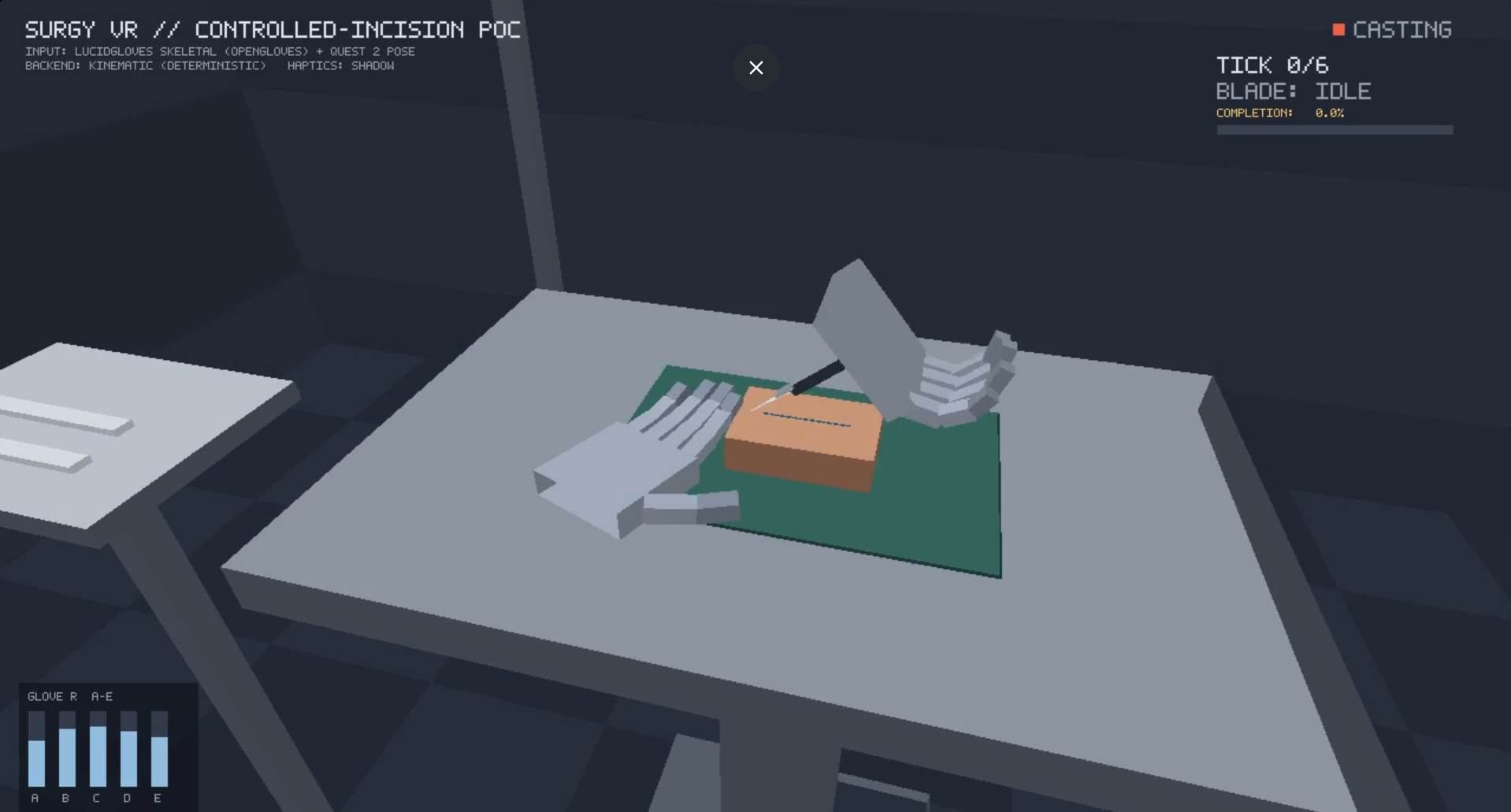
Physics Simulation
-
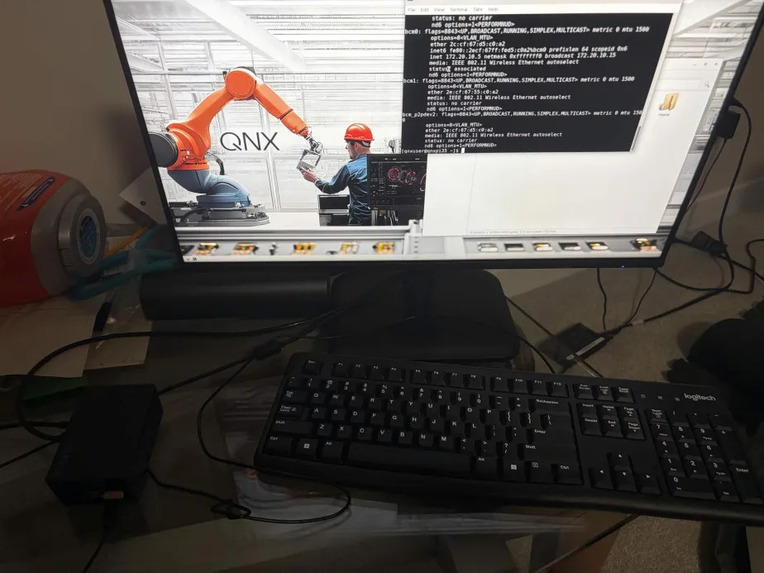
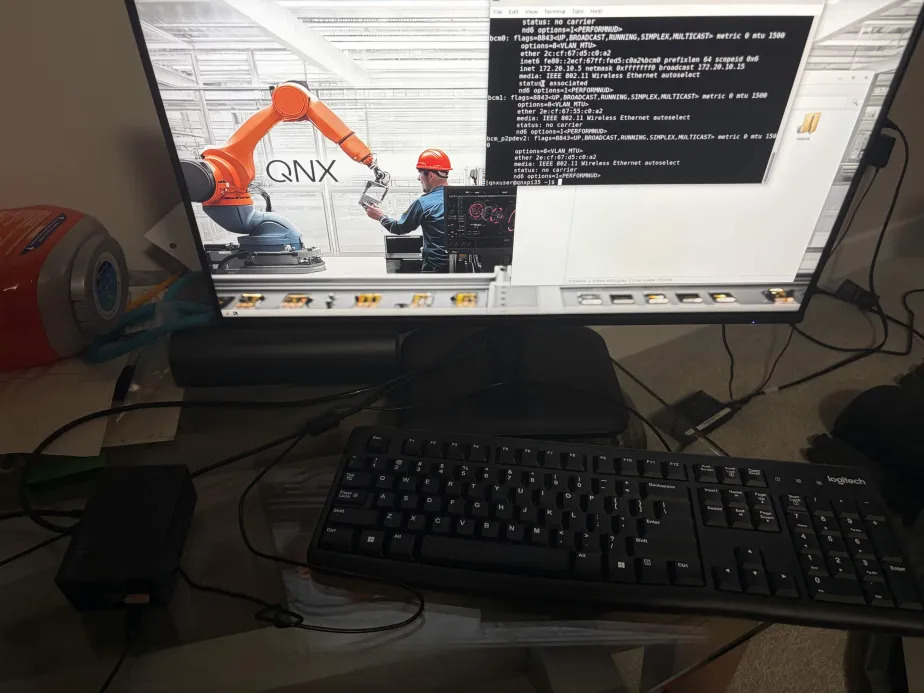
QNX Standalone Monitoring Setup
Inspiration
Surgery is physical.
A surgeon does not learn precision by watching a screen. Surgical skill is developed through repetition, hand control, grip, and the physical feeling of interacting with tools and tissue.
Virtual reality creates a safe place to practise procedures, but there is still a major disconnect: the virtual world often does not feel real, and completing a task does not necessarily tell us how the trainee's hands behaved while doing it.
We asked:
What if you could physically feel a virtual surgical environment while an embedded system independently analyzed how your hands moved?
That idea became SurgY.
SurgY combines custom haptic gloves, virtual reality, and a QNX-powered edge AI monitor to make surgical training more physical and measurable.
VR teaches the procedure. The gloves make it physical. QNX watches the hands.
What it does
SurgY uses custom wearable force feedback gloves.
Each finger is connected to a retractable spool and potentiometer that measures finger flexion. An ESP32 samples all five fingers and sends the data to SteamVR, allowing the user's real finger movements to control a virtual hand.
Servo mechanisms provide force feedback by resisting finger movement through guided strings. When the virtual environment detects an interaction, the glove can physically resist the corresponding fingers, making virtual objects feel more present.
At the same time, glove telemetry is mirrored over USB to a Raspberry Pi 5 running QNX.
This creates two independent paths:
- Bluetooth → OpenGloves → SteamVR for VR interaction and haptic feedback.
- USB → QNX for real-time hand monitoring and AI analysis.
The QNX system operates independently from the VR experience, allowing SurgY to analyze the trainee without becoming a bottleneck in the simulation.
Real-time AI monitoring
On QNX, SurgY processes both hands independently using 20-frame sliding windows.
For each hand, we extract 15 features describing:
- Finger position
- Frame-to-frame movement
- Short-term movement variability
These features are analyzed locally using mlpack K-nearest neighbours (KNN).
SurgY compares live hand behaviour against a recorded normal baseline. Movement that is close to the baseline receives a low anomaly score, while unusual or unstable behaviour produces a higher score.
All inference runs locally on the Raspberry Pi.
No cloud connection is required.
In one QNX validation test, controlled movement scored 0.066 and was classified as NORMAL, while intentionally erratic movement scored 0.602 and was flagged as an ANOMALY.
How we built it
We combined 3D-printed mechanical glove components, potentiometer-based finger sensing, servo-driven force feedback, ESP32 firmware, SteamVR, OpenGloves, and QNX.
The QNX monitor was written in C++17 and runs natively on a Raspberry Pi 5.
Its multithreaded architecture separates:
- Left glove ingestion
- Right glove ingestion
- Feature extraction and mlpack inference
- Monitoring and dashboard output
Higher-priority threads handle glove data, while lower-priority work handles visualization and logging. This allows SurgY to prioritize recent hand movement and keep monitoring both hands independently.
Our Tools
- ESP32
- 3D printing
- Potentiometers
- Servo motors
- Bluetooth
- USB serial
- OpenGloves
- SteamVR
- Raspberry Pi 5
- QNX
- C++17
- POSIX threads
- mlpack
- Armadillo
What's next
We want to collect larger real-user datasets and expand SurgY beyond finger flexion.
Future versions could include:
- Hand position and orientation
- Tool trajectories
- Grip consistency
- Tremor characteristics
- Procedure-specific movement patterns
- More realistic haptic resistance for different tools and tissues
Long term, we see SurgY as a hardware and edge-intelligence platform that can integrate with professional surgical simulators and provide trainees with measurable feedback on how their hands move over time.
Feel the surgery. Measure the skill.


Log in or sign up for Devpost to join the conversation.