Inspiration
We decided to go about with a simple question: why should meaningful surgical-skills practice depend so heavily on a student’s type of school, location, or financial situation?
Advanced simulators and specialized software from popular medical schools can be expensive to use. Simulation labs have limited availability, and students cannot always access supervised clinical observation or cadaver-based anatomy education as often as they would like.
These experiences are important, but they are difficult to repeat regularly due to not having access- especially for learners from lower-income communities and under-resourced institutions.
As future engineers, we wanted to contribute an idea by giving our love and tribute to future surgeons of Canada.
That idea became SurgePrep.
What it does
SurgePrep is a physical digital surgical-skills training prototype designed around hardware that students can buy and keep forever. It also has a simulator software to perform the surgery on.
The learner holds a realistic, 3-D printed scalpel-shaped blunt training instrument and practises on a flat surface (a 3-d simulator body). This helps to give more hands on training for future surgeons rather than a typical meta quest controller. A normal Logitech USB webcam observes how the tool moves using the apriltags, while an ESP32 measures contact and pressure using FSR sensors.
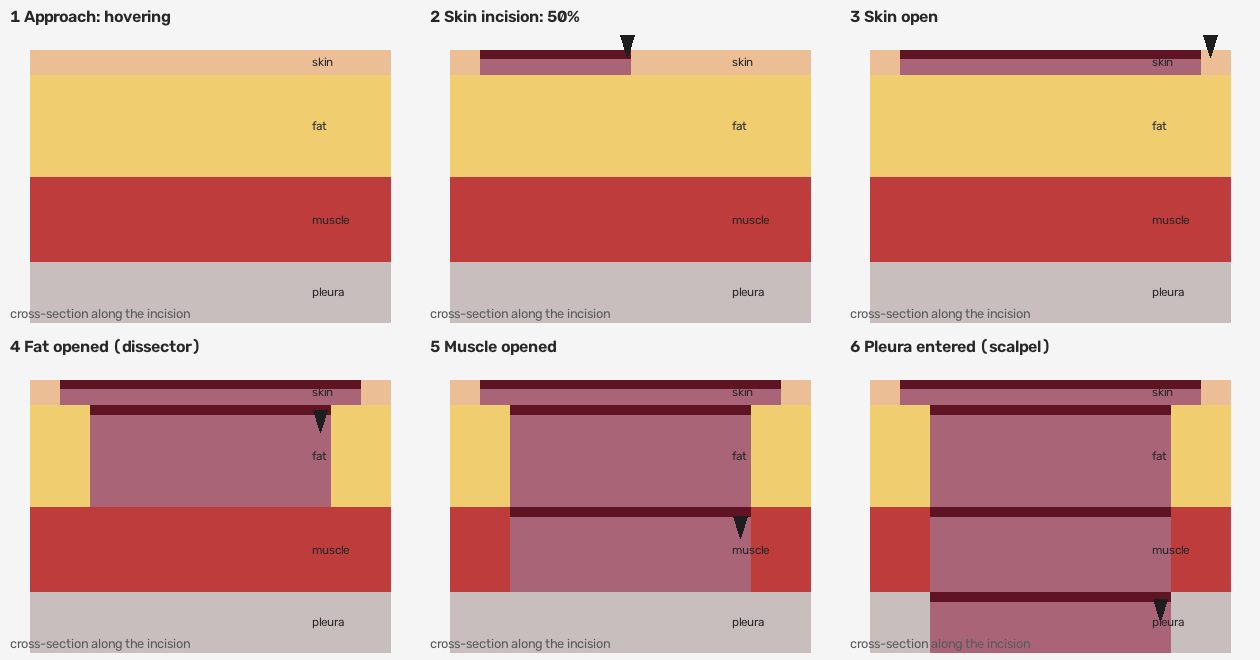
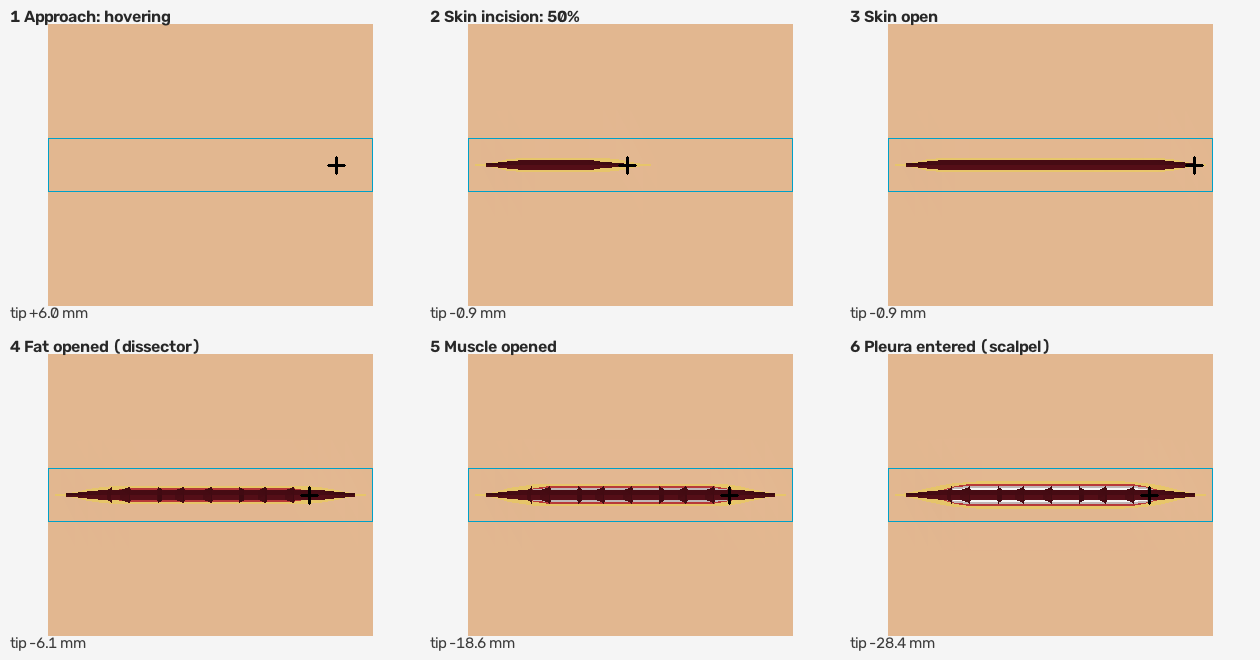
Those physical movements control a virtual instrument interacting with a 3D model on the computer screen.
The learner can see whether they followed the intended path, maintained consistent pressure, positioned the tool correctly, and completed the exercise accurately. At the end, SurgePrep provides a score, replay, and understandable feedback.
The goal is to let trainees safely repeat instructor-assigned exercises from home or through a shared community kit instead of depending entirely on expensive institutional equipment and limited lab hours.
How we built it
As we worked on the project, we realized that specialized hardware like a stereo depth camera or a VR headset conflicted with our goal of making training more accessible to people who came from low income families.
We redesigned the prototype around a standard Logitech USB webcam.
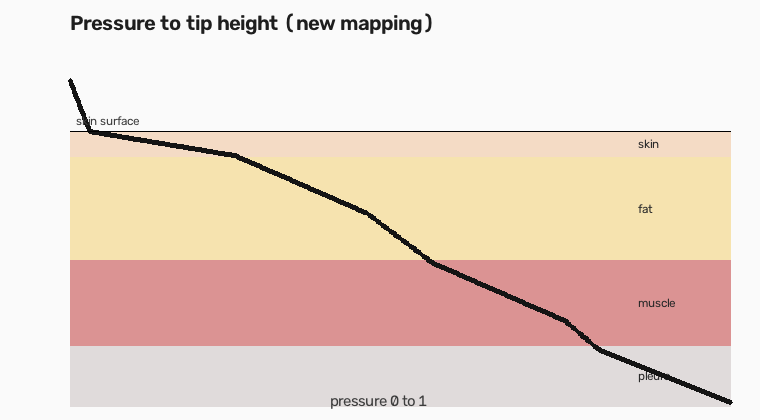
Using computer vision, the webcam tracks a marker attached to the blunt training tool which for instance a forceps. The ESP32 separately reads contact and force information. Our software synchronizes both data streams, calibrates the workspace, and maps the learner’s movement onto the virtual model.
The system combines:
- A Logitech USB webcam for visual tracking
- A blunt, scalpel-shaped simulation tool
- A reusable synthetic practice surface
- An ESP32 for force and contact sensing
- Computer vision for tool tracking and calibration
- A screen-based 3D training environment
- A backend for synchronizing and storing session data
- A scoring system for objective performance measurements
- AI-assisted feedback based on the recorded results
Challenges we ran into
Our greatest challenge was getting the physical and virtual systems to understand one another.
The webcam works with pixels. The ESP32 produces sensor values. The virtual model works with coordinates. We had to translate and synchronize those signals so that they represented the same interaction.
We mostly encountered challenges involving:
- Camera calibration to get a perfect view!
- Mapping a flat physical surface onto a 3D model
- Keeping the virtual tool synchronized with the physical tool and get it oriented properly
What we learned
We learned that reliable calibration matters more than impressive graphics. We learned that hardware is never truly “plug and play,” and that every sensor needs testing, filtering, and validation. We learned that accessibility is not achieved by simply calling a product affordable. It requires designing around equipment that students and schools can realistically access, reuse, repair, and share. We also learned that technology should support others rather than attempt to replace their experience and judgment like the current era that we live in.
What's next for SurgePrep
Our next step is to improve tracking accuracy and work with medical educators to design appropriate training exercises related to proper surgical practices and validate the scoring system.
~Built by future engineers for future surgeons~

Log in or sign up for Devpost to join the conversation.