SurgeAid Hackathon Story
Inspiration
- When disaster strikes, help is often delayed.
- Neighbors want to help, but they may not know you need it.
- Many survivors only have basic phones that work with text, not apps.
- This problem keeps happening: people want to help but can’t coordinate.
- The issue isn’t a lack of helpers; it’s the lack of connection.
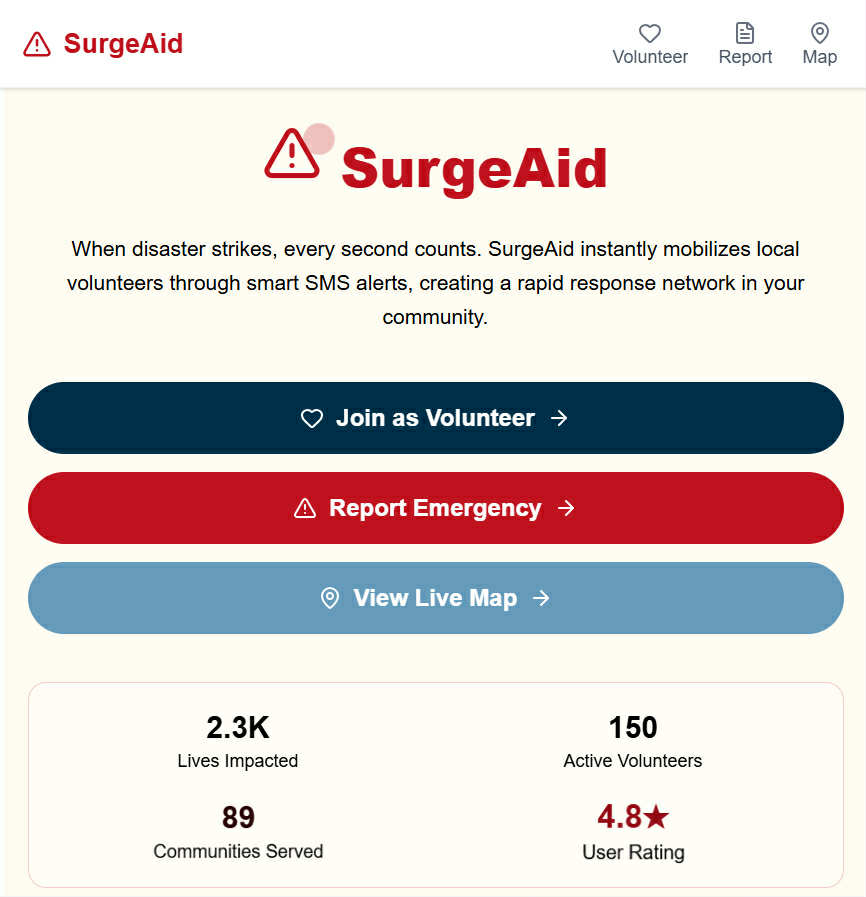
- SurgeAid solves this by using simple text messaging and web tools to link people fast, so neighbors can save lives right away.
What it does
- Rapid emergency response platform connecting disaster victims with nearby volunteers through smart SMS technology.
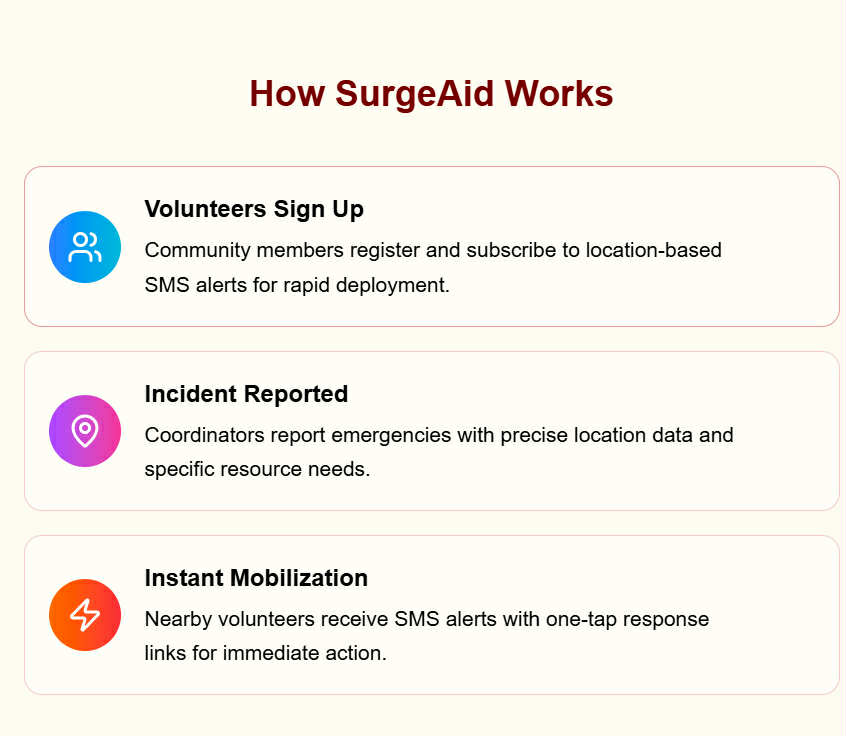
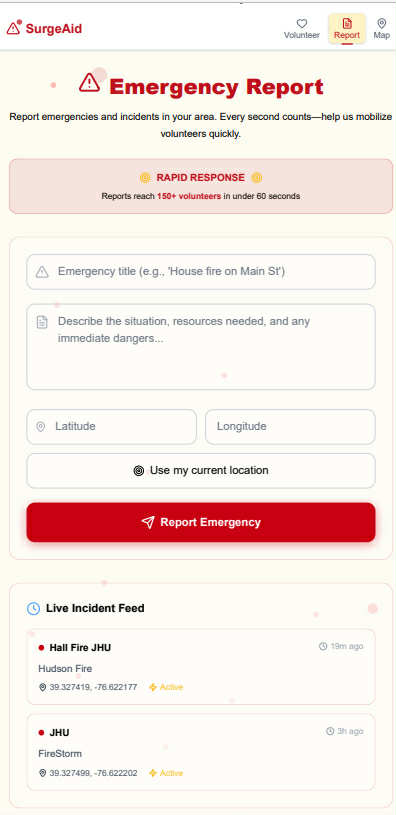
- Community members can report emergencies with precise location data.
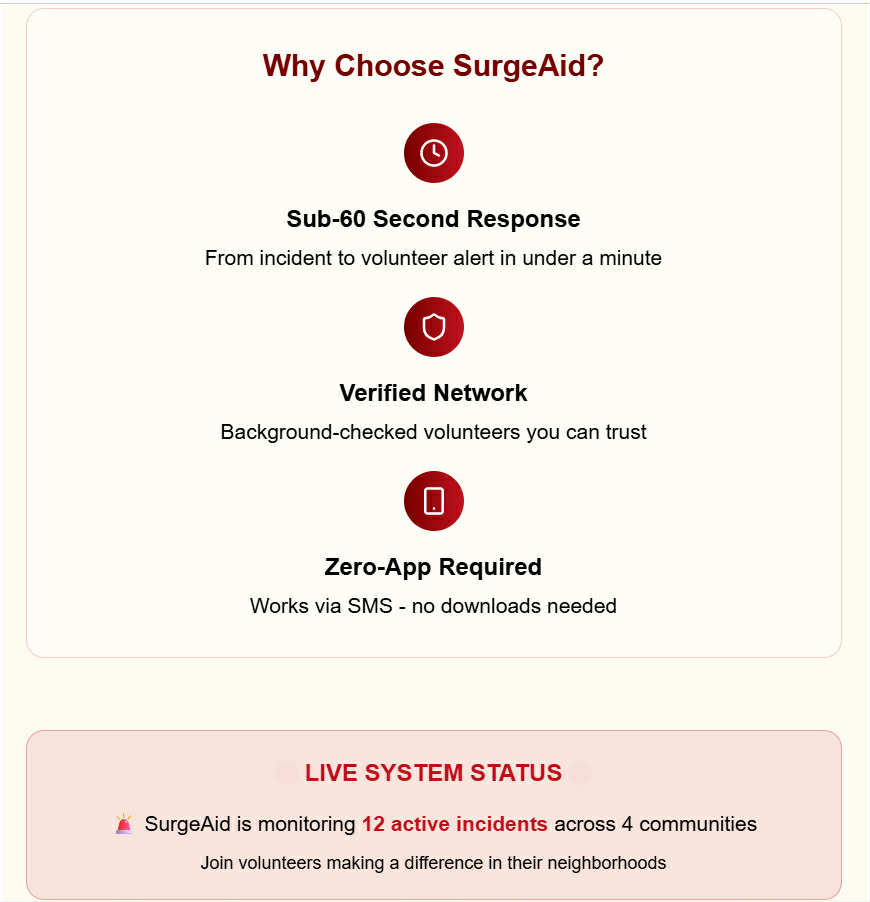
- Automatically alerts subscribed volunteers within 60 seconds via text message.
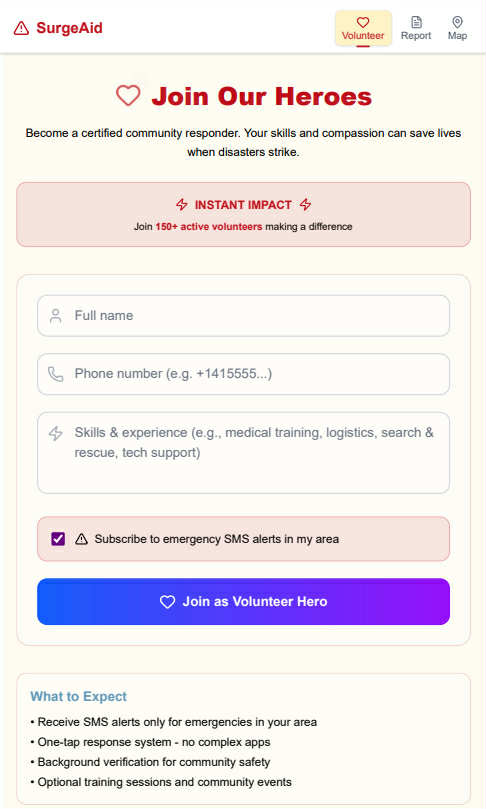
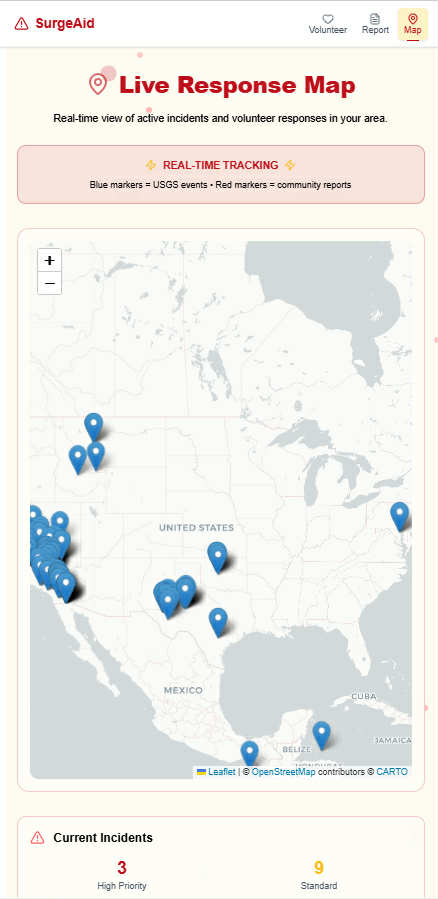
- Features real-time incident tracking, volunteer registration, and a live response map.
- Displays both USGS earthquake data and community-reported emergencies.
- Works entirely through SMS for maximum accessibility; no smartphone apps required.
How we built it
- Frontend: Next.js 15 with React 19, mobile-first and responsive.
- Backend: Next.js API routes connected to Firebase Firestore for real-time data storage and synchronization.
- SMS Integration: Twilio API for instant emergency alerts to volunteers.
- Interactive Map: Leaflet with React-Leaflet, pulling live USGS earthquake data and community reports.
- Styling & Icons: Tailwind CSS for styling and Lucide React for consistent iconography.
Challenges we ran into
- Picking an idea that was both unique and aligned with philanthropic goals.
- Deciding on the most suitable tech stack for the project.
- Implementing SMS functionality and ensuring alerts are delivered in under 60 seconds.
Accomplishments that we're proud of
- Successfully finished a web app on our first hackathon as a team.
- Created a solution that works, helps people, and improves lives.


Log in or sign up for Devpost to join the conversation.