-
-
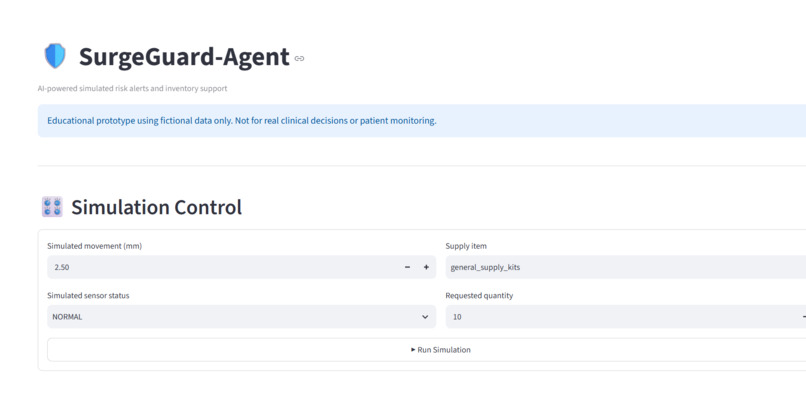
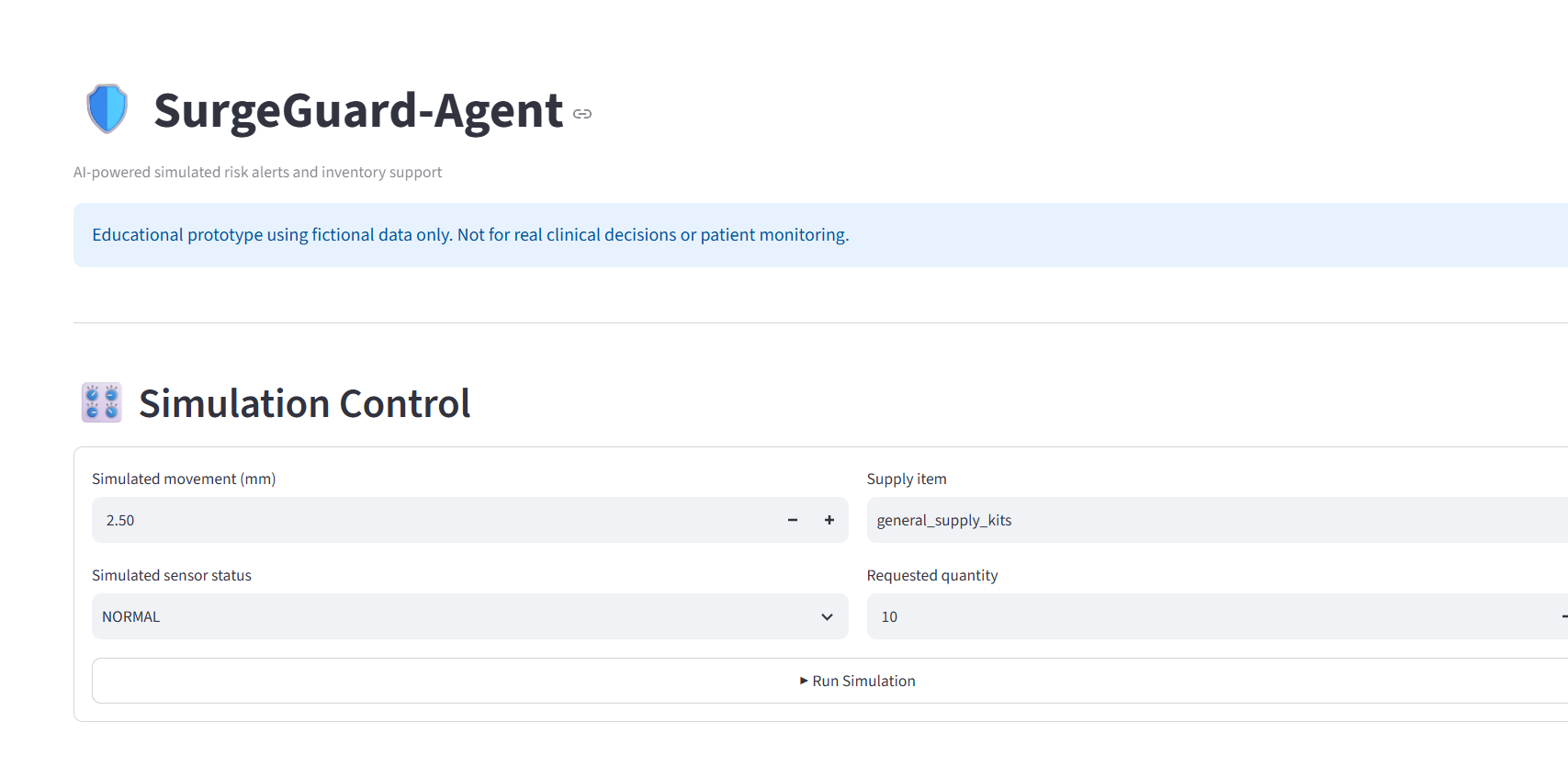
Stimulation control
-
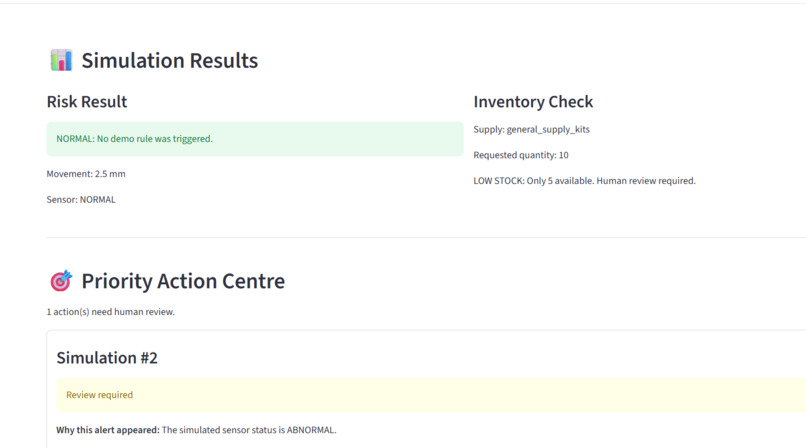
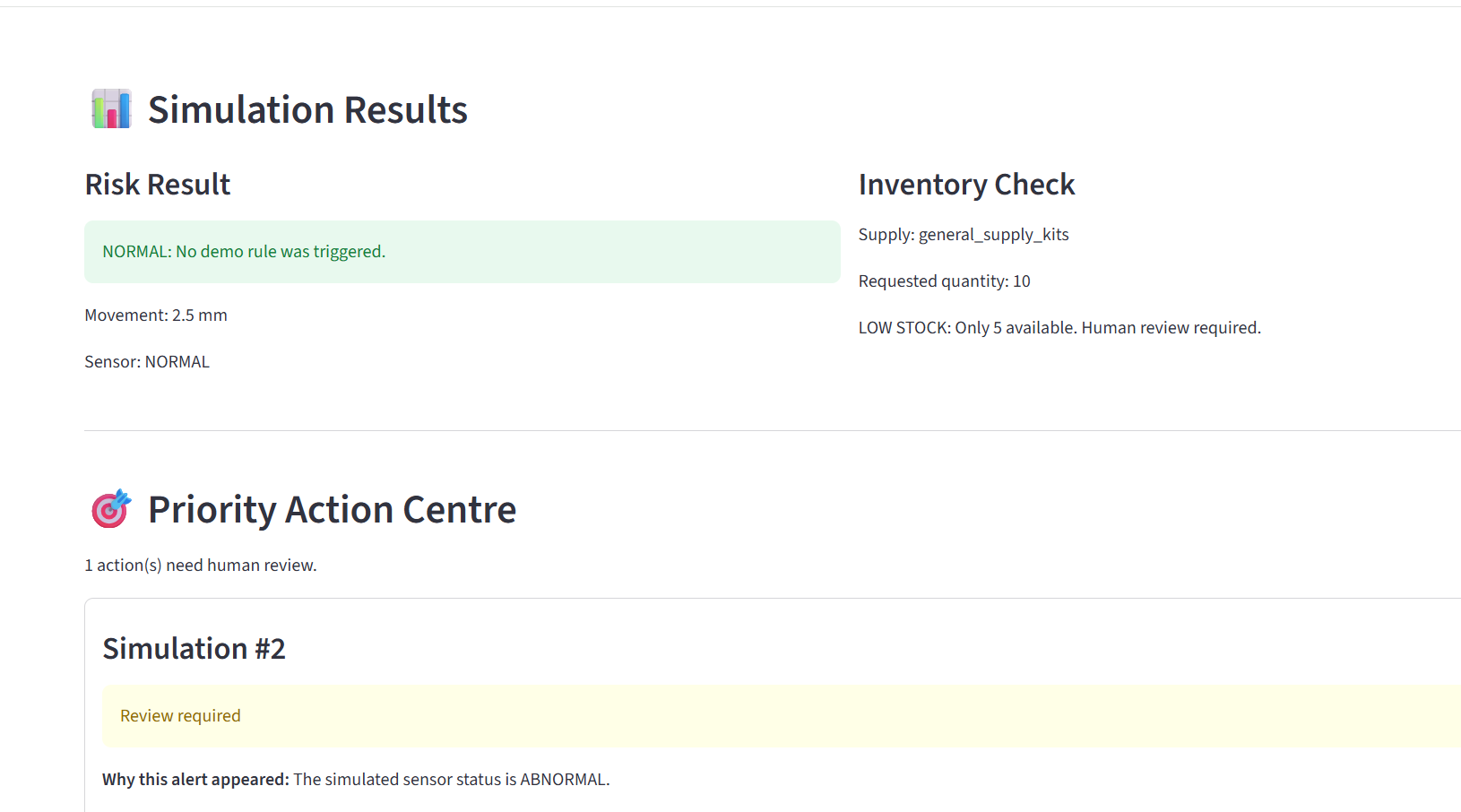
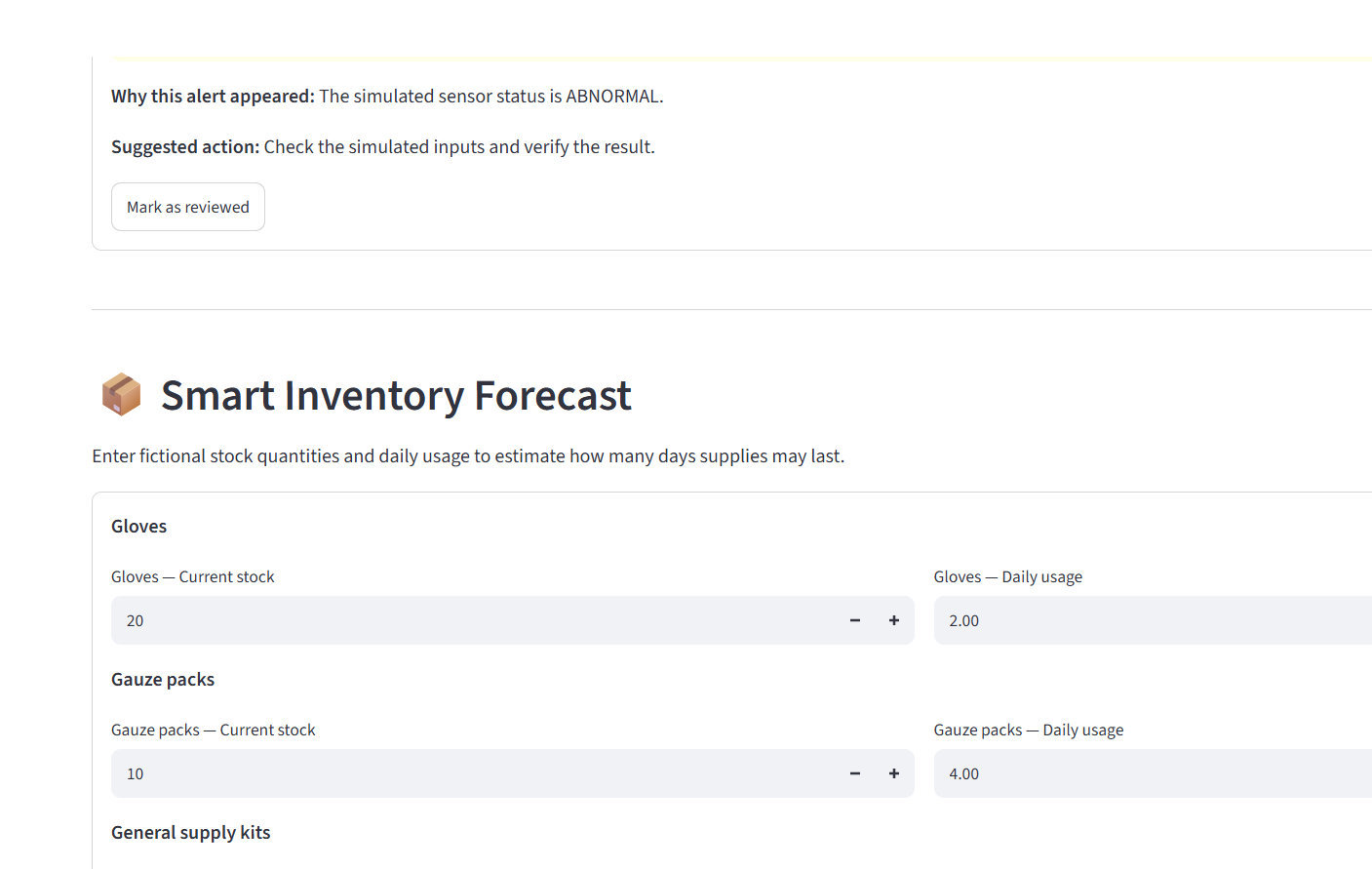
Priority action centre
-
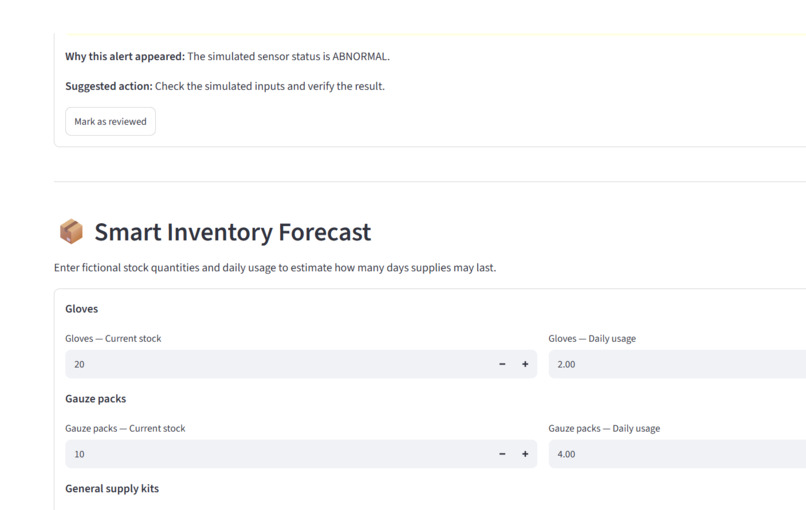
Smart Inventory Forecast
-
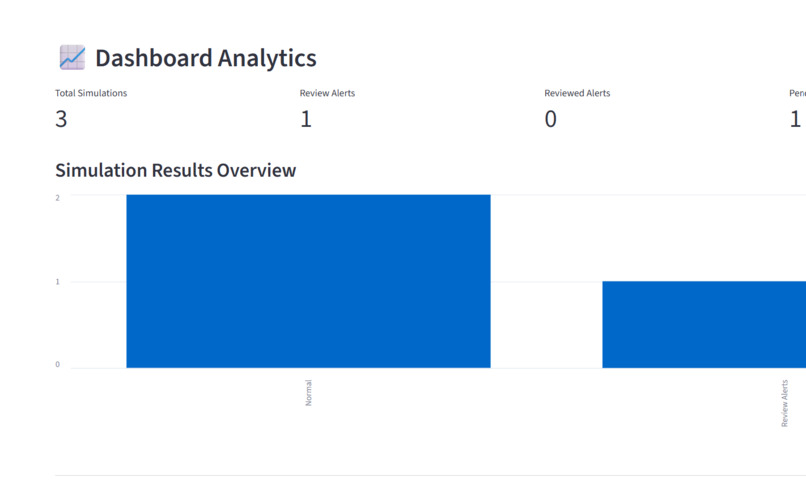
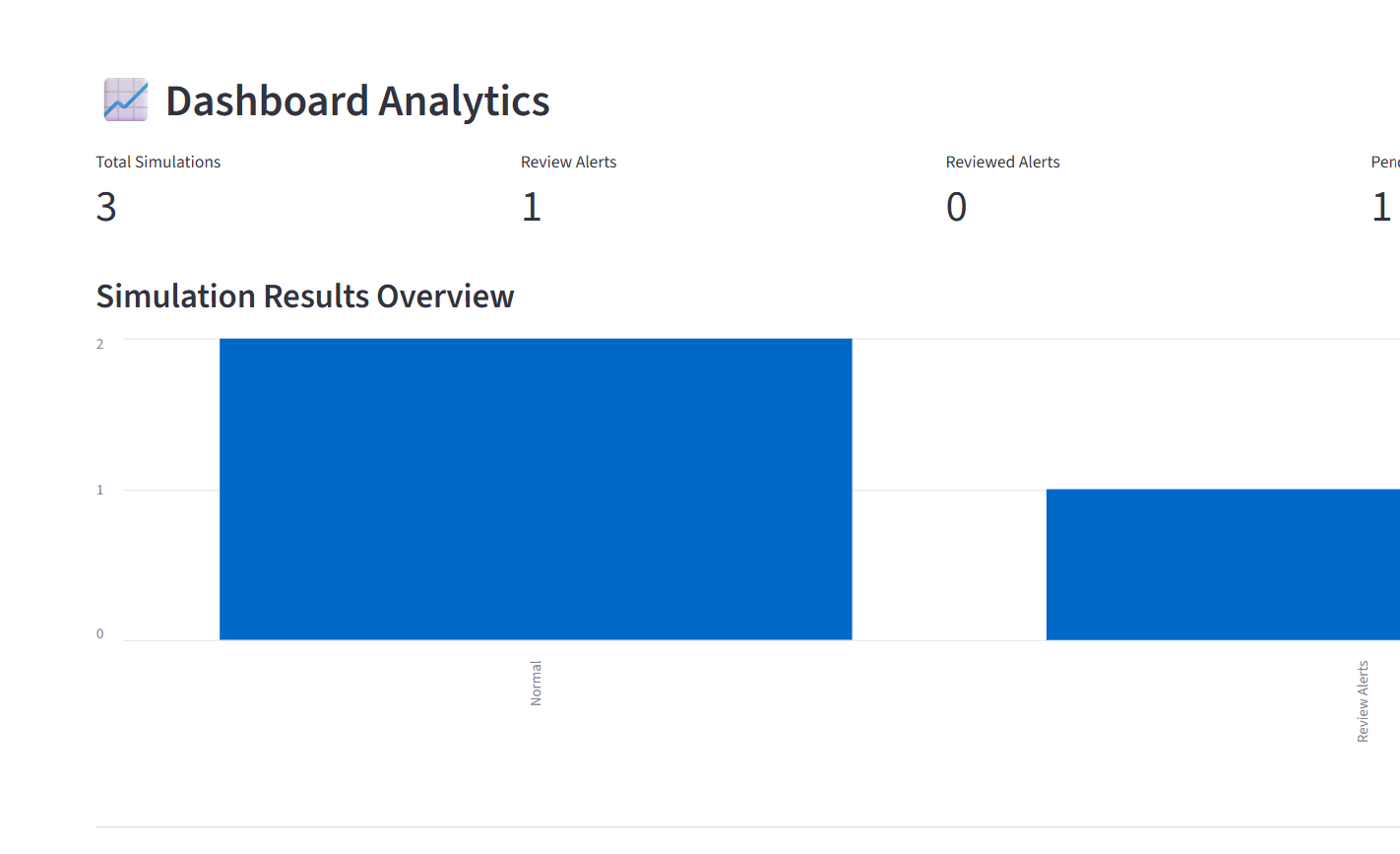
Dashboard Analytics
-
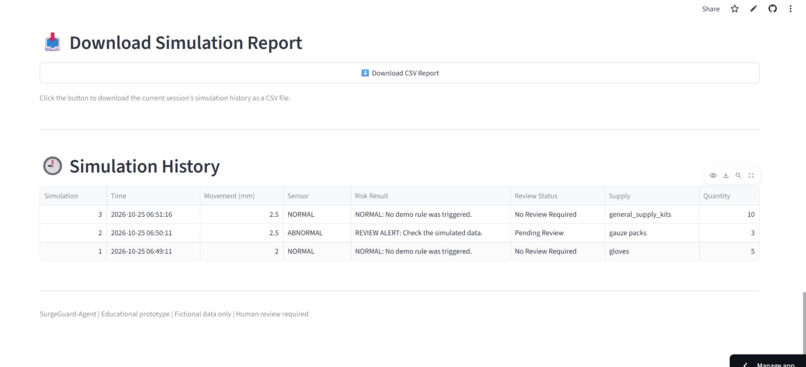
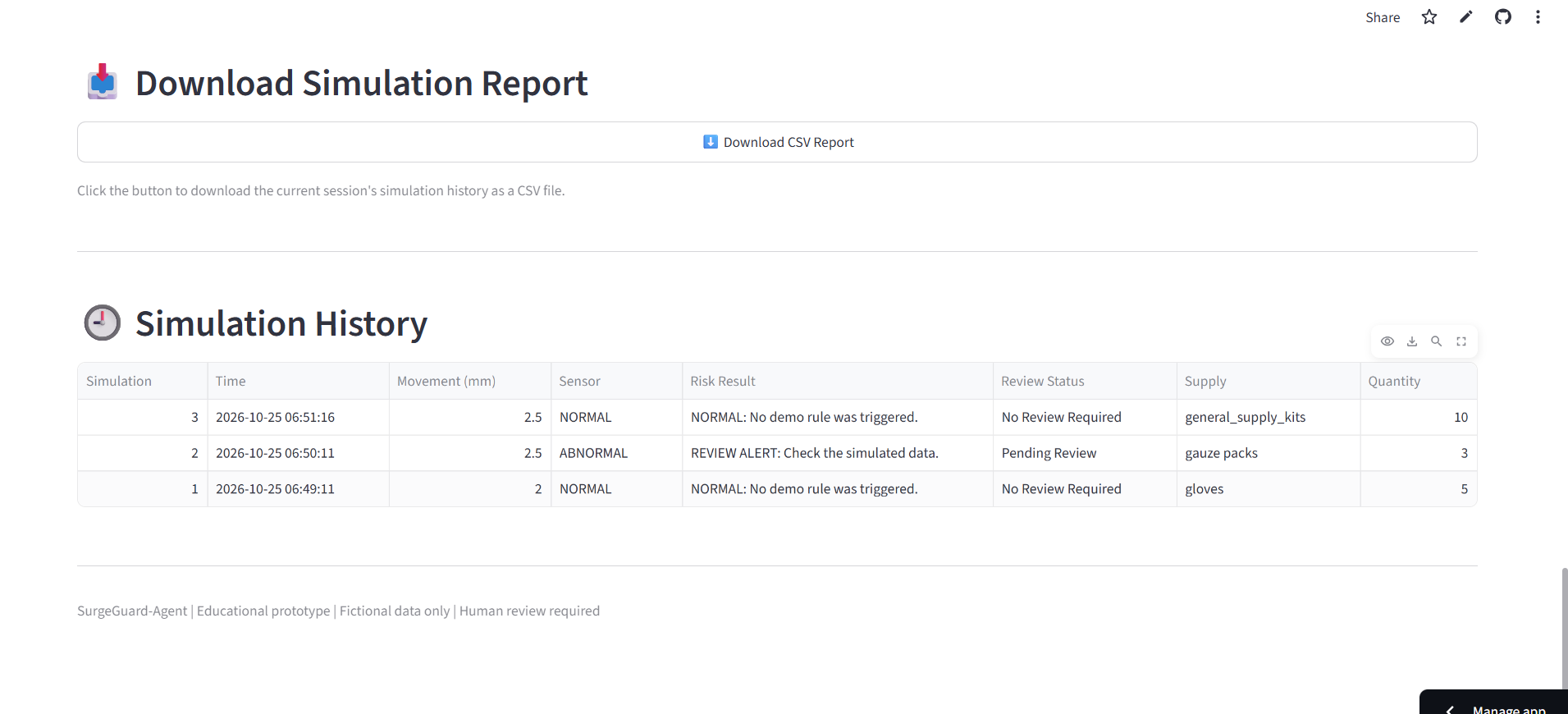
Download Simulation Report
-
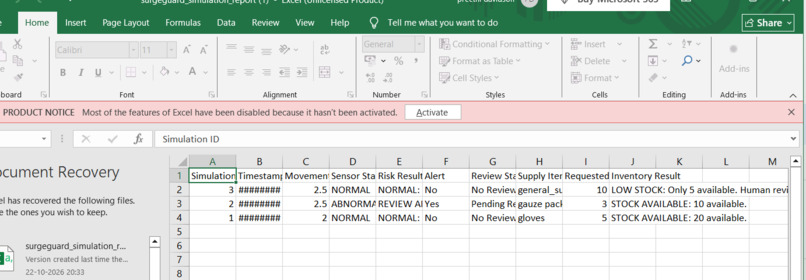
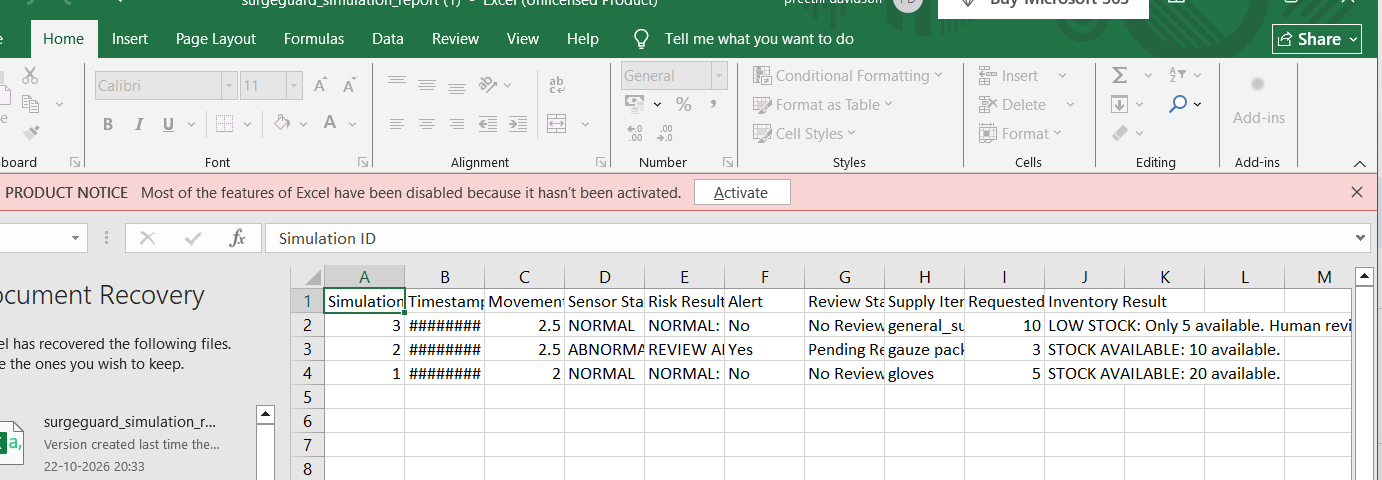
excell sheet result
Inspiration
🛡️ SurgeGuard-Agent
Detect Risks. Track Supplies. Empower Healthcare.
💡 Inspiration
What if technology could help healthcare professionals recognize important warning signs while also keeping track of essential medical resources?
This question inspired me to develop SurgeGuard-Agent, an AI-inspired healthcare monitoring and inventory assistance prototype.
Healthcare environments demand precision, awareness, and effective resource coordination. Even when advanced technology is available, monitoring information and medical inventory data may be managed through separate systems.
I wanted to explore how these functions could be combined into one accessible platform.
My goal was not to replace healthcare professionals, but to create a prototype demonstrating how automated monitoring, alerts, and resource management could work together.
That idea became SurgeGuard-Agent.
🚀 What It Does
SurgeGuard-Agent is an interactive healthcare technology prototype that evaluates fictional monitoring data, identifies predefined warning conditions, checks medical inventory, and visualizes simulation results.
Key Features
1. Simulated Risk Monitoring
Users can enter simulated movement measurements and sensor conditions.
The system evaluates these inputs using predefined rules and generates either a normal status or a review alert.
2. Automated Review Alerts
When an abnormal condition matches a configured rule, the application highlights it for human review.
3. Medical Inventory Checking
The system checks the availability of fictional medical supplies, including gloves, gauze packs, and general supply kits.
If the requested quantity exceeds available stock, it displays a shortage warning.
4. Priority Action Centre
The dashboard organizes review alerts and tracks pending and reviewed conditions.
5. Smart Inventory Forecast
The application estimates how many days medical supplies may last using current stock and daily usage.
6. Dashboard Analytics
Interactive metrics summarize total simulations, review alerts, reviewed alerts, and pending alerts.
7. CSV Report Generation
Users can download simulation history for documentation and further analysis.
The current prototype uses fictional data and predefined rules. It is not intended for real clinical decisions.
🛠️ How I Built It
I developed SurgeGuard-Agent using accessible development tools and a modular approach.
Technologies Used
- Python: Core application logic, simulated risk evaluation, inventory checking, and forecasting.
- Streamlit: Interactive web dashboard and user interface.
- Rule-Based Automation: Automated evaluation of predefined demonstration conditions.
- Data Visualization: Charts and metrics for monitoring simulation results.
- CSV: Exporting simulation history.
- GitHub: Source code management and project hosting.
- Streamlit Community Cloud: Deployment of the working web application.
- Dify: Explored for AI workflow integration during development.
Development Process
I began by identifying two connected problems: monitoring unusual conditions and checking medical supply availability.
I then developed a Python-based simulation system capable of accepting movement measurements, sensor status, and inventory requests.
Next, I created an interactive Streamlit dashboard so users could test different scenarios without needing to write code.
After developing the basic monitoring system, I expanded the project with a Priority Action Centre, Smart Inventory Forecast, analytics, and downloadable reports.
Finally, I uploaded the project to GitHub and deployed it using Streamlit Community Cloud, making the prototype accessible through a web browser.
🧩 Challenges I Faced
Building SurgeGuard-Agent was a challenging but rewarding experience.
1. Connecting Dify with Python
One of my first challenges was understanding how API connections work.
During development, I encountered connection errors caused by incorrect API URL configuration and environment variables.
This taught me the importance of API endpoints, authentication, and debugging.
2. Managing Python Dependencies
While working in VS Code, I encountered issues with Python packages and module installation.
I learned how to install dependencies, use the terminal, and troubleshoot errors.
3. Designing the Interactive Dashboard
Creating an interface that could accept inputs and display meaningful results required several improvements.
I worked on making the application easier to navigate and ensuring that users could understand the difference between normal results, review alerts, and inventory shortages.
4. Deploying the Application
Moving the project from my local Windows laptop to an online Streamlit application was another important challenge.
I learned how GitHub repositories, application dependencies, and cloud deployment work together.
5. Building a Reliable Demonstration
Because the project explores healthcare technology, I needed to clearly distinguish simulated warnings from real medical risk predictions.
I designed the application as an educational prototype using fictional data, with human review emphasized throughout.
What I Learned:
SurgeGuard-Agent helped me develop both technical and problem-solving skills.
Through this project, I learned:
- How to build interactive Python applications using Streamlit.
- How to structure rule-based monitoring workflows.
- How API authentication and environment variables work.
- How to debug Python errors in VS Code.
- How to manage source code using GitHub.
- How to deploy a working web application.
- How to implement inventory forecasting calculations.
- How to visualize data and generate downloadable reports.
- Why transparency, human oversight, and validation are essential in healthcare technology.
My biggest learning outcome was understanding how to transform an idea into a functional, publicly accessible software prototype.
I also learned that building a successful project requires more than writing code. It involves identifying a problem, testing solutions, overcoming failures, and continuously improving the user experience.
Accomplishments I'm Proud Of
The accomplishment I am most proud of is developing and deploying SurgeGuard-Agent as a working web application.
I successfully combined several features into one dashboard:
- Simulated monitoring and automatic alerts.
- Inventory availability checking.
- Priority-based review tracking.
- Supply forecasting.
- Analytics and downloadable reports.
I am particularly proud that I progressed from learning Python development and API integration to building an application that others can explore online.
This project represents an important milestone in my journey as a developer.
What's Next for SurgeGuard-Agent?
My long-term vision is to explore how SurgeGuard-Agent could evolve into a more advanced healthcare research platform.
Future development possibilities include:
AI-Powered Prediction: Exploring machine-learning models for pattern recognition using appropriately validated datasets.
Real-Time Sensor Integration: Connecting suitable sensors in controlled research environments.
Computer Vision: Investigating image-based monitoring approaches with medical expert involvement.
Advanced Inventory Forecasting:Developing forecasting models that account for changes in demand.
Explainable AI:Providing understandable explanations for automated alerts.
Hospital Resource Integration:Exploring secure integration with operational inventory systems.
Any real-world healthcare application would require extensive clinical validation, expert oversight, privacy safeguards, and regulatory evaluation.
🌍 Final Thoughts
SurgeGuard-Agent began with a simple question:
Can technology make important information easier to recognize and understand?
Through this project, I explored one possible answer.
Although the current application is an educational prototype, it demonstrates how automated monitoring, inventory checking, forecasting, and analytics can be combined into one interactive system.
More importantly, this journey strengthened my confidence in developing practical software solutions and encouraged me to continue exploring healthcare technology.
SurgeGuard-Agent is not about replacing healthcare professionals. It is about exploring how technology can empower them.
🔗 Project Links
Live Demo: https://surgeguard-agent-bafgymxyjjjd5vmctrbmo3.streamlit.app/
GitHub Repository: https://github.com/preethidavidson249140/SurgeGuard-Agent

Log in or sign up for Devpost to join the conversation.