-
-
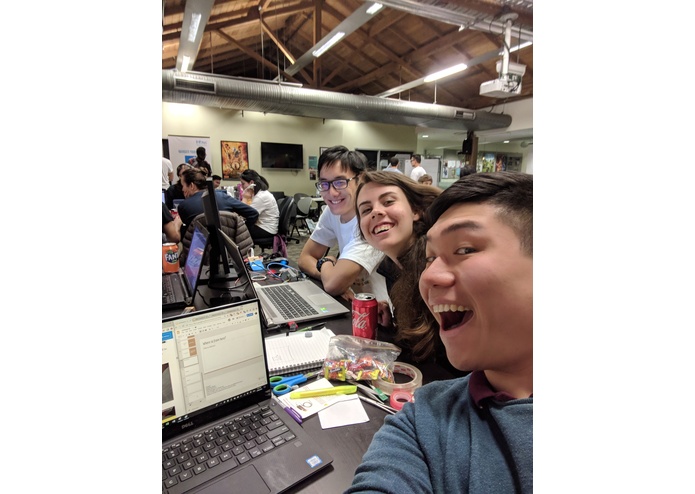
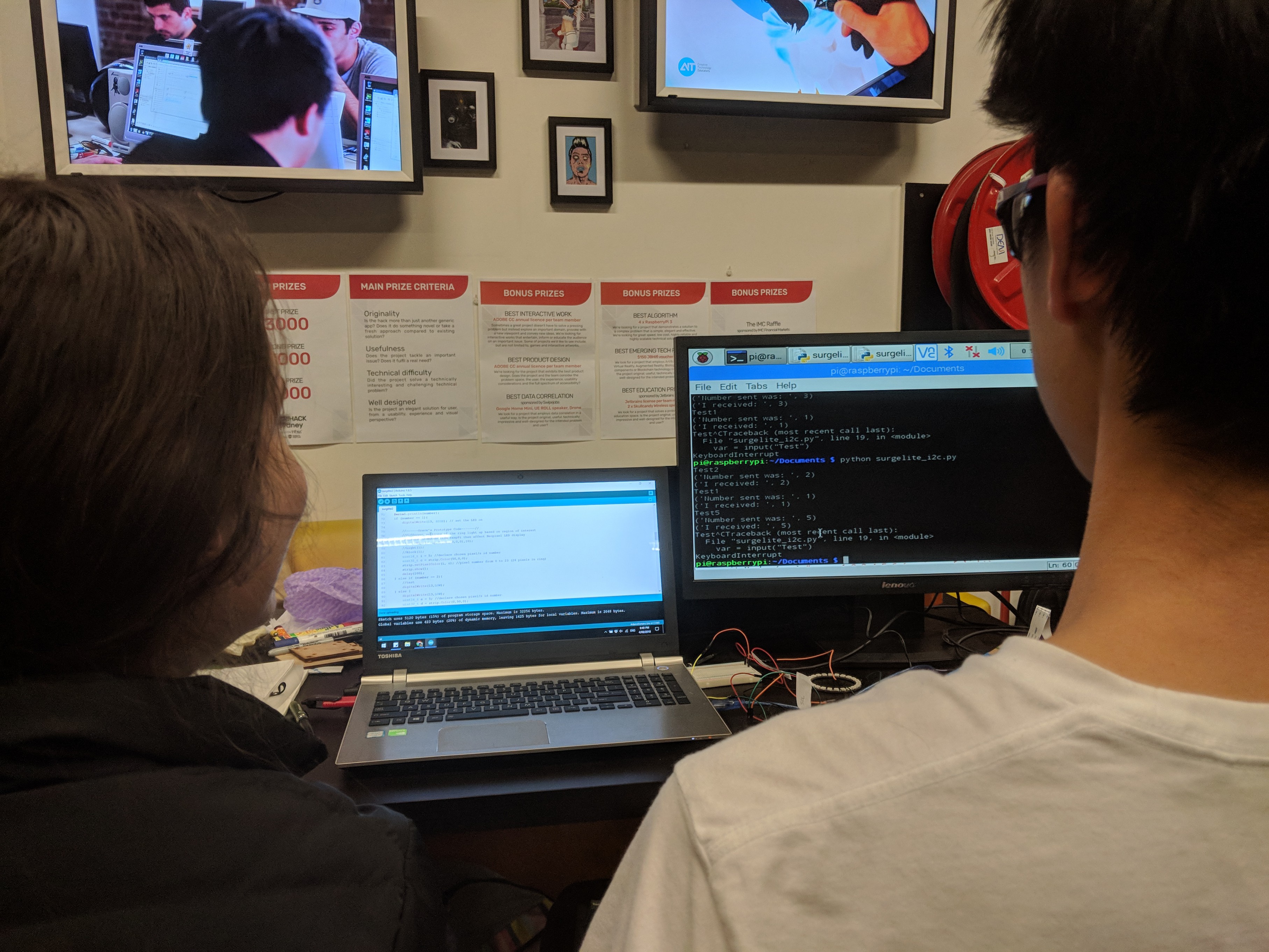
Team gets started!
-
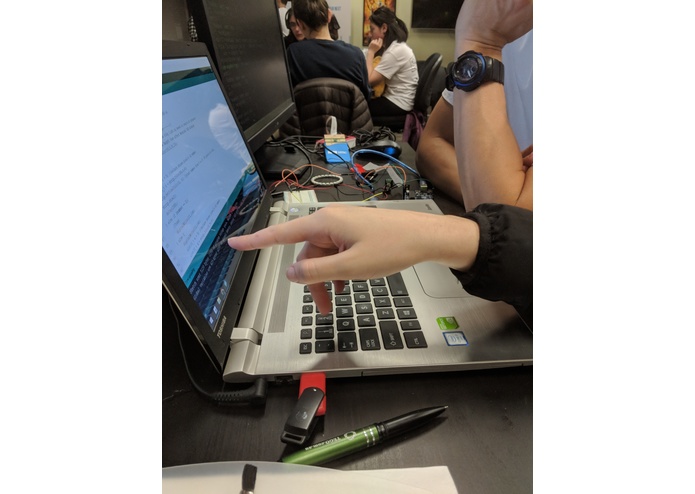
Discussing a technical problem
-
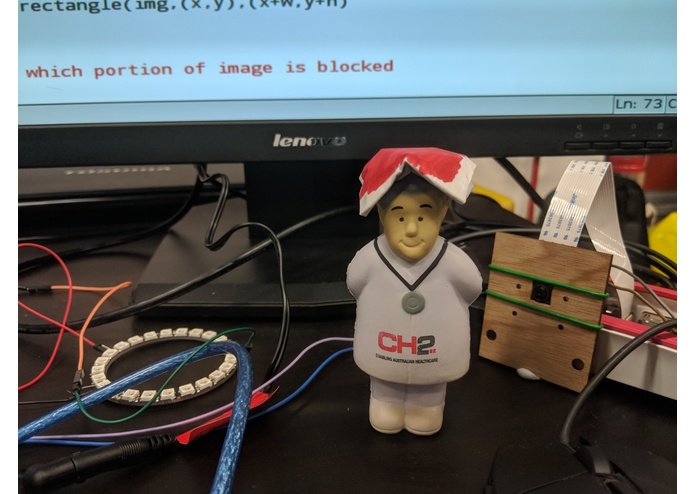
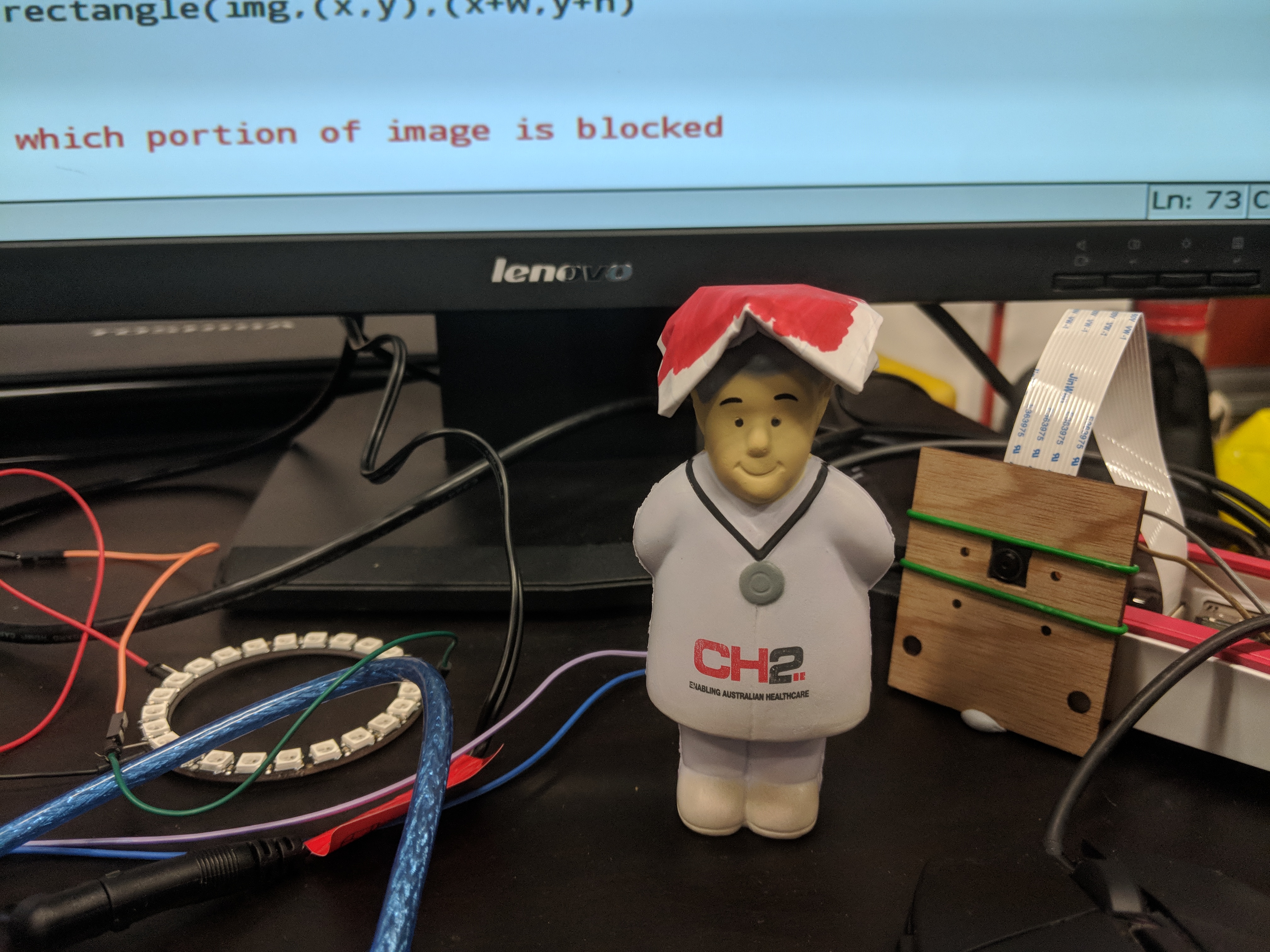
Team mascot
-
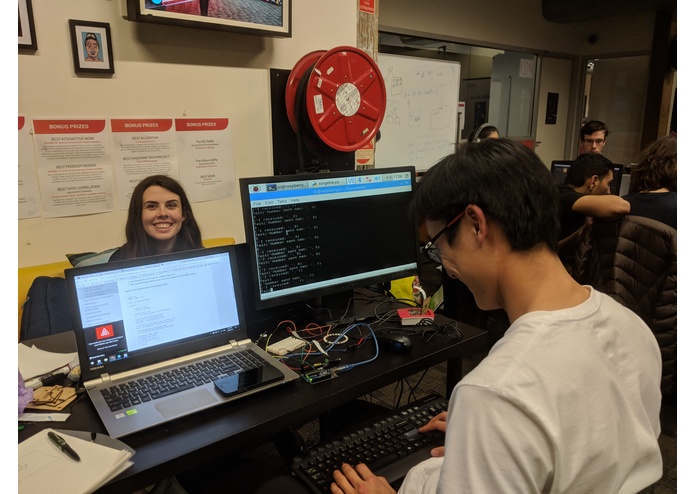
Go team go!
-
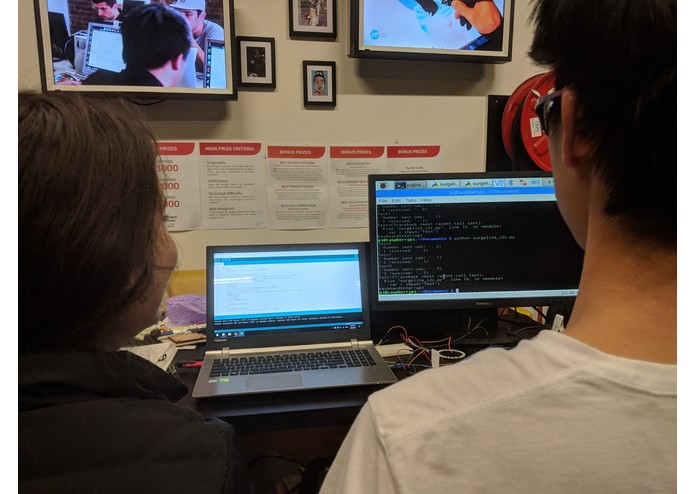
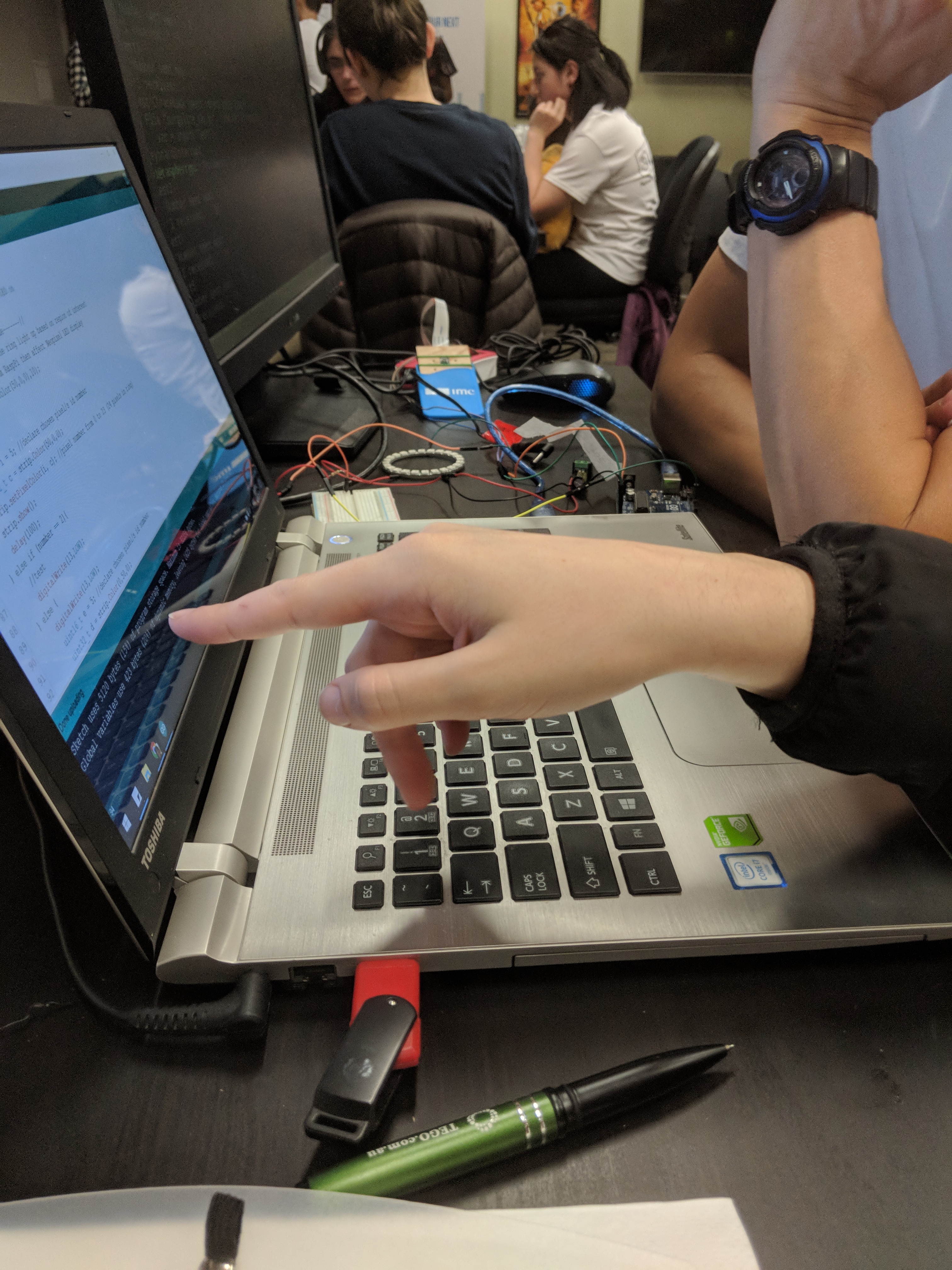
Figuring out the Arduino
-
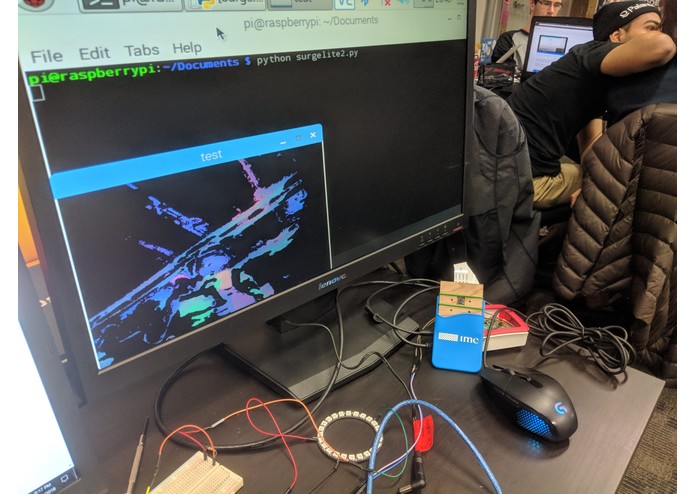
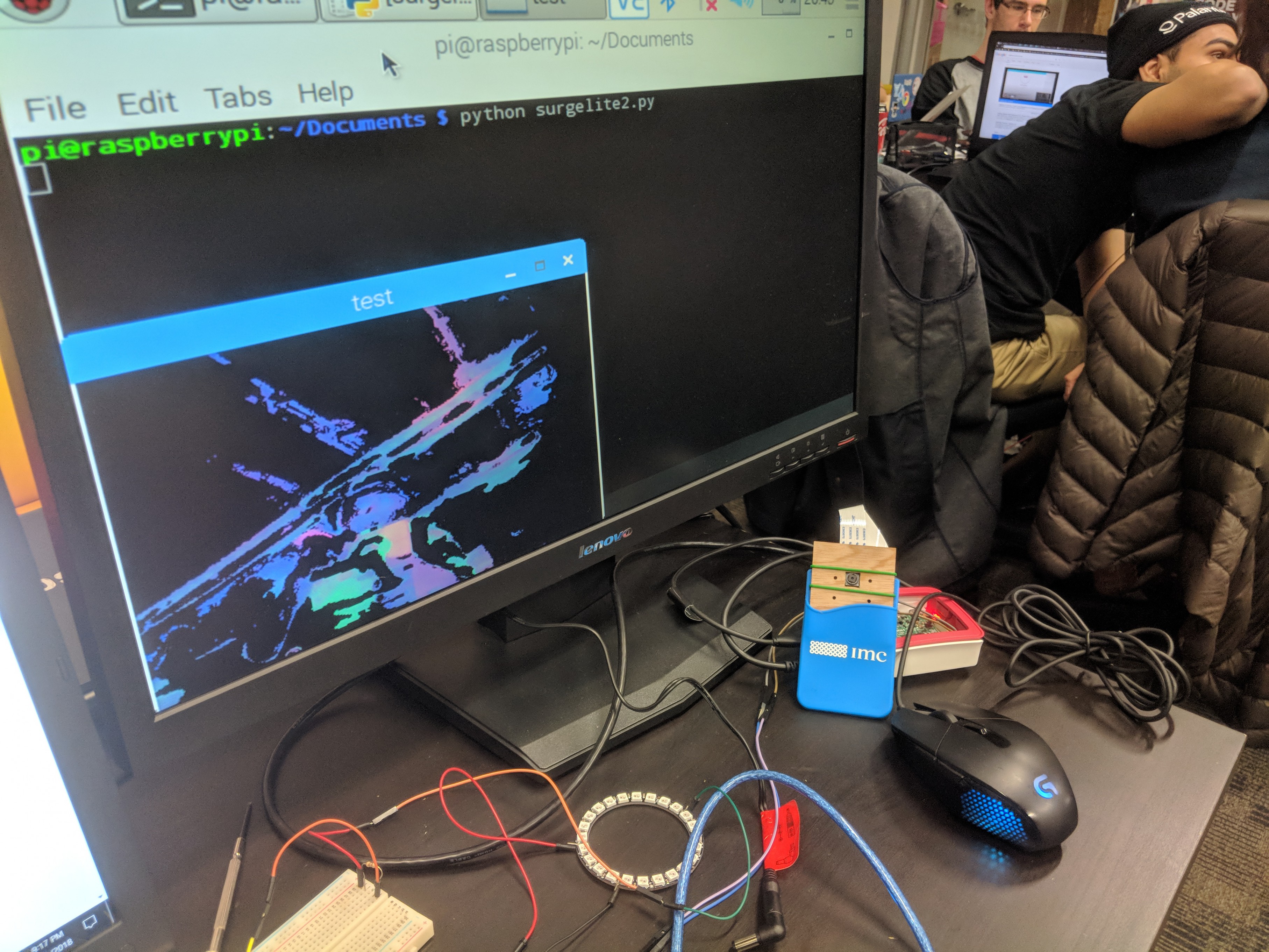
OpenCV works for the first time!
-
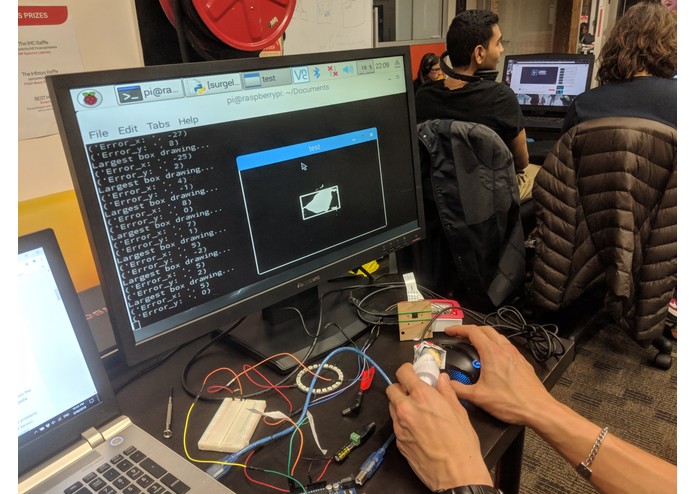
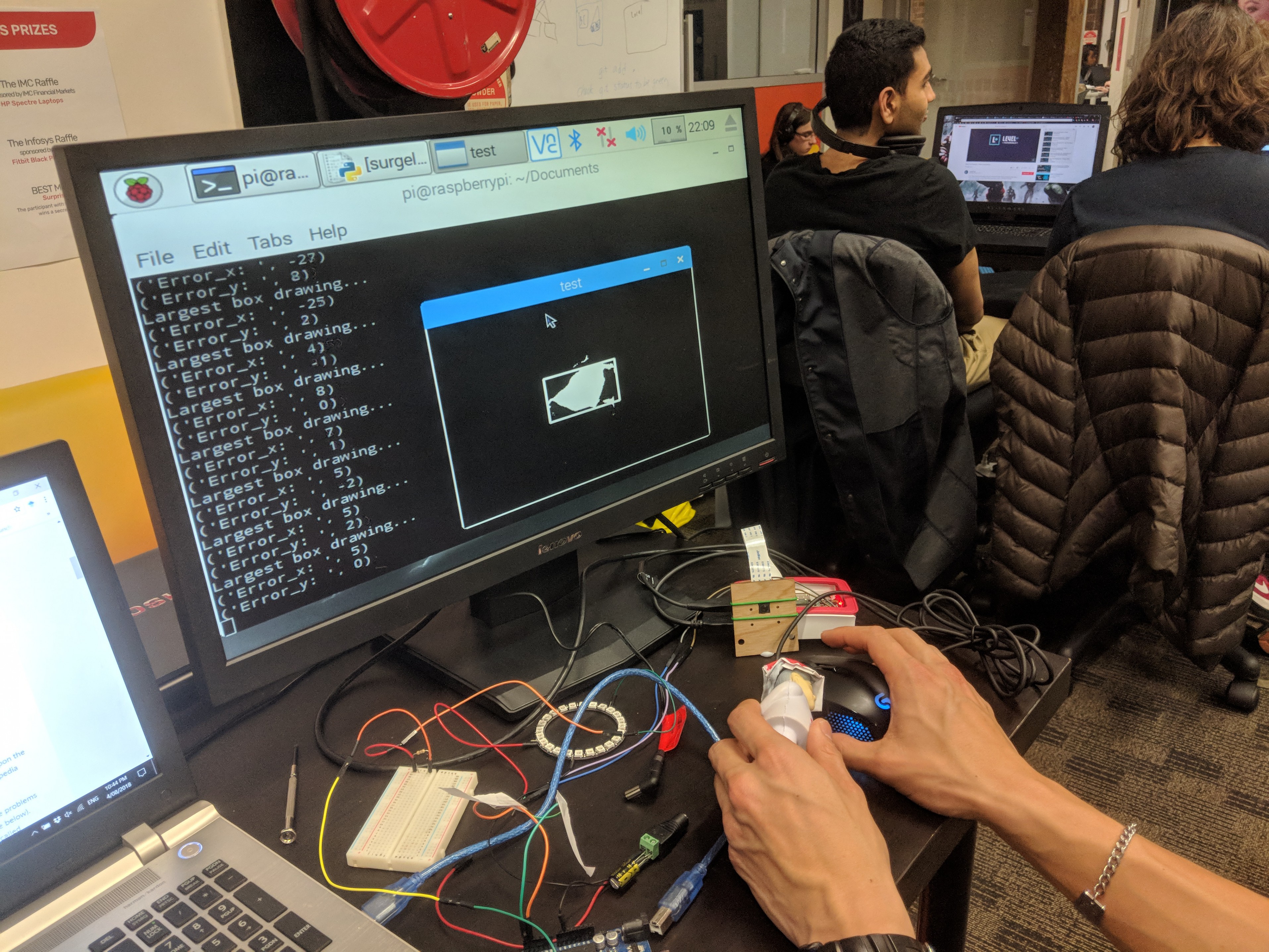
Getting the OpenCV to track our object!
-
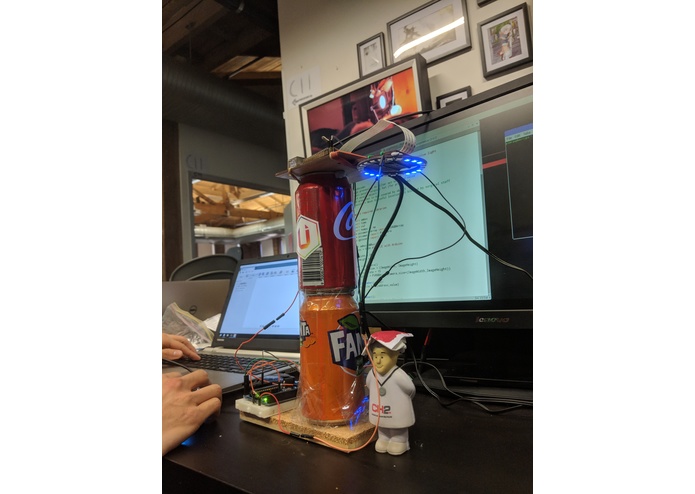
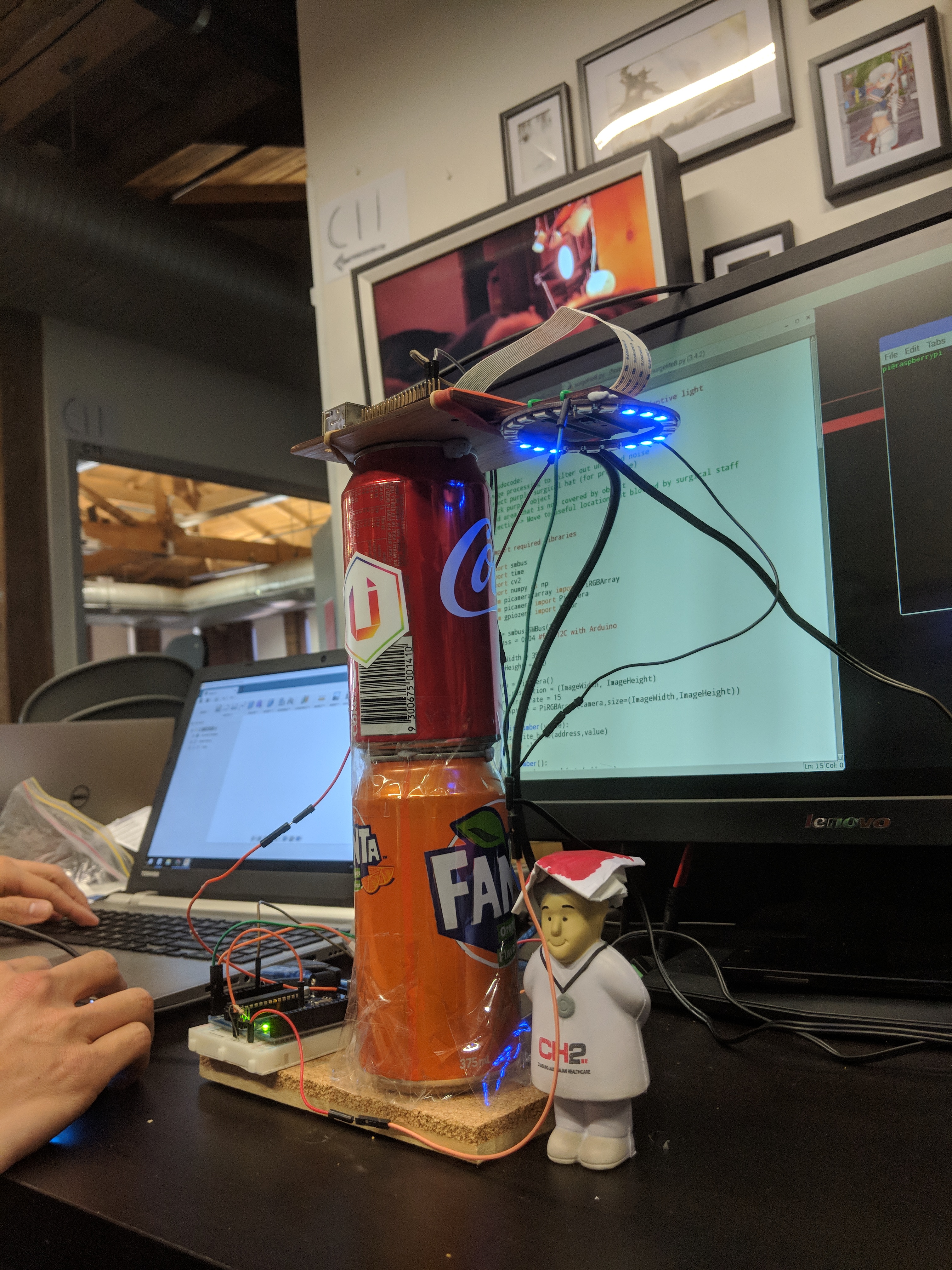
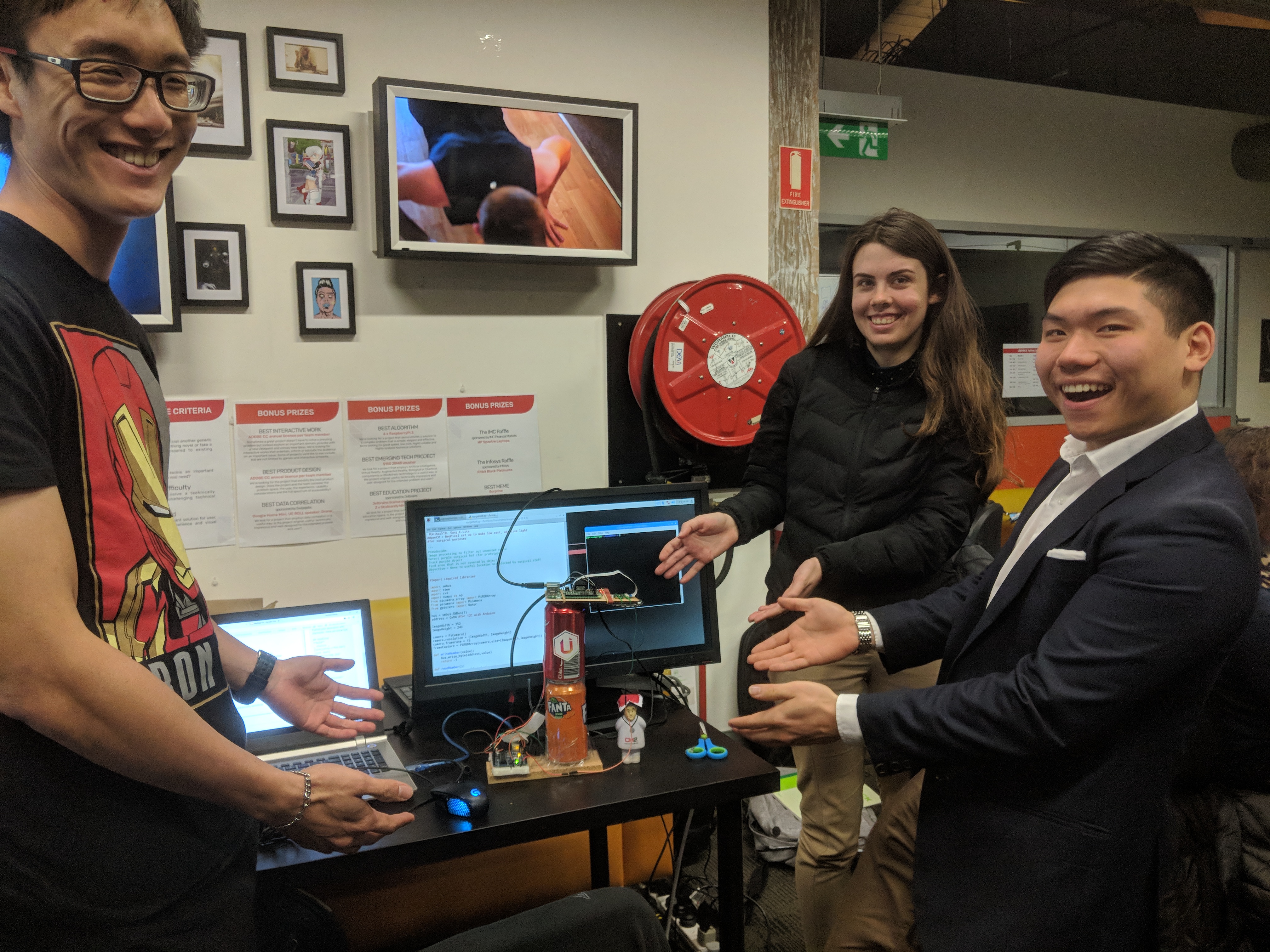
The final product
-
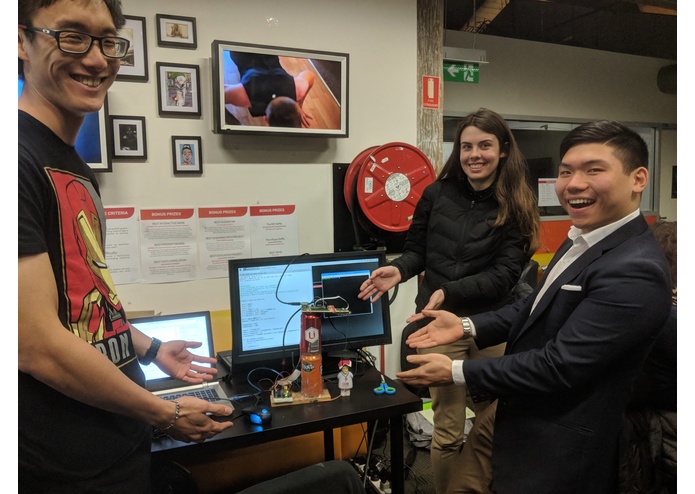
So proud of our baby!

Summary of Project Description
Our hardware solution helps poorly resourced health services who want to increase access to life-saving surgery by reducing the cost of surgical lighting and improving surgeon capabilities. (Unlike Stryker, Simeon, Skyton, BD, Steris)
Link to pitch deck: https://bit.ly/2Mk062v
Inspiration (what problem are we solving and for who)
Fact: developing countries lack access to surgical intervention
Fact: surgical equipment is costly and cumbersome
Fact: another barrier to the provision of surgical services is availability of electricity and quality of lighting
3 billion people lack access to basic surgery and the poorest 1/3rd receive only 3.5% of the world's 234 million major surgeries worldwide.
1.5 million lives could be saved if basic surgery could be provided equitably
What it does (and how does it work)
The Surg.E.Lite to help reduce barriers to surgery in developing countries by reducing the cost of effective lighting and giving clinicians a tool to be able to provide surgery in a wider range of contexts.
It automatically detects potential blockages of light to turn specific LEDs on and off, and also automatically re-positions itself as necessary to provide the best illumination possible so that the surgeon can be as effective as possible.
How we built it (description of implementation)
Surg.E.Lite utilises OpenCV to track our object of interest to detect an area of light blockage and pre-emptively turn off problem lights in the Arduino LED ring. In this case, we are detecting the surgeon's head and automatically turning off lights that it is blocking, reducing shadowing and glare.
Furthermore, the use of LEDs reduces heat generation and increases durability of the product (40,000 hours vs 3,000 in traditional halogen lights which also increase the risk of accidental burns).
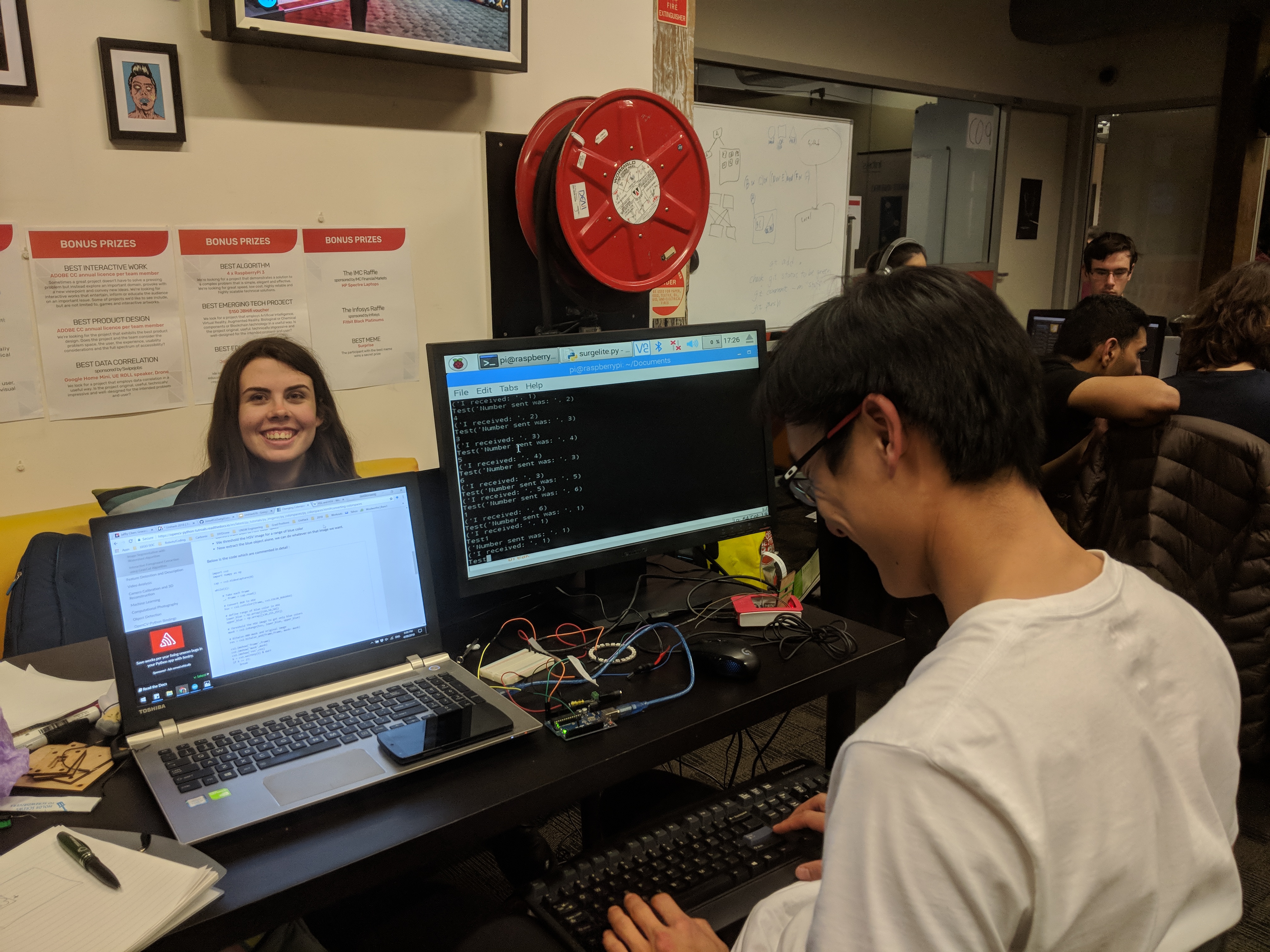
Arduino communicating with the Raspberry Pi: https://youtu.be/7smT0-ZxIUM
NeoPixel lighting up: https://youtu.be/z_KVCd3CT9U
OpenCV working: https://youtu.be/2PzW1lFZzWA
OpenCV colour tracking: https://youtu.be/MXwArGqloFY
Full Demo 1: https://youtu.be/oYSq3qDJZJY
Challenges we ran into and what we learned
We initially had some issues getting the Arduino, NeoPixel, and Raspberry Pi communicating. Often there would be debugging issues that required the whole team to deliberate and solve together.
As a hardware project, the wiring itself was complicated and the mindset in constructing our device physically needed to be different to the mindset used in constructing the software.
Having so much to pitch in such a limited amount of time.
Of course, the mentors were extremely helpful with their advice!
Accomplishments that we're proud of
Coming together as strangers to build something innovative and socially beneficial
Tackling a problem where no one has taken the initiative
Trying to do hardware in a software dominated competition
What's next for Surg.E.Lite
We will be continuing to refine the product with any winnings to create and promote a polished product for market. The technology will undergo several iterations to find the perfect balance between software and hardware. We'll also look into finalising our business model and other potentially novel applications for our technology.
Furthermore, there is scope to add further technologies to our product including streaming the video for teaching purposes.
List of all 3rd party materials and APIs, including things that were purchased
Tutorials for OpenCV, i2C and Electronics:
https://oscarliang.com/raspberry-pi-arduino-connected-i2c/
https://opencv-python-tutroals.readthedocs.io/en/latest/py_tutorials/py_tutorials.html
https://learn.adafruit.com/adafruit-neopixel-uberguide/neopixel-rings
Hardware:
Arduino
RaspberryPi and PiCamera
NeoPixel 24 LED 5050 Ring
Wires and Resistors
1000 Uf Capacitor (16V)
5V 3A DC Power Supply


Log in or sign up for Devpost to join the conversation.